Custom Walk in Florence, Italy by kathrynhyland5364 created on 2025-05-02
Guide Location: Italy » Florence
Guide Type: Custom Walk
# of Sights: 16
Tour Duration: 4 Hour(s)
Travel Distance: 7.2 Km or 4.5 Miles
Share Key: SFKBJ
Guide Type: Custom Walk
# of Sights: 16
Tour Duration: 4 Hour(s)
Travel Distance: 7.2 Km or 4.5 Miles
Share Key: SFKBJ
How It Works
Please retrieve this walk in the GPSmyCity app. Once done, the app will guide you from one tour stop to the next as if you had a personal tour guide. If you created the walk on this website or come to the page via a link, please follow the instructions below to retrieve the walk in the app.
Retrieve This Walk in App
Step 1. Download the app "GPSmyCity: Walks in 1K+ Cities" on Apple App Store or Google Play Store.



Step 2. In the GPSmyCity app, download(or launch) the guide "Florence Map and Walking Tours".
Step 3. Tap the menu button located at upper right corner of the "Walks" screen and select "Retrieve custom walk". Enter the share key: SFKBJ
1) Piazzale Michelangelo (Michelangelo Square) (must see)
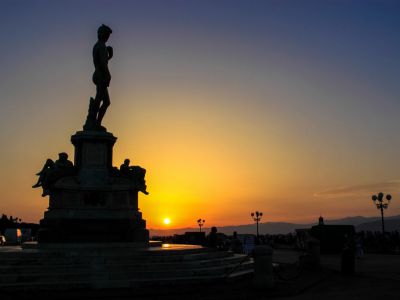
Florence is undebiably a stunning city, and this hilltop terrace proves it beyond question. Perched just south of the Arno River, the spacious overlook is lined with souvenir stalls and draws crowds for its panoramas of the city’s red-tiled rooftops. From here, you’ll spot the majestic Cathedral and its dome, along with the Giotto Bell Tower and Old Palace-a postcard-perfect scene has been captured thousands of times. But there’s more to take in. Scan the horizon and you’ll also spot Fort Belvedere, the Holy Cross Basilica, and the timelessly charming Old Bridge.
The square was laid out in 1869, during a period of major urban development known as the “Risanamento,” when Florence briefly served as Italy’s capital. As the name suggests, it was meant to honor Michelangelo, and features bronze copies of his most famous works-“David”, along with the four allegorical figures from the Medici Chapel. While the originals are in marble, these replicas were hauled up the hill by nine pairs of oxen-no small feat, especially on a warm Tuscan day.
As evening sets in, the square becomes a magnet for sunset seekers. Find a comfortable spot, sip a glass of wine, and watch the sun paint the city in golden tones. You can bring your own bottle or choose one of the nearby cafés and restaurants. The most famous one here is housed in a lovely Neoclassical building, and surprisingly, the prices are pretty fair for such a prime location.
Halfway up the main staircase, you’ll also find the charming rose garden-a peaceful hideaway filled with greenery and floral scents, with views of the city peeking through the trees.
Tip: Sunny days can get quite hot up here, so be sure to pack a hat or something to shield yourself from the sun.
The square was laid out in 1869, during a period of major urban development known as the “Risanamento,” when Florence briefly served as Italy’s capital. As the name suggests, it was meant to honor Michelangelo, and features bronze copies of his most famous works-“David”, along with the four allegorical figures from the Medici Chapel. While the originals are in marble, these replicas were hauled up the hill by nine pairs of oxen-no small feat, especially on a warm Tuscan day.
As evening sets in, the square becomes a magnet for sunset seekers. Find a comfortable spot, sip a glass of wine, and watch the sun paint the city in golden tones. You can bring your own bottle or choose one of the nearby cafés and restaurants. The most famous one here is housed in a lovely Neoclassical building, and surprisingly, the prices are pretty fair for such a prime location.
Halfway up the main staircase, you’ll also find the charming rose garden-a peaceful hideaway filled with greenery and floral scents, with views of the city peeking through the trees.
Tip: Sunny days can get quite hot up here, so be sure to pack a hat or something to shield yourself from the sun.
2) Forte di Belvedere (Fort Belvedere)
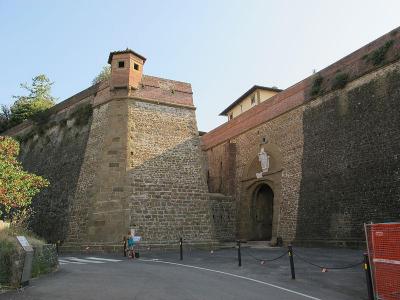
Fort Belvedere is a striking example of both Italian Renaissance elegance and strategic military design. Built at the end of the 16th century by Grand Duke Ferdinando de’ Medici, the fortress had a dual mission: to protect Florence and to demonstrate the might and wealth of the Medici family. It also served as a secure vault for their treasury and provided a refuge for the Grand Duke during times of unrest or siege.
To allow safe and quick movement, the fort was smartly connected to key spots in the city-like the Old Palace, the Pitti Palace, and the Boboli Gardens-through a network of hidden passageways. Positioned high above Florence, this landmark offered an ideal lookout over the surrounding area. During the Renaissance, fortifications were critical to military strategy. Belvedere’s angled walls were designed for both surveillance and defense, allowing for overlapping lines of fire to protect each section. Interestingly, the great Galileo Galilei once used the site for his astronomical studies. After being sentenced to life imprisonment in 1633, he lived nearby at Villa Arcetri, just beyond the walls.
At the heart of the fort lies a luxurious villa, completed around 1570-before the fortress itself. Meant to shelter the Grand Duke during crises or epidemics, this residence was built for comfort rather than defense. Legend has it the Medici treasures were hidden at the bottom of a heavily guarded well, rigged with traps that would spring on any intruder foolish enough to tamper with the locks.
Following a restoration, Fort Belvedere reopened in 2013, now serving mainly as a cultural venue and exhibition space. The small entrance fee grants access to sweeping views of Florence and the surrounding Tuscan hills-truly one of the city's best panoramic spots.
Tip: Head up to the upper floor for a cozy café-perfect for a relaxed lunch or a cool drink with a view.
To allow safe and quick movement, the fort was smartly connected to key spots in the city-like the Old Palace, the Pitti Palace, and the Boboli Gardens-through a network of hidden passageways. Positioned high above Florence, this landmark offered an ideal lookout over the surrounding area. During the Renaissance, fortifications were critical to military strategy. Belvedere’s angled walls were designed for both surveillance and defense, allowing for overlapping lines of fire to protect each section. Interestingly, the great Galileo Galilei once used the site for his astronomical studies. After being sentenced to life imprisonment in 1633, he lived nearby at Villa Arcetri, just beyond the walls.
At the heart of the fort lies a luxurious villa, completed around 1570-before the fortress itself. Meant to shelter the Grand Duke during crises or epidemics, this residence was built for comfort rather than defense. Legend has it the Medici treasures were hidden at the bottom of a heavily guarded well, rigged with traps that would spring on any intruder foolish enough to tamper with the locks.
Following a restoration, Fort Belvedere reopened in 2013, now serving mainly as a cultural venue and exhibition space. The small entrance fee grants access to sweeping views of Florence and the surrounding Tuscan hills-truly one of the city's best panoramic spots.
Tip: Head up to the upper floor for a cozy café-perfect for a relaxed lunch or a cool drink with a view.
3) Chiesa di Santa Felicita (Church of St. Felicity)
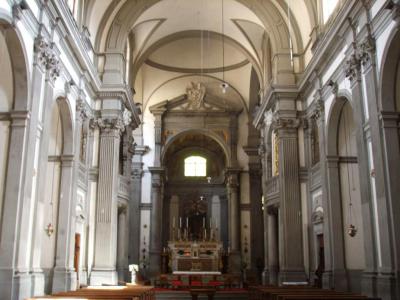
Dedicated to Saint Felicity, an early Roman martyr, this is one of the oldest churches in Florence-founded as early as the 2nd century AD by Greek or Syrian merchants, who were among the city’s first Christians. A Romanesque version was built in the 11th century, but the structure we see today dates from the 1730s, redesigned as a single-nave sanctuary.
Santa Felicita lies directly along the route of the Vasari Corridor-the secret passage used by the Medici family to move between the Old Palace and their residence at the Pitti Palace. From a high balcony at the back of the church, the Medici could attend mass discreetly, without mingling with the general public.
What truly draws visitors today, though, is the remarkable artwork inside, starting with Jacopo Pontormo’s “Deposition from the Cross”, painted between 1525 and 1528. Pontormo, a key figure of the early Florentine Renaissance and a contemporary of Michelangelo, created a work that breaks from tradition in every sense. There’s no cross, no background scenery, and almost no ground beneath the figures. Christ’s body is carried by ethereal, almost floating figures, surrounded by swirling drapery in rich, luminous colors. The only hint of the setting is a pale, ghostlike cloud in the background. And look closely-the man in the corner with the cloak and beard is believed to be Pontormo himself, quietly observing the scene he created.
It’s one of the most emotionally charged and visually stunning depictions of the Passion you’ll find in Florence-well worth stepping inside to experience firsthand.
Santa Felicita lies directly along the route of the Vasari Corridor-the secret passage used by the Medici family to move between the Old Palace and their residence at the Pitti Palace. From a high balcony at the back of the church, the Medici could attend mass discreetly, without mingling with the general public.
What truly draws visitors today, though, is the remarkable artwork inside, starting with Jacopo Pontormo’s “Deposition from the Cross”, painted between 1525 and 1528. Pontormo, a key figure of the early Florentine Renaissance and a contemporary of Michelangelo, created a work that breaks from tradition in every sense. There’s no cross, no background scenery, and almost no ground beneath the figures. Christ’s body is carried by ethereal, almost floating figures, surrounded by swirling drapery in rich, luminous colors. The only hint of the setting is a pale, ghostlike cloud in the background. And look closely-the man in the corner with the cloak and beard is believed to be Pontormo himself, quietly observing the scene he created.
It’s one of the most emotionally charged and visually stunning depictions of the Passion you’ll find in Florence-well worth stepping inside to experience firsthand.
4) Ponte Vecchio (Old Bridge) (must see)
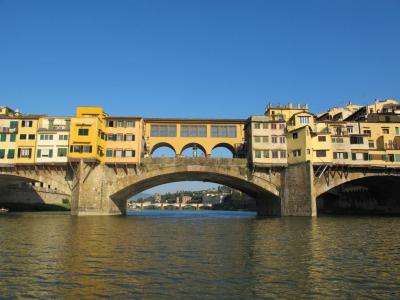
Ponte Vecchio, or The Old Bridge, first appeared in written records all the way back in 996. Of the six bridges that span the Arno River in Florence, it’s the only one that survived World War II intact-spared by retreating German forces. Today, this medieval stone arch structure stands as a powerful reminder of how a ruler’s vision can shape a city’s legacy.
As in the Middle Ages, the bridge is still lined with shops-but what’s sold here has changed quite a bit over time. Originally, it was occupied by butchers, who were know for tossing animal waste directly into the river-hardly ideal for anyone strolling by. That all changed in the 16th century, when Grand Duke Ferdinando de’ Medici had the meat merchants removed and replaced with goldsmiths. Not only did this improve the smell, but it also turned the bridge into one of the most glittering, upscale corners of Florence.
Take a look from a distance, and you might spot something unusual-a raised corridor running above the shops. This hidden passage is part of the Vasari Corridor, a nearly kilometer-long tunnel that connects the Pitti Palace with the Old Palace. It was built so that the Grand Duke could move between his residence and government offices without mingling with the crowds. Although closed since 2016 for safety reasons, there are plans to reopen it for visitors.
There’s even a bit of financial folklore tied to this spot, which is said to be the birthplace of the term “bankruptcy.” When a moneylender couldn’t pay his debts, soldiers smashed his trading bench-called a banco-to pieces, a symbolic act that left him unable to operate. Hence the term “bancorotto”, or “broken bench”, was born.
These days, the Old Bridge is a lovely place for a walk-especially at sunset, when the light casts a golden glow over the Arno. Early mornings are just as magical, with soft reflections on the water and, if you’re lucky, the bridge nearly all to yourself.
As in the Middle Ages, the bridge is still lined with shops-but what’s sold here has changed quite a bit over time. Originally, it was occupied by butchers, who were know for tossing animal waste directly into the river-hardly ideal for anyone strolling by. That all changed in the 16th century, when Grand Duke Ferdinando de’ Medici had the meat merchants removed and replaced with goldsmiths. Not only did this improve the smell, but it also turned the bridge into one of the most glittering, upscale corners of Florence.
Take a look from a distance, and you might spot something unusual-a raised corridor running above the shops. This hidden passage is part of the Vasari Corridor, a nearly kilometer-long tunnel that connects the Pitti Palace with the Old Palace. It was built so that the Grand Duke could move between his residence and government offices without mingling with the crowds. Although closed since 2016 for safety reasons, there are plans to reopen it for visitors.
There’s even a bit of financial folklore tied to this spot, which is said to be the birthplace of the term “bankruptcy.” When a moneylender couldn’t pay his debts, soldiers smashed his trading bench-called a banco-to pieces, a symbolic act that left him unable to operate. Hence the term “bancorotto”, or “broken bench”, was born.
These days, the Old Bridge is a lovely place for a walk-especially at sunset, when the light casts a golden glow over the Arno. Early mornings are just as magical, with soft reflections on the water and, if you’re lucky, the bridge nearly all to yourself.
5) Piazza della Signoria (Signoria Square) (must see)
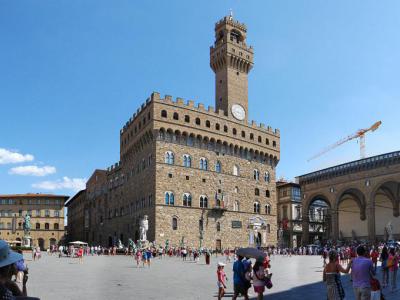
Alongside the Cathedral Square-the religious heart of Florence-you’ll find Signoria Square, the city’s historic civic center and a living museum under the open sky. Framed by elegant buildings and top-tier museums, this spot holds a special place in the hearts of locals. It was here that the Florentine Republic took shape, and to this day, the area remains a cherished gathering place. Michelangelo’s original “David” once stood proudly in the square, and while that statue now resides in a museum, a faithful replica now stands in its place, keeping the legacy alive.
Long before the Renaissance, back in Roman times, this was the town center of Florentia, surrounded by a theater, public baths, and a textile workshop. Centuries later, a church, a loggia, and a vast 5th-century basilica rose here, traces of which came to light during excavations in the 1980s.
What makes the square truly captivating is its irregular shape and the wealth of artwork-both monumental and subtle-that surrounds you. It’s a dream for photographers, with striking visuals from every angle. But even without a camera, just standing at the center and slowly turning to take it all in is a moment worth savoring.
Presiding over everything is the medieval Old Palace, still the seat of city government. Nearby, you’ll find the Lanterns’ Lodge-an open-air sculpture gallery that’s free to enter and always open. Here you’ll see dramatic masterpieces like “The Rape of the Sabine Women”, “Hercules and the Centaur”, and “Perseus with the Head of Medusa”, which seems locked in a timeless stare with Michelangelo’s “David”.
There are a few shaded benches for a break, but if you're visiting in summer, take it slow and stay hydrated. The crowds can be thick, so when crossing the square, don’t aim straight-zigzag gently, like a sailboat tacking through the wind. A few graceful steps to the right, a few to the left, and before you know it, you’re there. Simple, smooth, and very Florentine.
Long before the Renaissance, back in Roman times, this was the town center of Florentia, surrounded by a theater, public baths, and a textile workshop. Centuries later, a church, a loggia, and a vast 5th-century basilica rose here, traces of which came to light during excavations in the 1980s.
What makes the square truly captivating is its irregular shape and the wealth of artwork-both monumental and subtle-that surrounds you. It’s a dream for photographers, with striking visuals from every angle. But even without a camera, just standing at the center and slowly turning to take it all in is a moment worth savoring.
Presiding over everything is the medieval Old Palace, still the seat of city government. Nearby, you’ll find the Lanterns’ Lodge-an open-air sculpture gallery that’s free to enter and always open. Here you’ll see dramatic masterpieces like “The Rape of the Sabine Women”, “Hercules and the Centaur”, and “Perseus with the Head of Medusa”, which seems locked in a timeless stare with Michelangelo’s “David”.
There are a few shaded benches for a break, but if you're visiting in summer, take it slow and stay hydrated. The crowds can be thick, so when crossing the square, don’t aim straight-zigzag gently, like a sailboat tacking through the wind. A few graceful steps to the right, a few to the left, and before you know it, you’re there. Simple, smooth, and very Florentine.
6) Palazzo Vecchio (Old Palace) (must see)
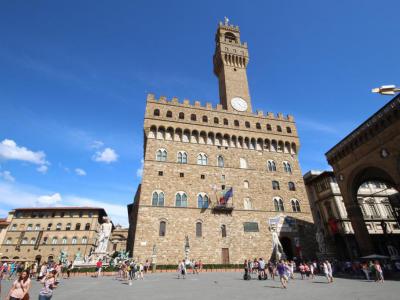
Just like the Cathedral complex and Florence’s world-class galleries, the Old Palace is essential for anyone wanting to grasp the city's history and cultural identity. This massive Romanesque fortress is one of the most striking town halls in all of Tuscany. Since 1872, it has served as the office of Florence’s mayor, but its legacy stretches much further back. Built in 1299, the edifice was the political heart of the Florentine Republic for centuries. When Cosimo de’ Medici moved in with his family in 1540 as Grand Duke, he had it expanded and transformed, blending its medieval bones with elegant Renaissance flair.
The rugged stone façade, lined with shields chronicling Florence’s political past, is also home to an impressive lineup of statues. These include Florence’s heraldic symbol- the Marzocco lion, along with Donatello’s powerful “Judith and Holofernes”, and “Hercules and Cacus”. The nearby Tower of Arnolfo, rising above the palace, offers a climbable vantage point-though access requires a separate ticket.
Meanwhile, inside, every room tells a chapter of the city’s history. You’ll walk through the spectacular Hall of the Five Hundred, designed to glorify Medici rule, and into the more private quarters where the family lived. Decorated under the artistic direction of Giorgio Vasari, these spaces are rich in symbolism and political narrative. Give yourself time to move slowly through the rooms-it’s an immersive dive into Florentine grandeur. And be warned: you may leave with a crick in your neck from gazing.
One standout work here is Michelangelo’s “Genius of Victory”. Originally meant for the tomb of Pope Julius II, the sculpture depicts a young, triumphant figure standing over a defeated older man. The contrast between the two is striking-the victor is smooth and polished, the vanquished figure unfinished and rough, still bearing the weight of the stone.
You’ll also come across something rather haunting-a death mask of Dante Alighieri, displayed between the Apartments of Eleanor and the Halls of the Priors. Though the poet was buried in Ravenna, this plaster cast has become a powerful reminder of his influence on Florence, both politically and culturally. Fans of Dan Brown’s “Inferno” will surely recognize it from the novel.
Tip: If you’re planning a guided visit, it’s best to book directly with the museum by email-include your preferred date and time, and wait for confirmation. Payment is made on the day of your tour, and afterward, you’re free to continue exploring on your own. Just keep in mind: because this is still a working municipal building, access may occasionally be restricted. It’s a good idea to check the official website before you go.
The rugged stone façade, lined with shields chronicling Florence’s political past, is also home to an impressive lineup of statues. These include Florence’s heraldic symbol- the Marzocco lion, along with Donatello’s powerful “Judith and Holofernes”, and “Hercules and Cacus”. The nearby Tower of Arnolfo, rising above the palace, offers a climbable vantage point-though access requires a separate ticket.
Meanwhile, inside, every room tells a chapter of the city’s history. You’ll walk through the spectacular Hall of the Five Hundred, designed to glorify Medici rule, and into the more private quarters where the family lived. Decorated under the artistic direction of Giorgio Vasari, these spaces are rich in symbolism and political narrative. Give yourself time to move slowly through the rooms-it’s an immersive dive into Florentine grandeur. And be warned: you may leave with a crick in your neck from gazing.
One standout work here is Michelangelo’s “Genius of Victory”. Originally meant for the tomb of Pope Julius II, the sculpture depicts a young, triumphant figure standing over a defeated older man. The contrast between the two is striking-the victor is smooth and polished, the vanquished figure unfinished and rough, still bearing the weight of the stone.
You’ll also come across something rather haunting-a death mask of Dante Alighieri, displayed between the Apartments of Eleanor and the Halls of the Priors. Though the poet was buried in Ravenna, this plaster cast has become a powerful reminder of his influence on Florence, both politically and culturally. Fans of Dan Brown’s “Inferno” will surely recognize it from the novel.
Tip: If you’re planning a guided visit, it’s best to book directly with the museum by email-include your preferred date and time, and wait for confirmation. Payment is made on the day of your tour, and afterward, you’re free to continue exploring on your own. Just keep in mind: because this is still a working municipal building, access may occasionally be restricted. It’s a good idea to check the official website before you go.
7) All'Antico Vinaio
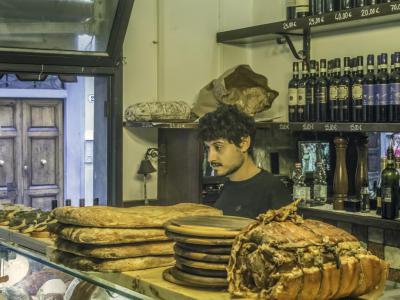
Boasting locations on both sides of the street – two dedicated to take-out and one offering sit-down service – this place has earned an international reputation. For a mere €5, you can savor an exceptional sandwich crafted with fresh focaccia bread, mouthwatering cheeses, and expertly carved meats like porchetta, salami, and prosciutto, prepared right before your eyes. These sandwiches are colossal, generously loaded with an array of toppings such as truffle cream, eggplant, zucchini, and an abundance of other options (feel free to customize your own creation). If you crave some heat, don't hesitate to try the "Inferno" – a spicy delight. While vegetarian options may not be listed on the menu, the staff will happily accommodate your preferences on the spot.
Simply choose the shorter queue, purchase your sandwich, and find a picturesque spot by the Arno River or in Signoria Square ("Piazza della Signoria") to indulge in one of the city's finest culinary experiences.
Tip:
For those seeking a more sit-down dining experience, the same owners provide limited seating at the back. Although sandwiches are not available in this area, you can relish a delightful assortment of meats, cheeses, and vegetables served on a tray accompanied by bread. Enhance your meal with authentic local pasta or indulge in an amazing "secondo" (second course) for a truly satisfying dining experience.
Simply choose the shorter queue, purchase your sandwich, and find a picturesque spot by the Arno River or in Signoria Square ("Piazza della Signoria") to indulge in one of the city's finest culinary experiences.
Tip:
For those seeking a more sit-down dining experience, the same owners provide limited seating at the back. Although sandwiches are not available in this area, you can relish a delightful assortment of meats, cheeses, and vegetables served on a tray accompanied by bread. Enhance your meal with authentic local pasta or indulge in an amazing "secondo" (second course) for a truly satisfying dining experience.
8) Museo dell'Opera del Duomo (Museum of the Works of the Cathedral) (must see)
If you’re visiting the Duomo, skipping this nearby museum would be a serious oversight. It tends to fly under the radar, given Florence's overwhelming list of must-see attractions-but there are quite a few things to like here. You’ll find fewer crowds, an easy-to-navigate layout, and thoughtfully spaced exhibits that invite close, uninterrupted viewing. Modern in design and, refreshingly, air-conditioned, the museum offers a calm, cool retreat for art lovers.
Many of the sculptures and architectural elements you see around the Duomo are actually replicas. This place is home to the originals, preserved for future generations. One of the most striking displays is the life-size reconstruction of the cathedral’s early façade-an immense installation packed with original details, including the enormous golden door that’s particularly unforgettable.
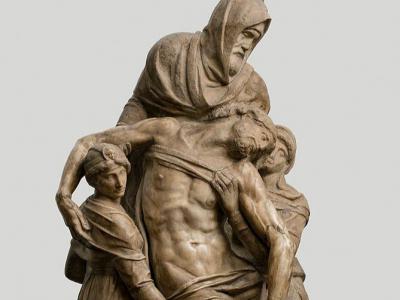
Michelangelo’s “The Deposition”-is another highlight, also known as “Lamentation over the Dead Christ”. Unlike his famous Roman version in Saint Peter’s Basilica, this one has a raw, unfinished energy. Carved toward the end of his life, the work was abandoned when Michelangelo consumed the marble through relentless chiseling. What remains feels almost modern in its abstraction, as if it were channeling the spirit of future centuries.
The museum also houses original pieces from the Baptistery and Giotto’s Bell Tower, all beautifully lit and arranged for close inspection. Benches are thoughtfully placed, allowing you to sit and absorb the detail without craning your neck like you might outside in the square.
The entire collection can be easily covered in about two hours-though art lovers may want to linger. Descriptions are available in both Italian and English, making it easy to guide yourself through.
Tip: Make sure not to miss the rooftop terrace-it offers one of the best vantage points for admiring the Duomo.
Many of the sculptures and architectural elements you see around the Duomo are actually replicas. This place is home to the originals, preserved for future generations. One of the most striking displays is the life-size reconstruction of the cathedral’s early façade-an immense installation packed with original details, including the enormous golden door that’s particularly unforgettable.
Michelangelo’s “The Deposition”-is another highlight, also known as “Lamentation over the Dead Christ”. Unlike his famous Roman version in Saint Peter’s Basilica, this one has a raw, unfinished energy. Carved toward the end of his life, the work was abandoned when Michelangelo consumed the marble through relentless chiseling. What remains feels almost modern in its abstraction, as if it were channeling the spirit of future centuries.
The museum also houses original pieces from the Baptistery and Giotto’s Bell Tower, all beautifully lit and arranged for close inspection. Benches are thoughtfully placed, allowing you to sit and absorb the detail without craning your neck like you might outside in the square.
The entire collection can be easily covered in about two hours-though art lovers may want to linger. Descriptions are available in both Italian and English, making it easy to guide yourself through.
Tip: Make sure not to miss the rooftop terrace-it offers one of the best vantage points for admiring the Duomo.
9) Enoteca Alessi
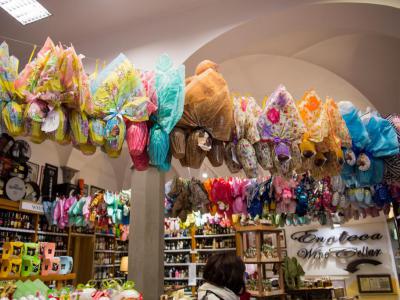
Alessi is more than just an ordinary 'enoteca', as it transcends the typical definition of a shop selling regional wines. Stepping into this expansive and luminous third-generation establishment, you'll be greeted by colorful aisles filled with enticingly packaged biscotti, caramelle, and cioccolatini. As you navigate through, you'll eventually find yourself at the back where a vast selection of wines is displayed, accompanied by an impressive array of spirits, liquors, beers, olive oils, jams, aged balsamic vinegars, and much more.
Venturing downstairs into the inviting wine cellar, you'll discover a treasure trove of over 2,500 labels to choose from. Here, you can browse through an enticing assortment while savoring the delightful aromas of Tuscan cold cuts and traditional cheeses. The wine selection is exceptional, catering to various budgets, spanning from €10 to several thousand euros. Don't fret, as the knowledgeable staff members are eager to engage in friendly conversations and provide expert recommendations.
For those in search of a quality spot for a snack or a light lunch, accompanied by an extensive list of Tuscan and Italian wines, Alessi is the perfect destination. Surprisingly, despite its proximity to the bustling Duomo and the influx of tourists, the atmosphere remains remarkably serene and relaxed.
Tip:
The most famous Tuscan reds – notably Brunello di Montalcino, Vino Nobile di Montepulciano and Chianti – are made from the Sangiovese grape and are produced inland, on the hills of Tuscany. They are of exceptional quality, as wineries combine the finest traditional and modern techniques. Here, not only can you sample these outstanding wines, but you can also gain a wealth of knowledge about their unique characteristics. All of this can be enjoyed at a fair price.
Venturing downstairs into the inviting wine cellar, you'll discover a treasure trove of over 2,500 labels to choose from. Here, you can browse through an enticing assortment while savoring the delightful aromas of Tuscan cold cuts and traditional cheeses. The wine selection is exceptional, catering to various budgets, spanning from €10 to several thousand euros. Don't fret, as the knowledgeable staff members are eager to engage in friendly conversations and provide expert recommendations.
For those in search of a quality spot for a snack or a light lunch, accompanied by an extensive list of Tuscan and Italian wines, Alessi is the perfect destination. Surprisingly, despite its proximity to the bustling Duomo and the influx of tourists, the atmosphere remains remarkably serene and relaxed.
Tip:
The most famous Tuscan reds – notably Brunello di Montalcino, Vino Nobile di Montepulciano and Chianti – are made from the Sangiovese grape and are produced inland, on the hills of Tuscany. They are of exceptional quality, as wineries combine the finest traditional and modern techniques. Here, not only can you sample these outstanding wines, but you can also gain a wealth of knowledge about their unique characteristics. All of this can be enjoyed at a fair price.
10) Piazza del Duomo (Cathedral Square)
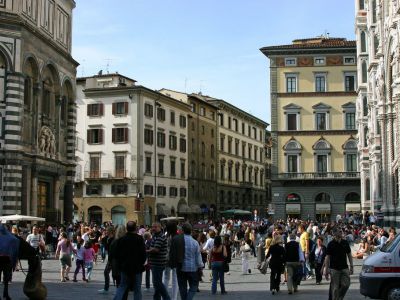
Piazza del Duomo, located in Florence, is one of the most popular destinations in Europe and the world; a place where history, art, and architectural magnificence converge. A UNESCO World Heritage site, this square is the bustling heart of the city and encompasses six of Florence's most renowned landmarks: the Florence Cathedral with its impressive Brunelleschi Dome, Giotto's splendid Bell Tower, adorned with intricate marble decorations and offering panoramic views of Florence; the Florence Baptistery, with its striking octagonal shape and magnificent bronze doors; the Crypt, and the Museum of the Works of the Cathedral ("Museo dell'Opera del Duomo"), which showcases an impressive collection of sculptures, artwork, and historical artifacts associated with the cathedral complex.
To conveniently explore all six attractions, you can obtain the Il Grande Museo del Duomo Card (which grants access to all of them), either online or from the ticket office at Piazza San Giovanni 7, located opposite the northern entrance of the Baptistery. If you decide to buy the Duomo Card from the ticket office, consider picking it up the day before your visit to save time.
Once you enter the first monument, you have a 24-hour window to explore the remaining attractions. However, keep in mind that you are not permitted to re-enter the same monument twice. Additionally, if you wish to visit the Dome ("Cupola"), it is necessary to reserve a 30-minute time slot. During peak months like July & August, it is advisable to book your slot in advance to ensure availability. The Duomo Card is a convenient choice if you do not plan to visit other museums or if you have limited time in the city.
Furthermore, there is a combined ticket option available for visiting the Uffizi Gallery, Pitti Palace, and Boboli Gardens. This ticket, valid for three days, can be purchased online or directly from the Uffizi ticket office. It offers faster entry, allowing you to make the most of your visit.
To conveniently explore all six attractions, you can obtain the Il Grande Museo del Duomo Card (which grants access to all of them), either online or from the ticket office at Piazza San Giovanni 7, located opposite the northern entrance of the Baptistery. If you decide to buy the Duomo Card from the ticket office, consider picking it up the day before your visit to save time.
Once you enter the first monument, you have a 24-hour window to explore the remaining attractions. However, keep in mind that you are not permitted to re-enter the same monument twice. Additionally, if you wish to visit the Dome ("Cupola"), it is necessary to reserve a 30-minute time slot. During peak months like July & August, it is advisable to book your slot in advance to ensure availability. The Duomo Card is a convenient choice if you do not plan to visit other museums or if you have limited time in the city.
Furthermore, there is a combined ticket option available for visiting the Uffizi Gallery, Pitti Palace, and Boboli Gardens. This ticket, valid for three days, can be purchased online or directly from the Uffizi ticket office. It offers faster entry, allowing you to make the most of your visit.
11) Palazzo Medici Riccardi (Medici Riccardi Palace)
The first Medici palace, once the residence of Cosimo the Elder and Lorenzo the Magnificent, stood as a thriving hub for numerous prominent Renaissance artists, among them the prodigious Michelangelo, who was discovered by Lorenzo while still in his formative teenage years.
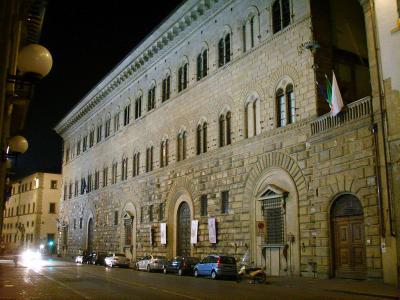
This grand edifice, an imposing spectacle of its time, set a new standard with its three tiers of progressively textured stonework and sizable, evenly spaced two-light windows. A magnificent cornice crowns the entirety of its exterior, exemplifying its resolute presence. The building encompasses an elegant square courtyard at its core, a stark contrast to the commanding impression projected by its façade. Together, they symbolize the duality of the Medici family, projecting an image of wealth, influence, and even ruthlessness to the outside world, while fostering an atmosphere of refinement as patrons of the humanist Renaissance within their sanctuary.
While the courtyard and gardens offer a delightful and complimentary experience, it is certainly worthwhile to invest in the admission fee and ascend to the upper rooms. These spaces exhibit designs, decor, style, furnishings, and collections that bear testament to the profound power, far-reaching influence, and immense wealth of the Medici dynasty.
A hidden gem within the palace, the Magi Chapel, mesmerizes with its diminutive size yet resplendent floor-to-ceiling frescoes by the gifted artist Benozzo Gozzoli. The intricate details within the artwork, such as the elaborate costumes, depictions of animals, and picturesque scenery, captivate the observer's gaze. One can spend an hour studying the reputed likenesses of various members of the illustrious Medici clan, along with notable figures like the Wolf of Rimini: Sigismondo Malatesta. The vibrant colors – considering the work was started in 1459 – create a visual feast where the composition unfolds in a bit of a whirlwind.
Near the end of the tour is the astonishing Galleria, a completely "over-the-top" Baroque marvel, resplendent with walls covered in shimmering gold and a grand domed ceiling adorned with scenes from Greek mythology. Additionally, there is an underground sculpture museum, housed within the former stables. Fortunately, there are minimal queues for entry, allowing visitors to relish the magnificence of the rooms comfortably and at their leisure.
Tip:
To gain entry into the building, it is advisable to queue up in the courtyard, at the base of the staircase.
This grand edifice, an imposing spectacle of its time, set a new standard with its three tiers of progressively textured stonework and sizable, evenly spaced two-light windows. A magnificent cornice crowns the entirety of its exterior, exemplifying its resolute presence. The building encompasses an elegant square courtyard at its core, a stark contrast to the commanding impression projected by its façade. Together, they symbolize the duality of the Medici family, projecting an image of wealth, influence, and even ruthlessness to the outside world, while fostering an atmosphere of refinement as patrons of the humanist Renaissance within their sanctuary.
While the courtyard and gardens offer a delightful and complimentary experience, it is certainly worthwhile to invest in the admission fee and ascend to the upper rooms. These spaces exhibit designs, decor, style, furnishings, and collections that bear testament to the profound power, far-reaching influence, and immense wealth of the Medici dynasty.
A hidden gem within the palace, the Magi Chapel, mesmerizes with its diminutive size yet resplendent floor-to-ceiling frescoes by the gifted artist Benozzo Gozzoli. The intricate details within the artwork, such as the elaborate costumes, depictions of animals, and picturesque scenery, captivate the observer's gaze. One can spend an hour studying the reputed likenesses of various members of the illustrious Medici clan, along with notable figures like the Wolf of Rimini: Sigismondo Malatesta. The vibrant colors – considering the work was started in 1459 – create a visual feast where the composition unfolds in a bit of a whirlwind.
Near the end of the tour is the astonishing Galleria, a completely "over-the-top" Baroque marvel, resplendent with walls covered in shimmering gold and a grand domed ceiling adorned with scenes from Greek mythology. Additionally, there is an underground sculpture museum, housed within the former stables. Fortunately, there are minimal queues for entry, allowing visitors to relish the magnificence of the rooms comfortably and at their leisure.
Tip:
To gain entry into the building, it is advisable to queue up in the courtyard, at the base of the staircase.
12) Mercato Centrale (Central Market) (must see)
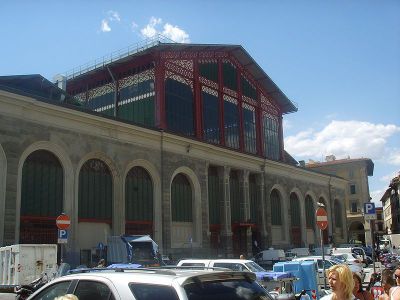
Florence's 19th-century Central Market, dating back to the 19th century, is divided into two distinct areas. The covered section is dedicated to all things food, while the outdoor area extends onto the surrounding streets, offering a variety of leather goods, clothing, and affordable souvenirs, including leather coats, jackets, and purses at great prices.
For those seeking Tuscan cuisine, the indoor area is the place to be. On the ground floor, you'll find a vibrant assortment of butchers, fishmongers, fruits, vegetables, and specialty shops. These specialty shops offer an array of local products such as olive oils, truffle honey, cured meats, cheeses, and sauces. Many of them even provide free samples, allowing visitors to taste before purchasing.
Upstairs, the food court awaits, featuring a host of delicious local culinary delights. Here, you not only have the opportunity to savor delicious food but also to observe the skilled artisans in action through glass windows. Watch as bread is freshly baked, bufala cheese is carefully crafted, and artisanal gelato is made from scratch. To fully enjoy your dining experience, it is recommended to visit outside of peak dining hours when the crowds are less overwhelming.
Some of the highlights include:
~ Il Pane e la Pasticceria: Witness the expertise of French baker and Bakery World Cup champion David Bedu as he creates a variety of bread, from baguettes to traditional loaves, and exquisite French pastries like choux and éclairs.
~ Martino Bellincampi's Shop: Indulge in buffalo mozzarella served in a classic Roman-style salad or enjoy the ultimate guilty pleasure of a Neapolitan "mozzarella in carrozza," a fried mozzarella sandwich.
~ ARÀ: Delight in Sicilian delicacies such as arancini (deep-fried rice balls with various fillings), cannoli, cassatini, and refreshing granita.
~ Il Tartufo: Experience the excellence of seasonal black & white truffles in dishes such as pasta, salads, sandwiches, spreads... even beer.
~ La Pizzeria: Savor Marco Fierro's perfectly crispy, fresh, wood oven-baked pizzas made with the finest Italian ingredients.
~ Pasta Fresca: Sample both classic and creative pasta dishes while attending cooking shows.
~ Il Vegeteriano e il Vegano: A haven for vegetarians and vegans, offering a wide selection of delectable options.
While the outdoor market closes in the afternoon, the food court stays open until midnight, offering an ideal spot for late-night cravings.
For those seeking Tuscan cuisine, the indoor area is the place to be. On the ground floor, you'll find a vibrant assortment of butchers, fishmongers, fruits, vegetables, and specialty shops. These specialty shops offer an array of local products such as olive oils, truffle honey, cured meats, cheeses, and sauces. Many of them even provide free samples, allowing visitors to taste before purchasing.
Upstairs, the food court awaits, featuring a host of delicious local culinary delights. Here, you not only have the opportunity to savor delicious food but also to observe the skilled artisans in action through glass windows. Watch as bread is freshly baked, bufala cheese is carefully crafted, and artisanal gelato is made from scratch. To fully enjoy your dining experience, it is recommended to visit outside of peak dining hours when the crowds are less overwhelming.
Some of the highlights include:
~ Il Pane e la Pasticceria: Witness the expertise of French baker and Bakery World Cup champion David Bedu as he creates a variety of bread, from baguettes to traditional loaves, and exquisite French pastries like choux and éclairs.
~ Martino Bellincampi's Shop: Indulge in buffalo mozzarella served in a classic Roman-style salad or enjoy the ultimate guilty pleasure of a Neapolitan "mozzarella in carrozza," a fried mozzarella sandwich.
~ ARÀ: Delight in Sicilian delicacies such as arancini (deep-fried rice balls with various fillings), cannoli, cassatini, and refreshing granita.
~ Il Tartufo: Experience the excellence of seasonal black & white truffles in dishes such as pasta, salads, sandwiches, spreads... even beer.
~ La Pizzeria: Savor Marco Fierro's perfectly crispy, fresh, wood oven-baked pizzas made with the finest Italian ingredients.
~ Pasta Fresca: Sample both classic and creative pasta dishes while attending cooking shows.
~ Il Vegeteriano e il Vegano: A haven for vegetarians and vegans, offering a wide selection of delectable options.
While the outdoor market closes in the afternoon, the food court stays open until midnight, offering an ideal spot for late-night cravings.
13) Cappelle Medicee (Medici Chapels)
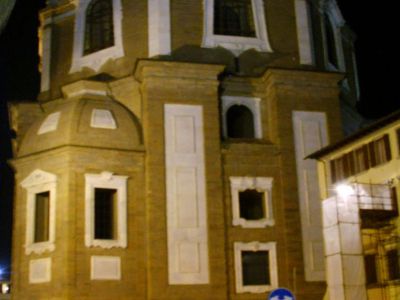
This impressive complex encompasses the Chapel of the Princes ("Cappella dei Principi"), a mausoleum and chapel dedicated to the Medici family, which began construction in 1605 and engaged marble workers for several centuries. Additionally, it includes the New Sacristy ("Sagrestia Nuova"), designed by Michelangelo. The name distinguishes it from Brunelleschi's Old Sacristy ("Sagrestia Vecchia"), located in San Lorenzo. In 1520, Cardinal Giulio de' Medici, who later became Pope Clement VII, commissioned Michelangelo to create the New Sacristy as a new burial chapel for his cousins, while also intending to pay homage to his father, Giuliano, and his uncle, Lorenzo il Magnifico. The result was a masterpiece combining architecture and sculpture.
Architecturally, Michelangelo exhibited his characteristic originality and inventiveness in the New Sacristy. However, it is the commanding sculpted tombs that rightfully dominate the space. The tomb on the right features figures symbolizing Day and Night, while the tomb on the left showcases figures representing Dawn and Dusk. Above them, idealized sculptures of the two men are typically interpreted as representing the active life and the contemplative life. While these allegorical meanings add depth, the true impact lies in the powerful presence of the sculptural figures and their ability to captivate the viewer. The intensity and force with which they engage the viewer leave a lasting impression.
The magnificent octagonal Chapel of the Princes, crowned by an imposing 59-meter-tall dome, serves as a striking focal point of San Lorenzo when viewed from a distance. It occupies a central position within the church, akin to an apsidal chapel, and provides a grand entrance from the exterior via Piazza Madonna degli Aldobrandini. Access to the chapel is through a low vaulted crypt, carefully designed by Bernardo Buontalenti even before plans were formulated for the chapel above.
Architecturally, Michelangelo exhibited his characteristic originality and inventiveness in the New Sacristy. However, it is the commanding sculpted tombs that rightfully dominate the space. The tomb on the right features figures symbolizing Day and Night, while the tomb on the left showcases figures representing Dawn and Dusk. Above them, idealized sculptures of the two men are typically interpreted as representing the active life and the contemplative life. While these allegorical meanings add depth, the true impact lies in the powerful presence of the sculptural figures and their ability to captivate the viewer. The intensity and force with which they engage the viewer leave a lasting impression.
The magnificent octagonal Chapel of the Princes, crowned by an imposing 59-meter-tall dome, serves as a striking focal point of San Lorenzo when viewed from a distance. It occupies a central position within the church, akin to an apsidal chapel, and provides a grand entrance from the exterior via Piazza Madonna degli Aldobrandini. Access to the chapel is through a low vaulted crypt, carefully designed by Bernardo Buontalenti even before plans were formulated for the chapel above.
14) Basilica di San Lorenzo (Basilica of St. Lawrence) (must see)
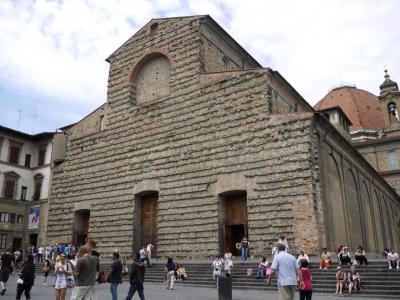
Amidst the lively atmosphere of Florence’s Central Market stands one of the city's oldest and most historically significant churches-San Lorenzo. Thought to have been founded in the late Roman era, it’s also the city’s largest basilica. While the rough, unfinished exterior may not draw immediate attention, the interior reveals the grandeur befitting the primary place of worship and final resting site for the powerful Medici dynasty.
The Medicis commissioned none other than the brilliant Brunelleschi to redesign the church in line with the modern Renaissance style. Meanwhile, Michelangelo was tasked with creating an elaborate marble façade. Unfortunately, the death of both Brunelleschi and Giovanni de’ Medici halted progress, leaving Michelangelo to bear the frustration of an unfulfilled vision. Still, he managed to design the internal façade, visible when you turn to look toward the main entrance from the nave.
Step through the church’s doors and you’ll be surrounded by the elegance of Renaissance design: clean lines, grey-and-white columns, and marble detailing that leads to the altar, which marks the tomb of Florence’s first Medici ruler. Donatello’s final works, a pair of bronze pulpits, can be spotted along the central nave, and both he and Cosimo de’ Medici are interred in the crypt. Nearby, Michelangelo’s New Sacristy holds sculpted tombs with allegorical figures of Night and Day, Dusk and Dawn.
The adjacent Chapel of the Princes also impresses with its monumental dome and exquisite fresco arrangements-a grand expression of Medici power. Add in the cloisters, peaceful gardens, and the Laurentian Library-also attributed to Michelangelo-and you’ve got a rare haven of art, architecture, and calm in the heart of Florence.
Tip: Keep in mind that each area has its own entrance, and separate admission is required-unless you have the Florence Card. Note that both the Chapel of the Princes and the New Sacristy close in the early afternoon, so plan accordingly. When you're done exploring, grab a table near the Central Market for a relaxed drink or bite and soak up the atmosphere of the square.
The Medicis commissioned none other than the brilliant Brunelleschi to redesign the church in line with the modern Renaissance style. Meanwhile, Michelangelo was tasked with creating an elaborate marble façade. Unfortunately, the death of both Brunelleschi and Giovanni de’ Medici halted progress, leaving Michelangelo to bear the frustration of an unfulfilled vision. Still, he managed to design the internal façade, visible when you turn to look toward the main entrance from the nave.
Step through the church’s doors and you’ll be surrounded by the elegance of Renaissance design: clean lines, grey-and-white columns, and marble detailing that leads to the altar, which marks the tomb of Florence’s first Medici ruler. Donatello’s final works, a pair of bronze pulpits, can be spotted along the central nave, and both he and Cosimo de’ Medici are interred in the crypt. Nearby, Michelangelo’s New Sacristy holds sculpted tombs with allegorical figures of Night and Day, Dusk and Dawn.
The adjacent Chapel of the Princes also impresses with its monumental dome and exquisite fresco arrangements-a grand expression of Medici power. Add in the cloisters, peaceful gardens, and the Laurentian Library-also attributed to Michelangelo-and you’ve got a rare haven of art, architecture, and calm in the heart of Florence.
Tip: Keep in mind that each area has its own entrance, and separate admission is required-unless you have the Florence Card. Note that both the Chapel of the Princes and the New Sacristy close in the early afternoon, so plan accordingly. When you're done exploring, grab a table near the Central Market for a relaxed drink or bite and soak up the atmosphere of the square.
15) Porta San Frediano (San Frediano Gate)
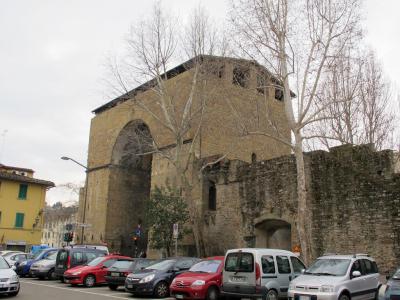
Take a moment to admire one of Florence’s best-preserved medieval gates, standing at the western end of Borgo San Frediano-the main artery of the neighborhood that still pulses with local life. Completed in 1332, this gateway offers a vivid reminder of the city’s fortified past and is among the finest remnants of the 14th-century walls that once enclosed Florence.
Its origins go back even further, to the 12th century, when it served as an important entry point for merchants and travelers arriving from Pisa and the western reaches of Tuscany. The gate is a sturdy example of medieval military design, featuring a grand central arch for carts and horses, flanked by two smaller arches for foot traffic. Above these an overhanging structure with openings was used for dropping stones or boiling liquids on would-be invaders.
As the city grew and the walls were gradually dismantled in the 1800s, many of Florence's old gates were torn down-but not this one. Still bearings its original heavy wooden doors, it stands as quiet witnesses to centuries of change
Tip: If all this walking has worked up an appetite, reward yourself with a stop at Trattoria Sabatino-a no-frills local favorite just outside the gate on Via Pisana 2R. Since 1956, this bright, welcoming dining hall has served affordable, soul-satisfying Tuscan dishes to generations of Florentines. The menu is short, the prices modest, and the atmosphere refreshingly genuine. Perfect for ending a stroll through the Oltrarno with a plate of something comforting and real.
Its origins go back even further, to the 12th century, when it served as an important entry point for merchants and travelers arriving from Pisa and the western reaches of Tuscany. The gate is a sturdy example of medieval military design, featuring a grand central arch for carts and horses, flanked by two smaller arches for foot traffic. Above these an overhanging structure with openings was used for dropping stones or boiling liquids on would-be invaders.
As the city grew and the walls were gradually dismantled in the 1800s, many of Florence's old gates were torn down-but not this one. Still bearings its original heavy wooden doors, it stands as quiet witnesses to centuries of change
Tip: If all this walking has worked up an appetite, reward yourself with a stop at Trattoria Sabatino-a no-frills local favorite just outside the gate on Via Pisana 2R. Since 1956, this bright, welcoming dining hall has served affordable, soul-satisfying Tuscan dishes to generations of Florentines. The menu is short, the prices modest, and the atmosphere refreshingly genuine. Perfect for ending a stroll through the Oltrarno with a plate of something comforting and real.
16) Porta Romana (Roman Gate)
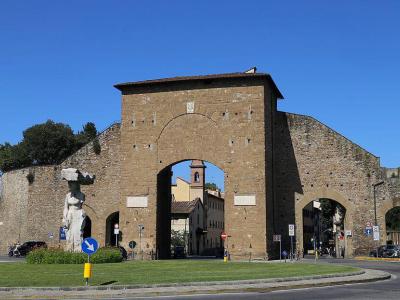
Roman Gate (Porta Romana) is a historic gate in Florence, originally known as Porta San Pier Gattolino. It was the southern entrance in the city's 13th-century walls and is located at the intersection of Via Romana, Via de' Serragli, and Viale Francesco Petrarca. The gate provided easy access to the Pitti Palace and served as a starting point for roads leading to Siena and Rome. Despite the demolition of most defensive walls in the 19th century, Porta Romana, along with a few other gates, survived.
Built in 1327, the Roman Gate had a lower outer wall and a small courtyard, resembling the Porta Romana of Siena. The gate featured a central entrance for carriages and smaller doors for pedestrians. It still retains its original iron-clad doors and showcases a weather-worn fresco from the 13th century depicting the Virgin and saints. Inside, two marble plaques commemorate the visits of Pope Leo X and Emperor Charles V.
During the expansion of Florence's walls, the original church of San Pier Gattolino was demolished. It was later rebuilt and restored in 1808, adorned with frescoes by Giuseppe Castagnoli and Domenico Del Podestà. The church is also known as the parish church of Serumido, named after Ser Umido di Domenico Grazzini, a benefactor. Adjacent to Roman Gate is the church and convent of San Giusto della Calza, a 14th-century structure associated with the Knights of Jerusalem.
In the square outside the gate, a controversial modern marble statue named "Dietro-Front" ("Turnabout") by artist Michelangelo Pistoletto has sparked discussions among art enthusiasts and the public.
Built in 1327, the Roman Gate had a lower outer wall and a small courtyard, resembling the Porta Romana of Siena. The gate featured a central entrance for carriages and smaller doors for pedestrians. It still retains its original iron-clad doors and showcases a weather-worn fresco from the 13th century depicting the Virgin and saints. Inside, two marble plaques commemorate the visits of Pope Leo X and Emperor Charles V.
During the expansion of Florence's walls, the original church of San Pier Gattolino was demolished. It was later rebuilt and restored in 1808, adorned with frescoes by Giuseppe Castagnoli and Domenico Del Podestà. The church is also known as the parish church of Serumido, named after Ser Umido di Domenico Grazzini, a benefactor. Adjacent to Roman Gate is the church and convent of San Giusto della Calza, a 14th-century structure associated with the Knights of Jerusalem.
In the square outside the gate, a controversial modern marble statue named "Dietro-Front" ("Turnabout") by artist Michelangelo Pistoletto has sparked discussions among art enthusiasts and the public.
