Custom Walk in Zurich, Switzerland by sss_kobita_45583 created on 2025-05-15
Guide Location: Switzerland » Zurich
Guide Type: Custom Walk
# of Sights: 16
Tour Duration: 5 Hour(s)
Travel Distance: 11.2 Km or 7 Miles
Share Key: BDMU5
Guide Type: Custom Walk
# of Sights: 16
Tour Duration: 5 Hour(s)
Travel Distance: 11.2 Km or 7 Miles
Share Key: BDMU5
How It Works
Please retrieve this walk in the GPSmyCity app. Once done, the app will guide you from one tour stop to the next as if you had a personal tour guide. If you created the walk on this website or come to the page via a link, please follow the instructions below to retrieve the walk in the app.
Retrieve This Walk in App
Step 1. Download the app "GPSmyCity: Walks in 1K+ Cities" on Apple App Store or Google Play Store.



Step 2. In the GPSmyCity app, download(or launch) the guide "Zurich Map and Walking Tours".
Step 3. Tap the menu button located at upper right corner of the "Walks" screen and select "Retrieve custom walk". Enter the share key: BDMU5
1) Kanzlei Flea Market
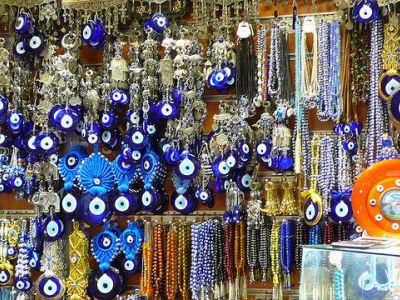
Nestled in the heart of Zurich, the Kanzlei Flea Market transforms Helvetia Square (Helvetiaplatz) into a bustling hub of secondhand treasure hunting every Saturday throughout the year. Renowned as the largest and most esteemed flea market in the country, it has garnered a bit of a reputation for the lengths to which sellers will go to secure the prime spots – some even camp out overnight to outdo their competitors.
Centrally located and easily accessible, Kanzlei Flohmarkt is just a stone's throw away from Langstrasse and conveniently reached by the Helvetiaplatz tram station. Its proximity to a children's playground makes it an ideal spot for families, allowing parents to delve into the myriad of goods on offer while their children play nearby.
The market is celebrated for its incredible diversity of items for sale, drawing up to 400 vendors on its busiest days. Shoppers can expect to find everything from vintage jewelry and furniture to bicycles, books, clothing, and an array of collectible antiques. Although some items may come with a higher price tag, the culture of haggling that pervades the market means that savvy shoppers can often negotiate a deal, particularly if they arrive early.
Regardless of the weather, the Kanzlei Flea Market thrives, showcasing its popularity and the dedication of its participants. Surrounded by numerous cafes and food stalls within the market itself, visitors can easily grab a bite to eat, making it the perfect morning outing after early bird bargain hunting.
Whether you're a collector, a fashion enthusiast, or simply in search of a unique find, Kanzlei Flea Market in Zurich is a destination that's sure to captivate and delight.
Centrally located and easily accessible, Kanzlei Flohmarkt is just a stone's throw away from Langstrasse and conveniently reached by the Helvetiaplatz tram station. Its proximity to a children's playground makes it an ideal spot for families, allowing parents to delve into the myriad of goods on offer while their children play nearby.
The market is celebrated for its incredible diversity of items for sale, drawing up to 400 vendors on its busiest days. Shoppers can expect to find everything from vintage jewelry and furniture to bicycles, books, clothing, and an array of collectible antiques. Although some items may come with a higher price tag, the culture of haggling that pervades the market means that savvy shoppers can often negotiate a deal, particularly if they arrive early.
Regardless of the weather, the Kanzlei Flea Market thrives, showcasing its popularity and the dedication of its participants. Surrounded by numerous cafes and food stalls within the market itself, visitors can easily grab a bite to eat, making it the perfect morning outing after early bird bargain hunting.
Whether you're a collector, a fashion enthusiast, or simply in search of a unique find, Kanzlei Flea Market in Zurich is a destination that's sure to captivate and delight.
2) Landesmuseum (Swiss National Museum) (must see)
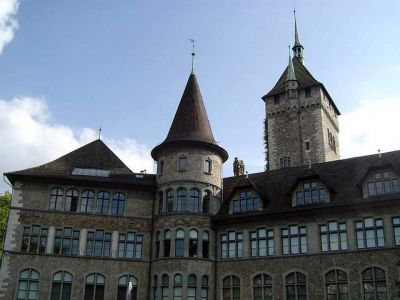
The Swiss National Museum is one of the key art museums of cultural history in the world. The museum was born out of the desire to create a national museum which would be the treasure of the young federal state of Switzerland. Nation Councilmember Salomon Vogelin proposed the construction of a national museum, and, after much debate, a site in Zurich was selected. The building that houses the museum was constructed in 1989. Gustav Gull, a Swiss architect and teacher, designed the building to look like a French Renaissance city chateau.
The museum features a wide range of art and the visitor will see a sample from ancient times and the Middle Ages up to 20th-century. Some of the more unique collections in the museum include a gothic art section, liturgical wooden sculpture, carved alters and chivalry-related art. There is also a section on the history of Switzerland that displays traditional costumes and clothing. The section on Swiss furniture design is a nice juxtaposition to the older items in the space. The museum features regularly rotating exhibits.
Why You Should Visit:
To learn about all aspects of Swiss history – from religion, demographics, archeology, industry to even topographical evolution and more.
The archaeology exhibition is particularly impressive thanks to the animated/interactive displays.
The museum features a wide range of art and the visitor will see a sample from ancient times and the Middle Ages up to 20th-century. Some of the more unique collections in the museum include a gothic art section, liturgical wooden sculpture, carved alters and chivalry-related art. There is also a section on the history of Switzerland that displays traditional costumes and clothing. The section on Swiss furniture design is a nice juxtaposition to the older items in the space. The museum features regularly rotating exhibits.
Why You Should Visit:
To learn about all aspects of Swiss history – from religion, demographics, archeology, industry to even topographical evolution and more.
The archaeology exhibition is particularly impressive thanks to the animated/interactive displays.
3) Lindenhofplatz (Lindenhof Square) (must see)
Perched above the Old Town of Zurich like a quiet, leafy crown, Lindenhof is both a park and a time machine with a view. And it's not just where the city began-it’s where the city still comes to breathe...
This peaceful hilltop was once the site of a Roman fortress, complete with ten towers and walls thick enough to make modern builders weep. The Romans got busy here in the 2nd century, but by the 9th, Louis the German decided the crumbling castle needed a royal facelift. Sadly, by the 13th century, the whole thing was abandoned, and locals did what locals do best-recycled the stones for new projects. Eco-friendly before it was cool...
And no, Zurich’s ancient swagger didn’t start with Roman togas and centurions. Long before Rome flexed its empire, Neolithic and Bronze Age folks had already claimed this hill as prime real estate. Back then, the Sihl River liked to flood the surrounding lands, and the elevated Lindenhof was the safe (and dry) bet.
Fast forward to the 1700s, and Lindenhof reinvented itself as a public park. The early crowd-pleaser, it was primarily about archery and crossbow contests that drew visitors in those days (indeed, nothing like a bit of target practice to go with your afternoon stroll...).
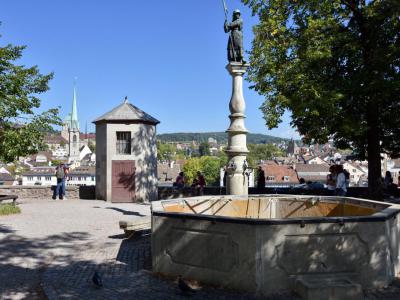
Nowadays, keep an eye out for the Hedwig Fountain, built in 1912 to honor one of Zurich’s boldest deceptions. During the 1292 siege by Duke Albert I, the city’s women donned full battle gear and manned the ramparts, while the men were off fighting elsewhere. The ruse worked, and Zurich lived to tell the tale. Today, Hedwig and her helmet still stand proudly in the park, thanks to sculptor Gustav Siber.
Apart from all the attractions inside, Lindenhof gives you panoramic eye-candy of Zurich’s rooftops, rivers, and lake-all in one relaxed snapshot. It’s the city’s breathing room, ideal for a pause between museum marathons and shopping sprees. Kids can run wild on the playgrounds, and for the tactically inclined, there’s an outdoor chessboard waiting to test your strategy.
Oh, and if you’re lucky, you might stumble onto a festival or event-just ask at the tourism office.
Insider tip:
Check out the replica of a Roman tombstone that first mentioned Turicum-Zurich’s name back when Latin was all the rage. The original is at the Swiss National Museum, but Lindenhof’s got its own copy for on-the-spot admiration...
This peaceful hilltop was once the site of a Roman fortress, complete with ten towers and walls thick enough to make modern builders weep. The Romans got busy here in the 2nd century, but by the 9th, Louis the German decided the crumbling castle needed a royal facelift. Sadly, by the 13th century, the whole thing was abandoned, and locals did what locals do best-recycled the stones for new projects. Eco-friendly before it was cool...
And no, Zurich’s ancient swagger didn’t start with Roman togas and centurions. Long before Rome flexed its empire, Neolithic and Bronze Age folks had already claimed this hill as prime real estate. Back then, the Sihl River liked to flood the surrounding lands, and the elevated Lindenhof was the safe (and dry) bet.
Fast forward to the 1700s, and Lindenhof reinvented itself as a public park. The early crowd-pleaser, it was primarily about archery and crossbow contests that drew visitors in those days (indeed, nothing like a bit of target practice to go with your afternoon stroll...).
Nowadays, keep an eye out for the Hedwig Fountain, built in 1912 to honor one of Zurich’s boldest deceptions. During the 1292 siege by Duke Albert I, the city’s women donned full battle gear and manned the ramparts, while the men were off fighting elsewhere. The ruse worked, and Zurich lived to tell the tale. Today, Hedwig and her helmet still stand proudly in the park, thanks to sculptor Gustav Siber.
Apart from all the attractions inside, Lindenhof gives you panoramic eye-candy of Zurich’s rooftops, rivers, and lake-all in one relaxed snapshot. It’s the city’s breathing room, ideal for a pause between museum marathons and shopping sprees. Kids can run wild on the playgrounds, and for the tactically inclined, there’s an outdoor chessboard waiting to test your strategy.
Oh, and if you’re lucky, you might stumble onto a festival or event-just ask at the tourism office.
Insider tip:
Check out the replica of a Roman tombstone that first mentioned Turicum-Zurich’s name back when Latin was all the rage. The original is at the Swiss National Museum, but Lindenhof’s got its own copy for on-the-spot admiration...
4) Augustinergasse (Augustinian Street)
Augustinian Street (Augustinergasse), located in the center of Zürich, represents the city's medieval past mixed with its modern energy. Originally named after the Augustinian Abbey, now the Augustinian Church (Augustinerkirche), this old street is a lively pedestrian area in the heart of Zürich's downtown. The church, once the hub of a convent that ended in 1525, is now used by the Christ Catholic community. Although it appears modest compared to the vibrant street, it holds historical significance.
In the past, Augustinian Street played a vital role in connecting various parts of the medieval city, like Münsterhof, Saint Peterhofstatt, and the Münzplatz, to the city gates and defenses. Its importance was further solidified when it became part of the southern extension of the Seeuferanlage promenades between 1881 and 1887. This made it not only an essential part of the city's layout but also a popular spot in Zürich's oldest neighborhood.
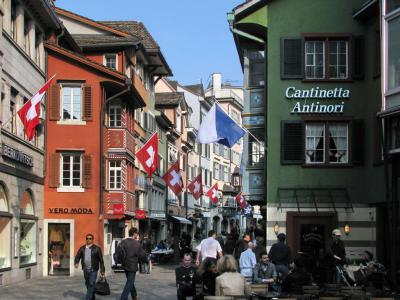
The street reflects Zürich's transition from a medieval craft center to a place of wealth and artistic expression. Starting from the 17th century, affluent factory owners moved in, leading to a competition to create the most impressive facades. This resulted in beautifully decorated wooden bay windows on the colorful houses that now line the street, making it one of the city's most charming areas. Nowadays, these buildings house shops, cafes, and restaurants catering to tourists, adding to the street's lively vibe.
The Augustinian Street illustrates Zürich's ability to retain its historical charm while embracing modern urban life. It offers visitors a glimpse into the city's past, showcasing the creativity of medieval artisans and the later inhabitants' wealth and architectural ambition. Therefore, it's not just a street but a cultural symbol, representing Zürich's spirit and evolution over time.
In the past, Augustinian Street played a vital role in connecting various parts of the medieval city, like Münsterhof, Saint Peterhofstatt, and the Münzplatz, to the city gates and defenses. Its importance was further solidified when it became part of the southern extension of the Seeuferanlage promenades between 1881 and 1887. This made it not only an essential part of the city's layout but also a popular spot in Zürich's oldest neighborhood.
The street reflects Zürich's transition from a medieval craft center to a place of wealth and artistic expression. Starting from the 17th century, affluent factory owners moved in, leading to a competition to create the most impressive facades. This resulted in beautifully decorated wooden bay windows on the colorful houses that now line the street, making it one of the city's most charming areas. Nowadays, these buildings house shops, cafes, and restaurants catering to tourists, adding to the street's lively vibe.
The Augustinian Street illustrates Zürich's ability to retain its historical charm while embracing modern urban life. It offers visitors a glimpse into the city's past, showcasing the creativity of medieval artisans and the later inhabitants' wealth and architectural ambition. Therefore, it's not just a street but a cultural symbol, representing Zürich's spirit and evolution over time.
5) St. Peterskirche (St. Peter's Church) (must see)
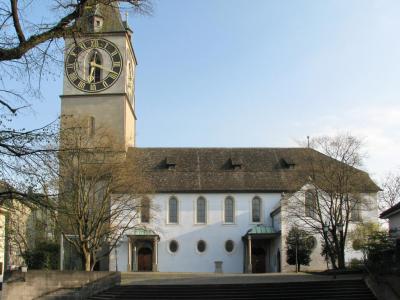
Saint Peter's Church-Zurich’s oldest temple-is also, quite possibly, the city’s most punctual landmark. Built in the 9th century, this beauty has seen more centuries than your local pub’s clock has seen beers. And speaking of clocks, St. Peter’s claims the biggest clock face in all of Europe. At a whopping 8.6 meters in diameter, its minute hand alone is longer than most compact cars. No excuse for being late around here...
The church got some facelifts over the years-first in the 13th century and again in the 1700s-because, indeed, medieval landmarks deserve a little renovation every now and then. Until 1911, a firewatcher lived in the steeple, popping his head out the window four times an hour to scan for smoke. If flames were spotted, he’d wave a flag in the direction of the danger-simple, low-tech, and surprisingly effective. Thus, unlike many of its European cousins, Zurich avoided catastrophic fires. It turns out that medieval flag signals are not just for parades...
Inside the church, you’ll find a Baroque nave paired with a Romanesque choir-like architectural speed dating through the centuries. Look closely at the faded murals, and you might spot a saint lurking in the shadows. Above the pulpit, the name of God appears in Hebrew, a nod to the Reformation’s love for the Bible’s original languages. Think of it as ancient theological street cred...
Now here’s the kicker: Saint Peter’s Church has shared custody. The City of Zurich owns the tower, while the Swiss Reformed Church parish holds the rights to the bells, the belfry, and the staircase. It is, indeed, church co-parenting at its finest...
Tip for the savvy traveler: Admire it up close, but for peak Instagram potential, cross the river-the church is even prettier from a distance.
The church got some facelifts over the years-first in the 13th century and again in the 1700s-because, indeed, medieval landmarks deserve a little renovation every now and then. Until 1911, a firewatcher lived in the steeple, popping his head out the window four times an hour to scan for smoke. If flames were spotted, he’d wave a flag in the direction of the danger-simple, low-tech, and surprisingly effective. Thus, unlike many of its European cousins, Zurich avoided catastrophic fires. It turns out that medieval flag signals are not just for parades...
Inside the church, you’ll find a Baroque nave paired with a Romanesque choir-like architectural speed dating through the centuries. Look closely at the faded murals, and you might spot a saint lurking in the shadows. Above the pulpit, the name of God appears in Hebrew, a nod to the Reformation’s love for the Bible’s original languages. Think of it as ancient theological street cred...
Now here’s the kicker: Saint Peter’s Church has shared custody. The City of Zurich owns the tower, while the Swiss Reformed Church parish holds the rights to the bells, the belfry, and the staircase. It is, indeed, church co-parenting at its finest...
Tip for the savvy traveler: Admire it up close, but for peak Instagram potential, cross the river-the church is even prettier from a distance.
6) Fraumünster (Church of Our Lady) (must see)
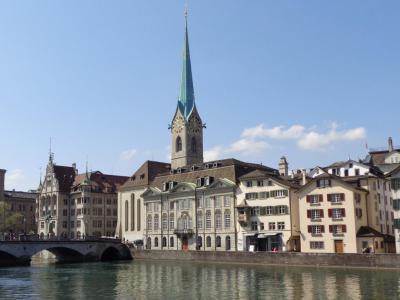
The Church of Our Lady-or Fraumünster if you're feeling Swiss about it-is easily one of Zurich’s most eye-catching landmarks, thanks to that graceful blue spire that insists on being in every skyline photo. Founded way back in 853 by Emperor Louis the German for his daughter Hildegard (talk about a royal housewarming gift), this wasn’t an average cloistered convent. No, the abbess here wasn’t just praying and gardening-she was running the show. In medieval Zurich, she held market rights, minted coins, and had a firm grip on city affairs. Basically, before Zurich was ruled by bankers in suits, it was partly governed by nuns with serious executive power.
By 874, they’d added a basilica complete with a crypt that now houses Zurich’s patron saints, Felix and Regula-because a great city can certainly benefit from a couple of martyred siblings watching over it. But the good times for the abbey came to an end in 1524 during the Reformation. The last abbess handed the keys over to the city, and most of the religious art was either taken down or..., well, aggressively removed.
Today, people come not just for the medieval intrigue, but for the stunning mashup of Gothic architecture and Baroque flair. And then-boom-the stained glass. In the 1970s, none other than Marc Chagall himself stepped in and created five towering windows for the choir. Each one tells a biblical story in bold, glowing color. The “Prophet” window is all reds and oranges and righteous fire. Across from it are “Jacob,” “Christ,” and “Zion” in cooler, gentler hues, and the “Law” window fit to impress even Moses himself.
Also remarkable is the vibrant window near the entrance by Augusto Giacometti, adding another layer of artistic prestige to the church’s interior. So now it doubles as an accidental art museum.
If you're visiting, do grab the audio guide-it’s included with the ticket and actually quite good. You’ll get the full story, minus the Latin. Entry fees vary, and remember: while photos of the interior are generally allowed, pictures of the Chagall windows are strictly prohibited. Your phone will be tempted, but resist. Oh, and be sure to bring some Swiss francs, too-they still like their cash here.
So, whether you’re into saints, stained glass, or just need a break from the Station Street, the Church of Our Lady is a peaceful detour into Zurich’s soul-with a splash of color and a whole lot of history.
By 874, they’d added a basilica complete with a crypt that now houses Zurich’s patron saints, Felix and Regula-because a great city can certainly benefit from a couple of martyred siblings watching over it. But the good times for the abbey came to an end in 1524 during the Reformation. The last abbess handed the keys over to the city, and most of the religious art was either taken down or..., well, aggressively removed.
Today, people come not just for the medieval intrigue, but for the stunning mashup of Gothic architecture and Baroque flair. And then-boom-the stained glass. In the 1970s, none other than Marc Chagall himself stepped in and created five towering windows for the choir. Each one tells a biblical story in bold, glowing color. The “Prophet” window is all reds and oranges and righteous fire. Across from it are “Jacob,” “Christ,” and “Zion” in cooler, gentler hues, and the “Law” window fit to impress even Moses himself.
Also remarkable is the vibrant window near the entrance by Augusto Giacometti, adding another layer of artistic prestige to the church’s interior. So now it doubles as an accidental art museum.
If you're visiting, do grab the audio guide-it’s included with the ticket and actually quite good. You’ll get the full story, minus the Latin. Entry fees vary, and remember: while photos of the interior are generally allowed, pictures of the Chagall windows are strictly prohibited. Your phone will be tempted, but resist. Oh, and be sure to bring some Swiss francs, too-they still like their cash here.
So, whether you’re into saints, stained glass, or just need a break from the Station Street, the Church of Our Lady is a peaceful detour into Zurich’s soul-with a splash of color and a whole lot of history.
7) Wasserkirche (Water Church)
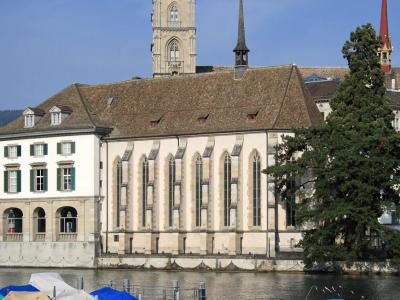
Inside the Water Church, Zurich’s history flows just as steadily as the Limmat River beneath it. First mentioned in 1250, but with roots going all the way back to the 1100s, this church wasn’t just built near the water-it was built on it. Originally perched on a little island in the river, it looked like it was doing the medieval version of island life before it was cool. By 1486, it got a full makeover-think of it as a 15th-century home renovation, but with more stained glass and fewer Instagram reels.
Then came the Reformation, and let’s just say the Water Church’s spiritual career hit a speed bump. Reformers, unimpressed by its "idolatrous" vibe, gave it a secular upgrade-making it Zurich’s very first public library in 1634. So, yes, before the Kindle, there was the Water Church...
During the 1800s, the island it sat on got connected to the mainland (bye-bye, island mystique), and by 1917, the library moved out. The church, now unemployed, found a new gig-grain storage. Holy wheat, indeed...
In the 1940s, archaeologists and restorers gave the building some long-overdue tender loving care. The crypt was dusted off, the walls were reinforced, and by the time the renovations were done, the church was back in the business of being a place of worship-this time serving the Evangelical-Reformed State Church of Zurich.
But history aside, the Water Church stands on solemn ground. Legend has it that Zurich’s patron saints, Felix and Regula, were executed right here after refusing to persecute Christians. Decapitated, yes-but apparently they stood up and walked off with their heads. As saints sometimes do...
Coming here, you'll find a serene, quiet corner of Zurich where you can catch your breath, contemplate eternity, or just admire the stunning Giacometti windows and explore the mysterious crypt below. Divine inspiration not guaranteed-but a moment of peace is highly likely.
Then came the Reformation, and let’s just say the Water Church’s spiritual career hit a speed bump. Reformers, unimpressed by its "idolatrous" vibe, gave it a secular upgrade-making it Zurich’s very first public library in 1634. So, yes, before the Kindle, there was the Water Church...
During the 1800s, the island it sat on got connected to the mainland (bye-bye, island mystique), and by 1917, the library moved out. The church, now unemployed, found a new gig-grain storage. Holy wheat, indeed...
In the 1940s, archaeologists and restorers gave the building some long-overdue tender loving care. The crypt was dusted off, the walls were reinforced, and by the time the renovations were done, the church was back in the business of being a place of worship-this time serving the Evangelical-Reformed State Church of Zurich.
But history aside, the Water Church stands on solemn ground. Legend has it that Zurich’s patron saints, Felix and Regula, were executed right here after refusing to persecute Christians. Decapitated, yes-but apparently they stood up and walked off with their heads. As saints sometimes do...
Coming here, you'll find a serene, quiet corner of Zurich where you can catch your breath, contemplate eternity, or just admire the stunning Giacometti windows and explore the mysterious crypt below. Divine inspiration not guaranteed-but a moment of peace is highly likely.
8) Grossmünster (Great Minster) (must see)
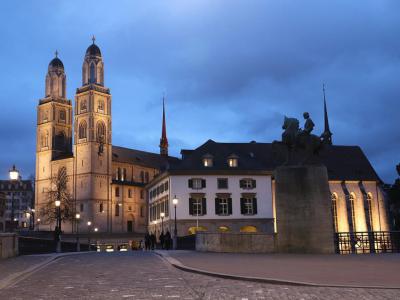
Now, if Zurich’s skyline had a king of the hill, it would probably be the Great Minster-standing tall, proud, and unmistakably Romanesque. It’s one of the city’s four major churches, rubbing historic shoulders with The Church of Our Lady, Preacher's Church, and Saint Peter's Church. But this one’s got some serious theological swagger.
Legend credits none other than Emperor Charlemagne-yes, that Charles the Great-with commissioning the place. Construction kicked off around 1100, and after about 120 years of medieval bricklaying, the Great Minster was born.
But here’s where it gets spicy: in the early 1500s, this church didn’t just host sermons-it became ground zero for the Swiss-German Reformation. Huldrych Zwingli, local priest and full-time disruptor, began preaching bold new ideas in 1520. By 1523, after winning a couple of intense theological debates, Zurich officially seceded from the Pope.
Zwingli’s influence ran deep. In 1524, the interior of the Great Minster underwent a makeover-with religious imagery, altars, and even the organ stripped away. Fasting was declared optional. Mass got rewritten. Celibacy-rethought. Church music? Well… eventually it made a comeback. What’s left is a beautifully bare, historically loaded space that tells the story of faith meeting reform head-on.
And speaking of Charles the Great, you’ll spot him again as a statue perched on the southern tower-sword in hand, crown slipping stylishly off his head like a medieval mic drop. The man unified a good chunk of Europe and even lent his name to the word “king” in many languages. Not bad for a guy in stone.
Okay, the church may seem a little plain inside-but don’t let that fool you. The stained-glass windows made from sliced agate are pure magic. The Carolus Magnus statue is iconic. And the front door alone could earn its own Instagram account.
Tip:
Feeling ambitious? Climb the tower-just 180+ steps up. No lift, no turning back. But once you’re up there, the views of Zurich are unbeatable, and best of all, you can catch your breath for as long as you like.
Legend credits none other than Emperor Charlemagne-yes, that Charles the Great-with commissioning the place. Construction kicked off around 1100, and after about 120 years of medieval bricklaying, the Great Minster was born.
But here’s where it gets spicy: in the early 1500s, this church didn’t just host sermons-it became ground zero for the Swiss-German Reformation. Huldrych Zwingli, local priest and full-time disruptor, began preaching bold new ideas in 1520. By 1523, after winning a couple of intense theological debates, Zurich officially seceded from the Pope.
Zwingli’s influence ran deep. In 1524, the interior of the Great Minster underwent a makeover-with religious imagery, altars, and even the organ stripped away. Fasting was declared optional. Mass got rewritten. Celibacy-rethought. Church music? Well… eventually it made a comeback. What’s left is a beautifully bare, historically loaded space that tells the story of faith meeting reform head-on.
And speaking of Charles the Great, you’ll spot him again as a statue perched on the southern tower-sword in hand, crown slipping stylishly off his head like a medieval mic drop. The man unified a good chunk of Europe and even lent his name to the word “king” in many languages. Not bad for a guy in stone.
Okay, the church may seem a little plain inside-but don’t let that fool you. The stained-glass windows made from sliced agate are pure magic. The Carolus Magnus statue is iconic. And the front door alone could earn its own Instagram account.
Tip:
Feeling ambitious? Climb the tower-just 180+ steps up. No lift, no turning back. But once you’re up there, the views of Zurich are unbeatable, and best of all, you can catch your breath for as long as you like.
9) Rathaus (Town Hall)
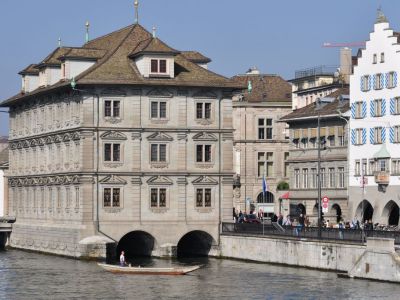
Zurich’s power couple: the Town Hall and the City House-two buildings, one river, and several centuries of political drama.
The former of the two, the Town Hall, is a stately beauty dating back to the 1690s, sitting atop a historical layer cake. It's built on the bones of a 1397 city council hall, which itself rose from a 13th-century courthouse. Basically, if these walls could talk, they’d probably be exhausted. Once the seat of the Republic of Zurich until 1798, it is now the proud property of the Canton of Zurich and hosts both the cantonal and city parliaments. Talk about multitasking...
Just across the river (because Zurich doesn’t believe in overcrowding its government buildings), you’ll find the City House, the edifice in which the executive government gets down to business. It's on the Limmat’s west side, just south of the Town Hall Bridge. If you time it right, you can watch democracy in action from a second-floor terrace. It’s like political theater, but with less shouting.
Speaking of the Town Hall Bridge, this isn’t just any river crossing. It’s a plaza, a market, a pedestrian hangout, and a time machine all rolled into one. The locals used to call it the “vegetable bridge,” because medieval farmers once hawked their carrots and cabbages here. Today, you're more likely to find bratwurst and espresso.
This bridge has been around since the Middle Ages, originally made entirely of wood. Expanded in 1375 and again in 1420, it’s always been extra-wide enough for buildings to sit on top. By the 1600s, it had grown into its current footprint, and in the 1800s, it ditched the timber look for some serious stone-and-cast-iron swagger.
The bridge and surrounding square still buzz with life-festivals, markets, street performers, and all the postcard-perfect souvenir shops your heart desires. It’s pedestrian-only, so, put on your comfy footwear and let history meet you halfway across the Limmat.
The former of the two, the Town Hall, is a stately beauty dating back to the 1690s, sitting atop a historical layer cake. It's built on the bones of a 1397 city council hall, which itself rose from a 13th-century courthouse. Basically, if these walls could talk, they’d probably be exhausted. Once the seat of the Republic of Zurich until 1798, it is now the proud property of the Canton of Zurich and hosts both the cantonal and city parliaments. Talk about multitasking...
Just across the river (because Zurich doesn’t believe in overcrowding its government buildings), you’ll find the City House, the edifice in which the executive government gets down to business. It's on the Limmat’s west side, just south of the Town Hall Bridge. If you time it right, you can watch democracy in action from a second-floor terrace. It’s like political theater, but with less shouting.
Speaking of the Town Hall Bridge, this isn’t just any river crossing. It’s a plaza, a market, a pedestrian hangout, and a time machine all rolled into one. The locals used to call it the “vegetable bridge,” because medieval farmers once hawked their carrots and cabbages here. Today, you're more likely to find bratwurst and espresso.
This bridge has been around since the Middle Ages, originally made entirely of wood. Expanded in 1375 and again in 1420, it’s always been extra-wide enough for buildings to sit on top. By the 1600s, it had grown into its current footprint, and in the 1800s, it ditched the timber look for some serious stone-and-cast-iron swagger.
The bridge and surrounding square still buzz with life-festivals, markets, street performers, and all the postcard-perfect souvenir shops your heart desires. It’s pedestrian-only, so, put on your comfy footwear and let history meet you halfway across the Limmat.
10) Niederdorfstrasse (Niederdorf street) (must see)
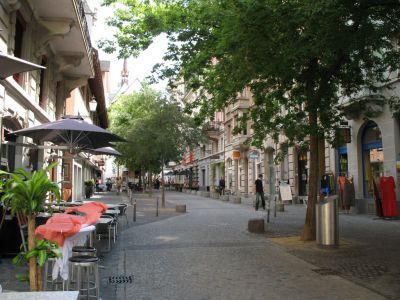
Niederdorf Street-known to locals simply as Niederdorf, or more affectionately as Dörfli (which means "little village")-is Zurich’s cobblestoned catwalk where medieval mischief meets modern-day people-watching. Tucked into the east side of the Old Town, just across the Limmat River, this pedestrian stretch is part time machine, part open-air stage, and full-time charmer.
Back in the day, this was the artisans’ turf. Imagine hammering, shouting, bargaining, and maybe the odd scandal whispered over a barrel of ale. Many of the buildings here date back to the 14th and 15th centuries, and if you squint, you might see a medieval merchant leaning out a timbered window-or maybe it’s just a tourist in vintage Instagram mode...
Fast forward to now, and Dörfli’s still buzzing, only the tools of the trade have changed. Out are the blacksmiths, and in are the chocolate-makers, bookshop keepers, and espresso artists. During the day, it’s the perfect place to grab a coffee, pick up a quirky souvenir, or get delightfully lost in a narrow alley that probably leads to a surprise fountain or a tiny wine bar. By night, the whole street slips into something more comfortable-live music, clinking glasses, laughter in at least five different languages, and bars that don’t mind if you stay a little longer.
The fun starts just opposite Zurich’s main train station and runs parallel to Limmatquai-the riverside promenade one block over, where the views are breezy and the vibes are park-like. Down at the southern end, you'll spot the Great Minster-Zurich’s twin-towered Romanesque giant, looking ever so stoic, while the rest of us have fondue.
Speaking of food: Dörfli delivers too. From bubbling Swiss cheese pots to globally inspired bites, there’s plenty to keep your fork busy. And if you're lucky, a street performer or accordionist might just soundtrack your evening.
Oh, and don’t miss the Dörfli Festival in late August-Zurich's answer to “what if a whole street threw a party?” Music, food, and good vibes guaranteed.
So, go ahead-make good use of your walking shoes, follow the sound of clinking glasses, and let Niederdorf work its old-world magic on you.
Back in the day, this was the artisans’ turf. Imagine hammering, shouting, bargaining, and maybe the odd scandal whispered over a barrel of ale. Many of the buildings here date back to the 14th and 15th centuries, and if you squint, you might see a medieval merchant leaning out a timbered window-or maybe it’s just a tourist in vintage Instagram mode...
Fast forward to now, and Dörfli’s still buzzing, only the tools of the trade have changed. Out are the blacksmiths, and in are the chocolate-makers, bookshop keepers, and espresso artists. During the day, it’s the perfect place to grab a coffee, pick up a quirky souvenir, or get delightfully lost in a narrow alley that probably leads to a surprise fountain or a tiny wine bar. By night, the whole street slips into something more comfortable-live music, clinking glasses, laughter in at least five different languages, and bars that don’t mind if you stay a little longer.
The fun starts just opposite Zurich’s main train station and runs parallel to Limmatquai-the riverside promenade one block over, where the views are breezy and the vibes are park-like. Down at the southern end, you'll spot the Great Minster-Zurich’s twin-towered Romanesque giant, looking ever so stoic, while the rest of us have fondue.
Speaking of food: Dörfli delivers too. From bubbling Swiss cheese pots to globally inspired bites, there’s plenty to keep your fork busy. And if you're lucky, a street performer or accordionist might just soundtrack your evening.
Oh, and don’t miss the Dörfli Festival in late August-Zurich's answer to “what if a whole street threw a party?” Music, food, and good vibes guaranteed.
So, go ahead-make good use of your walking shoes, follow the sound of clinking glasses, and let Niederdorf work its old-world magic on you.
11) Preacher's Church (Predigerkirche)
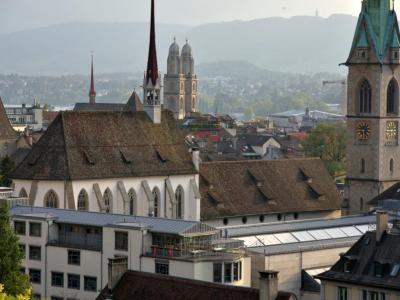
The Preacher’s Church, located in Zurich’s Old Town, has a long history in the city. The first mention of the church in records dates back to 1213, when it served as a preacher’s church. It was run by monks of the Dominican order who focused on spreading the word of the church. In the 1500s, reformation in Switzerland, lead by Ulrich Zwingli, resulted in the Predigerkirche becoming Protestant. During the time of the Reformation, much of the elegant ornamentation was removed from the church.
The building features Gothic forms, with one side visible from the street and the other side integrated into the city’s central library. The library is located on the site of a former monastery that was also shuttered during the Reformation. The church experienced many renovations and restorations. The main form of the church that is visible today dates back to the early 1600s. A steeple was added in 1899, the work of architect Gustav Gull.
Today, the church is primarily Protestant; however, it does employ a Catholic priest and occasionally has celebratory masses with Muslims and Buddhists. It draws immigrants from a variety of faiths. The church is open seven days a week to parishioners and visitors alike.
The building features Gothic forms, with one side visible from the street and the other side integrated into the city’s central library. The library is located on the site of a former monastery that was also shuttered during the Reformation. The church experienced many renovations and restorations. The main form of the church that is visible today dates back to the early 1600s. A steeple was added in 1899, the work of architect Gustav Gull.
Today, the church is primarily Protestant; however, it does employ a Catholic priest and occasionally has celebratory masses with Muslims and Buddhists. It draws immigrants from a variety of faiths. The church is open seven days a week to parishioners and visitors alike.
12) Gates of Hell
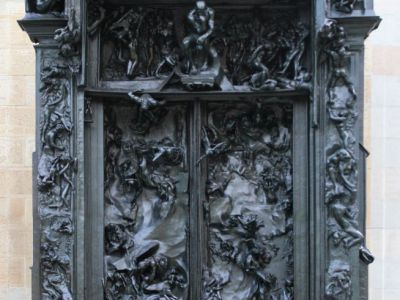
The Gates of Hell, located at the Kunsthaus Zurich, stands as a significant sculptural achievement by the renowned French artist Auguste Rodin. Inspired by Dante Alighieri's "The Inferno," this monumental work delves into a dark portrayal of the afterlife, depicting various damned souls in intricate detail. With dimensions reaching six meters in height, four meters in width, and extending one meter in depth, the sculpture showcases Rodin's expertise in form and emotion.
Commissioned in 1880 by the Directorate of Fine Arts, Rodin's Gates of Hell project was expected to take five years. However, Rodin surpassed expectations, spending 37 years perfecting the composition until his death, showcasing his dedication to his craft. The bronze cast housed in Zurich, acquired by the museum in 1947, features 186 figures adorning the gate, with variations in size ranging from 15 centimeters to over a meter, each contributing to the narrative complexity.
Beyond its sheer scale and emotional resonance, the Gates of Hell holds significance for its impact on Rodin's subsequent works. Several figures from the composition were later developed into standalone sculptures, solidifying Rodin's legacy in the art world. Examples include "The Thinker," "The Kiss," "Ugolino and His Children," and "The Three Shades," showcasing Rodin's innovative approach where elements of a larger work gain individual recognition.
Various casts of the Gates of Hell are displayed worldwide, including at Stanford University in California and the Rodin Gallery in Korea, while the original plaster resides at the Rodin Museum in Paris. Its presence at the Kunsthaus Zurich provides a unique opportunity to engage with Rodin's profound interpretation of Dante's narrative, making it a pivotal work in modern sculpture studies.
Tip:
Look around at the back to see how the castings were put together. Really quite amazing!
Commissioned in 1880 by the Directorate of Fine Arts, Rodin's Gates of Hell project was expected to take five years. However, Rodin surpassed expectations, spending 37 years perfecting the composition until his death, showcasing his dedication to his craft. The bronze cast housed in Zurich, acquired by the museum in 1947, features 186 figures adorning the gate, with variations in size ranging from 15 centimeters to over a meter, each contributing to the narrative complexity.
Beyond its sheer scale and emotional resonance, the Gates of Hell holds significance for its impact on Rodin's subsequent works. Several figures from the composition were later developed into standalone sculptures, solidifying Rodin's legacy in the art world. Examples include "The Thinker," "The Kiss," "Ugolino and His Children," and "The Three Shades," showcasing Rodin's innovative approach where elements of a larger work gain individual recognition.
Various casts of the Gates of Hell are displayed worldwide, including at Stanford University in California and the Rodin Gallery in Korea, while the original plaster resides at the Rodin Museum in Paris. Its presence at the Kunsthaus Zurich provides a unique opportunity to engage with Rodin's profound interpretation of Dante's narrative, making it a pivotal work in modern sculpture studies.
Tip:
Look around at the back to see how the castings were put together. Really quite amazing!
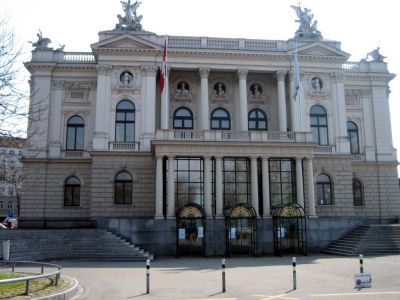
13) Opernhaus (Zurich Opera House)
The Zürich Opera House (Opernhaus) is a hub for culture and art in Zürich. It has been home to the Zürich Opera since its establishment in 1891 and also hosts the Bernhard-Theater Zürich and the Zürich Ballet. Its excellence in opera was recognized with the "Opera Company of the Year" award at the 2014 International Opera Awards, highlighting its impact on the global opera scene.
The roots of the Zürich Opera House date back to the Aktientheater, Zürich's first permanent theater built in 1834. Richard Wagner found refuge and artistic inspiration here during his exile from Germany. After the Aktientheater was destroyed by fire in 1890, the Stadttheater Zürich was constructed in a remarkably short span of 16 months by esteemed Viennese architects Fellner & Helmer. It was Europe's first opera house with electric lighting and symbolized a revival in architecture and culture.
Until the Bernhard Theater was built in 1925 for plays, the Zürich Opera House was the main venue for drama, opera, and music performances. Its history includes a renaming of the Zürich Opera House in 1964 and a significant renovation from 1982 to 1984, which faced local opposition and led to street riots. Despite these challenges, the opera house was beautifully restored, featuring a Neoclassical façade and a Neorococo auditorium. The busts of Weber, Wagner, Mozart, Shiller, Shakespeare, and Goethe adorn the building. The auditorium space seats over 1,200 people.
Today, the Zürich Opera House offers a variety of events, including concerts by its Philharmonia orchestra, matinees, Lieder evenings, and children's shows. Despite past challenges, it remains a cultural gem in Zürich, captivating audiences with its dynamic performances and historical charm.
Why You Should Visit:
The building itself is beautiful and part of Zurich's landscape, while the setting by the lake is just delightful.
As the theatre is rather small, you are much closer to the stage, compared to other opera houses.
Most days have no dress code, and no one really cares about the attire – another huge plus compared to other opera houses.
The roots of the Zürich Opera House date back to the Aktientheater, Zürich's first permanent theater built in 1834. Richard Wagner found refuge and artistic inspiration here during his exile from Germany. After the Aktientheater was destroyed by fire in 1890, the Stadttheater Zürich was constructed in a remarkably short span of 16 months by esteemed Viennese architects Fellner & Helmer. It was Europe's first opera house with electric lighting and symbolized a revival in architecture and culture.
Until the Bernhard Theater was built in 1925 for plays, the Zürich Opera House was the main venue for drama, opera, and music performances. Its history includes a renaming of the Zürich Opera House in 1964 and a significant renovation from 1982 to 1984, which faced local opposition and led to street riots. Despite these challenges, the opera house was beautifully restored, featuring a Neoclassical façade and a Neorococo auditorium. The busts of Weber, Wagner, Mozart, Shiller, Shakespeare, and Goethe adorn the building. The auditorium space seats over 1,200 people.
Today, the Zürich Opera House offers a variety of events, including concerts by its Philharmonia orchestra, matinees, Lieder evenings, and children's shows. Despite past challenges, it remains a cultural gem in Zürich, captivating audiences with its dynamic performances and historical charm.
Why You Should Visit:
The building itself is beautiful and part of Zurich's landscape, while the setting by the lake is just delightful.
As the theatre is rather small, you are much closer to the stage, compared to other opera houses.
Most days have no dress code, and no one really cares about the attire – another huge plus compared to other opera houses.
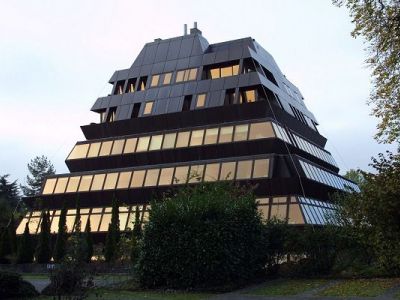
14) Ferrohaus (Klinik Pyramide am See)
Ferrohaus, also recognized as Klinik Pyramide am See, is a prestigious private hospital renowned for its specialized medical services, striking architectural design, and picturesque location in Zurich. This exclusive hospital prides itself on being a standout establishment by the lake, providing top-notch medical care amidst a blend of modernity and natural beauty.
The hospital specializes in various surgical fields, including plastic surgery and vascular surgery for hands and feet, catering to patients in need of essential and elective procedures. Its dedication to exceptional medical care is mirrored in its unique architectural design. Designed by the acclaimed Swiss architect Justus Dahinden, the pyramid-shaped Ferrohaus was completed in 1970. Its contemporary pyramid structure contrasts with Zurich's predominantly older architectural backdrop, making it a distinctive feature along Lake Zurich's shores.
Notably, Ferrohaus is located directly on the lakeshore, surrounded by lush greenery, creating a serene and therapeutic environment for patients and visitors alike. Adjacent to the hospital lies Zurichhorn Park, a peaceful urban oasis cherished by locals and tourists alike. The park provides a tranquil escape from the city's hustle and bustle and hosts various attractions, including a notable Henry Moore sculpture, an outdoor cinema operational during the summer months, and a lakeside swimming pool. Furthermore, the park features the China Garden, symbolizing Zurich's bond with its Chinese sister city, Kunming, fostering international camaraderie and cultural exchange.
Ferrohaus's distinctive architecture, combined with its specialized medical services and tranquil lakeside setting, make it a remarkable institution in Zurich. Its proximity to Zurichhorn Park enhances its allure, offering patients and visitors an opportunity to recuperate and unwind in one of the city's most beautiful and peaceful locations.
The hospital specializes in various surgical fields, including plastic surgery and vascular surgery for hands and feet, catering to patients in need of essential and elective procedures. Its dedication to exceptional medical care is mirrored in its unique architectural design. Designed by the acclaimed Swiss architect Justus Dahinden, the pyramid-shaped Ferrohaus was completed in 1970. Its contemporary pyramid structure contrasts with Zurich's predominantly older architectural backdrop, making it a distinctive feature along Lake Zurich's shores.
Notably, Ferrohaus is located directly on the lakeshore, surrounded by lush greenery, creating a serene and therapeutic environment for patients and visitors alike. Adjacent to the hospital lies Zurichhorn Park, a peaceful urban oasis cherished by locals and tourists alike. The park provides a tranquil escape from the city's hustle and bustle and hosts various attractions, including a notable Henry Moore sculpture, an outdoor cinema operational during the summer months, and a lakeside swimming pool. Furthermore, the park features the China Garden, symbolizing Zurich's bond with its Chinese sister city, Kunming, fostering international camaraderie and cultural exchange.
Ferrohaus's distinctive architecture, combined with its specialized medical services and tranquil lakeside setting, make it a remarkable institution in Zurich. Its proximity to Zurichhorn Park enhances its allure, offering patients and visitors an opportunity to recuperate and unwind in one of the city's most beautiful and peaceful locations.
15) Bürkliplatz (Burkli Square)
Burkli-Zurich’s unofficial front porch, main square, and tram central all rolled into one. If you're looking for a place where the city gently slips off its shoes and enjoys the lake breeze, this is it. With a steady hum of trams passing through, it's where urban bustle meets lakeside leisure, and somehow, they get along quite nicely.
Just to the north, under the shade of well-behaved trees, is Stadthausanlage-a leafy square that hosts some of the city’s most delicious negotiations: veggies, cheese, flowers, and bread, all vying for your attention at the local market. In the middle, a classic music pavilion nods politely to passersby, often with a soundtrack to match.
From here, Station Street marches north like a well-dressed soldier, ready to lead you straight into Zurich’s high-end shopping world-credit cards beware...
But back to Burkli Square. It’s not just the transport hub or the snack stand heaven (though the bratwurst game is strong). It is also your launch pad for scenic lake cruises and water taxis-because, yes, Zurich knows how to do traffic with style.
To the east, the elegant Quay Bridge crosses the Limmat like a well-dressed Victorian gentleman. Nearby, the Seeuferanlage lakefront park stretches out invitingly, complete with an arboretum and aviary. Nature and relaxation? Yes, and yes.
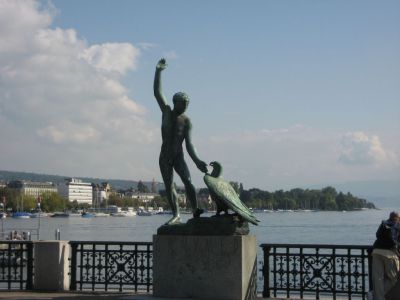
And don't miss the statue of Ganymede at the lake overlook-it’s a dramatic bronze moment of myth-meets-modernity, with the young man being whisked away by Zeus’s eagle, as you do on an average Zurich afternoon...
Just a short stroll east, you'll run into the Geiserbrunnen, a beefy 1911 sculpture by Jakob Brüllmann, where a man appears to be in intense negotiation-or maybe just wrestling-with a bull. Either way, it's got the energy of a protein bar ad.
Burkli Square is not just a place to pass through-it’s a place to pause, snack, stare at some art, and maybe catch a boat. So, linger a little. Zurich doesn’t mind...
Just to the north, under the shade of well-behaved trees, is Stadthausanlage-a leafy square that hosts some of the city’s most delicious negotiations: veggies, cheese, flowers, and bread, all vying for your attention at the local market. In the middle, a classic music pavilion nods politely to passersby, often with a soundtrack to match.
From here, Station Street marches north like a well-dressed soldier, ready to lead you straight into Zurich’s high-end shopping world-credit cards beware...
But back to Burkli Square. It’s not just the transport hub or the snack stand heaven (though the bratwurst game is strong). It is also your launch pad for scenic lake cruises and water taxis-because, yes, Zurich knows how to do traffic with style.
To the east, the elegant Quay Bridge crosses the Limmat like a well-dressed Victorian gentleman. Nearby, the Seeuferanlage lakefront park stretches out invitingly, complete with an arboretum and aviary. Nature and relaxation? Yes, and yes.
And don't miss the statue of Ganymede at the lake overlook-it’s a dramatic bronze moment of myth-meets-modernity, with the young man being whisked away by Zeus’s eagle, as you do on an average Zurich afternoon...
Just a short stroll east, you'll run into the Geiserbrunnen, a beefy 1911 sculpture by Jakob Brüllmann, where a man appears to be in intense negotiation-or maybe just wrestling-with a bull. Either way, it's got the energy of a protein bar ad.
Burkli Square is not just a place to pass through-it’s a place to pause, snack, stare at some art, and maybe catch a boat. So, linger a little. Zurich doesn’t mind...
16) House of Dogs
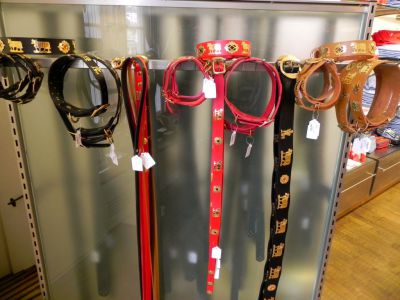
What to buy here: Appenzeller Dog Collar: Appenzell is a beautiful rolling green region in the Swiss Alps, where the Appenzeller Sennenhund, or mountain dog, originated. Dogs in Switzerland have been wearing the red, black, or tan, Appenzeller dog collars for over 250 years, and the fashion is now spreading throughout Europe. Today, collars and leashes can be found in either traditional or more modern versions of the original design, made of high quality Swiss leather and adorned with detailed medal Alpine figures. Traditional designs feature smooth leather and gold metal cutouts in the shapes of herders, dogs, and cows. Modern versions can be found with faux alligator print and shiny white Swiss crosses. Schweizer Heimatwerk offers the traditional style of collar from 52 francs to 79 francs, with matching leashes for 72 francs. A quick tram ride from the main shopping area of the Bahnhofstrasse, to Sternenstrasse 74, will deliver you to the modern boutique, The House of Dog, that sells the updated version of the collar for 120 francs to 150 francs depending on the size. The small shop is a dog-lover’s heaven with an abundance of contemporary Swiss-made dog products.
