Custom Walk in Washington D.C., USA by gotiwala_66b86 created on 2025-07-18
Guide Location: USA » Washington D.C.
Guide Type: Custom Walk
# of Sights: 10
Tour Duration: 4 Hour(s)
Travel Distance: 8.9 Km or 5.5 Miles
Share Key: NUZB4
Guide Type: Custom Walk
# of Sights: 10
Tour Duration: 4 Hour(s)
Travel Distance: 8.9 Km or 5.5 Miles
Share Key: NUZB4
How It Works
Please retrieve this walk in the GPSmyCity app. Once done, the app will guide you from one tour stop to the next as if you had a personal tour guide. If you created the walk on this website or come to the page via a link, please follow the instructions below to retrieve the walk in the app.
Retrieve This Walk in App
Step 1. Download the app "GPSmyCity: Walks in 1K+ Cities" on Apple App Store or Google Play Store.



Step 2. In the GPSmyCity app, download(or launch) the guide "Washington D.C. Map and Walking Tours".
Step 3. Tap the menu button located at upper right corner of the "Walks" screen and select "Retrieve custom walk". Enter the share key: NUZB4
1) U.S. Capitol (must see)
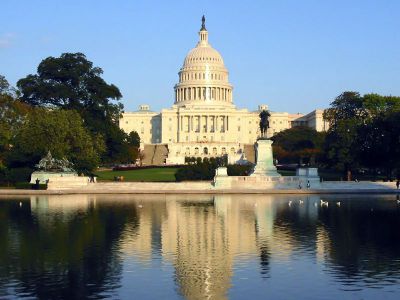
The United States Capitol stands at the opposite end of the National Mall from the Washington Monument. This huge building holds the House of Representatives in the south wing, and the Senate in the north wing. There are 540 rooms, five floors and the beautiful Capitol Rotunda which additionally houses art and sculptures. The artwork depicts events and figures from American history.
After much wrangling about the design, the Capitol cornerstone was laid by President Washington, who was dressed for the occasion in full Mason attire, on September 18, 1793. The north wing was completed in 1800. For several decades, beginning when the federal government moved to Washington in the fall of 1800, the Capitol building was used for Sunday religious services as well as for governmental functions.
Soon after the building was fully completed in 1811, the Capitol was partially damaged in August 1814 during the burning of Washington in the course of the War of 1812. The burnt down portions were rebuilt and the Rotunda was added in 1826. In the 1850s the Capitol was expanded further with a new cast-iron dome added to replace the wooden Rotunda, following which several more renovations and expansions have been made. Among them is The Apotheosis of Washington fresco painted on the inside of the dome, visible through the oculus from the Rotunda floor.
The Capitol is open to visitors and offers free tour. Tickets are available at the Capitol Visitor Center on the first come-first served basis. This center is new, having opened in 2008. There is a 15-minute orientation film about the Capitol that is well worth viewing.
Visitors to the Capitol can watch Congress in action from designated galleries. Passes are available from the offices of Senators and Representatives. If visiting when Congress is in session, be sure to contact your local official and see government in action. Overseas visitors can apply for the passes at the Senate Appointment Desk and the House Appointment Desk inside the Capitol Building.
Tip:
First off, book your 45-min tour early to avoid missing out and to give yourself a bigger range of time slots.
You'll still have to go to the desk to pick up your ticket by showing the online receipt on your phone.
Get there 30-45 mins before your tour due to security checks before entry (food & drinks are prohibited).
When you've finished your visit, use the tunnel just before the exit to go directly to the Library of Congress (no additional security check).
Interestingly, both the east side and the west side of the Capitol can be designated as the front, so just be aware that “front” is not the best descriptive designation here.
After much wrangling about the design, the Capitol cornerstone was laid by President Washington, who was dressed for the occasion in full Mason attire, on September 18, 1793. The north wing was completed in 1800. For several decades, beginning when the federal government moved to Washington in the fall of 1800, the Capitol building was used for Sunday religious services as well as for governmental functions.
Soon after the building was fully completed in 1811, the Capitol was partially damaged in August 1814 during the burning of Washington in the course of the War of 1812. The burnt down portions were rebuilt and the Rotunda was added in 1826. In the 1850s the Capitol was expanded further with a new cast-iron dome added to replace the wooden Rotunda, following which several more renovations and expansions have been made. Among them is The Apotheosis of Washington fresco painted on the inside of the dome, visible through the oculus from the Rotunda floor.
The Capitol is open to visitors and offers free tour. Tickets are available at the Capitol Visitor Center on the first come-first served basis. This center is new, having opened in 2008. There is a 15-minute orientation film about the Capitol that is well worth viewing.
Visitors to the Capitol can watch Congress in action from designated galleries. Passes are available from the offices of Senators and Representatives. If visiting when Congress is in session, be sure to contact your local official and see government in action. Overseas visitors can apply for the passes at the Senate Appointment Desk and the House Appointment Desk inside the Capitol Building.
Tip:
First off, book your 45-min tour early to avoid missing out and to give yourself a bigger range of time slots.
You'll still have to go to the desk to pick up your ticket by showing the online receipt on your phone.
Get there 30-45 mins before your tour due to security checks before entry (food & drinks are prohibited).
When you've finished your visit, use the tunnel just before the exit to go directly to the Library of Congress (no additional security check).
Interestingly, both the east side and the west side of the Capitol can be designated as the front, so just be aware that “front” is not the best descriptive designation here.
2) White House (must see)
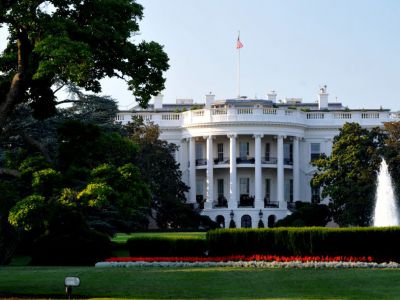
The White House address on Pennsylvania Avenue, Washington, D.C. is both home and office of the American President, much as the symbol of the United States. While this is not the first home of American presidents, it has been the home of every American President since John Adams moved in here during his presidency in 1800. The design was made by James Hoban and the construction started with the laying of the cornerstone in 1792. Each president ever since has added their own touch to the people’s house, some big and some small.
The original White House was burned, almost to the ground, by British troops in 1814 during the War of 1812. Rebuilding soon began and was finished by 1817. The South Portico was added in 1824 and the North Portico followed in 1830. The West Wing came during an addition in 1901 and then later the Oval Office was added. A fire of 1929 damaged the West Wing but the damage was repaired, and in the 1930s, a second story and basement were added, upon which the Oval Office was moved to its present location.
By 1948 the building was in need of a serious repair prompted by numerous additions made over the years. Load bearing beams were installed and a complete dismantling of the interior was undertaken. Sadly, most of the glorious handcrafted work was lost during that process. In the 1960s Jacqueline Kennedy oversaw another extensive redecoration of the White House whereby some of the artifacts, previously lost, were brought back and the building returned to its grander days.
Today, the White House has six stories, 132 rooms and various amenities including a tennis court, swimming pool, bowling alley and, of course, the First Garden. Following the attacks of 9/11, the White House is no longer open for tours, except on a very limited basis. All those wanting a tour must ask their Congressional representatives to put them on a list and have background checks completed prior to the visit.
Tip:
The entire tour is self-paced, so you might want to brush up on your White House history (War of 1812, etc) ahead of time, so as to maximize the experience. You will only be visiting the East Wing, so that will limit how much you need to research.
If you're you don't get a tour time, don't be heartbroken. Stand in front of the White House and take a group photo, then head over to the Visitor Center and use the interactive displays where you can see the same rooms.
The original White House was burned, almost to the ground, by British troops in 1814 during the War of 1812. Rebuilding soon began and was finished by 1817. The South Portico was added in 1824 and the North Portico followed in 1830. The West Wing came during an addition in 1901 and then later the Oval Office was added. A fire of 1929 damaged the West Wing but the damage was repaired, and in the 1930s, a second story and basement were added, upon which the Oval Office was moved to its present location.
By 1948 the building was in need of a serious repair prompted by numerous additions made over the years. Load bearing beams were installed and a complete dismantling of the interior was undertaken. Sadly, most of the glorious handcrafted work was lost during that process. In the 1960s Jacqueline Kennedy oversaw another extensive redecoration of the White House whereby some of the artifacts, previously lost, were brought back and the building returned to its grander days.
Today, the White House has six stories, 132 rooms and various amenities including a tennis court, swimming pool, bowling alley and, of course, the First Garden. Following the attacks of 9/11, the White House is no longer open for tours, except on a very limited basis. All those wanting a tour must ask their Congressional representatives to put them on a list and have background checks completed prior to the visit.
Tip:
The entire tour is self-paced, so you might want to brush up on your White House history (War of 1812, etc) ahead of time, so as to maximize the experience. You will only be visiting the East Wing, so that will limit how much you need to research.
If you're you don't get a tour time, don't be heartbroken. Stand in front of the White House and take a group photo, then head over to the Visitor Center and use the interactive displays where you can see the same rooms.
3) Lincoln Memorial (must see)
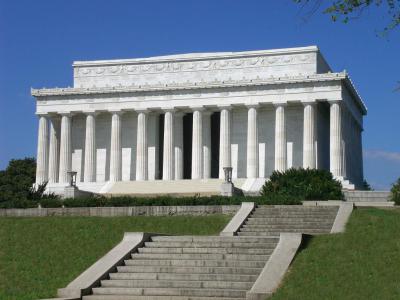
The Lincoln Memorial is one of the most famous monuments and historical places in the United States. It is a nationally recognized location that was built in honor of Abraham Lincoln, who was the 16th President of the United States during the bloody years of the Civil War. The monument is a fine example of a classic Greek Doric temple. Even the sculpture of the President is done in Olympic Godlike fashion. Two well-known speeches of the former President are also engraved there: the Gettysburg Address and Lincoln’s Second Inaugural Address.
The Lincoln Monument Association was formed two years after the death of the President. Planning for the memorial, though, stretched out until 1901. The Lincoln Memorial Bill was signed by President Taft in 1911. Interestingly, the entire monument was built for just $2 million. Today, the site is famous as the location for many historic speeches, like the “I have a dream” speech by the Rev. Martin Luther King. It has also been the site for many famous protests. The Monument is cared for by the National Park Service and is listed on the National Register of Historic Places. The monument is open 24 hours a day.
Why You Should Visit:
The most visited memorial in the National Mall for a reason; it is beautiful and offers a fantastic view of the reflecting pool and the Washington Monument.
Tip:
Go first thing in the morning (probably before 9am) or later in the evening (when the lights are on) to avoid the crowds.
Right on the steps, look down on the floor for the "I have a dream" block. It's where MLK, Jr. stood when he gave his most famous speech.
Pack your food and water (in the summer) because the food at the refreshment stands is not very good and somewhat overpriced.
The Lincoln Monument Association was formed two years after the death of the President. Planning for the memorial, though, stretched out until 1901. The Lincoln Memorial Bill was signed by President Taft in 1911. Interestingly, the entire monument was built for just $2 million. Today, the site is famous as the location for many historic speeches, like the “I have a dream” speech by the Rev. Martin Luther King. It has also been the site for many famous protests. The Monument is cared for by the National Park Service and is listed on the National Register of Historic Places. The monument is open 24 hours a day.
Why You Should Visit:
The most visited memorial in the National Mall for a reason; it is beautiful and offers a fantastic view of the reflecting pool and the Washington Monument.
Tip:
Go first thing in the morning (probably before 9am) or later in the evening (when the lights are on) to avoid the crowds.
Right on the steps, look down on the floor for the "I have a dream" block. It's where MLK, Jr. stood when he gave his most famous speech.
Pack your food and water (in the summer) because the food at the refreshment stands is not very good and somewhat overpriced.
4) Korean War Veterans Memorial (must see)
The Korean War Veterans Memorial stands in West Potomac Park within Washington, D.C. Its purpose is to pay tribute to all those who served during the Korean conflict. The United States provided assistance to South Korea when it was invaded by North Korea at the behest of the United Nations. The U.S. had divided opinions about the conflict, often referring to it as a "conflict" rather than a full-fledged war. The Korean War was a grueling battle that took place in extremely harsh conditions, with temperatures dropping to as low as -40°F during the Chosin Reservoir battle.
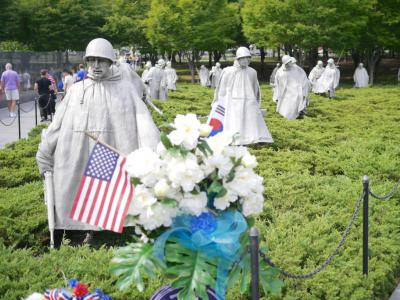
The memorial is designed in the shape of a triangle and is constructed using juniper and strips of concrete to mimic the rugged terrain of the battlefield. This triangular shape symbolizes the Field of Service. Within this landscape, you'll find 19 statues of soldiers dressed in military attire, their clothing appearing to be windblown, evoking memories of the brutal weather conditions endured. These soldier statues are crafted from stainless steel. On the south side of the memorial, there's a black granite wall that reflects the statues in such a way that it creates the illusion of a total of 38 soldiers, paying homage to the 38th parallel, which separates North Korea from South Korea.
At the end of the Field of Service, there's a triangular reflecting pool. Along the northern side, there's a low granite wall bearing the names of the 22 United Nations member countries that participated in the Korean War. The memorial is open for visitors around the clock, and park rangers are on hand from 8 a.m. to 12 a.m. daily, except for major holidays.
Why You Should Visit:
The company of soldiers depicted as moving through hostile terrain is a bit eerie and very lifelike, making this one of the most remarkable war memorials you'll ever see.
Tip:
Truly better to visit after dark; the lighting is so very dramatic, you can almost hear the soldiers' boots sloshing through the mud.
Additionally, use your phone flashlight to look carefully at the black wall that has images of soldiers laser-etched onto the black surface.
The memorial is designed in the shape of a triangle and is constructed using juniper and strips of concrete to mimic the rugged terrain of the battlefield. This triangular shape symbolizes the Field of Service. Within this landscape, you'll find 19 statues of soldiers dressed in military attire, their clothing appearing to be windblown, evoking memories of the brutal weather conditions endured. These soldier statues are crafted from stainless steel. On the south side of the memorial, there's a black granite wall that reflects the statues in such a way that it creates the illusion of a total of 38 soldiers, paying homage to the 38th parallel, which separates North Korea from South Korea.
At the end of the Field of Service, there's a triangular reflecting pool. Along the northern side, there's a low granite wall bearing the names of the 22 United Nations member countries that participated in the Korean War. The memorial is open for visitors around the clock, and park rangers are on hand from 8 a.m. to 12 a.m. daily, except for major holidays.
Why You Should Visit:
The company of soldiers depicted as moving through hostile terrain is a bit eerie and very lifelike, making this one of the most remarkable war memorials you'll ever see.
Tip:
Truly better to visit after dark; the lighting is so very dramatic, you can almost hear the soldiers' boots sloshing through the mud.
Additionally, use your phone flashlight to look carefully at the black wall that has images of soldiers laser-etched onto the black surface.

5) Martin Luther King, Jr. Memorial (must see)
The Martin Luther King, Jr. Memorial can be found in West Potomac Park, Washington DC, situated to the southwest of the National Mall. This imposing monument occupies the northwest corner of the Tidal Basin, close to the Franklin Delano Roosevelt Memorial. It's strategically aligned in a way that connects the Lincoln Memorial to the northwest and the Jefferson Memorial to the southeast. The monument's official address, 1964 Independence Avenue, S.W., commemorates the year the Civil Rights Act of 1964 was passed, a pivotal moment in the Civil Rights movement with Dr. King's significant involvement.
Spanning four acres, the memorial was opened to the public on August 22, 2011, following over two decades of planning, fundraising, and construction. Originally, a dedication ceremony was planned for Sunday, August 28, 2011, which marked the 48th anniversary of Dr. Martin Luther King, Jr.'s "I Have a Dream" speech delivered from the steps of the Lincoln Memorial in 1963. However, this event was postponed to October 16, the 16th anniversary of the 1995 Million Man March on the National Mall, due to Hurricane Irene.
While Washington DC has other memorials honoring African-Americans, Dr. King's memorial holds special significance as the first to commemorate an African-American figure on or near the National Mall. He is also only the fourth non-President to be memorialized in such a manner. The administration of the King Memorial falls under the purview of the National Park Service (NPS).
A 30-foot-high relief sculpture of Dr. King, called the "Stone of Hope," stands beyond two granite pieces representing the "mountain of despair." Visitors metaphorically trace Dr. King's life journey as they approach it. A 450-foot inscription wall showcases excerpts from his speeches and sermons, featuring 14 quotes spanning from the 1955 Montgomery Bus Boycott to his last sermon in 1968, four days before his assassination.
The relief of Dr. King is designed to create the impression that he is gazing out over the Tidal Basin towards the horizon, not towards the Jefferson Memorial, as is commonly believed. The cherry trees that adorn the site bloom every year during the anniversary of Dr. King's death, adding a poignant touch to the memorial's symbolism.
Why You Should Visit:
The memorial itself – a magnificent statue of King carved from white stone is worth checking out, but the quotes are really what make this memorial poignant.
People of all colors, creeds, religious backgrounds, ethnicities, etc., could benefit from reading – and thinking about – his many words of wisdom.
Tip:
Particularly beautiful in spring, when white blossoms on cherry trees and new-green leaves on other trees surround the memorial.
Photographers: Try to go on a cloudless day when the white stone contrasts with a clear blue sky.
Spanning four acres, the memorial was opened to the public on August 22, 2011, following over two decades of planning, fundraising, and construction. Originally, a dedication ceremony was planned for Sunday, August 28, 2011, which marked the 48th anniversary of Dr. Martin Luther King, Jr.'s "I Have a Dream" speech delivered from the steps of the Lincoln Memorial in 1963. However, this event was postponed to October 16, the 16th anniversary of the 1995 Million Man March on the National Mall, due to Hurricane Irene.
While Washington DC has other memorials honoring African-Americans, Dr. King's memorial holds special significance as the first to commemorate an African-American figure on or near the National Mall. He is also only the fourth non-President to be memorialized in such a manner. The administration of the King Memorial falls under the purview of the National Park Service (NPS).
A 30-foot-high relief sculpture of Dr. King, called the "Stone of Hope," stands beyond two granite pieces representing the "mountain of despair." Visitors metaphorically trace Dr. King's life journey as they approach it. A 450-foot inscription wall showcases excerpts from his speeches and sermons, featuring 14 quotes spanning from the 1955 Montgomery Bus Boycott to his last sermon in 1968, four days before his assassination.
The relief of Dr. King is designed to create the impression that he is gazing out over the Tidal Basin towards the horizon, not towards the Jefferson Memorial, as is commonly believed. The cherry trees that adorn the site bloom every year during the anniversary of Dr. King's death, adding a poignant touch to the memorial's symbolism.
Why You Should Visit:
The memorial itself – a magnificent statue of King carved from white stone is worth checking out, but the quotes are really what make this memorial poignant.
People of all colors, creeds, religious backgrounds, ethnicities, etc., could benefit from reading – and thinking about – his many words of wisdom.
Tip:
Particularly beautiful in spring, when white blossoms on cherry trees and new-green leaves on other trees surround the memorial.
Photographers: Try to go on a cloudless day when the white stone contrasts with a clear blue sky.
6) World War II Memorial (must see)
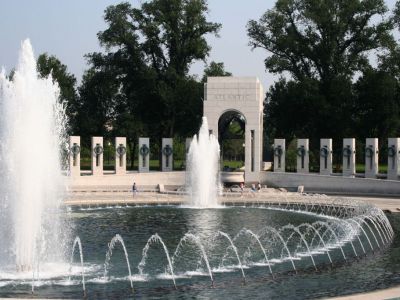
The World War II Memorial has a grand design that reflects the vastness of a war that spanned the entire globe. Two arches at either end of the memorial are symbolic of the Pacific and Atlantic areas of fighting. 56 pillars are arranged in two semicircles around both arches that represent the 48 states at the time of the war and the District of Columbia, plus the territories of Alaska, Hawaii, Puerto Rico, Guam, U.S. Virgin Islands, American Samoa, and the Philippines.
The walls between the arches and in front of the pillars depict scenes that were typical of the Pacific and European theaters of the war. These are depicted in bas relief. An engraving of the ubiquitous “Kilroy Was Here” is also present. "Kilroy Was Here" is a meme that became popular during World War II, typically seen in graffiti. Its origin is debated, but the phrase and the distinctive accompanying doodle became associated with GIs in the 1940s.
On the west side sits the Freedom Wall that contains 4,048 gold stars each one representing 100 American soldiers who died or remain missing during WWII. Behind the Freedom Wall is the Reflecting Pool on the Mall. In front of the wall is the World War II Memorial Rainbow Pool and the stars reflect in the water. It makes for a very moving scene.
Almost 2/3 of the site is water or landscaping so the components of the memorial really stand out. The site is available for visiting 24 hours a day except around Memorial Day activities. Rangers are on hand to answer questions from around 10am to 11pm.
Why You Should Visit:
One of the more formal-style memorials, it carries a certain gravity, conveys a somber nature, and provides lots of space to reflect on the drama of WWII.
The small bronze relief panels on the walls show scenes of different wartime activities that give you a bit more insight into the lives of people during the war.
The entire site sits on a little over seven acres, so wear comfortable walking shoes.
Tip:
Entry is free but do it on a clear day if you can. On a wet day, there is nowhere much to shelter. If you join a guided tour, it's recommended to get some explanation of all the symbolism and pageantry.
The walls between the arches and in front of the pillars depict scenes that were typical of the Pacific and European theaters of the war. These are depicted in bas relief. An engraving of the ubiquitous “Kilroy Was Here” is also present. "Kilroy Was Here" is a meme that became popular during World War II, typically seen in graffiti. Its origin is debated, but the phrase and the distinctive accompanying doodle became associated with GIs in the 1940s.
On the west side sits the Freedom Wall that contains 4,048 gold stars each one representing 100 American soldiers who died or remain missing during WWII. Behind the Freedom Wall is the Reflecting Pool on the Mall. In front of the wall is the World War II Memorial Rainbow Pool and the stars reflect in the water. It makes for a very moving scene.
Almost 2/3 of the site is water or landscaping so the components of the memorial really stand out. The site is available for visiting 24 hours a day except around Memorial Day activities. Rangers are on hand to answer questions from around 10am to 11pm.
Why You Should Visit:
One of the more formal-style memorials, it carries a certain gravity, conveys a somber nature, and provides lots of space to reflect on the drama of WWII.
The small bronze relief panels on the walls show scenes of different wartime activities that give you a bit more insight into the lives of people during the war.
The entire site sits on a little over seven acres, so wear comfortable walking shoes.
Tip:
Entry is free but do it on a clear day if you can. On a wet day, there is nowhere much to shelter. If you join a guided tour, it's recommended to get some explanation of all the symbolism and pageantry.
7) Washington Monument (must see)
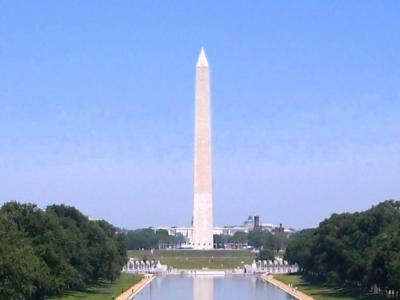
The Washington Monument was built to honor George Washington. It stands in the center of the US Capital to symbolize the importance of President Washington to the country. The idea to build the monument was first discussed in 1783. It wasn’t until 1847 that a design was agreed upon. However, that design was very different from the monument that stands today.
The obelisk was to rise above a temple that would house artifacts of American presidents and heroes. Over the years that plan was dropped, and today the obelisk is rather plain. The first cornerstone was laid in a Masonic ceremony on July 4, 1848. The same Masonic trowel that President Washington used to lay the cornerstone for the Capitol was used.
Work on the Washington Monument was slow and eventually stopped altogether during the Civil War. Modifications were made to the design and the work resumed in 1880, with the capstone placed on December 6, 1884. The hollow shaft of the monument contains an elevator to the top plus a staircase with 897 steps. There are 188 interesting, carved blocks of stone to be viewed along the staircase, quarried of native stones brought from all the 50 states. These stones were originally supposed to arrive with a donation attached to raise funds. Eventually, the stones arrived but the donation did not.
Go to the top of the monument to get the amazing views of Washington DC. It will be a highlight of your trip.
Tip:
Entry is free, but a ticket is a must for everyone going into the monument.
One person from your party can obtain up to 6 tickets and pick a time to go up in the monument. Tickets can also be ordered ahead of time for a fee.
The obelisk was to rise above a temple that would house artifacts of American presidents and heroes. Over the years that plan was dropped, and today the obelisk is rather plain. The first cornerstone was laid in a Masonic ceremony on July 4, 1848. The same Masonic trowel that President Washington used to lay the cornerstone for the Capitol was used.
Work on the Washington Monument was slow and eventually stopped altogether during the Civil War. Modifications were made to the design and the work resumed in 1880, with the capstone placed on December 6, 1884. The hollow shaft of the monument contains an elevator to the top plus a staircase with 897 steps. There are 188 interesting, carved blocks of stone to be viewed along the staircase, quarried of native stones brought from all the 50 states. These stones were originally supposed to arrive with a donation attached to raise funds. Eventually, the stones arrived but the donation did not.
Go to the top of the monument to get the amazing views of Washington DC. It will be a highlight of your trip.
Tip:
Entry is free, but a ticket is a must for everyone going into the monument.
One person from your party can obtain up to 6 tickets and pick a time to go up in the monument. Tickets can also be ordered ahead of time for a fee.
8) National Museum of African American History and Culture (must see)
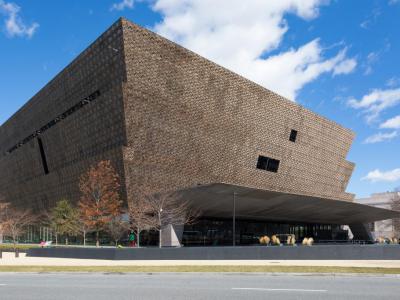
The National Museum of African American History and Culture (NMAAHC), informally known as the "Blacksonian," is part of the Smithsonian Institution and can be found on the National Mall in Washington, D.C. This museum was established in 2003 and officially opened its permanent location in 2016, marked by a ceremony led by President Barack Obama.
The origins of the idea for a federally owned museum dedicated to African-American history and culture can be traced back to 1915 with the National Memorial Association. However, the push for such an institution as we know it today didn't gain momentum until the 1970s. It took several decades and legislative efforts, which began in 1988, to secure authorization for the museum, ultimately achieved in 2003. The site was chosen in 2006, and a design by the Freelon Group/Adjaye Associates/Davis Brody Bond was selected in 2009. Construction work commenced in 2012, culminating in the museum's completion in 2016.
The NMAAHC stands as the largest museum globally dedicated to the history and culture of African Americans. The museum's building, spanning 350,000 square feet (33,000 square meters) and rising ten stories (five above ground and five below), houses an impressive collection of over 40,000 items. However, only approximately 3,500 of these items are currently on display.
Noteworthy pieces within the collection include Ashley's Sack, an intricately hand-embroidered feedsack from the mid-1800s, given by a slave mother named Rose to her nine-year-old daughter, Ashley, when Ashley was separated from her family due to being sold; a badge from 1850 worn by an African American in Charleston, South Carolina, signifying the individual's status as a slave; restraints for the feet and wrists from the American Deep South, utilized before 1860; clothing worn by African-American slaves; and a segregated drinking fountain from the Jim Crow era bearing the label "colored," indicating its use exclusively for Black individuals. Additionally, the museum houses Muhammad Ali's boxing gloves among its notable artifacts.
The origins of the idea for a federally owned museum dedicated to African-American history and culture can be traced back to 1915 with the National Memorial Association. However, the push for such an institution as we know it today didn't gain momentum until the 1970s. It took several decades and legislative efforts, which began in 1988, to secure authorization for the museum, ultimately achieved in 2003. The site was chosen in 2006, and a design by the Freelon Group/Adjaye Associates/Davis Brody Bond was selected in 2009. Construction work commenced in 2012, culminating in the museum's completion in 2016.
The NMAAHC stands as the largest museum globally dedicated to the history and culture of African Americans. The museum's building, spanning 350,000 square feet (33,000 square meters) and rising ten stories (five above ground and five below), houses an impressive collection of over 40,000 items. However, only approximately 3,500 of these items are currently on display.
Noteworthy pieces within the collection include Ashley's Sack, an intricately hand-embroidered feedsack from the mid-1800s, given by a slave mother named Rose to her nine-year-old daughter, Ashley, when Ashley was separated from her family due to being sold; a badge from 1850 worn by an African American in Charleston, South Carolina, signifying the individual's status as a slave; restraints for the feet and wrists from the American Deep South, utilized before 1860; clothing worn by African-American slaves; and a segregated drinking fountain from the Jim Crow era bearing the label "colored," indicating its use exclusively for Black individuals. Additionally, the museum houses Muhammad Ali's boxing gloves among its notable artifacts.
9) Freer Gallery of Art
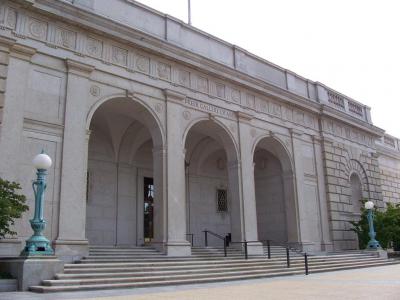
The Freer Gallery of Art, situated in Washington, D.C., is an art museum affiliated with the Smithsonian Institution. Its primary focus lies in showcasing Asian art. Together with the Arthur M. Sackler Gallery, it constitutes the National Museum of Asian Art in the United States. These galleries boast the largest Asian art research library in the country and house an extensive array of artworks from diverse regions, including East Asia, South Asia, Southeast Asia, the Islamic world, the ancient Near East, and ancient Egypt, in addition to a substantial collection of American art.
The Freer Gallery is home to a staggering collection of over 26,000 objects, spanning a remarkable 6,000-year period from the Neolithic era to modern times. This collection encompasses a wide range of artifacts, such as ancient Egyptian stone sculptures and wooden items, ancient Near Eastern ceramics and metalwork, Chinese paintings and ceramics, Korean pottery and porcelain, Japanese folding screens, Persian manuscripts, and Buddhist sculptures. Notably, amid its American art collection, the Freer also houses the renowned artwork titled "Harmony in Blue and Gold: The Peacock Room" by the American artist James McNeill Whistler, which serves as a centerpiece.
The museum extends its offerings to the public by providing free tours and hosting a diverse schedule of events, including screenings, lectures, symposia, concerts, performances, and discussions.
Why You Should Visit:
As free, massive, art galleries go, this is quite respectable. The Freer has more permanent exhibits and the Sackler has more temporary exhibits.
The two spaces – Freer & Sackler – connect to each other underground, making a substantial enclave (and quite a nice place to be in bad weather).
Then again, if the weather is nice, you can enjoy the peace and quiet of a beautiful aboveground courtyard towards the western side.
Tip:
If you do nothing else, visit the Peacock Room, a magnificent result of Whistler's imagination and talent (under natural light every 3rd Thursday).
The coolest, most Instagrammable installation has got to be Terminal – a gold & thread maze using the spires found on top of temples and mosques.
The Freer Gallery is home to a staggering collection of over 26,000 objects, spanning a remarkable 6,000-year period from the Neolithic era to modern times. This collection encompasses a wide range of artifacts, such as ancient Egyptian stone sculptures and wooden items, ancient Near Eastern ceramics and metalwork, Chinese paintings and ceramics, Korean pottery and porcelain, Japanese folding screens, Persian manuscripts, and Buddhist sculptures. Notably, amid its American art collection, the Freer also houses the renowned artwork titled "Harmony in Blue and Gold: The Peacock Room" by the American artist James McNeill Whistler, which serves as a centerpiece.
The museum extends its offerings to the public by providing free tours and hosting a diverse schedule of events, including screenings, lectures, symposia, concerts, performances, and discussions.
Why You Should Visit:
As free, massive, art galleries go, this is quite respectable. The Freer has more permanent exhibits and the Sackler has more temporary exhibits.
The two spaces – Freer & Sackler – connect to each other underground, making a substantial enclave (and quite a nice place to be in bad weather).
Then again, if the weather is nice, you can enjoy the peace and quiet of a beautiful aboveground courtyard towards the western side.
Tip:
If you do nothing else, visit the Peacock Room, a magnificent result of Whistler's imagination and talent (under natural light every 3rd Thursday).
The coolest, most Instagrammable installation has got to be Terminal – a gold & thread maze using the spires found on top of temples and mosques.
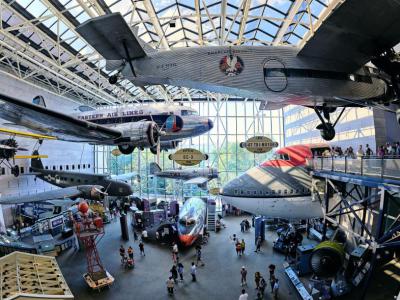
10) National Air and Space Museum (must see)
The National Air and Space Museum of the Smithsonian Institution is a must-see for all aviation and space aficionados. It houses the largest collection of planes and spacecraft in the world. This is one of the most popular of the Smithsonian museums, so plan to go early and spend a day.
The original inception of the museum began in 1946, although some of the pieces in the museum are from the 1876 Centennial Exposition. At that time the name was to be the National Air Museum. As man ventured to the heavens and landed on the moon, the name was changed to include “Space”. In fact, the exhibition hall was opened by Director Michael Collins who has been to space on the Apollo 11 mission to the moon.
The Spirit of St. Louis that Charles Lindbergh flew over the Atlantic is displayed here along with Wright Flyer that made its famous flight at Kitty Hawk in 1903 piloted by Orville Wright. The Apollo 11 Command module is here too. The Bell X-1, Mercury Friendship 7, and SpaceShipOne are also on display. More conventional aircraft include a DC-3 and a 747. Even the USS Enterprise from Star Trek fame is here.
Why You Should Visit:
Great for learning and teaching kids and adults about the science behind flying.
You learn about commercial or military jets, new technology and early technology.
The motion-based, VR, flight simulators are amazing and the Planetarium shows have awesome visual effects.
Tip:
They also have audio tours and guided tours – you can check the information counter for more info.
The original inception of the museum began in 1946, although some of the pieces in the museum are from the 1876 Centennial Exposition. At that time the name was to be the National Air Museum. As man ventured to the heavens and landed on the moon, the name was changed to include “Space”. In fact, the exhibition hall was opened by Director Michael Collins who has been to space on the Apollo 11 mission to the moon.
The Spirit of St. Louis that Charles Lindbergh flew over the Atlantic is displayed here along with Wright Flyer that made its famous flight at Kitty Hawk in 1903 piloted by Orville Wright. The Apollo 11 Command module is here too. The Bell X-1, Mercury Friendship 7, and SpaceShipOne are also on display. More conventional aircraft include a DC-3 and a 747. Even the USS Enterprise from Star Trek fame is here.
Why You Should Visit:
Great for learning and teaching kids and adults about the science behind flying.
You learn about commercial or military jets, new technology and early technology.
The motion-based, VR, flight simulators are amazing and the Planetarium shows have awesome visual effects.
Tip:
They also have audio tours and guided tours – you can check the information counter for more info.
