Custom Walk in Quebec City, Quebec by teremex49_8c3c4 created on 2025-07-24
Guide Location: Canada » Quebec City
Guide Type: Custom Walk
# of Sights: 13
Tour Duration: 2 Hour(s)
Travel Distance: 3.5 Km or 2.2 Miles
Share Key: X242P
Guide Type: Custom Walk
# of Sights: 13
Tour Duration: 2 Hour(s)
Travel Distance: 3.5 Km or 2.2 Miles
Share Key: X242P
How It Works
Please retrieve this walk in the GPSmyCity app. Once done, the app will guide you from one tour stop to the next as if you had a personal tour guide. If you created the walk on this website or come to the page via a link, please follow the instructions below to retrieve the walk in the app.
Retrieve This Walk in App
Step 1. Download the app "GPSmyCity: Walks in 1K+ Cities" on Apple App Store or Google Play Store.



Step 2. In the GPSmyCity app, download(or launch) the guide "Quebec City Map and Walking Tours".
Step 3. Tap the menu button located at upper right corner of the "Walks" screen and select "Retrieve custom walk". Enter the share key: X242P
1) Old Quebec (must see)
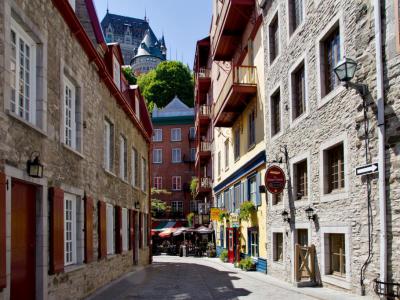
Old Québec is a historically significant neighborhood within Quebec City, encompassing both the Upper Town and Lower Town areas. This locale holds the prestigious designation of being a UNESCO World Heritage Site. From an administrative perspective, Old Quebec is situated within the Vieux-Québec–Cap-Blanc–colline Parlementaire district, which falls under the jurisdiction of the La Cité-Limoilou borough. In English, it is commonly referred to as "the Old City" or "Québec's Old City."
The majority of the buildings in the Upper Town section of Old Québec originate from the 19th century, with a few dating back to the 17th and 18th centuries. This area boasts several commercial streets, such as Saint Jean, Sainte Anne, and De Buade, with numerous hotels, including the renowned Château Frontenac, making it a highly sought-after tourist destination. In the Upper Town, you can find parks like De l'Esplanade, Artillerie, Des Gouverneurs, Montmorency, and the grounds of l’Hotel-de-Ville.
The Lower Town, situated at the base of Cap Diamant, holds historical significance. The construction of the Church of Notre-Dame-des-Victoires commenced in 1687 at this location and was completed in 1723. Lower Town features notable cultural institutions such as the Musée de la civilisation, the Musée naval de Québec, the caserne Dalhousie, and the Théâtre Petit Champlain, which encompass museums, performance venues, theaters, and exhibition spaces.
The majority of the buildings in the Upper Town section of Old Québec originate from the 19th century, with a few dating back to the 17th and 18th centuries. This area boasts several commercial streets, such as Saint Jean, Sainte Anne, and De Buade, with numerous hotels, including the renowned Château Frontenac, making it a highly sought-after tourist destination. In the Upper Town, you can find parks like De l'Esplanade, Artillerie, Des Gouverneurs, Montmorency, and the grounds of l’Hotel-de-Ville.
The Lower Town, situated at the base of Cap Diamant, holds historical significance. The construction of the Church of Notre-Dame-des-Victoires commenced in 1687 at this location and was completed in 1723. Lower Town features notable cultural institutions such as the Musée de la civilisation, the Musée naval de Québec, the caserne Dalhousie, and the Théâtre Petit Champlain, which encompass museums, performance venues, theaters, and exhibition spaces.
2) Breakneck Steps (L'Escalier Casse-Cou) (must see)
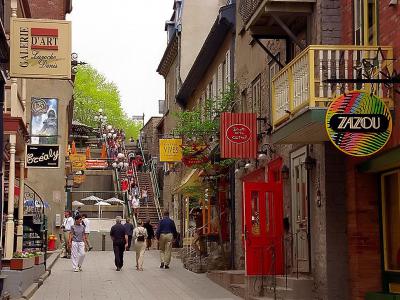
Built in 1635, the legendary Breakneck Stairs or Steps (Escalier Casse-Cou) is the oldest stairway in Quebec City. Named so for its steepness, the staircase was previously known as Champlain Stairs (escalier Champlain), Beggars' Stairs (escalier du Quêteux), and Lower Town Stairs (escalier de la Basse-Ville).
The first steps and landings were made of wood and were much narrower and steeper than today. In 1889, the staircase was replaced with a larger iron one, expanded from a single to three parallel flights, designed by the celebrated local architect and engineer, Charles Baillargé. The stairs that we see now, however, resulted from the major overhaul in the late 1960s.
While not Quebec City's longest staircase (59 steps only), the Breakneck Stairs is probably the city's most useful as it provides a shortcut between Côte de la Montagne street in the Upper Town to the corner of Petit-Champlain and Sous-le-Fort streets in the Lower Town. Despite the ominous name, coined by British tour guides in the mid-19th century (and made official in the 1960s), no serious injuries have ever been reported on the stairs.
The upper level, near Côte de la Montagne, hosts a few artisan kiosks. Tourists adore this location for the wonderful view it affords. As you gaze down upon Petit-Champlain – one of Canada's most picturesque streets, stretching along the foot of the cliff – you may think you are looking at a postcard come to life.
In the winter, the scene is even more sublime with the Christmas lights twinkling and snow gently falling. In the summer, the ultimate experience on the Stairs consists of eating or having a drink at one of the restaurant terraces located on different landings. And when it comes to taking pictures, any time of the year is good, on any of the landings, for a personalized postcard made.
At the bottom of the Stairs, you will find several boutiques, including the famed confectionery La Fudgerie, plus a number restaurants and other delights.
The first steps and landings were made of wood and were much narrower and steeper than today. In 1889, the staircase was replaced with a larger iron one, expanded from a single to three parallel flights, designed by the celebrated local architect and engineer, Charles Baillargé. The stairs that we see now, however, resulted from the major overhaul in the late 1960s.
While not Quebec City's longest staircase (59 steps only), the Breakneck Stairs is probably the city's most useful as it provides a shortcut between Côte de la Montagne street in the Upper Town to the corner of Petit-Champlain and Sous-le-Fort streets in the Lower Town. Despite the ominous name, coined by British tour guides in the mid-19th century (and made official in the 1960s), no serious injuries have ever been reported on the stairs.
The upper level, near Côte de la Montagne, hosts a few artisan kiosks. Tourists adore this location for the wonderful view it affords. As you gaze down upon Petit-Champlain – one of Canada's most picturesque streets, stretching along the foot of the cliff – you may think you are looking at a postcard come to life.
In the winter, the scene is even more sublime with the Christmas lights twinkling and snow gently falling. In the summer, the ultimate experience on the Stairs consists of eating or having a drink at one of the restaurant terraces located on different landings. And when it comes to taking pictures, any time of the year is good, on any of the landings, for a personalized postcard made.
At the bottom of the Stairs, you will find several boutiques, including the famed confectionery La Fudgerie, plus a number restaurants and other delights.
3) Petit-Champlain Street (Rue du Petit-Champlain) (must see)
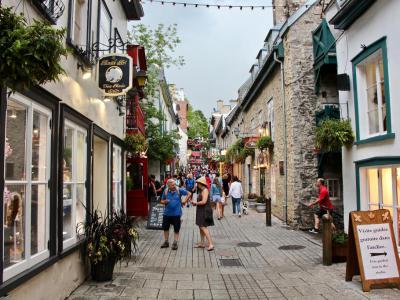
A charming narrow street at the base of Cape Diamond, known as Rue du Petit-Champlain, serves as the heart of the quaint neighborhood sharing its name. This area pays homage to Samuel de Champlain, the French explorer credited with founding Quebec City back in 1608.
Stretching a mere 814 feet (or 260 meters) in length, Petit-Champlain, translating to "Little Champlain," should not be confused with Champlain Street further to the west, located in the Cap-Blanc district. These two streets were once connected until a rockslide in 1889 separated them.
Towards the southern terminus of Petit-Champlain, you'll come across a sizable trompe-l'œil mural adorning the side of a three-story building at No. 102. This mural vividly recounts the neighborhood's history, encompassing significant events such as the 1759 bombardments, landslides, and numerous fires that have plagued the area over the years.
At the opposite end of the street lies the renowned Breakneck Staircase, aptly named for its steepness, offering a picturesque view of the surrounding area.
Just beyond the staircase awaits the lower entrance to the Old Quebec Funicular, known as the Funiculaire du Vieux-Québec. Operating since 1879, this electric cableway navigates Cape Diamond at a sharp 45-degree angle, covering a total distance of 64 meters (210 feet).
In 2014, Petit-Champlain received recognition as "the most remarkable street" in Canada, a title bestowed upon it through public and professional polls conducted during an event organized by the Canadian Institute of Planners.
Stretching a mere 814 feet (or 260 meters) in length, Petit-Champlain, translating to "Little Champlain," should not be confused with Champlain Street further to the west, located in the Cap-Blanc district. These two streets were once connected until a rockslide in 1889 separated them.
Towards the southern terminus of Petit-Champlain, you'll come across a sizable trompe-l'œil mural adorning the side of a three-story building at No. 102. This mural vividly recounts the neighborhood's history, encompassing significant events such as the 1759 bombardments, landslides, and numerous fires that have plagued the area over the years.
At the opposite end of the street lies the renowned Breakneck Staircase, aptly named for its steepness, offering a picturesque view of the surrounding area.
Just beyond the staircase awaits the lower entrance to the Old Quebec Funicular, known as the Funiculaire du Vieux-Québec. Operating since 1879, this electric cableway navigates Cape Diamond at a sharp 45-degree angle, covering a total distance of 64 meters (210 feet).
In 2014, Petit-Champlain received recognition as "the most remarkable street" in Canada, a title bestowed upon it through public and professional polls conducted during an event organized by the Canadian Institute of Planners.
4) Chevalier House (Maison Chevalier)
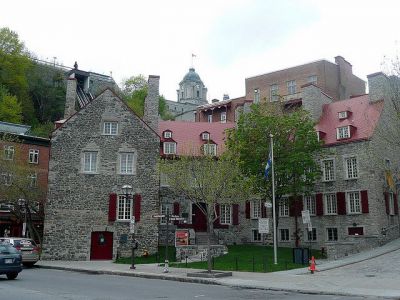
The Chevalier House (Maison Historique Chevalier) is a prominent example of French urban architecture in New France. This historical structure is composed of three distinct buildings from different time periods.
In the center stands the former residence of shipowner Jean-Baptiste Chevalier, constructed in 1752, which is closely connected to the neighboring mansard-style Frérot House, dating back to either 1683 or 1695. Additionally, the Chesnay House, dating back to 1660 or 1675, completes the trio.
All three houses suffered destruction by fire but were subsequently rebuilt in 1762. Following the British conquest of the region, the entire complex underwent partial renovations and was repurposed for commercial use. Starting in 1807, the property was leased to an innkeeper who named it the London Coffee House, a name that persisted until the early 20th century.
In the 1950s, these buildings narrowly avoided demolition when the government of Quebec acquired them as part of a significant restoration effort in the Royal Square area. Subsequently, in 1965, the complex received recognition as a historic monument and was transformed into a museum.
Set against the backdrop of Frontenac Castle, the Chevalier House offers an excellent photo opportunity for architecture enthusiasts, reflecting a substantial portion of the area's historical legacy. During the Quebec Carnival in February, it frequently hosts traditional music events.
In the center stands the former residence of shipowner Jean-Baptiste Chevalier, constructed in 1752, which is closely connected to the neighboring mansard-style Frérot House, dating back to either 1683 or 1695. Additionally, the Chesnay House, dating back to 1660 or 1675, completes the trio.
All three houses suffered destruction by fire but were subsequently rebuilt in 1762. Following the British conquest of the region, the entire complex underwent partial renovations and was repurposed for commercial use. Starting in 1807, the property was leased to an innkeeper who named it the London Coffee House, a name that persisted until the early 20th century.
In the 1950s, these buildings narrowly avoided demolition when the government of Quebec acquired them as part of a significant restoration effort in the Royal Square area. Subsequently, in 1965, the complex received recognition as a historic monument and was transformed into a museum.
Set against the backdrop of Frontenac Castle, the Chevalier House offers an excellent photo opportunity for architecture enthusiasts, reflecting a substantial portion of the area's historical legacy. During the Quebec Carnival in February, it frequently hosts traditional music events.
5) Place Royale (must see)
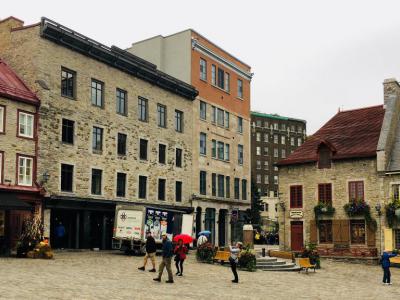
It's not often one can visit an area in North America with a 400-year history. The birthplace of French-Canadian civilization, Place Royale is the original site of Samuel de Champlain's fort that he built on the shores of the Saint Lawrence in the early 1600s. The footprint of that building is marked with black tile on the cobblestones and is particularly noticeable just in front of the stone church on the square – the oldest of its kind in N America, known as Notre-Dame-des-Victoires. At the door to the church is a bronze plaque commemorating said event, though it's unfortunately just inscribed in French.
Place Royale is quite small as it was built in the late 1600s by orders of the French "Sun King", Louis XIV, whose bust visitors can still see. What gives the square its charm, however, are probably the 2-3 story grey fieldstone row houses, all restored to their French colonial appearance with small windows, wide brick chimneys, steep roofs, and firewalls to prevent the spread of fire. Window shutters and doors are painted in cheerful colors (rose, yellow, blue, green), while plentiful window boxes are planted with colorful annual flowers. The ground floors of these homes, once owned by wealthy merchants, have shops offering art, clothing, and souvenirs.
Stop at Place Royale for some attractive photos, briefly visit the church, look at the tiled outline of Champlain's fort, and browse the shops. Not far away is one of the most stunningly beautiful murals in town called Fresque des Québecois, a three-dimensional landscape featuring landmarks and figures of Québec City's history.
Why You Should Visit:
To escape the crowds in a charming part of town. Not only beautiful but equipped with nice shops and restaurants. Feels more like Europe than anything else.
Tip:
La Maison Smith on the square here is a wonderful place to watch people go by with a cup of coffee and croissants. From there you can also easily walk to Petit-Champlain, which is a row of wonderful shops.
Place Royale is quite small as it was built in the late 1600s by orders of the French "Sun King", Louis XIV, whose bust visitors can still see. What gives the square its charm, however, are probably the 2-3 story grey fieldstone row houses, all restored to their French colonial appearance with small windows, wide brick chimneys, steep roofs, and firewalls to prevent the spread of fire. Window shutters and doors are painted in cheerful colors (rose, yellow, blue, green), while plentiful window boxes are planted with colorful annual flowers. The ground floors of these homes, once owned by wealthy merchants, have shops offering art, clothing, and souvenirs.
Stop at Place Royale for some attractive photos, briefly visit the church, look at the tiled outline of Champlain's fort, and browse the shops. Not far away is one of the most stunningly beautiful murals in town called Fresque des Québecois, a three-dimensional landscape featuring landmarks and figures of Québec City's history.
Why You Should Visit:
To escape the crowds in a charming part of town. Not only beautiful but equipped with nice shops and restaurants. Feels more like Europe than anything else.
Tip:
La Maison Smith on the square here is a wonderful place to watch people go by with a cup of coffee and croissants. From there you can also easily walk to Petit-Champlain, which is a row of wonderful shops.
6) Lower Town (Basse-Ville) (must see)
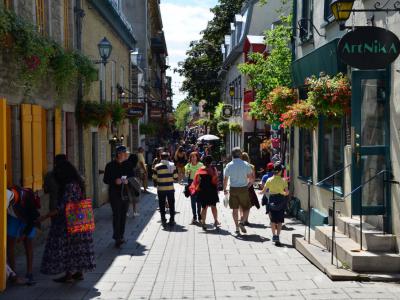
The Lower Town is a historic area situated at the foot of Cap Diamant. In 1608, Samuel de Champlain established a settlement here, which you can still see remnants of today, centered around Place Royale. It has been carefully restored to capture its original French charm. The construction of the Church of Notre-Dame-des-Victoires began in 1687 and was completed in 1723 at this very location.
Lower Town is home to several museums, performance venues, theaters, and exhibition spaces, including the Musée de la Civilisation, the Musée Naval de Québec, the caserne Dalhousie, and the Théâtre Petit Champlain. Additionally, Lower Town offers picturesque sights such as the Louise Basin, Brown Basin, La Pointe-à-Carcy, the Gare du Palais, and the Marche du Vieux-Port, all of which are visible from the Port of Québec.
If you're interested in shopping, Lower Town features charming narrow cobblestone streets lined with unique boutiques and galleries. To make it easier to ascend Cap Diamant, there's a funicular car that conveniently connects Lower Town to Upper Town via the petite Petit-Champlain road at the base of the Cape. This ride offers a magnificent panoramic view of the city from the top.
Lower Town is home to several museums, performance venues, theaters, and exhibition spaces, including the Musée de la Civilisation, the Musée Naval de Québec, the caserne Dalhousie, and the Théâtre Petit Champlain. Additionally, Lower Town offers picturesque sights such as the Louise Basin, Brown Basin, La Pointe-à-Carcy, the Gare du Palais, and the Marche du Vieux-Port, all of which are visible from the Port of Québec.
If you're interested in shopping, Lower Town features charming narrow cobblestone streets lined with unique boutiques and galleries. To make it easier to ascend Cap Diamant, there's a funicular car that conveniently connects Lower Town to Upper Town via the petite Petit-Champlain road at the base of the Cape. This ride offers a magnificent panoramic view of the city from the top.
7) Quebec City Mural (La Fresque des Quebecois)
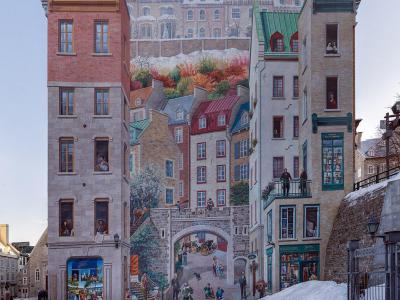
Standing at almost three stories tall and spanning an impressive 4,520 square feet (or 420 square meters), the Quebec City Mural holds the distinction of being the largest and most historically significant trompe l'oeil artwork in the historic Old Quebec area. It's nestled in the iconic Petit Champlain district.
Unveiled to the public in 1999, this monumental mural vividly narrates the rich history of Quebec City, spanning over 400 years, and showcases key historical figures integral to its story. The creation of this colossal masterpiece required the collaborative effort of twelve artists hailing from France and Canada. Their work was closely overseen by experts, including historians, geographers, and others well-versed in the city's heritage.
The mural's location at the intersection of Notre Dame street was strategically chosen, ensuring that no adjacent structures obstruct the view of the artwork. This means that anyone with the inclination can spend hours meticulously examining its intricate details.
The expansive fresco showcases 16 prominent figures from Quebec's history, featuring renowned personalities such as Jacques Cartier, Samuel de Champlain, and Lord Dufferin. It also pays homage to cultural icons like singer-songwriter Félix Leclerc and politician Louis-Joseph Papineau.
Additionally, the mural portrays famous local buildings with notable individuals seemingly peering out from the windows. It includes architectural landmarks like the Breakneck Stairway (L'Escalier Casse-Cou) and the Frontenac Castle (Château Frontenac). Furthermore, it incorporates representations of the distinct climatic seasons experienced in Quebec.
Given its close proximity to a bookstore, the mural also honors numerous authors and artists of Quebecois origin. Notably, the popularity of this mural sparked a trend of trompe l'oeil artwork throughout the city, resulting in many buildings adorned with similarly historically meaningful murals over the years.
Unveiled to the public in 1999, this monumental mural vividly narrates the rich history of Quebec City, spanning over 400 years, and showcases key historical figures integral to its story. The creation of this colossal masterpiece required the collaborative effort of twelve artists hailing from France and Canada. Their work was closely overseen by experts, including historians, geographers, and others well-versed in the city's heritage.
The mural's location at the intersection of Notre Dame street was strategically chosen, ensuring that no adjacent structures obstruct the view of the artwork. This means that anyone with the inclination can spend hours meticulously examining its intricate details.
The expansive fresco showcases 16 prominent figures from Quebec's history, featuring renowned personalities such as Jacques Cartier, Samuel de Champlain, and Lord Dufferin. It also pays homage to cultural icons like singer-songwriter Félix Leclerc and politician Louis-Joseph Papineau.
Additionally, the mural portrays famous local buildings with notable individuals seemingly peering out from the windows. It includes architectural landmarks like the Breakneck Stairway (L'Escalier Casse-Cou) and the Frontenac Castle (Château Frontenac). Furthermore, it incorporates representations of the distinct climatic seasons experienced in Quebec.
Given its close proximity to a bookstore, the mural also honors numerous authors and artists of Quebecois origin. Notably, the popularity of this mural sparked a trend of trompe l'oeil artwork throughout the city, resulting in many buildings adorned with similarly historically meaningful murals over the years.
8) Dufferin Terrace (Terrasse Dufferin) (must see)
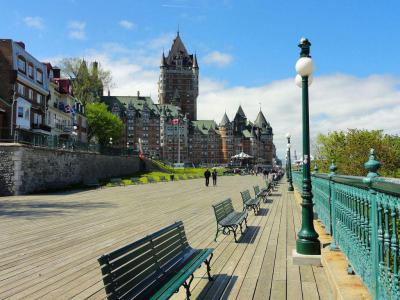
The Dufferin Terrace (Terrasse Dufferin) is a wide, wooden boardwalk wrapping around the front of the Frontenac Castle (Château Frontenac) towards the Citadel of Quebec. The abundance of gazebos and benches here, not to mention the panoramic views of the Saint Lawrence River, the South Shore, and Orleans Island (Île d'Orléans), makes this place an equally loved leisure spot by both locals and tourists.
Remarkably, the use of wooden planks gives this whole thing an “air of summer”, even in the middle of winter when the famous Terrasse Dufferin Slides, a huge (150-metre/490-foot) toboggan on the south end of the terrace, is open during the Quebec Winter Carnival (Carnaval de Québec), from late January to mid-February.
The promenade was built in 1838 and was first known as Durham Terrace. It was enlarged in 1854 and then remodeled, in 1878-1879, under the direction of the then Governor General of Canada, Marquess of Dufferin, whose name it now bears. Each of the six gazebos found on this boardwalk has a name – going north-south, it is Frontenac, Lorne, Princess Louise, Victoria, Dufferin, and Plessis.
Underneath the terrace is the archaeological site of Saint Louis Fort and Castle (Château Saint-Louis), featuring the remains of the former seat of power occupied by the French and British governors of the territory from 1620 to 1834 (when it was destroyed by fire) – it is now open for viewing through the three specially built-in peek-a-boo windows.
Also, at the southern end of the terrace is the entry to the Governors' Promenade, a walkway to the Plains of Abraham built into the cliffs below the Citadel. Nearby, a few old guns recall the strategic position of the place once guarded by artillery batteries.
Remarkably, the use of wooden planks gives this whole thing an “air of summer”, even in the middle of winter when the famous Terrasse Dufferin Slides, a huge (150-metre/490-foot) toboggan on the south end of the terrace, is open during the Quebec Winter Carnival (Carnaval de Québec), from late January to mid-February.
The promenade was built in 1838 and was first known as Durham Terrace. It was enlarged in 1854 and then remodeled, in 1878-1879, under the direction of the then Governor General of Canada, Marquess of Dufferin, whose name it now bears. Each of the six gazebos found on this boardwalk has a name – going north-south, it is Frontenac, Lorne, Princess Louise, Victoria, Dufferin, and Plessis.
Underneath the terrace is the archaeological site of Saint Louis Fort and Castle (Château Saint-Louis), featuring the remains of the former seat of power occupied by the French and British governors of the territory from 1620 to 1834 (when it was destroyed by fire) – it is now open for viewing through the three specially built-in peek-a-boo windows.
Also, at the southern end of the terrace is the entry to the Governors' Promenade, a walkway to the Plains of Abraham built into the cliffs below the Citadel. Nearby, a few old guns recall the strategic position of the place once guarded by artillery batteries.
9) Old Quebec Funicular (Funiculaire du Vieux-Quebec) (must see)
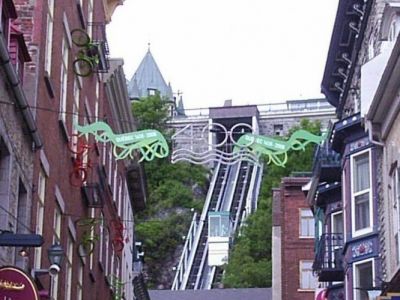
The Old Quebec Funicular, known as the Funiculaire du Vieux-Québec, is a cable railway that connects the Upper and Lower Towns of Old Quebec. It runs between Dufferin Terrace and Petit-Champlain Street.
Besides its speed and convenience, this mode of transportation holds historical significance. The funicular was originally established in 1879. Initially, it operated using a hydraulic system that required the transfer of water between reservoirs before it could function. However, in 1907, it underwent a conversion to electricity.
In 1945, a significant fire damaged the structure, necessitating its reconstruction, which was completed within a year. Subsequent renovations in 1978 and 1998 made both cabins fully autonomous, essentially operating as elevators. From a technical standpoint, it's now more of an inclined lift than a traditional funicular.
Despite its small size, the funicular provides a remarkable way to enjoy the scenery. When traveling uphill, you enter through the Louis Jolliet House and, after obtaining your ticket (which usually takes about 10 minutes on a summer afternoon), ascend 64 meters (210 feet) at a 45-degree angle. During the ride, you can take in stunning views of the Lower Town, the Saint Lawrence River, and the iconic Frontenac Castle (Château Frontenac).
Being here offers a one-of-a-kind experience that you're unlikely to find in many other places around the world. Although the ride itself is short, the enjoyment it provides is long-lasting!
For added enjoyment, there is an on-site gift shop and café.
Besides its speed and convenience, this mode of transportation holds historical significance. The funicular was originally established in 1879. Initially, it operated using a hydraulic system that required the transfer of water between reservoirs before it could function. However, in 1907, it underwent a conversion to electricity.
In 1945, a significant fire damaged the structure, necessitating its reconstruction, which was completed within a year. Subsequent renovations in 1978 and 1998 made both cabins fully autonomous, essentially operating as elevators. From a technical standpoint, it's now more of an inclined lift than a traditional funicular.
Despite its small size, the funicular provides a remarkable way to enjoy the scenery. When traveling uphill, you enter through the Louis Jolliet House and, after obtaining your ticket (which usually takes about 10 minutes on a summer afternoon), ascend 64 meters (210 feet) at a 45-degree angle. During the ride, you can take in stunning views of the Lower Town, the Saint Lawrence River, and the iconic Frontenac Castle (Château Frontenac).
Being here offers a one-of-a-kind experience that you're unlikely to find in many other places around the world. Although the ride itself is short, the enjoyment it provides is long-lasting!
For added enjoyment, there is an on-site gift shop and café.
10) Chateau Frontenac
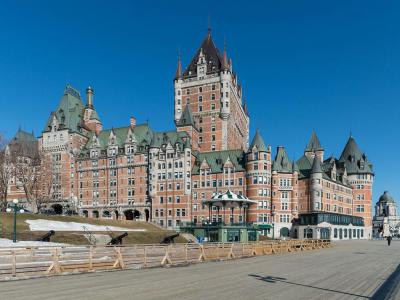
One of the most astonishing buildings in Quebec, renowned for its fortress-like architecture and majestic location – sitting on top of the Cape Diamond (Cap Diamant) ridge, the Frontenac Castle (Château Frontenac) proudly holds the title of the "most photographed hotel in the world".
Opened in 1893, this was one of the first grand railway hotels built by the Canadian Pacific Railway in the country, whose 18-floor grandness, augmented by the 54-meter (177-foot) elevation that it sits at, rivaled any European hotel of the day and grabbed the attention of travelers visiting the city.
The Châteauesque style of the building was later replicated in other grand railway hotels erected throughout Canada from the late 19th to the early 20th centuries. American architect Bruce Price drew inspiration from Medieval, Renaissance, and Victorian architecture, incorporating into his design such elements as turrets from Scottish castles and bastion towers of French châteaus. The hotel was designated a National Historic Site of Canada in 1981 and expanded on three occasions, most recently in 1993.
The building is named after Louis de Buade de Frontenac, who served twice as the Governor General of New France, and it sits on the site previously occupied by Saint Louis Castle (Château Saint-Louis). The remains of this former seat of the French and later of the British governors of the territory now lie in front of the hotel as an archaeological site.
Over the years, the Frontenac Castle has welcomed many guests of honour among whom were the likes of Queen Elizabeth II, Charles Lindbergh, and other dignitaries and celebrities. Alfred Hitchcock used the building as the setting for his 1953 drama "I Confess", however, the most memorable historic events associated with the hotel are the two Quebec Conferences, held in 1943 and 1944, during which U.S. President Franklin D. Roosevelt, British Prime Minister Winston Churchill, and Canadian Prime Minister William Lyon Mackenzie King discussed Allied strategy for WWII including plans for the invasion of Normandy.
Tip:
If you ever book a room here, ask for a high floor – the 18th floor offers a particularly stunning city view!
Consider taking a hotel tour, offered every day, as there are some good anecdotes and stories to hear from the hotel's history.
Opened in 1893, this was one of the first grand railway hotels built by the Canadian Pacific Railway in the country, whose 18-floor grandness, augmented by the 54-meter (177-foot) elevation that it sits at, rivaled any European hotel of the day and grabbed the attention of travelers visiting the city.
The Châteauesque style of the building was later replicated in other grand railway hotels erected throughout Canada from the late 19th to the early 20th centuries. American architect Bruce Price drew inspiration from Medieval, Renaissance, and Victorian architecture, incorporating into his design such elements as turrets from Scottish castles and bastion towers of French châteaus. The hotel was designated a National Historic Site of Canada in 1981 and expanded on three occasions, most recently in 1993.
The building is named after Louis de Buade de Frontenac, who served twice as the Governor General of New France, and it sits on the site previously occupied by Saint Louis Castle (Château Saint-Louis). The remains of this former seat of the French and later of the British governors of the territory now lie in front of the hotel as an archaeological site.
Over the years, the Frontenac Castle has welcomed many guests of honour among whom were the likes of Queen Elizabeth II, Charles Lindbergh, and other dignitaries and celebrities. Alfred Hitchcock used the building as the setting for his 1953 drama "I Confess", however, the most memorable historic events associated with the hotel are the two Quebec Conferences, held in 1943 and 1944, during which U.S. President Franklin D. Roosevelt, British Prime Minister Winston Churchill, and Canadian Prime Minister William Lyon Mackenzie King discussed Allied strategy for WWII including plans for the invasion of Normandy.
Tip:
If you ever book a room here, ask for a high floor – the 18th floor offers a particularly stunning city view!
Consider taking a hotel tour, offered every day, as there are some good anecdotes and stories to hear from the hotel's history.
11) Plains of Abraham / Battlefield Park (must see)
On the Plains of Abraham on September 13, 1759, the French fell to the British, forever changing the course of North American history. After Champlain's arrival in 1608, there were skirmishes on and off with the British, who at the time were fighting for control of the North American colonies against the French, but it wasn’t until 1759 that the real battle took place. It was all over in 15 minutes, and five days later, Québec capitulated.
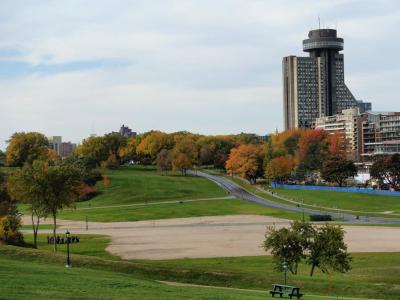
The peculiar name Plains of Abraham can be traced as far back as 1635, when Abraham Martin, a pilot of the Saint Lawrence and a friend of Samuel de Champlain, was given 12 acres of land in the area. Today there is little trace of the battle on the rolling green hills of the plains that border the cliff above the river. The grandiose stone building set back from the Plains houses the park's museum and interpretation center, which offers a multimedia exhibit of its history, from the battle to its popularity with prostitutes in the 19th century and as a choice spot for duels, hangings, and the Stanley Cup playoffs. The park itself was part of the 300th anniversary celebrations and was designed by Frederick Todd. Many of the cannons that line the park were gifts from other nations to remind people that this was once a battlefield.
If you're interested in doing more than just strolling and picnicking in the park, you can head to the Plains of Abraham Museum, where you can visit the Battles 1759-1760 exhibit, which features first-hand soldiers' accounts, battle paraphernalia, and immersive video.
Why You Should Visit:
The park is expansive and very well maintained. You can walk yourself around the battlefields without taking a guided tour as explanatory signs are everywhere.
There are all sorts of activities during the summer and holidays, as well as many quiet areas to just relax and enjoy the solitude of the area.
The museum offers a variety of exhibits and a short film about the famous battle – all worth seeing.
Tip:
Combine your visit with the Joan of Arc Garden and the Citadelle, and make sure to explore all the streets and shops nearby.
The peculiar name Plains of Abraham can be traced as far back as 1635, when Abraham Martin, a pilot of the Saint Lawrence and a friend of Samuel de Champlain, was given 12 acres of land in the area. Today there is little trace of the battle on the rolling green hills of the plains that border the cliff above the river. The grandiose stone building set back from the Plains houses the park's museum and interpretation center, which offers a multimedia exhibit of its history, from the battle to its popularity with prostitutes in the 19th century and as a choice spot for duels, hangings, and the Stanley Cup playoffs. The park itself was part of the 300th anniversary celebrations and was designed by Frederick Todd. Many of the cannons that line the park were gifts from other nations to remind people that this was once a battlefield.
If you're interested in doing more than just strolling and picnicking in the park, you can head to the Plains of Abraham Museum, where you can visit the Battles 1759-1760 exhibit, which features first-hand soldiers' accounts, battle paraphernalia, and immersive video.
Why You Should Visit:
The park is expansive and very well maintained. You can walk yourself around the battlefields without taking a guided tour as explanatory signs are everywhere.
There are all sorts of activities during the summer and holidays, as well as many quiet areas to just relax and enjoy the solitude of the area.
The museum offers a variety of exhibits and a short film about the famous battle – all worth seeing.
Tip:
Combine your visit with the Joan of Arc Garden and the Citadelle, and make sure to explore all the streets and shops nearby.
12) Palais Montcalm
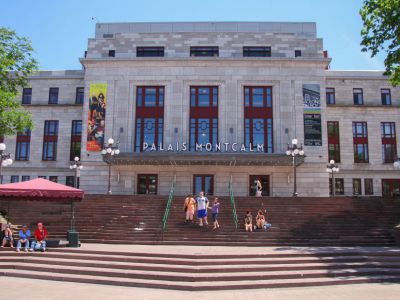
Palais Montcalm is an impressive concert hall situated at Place d'Youville, just beyond the walls of Quebec City. This iconic venue, which has been a prominent feature of Old Quebec since its construction in 1932, underwent a significant transformation from 2002 to 2006, becoming a top-tier performance space with acoustic qualities that complement its stunning art deco design. Within the walls of Palais Montcalm, a diverse range of musical performances, including jazz, blues, folk, and classical music, find their home.
On March 17, 2007, those attending its inaugural performance experienced a venue that had been expanded both upwards and downwards, with the roof being raised and reinforced. The entire interior underwent a remarkable overhaul, resulting in the creation of a 979-seat concert hall adorned with exquisite wood finishes and pristine acoustics, providing an ideal setting for presenting classical music as well as emerging artists. It also became the perfect residence for the renowned string ensemble known as les Violons du Roy.
Furthermore, Palais Montcalm was specially designed to house a colossal pipe organ, which serves as the hall's centerpiece and distinguishes it as a unique destination not only within the province but also throughout the entire country.
This magnificent organ, Casavant’s Opus 3896, boasts three keyboards with mechanical action, 37 stops, and 51 ranks, comprising a total of 2846 pipes. It made its debut on September 11, 2013. Positioned within the room's distinctive "shoebox" layout, the instrument was strategically placed within the hall, centered and as close to the stage as possible to seamlessly blend with the orchestra's performances.
On March 17, 2007, those attending its inaugural performance experienced a venue that had been expanded both upwards and downwards, with the roof being raised and reinforced. The entire interior underwent a remarkable overhaul, resulting in the creation of a 979-seat concert hall adorned with exquisite wood finishes and pristine acoustics, providing an ideal setting for presenting classical music as well as emerging artists. It also became the perfect residence for the renowned string ensemble known as les Violons du Roy.
Furthermore, Palais Montcalm was specially designed to house a colossal pipe organ, which serves as the hall's centerpiece and distinguishes it as a unique destination not only within the province but also throughout the entire country.
This magnificent organ, Casavant’s Opus 3896, boasts three keyboards with mechanical action, 37 stops, and 51 ranks, comprising a total of 2846 pipes. It made its debut on September 11, 2013. Positioned within the room's distinctive "shoebox" layout, the instrument was strategically placed within the hall, centered and as close to the stage as possible to seamlessly blend with the orchestra's performances.
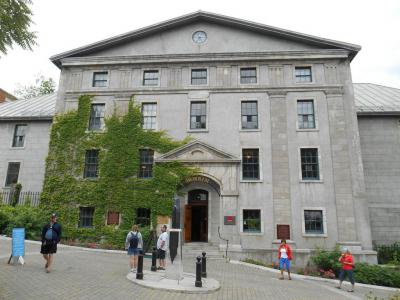
13) Morrin Centre (must see)
One of the most famous cultural landmarks in Quebec City, the Morrin Centre is dedicated to educating the public about the history of English-speaking Quebec and showcasing the present-day culture of local English speakers.
Here you will find the private English-language library of the Literary and Historical Society of Quebec, located on the premises since 1868, and comprising over 20,000 books, a small collection of archives, manuscripts, films and videos, electronic records, nearly 800 artifacts, plus the Stephens collection of decorative items and tea-ware related to the English families of Quebec City.
The centre is found in a former prison building – Quebec City Common Gaol – which operated from 1814 to 1861. The property was sold to Doctor Joseph Morrin in 1868, who turned it into a college for young English speakers, designed by architect Joseph-Ferdinand Peachy, which served in this capacity until 1902. The heritage building was designated a National Historic Site of Canada in 1981.
Visitors to the Morrin Centre can take a guided tour of the building (in either English or French) during which they can see the dark dank cells where prisoners spent their sentences for crimes ranging from drunkenness to murder to stealing tea! There is also an original darkroom that may be the world's oldest in existence.
Any place that can boast of having been a prison, a college, and a library, is well worth visiting and guarantees time well spent. Here, apart from jails, you can learn a little bit more about Quebec history, too.
Here you will find the private English-language library of the Literary and Historical Society of Quebec, located on the premises since 1868, and comprising over 20,000 books, a small collection of archives, manuscripts, films and videos, electronic records, nearly 800 artifacts, plus the Stephens collection of decorative items and tea-ware related to the English families of Quebec City.
The centre is found in a former prison building – Quebec City Common Gaol – which operated from 1814 to 1861. The property was sold to Doctor Joseph Morrin in 1868, who turned it into a college for young English speakers, designed by architect Joseph-Ferdinand Peachy, which served in this capacity until 1902. The heritage building was designated a National Historic Site of Canada in 1981.
Visitors to the Morrin Centre can take a guided tour of the building (in either English or French) during which they can see the dark dank cells where prisoners spent their sentences for crimes ranging from drunkenness to murder to stealing tea! There is also an original darkroom that may be the world's oldest in existence.
Any place that can boast of having been a prison, a college, and a library, is well worth visiting and guarantees time well spent. Here, apart from jails, you can learn a little bit more about Quebec history, too.
