Custom Walk in Bucharest, Romania by tiffany_wilcox_uk_738f5 created on 2025-10-03
Guide Location: Romania » Bucharest
Guide Type: Custom Walk
# of Sights: 11
Tour Duration: 3 Hour(s)
Travel Distance: 5 Km or 3.1 Miles
Share Key: 5RXBE
Guide Type: Custom Walk
# of Sights: 11
Tour Duration: 3 Hour(s)
Travel Distance: 5 Km or 3.1 Miles
Share Key: 5RXBE
How It Works
Please retrieve this walk in the GPSmyCity app. Once done, the app will guide you from one tour stop to the next as if you had a personal tour guide. If you created the walk on this website or come to the page via a link, please follow the instructions below to retrieve the walk in the app.
Retrieve This Walk in App
Step 1. Download the app "GPSmyCity: Walks in 1K+ Cities" on Apple App Store or Google Play Store.



Step 2. In the GPSmyCity app, download(or launch) the guide "Bucharest Map and Walking Tours".
Step 3. Tap the menu button located at upper right corner of the "Walks" screen and select "Retrieve custom walk". Enter the share key: 5RXBE
1) Cișmigiu Gardens (must see)
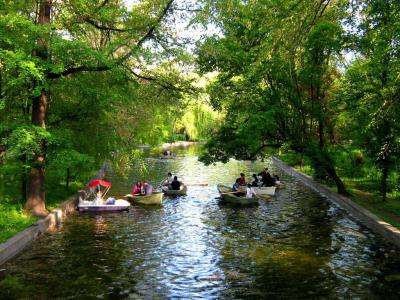
Cismigiu Gardens, the oldest public park in Bucharest, is a serene escape in the heart of Romania’s bustling capital. Established in the mid-19th century, the gardens were designed by German landscape architect Carl Friedrich Wilhelm Meyer, who transformed a former swampy area into a picturesque green space. Officially opened in 1854, Cismigiu quickly became a favorite meeting point for locals and visitors alike, offering a peaceful retreat steps away from the city’s busy boulevards.
The park spans nearly 17 hectares and features a harmonious mix of winding alleys, decorative flowerbeds, and mature trees, some of which are over a century old. At its center lies a large ornamental lake, which serves as a boating spot in the summer and a popular ice-skating rink in the winter. Classical statues, charming bridges, and historic monuments, such as the Sissi Stefanidi Monument and the Writers’ Rotunda, add cultural and historical depth to the landscape.
Beyond its natural beauty, Cismigiu Gardens is a vibrant place for leisure and recreation. Visitors can enjoy shaded pathways ideal for strolls, while children can explore the playgrounds scattered throughout the park. Seasonal floral displays, fountains, and ornamental arrangements make it a delightful spot for photography or quiet relaxation.
For tourists, Cismigiu Gardens offers both a glimpse into Bucharest’s 19th-century urban development and a refreshing break from sightseeing. Its central location makes it easy to pair with nearby attractions, such as the University Square or Victory Avenue (Calea Victoriei), while its timeless atmosphere invites a slow-paced, unhurried visit.
The park spans nearly 17 hectares and features a harmonious mix of winding alleys, decorative flowerbeds, and mature trees, some of which are over a century old. At its center lies a large ornamental lake, which serves as a boating spot in the summer and a popular ice-skating rink in the winter. Classical statues, charming bridges, and historic monuments, such as the Sissi Stefanidi Monument and the Writers’ Rotunda, add cultural and historical depth to the landscape.
Beyond its natural beauty, Cismigiu Gardens is a vibrant place for leisure and recreation. Visitors can enjoy shaded pathways ideal for strolls, while children can explore the playgrounds scattered throughout the park. Seasonal floral displays, fountains, and ornamental arrangements make it a delightful spot for photography or quiet relaxation.
For tourists, Cismigiu Gardens offers both a glimpse into Bucharest’s 19th-century urban development and a refreshing break from sightseeing. Its central location makes it easy to pair with nearby attractions, such as the University Square or Victory Avenue (Calea Victoriei), while its timeless atmosphere invites a slow-paced, unhurried visit.
2) Calea Victoriei (Victory Avenue) (must see)
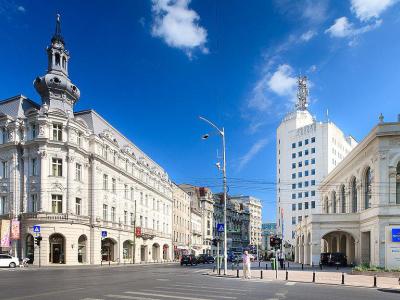
Victory Avenue (Calea Victoriei) is one of Bucharest’s most historic and elegant boulevards. Originally a simple trade route connecting Bucharest to the city of Brasov, it was transformed into a paved thoroughfare in the late 17th century under Prince Constantin Brancoveanu. The road was renamed “Calea Victoriei” in 1878 to commemorate Romania’s victory in the War of Independence, and has since become a symbol of the city’s modern ambitions and architectural grandeur.
Lined with a mix of Belle Époque mansions, interwar modernist buildings, and imposing institutions, the avenue reflects the city’s shifting styles and eras. Notable landmarks include the Romanian Athenaeum, the National Museum of Art (formerly the Royal Palace), the CEC Palace with its eclectic dome, and the Revolution Square-an important site during the fall of communism in 1989. The street also hosts several high-end hotels, shops, and cafes, blending culture with commerce in a uniquely urban setting.
Victory Avenue is best explored on foot, especially during weekends when parts of it become pedestrian-only. The blend of heritage facades, tree-lined sidewalks, and occasional street performances creates a leisurely atmosphere ideal for strolling and people-watching. While the traffic and noise of the city persist nearby, the boulevard manages to offer moments of elegance and calm amid the bustle.
For visitors interested in architecture, history, or simply soaking in the spirit of Bucharest, Victory Avenue offers a continuous narrative-one that ties the past to the present with each step taken along its route.
Lined with a mix of Belle Époque mansions, interwar modernist buildings, and imposing institutions, the avenue reflects the city’s shifting styles and eras. Notable landmarks include the Romanian Athenaeum, the National Museum of Art (formerly the Royal Palace), the CEC Palace with its eclectic dome, and the Revolution Square-an important site during the fall of communism in 1989. The street also hosts several high-end hotels, shops, and cafes, blending culture with commerce in a uniquely urban setting.
Victory Avenue is best explored on foot, especially during weekends when parts of it become pedestrian-only. The blend of heritage facades, tree-lined sidewalks, and occasional street performances creates a leisurely atmosphere ideal for strolling and people-watching. While the traffic and noise of the city persist nearby, the boulevard manages to offer moments of elegance and calm amid the bustle.
For visitors interested in architecture, history, or simply soaking in the spirit of Bucharest, Victory Avenue offers a continuous narrative-one that ties the past to the present with each step taken along its route.
3) Macca-Villacrosse Passage
Nestled in the heart of historic Lipscani district, the Macca‑Villacrosse Passage is a captivating 19th‑century gem offering a unique blend of elegance, architectural innovation, and bohemian flair. Constructed in 1891 by architect Felix Xenopol, this graceful arcade spans between Victory Avenue (Calea Victoriei) and Lipscani Street. What sets it apart is its distinctive fork‑shaped design, created after a hotel in the center resisted acquisition, resulting in two glass‑covered wings that elegantly arch around the building.
Originally a luxurious shopping arcade and Bucharest’s first Stock Exchange, the Passage hosted the city's primary financial hub before it relocated, earning it the unofficial title of the first “luxury mall” in Bucharest. During the Communist era (1950–1990), it was renamed the “Jewelry Passage” (Pasajul Bijuteria), and though that title fell out of favour, traces of its glittering past still linger in the ornate façades and boutique atmosphere.
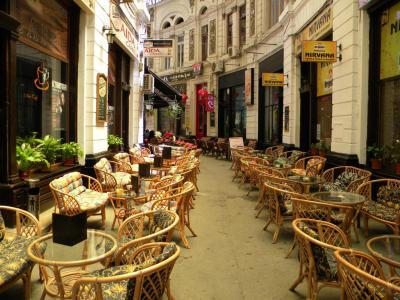
Today, Macca‑Villacrosse has been revitalized as a lively cultural and social hub. Sheltered under a luminous yellow glass canopy, the arcade is lined with convivial cafés, cozy bistros, stylish wine bars, and themed spots like “The Valley of the Kings,” an Arabic‑Egyptian bar highlighting the city’s modern-day cosmopolitan tastes. Wander through daylight or evening ambiance, and you can still sense the passage’s storied elegance mingled with current urban energy.
For tourists seeking a memorable stop between sightseeing in the Old Town and along Calea Victoriei, the Passage offers a perfect blend of historical character and contemporary charm. Whether savouring a coffee, admiring intricate architecture, or strolling through shaded arcade corridors, you’ll be stepping into a living time capsule that captures Bucharest’s eclectic spirit.
Originally a luxurious shopping arcade and Bucharest’s first Stock Exchange, the Passage hosted the city's primary financial hub before it relocated, earning it the unofficial title of the first “luxury mall” in Bucharest. During the Communist era (1950–1990), it was renamed the “Jewelry Passage” (Pasajul Bijuteria), and though that title fell out of favour, traces of its glittering past still linger in the ornate façades and boutique atmosphere.
Today, Macca‑Villacrosse has been revitalized as a lively cultural and social hub. Sheltered under a luminous yellow glass canopy, the arcade is lined with convivial cafés, cozy bistros, stylish wine bars, and themed spots like “The Valley of the Kings,” an Arabic‑Egyptian bar highlighting the city’s modern-day cosmopolitan tastes. Wander through daylight or evening ambiance, and you can still sense the passage’s storied elegance mingled with current urban energy.
For tourists seeking a memorable stop between sightseeing in the Old Town and along Calea Victoriei, the Passage offers a perfect blend of historical character and contemporary charm. Whether savouring a coffee, admiring intricate architecture, or strolling through shaded arcade corridors, you’ll be stepping into a living time capsule that captures Bucharest’s eclectic spirit.
4) CEC Palace
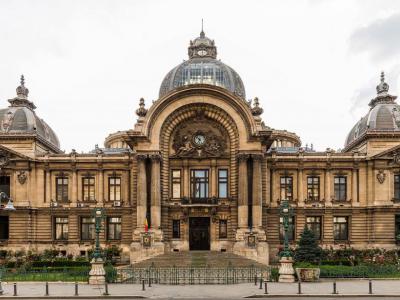
The CEC Palace (Palatul CEC), gracing the heart of Bucharest’s iconic Victory Avenue (Calea Victoriei), is a breathtaking symbol of the city’s late‑19th‑century architectural renaissance. Constructed between 1897 and 1900 under the eye of French architect Paul Gottereau and Romanian firm Ion Socolescu, this elegant Beaux‑Arts masterpiece was commissioned as the headquarters for the nation’s oldest savings institution, the Casa de Depuneri, Consemnațiuni și Economie. Its ornate façade, crowned by a magnificent central glass-and-metal dome and flanked by four smaller cupolas, anchors the streetscape with grace and grandeur.
Beneath its soaring arches and atop elegant Dobrogea marble steps lies a building rich in history and craftsmanship. The palace’s design nods to late‑19th‑century Romanian aspirations toward Western European refinement, mirroring Bucharest’s moniker as “Little Paris”. Statues of Mercury and Demeter adorn the entrance, symbolizing commerce and prosperity, while coats of arms and decorative gables add layers of emblematic meaning. Remarkably resilient, the structure withstood the seismic shocks of the 1940 and 1977 earthquakes, as well as wartime bombings, emerging much as it was originally envisioned.
Though the CEC Palace remains an active working bank and closed to the general public, it holds a private allure few can resist. Guided tours for special events sometimes grant rare access to the palace’s sumptuous interior-featuring ornate wood-carved council chambers and opulent frescoes-including the mythic Fortuna mural. Whether bathed in daylight or softly illuminated at dusk, the palace façade itself is a visual feast, offering unforgettable photo opportunities.
For tourists exploring Bucharest’s storied avenues, a stroll along Victory Avenue (Calea Victoriei) presents the CEC Palace as an essential stop. Opposite the National Museum of Romanian History, it nestles among storied neighbors like the Athénée Palace and Cantacuzino Palace. Though you may only view it from the outside, its presence infuses the city with architectural poetry-an emblem of Romania’s transition into modern Europe and an enduring jewel in Bucharest’s urban crown.
Beneath its soaring arches and atop elegant Dobrogea marble steps lies a building rich in history and craftsmanship. The palace’s design nods to late‑19th‑century Romanian aspirations toward Western European refinement, mirroring Bucharest’s moniker as “Little Paris”. Statues of Mercury and Demeter adorn the entrance, symbolizing commerce and prosperity, while coats of arms and decorative gables add layers of emblematic meaning. Remarkably resilient, the structure withstood the seismic shocks of the 1940 and 1977 earthquakes, as well as wartime bombings, emerging much as it was originally envisioned.
Though the CEC Palace remains an active working bank and closed to the general public, it holds a private allure few can resist. Guided tours for special events sometimes grant rare access to the palace’s sumptuous interior-featuring ornate wood-carved council chambers and opulent frescoes-including the mythic Fortuna mural. Whether bathed in daylight or softly illuminated at dusk, the palace façade itself is a visual feast, offering unforgettable photo opportunities.
For tourists exploring Bucharest’s storied avenues, a stroll along Victory Avenue (Calea Victoriei) presents the CEC Palace as an essential stop. Opposite the National Museum of Romanian History, it nestles among storied neighbors like the Athénée Palace and Cantacuzino Palace. Though you may only view it from the outside, its presence infuses the city with architectural poetry-an emblem of Romania’s transition into modern Europe and an enduring jewel in Bucharest’s urban crown.
5) Stavropoleos Convent (must see)
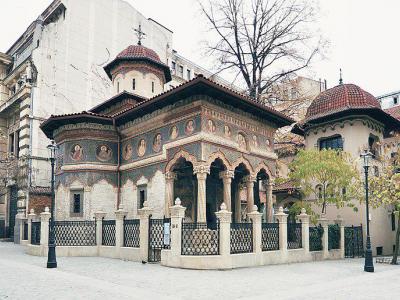
Stavropoleos Convent (Manastirea Stavropoleos) is a hidden treasure tucked away on a quiet lane in Bucharest’s bustling Old Town. Founded in 1724 by Greek archimandrite Ioanichie Stratonikeas under Prince Nicolae Mavrocordatos, the convent-with its cobblestone courtyard and peaceful atmosphere-offers a serene contrast to the energetic cafés and shops just steps away. The name Stavropoleos is derived from the Greek “Stauropolis,” meaning “City of the Cross,” a poetic reminder of the convent's spiritual focus.
Architecturally, the church and remaining convent buildings showcase the exquisite Brancovenesc style-an iconic synthesis of Byzantine, Ottoman, Italian Renaissance, and local influences. You’ll notice its intricately carved stone portico, trilobate arches, floral motifs, and framed religious medallions adorning the facade. Inside, the intimate space is rich with stunning frescoes, gilded icons, and an atmosphere heavy with incense and devotion. Its survival through earthquakes, secularization, and the Ceaușescu era makes visiting feel like stepping back into early 18th-century Bucharest.
Beyond its visual beauty, Stavropoleos is a living center for Orthodox spirituality and cultural heritage. The convent is active with nuns and priests who continue its mission through a renowned Byzantine choir, a library housing over 8,000 theological works and historical manuscripts, and diligent restoration of ancient books, icons, and liturgical garments. Its courtyard also displays fragments rescued from demolished churches, turning this urban nook into a small but poignant museum of Romanian religious art.
For travelers, a visit to Stavropoleos offers much more than architecture-it brings a spiritual and cultural immersion. Entry is free, and the convent welcomes visitors daily from morning to evening. A guided tour or simply lingering inside to absorb the hymns, scents, and sacred ambiance makes this a highlight of any stroll through Bucharest’s Old Town.
Architecturally, the church and remaining convent buildings showcase the exquisite Brancovenesc style-an iconic synthesis of Byzantine, Ottoman, Italian Renaissance, and local influences. You’ll notice its intricately carved stone portico, trilobate arches, floral motifs, and framed religious medallions adorning the facade. Inside, the intimate space is rich with stunning frescoes, gilded icons, and an atmosphere heavy with incense and devotion. Its survival through earthquakes, secularization, and the Ceaușescu era makes visiting feel like stepping back into early 18th-century Bucharest.
Beyond its visual beauty, Stavropoleos is a living center for Orthodox spirituality and cultural heritage. The convent is active with nuns and priests who continue its mission through a renowned Byzantine choir, a library housing over 8,000 theological works and historical manuscripts, and diligent restoration of ancient books, icons, and liturgical garments. Its courtyard also displays fragments rescued from demolished churches, turning this urban nook into a small but poignant museum of Romanian religious art.
For travelers, a visit to Stavropoleos offers much more than architecture-it brings a spiritual and cultural immersion. Entry is free, and the convent welcomes visitors daily from morning to evening. A guided tour or simply lingering inside to absorb the hymns, scents, and sacred ambiance makes this a highlight of any stroll through Bucharest’s Old Town.
6) Lipscani Street (must see)
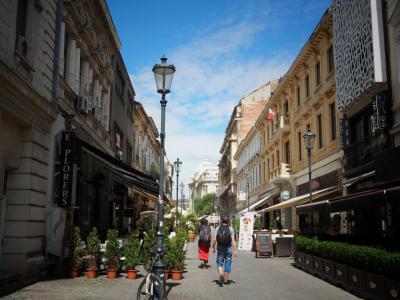
Lipscani Street is the beating heart of Bucharest’s Old Town, a vibrant pedestrian artery that beautifully intertwines medieval charm with bustling modern life. Stretching for nearly a kilometre, Lipscani has been central to the city’s identity since its first mention in 1589, originally known as Broad Lane (Ulita Mare). Its name derives from “lipscan,” the Romanian word for merchants from Leipzig-“Lipsca”-who traded here, making it a lively hub where fine European goods arrived in Wallachia.
The street thrived especially during the reign of Princes Constantin Brancoveanu and Serban Cantacuzino in the late 17th and early 18th centuries, becoming home to guilds and several hanuri (merchant inns) such as The Linden Tree Inn (Hanul cu Tei), which still stands today with its original vaulted cellars and façade. Nearby, the impressive National Bank of Romania occupies the former Serban Voda Inn site, its grand eclectic façade a testament to the late 19th-century architectural ambitions. These buildings reveal layers of Baroque, Neo‑Classical, and Brancovenesc styles-an architectural narrative of a street that evolved from trade epicentre to cultural landmark.
Throughout the 20th century, Lipscani suffered neglect-from wartime damage to Communist-era dereliction-but escaped major demolition and began a dramatic revival in the early 2000s. Today, it pulses with life: cafés, atmospheric bars, boutique shops, and cultural gems occupy restored spaces. Highlights include the iconic Caru’ cu Bere (est. 1899), a Gothic‑Revival gem, and Carturesti Carusel, a stunning early-20th-century bookstore in a former Phanariot bank building. Close by, visiting the Old Princely Court ruins and Stavropoleos Church offers a dip into medieval Bucharest.
For visitors, Lipscani is an immersive time-travel journey. By day, historic façades and narrow cobbles beckon. By night, it transforms into the lifeblood of Bucharest’s culinary and nightlife scene. Whether you're exploring its rich architecture, dashing from a coffee house to a craft beer bar, or simply soaking in the spirited atmosphere, Lipscani is where the city’s past and present meet-and it’s a must-do introduction to the soul of Bucharest.
The street thrived especially during the reign of Princes Constantin Brancoveanu and Serban Cantacuzino in the late 17th and early 18th centuries, becoming home to guilds and several hanuri (merchant inns) such as The Linden Tree Inn (Hanul cu Tei), which still stands today with its original vaulted cellars and façade. Nearby, the impressive National Bank of Romania occupies the former Serban Voda Inn site, its grand eclectic façade a testament to the late 19th-century architectural ambitions. These buildings reveal layers of Baroque, Neo‑Classical, and Brancovenesc styles-an architectural narrative of a street that evolved from trade epicentre to cultural landmark.
Throughout the 20th century, Lipscani suffered neglect-from wartime damage to Communist-era dereliction-but escaped major demolition and began a dramatic revival in the early 2000s. Today, it pulses with life: cafés, atmospheric bars, boutique shops, and cultural gems occupy restored spaces. Highlights include the iconic Caru’ cu Bere (est. 1899), a Gothic‑Revival gem, and Carturesti Carusel, a stunning early-20th-century bookstore in a former Phanariot bank building. Close by, visiting the Old Princely Court ruins and Stavropoleos Church offers a dip into medieval Bucharest.
For visitors, Lipscani is an immersive time-travel journey. By day, historic façades and narrow cobbles beckon. By night, it transforms into the lifeblood of Bucharest’s culinary and nightlife scene. Whether you're exploring its rich architecture, dashing from a coffee house to a craft beer bar, or simply soaking in the spirited atmosphere, Lipscani is where the city’s past and present meet-and it’s a must-do introduction to the soul of Bucharest.
7) Cărturești Carusel Bookstore
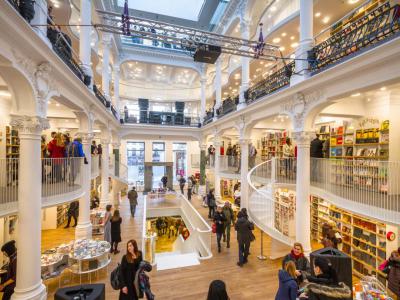
Nestled in the heart of Bucharest’s historic Lipscani district, Carturesti Carusel is more than just a bookstore-it’s a captivating cultural landmark. Housed in a beautifully restored 19th-century edifice, this multi-level treasure trove weaves together literature, design, music, and culinary delights. As you climb the gracefully spiraling staircase, it's easy to lose track of time amid shelves overflowing with books in Romanian and multiple foreign languages-fiction, poetry, art, fashion, and children’s literature. The soft lighting, wooden floors, and ornate balconies give the space a refined yet cozy atmosphere, inviting visitors to linger, browse, and discover unexpected gems.
Beyond books, Carturesti Carusel offers an alluring art studio, a café with luscious pastries and expertly crafted coffee, and an events space for talks, readings, and exhibitions. Whether you're a bibliophile eager to find a rare volume, a traveler seeking a calm retreat from the bustle of the Old Town, or someone hoping to connect with Bucharest’s contemporary cultural scene, this bookstore delivers. Its central location also makes it a convenient stop during a sightseeing stroll-just steps from landmarks like Stavropoleos Monastery and University Square.
Visiting Carturesti Carusel is an immersive, sensory experience. The gradient of hues-from cream walls to warm wooden accents-enhances the sense of depth and elegance as you explore its six balconies, each with a unique view into the shop’s literary world. Live music often fills the air in the evenings, pairing effortlessly with a glass of wine or a cappuccino as you scan the latest releases or flip through vintage art books.
On your journey through Bucharest, set aside some time to experience this literary gem-a place that celebrates imagination, creativity, and the joy of slow, intentional exploration.
Beyond books, Carturesti Carusel offers an alluring art studio, a café with luscious pastries and expertly crafted coffee, and an events space for talks, readings, and exhibitions. Whether you're a bibliophile eager to find a rare volume, a traveler seeking a calm retreat from the bustle of the Old Town, or someone hoping to connect with Bucharest’s contemporary cultural scene, this bookstore delivers. Its central location also makes it a convenient stop during a sightseeing stroll-just steps from landmarks like Stavropoleos Monastery and University Square.
Visiting Carturesti Carusel is an immersive, sensory experience. The gradient of hues-from cream walls to warm wooden accents-enhances the sense of depth and elegance as you explore its six balconies, each with a unique view into the shop’s literary world. Live music often fills the air in the evenings, pairing effortlessly with a glass of wine or a cappuccino as you scan the latest releases or flip through vintage art books.
On your journey through Bucharest, set aside some time to experience this literary gem-a place that celebrates imagination, creativity, and the joy of slow, intentional exploration.
8) Manuc's Inn (must see)
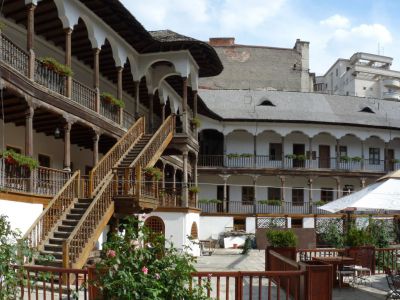
Nestled in the vibrant heart of Old Town, Manuc’s Inn (Hanul lui Manuc), built in 1806–1808 by Armenian-Turkish merchant-diplomat Emanuel Marzaian-known as Manuc Bey-stands as the city’s oldest operating hotel building. Originally conceived as a khan (inn) on the banks of the Dambovita River, it quickly grew into a major commercial and cultural hub. By the mid-19th century, the complex boasted 107 rooms, 15 wholesalers, 23 shops, two reception halls, pubs, taverns, and a charming courtyard encircled by balconied galleries.
Beyond lodging and trade, Manuc’s Inn played host to pivotal historical moments. In 1812, it was the venue for the preliminary negotiations and signing of the Treaty of Bucharest, ending the Russo‑Turkish War from 1806 to 1812. Later, in 1842, it briefly housed Bucharest's town hall, and around 1880 became the scene of the first Romanian operetta performances. Its grand ''Dacia Hall'' also rang with political debates before World War I, further cementing its role as a cultural and civic meeting place.
Though Manuc’s Inn has weathered fire, earthquakes, nationalization under communism, and numerous restorations, its original architectural essence-marked by its courtyards, wooden balconies, and elegant arches-remains wonderfully intact. Today, the Inn melds centuries-old charm with contemporary life: visitors can wander its leafy courtyard, savor traditional Romanian cuisine in its vaulted cellar restaurant, enjoy a coffee or glass of wine on a sunlit balcony, or browse artisan shops lining its street-facing side.
For tourists, a visit to Manuc’s Inn is an invitation to travel back in time-to imagine caravans resting under the courtyards, diplomats negotiating peace, and citizens gathering for culture and commerce. Located just steps from the Old Court ruins (Curtea Veche) and a stone’s throw from Union Square (Piata Unirii), it remains an essential stop on any walking tour of Lipscani’s atmospheric streets.
Beyond lodging and trade, Manuc’s Inn played host to pivotal historical moments. In 1812, it was the venue for the preliminary negotiations and signing of the Treaty of Bucharest, ending the Russo‑Turkish War from 1806 to 1812. Later, in 1842, it briefly housed Bucharest's town hall, and around 1880 became the scene of the first Romanian operetta performances. Its grand ''Dacia Hall'' also rang with political debates before World War I, further cementing its role as a cultural and civic meeting place.
Though Manuc’s Inn has weathered fire, earthquakes, nationalization under communism, and numerous restorations, its original architectural essence-marked by its courtyards, wooden balconies, and elegant arches-remains wonderfully intact. Today, the Inn melds centuries-old charm with contemporary life: visitors can wander its leafy courtyard, savor traditional Romanian cuisine in its vaulted cellar restaurant, enjoy a coffee or glass of wine on a sunlit balcony, or browse artisan shops lining its street-facing side.
For tourists, a visit to Manuc’s Inn is an invitation to travel back in time-to imagine caravans resting under the courtyards, diplomats negotiating peace, and citizens gathering for culture and commerce. Located just steps from the Old Court ruins (Curtea Veche) and a stone’s throw from Union Square (Piata Unirii), it remains an essential stop on any walking tour of Lipscani’s atmospheric streets.
9) Piața Unirii (Union Square) (must see)
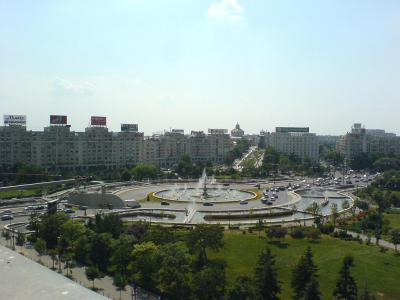
Union Square (Piata Unirii) stands as one of Bucharest’s central and busiest public spaces, both geographically and historically significant. Once the site of an old marketplace known as Great Square (Piata Mare), the square has undergone multiple transformations, especially during the communist period, when it was expanded and reshaped to accommodate grand boulevards and monumental architecture. Today, it serves as a major traffic hub, linking several important roads and metro lines, while anchoring visitors in the heart of the Romanian capital.
To the north of the square lies the grand Bulevardul Unirii, designed to mirror the Champs-Élysées in Paris and lined with fountains that come to life during the summer with coordinated light and music shows. At its western edge, the imposing Unirea Shopping Center provides retail and dining options, while nearby green spaces and wide sidewalks make the square a common meeting point for locals and tourists alike. The square is also within walking distance of major landmarks such as the Palace of the Parliament and the Old Town (Lipscani), making it a convenient starting point for exploration.
Architecturally, Union Square reflects the city’s shifting identity-from its utilitarian communist buildings to more recent commercial developments and restored historical facades. Though not always praised for its aesthetic cohesion, the square’s scale and energy offer a snapshot of Bucharest’s urban evolution. Whether you're using it as a transport junction, admiring the fountains, or simply people-watching, Union Square encapsulates the contrasts and momentum of modern-day Bucharest.
To the north of the square lies the grand Bulevardul Unirii, designed to mirror the Champs-Élysées in Paris and lined with fountains that come to life during the summer with coordinated light and music shows. At its western edge, the imposing Unirea Shopping Center provides retail and dining options, while nearby green spaces and wide sidewalks make the square a common meeting point for locals and tourists alike. The square is also within walking distance of major landmarks such as the Palace of the Parliament and the Old Town (Lipscani), making it a convenient starting point for exploration.
Architecturally, Union Square reflects the city’s shifting identity-from its utilitarian communist buildings to more recent commercial developments and restored historical facades. Though not always praised for its aesthetic cohesion, the square’s scale and energy offer a snapshot of Bucharest’s urban evolution. Whether you're using it as a transport junction, admiring the fountains, or simply people-watching, Union Square encapsulates the contrasts and momentum of modern-day Bucharest.
10) Palace of the Parliament (must see)
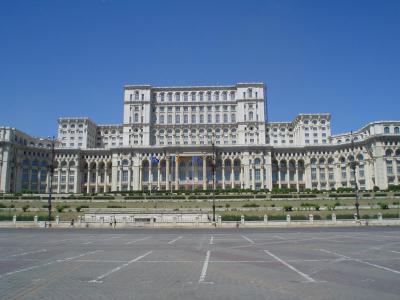
The Palace of the Parliament in Bucharest is a multi-purpose building which houses both chambers of the Romanian Parliament. According to the World Records Academy, the Palace is the world's largest civilian building, most expensive administrative building, and heaviest construction. The Palace was designed and nearly completed under the Ceauşescu regime as the seat of political and administrative power. Nicolae Ceauşescu named it the House of the Republic, although many Romanians call it the People's House.
Built on the site of a hill variously known as Spirii Hill, Uranus Hill, or Arsenal Hill, which was largely razed for this mega project in 1980, the building anchors the west end of Unification Boulevard and Civic Center. Constructing the Palace and Civic Center required demolishing much of Bucharest's historic district, including 19 Orthodox Christian churches, six Jewish synagogues, three Protestant churches (plus eight churches had to be relocated), and 30,000 residences. The construction began in 1983; the cornerstone was laid on 25 June 1984.
While the building was intended to house all four major state institutions (in a similar manner to the UK Houses of Parliament), Ceausescu opted to make the palace his personal residence and have the government operate in it (as if confining the Moscow Kremlin to one building). By the time Nicolae Ceauşescu was overthrown and executed in 1989, the building had been almost complete. Some of the initially planned furnishings were never installed, and the last three basement levels and a large clock tower (meant to display the official Romanian time) were never finished.
Built on the site of a hill variously known as Spirii Hill, Uranus Hill, or Arsenal Hill, which was largely razed for this mega project in 1980, the building anchors the west end of Unification Boulevard and Civic Center. Constructing the Palace and Civic Center required demolishing much of Bucharest's historic district, including 19 Orthodox Christian churches, six Jewish synagogues, three Protestant churches (plus eight churches had to be relocated), and 30,000 residences. The construction began in 1983; the cornerstone was laid on 25 June 1984.
While the building was intended to house all four major state institutions (in a similar manner to the UK Houses of Parliament), Ceausescu opted to make the palace his personal residence and have the government operate in it (as if confining the Moscow Kremlin to one building). By the time Nicolae Ceauşescu was overthrown and executed in 1989, the building had been almost complete. Some of the initially planned furnishings were never installed, and the last three basement levels and a large clock tower (meant to display the official Romanian time) were never finished.
11) Carol Park
Carol Park (Parcul Carol I), perched on Filaret Hill in southern-central Bucharest, is a lush 36–45 hectare oasis lovingly fashioned between 1900 and 1906 to honor King Carol I’s 40‑year reign. Designed by French landscape artist Édouard Redont-with scientific guidance from Constantin Istrati-the park’s original purpose was to host the grand 1906 Exhibition of Romanian arts and achievements. Its harmoniously blended French and English garden styles showcase more than 4,000 large trees, nearly 6,000 conifers, and more than 48,000 shrubs, all arrayed along a geometrically elegant central alley.
Visitors are welcomed by the Cantacuzino fountain and the whimsical Zodiac Fountain-initially installed in 1935 for the “Days of Bucharest” festival, later de‑iconified under communism, and finally restored to its zodiacal glory. A gentle stroll around the central lake leads to notable landmarks: the open‑air Arenele Romane concert venue, the Astronomical Institute, and the charming “Tepes Castle”-a neo‑medieval water tower from the 1906 exhibition now serving as the veteran’s office.
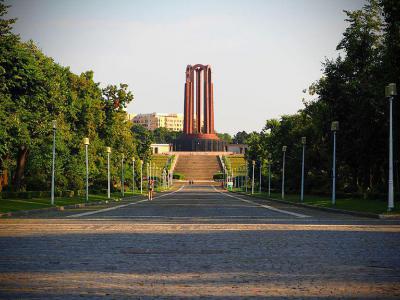
Dominating the skyline is the imposing Communist‑era Mausoleum, built in 1963 atop the former Arts Palace site. Once the tomb of Romania’s communist leaders, it was repurposed after 1991 to house the Tomb of the Unknown Soldier, serving as a somber tribute to World War I heroes. Its massive granite arches and elevated position offer panoramic views of central Bucharest.
Today, Carol Park remains a vibrant mélange of history, culture, and nature-an inviting retreat for tourists and locals alike. Whether you're picnicking beneath centuries‑old trees, attending a concert under the stars at Arenele Romane, or soaking in the solemnity of the Mausoleum, the park offers a unique cross‑section of Romanian history-from monarchical pageantry through communist symbolism to modern remembrance.
Visitors are welcomed by the Cantacuzino fountain and the whimsical Zodiac Fountain-initially installed in 1935 for the “Days of Bucharest” festival, later de‑iconified under communism, and finally restored to its zodiacal glory. A gentle stroll around the central lake leads to notable landmarks: the open‑air Arenele Romane concert venue, the Astronomical Institute, and the charming “Tepes Castle”-a neo‑medieval water tower from the 1906 exhibition now serving as the veteran’s office.
Dominating the skyline is the imposing Communist‑era Mausoleum, built in 1963 atop the former Arts Palace site. Once the tomb of Romania’s communist leaders, it was repurposed after 1991 to house the Tomb of the Unknown Soldier, serving as a somber tribute to World War I heroes. Its massive granite arches and elevated position offer panoramic views of central Bucharest.
Today, Carol Park remains a vibrant mélange of history, culture, and nature-an inviting retreat for tourists and locals alike. Whether you're picnicking beneath centuries‑old trees, attending a concert under the stars at Arenele Romane, or soaking in the solemnity of the Mausoleum, the park offers a unique cross‑section of Romanian history-from monarchical pageantry through communist symbolism to modern remembrance.
