Custom Walk in Stratford-upon-Avon, England by aishani_9b224 created on 2025-11-01
Guide Location: England » Stratford-upon-Avon
Guide Type: Custom Walk
# of Sights: 13
Tour Duration: 2 Hour(s)
Travel Distance: 2.2 Km or 1.4 Miles
Share Key: KNDH8
Guide Type: Custom Walk
# of Sights: 13
Tour Duration: 2 Hour(s)
Travel Distance: 2.2 Km or 1.4 Miles
Share Key: KNDH8
How It Works
Please retrieve this walk in the GPSmyCity app. Once done, the app will guide you from one tour stop to the next as if you had a personal tour guide. If you created the walk on this website or come to the page via a link, please follow the instructions below to retrieve the walk in the app.
Retrieve This Walk in App
Step 1. Download the app "GPSmyCity: Walks in 1K+ Cities" on Apple App Store or Google Play Store.



Step 2. In the GPSmyCity app, download(or launch) the guide "Stratford-upon-Avon Map and Walking Tours".
Step 3. Tap the menu button located at upper right corner of the "Walks" screen and select "Retrieve custom walk". Enter the share key: KNDH8
1) Shakespeare Memorial
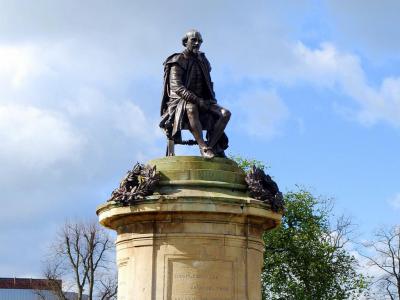
The Shakespeare Memorial in Stratford-upon-Avon is a tribute to the legacy of William Shakespeare, celebrating his unparalleled contribution to literature. The initiative to erect a memorial in his honor began in 1877 when a committee was formed with the vision of commemorating the bard in the town of his birth. The memorial complex, envisioned to celebrate Shakespeare's genius, includes a theatre and statues, situated on land by the Avon River, within view of the church where Shakespeare is interred.
The centerpiece of the memorial, created in 1888 by Lord Ronald Gower, is located in Stratford’s Bancroft Gardens. This striking statue of Shakespeare depicts him seated on a pedestal, exuding a contemplative poise. Surrounding him at ground level are figures of some of his most memorable characters: Hamlet, Lady Macbeth, Prince Hal, and Falstaff. These characters were chosen for their symbolic representation of the broad spectrum of human experience that Shakespeare explored in his works-Philosophy, Tragedy, History, and Comedy. This arrangement showcases the bard's creative versatility and the depth of his understanding of the human condition.
Together, these elements of the Shakespeare Memorial in Stratford-upon-Avon not only honor the memory of William Shakespeare but also serve as a lasting testament to his enduring impact on literature and the arts. Through the thoughtful incorporation of symbolic statuary and the strategic placement of the memorial in a location imbued with historical significance, Stratford-upon-Avon pays homage to its most famous son, ensuring that the legacy of Shakespeare's genius continues to inspire and captivate for generations to come.
The centerpiece of the memorial, created in 1888 by Lord Ronald Gower, is located in Stratford’s Bancroft Gardens. This striking statue of Shakespeare depicts him seated on a pedestal, exuding a contemplative poise. Surrounding him at ground level are figures of some of his most memorable characters: Hamlet, Lady Macbeth, Prince Hal, and Falstaff. These characters were chosen for their symbolic representation of the broad spectrum of human experience that Shakespeare explored in his works-Philosophy, Tragedy, History, and Comedy. This arrangement showcases the bard's creative versatility and the depth of his understanding of the human condition.
Together, these elements of the Shakespeare Memorial in Stratford-upon-Avon not only honor the memory of William Shakespeare but also serve as a lasting testament to his enduring impact on literature and the arts. Through the thoughtful incorporation of symbolic statuary and the strategic placement of the memorial in a location imbued with historical significance, Stratford-upon-Avon pays homage to its most famous son, ensuring that the legacy of Shakespeare's genius continues to inspire and captivate for generations to come.
2) Tudor World (must see)
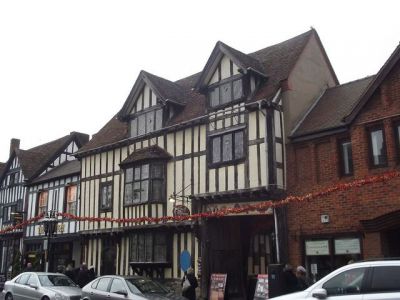
Tudor World is a Museum of everyday life in the time of the Tudors. It is located on Sheep Street, Stratford-upon-Avon, almost exactly in the center of town. The museum operates several different tours including the Walking tour with William Shakespeare himself. William answers questions, tells stories and even poses for pictures.
And best of all for some people, is the Ghost tour. The Ghost tour takes place in the evenings, entirely within the confines of the haunted 12th century edifice. It is not recommended for children under 14. It is spooky and that's the best part. It is so spooky William Shakespeare will not take the tour himself (he said so).
Ghostly visions have been reported by some visitors but the management assures us there has never been an attack by a ghost. The management also guarantees there will not be an attack by anyone living. (Anyone LIVING, that is.) The tour relates the history of ghostly visitations in the building and around the town.
Visitors are taken through the Ghost tour by a guide with a lantern. In each room he/she will talk of the ghostly history of the place. The museum is over 400 years old. The rooms have low ceilings and beams and floors slightly warped. This type of thing is not recommended for those who are nervous or who have physical limitations.
For those who are not overly impressed with the Ghost tour, there will be a Halloween "Terror" tour. Be sure to come at Halloween. For the psychic fans there is a Victorian seance. A seance in a haunted house! Will William be there? He does not answer calls. Well, there's always fortune telling. That's even approved for kids.
Tips:
Take the virtual tour first.
And best of all for some people, is the Ghost tour. The Ghost tour takes place in the evenings, entirely within the confines of the haunted 12th century edifice. It is not recommended for children under 14. It is spooky and that's the best part. It is so spooky William Shakespeare will not take the tour himself (he said so).
Ghostly visions have been reported by some visitors but the management assures us there has never been an attack by a ghost. The management also guarantees there will not be an attack by anyone living. (Anyone LIVING, that is.) The tour relates the history of ghostly visitations in the building and around the town.
Visitors are taken through the Ghost tour by a guide with a lantern. In each room he/she will talk of the ghostly history of the place. The museum is over 400 years old. The rooms have low ceilings and beams and floors slightly warped. This type of thing is not recommended for those who are nervous or who have physical limitations.
For those who are not overly impressed with the Ghost tour, there will be a Halloween "Terror" tour. Be sure to come at Halloween. For the psychic fans there is a Victorian seance. A seance in a haunted house! Will William be there? He does not answer calls. Well, there's always fortune telling. That's even approved for kids.
Tips:
Take the virtual tour first.
3) Royal Shakespeare Theatre (must see)
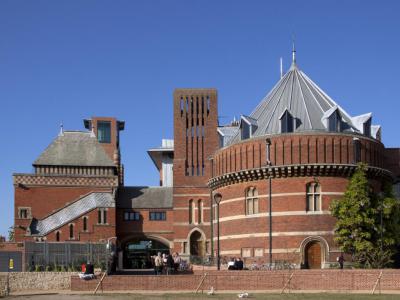
"O for a Muse of fire, that would ascend the brightest heaven of invention...." That comes to mind upon seeing the house and stage of the Royal Shakespeare Theatre (RSC) after its transformation of 2010. The Royal Shakespeare Theatre and the Swan Theatres reopened in 2010 after the extensive changes wrought by the Transformation Project.
This was a redo of the Shakespeare Memorial Theatre (SMT) which had been opened in 1932. The original theatre had been destroyed by fire six years earlier. The new SMT was designed by Elisabeth Scott. Ms Scott's theatre was renamed to Royal Shakespeare Theatre in 1961 after the creation of the Royal Shakespeare Company the previous year.
The RST is a 1,040 seat theatre with a thrust stage, bounded by the audience on three sides. The theatre is owned by the Royal Shakespeare Company (RSC). The new theatre is referred to as a "one room" theatre. Actors and audience are close together in the same room, as in Shakespeare's time. The play is an intimate experience for all.
The Theatre has a Rooftop Restaurant and bar offering views of the river Avon. There are also a Riverside Cafe and Terrace. There is a colonnade linking the RSC and the Swan Theatre. There is a tower, 118 feet in height with dramatic perspectives of the town and countryside. A riverside walk reaches from Bancroft Gardens past the Theatre.
Queen Elizabeth II and Prince Philip officially opened the Theatre in March 2011. An urn with the ashes of Actor Ian Richardson was placed in the foundation by his widow and son in 2007.
This was a redo of the Shakespeare Memorial Theatre (SMT) which had been opened in 1932. The original theatre had been destroyed by fire six years earlier. The new SMT was designed by Elisabeth Scott. Ms Scott's theatre was renamed to Royal Shakespeare Theatre in 1961 after the creation of the Royal Shakespeare Company the previous year.
The RST is a 1,040 seat theatre with a thrust stage, bounded by the audience on three sides. The theatre is owned by the Royal Shakespeare Company (RSC). The new theatre is referred to as a "one room" theatre. Actors and audience are close together in the same room, as in Shakespeare's time. The play is an intimate experience for all.
The Theatre has a Rooftop Restaurant and bar offering views of the river Avon. There are also a Riverside Cafe and Terrace. There is a colonnade linking the RSC and the Swan Theatre. There is a tower, 118 feet in height with dramatic perspectives of the town and countryside. A riverside walk reaches from Bancroft Gardens past the Theatre.
Queen Elizabeth II and Prince Philip officially opened the Theatre in March 2011. An urn with the ashes of Actor Ian Richardson was placed in the foundation by his widow and son in 2007.
4) Shakespeare's New Place (must see)
In 1597 William Shakespeare was founder of the Lord Chamberlain's Men and a successful playwright. He had left his Birthplace House. He had moved to his newer, larger house, which he had bought for 129 pounds. The New Place (for so it was called) was located on Chapel Street, but a short walk from the Birthplace House on Henley Street.
New Place had been built in the 15th century by Hugh Clopton. The terms "New" or "Newer" as used in Britain are relative and not to be taken literally. One might say, "newer than the pyramids", for example. The New Place had a five gabled, three bayed, half-timbered frontage. Shakespeare rebuilt the frontage and added a gallery.
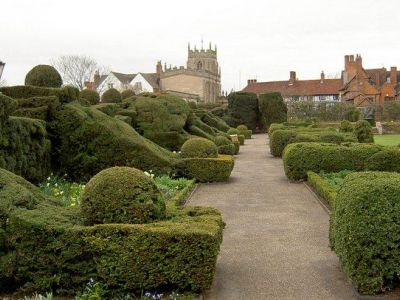
New Place was pulled down in the late 17th century by the Clopton family who had reacquired the property. The Clopton's newer New Place itself was demolished in 1759. Now New Place is occupied by a garden designed to memorialize Shakespeare's life and work and to allow visitors to develop their own connections with his legacy.
The Great Garden is behind the site where the house once stood. The garden shows sculptures based on Shakespeare's writings. The Knot Garden has been restored using designs which would have been familiar to Shakespeare himself.
New Place had been built in the 15th century by Hugh Clopton. The terms "New" or "Newer" as used in Britain are relative and not to be taken literally. One might say, "newer than the pyramids", for example. The New Place had a five gabled, three bayed, half-timbered frontage. Shakespeare rebuilt the frontage and added a gallery.
New Place was pulled down in the late 17th century by the Clopton family who had reacquired the property. The Clopton's newer New Place itself was demolished in 1759. Now New Place is occupied by a garden designed to memorialize Shakespeare's life and work and to allow visitors to develop their own connections with his legacy.
The Great Garden is behind the site where the house once stood. The garden shows sculptures based on Shakespeare's writings. The Knot Garden has been restored using designs which would have been familiar to Shakespeare himself.
5) Shakespeare's Schoolroom and Guildhall (must see)
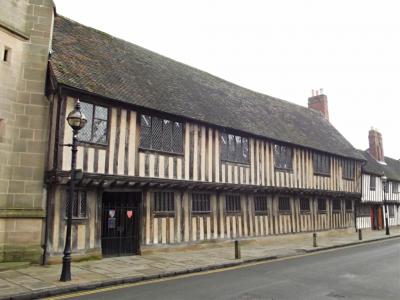
Here is an interactive peek into William Shakespeare's childhood and schooling in the 16th century. The Guild of the Holy Cross built the Guildhall in 1420. Over the years more buildings were added, including a schoolhouse, a Chapel and Almshouses. The Guildhall was the headquarter of the Stratford Borough Council from 1553 and 1848.
When the Borough Council left for new digs at the Town Hall, they left the building to the school. The school, known as The King's New school, had been in the Guildhall since 1568. It later became the King Edward VI School (K.E.S.). Three years later seven-year-old William Shakespeare attended his first class. One may assume it was writing.
The school has been in continuous use by the local people since it first opened. The Guildhall has always been used and looked after and never neglected. Not only local students may study here, the school is also open to tourists. They may take an interactive class with William Shakespeare's teacher, Master Thomas Jenkins.
Adjoining the Guildhall is the Armoury. It was originally used a store place for arms, but after 1553 it became an administration center for the school. It also served as courtroom. On the first floor is the Master's chamber. In the center of the chamber is the prefect's table, bearing the names and initials of schoolboys through the years.
Students were mostly the children of wealthy middle class people. Williams' father, for instance, was the bailiff for the town. It was a public school and an entrance exam was required. Students did not pay fees, but they did have to provide their own firewood and candles. Classes frequently went from 6 am to 6 pm. There was a brief midday break.
Why You Should Visit:
to experience a bit how education used to be.
Tips:
When using the feather quill, be wary of ink blots.
When the Borough Council left for new digs at the Town Hall, they left the building to the school. The school, known as The King's New school, had been in the Guildhall since 1568. It later became the King Edward VI School (K.E.S.). Three years later seven-year-old William Shakespeare attended his first class. One may assume it was writing.
The school has been in continuous use by the local people since it first opened. The Guildhall has always been used and looked after and never neglected. Not only local students may study here, the school is also open to tourists. They may take an interactive class with William Shakespeare's teacher, Master Thomas Jenkins.
Adjoining the Guildhall is the Armoury. It was originally used a store place for arms, but after 1553 it became an administration center for the school. It also served as courtroom. On the first floor is the Master's chamber. In the center of the chamber is the prefect's table, bearing the names and initials of schoolboys through the years.
Students were mostly the children of wealthy middle class people. Williams' father, for instance, was the bailiff for the town. It was a public school and an entrance exam was required. Students did not pay fees, but they did have to provide their own firewood and candles. Classes frequently went from 6 am to 6 pm. There was a brief midday break.
Why You Should Visit:
to experience a bit how education used to be.
Tips:
When using the feather quill, be wary of ink blots.
6) Nash House
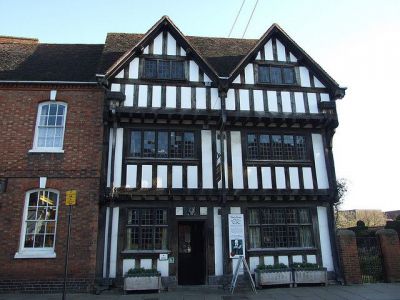
Standing right next door to the ruins and gardens of New Place, the residence in which William Shakespeare spent his last living days, is Nash's House.
This classical Tudor-period dwelling was built around 1500 and was once owned and occupied by Thomas Nash, a distinguished lawyer. In 1626 he married Shakespeare’s granddaughter Elizabeth – the only daughter of Susanna Shakespeare. In 1637, Susanna bought the property and later bequeathed it to Elizabeth. After Nash’s death in 1647, it was reserved for their use and that of their heirs.
When Elizabeth died childless in 1670, the direct line of Shakespeare came to an end and the property came into the possession of her second husband John Bernard. In 1876, The Shakespeare Birthplace Trust acquired both New Place and Nash's House, and converted the latter into a museum of local history.
The museum traces lineage from the earliest settlers in the Avon Valley to the time of Shakespeare, and has a permanent exhibition on the life of Shakespeare as a father, husband, and resident of Stratford, as well as his writing career.
A fine example of 16th-century architecture, the house features period furnishing (many fine pieces of original Jacobean, Tudor and Elizabethan furniture), tapestries and engravings, and boasts a first-floor viewing platform overlooking the New Place site, the Guild Chapel and King Edward VI School, where Shakespeare was a student.
Exhibits inside include the executor's copy of Shakespeare's will, dated 1616, and a copy of the “fine” (a Tudor term for legal action) marking Shakespeare's purchase of New Place. One of the most intriguing objects on display is a gold signet ring with the inscription 'WS' – discovered near Holy Trinity Church, where Shakespeare's daughter Judith was married in February 1616.
This classical Tudor-period dwelling was built around 1500 and was once owned and occupied by Thomas Nash, a distinguished lawyer. In 1626 he married Shakespeare’s granddaughter Elizabeth – the only daughter of Susanna Shakespeare. In 1637, Susanna bought the property and later bequeathed it to Elizabeth. After Nash’s death in 1647, it was reserved for their use and that of their heirs.
When Elizabeth died childless in 1670, the direct line of Shakespeare came to an end and the property came into the possession of her second husband John Bernard. In 1876, The Shakespeare Birthplace Trust acquired both New Place and Nash's House, and converted the latter into a museum of local history.
The museum traces lineage from the earliest settlers in the Avon Valley to the time of Shakespeare, and has a permanent exhibition on the life of Shakespeare as a father, husband, and resident of Stratford, as well as his writing career.
A fine example of 16th-century architecture, the house features period furnishing (many fine pieces of original Jacobean, Tudor and Elizabethan furniture), tapestries and engravings, and boasts a first-floor viewing platform overlooking the New Place site, the Guild Chapel and King Edward VI School, where Shakespeare was a student.
Exhibits inside include the executor's copy of Shakespeare's will, dated 1616, and a copy of the “fine” (a Tudor term for legal action) marking Shakespeare's purchase of New Place. One of the most intriguing objects on display is a gold signet ring with the inscription 'WS' – discovered near Holy Trinity Church, where Shakespeare's daughter Judith was married in February 1616.
7) American Fountain
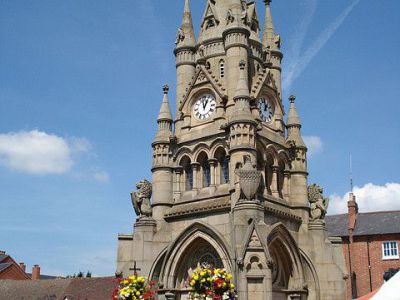
The American Fountain is a beautiful Stratford-Upon-Avon landmark. The Gothic clock tower with a roundabout fountain, was established in 1887 in honor of Queen Victoria's jubilee.
Design is by Jethro Anstice Cossins. Dedication by the actor Henry Irving. The tower is in three stages including arches, recesses, roundels of flowers and fruit carvings. The second stage has a triple arcade, turrets and spiralets. The top has clocks in gables, and figures of Puck, Mustard Seed, Pea-blossom and Cobweb Ltd, fairies-at-law.
It was a gift from George Childs, a Philadelphia newspaper magnate, and that's why it's called the American Fountain. The opening ceremony featured Henry Irving, famous Shakespearean actor. The fountain also features inscriptions and quotations from famous Shakespearian plays.
Design is by Jethro Anstice Cossins. Dedication by the actor Henry Irving. The tower is in three stages including arches, recesses, roundels of flowers and fruit carvings. The second stage has a triple arcade, turrets and spiralets. The top has clocks in gables, and figures of Puck, Mustard Seed, Pea-blossom and Cobweb Ltd, fairies-at-law.
It was a gift from George Childs, a Philadelphia newspaper magnate, and that's why it's called the American Fountain. The opening ceremony featured Henry Irving, famous Shakespearean actor. The fountain also features inscriptions and quotations from famous Shakespearian plays.
8) White Swan Hotel
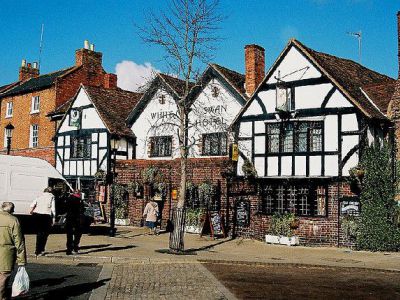
A truly historic, black-and-white Tudor building of the White Swan Hotel has been ever faithful to the Stratford-upon-Avon picture perfect postcard since its construction in 1450. One of the few oldest preserved buildings in town, this was originally a bakery amongst whose faithful bread buyers, they say, were the Shakespeares. It started as an inn in 1560, and was first known as the King's House or Hall.
The Hall was owned by Robert Perrott, the brewer, and was kept by his brother William. In 1588, Roberts’s granddaughter Susanne Woodward married a young officer, called Richard Tyler, who happened to be one of William Shakespeare’s boyhood friends. Rumours have it that the Bard and the young couple would have had many a drink here, which is plausible, considering that Tyler had a passion for ales and was the son of an appointed Ale Taster for the borough.
Inside the hotel, in the oak room, there is a wall painting, commissioned by William Perrot in honour of his wife, dated around 1560. The painting depicts the story of Tobias and the Angel, and was discovered in 1927 during renovation. Chances are that, in his day, William Shakespeare could well sit here and enjoy his mead whilst looking at this very painting...
The Hall was owned by Robert Perrott, the brewer, and was kept by his brother William. In 1588, Roberts’s granddaughter Susanne Woodward married a young officer, called Richard Tyler, who happened to be one of William Shakespeare’s boyhood friends. Rumours have it that the Bard and the young couple would have had many a drink here, which is plausible, considering that Tyler had a passion for ales and was the son of an appointed Ale Taster for the borough.
Inside the hotel, in the oak room, there is a wall painting, commissioned by William Perrot in honour of his wife, dated around 1560. The painting depicts the story of Tobias and the Angel, and was discovered in 1927 during renovation. Chances are that, in his day, William Shakespeare could well sit here and enjoy his mead whilst looking at this very painting...
9) The Jester
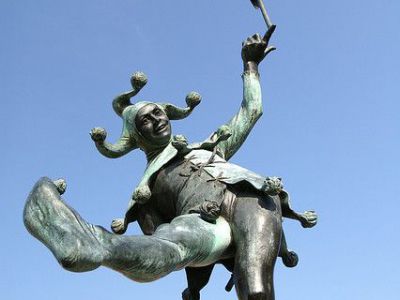
The Jester is one of the most recent and famous Stratford landmarks. Situated at the crossroads of Henley and Windsor Streets, this bronze statue captures the essence of the Shakespearean Jester, a character that graced many of the Bard's plays with wit and wisdom. The figure is depicted in a dynamic pose, holding a pole and a comedy mask, with an extended heel forward, suggesting a moment of jest. Intriguingly, the statue conceals a tragedy mask behind its back, embodying the dual nature of joy and sorrow that these characters often represented in Shakespeare's works.
The Jester was generously donated by Anthony Bird, a native of Warwickshire, thereby enriching the cultural and artistic landscape of Stratford-upon-Avon. The choice of location for the statue is symbolically significant, placed just a short distance from Shakespeare's birthplace, thereby linking the literary heritage of the town with its contemporary artistic expressions.
Adding to its charm, the plinth of The Jester is inscribed with a selection of Shakespearian quotations that are both interesting and humorously fitting. These inscriptions serve not only as a tribute to the playwright's genius but also as a means to engage and entertain the public, inviting passersby to reflect on the timeless relevance of Shakespeare's words. The Jester, thus, stands not just as a physical landmark, but as a testament to the enduring legacy of Shakespeare's work and its capacity to inspire and amuse generations.
The Jester was generously donated by Anthony Bird, a native of Warwickshire, thereby enriching the cultural and artistic landscape of Stratford-upon-Avon. The choice of location for the statue is symbolically significant, placed just a short distance from Shakespeare's birthplace, thereby linking the literary heritage of the town with its contemporary artistic expressions.
Adding to its charm, the plinth of The Jester is inscribed with a selection of Shakespearian quotations that are both interesting and humorously fitting. These inscriptions serve not only as a tribute to the playwright's genius but also as a means to engage and entertain the public, inviting passersby to reflect on the timeless relevance of Shakespeare's words. The Jester, thus, stands not just as a physical landmark, but as a testament to the enduring legacy of Shakespeare's work and its capacity to inspire and amuse generations.
10) Henley Street
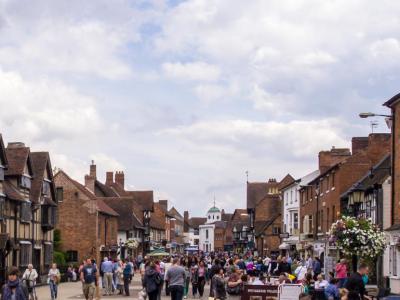
Henley Street in Stratford-upon-Avon is one of the oldest streets in the town. It has seen substantial architectural transformations between the sixteenth and nineteenth centuries, blending a rich tapestry of Tudor and mock-Tudor buildings along its length. Today, Henley Street is a bustling pedestrian precinct, a major tourist and shopping destination. Visitors can enjoy al fresco cafés, street entertainers, and a variety of shops, adding to the street's lively atmosphere.
Central to Henley Street's allure is The Shakespeare Birthplace, a landmark that draws visitors from around the globe, making it one of the world’s most recognizable locations. This historic house, where William Shakespeare was born, along with The Shakespeare Birthplace Trust and Library, is pivotal in celebrating the legacy of the Bard. Additionally, the MAD Museum offers an intriguing diversion, showcasing mechanical art and design.
Henley Street's significance is further highlighted during special events, such as the National Museums at Night festival. This festival offers a unique opportunity to explore history in a new light, with Henley Street playing host to the House Party on Henley Street. Here, visitors can meet significant historical figures associated with the street, including John and Mary Shakespeare, William's parents; Mary Hornby, an early custodian of Shakespeare’s Birthplace; Marie Corelli, a noted novelist, and campaigner; Dr John Connolly, a pioneer in mental health treatment; and Waldo Lanchester, England’s leading puppeteer.
Henley Street isn't just a historic site-it's a vibrant part of Stratford-upon-Avon, alive with history, culture, and entertainment. From Shakespeare's legacy to other notable figures, it's a captivating blend of past and present.
Central to Henley Street's allure is The Shakespeare Birthplace, a landmark that draws visitors from around the globe, making it one of the world’s most recognizable locations. This historic house, where William Shakespeare was born, along with The Shakespeare Birthplace Trust and Library, is pivotal in celebrating the legacy of the Bard. Additionally, the MAD Museum offers an intriguing diversion, showcasing mechanical art and design.
Henley Street's significance is further highlighted during special events, such as the National Museums at Night festival. This festival offers a unique opportunity to explore history in a new light, with Henley Street playing host to the House Party on Henley Street. Here, visitors can meet significant historical figures associated with the street, including John and Mary Shakespeare, William's parents; Mary Hornby, an early custodian of Shakespeare’s Birthplace; Marie Corelli, a noted novelist, and campaigner; Dr John Connolly, a pioneer in mental health treatment; and Waldo Lanchester, England’s leading puppeteer.
Henley Street isn't just a historic site-it's a vibrant part of Stratford-upon-Avon, alive with history, culture, and entertainment. From Shakespeare's legacy to other notable figures, it's a captivating blend of past and present.
11) Shakespeare's Birthplace (must see)
"A Mecca for all lovers of literature." That must be true, judging by all the "lovers of literature" signatures etched into the windows of the house on Henley Street. Years after William Shakespeare left the planet, his admirers came to say hello.
Charles Dickens, Sir Walter Scott, Thomas Carlyle, Lord Byron, Lord Tennyson, John Keats and last but not least, William Thackeray left their names. Here lived the Master of the English Language. What was it like, the house he grew up in? Was it rich, poor, middle class?
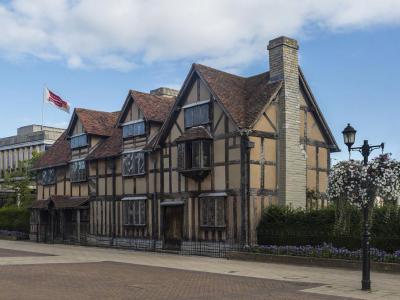
It is a very simple house today, but in Shakespeare's time it would have been thought a large dwelling. People were shorter, doors were lower, rooms were smaller. The house was effectively divided in two parts. One was for business and the other for living. Shakespeare's father, John, was a glove maker and a dealer in leather and wool.
It is a restored 16th century half-timbered house in Stratford-upon-Avon, Warwickshire, England. It is a museum now, but in 1564 it was where William Shakespeare was born. The house was constructed of wattle and daub around a timber frame. The fireplaces are of brick and stone and the ground floor is of flagstone.
William Shakespeare inherited the house but by then he had moved with his family to New Place on Chapel Street. Eventually the Henley Street house passed to other owners and by the 1800s it had fallen into a distressed state. In 1846 it was put up for sale. P.T. Barnum of circus fame tried to buy it and ship it "brick by brick" to the USA.
Not having any of that, the Shakespeare Birthplace Committee became the Shakespeare Birthplace Trust by an act of Parliament and stepped in to save the day. The Trust bought the property and restored it to its original state.
Next to the Birthplace is the Shakespeare Centre, a modern building which houses the Shakespeare Birthplace Trust. The Centre contains a library, and a collection of Shakespeare paraphernalia. The Centre also provides admission to the Birthplace.
Why You Should Visit:
William Shakespeare is the heart of this town.
Tips:
Don't worry about driving, parking, etc. There is a tram (good one) and most places to be seen are within walking distance of each other.
Charles Dickens, Sir Walter Scott, Thomas Carlyle, Lord Byron, Lord Tennyson, John Keats and last but not least, William Thackeray left their names. Here lived the Master of the English Language. What was it like, the house he grew up in? Was it rich, poor, middle class?
It is a very simple house today, but in Shakespeare's time it would have been thought a large dwelling. People were shorter, doors were lower, rooms were smaller. The house was effectively divided in two parts. One was for business and the other for living. Shakespeare's father, John, was a glove maker and a dealer in leather and wool.
It is a restored 16th century half-timbered house in Stratford-upon-Avon, Warwickshire, England. It is a museum now, but in 1564 it was where William Shakespeare was born. The house was constructed of wattle and daub around a timber frame. The fireplaces are of brick and stone and the ground floor is of flagstone.
William Shakespeare inherited the house but by then he had moved with his family to New Place on Chapel Street. Eventually the Henley Street house passed to other owners and by the 1800s it had fallen into a distressed state. In 1846 it was put up for sale. P.T. Barnum of circus fame tried to buy it and ship it "brick by brick" to the USA.
Not having any of that, the Shakespeare Birthplace Committee became the Shakespeare Birthplace Trust by an act of Parliament and stepped in to save the day. The Trust bought the property and restored it to its original state.
Next to the Birthplace is the Shakespeare Centre, a modern building which houses the Shakespeare Birthplace Trust. The Centre contains a library, and a collection of Shakespeare paraphernalia. The Centre also provides admission to the Birthplace.
Why You Should Visit:
William Shakespeare is the heart of this town.
Tips:
Don't worry about driving, parking, etc. There is a tram (good one) and most places to be seen are within walking distance of each other.
12) Shakespeare's Birthplace Giftshop
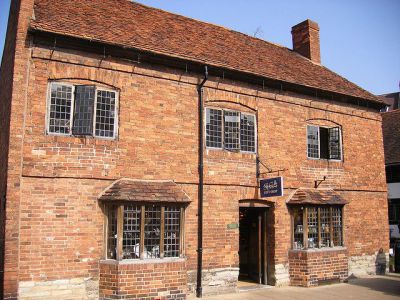
Situated in the heart of Stratford-Upon-Avon, right next to the famous home of Britain's beloved playwright, Shakespeare's Birthplace Gift Shop is a must-visit spot for tourists. This special store not only benefits from its proximity to Shakespeare's historic house but also impresses visitors with its wide range of products, each one reflecting the legacy of the esteemed writer.
The store offers a diverse collection tailored to those interested in home decor, featuring gift books, elegant pewter items, fashionable clothing, delightful toys, and captivating prints. Each item in the shop pays tribute to Shakespeare's lasting influence, with designs and themes inspired by his iconic characters and timeless writings.
Literature enthusiasts of all ages, from young readers to academic scholars, will appreciate the shop's unmatched selection of Shakespearean literature. Whether seeking charming gift editions, complete collections of Shakespeare's works, board books for children, or scholarly texts for students, the shop prides itself on catering to every interest and educational requirement.
In addition to its retail offerings, Shakespeare's Birthplace Gift Shop plays a vital role in preserving Shakespearean heritage. Every purchase directly supports the essential maintenance and conservation of Shakespeare's family homes, as well as the protection of invaluable collections. Through these efforts, the shop helps cultivate a global appreciation and love for Shakespeare's body of work.
The store offers a diverse collection tailored to those interested in home decor, featuring gift books, elegant pewter items, fashionable clothing, delightful toys, and captivating prints. Each item in the shop pays tribute to Shakespeare's lasting influence, with designs and themes inspired by his iconic characters and timeless writings.
Literature enthusiasts of all ages, from young readers to academic scholars, will appreciate the shop's unmatched selection of Shakespearean literature. Whether seeking charming gift editions, complete collections of Shakespeare's works, board books for children, or scholarly texts for students, the shop prides itself on catering to every interest and educational requirement.
In addition to its retail offerings, Shakespeare's Birthplace Gift Shop plays a vital role in preserving Shakespearean heritage. Every purchase directly supports the essential maintenance and conservation of Shakespeare's family homes, as well as the protection of invaluable collections. Through these efforts, the shop helps cultivate a global appreciation and love for Shakespeare's body of work.
13) The MAD Museum (must see)
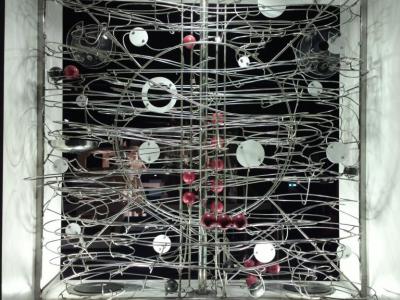
"Hail, Science and science-type stuff!" That would make a fair motto for this place. The MAD Museum, aka The Mechanical Art& Design Museum, is located on Henley Street in Stratford-upon-Avon. Yes, it is quite mad, in a Rube Goldberg sort of way. It is interactive, especially for kids who love to put their hands on things anyway.
This is the home of Mechanical Art. What is that? Think of Wallis & Gromit, interactive kinetic art, Pinball Wizard, like that. All the parts move, for the fun of it, or with some mad purpose in mind. Artists and inventors throughout the world have contributed to the exhibitions. Kids of all ages are encouraged to experiment and "push buttons."
The MAD Museum is operated by a local family from Kenilworth in Warwickshire. There are ten dedicated members on staff who have been with the Museum since its inception in March, 2012. It offers kids the opportunity to "put down their mobiles" and acquaint themselves with engineering, art and design.
This is the home of Mechanical Art. What is that? Think of Wallis & Gromit, interactive kinetic art, Pinball Wizard, like that. All the parts move, for the fun of it, or with some mad purpose in mind. Artists and inventors throughout the world have contributed to the exhibitions. Kids of all ages are encouraged to experiment and "push buttons."
The MAD Museum is operated by a local family from Kenilworth in Warwickshire. There are ten dedicated members on staff who have been with the Museum since its inception in March, 2012. It offers kids the opportunity to "put down their mobiles" and acquaint themselves with engineering, art and design.
