Custom Walk in London, England by gpsmycity_azusfamily_223e5 created on 2026-01-03
Guide Location: England » London
Guide Type: Custom Walk
# of Sights: 13
Tour Duration: 5 Hour(s)
Travel Distance: 10.4 Km or 6.5 Miles
Share Key: 5NN33
Guide Type: Custom Walk
# of Sights: 13
Tour Duration: 5 Hour(s)
Travel Distance: 10.4 Km or 6.5 Miles
Share Key: 5NN33
How It Works
Please retrieve this walk in the GPSmyCity app. Once done, the app will guide you from one tour stop to the next as if you had a personal tour guide. If you created the walk on this website or come to the page via a link, please follow the instructions below to retrieve the walk in the app.
Retrieve This Walk in App
Step 1. Download the app "GPSmyCity: Walks in 1K+ Cities" on Apple App Store or Google Play Store.



Step 2. In the GPSmyCity app, download(or launch) the guide "London Map and Walking Tours".
Step 3. Tap the menu button located at upper right corner of the "Walks" screen and select "Retrieve custom walk". Enter the share key: 5NN33
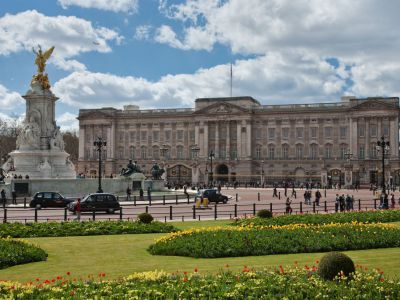
1) Buckingham Palace (must see)
The postcard-perfect face of the British monarchy, Buckingham Palace is possibly the world’s fanciest “office.” What began in 1703 as a cozy townhouse for the Duke of Buckingham (hence the name) ended up becoming royal property in 1761 when King George III bought it for his wife, Queen Charlotte. By 1837, Queen Victoria had officially moved in, setting up camp and turning it into the headquarters of royal business and the heart of Britain's ceremonial life ever since.
Today, the palace packs a whopping 775 rooms, including 52 royal and guest bedrooms, 78 bathrooms (because clearly, you never know when you’ll need a backup loo), and countless other rooms fit for everything from crown-polishing to state banquets. While most of these royal spaces are strictly off-limits, commoners-like us, the curious public-can sneak a peek during special visiting seasons, mainly August and September, plus select days in winter and spring.
Step inside the palace’s 19 State Rooms and prepare to have your jaw royally dropped. Here, we’re talking chandeliers that could double as UFOs, lavish gold trim, and masterpieces by Rembrandt and Rubens just casually hanging around. You’ll stroll through the Throne Room (cue the imaginary fanfare), the Ballroom where knighthoods are handed out like royal gold stars, the Grand Staircase, and a variety of drawing rooms, each with its own personality-from the Blue Drawing Room’s stately charm to the Music Room’s lapis columns and the gleaming White Drawing Room. Don’t skip the State Dining Room either-this is where the portraits watch you more than you watch them.
Outside, the Changing of the Guard steals the show with its precision marching, bearskin hats, and musical flair. It’s essentially a military ballet, free of charge-but do arrive early for the best view, as everyone and their selfie stick wants in.
Right next door, the Queen’s Gallery serves up rotating exhibits from the Royal Collection, including priceless paintings, sparkling jewels, and historic treasures galore. A few steps away, the Royal Mews stables show off the royal horses and carriages, because royalty of all people needs a stylish ride.
Tip:
Snag a timed-entry ticket (they’re released in 15-minute waves), and if you’ve got time, tack on a garden tour for some fresh air and manicured perfection. Give yourself two hours-minimum-because once you step into Buckingham Palace, you’ll want to soak up every royal second.
Today, the palace packs a whopping 775 rooms, including 52 royal and guest bedrooms, 78 bathrooms (because clearly, you never know when you’ll need a backup loo), and countless other rooms fit for everything from crown-polishing to state banquets. While most of these royal spaces are strictly off-limits, commoners-like us, the curious public-can sneak a peek during special visiting seasons, mainly August and September, plus select days in winter and spring.
Step inside the palace’s 19 State Rooms and prepare to have your jaw royally dropped. Here, we’re talking chandeliers that could double as UFOs, lavish gold trim, and masterpieces by Rembrandt and Rubens just casually hanging around. You’ll stroll through the Throne Room (cue the imaginary fanfare), the Ballroom where knighthoods are handed out like royal gold stars, the Grand Staircase, and a variety of drawing rooms, each with its own personality-from the Blue Drawing Room’s stately charm to the Music Room’s lapis columns and the gleaming White Drawing Room. Don’t skip the State Dining Room either-this is where the portraits watch you more than you watch them.
Outside, the Changing of the Guard steals the show with its precision marching, bearskin hats, and musical flair. It’s essentially a military ballet, free of charge-but do arrive early for the best view, as everyone and their selfie stick wants in.
Right next door, the Queen’s Gallery serves up rotating exhibits from the Royal Collection, including priceless paintings, sparkling jewels, and historic treasures galore. A few steps away, the Royal Mews stables show off the royal horses and carriages, because royalty of all people needs a stylish ride.
Tip:
Snag a timed-entry ticket (they’re released in 15-minute waves), and if you’ve got time, tack on a garden tour for some fresh air and manicured perfection. Give yourself two hours-minimum-because once you step into Buckingham Palace, you’ll want to soak up every royal second.
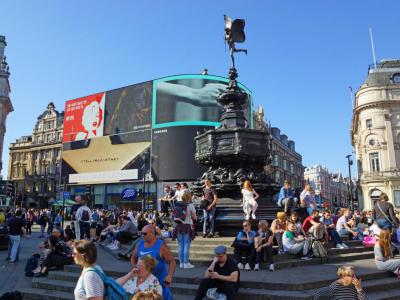
2) Piccadilly Circus
Now, Piccadilly Circus is not a literal circus, though with the crowds, neon lights, and eccentric street performers, you’d be forgiven for thinking you’d stumbled into one.
The origins of the name Piccadilly trace back to a 17th-century guy, Robert Baker-not a baker himself, mind you, but a tailor who made a fortune selling "piccadills"-fancy ruffled collars. Baker did so well peddling these neck braces that he built himself a swanky mansion in the area. The aristocrats, clearly not fans of upstart tailors living large, mockingly dubbed it “Piccadilly Hall.” The joke’s on them-the name stuck, and now it’s on the map.
At the center of the circus (once actually circular until 1886), stands a statue famously misidentified as Eros. In truth, it’s Anteros, Eros’s lesser-known brother-the Greek god of requited love (less wild romance, more emotionally mature affection). Because apparently, even gods have to deal with (and occasionally get tired of) complicated relationships...
Just behind him, look up, and you’ll see the legendary wall of illuminated billboards lighting up the north side. The first glowing ad appeared there in 1908, promoting Perrier mineral water like it was the elixir of life. For a perfect “I’m in London” kind of photo, stand at the corner of Regent Street and get those lights framed behind the Tube sign.
Now, take a peek underground. Hidden beneath the chaos, you’ll find two gems. The Criterion Theatre-built in 1873, and mostly below street level-was once ventilated with pumped-in fresh air to counter gaslight fumes. Next door, Piccadilly Circus Station is one of the few fully subterranean Tube stops in the network.
Over on the western side, history buffs can spot a rare relic: a 1935 police call box-one of the last of its kind. And if you're really sharp-eyed, look for one of the Seven Noses of Soho, a quirky sculptural series. Word has it, if you find all seven, unimaginable wealth awaits you. So, go for it!
In Harry Potter and the Deathly Hallows – Part 1, Piccadilly Circus becomes the chaotic landing spot for Harry, Ron, and Hermione after the Death Eaters crash Bill and Fleur’s wedding. It’s all running, panicking, and nearly becoming roadkill via double-decker bus. The scene was shot right in front of the Gap store, just off the main circle-quite the fashion-forward place to dodge dark wizards. In the book, they land at Tottenham Court Road, but the filmmakers clearly wanted a little more drama and dazzle.
Well, aside from possible magical encounters and spontaneous nose hunts, it’s the heart of London’s West End. Basically, it’s where London throws on its glitter, grabs a coffee, and says, “Let’s go!”
The origins of the name Piccadilly trace back to a 17th-century guy, Robert Baker-not a baker himself, mind you, but a tailor who made a fortune selling "piccadills"-fancy ruffled collars. Baker did so well peddling these neck braces that he built himself a swanky mansion in the area. The aristocrats, clearly not fans of upstart tailors living large, mockingly dubbed it “Piccadilly Hall.” The joke’s on them-the name stuck, and now it’s on the map.
At the center of the circus (once actually circular until 1886), stands a statue famously misidentified as Eros. In truth, it’s Anteros, Eros’s lesser-known brother-the Greek god of requited love (less wild romance, more emotionally mature affection). Because apparently, even gods have to deal with (and occasionally get tired of) complicated relationships...
Just behind him, look up, and you’ll see the legendary wall of illuminated billboards lighting up the north side. The first glowing ad appeared there in 1908, promoting Perrier mineral water like it was the elixir of life. For a perfect “I’m in London” kind of photo, stand at the corner of Regent Street and get those lights framed behind the Tube sign.
Now, take a peek underground. Hidden beneath the chaos, you’ll find two gems. The Criterion Theatre-built in 1873, and mostly below street level-was once ventilated with pumped-in fresh air to counter gaslight fumes. Next door, Piccadilly Circus Station is one of the few fully subterranean Tube stops in the network.
Over on the western side, history buffs can spot a rare relic: a 1935 police call box-one of the last of its kind. And if you're really sharp-eyed, look for one of the Seven Noses of Soho, a quirky sculptural series. Word has it, if you find all seven, unimaginable wealth awaits you. So, go for it!
In Harry Potter and the Deathly Hallows – Part 1, Piccadilly Circus becomes the chaotic landing spot for Harry, Ron, and Hermione after the Death Eaters crash Bill and Fleur’s wedding. It’s all running, panicking, and nearly becoming roadkill via double-decker bus. The scene was shot right in front of the Gap store, just off the main circle-quite the fashion-forward place to dodge dark wizards. In the book, they land at Tottenham Court Road, but the filmmakers clearly wanted a little more drama and dazzle.
Well, aside from possible magical encounters and spontaneous nose hunts, it’s the heart of London’s West End. Basically, it’s where London throws on its glitter, grabs a coffee, and says, “Let’s go!”
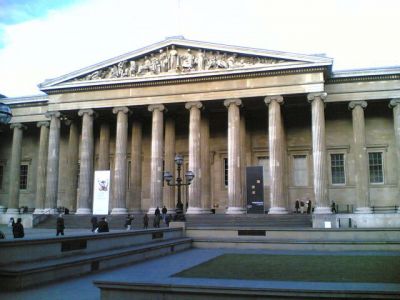
3) British Museum (must see)
Spanning several miles of galleries and featuring around 80,000 exhibits, the British Museum stands as one of the most comprehensive displays of human culture and history globally. Under its roof, it houses one of the largest collections of antiquities, prints, and drawings, with over 8,000,000 objects and a continuously expanding inventory. Its unparalleled assortment of Roman and Greek art, exceptional Egyptian collection, and captivating treasures from Africa, China, Japan, India, Mesopotamia, Anglo-Saxon, and Roman Britain make it an extraordinary institution.
From a certain perspective, the British Museum represents a repository of artifacts acquired during the peak of the British Empire's influence, often seen as a collection of "plundered goods". The most famous example of this is Lord Elgin's removal of the Elgin Marbles, but numerous other instances of sporadic looting throughout the empire's territories also contributed to the museum's holdings. Additionally, the museum commissioned archaeologists to excavate and acquire classical artifacts.
The museum's origins trace back to the 71,000 curiosities amassed by Hans Sloane, a Chelsea physician. Sloane bequeathed this collection to George II in 1753 for £20,000. When the king couldn't or wouldn't pay, the government reluctantly purchased the collection, establishing the world's first public secular museum, initially housed in a mansion funded by a controversial public lottery. As the collection expanded, a grander space became necessary, resulting in the impressive Greek Revival building that still graces London today. This building, designed by Robert Smirke in the 1820s, features a majestic Ionic colonnade and portico.
Visitors to the British Museum should be prepared for crowds, especially on weekends, as it is a far cry from its modest beginnings. In its early days, the museum was open for just three hours a day, entry required a written application, and tickets were limited to ten per hour for "any person of decent appearance". Today, it can be overwhelming even for the most devoted museum enthusiasts. To make the most of a visit, it is advisable to focus on specific areas of interest, explore the highlights, or participate in one of the museum's excellent free guided tours of individual rooms.
Why You Should Visit:
Home of the Rosetta Stone, ancient Egyptian artifacts, Roman statuary and much, much more.
Tips:
Arriving early is a wise strategy to avoid the crowds.
There are two entrances: the primary entrance at the front, and a secondary one at the rear, which tends to have fewer visitors.
Visiting the exhibits inside the museum requires an admission fee, but entry to the museum itself is free of charge.
From a certain perspective, the British Museum represents a repository of artifacts acquired during the peak of the British Empire's influence, often seen as a collection of "plundered goods". The most famous example of this is Lord Elgin's removal of the Elgin Marbles, but numerous other instances of sporadic looting throughout the empire's territories also contributed to the museum's holdings. Additionally, the museum commissioned archaeologists to excavate and acquire classical artifacts.
The museum's origins trace back to the 71,000 curiosities amassed by Hans Sloane, a Chelsea physician. Sloane bequeathed this collection to George II in 1753 for £20,000. When the king couldn't or wouldn't pay, the government reluctantly purchased the collection, establishing the world's first public secular museum, initially housed in a mansion funded by a controversial public lottery. As the collection expanded, a grander space became necessary, resulting in the impressive Greek Revival building that still graces London today. This building, designed by Robert Smirke in the 1820s, features a majestic Ionic colonnade and portico.
Visitors to the British Museum should be prepared for crowds, especially on weekends, as it is a far cry from its modest beginnings. In its early days, the museum was open for just three hours a day, entry required a written application, and tickets were limited to ten per hour for "any person of decent appearance". Today, it can be overwhelming even for the most devoted museum enthusiasts. To make the most of a visit, it is advisable to focus on specific areas of interest, explore the highlights, or participate in one of the museum's excellent free guided tours of individual rooms.
Why You Should Visit:
Home of the Rosetta Stone, ancient Egyptian artifacts, Roman statuary and much, much more.
Tips:
Arriving early is a wise strategy to avoid the crowds.
There are two entrances: the primary entrance at the front, and a secondary one at the rear, which tends to have fewer visitors.
Visiting the exhibits inside the museum requires an admission fee, but entry to the museum itself is free of charge.
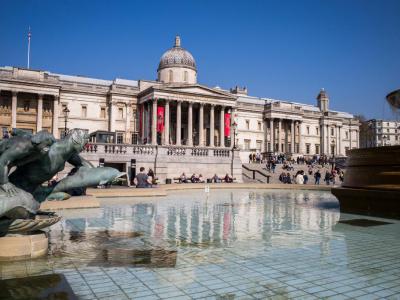
4) National Gallery (must see)
If you’ve ever even squinted at a painting and thought, “Huh, that’s nice,” then the National Gallery deserves a prime spot on your London to-do list. It’s not just any gallery-it’s a global heavyweight, housing over 2,300 works from the who’s who of art history: Michelangelo, Leonardo, Turner, Monet, van Gogh, Picasso... you get the idea. Step through its stately portico overlooking Trafalgar Square, and you’ll tumble straight into centuries of artistic genius.
Now, if you hang a sharp left at the entrance, you’ll find the Sainsbury Wing. It’s modern, it’s moody, and it’s medieval-perfect for lovers of halos, tempera, and crowds that don’t jostle quite as much.
Don’t be surprised if a “quick pop-in” turns into an all-day affair. Must-sees include Holbein’s The Ambassadors, complete with a gloriously skewed skull (visible only if you stand just right and maybe squint like you mean it). Make sure not to miss van Eyck’s Arnolfini Portrait, where a couple holds hands while a mysterious mirror photobombs from the background, or da Vinci’s Virgin of the Rocks, dripping with drama and Renaissance elegance. And of course, in Turner’s Rain, Steam, and Speed, check out the train, which is not the only thing speeding-you’ll need sharp eyes to spot a hare bolting for dear life.
The Gallery also hosts special exhibitions that are buzzy enough to make even the Mona Lisa smirk. These usually require a ticket and advance booking, but the permanent collection is gloriously free, always. You can join a guided tour, listen to a curator wax lyrical, or just wander with your own thoughts and an audio guide.
Tip:
If at some point, your stomach starts growling louder than the gallery’s whisper policy allows, head to the in-house restaurant. They serve Colchester native oysters and artful sandwiches, not to mention themed afternoon teas with more traditional choices like cakes that change with the exhibits. As for the scones, they are a permanent fixture. Afternoon tea is served daily, no reservation needed-just bring your appetite and maybe a friend who knows the difference between Impressionism and Expressionism.
Long story short: go for the art, stay for the scones.
Now, if you hang a sharp left at the entrance, you’ll find the Sainsbury Wing. It’s modern, it’s moody, and it’s medieval-perfect for lovers of halos, tempera, and crowds that don’t jostle quite as much.
Don’t be surprised if a “quick pop-in” turns into an all-day affair. Must-sees include Holbein’s The Ambassadors, complete with a gloriously skewed skull (visible only if you stand just right and maybe squint like you mean it). Make sure not to miss van Eyck’s Arnolfini Portrait, where a couple holds hands while a mysterious mirror photobombs from the background, or da Vinci’s Virgin of the Rocks, dripping with drama and Renaissance elegance. And of course, in Turner’s Rain, Steam, and Speed, check out the train, which is not the only thing speeding-you’ll need sharp eyes to spot a hare bolting for dear life.
The Gallery also hosts special exhibitions that are buzzy enough to make even the Mona Lisa smirk. These usually require a ticket and advance booking, but the permanent collection is gloriously free, always. You can join a guided tour, listen to a curator wax lyrical, or just wander with your own thoughts and an audio guide.
Tip:
If at some point, your stomach starts growling louder than the gallery’s whisper policy allows, head to the in-house restaurant. They serve Colchester native oysters and artful sandwiches, not to mention themed afternoon teas with more traditional choices like cakes that change with the exhibits. As for the scones, they are a permanent fixture. Afternoon tea is served daily, no reservation needed-just bring your appetite and maybe a friend who knows the difference between Impressionism and Expressionism.
Long story short: go for the art, stay for the scones.
5) Trafalgar Square (must see)
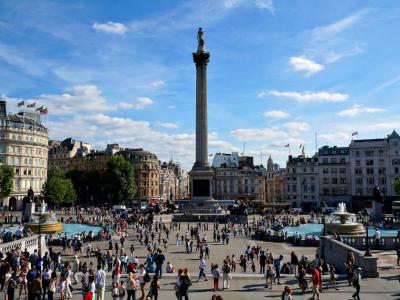
Britain’s most self-important plaza, Trafalgar Square is arguably the closest thing to London’s beating heart (if London had ventricles paved in pigeons and protest signs). Want the official center of the city? That’s actually a tiny traffic island called Charing Cross, just south of the square. Yep, all distances to London are measured from there. Not Buckingham Palace. Not Big Ben. A glorified roundabout...
Now, if you're into obscure imperial measurements, Trafalgar’s got you covered. Nestled behind the café, you’ll find the Imperial Standard measures: inches, feet, yards, chains, perches, poles... basically, the greatest hits of Victorian measuring tape. Originally installed in 1876, they were moved in 2003 when the north terrace was pedestrianized-because who needs traffic when you’ve got trivia?
The square gets its name from the Battle of Trafalgar, a Napoleonic showdown where Admiral Lord Nelson heroically defeated the French and Spanish fleets in 1805... and promptly died doing so. 30 years later, the square got its now-famous name. Then, in 1843, they added Nelson’s Column, a towering tribute built from Devon granite, with bronze panels depicting his greatest hits: Saint Vincent, The Nile, Copenhagen, and Trafalgar-which, to be fair, did earn him the naming rights.
By 1868, the stone lions guarding the column were considered too puny for British pride, so the sculptor Edwin Landseer crafted bronze ones instead, with remarkable anatomical precision. Beautiful, grand, majestic-except, apparently, he got one detail hilariously wrong: he sculpted the back of the lions as if they had beanbag backs (real lions don’t sag like that).
Surrounded by fountains, tourists, and-until recently-a whole lot of feathered freeloaders, Trafalgar was once London’s top pigeon hangout. That is, until a mayor declared them public enemy number one and evicted the birdseed dealers. The pigeons, scandalized, have never quite forgiven the city.
Tip:
Plant yourself on the steps, let the sounds of the city wash over you, and watch the sun dip behind Nelson’s heroic silhouette. Or just use it as your springboard to the rest of London-you’re already at the center, after all.
Now, if you're into obscure imperial measurements, Trafalgar’s got you covered. Nestled behind the café, you’ll find the Imperial Standard measures: inches, feet, yards, chains, perches, poles... basically, the greatest hits of Victorian measuring tape. Originally installed in 1876, they were moved in 2003 when the north terrace was pedestrianized-because who needs traffic when you’ve got trivia?
The square gets its name from the Battle of Trafalgar, a Napoleonic showdown where Admiral Lord Nelson heroically defeated the French and Spanish fleets in 1805... and promptly died doing so. 30 years later, the square got its now-famous name. Then, in 1843, they added Nelson’s Column, a towering tribute built from Devon granite, with bronze panels depicting his greatest hits: Saint Vincent, The Nile, Copenhagen, and Trafalgar-which, to be fair, did earn him the naming rights.
By 1868, the stone lions guarding the column were considered too puny for British pride, so the sculptor Edwin Landseer crafted bronze ones instead, with remarkable anatomical precision. Beautiful, grand, majestic-except, apparently, he got one detail hilariously wrong: he sculpted the back of the lions as if they had beanbag backs (real lions don’t sag like that).
Surrounded by fountains, tourists, and-until recently-a whole lot of feathered freeloaders, Trafalgar was once London’s top pigeon hangout. That is, until a mayor declared them public enemy number one and evicted the birdseed dealers. The pigeons, scandalized, have never quite forgiven the city.
Tip:
Plant yourself on the steps, let the sounds of the city wash over you, and watch the sun dip behind Nelson’s heroic silhouette. Or just use it as your springboard to the rest of London-you’re already at the center, after all.
6) Westminster Abbey (must see)
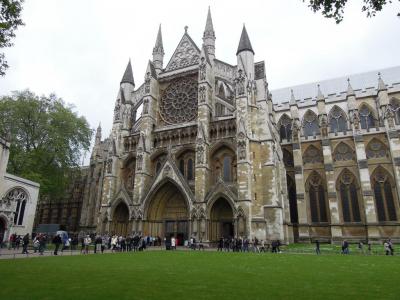
Westminster Abbey-the Gothic heavyweight champion of British heritage, parked squarely in the City of Westminster. Back in the day, Westminster wasn’t even part of London proper. It was its own thing.
The roots of this holy site stretch all the way back to the late 10th century. But it wasn’t until King Edward the Confessor decided to go full Romanesque here, in the 11th century, that things got serious. He turned the abbey into one of Europe’s top-tier religious mega-structures. Edward didn’t live to see it fully materialize, though, but history appreciates his effort.
In 1245, Henry III kicked off construction of the Gothic version we see today. He also commissioned the fancy Cosmati pavement near the High Altar-because kings of all people do appreciate custom flooring. Most of what we admire here now was wrapped up under Richard II, and in 1519, Henry VII added a gorgeous chapel to the Virgin Mary for good measure. As for the iconic west towers, Early Gothic Revival, they were built between 1722 and 1745.
But Westminster Abbey is not just a church. No. It’s the spiritual VIP lounge of the UK. Monarchs have been crowned here since 1066, starting with William the Conqueror. It’s also the final resting place for legends: Queen Elizabeth I, Isaac Newton, Charles Darwin, Geoffrey Chaucer, Rudyard Kipling, Laurence Olivier… Basically, if you’ve made Britain proud, there’s a plot here waiting for you.
And don’t forget the emotional landmarks: Princess Diana’s funeral in 1997, and the royal wedding of Prince William and Kate Middleton in 2011. Yes, this place has seen more royal drama than a season of The Crown.
If you consider visiting, remember: Lines form year-round, so book online to skip the queue like a pro. But don’t plan your Instagram reel just yet-no photography inside is allowed. It’s all eyes and memory...
As a bonus round, make a literary pilgrimage to Poet’s Corner and pay respects to Mr. Charles Dickens himself. Per his modest request, his gravestone simply reads:
CHARLES DICKENS
BORN 7th FEBRUARY 1812
DIED 9th JUNE 1870
Dickens died in Kent, but the public insisted-and The Times newspaper rallied behind the cause-that only Westminster would do as his final resting place. The funeral was private. The legacy-immortal.
So, whether it’s the soaring arches, the centuries of coronations, or the sheer weight of brilliance buried beneath your feet, Westminster Abbey is London in its architectural form-solemn, storied, and just a touch dramatic.
The roots of this holy site stretch all the way back to the late 10th century. But it wasn’t until King Edward the Confessor decided to go full Romanesque here, in the 11th century, that things got serious. He turned the abbey into one of Europe’s top-tier religious mega-structures. Edward didn’t live to see it fully materialize, though, but history appreciates his effort.
In 1245, Henry III kicked off construction of the Gothic version we see today. He also commissioned the fancy Cosmati pavement near the High Altar-because kings of all people do appreciate custom flooring. Most of what we admire here now was wrapped up under Richard II, and in 1519, Henry VII added a gorgeous chapel to the Virgin Mary for good measure. As for the iconic west towers, Early Gothic Revival, they were built between 1722 and 1745.
But Westminster Abbey is not just a church. No. It’s the spiritual VIP lounge of the UK. Monarchs have been crowned here since 1066, starting with William the Conqueror. It’s also the final resting place for legends: Queen Elizabeth I, Isaac Newton, Charles Darwin, Geoffrey Chaucer, Rudyard Kipling, Laurence Olivier… Basically, if you’ve made Britain proud, there’s a plot here waiting for you.
And don’t forget the emotional landmarks: Princess Diana’s funeral in 1997, and the royal wedding of Prince William and Kate Middleton in 2011. Yes, this place has seen more royal drama than a season of The Crown.
If you consider visiting, remember: Lines form year-round, so book online to skip the queue like a pro. But don’t plan your Instagram reel just yet-no photography inside is allowed. It’s all eyes and memory...
As a bonus round, make a literary pilgrimage to Poet’s Corner and pay respects to Mr. Charles Dickens himself. Per his modest request, his gravestone simply reads:
CHARLES DICKENS
BORN 7th FEBRUARY 1812
DIED 9th JUNE 1870
Dickens died in Kent, but the public insisted-and The Times newspaper rallied behind the cause-that only Westminster would do as his final resting place. The funeral was private. The legacy-immortal.
So, whether it’s the soaring arches, the centuries of coronations, or the sheer weight of brilliance buried beneath your feet, Westminster Abbey is London in its architectural form-solemn, storied, and just a touch dramatic.
7) Big Ben & Houses of Parliament (must see)
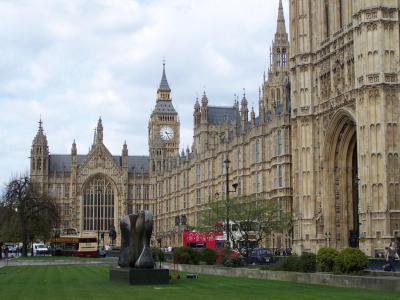
Ah yes, Big Ben-London’s most famous timekeeper! Often mistaken for the entire tower, technically, it's just the bell inside. The tower itself, once modestly named the Clock Tower, got a royal upgrade in 2012 and is now known as the Elizabeth Tower, in honor of Queen Elizabeth II’s Diamond Jubilee.
As for Big Ben-the bell-it weighs a jaw-dropping 15 tonnes. That’s about the weight of three adult elephants. It chimes every hour with a deep, resonant bong that echoes across the city, while four smaller bells handle the quarter-hour duties like loyal timekeeping sidekicks.
As for the name “Big Ben”, theories abound. Some say it was named after Benjamin Hall, the rather large man in charge of installing the bell. Others swear it honors Benjamin Caunt, a Victorian heavyweight boxer. Either way, it’s clear: you didn’t get to be “Big Ben” by being discreet.
Just next door, you'll find the Palace of Westminster, home of the Houses of Parliament-that’s the House of Commons and the House of Lords for those keeping score. After a fire in 1834 burned the old palace to a crisp, King William IV generously offered up Buckingham Palace as a backup. The MPs politely declined, presumably because having tea in the Throne Room seemed a bit too much.
These days, the House of Commons is often in the headlines, especially during the theatrical Wednesdays known as Prime Minister’s Questions. Yes, it’s as lively as it sounds. The public can watch the action live, either by scoring a free ticket through their MP or simply queuing up outside (bonus points if it’s raining-very British).
In terms of security, expect the full “airport-lite” treatment. Bags scanned, belts off, shoes inspected-but thankfully, no need to explain your carry-on liquids.
Now, if the idea of parliamentary debates doesn’t tickle your fancy and you’re more into aesthetic admiration, simply head over to Westminster Bridge-some 500 yards away. From there, you’ll get the postcard shot of Big Ben and the Parliament buildings, no queuing or shoe removal required. Just you, the view, and a thousand other camera-happy tourists. Smile for history!
As for Big Ben-the bell-it weighs a jaw-dropping 15 tonnes. That’s about the weight of three adult elephants. It chimes every hour with a deep, resonant bong that echoes across the city, while four smaller bells handle the quarter-hour duties like loyal timekeeping sidekicks.
As for the name “Big Ben”, theories abound. Some say it was named after Benjamin Hall, the rather large man in charge of installing the bell. Others swear it honors Benjamin Caunt, a Victorian heavyweight boxer. Either way, it’s clear: you didn’t get to be “Big Ben” by being discreet.
Just next door, you'll find the Palace of Westminster, home of the Houses of Parliament-that’s the House of Commons and the House of Lords for those keeping score. After a fire in 1834 burned the old palace to a crisp, King William IV generously offered up Buckingham Palace as a backup. The MPs politely declined, presumably because having tea in the Throne Room seemed a bit too much.
These days, the House of Commons is often in the headlines, especially during the theatrical Wednesdays known as Prime Minister’s Questions. Yes, it’s as lively as it sounds. The public can watch the action live, either by scoring a free ticket through their MP or simply queuing up outside (bonus points if it’s raining-very British).
In terms of security, expect the full “airport-lite” treatment. Bags scanned, belts off, shoes inspected-but thankfully, no need to explain your carry-on liquids.
Now, if the idea of parliamentary debates doesn’t tickle your fancy and you’re more into aesthetic admiration, simply head over to Westminster Bridge-some 500 yards away. From there, you’ll get the postcard shot of Big Ben and the Parliament buildings, no queuing or shoe removal required. Just you, the view, and a thousand other camera-happy tourists. Smile for history!
8) London Eye (must see)
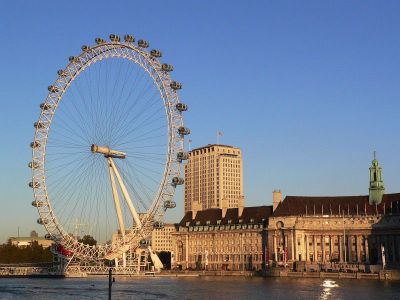
Say hello to the London Eye - or, if you’re feeling fancy, the Millennium Wheel. Built to welcome the year 2000 in style, it had its soft launch in late 1999 and officially opened in March 2000. Designed by architects David Marks and Julia Barfield, it was supposed to be temporary... but Londoners loved it so much, they basically said, “Nope, it’s staying.”
At 135 meters (that’s 443 feet if you’re still thinking imperial), the Eye was once the tallest observation wheel on the planet - and it still holds the crown in Europe. The ride - a slow, elegant spin takes about 30 minutes, offering jaw-dropping, 360-degree views stretching up to 40 kilometers on a clear day. From Big Ben to Buckingham Palace - and if you squint, even Windsor Castle - London is laid out before you like a pop-up storybook.
Each of the 32 sleek glass capsules (one for each London borough) can carry up to 28 people. Great for selfies, great for proposals, and perfect if you just want to stare out and feel dramatically reflective.
Want to dial up the experience? Your ticket comes with a 4D cinema show, or you can upgrade to private pods or champagne flights if you're feeling extra. Plus, the Eye sits right on the South Bank - a hop away from the SEA LIFE Aquarium, the London Dungeon, and the laid-back Jubilee Gardens.
Fun fact: The Eye’s giant bicycle-wheel design is a true European team effort - with British steel, Dutch engineering, and a smattering of German, French, Czech, and Italian parts.
Bottom line: Whether you're new in town or just want to fall in love with London all over again, the London Eye is a must-spin.
Tip:
Book online to save cash and skip the long lines. Your Instagram will thank you.
At 135 meters (that’s 443 feet if you’re still thinking imperial), the Eye was once the tallest observation wheel on the planet - and it still holds the crown in Europe. The ride - a slow, elegant spin takes about 30 minutes, offering jaw-dropping, 360-degree views stretching up to 40 kilometers on a clear day. From Big Ben to Buckingham Palace - and if you squint, even Windsor Castle - London is laid out before you like a pop-up storybook.
Each of the 32 sleek glass capsules (one for each London borough) can carry up to 28 people. Great for selfies, great for proposals, and perfect if you just want to stare out and feel dramatically reflective.
Want to dial up the experience? Your ticket comes with a 4D cinema show, or you can upgrade to private pods or champagne flights if you're feeling extra. Plus, the Eye sits right on the South Bank - a hop away from the SEA LIFE Aquarium, the London Dungeon, and the laid-back Jubilee Gardens.
Fun fact: The Eye’s giant bicycle-wheel design is a true European team effort - with British steel, Dutch engineering, and a smattering of German, French, Czech, and Italian parts.
Bottom line: Whether you're new in town or just want to fall in love with London all over again, the London Eye is a must-spin.
Tip:
Book online to save cash and skip the long lines. Your Instagram will thank you.
9) London Bridge
For pretty much as long as London has been… well, London, there’s been a bridge standing right here. The first one went up over 2,000 years ago, and since then it’s been a bit of a revolving door for bridges-Romans built one, William the Conqueror gave it a go, and King John had his moment too.
Back in 1014, when the Danes were running the show in London, King Ethelred the Unready-a man as prepared for battle as his name suggests-decided to team up with King Olaf of Norway and a band of Vikings. Yes, Saxons and Vikings were together at last. They sailed up the Thames, tied ropes to the wooden supports of the bridge, let the tide carry them downstream, and yoink!-down came the bridge. And just like that, the world got its catchiest medieval jingle: “London Bridge is Falling Down.”
By Tudor times, the bridge was basically a medieval high street, with 600 buildings, some six stories tall, crammed shoulder to shoulder. It was so packed, it became its own city ward. And as if bumper-to-bumper Tudor traffic wasn’t enough, the bridge also had a rather grim flair for home decor-namely, the severed heads of traitors displayed proudly on spikes. Yikes...
But the bridge couldn’t handle the modern hustle. By the 1960s, it was literally sinking at one end, buckling under the weight of traffic and time. So what did Britain do? Sell it, of course! For £1 million, or about $2.4 million back then, an American oil tycoon bought it, shipped it piece-by-piece across the Atlantic, and reassembled it over a lake in Arizona, where it stands to this day, probably wondering what happened.
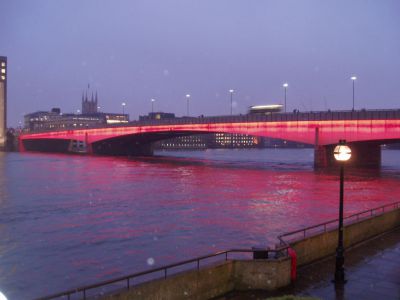
The current London Bridge, built in 1973, is a minimalist affair: clean lines, pre-stressed concrete, some polished granite, and about as much flair as a spreadsheet. But hey-it gets the job done.
And once a year, for one glorious Sunday in autumn, the bridge trades buses and bikes for a flock of sheep. It's the Sheep Drive, an ancient right of the Freemen of the City, who lead their woolly companions across the bridge in a ceremony that's part tradition, part traffic-stopping spectacle.
Because why not?
Back in 1014, when the Danes were running the show in London, King Ethelred the Unready-a man as prepared for battle as his name suggests-decided to team up with King Olaf of Norway and a band of Vikings. Yes, Saxons and Vikings were together at last. They sailed up the Thames, tied ropes to the wooden supports of the bridge, let the tide carry them downstream, and yoink!-down came the bridge. And just like that, the world got its catchiest medieval jingle: “London Bridge is Falling Down.”
By Tudor times, the bridge was basically a medieval high street, with 600 buildings, some six stories tall, crammed shoulder to shoulder. It was so packed, it became its own city ward. And as if bumper-to-bumper Tudor traffic wasn’t enough, the bridge also had a rather grim flair for home decor-namely, the severed heads of traitors displayed proudly on spikes. Yikes...
But the bridge couldn’t handle the modern hustle. By the 1960s, it was literally sinking at one end, buckling under the weight of traffic and time. So what did Britain do? Sell it, of course! For £1 million, or about $2.4 million back then, an American oil tycoon bought it, shipped it piece-by-piece across the Atlantic, and reassembled it over a lake in Arizona, where it stands to this day, probably wondering what happened.
The current London Bridge, built in 1973, is a minimalist affair: clean lines, pre-stressed concrete, some polished granite, and about as much flair as a spreadsheet. But hey-it gets the job done.
And once a year, for one glorious Sunday in autumn, the bridge trades buses and bikes for a flock of sheep. It's the Sheep Drive, an ancient right of the Freemen of the City, who lead their woolly companions across the bridge in a ceremony that's part tradition, part traffic-stopping spectacle.
Because why not?
10) Sky Garden
Designed by Uruguayan architect Rafael Viñoly, 20 Fenchurch Street is better known by its catchier nickname-the “Walkie-Talkie.” Why? Well, because it looks exactly like one, just supersized and stuck smack in the London skyline. Not everyone is a fan of its chunky silhouette, but love it or mock it, the building makes quite the statement-and unlike most skyscrapers, it actually lets the public in for free.
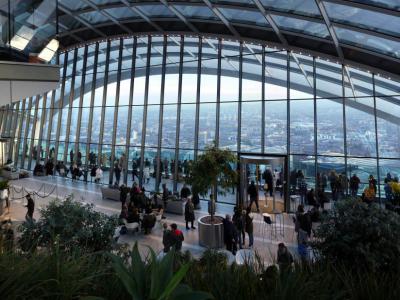
At the top sits the Sky Garden, a three-story glass crown perched on the 35th, 36th, and 37th floors. To get in, you’ll need to be quick on the click-free tickets drop every Monday, and they vanish faster than a London cab on a rainy night. Once you’ve secured your spot, you’ll be treated to one of the best panoramic views in the city, complete with a side of wine or dinner if you book a table. Yes, the bars and restaurants stay open late for those who like their skyline with a cocktail.
From this lofty perch, the view is a who’s who of London’s architectural elite: look south for the jagged elegance of The Shard, or north for a full lineup of nicknamed giants-Tower 42, the Gherkin, the Cheesegrater, the Scalpel, and the tall-and-polished 22 Bishopsgate.
As for the “garden” part of Sky Garden, it’s not just a name. You’ll find a leafy collection of semitropical trees, succulents, and flowering showstoppers like African lilies, Red Hot Pokers, and Birds of Paradise, all bordered by wafts of French lavender. It’s basically a high-rise greenhouse with views, drinks, and a better Instagram ratio than most city parks.
Bottom line: whether you’re a lover of lush greenery, skyline spotting, or just in it for the gram-the Walkie-Talkie talks back.
At the top sits the Sky Garden, a three-story glass crown perched on the 35th, 36th, and 37th floors. To get in, you’ll need to be quick on the click-free tickets drop every Monday, and they vanish faster than a London cab on a rainy night. Once you’ve secured your spot, you’ll be treated to one of the best panoramic views in the city, complete with a side of wine or dinner if you book a table. Yes, the bars and restaurants stay open late for those who like their skyline with a cocktail.
From this lofty perch, the view is a who’s who of London’s architectural elite: look south for the jagged elegance of The Shard, or north for a full lineup of nicknamed giants-Tower 42, the Gherkin, the Cheesegrater, the Scalpel, and the tall-and-polished 22 Bishopsgate.
As for the “garden” part of Sky Garden, it’s not just a name. You’ll find a leafy collection of semitropical trees, succulents, and flowering showstoppers like African lilies, Red Hot Pokers, and Birds of Paradise, all bordered by wafts of French lavender. It’s basically a high-rise greenhouse with views, drinks, and a better Instagram ratio than most city parks.
Bottom line: whether you’re a lover of lush greenery, skyline spotting, or just in it for the gram-the Walkie-Talkie talks back.
11) All Hallows-by-the-Tower
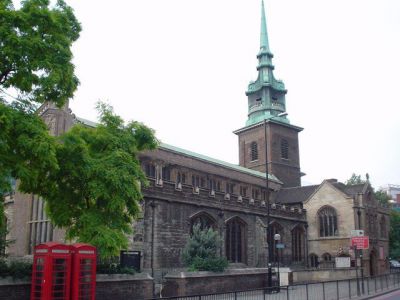
Welcome to All Hallows by the Tower-where history isn't just in the walls… it is the walls. This venerable church dates all the way back to 675 AD, making it the oldest in the City of London. That’s right, it’s been standing since before England had shires, smartphones, or sarcasm. Miraculously, it survived the Great Fire and narrowly dodged destruction during the Blitz, though it did get a bit of a concrete facelift in the post-WWII era, now donning a rather serious neo-Gothic expression.
Step inside, and you're in for a visual treasure hunt: model ships, maritime memorials, fragments of a Flemish triptych from circa 1500, and the showstopper-an exquisitely carved limewood font cover by Grinling Gibbons (the Anglo-Dutch sculptor known for his works in Windsor Castle, the Royal Hospital Chelsea, Hampton Court Palace, St Paul's Cathedral and other London churches), casually waiting in the southwest chapel like it owns the place.
But wait-there’s more ancient wonder just outside the chapel door. Nestled nearby is a 7th-century Anglo-Saxon arch, decorated with recycled Roman tiles-yes, the Romans were here first. This humble arch is the oldest surviving piece of church architecture in the entire city, and it’s just sitting there like it hasn’t aged a day.
Head downstairs to the Crypt Museum, and you’ll find bits of Roman pavement in all their tessellated glory, plus pre-Reformation brasses that have seen more candles than a cathedral gift shop. Entry is free. Knowledge is priceless.
And because location is everything, All Hallows found itself next door to the Tower of London-so naturally, it made a few royal connections. Edward IV turned one chapel into a royal chantry, and the church became the temporary resting place for unfortunate Tower victims. Think of it as the VIP lounge for history’s more tragic characters.
Ultimately, it'd be fair to say that, apart from being a church, All Hallows is a true stone-and-mortar time machine with surprisingly good lighting.
Step inside, and you're in for a visual treasure hunt: model ships, maritime memorials, fragments of a Flemish triptych from circa 1500, and the showstopper-an exquisitely carved limewood font cover by Grinling Gibbons (the Anglo-Dutch sculptor known for his works in Windsor Castle, the Royal Hospital Chelsea, Hampton Court Palace, St Paul's Cathedral and other London churches), casually waiting in the southwest chapel like it owns the place.
But wait-there’s more ancient wonder just outside the chapel door. Nestled nearby is a 7th-century Anglo-Saxon arch, decorated with recycled Roman tiles-yes, the Romans were here first. This humble arch is the oldest surviving piece of church architecture in the entire city, and it’s just sitting there like it hasn’t aged a day.
Head downstairs to the Crypt Museum, and you’ll find bits of Roman pavement in all their tessellated glory, plus pre-Reformation brasses that have seen more candles than a cathedral gift shop. Entry is free. Knowledge is priceless.
And because location is everything, All Hallows found itself next door to the Tower of London-so naturally, it made a few royal connections. Edward IV turned one chapel into a royal chantry, and the church became the temporary resting place for unfortunate Tower victims. Think of it as the VIP lounge for history’s more tragic characters.
Ultimately, it'd be fair to say that, apart from being a church, All Hallows is a true stone-and-mortar time machine with surprisingly good lighting.
12) Tower of London (must see)
Nowhere in London does the past strut around quite so confidently as in the Tower of London-a moated, multi-towered, medieval mashup where history is practically haunting the place.
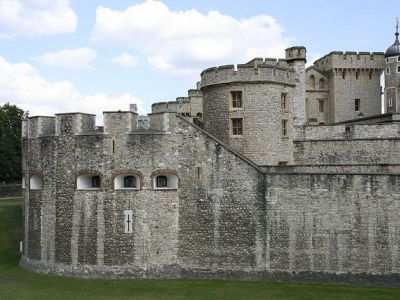
Originally built by the Normans over 900 years ago, the Tower has played just about every role imaginable: fortress, royal mint, palace, archive, and-you may like it the most-zoo. Yes, it once housed the Royal Menagerie, the wild precursor to the London Zoo. But make no mistake, the Tower is best known for its darker side-as a high-security VIP prison with a side hustle in executions. Nobles, queens, and even kings paced its echoing stone halls before meeting a less-than-ideal end. Some scratched their goodbyes into the walls. Others just lost their heads.
Now, if you were an important prisoner, you didn’t get dragged to Tower Hill with the commoners. Oh no-you got the deluxe package: a private execution on Tower Green. Only seven ever received this exclusive send-off, including Anne Boleyn and Catherine Howard, two royal wives who found out the hard way that Henry VIII was not great with long-term commitment.
At the heart of it all is the White Tower, the magnificent structure built in 1078 by William the Conqueror. Later, Henry III decided it looked better in white-hence the name. Today, it houses the Armouries, a jaw-dropping display of medieval bling, including weapons, suits of armor, and a reminder that fashion has always been a pain.
Nearby, the Traitors’ Gate offered less-than-warm welcomes to infamous prisoners as they arrived by boat. And then there’s the Bloody Tower, where the two "Princes in the Tower" disappeared under mysterious circumstances… conveniently clearing the way for their uncle to become Richard III. Coincidence? Mmm...
Also, don’t leave without gawking at the Crown Jewels-sparkly symbols of royal power that were rebooted after the English Civil War. The current set dates from 1661 and features more gems than a royal family group chat.
And if you want the full story, join a free Beefeater tour-they’re funny, sharp, and decked out in navy-and-red Tudor gear. Tours leave every half hour from the main gate and run for about 45-60 minutes.
Tip:
Buy tickets online to skip the queue. And do keep an eye out for the Tower’s resident ravens-legend has it that, if they ever fly off, the kingdom’s toast. No pressure, birds...
Originally built by the Normans over 900 years ago, the Tower has played just about every role imaginable: fortress, royal mint, palace, archive, and-you may like it the most-zoo. Yes, it once housed the Royal Menagerie, the wild precursor to the London Zoo. But make no mistake, the Tower is best known for its darker side-as a high-security VIP prison with a side hustle in executions. Nobles, queens, and even kings paced its echoing stone halls before meeting a less-than-ideal end. Some scratched their goodbyes into the walls. Others just lost their heads.
Now, if you were an important prisoner, you didn’t get dragged to Tower Hill with the commoners. Oh no-you got the deluxe package: a private execution on Tower Green. Only seven ever received this exclusive send-off, including Anne Boleyn and Catherine Howard, two royal wives who found out the hard way that Henry VIII was not great with long-term commitment.
At the heart of it all is the White Tower, the magnificent structure built in 1078 by William the Conqueror. Later, Henry III decided it looked better in white-hence the name. Today, it houses the Armouries, a jaw-dropping display of medieval bling, including weapons, suits of armor, and a reminder that fashion has always been a pain.
Nearby, the Traitors’ Gate offered less-than-warm welcomes to infamous prisoners as they arrived by boat. And then there’s the Bloody Tower, where the two "Princes in the Tower" disappeared under mysterious circumstances… conveniently clearing the way for their uncle to become Richard III. Coincidence? Mmm...
Also, don’t leave without gawking at the Crown Jewels-sparkly symbols of royal power that were rebooted after the English Civil War. The current set dates from 1661 and features more gems than a royal family group chat.
And if you want the full story, join a free Beefeater tour-they’re funny, sharp, and decked out in navy-and-red Tudor gear. Tours leave every half hour from the main gate and run for about 45-60 minutes.
Tip:
Buy tickets online to skip the queue. And do keep an eye out for the Tower’s resident ravens-legend has it that, if they ever fly off, the kingdom’s toast. No pressure, birds...
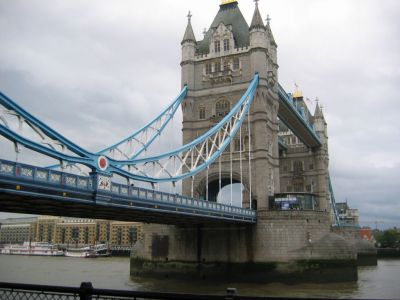
13) Tower Bridge (must see)
Tower Bridge-yes, that famous one with the twin towers and rising roadways-surprisingly didn’t swing into action until 1894. That’s right: it’s younger than your great-great-grandma’s fruitcake recipe, though you'd never guess it based on the number of fridge magnets it’s starred on. Indeed, in just over a century, it’s managed to become one of London’s most iconic symbols-practically the Victorian era in bridge form.
Now here’s a royal twist: Queen Victoria wasn’t exactly thrilled about it at first. She worried the bridge might compromise the security of the nearby Tower of London, which at that time doubled as an armory. Still, they painted it her favorite color-chocolate brown-and forged ahead, perhaps hoping that a well-dressed bridge would soothe Her Majesty’s nerves.
Under the hood (well, under the road), it was all quite steamy-literally. Sophisticated steam-powered engines lifted the bridge’s bascules to allow tall ships to pass through. In its very first year, the bridge went up over 6,000 times-talk about an overachiever! These days, it opens around 1,000 times a year, and somehow, they’ve managed to avoid any major mishaps. If you’re lucky, you might even catch one of those dramatic lifts in real time-free theater, London-style...
For an unforgettable experience, take in the sweeping views of the Thames, the sci-fi egg that is City Hall, the gleaming glass Shard, and the chaos of central London from the top of the bridge. Better yet, grab a ticket and ride the elevator to the elevated walkways. Up there, you’ll find a glass floor for peeking at the world below (great for photos, or mild panic), plus a museum showcasing the original steam engines-because nothing says Victorian romance like big brass machinery. Bonus points: Yes, there are restrooms at the top, so no need to “hold it” at altitude.
And in case you wonder, why you should go?-This masterpiece of Victorian engineering also sparkles at night, and-let’s face it-your trip to London wouldn't be complete without seeing it.
Now here’s a royal twist: Queen Victoria wasn’t exactly thrilled about it at first. She worried the bridge might compromise the security of the nearby Tower of London, which at that time doubled as an armory. Still, they painted it her favorite color-chocolate brown-and forged ahead, perhaps hoping that a well-dressed bridge would soothe Her Majesty’s nerves.
Under the hood (well, under the road), it was all quite steamy-literally. Sophisticated steam-powered engines lifted the bridge’s bascules to allow tall ships to pass through. In its very first year, the bridge went up over 6,000 times-talk about an overachiever! These days, it opens around 1,000 times a year, and somehow, they’ve managed to avoid any major mishaps. If you’re lucky, you might even catch one of those dramatic lifts in real time-free theater, London-style...
For an unforgettable experience, take in the sweeping views of the Thames, the sci-fi egg that is City Hall, the gleaming glass Shard, and the chaos of central London from the top of the bridge. Better yet, grab a ticket and ride the elevator to the elevated walkways. Up there, you’ll find a glass floor for peeking at the world below (great for photos, or mild panic), plus a museum showcasing the original steam engines-because nothing says Victorian romance like big brass machinery. Bonus points: Yes, there are restrooms at the top, so no need to “hold it” at altitude.
And in case you wonder, why you should go?-This masterpiece of Victorian engineering also sparkles at night, and-let’s face it-your trip to London wouldn't be complete without seeing it.
