Custom Walk in Bath, England by kxl_cirencester_aee7d2 created on 2026-03-24
Guide Location: England » Bath
Guide Type: Custom Walk
# of Sights: 15
Tour Duration: 3 Hour(s)
Travel Distance: 3.9 Km or 2.4 Miles
Share Key: KT62K
Guide Type: Custom Walk
# of Sights: 15
Tour Duration: 3 Hour(s)
Travel Distance: 3.9 Km or 2.4 Miles
Share Key: KT62K
How It Works
Please retrieve this walk in the GPSmyCity app. Once done, the app will guide you from one tour stop to the next as if you had a personal tour guide. If you created the walk on this website or come to the page via a link, please follow the instructions below to retrieve the walk in the app.
Retrieve This Walk in App
Step 1. Download the app "GPSmyCity: Walks in 1K+ Cities" on Apple App Store or Google Play Store.



Step 2. In the GPSmyCity app, download(or launch) the guide "Bath Map and Walking Tours".
Step 3. Tap the menu button located at upper right corner of the "Walks" screen and select "Retrieve custom walk". Enter the share key: KT62K
1) Bath Abbey (must see)
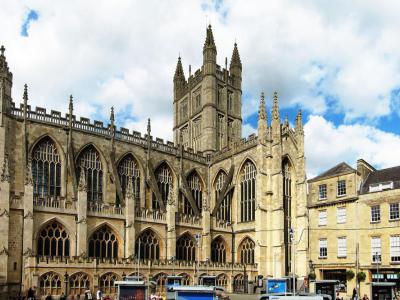
The Abbey Church of Saint Peter and Saint Paul, commonly referred to as Bath Abbey, is a parish church of the Church of England and used to be a Benedictine monastery in Bath. It was established in the 7th century, underwent reorganization in the 10th century, and was reconstructed in the 12th and 16th centuries. A significant restoration project led by Sir George Gilbert Scott took place in the 1860s.
This church is a notable example of Perpendicular Gothic architecture in the West Country. In the past, it also served as a cathedral for a period but later, after disputes between church officials in Bath and Wells, the Diocese of Bath and Wells was centered at Wells Cathedral. The Benedictine community that resided here was disbanded in 1539 during the Dissolution of the Monasteries.
The church has a cruciform design and can accommodate up to 1,200 worshippers. In addition to being an active place of worship, it hosts various civic events, concerts, and lectures. There's a museum showcasing its heritage in the basement.
Bath Abbey is recognized as a Grade I listed building, with a notable feature being its impressive fan vaulting. Inside, you can find war memorials dedicated to the local population and monuments honoring several significant individuals, including wall and floor plaques and commemorative stained glass windows. The church houses two organs and a set of ten bells. On its west front, you can see sculptures depicting angels ascending to heaven on two stone ladders, symbolizing Jacob's Ladder.
Why You Should Visit:
The Abbey is a gorgeous historic building that is worth seeing in its own right. The church is 225 feet long and 80 feet wide.
About 80 percent of the Abbey's wall space is dedicated to windows; the stained glass is spectacular! Specifically, look out for the King Edgar Window, which shows the crowning of King Edgar the Peaceful, and The Great East Window, which shows the story of Jesus in 53 scenes.
Tips:
Keep an eye out for the 635 various memorials on the walls throughout the Abbey.
You can spend a few minutes or an hour and more exploring the Abbey. If you only have 15 minutes, you can take a quick walk, admire the windows and carved angels, and see the fan vaulted ceilings. If you have time for a more extended tour, you can spend more time reading the memorials or reflect or pray in the chapels.
Keep an ear open for the impressive Klais Organ that is played every Sunday and for regular recitals. Organs have been played in the Abbey since 1634, though the current model is newer. The organ was entirely rebuilt by Klais in 1997, using many parts from historical instruments in the building.
Look for the sculpture on the west side of Jacob's Ladder, complete with angels climbing to heaven.
This church is a notable example of Perpendicular Gothic architecture in the West Country. In the past, it also served as a cathedral for a period but later, after disputes between church officials in Bath and Wells, the Diocese of Bath and Wells was centered at Wells Cathedral. The Benedictine community that resided here was disbanded in 1539 during the Dissolution of the Monasteries.
The church has a cruciform design and can accommodate up to 1,200 worshippers. In addition to being an active place of worship, it hosts various civic events, concerts, and lectures. There's a museum showcasing its heritage in the basement.
Bath Abbey is recognized as a Grade I listed building, with a notable feature being its impressive fan vaulting. Inside, you can find war memorials dedicated to the local population and monuments honoring several significant individuals, including wall and floor plaques and commemorative stained glass windows. The church houses two organs and a set of ten bells. On its west front, you can see sculptures depicting angels ascending to heaven on two stone ladders, symbolizing Jacob's Ladder.
Why You Should Visit:
The Abbey is a gorgeous historic building that is worth seeing in its own right. The church is 225 feet long and 80 feet wide.
About 80 percent of the Abbey's wall space is dedicated to windows; the stained glass is spectacular! Specifically, look out for the King Edgar Window, which shows the crowning of King Edgar the Peaceful, and The Great East Window, which shows the story of Jesus in 53 scenes.
Tips:
Keep an eye out for the 635 various memorials on the walls throughout the Abbey.
You can spend a few minutes or an hour and more exploring the Abbey. If you only have 15 minutes, you can take a quick walk, admire the windows and carved angels, and see the fan vaulted ceilings. If you have time for a more extended tour, you can spend more time reading the memorials or reflect or pray in the chapels.
Keep an ear open for the impressive Klais Organ that is played every Sunday and for regular recitals. Organs have been played in the Abbey since 1634, though the current model is newer. The organ was entirely rebuilt by Klais in 1997, using many parts from historical instruments in the building.
Look for the sculpture on the west side of Jacob's Ladder, complete with angels climbing to heaven.
2) Grand Pump Room
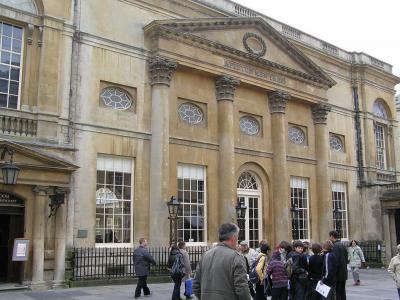
The Grand Pump Room has been an intricate part of the Bath social scene since it opened. The current building opened in 1795, built upon an early building's foundations from the early 1700s. Famous visitors have included Jane Austen and Charles Dickens.
The Grand Pump Room is currently the entrance to the Roman Baths and features the Grand Pump Room Restaurant. It's a great place to take the waters and to dine in the opulent surroundings one would expect for such an affair.
The Grand Pump Room was a prime setting in some of Austen's novels. In Northanger Abbey, it is here that Catherine Morland makes her first forays into Bath society. In one passage of the novel, Catherine Morland found the crowd in the Pump Room insupportable. In another, she eagerly checked for Henry Tilney's name in the visitor's book and was disappointed not to find it. Visitors would sign in, and this book was a useful tool to track the comings and goings of acquaintances. In Persuasion, Admiral Croft comes to Bath to take the waters as a cure for his gout.
The Grand Pump Room is currently the entrance to the Roman Baths and features the Grand Pump Room Restaurant. It's a great place to take the waters and to dine in the opulent surroundings one would expect for such an affair.
The Grand Pump Room was a prime setting in some of Austen's novels. In Northanger Abbey, it is here that Catherine Morland makes her first forays into Bath society. In one passage of the novel, Catherine Morland found the crowd in the Pump Room insupportable. In another, she eagerly checked for Henry Tilney's name in the visitor's book and was disappointed not to find it. Visitors would sign in, and this book was a useful tool to track the comings and goings of acquaintances. In Persuasion, Admiral Croft comes to Bath to take the waters as a cure for his gout.
3) Roman Baths (must see)
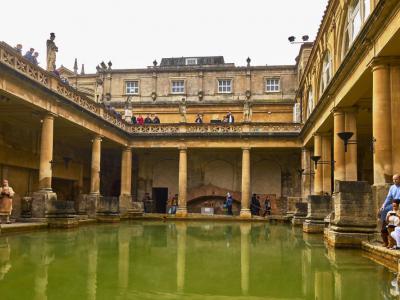
The Baths at Bath are fed by a natural spring system. Rain falls on the nearby Mendip Hills, and it flows down through limestone aquifers until it is more than 4,000 meters (13,100 feet) below ground level. Geothermal energy heats and pressurizes the water, which rises to the surface and escapes through natural fissures. The 46-degree Celcius (115-degree Fahrenheit) water bubbles up at more than a million liters (250,000 gallons) per day.
This natural spring has attracted visitors to the area for more than 2,000 years. The Celts worshiped here, and the early Romans dedicated the springs to the goddess Sulis. As such, the Roman name of the town was Aquae Sulis. It is also believed that pre-Roman British king Bladud built the original baths here and that their healing powers cured him and his pigs of leprosy.
Between 60 and 70 AD, the Roman temple was built. The Baths, or thermae, were created over the next 300 years or so. After the Romans withdrew from Britain, their complex fell into disrepair and was gone by the 6th century.
Today the spring is housed inside an 18th-century building designed by John Wood, the Elder, and John Wood, the Younger. The buildings were further expanded during the Victorian era in a similar style. The main entrance is currently through the Grand Pump Room, where visitors drank the waters and many social functions were held.
Why You Should Visit:
The Roman Baths intricately connect all points of Britain's history. The natural spring has been worshipped or visited by every resident and conqueror to pass; a visit to the Baths is a walk through time. The Baths are quintessentially unique to this location, and no visit to Bath would be complete without taking the waters, so to speak.
The site is one of the most popular tourist attractions and one of the finest historical sites you can visit in northern Europe. It is remarkably well preserved, with elements on display from each phase of its history.
Tips:
The museum is the place to go to learn the history of the Baths. There you will find thousands of Roman artifacts from the area, many thrown in the spring as an offering to Sulis.
Most people spend from two to three hours to a half-day touring the Baths and museum.
Unfortunately, you can no longer swim in the Baths. But there are several smaller spas nearby that capitalize on the same spring system, and aquifer-drawn water is still served in the Grand Pump Room.
This natural spring has attracted visitors to the area for more than 2,000 years. The Celts worshiped here, and the early Romans dedicated the springs to the goddess Sulis. As such, the Roman name of the town was Aquae Sulis. It is also believed that pre-Roman British king Bladud built the original baths here and that their healing powers cured him and his pigs of leprosy.
Between 60 and 70 AD, the Roman temple was built. The Baths, or thermae, were created over the next 300 years or so. After the Romans withdrew from Britain, their complex fell into disrepair and was gone by the 6th century.
Today the spring is housed inside an 18th-century building designed by John Wood, the Elder, and John Wood, the Younger. The buildings were further expanded during the Victorian era in a similar style. The main entrance is currently through the Grand Pump Room, where visitors drank the waters and many social functions were held.
Why You Should Visit:
The Roman Baths intricately connect all points of Britain's history. The natural spring has been worshipped or visited by every resident and conqueror to pass; a visit to the Baths is a walk through time. The Baths are quintessentially unique to this location, and no visit to Bath would be complete without taking the waters, so to speak.
The site is one of the most popular tourist attractions and one of the finest historical sites you can visit in northern Europe. It is remarkably well preserved, with elements on display from each phase of its history.
Tips:
The museum is the place to go to learn the history of the Baths. There you will find thousands of Roman artifacts from the area, many thrown in the spring as an offering to Sulis.
Most people spend from two to three hours to a half-day touring the Baths and museum.
Unfortunately, you can no longer swim in the Baths. But there are several smaller spas nearby that capitalize on the same spring system, and aquifer-drawn water is still served in the Grand Pump Room.
4) Sally Lunn's Historic Eating House
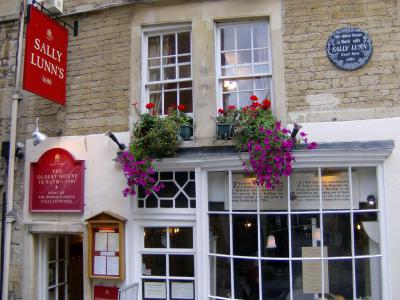
Inside one of the oldest houses in Bath, you will find some delectable treats. As the story goes, Sally Lunn was a French immigrant who arrived in Bath in 1680 and established this bakery. The house was built around 1482, but the masonry oven and other elements on the ground floor date from around 1137.
The lower level of the home hosts a museum where you can tour the original kitchen. The house still serves food based on their trademark recipe, the "Sally Lunn Bunn." In the evening, they serve fine English food, including some spectacular pies.
But all is not as it seems at Sally Lunn's Historic Eating House. While the food is excellent, and the house is very old indeed, there is little historical evidence of one Sally Lunn, or Solange Lyon, as the story goes. The building was purchased in the 1930s by the enterprising Marie Byng-Johnson, who opened a tearoom and claimed to subsequently discover an "ancient document" that told Madamoiselle Lunn's story. The "Sally Lunn Bunn" moniker had already long been used to describe the sweet teacake throughout Britain.
Regardless of the details, Sally Lunn Bunns are an iconic Bath original. There's no better place in town to take tea, and there's no better accompaniment than the original teacake. Savory or sweet, with tea or coffee, you can't go wrong. Just don't forget the clotted cream.
The lower level of the home hosts a museum where you can tour the original kitchen. The house still serves food based on their trademark recipe, the "Sally Lunn Bunn." In the evening, they serve fine English food, including some spectacular pies.
But all is not as it seems at Sally Lunn's Historic Eating House. While the food is excellent, and the house is very old indeed, there is little historical evidence of one Sally Lunn, or Solange Lyon, as the story goes. The building was purchased in the 1930s by the enterprising Marie Byng-Johnson, who opened a tearoom and claimed to subsequently discover an "ancient document" that told Madamoiselle Lunn's story. The "Sally Lunn Bunn" moniker had already long been used to describe the sweet teacake throughout Britain.
Regardless of the details, Sally Lunn Bunns are an iconic Bath original. There's no better place in town to take tea, and there's no better accompaniment than the original teacake. Savory or sweet, with tea or coffee, you can't go wrong. Just don't forget the clotted cream.
5) Bath Street (must see)
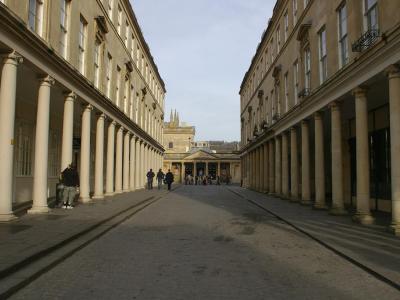
Spanning the short distance between the Roman Baths and the Cross Bath, Bath Street was built in 1791 by Thomas Baldwin. It was first called Cross Bath Street since it leads to the Cross Bath. In 1688, James II welcomed a son, nine months after his wife, Mary of Modena, bathed in the waters. The cross was erected to celebrate the birth of Prince James. This stamp of royal approval only increased the bath's popularity. Thermae Bath Spa now runs cross Bath.
The historic buildings lining each side of the street are all registered as Grade I listed buildings. It's a lively tourist destination as folks walk between the various sites of Bath. You can see the Abbey in the distance, and the west side of the Roman Baths complex is visible at the end of the road.
Bath Street is lined with shops and restaurants, making it the perfect hub for finding afternoon tea or doing some window shopping. It also acts as a time machine; the absence of shop signs and neon lights will transport you back to Georgian times. It's appealing unchanged architecture make Bath Street a popular backdrop for movie scenes. During the winter holidays, look for the streets to be lined with the Bath Christmas Market festival.
The historic buildings lining each side of the street are all registered as Grade I listed buildings. It's a lively tourist destination as folks walk between the various sites of Bath. You can see the Abbey in the distance, and the west side of the Roman Baths complex is visible at the end of the road.
Bath Street is lined with shops and restaurants, making it the perfect hub for finding afternoon tea or doing some window shopping. It also acts as a time machine; the absence of shop signs and neon lights will transport you back to Georgian times. It's appealing unchanged architecture make Bath Street a popular backdrop for movie scenes. During the winter holidays, look for the streets to be lined with the Bath Christmas Market festival.
6) Thermae Bath Spa
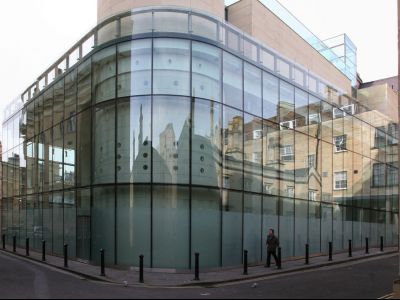
You may not be able to swim in Bath’s world famous Roman Baths – but around the corner, a new attraction offers the next best thing. Thermae Bath Spa, redeveloped in the last decade, is an open air, naturally heated spa that combines the existing Georgian spa of Cross Bath with a brand new spa facility, New Royal Bath. Bath is home to the only naturally warm mineral water springs in the UK. The foundation of Bath in the Roman era, and its subsequent rebirth as a health resort in the 18th century, were down to this unique geographical feature.
With the reopening of the historic Cross Bath spa, and the addition of ultra-modern facilities, Thermae Bath Spa will ensure that Bath remains a booming spa town. The spa offers a range of packages for visitors, from £68 for a three hour spa session to £188 for a day in the facility. The spa’s frontage is constructed from distinctive Bath stone with a contemporary glass surround. Thermae Bath Spa is located on Hot Bath Street, in the middle of Bath’s historic city centre.
With the reopening of the historic Cross Bath spa, and the addition of ultra-modern facilities, Thermae Bath Spa will ensure that Bath remains a booming spa town. The spa offers a range of packages for visitors, from £68 for a three hour spa session to £188 for a day in the facility. The spa’s frontage is constructed from distinctive Bath stone with a contemporary glass surround. Thermae Bath Spa is located on Hot Bath Street, in the middle of Bath’s historic city centre.
7) Theatre Royal
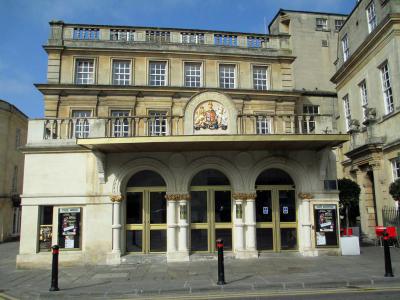
Opened in 1805, The Theatre Royal in Bath remains one of the largest provincial theatres in the UK. Located in the busy Seven Dials area of Bath city centre, the theatre hosts touring plays, musical performances and stand up comedy. The theatre is also the centre of Bath’s renowned Shakespeare Festival, which takes place throughout the month of March. The theatre complex also houses two smaller studio theatres – the Ustinov Studio, which hosts an annual puppetry festival, and The Egg, a newly opened children’s studio which runs regular arts and theatre workshops for children and families.
The Theatre Royal is one of several fine examples of Georgian architecture in the city of Bath. The main theatre building was originally built in 1720, and was designed by architect Thomas Greenway. Local socialite Beau Nash was the first resident of the building, before it was converted into a theatre in the early 19th century. Rebuilt after a fire in 1863, the ornate red and gold interior of the theatre’s 900 seat auditorium was restored as part of a complete overhaul of the theatre in 2010. The Rivals, a play set in Bath’s Georgian heyday, premièred to commemorate the theatre’s restoration and reopening.
The Theatre Royal is one of several fine examples of Georgian architecture in the city of Bath. The main theatre building was originally built in 1720, and was designed by architect Thomas Greenway. Local socialite Beau Nash was the first resident of the building, before it was converted into a theatre in the early 19th century. Rebuilt after a fire in 1863, the ornate red and gold interior of the theatre’s 900 seat auditorium was restored as part of a complete overhaul of the theatre in 2010. The Rivals, a play set in Bath’s Georgian heyday, premièred to commemorate the theatre’s restoration and reopening.

8) Beau Nash Obelisk, Queen Square
The Beau Nash Obelisk, prominently located in the center of Queen Square in Bath, is a historical monument steeped in 18th-century heritage. Erected in 1738 by the notable Beau Nash, a renowned socialite of the Georgian era, the Obelisk was designed by the famous architect John Wood the Elder. This collaboration reflects the architectural and social prominence of the period.
Originally, the Obelisk was a grand structure, standing 70 feet (about 21 meters) high. Its construction not only showcased the architectural prowess of John Wood but also the generosity of Ralph Allen, who donated the stone for its construction. The Obelisk's design and scale were indicative of the grandeur and taste of the time.
Significantly, the Obelisk was dedicated to Frederick, Prince of Wales, as indicated by the inscription penned by the celebrated poet Alexander Pope. This dedication highlights the political and cultural connections of the era, linking the monument to the broader national and royal narratives of 18th-century Britain.
However, the Obelisk's original form was not to last. In 1815, it suffered damage from a severe gale, leading to a reduction in its height. Despite this truncation, the Obelisk remains a central feature of Queen Square and continues to be a symbol of the Georgian elegance and the historical legacy of Beau Nash in Bath. Its presence in the square is a reminder of the city's rich history and its role in the social and architectural developments of the time.
Originally, the Obelisk was a grand structure, standing 70 feet (about 21 meters) high. Its construction not only showcased the architectural prowess of John Wood but also the generosity of Ralph Allen, who donated the stone for its construction. The Obelisk's design and scale were indicative of the grandeur and taste of the time.
Significantly, the Obelisk was dedicated to Frederick, Prince of Wales, as indicated by the inscription penned by the celebrated poet Alexander Pope. This dedication highlights the political and cultural connections of the era, linking the monument to the broader national and royal narratives of 18th-century Britain.
However, the Obelisk's original form was not to last. In 1815, it suffered damage from a severe gale, leading to a reduction in its height. Despite this truncation, the Obelisk remains a central feature of Queen Square and continues to be a symbol of the Georgian elegance and the historical legacy of Beau Nash in Bath. Its presence in the square is a reminder of the city's rich history and its role in the social and architectural developments of the time.
9) Royal Victoria Park (must see)
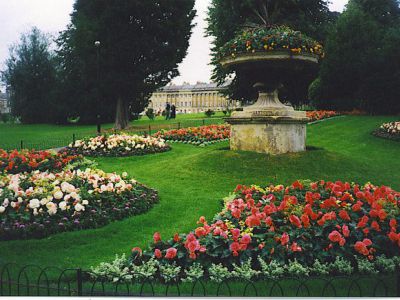
There are landmarks across Great Britain named after its longest serving monarch, Queen Victoria – but Royal Victoria Park was the first to bear her name. Opened in 1830 when the then Princess Victoria was just 11 years old, the 57 acre public park is typical of the municipal gardens that appeared in wealthy cities in the 19th century. Aiming to offer entertainment, social spaces and the tranquility of nature within one space, the park is a popular destination for tourists and local residents to this day.
Royal Victoria Park is situated to the northwest of the city, a ten minute walk from the center. The Royal Crescent is five minutes away, and overlooks the park from the edge of Lansdown Hill. The park boasts an extensive ornamental garden with a monument to Victoria at its center. A boating pond is a popular spot to spend an afternoon, whilst the large public playground is perhaps the park’s highlight. A large, constantly updated collection of unique and creative play equipment caters for all ages, from sand pits to skateboard ramps. The park hosts several outdoor family events in summer, including the popular Hot Air Balloon festival, when the Bath skyline is lit up by colorful hot air balloons launching from the park.
Royal Victoria Park is situated to the northwest of the city, a ten minute walk from the center. The Royal Crescent is five minutes away, and overlooks the park from the edge of Lansdown Hill. The park boasts an extensive ornamental garden with a monument to Victoria at its center. A boating pond is a popular spot to spend an afternoon, whilst the large public playground is perhaps the park’s highlight. A large, constantly updated collection of unique and creative play equipment caters for all ages, from sand pits to skateboard ramps. The park hosts several outdoor family events in summer, including the popular Hot Air Balloon festival, when the Bath skyline is lit up by colorful hot air balloons launching from the park.
10) Royal Crescent (must see)
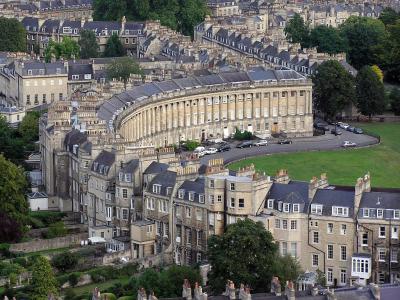
The Royal Crescent in Bath is a notable example of Georgian architecture. It comprises 30 terraced houses, designed by John Wood, the Younger, and constructed between 1767 and 1774. Recognized as a Grade I listed building, the Royal Crescent is a testament to the architectural grandeur of its time and remains a significant historical and cultural landmark.
Spanning 500 feet (about 150 meters), the crescent is distinguished by its 114 Ionic columns on the first floor, supporting an entablature designed in the Palladian style. This design element contributes to its classical and elegant appearance. The Royal Crescent holds the distinction of being the first crescent of terraced houses ever built, embodying the concept of "rus in urbe" or "the country in the city," thanks to its overlooking views of the parkland opposite.
Throughout its history of over 240 years, the Royal Crescent has been home to many notable figures, commemorated by plaques on the relevant buildings. The configuration of the crescent has evolved; of the original 30 townhouses, 10 remain full-size, 18 have been converted into flats of various sizes, one serves as the No. 1 Royal Crescent museum, and two (No. 16 and No. 15) now form The Royal Crescent Hotel & Spa.
Constructed primarily from Bath stone, these houses have slate roofs, although they were originally tiled with stone. The external appearance of each house is remarkably similar, with only minor variations such as some featuring small balconettes on the first floor. Many windows have been restored to their original style with glazing bars, replacing the horned plate glass sash windows installed in later centuries. Despite various internal modifications over the years, the Georgian stone facade of the Royal Crescent has been meticulously preserved, maintaining much of its original aesthetic and charm.
Tips:
No. 1 Royal Cresent is a museum. Here you'll find it preserved as a historic house, with rooms, furniture, pictures, and other items depicting Georgian life between 1776 and 1796. Among the fully furnished and appointed rooms you can tour, there is a Parlour, a Gentleman's Retreat, a Withdrawing Room, Servant's Hall, Kitchen, and Scullery.
Spanning 500 feet (about 150 meters), the crescent is distinguished by its 114 Ionic columns on the first floor, supporting an entablature designed in the Palladian style. This design element contributes to its classical and elegant appearance. The Royal Crescent holds the distinction of being the first crescent of terraced houses ever built, embodying the concept of "rus in urbe" or "the country in the city," thanks to its overlooking views of the parkland opposite.
Throughout its history of over 240 years, the Royal Crescent has been home to many notable figures, commemorated by plaques on the relevant buildings. The configuration of the crescent has evolved; of the original 30 townhouses, 10 remain full-size, 18 have been converted into flats of various sizes, one serves as the No. 1 Royal Crescent museum, and two (No. 16 and No. 15) now form The Royal Crescent Hotel & Spa.
Constructed primarily from Bath stone, these houses have slate roofs, although they were originally tiled with stone. The external appearance of each house is remarkably similar, with only minor variations such as some featuring small balconettes on the first floor. Many windows have been restored to their original style with glazing bars, replacing the horned plate glass sash windows installed in later centuries. Despite various internal modifications over the years, the Georgian stone facade of the Royal Crescent has been meticulously preserved, maintaining much of its original aesthetic and charm.
Tips:
No. 1 Royal Cresent is a museum. Here you'll find it preserved as a historic house, with rooms, furniture, pictures, and other items depicting Georgian life between 1776 and 1796. Among the fully furnished and appointed rooms you can tour, there is a Parlour, a Gentleman's Retreat, a Withdrawing Room, Servant's Hall, Kitchen, and Scullery.
11) The Circus (must see)
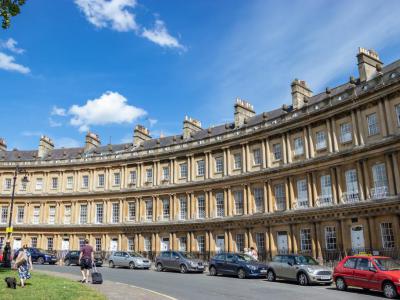
Originally called the King's Circus, The Circus was finished in 1768. The design was formulated by architect John Wood Sr., but he died during construction, and his son finished the project. The plaza consists of three large townhouse buildings, all forming a perfect circle at the meeting of Brock, Gay, and Bennett Streets. The name "Circus" comes from Latin and means a ring or circle.
John Wood Sr. was known for his appreciation of symbology. He admired the Druids and was convinced that Bath had been the hub of much Druid activity in Britain. As such, he studied Stonehenge and built The Circus with the same diameter. He also included many emblems in the design, with serpents, nautical symbols, acorns, and keys from masonic lore. In all, there are more than 525 pictorial emblems and symbols used. The entire design, when viewed from above, looks like a masonic key. A ley-line joins it to the Royal Crescent, which some believe represents the sun and the moon in their designs.
Many wealthy and famous have lived in The Circus over the years. Thomas Gainsborough lived here in the 1700s, and Nicolas Cage had a flat here for awhile. It's also said that if you wander the center plaza, you can find one precise point where all sound will echo.
The building is a Grade I listed building, and like many others in Bath, it is a fine example of Georgian architecture. Each level's facade is designed in a different classical order-Greek Doric, Roman Composite, and Corinthian.
John Wood Sr. was known for his appreciation of symbology. He admired the Druids and was convinced that Bath had been the hub of much Druid activity in Britain. As such, he studied Stonehenge and built The Circus with the same diameter. He also included many emblems in the design, with serpents, nautical symbols, acorns, and keys from masonic lore. In all, there are more than 525 pictorial emblems and symbols used. The entire design, when viewed from above, looks like a masonic key. A ley-line joins it to the Royal Crescent, which some believe represents the sun and the moon in their designs.
Many wealthy and famous have lived in The Circus over the years. Thomas Gainsborough lived here in the 1700s, and Nicolas Cage had a flat here for awhile. It's also said that if you wander the center plaza, you can find one precise point where all sound will echo.
The building is a Grade I listed building, and like many others in Bath, it is a fine example of Georgian architecture. Each level's facade is designed in a different classical order-Greek Doric, Roman Composite, and Corinthian.
12) Bath Assembly Rooms
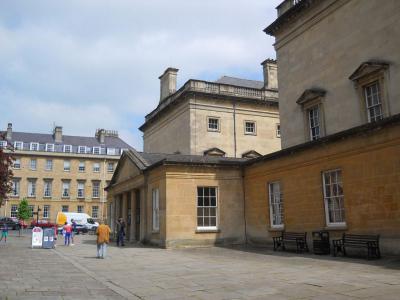
There are two sets of Assembly Rooms: the Lower Rooms and the Upper Rooms. The Lower Rooms were built in 1708 and are located in the older part of the city. The Upper Rooms were built in a more fashionable part of town, near The Circus and the Royal Crescent, hence the "upper" description. The lower rooms burned in 1820 and were not rebuilt.
Today, you can still visit the Upper Rooms and glory in their beauty. Don't miss the original Wayfarers crystal chandeliers. The Fashion Museum is also located in the Assembly Rooms and is well worth a visit. Be sure to admire all the Regency era dresses.
The Assembly Rooms were another center of Regency life in Jane Austen's time. Jane Austen loved dancing, and she spent time in the Assembly Rooms attending evening balls - dancing, watching, and gossiping.
In Persausion, Anne Elliot hopes to visit the Assembly Rooms and meet Captain Wentworth. But her father felt that the Assembly Rooms were not fashionable enough for the Elliots. Later on, however, the Elliots did accept an invitation to a concert in the Upper Rooms, and the meeting did take place.
In Northanger Abbey, Catherine Morland often visits both the Upper Rooms and the Lower Rooms and dances the nights away in crowded rooms. Catherine Morland met Henry Tilney in the Lower Rooms, and Henry Tilney found the Master of Ceremonies to introduce them. Isabella Thorpe was affronted when James Morland asks for more dances without changing partners. These vignettes give insight into the different, more restrictive social norms of Regency England.
Today, you can still visit the Upper Rooms and glory in their beauty. Don't miss the original Wayfarers crystal chandeliers. The Fashion Museum is also located in the Assembly Rooms and is well worth a visit. Be sure to admire all the Regency era dresses.
The Assembly Rooms were another center of Regency life in Jane Austen's time. Jane Austen loved dancing, and she spent time in the Assembly Rooms attending evening balls - dancing, watching, and gossiping.
In Persausion, Anne Elliot hopes to visit the Assembly Rooms and meet Captain Wentworth. But her father felt that the Assembly Rooms were not fashionable enough for the Elliots. Later on, however, the Elliots did accept an invitation to a concert in the Upper Rooms, and the meeting did take place.
In Northanger Abbey, Catherine Morland often visits both the Upper Rooms and the Lower Rooms and dances the nights away in crowded rooms. Catherine Morland met Henry Tilney in the Lower Rooms, and Henry Tilney found the Master of Ceremonies to introduce them. Isabella Thorpe was affronted when James Morland asks for more dances without changing partners. These vignettes give insight into the different, more restrictive social norms of Regency England.
13) Pulteney Bridge (must see)
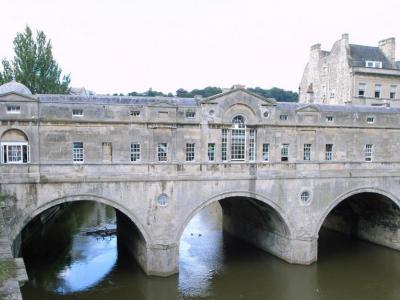
Bath is a city of unique landmarks, and none are more recognizable than the Pulteney Bridge. Depending on who you trust, there are only one, two, or three other bridges in the world that are lined with shops. Whatever the exact number is, there certainly aren't many others like it.
The bridge opened in 1774 and was designed by Robert Adam. The bridge was the brainchild of William Johnstone Pulteney, who named it after his wife, Frances. His vision was to create a new town nearby, but he needed a grand bridge to connect it to Bath. Adam's design was drafted in the Palladian style, harking back to the 16th-century Venetian architect Andrea Palladio.
The Pulteney Bridge is a World Heritage Site and an English Grade I Listed Building. You will find restaurants of various cuisines, independent shops, and Bath Rugby Club's official store along the bridge. The roadway is a busy thoroughfare through Bath to this day.
The best views of the bridge are actually from the south side, either from the Parade Gardens or the Beazer Garden Maze.
To the south, the River Avon flows over the crescent weir. The shops on the north side were heavily altered and expanded by these owners in the 18th and 19th centuries. Their cantilevered floorplans show in stark contrast to the beautiful Georgian stone bridge as viewed from the south.
The bridge opened in 1774 and was designed by Robert Adam. The bridge was the brainchild of William Johnstone Pulteney, who named it after his wife, Frances. His vision was to create a new town nearby, but he needed a grand bridge to connect it to Bath. Adam's design was drafted in the Palladian style, harking back to the 16th-century Venetian architect Andrea Palladio.
The Pulteney Bridge is a World Heritage Site and an English Grade I Listed Building. You will find restaurants of various cuisines, independent shops, and Bath Rugby Club's official store along the bridge. The roadway is a busy thoroughfare through Bath to this day.
The best views of the bridge are actually from the south side, either from the Parade Gardens or the Beazer Garden Maze.
To the south, the River Avon flows over the crescent weir. The shops on the north side were heavily altered and expanded by these owners in the 18th and 19th centuries. Their cantilevered floorplans show in stark contrast to the beautiful Georgian stone bridge as viewed from the south.
14) Great Pulteney Street
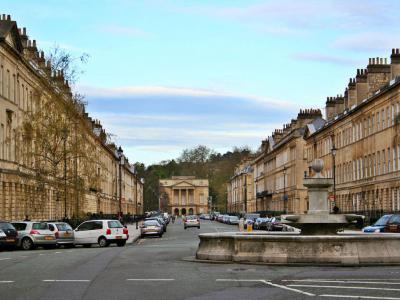
At 1,000 feet long and 100 feet wide, the Great Pulteney Street is the most impressive in Bath. The houses along the street were commissioned by Sir William Pulteney and designed by Thomas Baldwin. Mr. Baldwin designed the exterior facade to be unifying. However, the houses and hotels behind the facades are all unique.
Great Pulteney Street would have been very familiar to Jane Austen. From her residence at Sydney Place, she would have walked Great Pulteney Street to reach the center of town. In Northanger Abbey, Catherine Morland's aunt and uncle the Allen's had lodgings in Great Pulteney Street, and it was here that Catherine stayed during her time in Bath. The Allen's house was considered enormous and very fashionable.
Don't miss Laura Place, connected to Great Pulteney Street. In Persuasion, the Elliot's wealthy cousins, the Dowager Viscountess Dalrymple and the Honourable Miss Carteret, resided at the very prestigious and fashionable Laura Place.
Great Pulteney Street would have been very familiar to Jane Austen. From her residence at Sydney Place, she would have walked Great Pulteney Street to reach the center of town. In Northanger Abbey, Catherine Morland's aunt and uncle the Allen's had lodgings in Great Pulteney Street, and it was here that Catherine stayed during her time in Bath. The Allen's house was considered enormous and very fashionable.
Don't miss Laura Place, connected to Great Pulteney Street. In Persuasion, the Elliot's wealthy cousins, the Dowager Viscountess Dalrymple and the Honourable Miss Carteret, resided at the very prestigious and fashionable Laura Place.
15) Guildhall and Banqueting Room
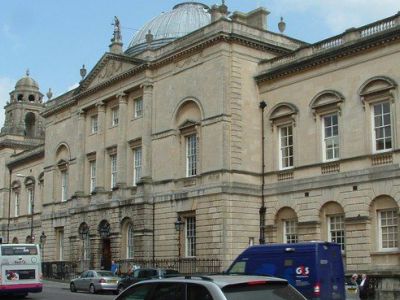
The Guildhall in Bath is a significant historical building with a rich architectural and functional history. Constructed between 1775 and 1778, this majestic building was the work of architect Thomas Baldwin, who realized the designs of Thomas Warr Attwood. It holds the prestigious status of a Grade I listed building, a testament to its historical and architectural importance.
The Guildhall we see today is not the first on its site. It replaced a Stuart Guildhall built in 1625, which in turn had replaced an earlier Tudor structure. Architecturally, the building is noted for its striking facade, which features four Ionic columns. Adding to its grandeur is a figure of Justice that surmounts the building. An architectural enhancement came in 1893 with the addition of a central dome, further enriching its historical aesthetic.
The Guildhall is part of a larger architectural ensemble that includes the Victoria Art Gallery and a covered market, forming a continuous structure with these neighboring buildings.
One of the most distinguished features of the Guildhall is its banqueting hall. This grand interior space is characterized by engaged Corinthian columns, adding to its classical elegance. The hall is adorned with 18th-century chandeliers and boasts original royal portraits, creating an atmosphere of regal opulence. This room has played host to royal visitors, including Queen Elizabeth II, who had lunch in the banqueting room in May 2002.
Today, the Guildhall serves multiple functions. It houses the Council chamber and Register office for Bath and North East Somerset. It's not only a place of administrative importance but also a popular venue for weddings, thanks to its historic charm and elegant interiors. Additionally, its authentic period features make it an ideal location for filming period dramas, contributing to its cultural significance in the contemporary era.
The Guildhall we see today is not the first on its site. It replaced a Stuart Guildhall built in 1625, which in turn had replaced an earlier Tudor structure. Architecturally, the building is noted for its striking facade, which features four Ionic columns. Adding to its grandeur is a figure of Justice that surmounts the building. An architectural enhancement came in 1893 with the addition of a central dome, further enriching its historical aesthetic.
The Guildhall is part of a larger architectural ensemble that includes the Victoria Art Gallery and a covered market, forming a continuous structure with these neighboring buildings.
One of the most distinguished features of the Guildhall is its banqueting hall. This grand interior space is characterized by engaged Corinthian columns, adding to its classical elegance. The hall is adorned with 18th-century chandeliers and boasts original royal portraits, creating an atmosphere of regal opulence. This room has played host to royal visitors, including Queen Elizabeth II, who had lunch in the banqueting room in May 2002.
Today, the Guildhall serves multiple functions. It houses the Council chamber and Register office for Bath and North East Somerset. It's not only a place of administrative importance but also a popular venue for weddings, thanks to its historic charm and elegant interiors. Additionally, its authentic period features make it an ideal location for filming period dramas, contributing to its cultural significance in the contemporary era.
