Custom Walk in Savannah, Georgia by leigh_poirierball_9d9993 created on 2026-03-26
Guide Location: USA » Savannah
Guide Type: Custom Walk
# of Sights: 14
Tour Duration: 3 Hour(s)
Travel Distance: 5.8 Km or 3.6 Miles
Share Key: 3RD6L
Guide Type: Custom Walk
# of Sights: 14
Tour Duration: 3 Hour(s)
Travel Distance: 5.8 Km or 3.6 Miles
Share Key: 3RD6L
How It Works
Please retrieve this walk in the GPSmyCity app. Once done, the app will guide you from one tour stop to the next as if you had a personal tour guide. If you created the walk on this website or come to the page via a link, please follow the instructions below to retrieve the walk in the app.
Retrieve This Walk in App
Step 1. Download the app "GPSmyCity: Walks in 1K+ Cities" on Apple App Store or Google Play Store.



Step 2. In the GPSmyCity app, download(or launch) the guide "Savannah Map and Walking Tours".
Step 3. Tap the menu button located at upper right corner of the "Walks" screen and select "Retrieve custom walk". Enter the share key: 3RD6L
1) Historic District
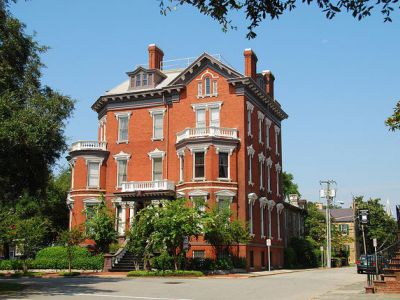
The Savannah Historic District is a sizable historic area in the United States that corresponds roughly to the boundaries of Savannah, before the American Civil War. In 1966, it earned the distinction of being declared a National Historic Landmark District, making it one of the largest of its kind in the country.
Every year, the Savannah Historic District draws millions of tourists who come to appreciate its architecture from the 18th and 19th centuries, as well as its green spaces. This district is home to various historically significant sites, such as the birthplace of Juliette Gordon Low (the founder of the Girl Scouts of the United States of America, found in the Juliette Gordon Low Historic District), the Telfair Academy of Arts and Sciences (one of the earliest public museums in the Southern United States), the First African Baptist Church (the oldest African American Baptist congregation in the U.S.), Temple Mickve Israel (the third-oldest synagogue in America), the Central of Georgia Railway roundhouse complex (the oldest surviving pre-Civil War rail facility in America), the old Colonial Cemetery, Cathedral of St. John the Baptist, and Old Harbor Light.
Among the notable buildings within the district are the Isaiah Davenport House, the Green-Meldrim House, the Owens-Thomas House, the William Scarbrough House, and the United States Customhouse. Additionally, you'll find attractive green spaces in the area, including Savannah's 22 shaded squares, the 30-acre Forsyth Park, located at the district's southern edge, and Emmet Park, situated near the city's riverfront.
Every year, the Savannah Historic District draws millions of tourists who come to appreciate its architecture from the 18th and 19th centuries, as well as its green spaces. This district is home to various historically significant sites, such as the birthplace of Juliette Gordon Low (the founder of the Girl Scouts of the United States of America, found in the Juliette Gordon Low Historic District), the Telfair Academy of Arts and Sciences (one of the earliest public museums in the Southern United States), the First African Baptist Church (the oldest African American Baptist congregation in the U.S.), Temple Mickve Israel (the third-oldest synagogue in America), the Central of Georgia Railway roundhouse complex (the oldest surviving pre-Civil War rail facility in America), the old Colonial Cemetery, Cathedral of St. John the Baptist, and Old Harbor Light.
Among the notable buildings within the district are the Isaiah Davenport House, the Green-Meldrim House, the Owens-Thomas House, the William Scarbrough House, and the United States Customhouse. Additionally, you'll find attractive green spaces in the area, including Savannah's 22 shaded squares, the 30-acre Forsyth Park, located at the district's southern edge, and Emmet Park, situated near the city's riverfront.
2) City Market (must see)
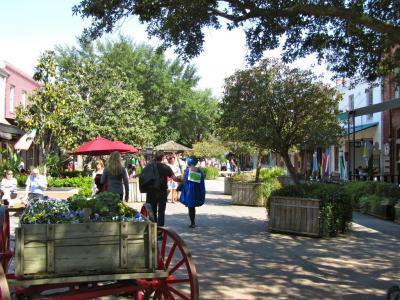
Originally centered on the site of today's Ellis Square, from 1733, Savannah's main marketplace was established as a wooden building where locals gathered for their groceries and services. By 1755, the market had turned into a center of local commerce and hub of all activity downtown; a place where fishermen and farmers would bring their goods to sell.
Over time, the building survived two fires (in 1796 and 1820) which ultimately destroyed it, and was replaced the following year with a single-storey structure. The latter was torn down also, shortly after the Civil War, and its place was taken by a brick building, erected in 1876, by architects Augustus Schwaab and Martin Phillip Muller.
Albeit praised as "roomy (the structure encompassed 33,000 square feet), and capable of being kept in the highest condition of cleanliness, with ample ventilation", the cost of construction "vastly exceeded expectations". Later excavations revealed weakened arches in the basement floor that required them to be replaced.
The market suffered severe damage from a hurricane in 1896, and was even closed at one point, in 1954. But today it thrives once again, stretching for a good two blocks between Ellis and Franklin squares.
The old 19th-century cotton warehouses, once fallen into disrepair, have been restored and renovated, and turned into bistros, art galleries, casual and upscale restaurants, antique stores, jewelry shops, bakeries, sweets and candy parlors, and other specialty outlets (there's even a daiquiri dispensary and a specialty coffee joint).
The newest attraction in the market complex is the American Prohibition Museum, which has 6,000 square feet of exhibition space, housing 13 galleries.
During the day and at night the historic place offers totally different experiences. In the evenings, visitors can enjoy jazz at local nightclubs or otherwise discover the "art and soul" of Savannah while being serenaded by local musicians.
Over time, the building survived two fires (in 1796 and 1820) which ultimately destroyed it, and was replaced the following year with a single-storey structure. The latter was torn down also, shortly after the Civil War, and its place was taken by a brick building, erected in 1876, by architects Augustus Schwaab and Martin Phillip Muller.
Albeit praised as "roomy (the structure encompassed 33,000 square feet), and capable of being kept in the highest condition of cleanliness, with ample ventilation", the cost of construction "vastly exceeded expectations". Later excavations revealed weakened arches in the basement floor that required them to be replaced.
The market suffered severe damage from a hurricane in 1896, and was even closed at one point, in 1954. But today it thrives once again, stretching for a good two blocks between Ellis and Franklin squares.
The old 19th-century cotton warehouses, once fallen into disrepair, have been restored and renovated, and turned into bistros, art galleries, casual and upscale restaurants, antique stores, jewelry shops, bakeries, sweets and candy parlors, and other specialty outlets (there's even a daiquiri dispensary and a specialty coffee joint).
The newest attraction in the market complex is the American Prohibition Museum, which has 6,000 square feet of exhibition space, housing 13 galleries.
During the day and at night the historic place offers totally different experiences. In the evenings, visitors can enjoy jazz at local nightclubs or otherwise discover the "art and soul" of Savannah while being serenaded by local musicians.
3) First African Baptist Church (must see)
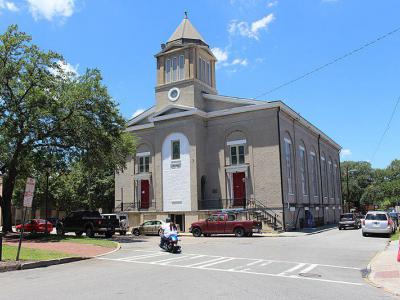
The First Colored Church of Savannah (renamed the First African Baptist Church in 1882) is the oldest continuously active African-American congregation in North America. It was formed in 1778 by George Liele, the first black man to be ordained by Baptists to preach in Georgia.
The present church was built by members of the congregation, among whom there were many slaves who, after laboring all day in the fields, would make bricks, lay mortar, and carve pews for the church (that are still in use even today!).
During the turbulent years of the Civil War, this temple was a haven for runaway slaves. The fugitives hid in a four-foot high space between the basement and foundation below, with 'air holes' still visible in the basement floor – in lack of better knowledge, some visitors today erroneously assume these holes to be part of an artistic design. Speaking of the design, worthy of note here are the beautiful stained glass windows depicting Liele and other early church leaders, installed in 1885.
During the 1960s, the First African Baptist Church of Savannah served as a base for the Civil Rights movement. Today, it houses a museum containing archives and memorabilia dated from the 18th century.
Those interested in history in general and that of Savannah in particular, should consider taking a guided tour of the church. The tour takes you through the main temple, upstairs, and in the basement where you can learn about the role of the Underground Railroad.
Guided tours are offered Tuesday through Saturday at 11am, 2pm, and 4pm; and on Sunday at 1pm.
The present church was built by members of the congregation, among whom there were many slaves who, after laboring all day in the fields, would make bricks, lay mortar, and carve pews for the church (that are still in use even today!).
During the turbulent years of the Civil War, this temple was a haven for runaway slaves. The fugitives hid in a four-foot high space between the basement and foundation below, with 'air holes' still visible in the basement floor – in lack of better knowledge, some visitors today erroneously assume these holes to be part of an artistic design. Speaking of the design, worthy of note here are the beautiful stained glass windows depicting Liele and other early church leaders, installed in 1885.
During the 1960s, the First African Baptist Church of Savannah served as a base for the Civil Rights movement. Today, it houses a museum containing archives and memorabilia dated from the 18th century.
Those interested in history in general and that of Savannah in particular, should consider taking a guided tour of the church. The tour takes you through the main temple, upstairs, and in the basement where you can learn about the role of the Underground Railroad.
Guided tours are offered Tuesday through Saturday at 11am, 2pm, and 4pm; and on Sunday at 1pm.
4) Olde Pink House Restaurant (must see)
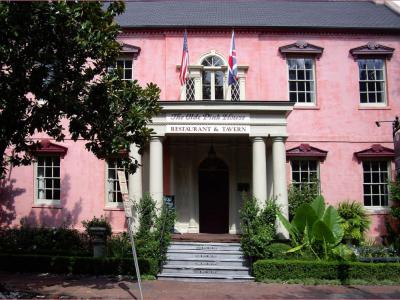
The Olde Pink House was originally known as Habersham House when it was built in 1789, after its owner, James Habersham, Jr., one of Savannah's most important early cotton factors and founding-family members. Habersham lived there until his death in 1799. The lot was originally a land grant from the British Crown. It survived the Savannah fire of 1796 that destroyed 229 buildings in the city.
In 1812, the home became Planters Bank, the first bank in Georgia. It was at this time that a portico, supported by unfluted Doric columns, was added to the building's main façade, while an extension was built on the northern side.
After the Civil War, the house changed hands several times, becoming an attorney's office, bookstore and Alida Harper Fowlkes' Georgian Tea Room. The building went through extensive restoration to regain its former glory in 1970 and re-opened as a restaurant in 1971.
Today the Olde Pink House Restaurant serves traditional southern and lowcountry cuisine with accompanying live music in Savannah's only 18th-century mansion. If you are visiting Savannah for the first time and only have time to dine at one restaurant, this should be your choice. With antiques, ancestral paintings and fireplaces, and high-end service, guests can enjoy the Southern cuisine in style.
In 1812, the home became Planters Bank, the first bank in Georgia. It was at this time that a portico, supported by unfluted Doric columns, was added to the building's main façade, while an extension was built on the northern side.
After the Civil War, the house changed hands several times, becoming an attorney's office, bookstore and Alida Harper Fowlkes' Georgian Tea Room. The building went through extensive restoration to regain its former glory in 1970 and re-opened as a restaurant in 1971.
Today the Olde Pink House Restaurant serves traditional southern and lowcountry cuisine with accompanying live music in Savannah's only 18th-century mansion. If you are visiting Savannah for the first time and only have time to dine at one restaurant, this should be your choice. With antiques, ancestral paintings and fireplaces, and high-end service, guests can enjoy the Southern cuisine in style.
5) The Pirate's House
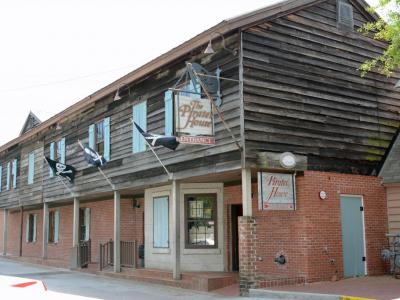
The Pirate's House is a tavern and restaurant thought to be the oldest building still standing in all of Georgia. It wasn't always a tavern, though- the building was originally created to house the gardener that worked on Savannah's botanical garden in 1734. When the botanical garden was deemed unnecessary by 1754, the gardener's building (dubbed the Herb House) was reinvented as an inn for visiting seamen and traders.
Over time, the building attracted the criminal element, as more and more pirates, smugglers, thieves, and criminals visited it. Sailors would be kidnapped from their beds by sea captains in need of men. Since The Pirate's House is the entrance to one of Savannah's underground escape tunnels, the sailors were usually drunk, and many of them were from foreign ports, it wasn't easy to try to track down someone who went missing from the inn. Captain Flint, mentioned in Robert Louis Stevenson's Treasure Island, is rumored to have died in one of the bedrooms of the house.
Today, The Pirate's House functions as a restaurant, tavern, and historical house museum. Visiting The Pirate's House you will get more than just a nice Southern meal. Its fun atmosphere and stories about pirates make it an interesting experience for both adults and kids.
Over time, the building attracted the criminal element, as more and more pirates, smugglers, thieves, and criminals visited it. Sailors would be kidnapped from their beds by sea captains in need of men. Since The Pirate's House is the entrance to one of Savannah's underground escape tunnels, the sailors were usually drunk, and many of them were from foreign ports, it wasn't easy to try to track down someone who went missing from the inn. Captain Flint, mentioned in Robert Louis Stevenson's Treasure Island, is rumored to have died in one of the bedrooms of the house.
Today, The Pirate's House functions as a restaurant, tavern, and historical house museum. Visiting The Pirate's House you will get more than just a nice Southern meal. Its fun atmosphere and stories about pirates make it an interesting experience for both adults and kids.
6) River Street Market Place
The embodiment of Savannah’s love of history, River Street Market Place represents an array of beautifully recreated sheds that once stood on this street, back in the mid 19th century.
The place is worth wandering through if enjoy the Savannah riverfront, especially while killing time waiting for a table at a nearby restaurant. Recognized as the most unique shopping destination in Savannah, this venue is set in a wonderfully relaxing area, with the river on one side and the cobblestone thoroughfare on the other.
It has over 70 booths altogether, containing artwork, gifts, and personalized items from around the globe. Pretty much every booth here has a vendor, and there is a ceiling overhead, so rain is not an issue. Among the most interesting things to check out are the wood burning and carved home décor designs, as well as the candles you could use as a lotion, made out of essential oils.
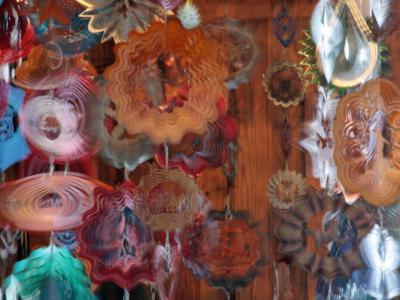
There are tons of other random, unique items, some handmade (such as jewelry, carvings, and wind chimes) and some pricey, but it's fine to walk through and see all the local culture anyway. And, just in case you get thirsty or fancy a bite to eat, there is a coffee, drinks and smoothies food cart right outside, with picnic tables to lounge on, should you be so inclined. The sweet tooth in you will definitely appreciate the delicious praline at the local candy shop or the honey store, as they are among the highlights.
The marketplace is rather small, so it doesn't take long to walk through. Highly recommended to those seeking to experience Southern charm, old-fashioned hospitality and shop in an open-air environment.
The place is worth wandering through if enjoy the Savannah riverfront, especially while killing time waiting for a table at a nearby restaurant. Recognized as the most unique shopping destination in Savannah, this venue is set in a wonderfully relaxing area, with the river on one side and the cobblestone thoroughfare on the other.
It has over 70 booths altogether, containing artwork, gifts, and personalized items from around the globe. Pretty much every booth here has a vendor, and there is a ceiling overhead, so rain is not an issue. Among the most interesting things to check out are the wood burning and carved home décor designs, as well as the candles you could use as a lotion, made out of essential oils.
There are tons of other random, unique items, some handmade (such as jewelry, carvings, and wind chimes) and some pricey, but it's fine to walk through and see all the local culture anyway. And, just in case you get thirsty or fancy a bite to eat, there is a coffee, drinks and smoothies food cart right outside, with picnic tables to lounge on, should you be so inclined. The sweet tooth in you will definitely appreciate the delicious praline at the local candy shop or the honey store, as they are among the highlights.
The marketplace is rather small, so it doesn't take long to walk through. Highly recommended to those seeking to experience Southern charm, old-fashioned hospitality and shop in an open-air environment.
7) Emmet Park
Emmet Park in Savannah's historic district is named after Robert Emmet, a renowned orator and patriot. Originally called Irish Green due to its proximity to Irish residents in the Old Fort area of Savannah, it was renamed in 1902 to honor Robert Emmet on the centennial of his passing. Emmet was highly regarded among Savannah's Irish community for his leadership in a Dublin uprising for Irish independence, even though he was ultimately executed for treason.
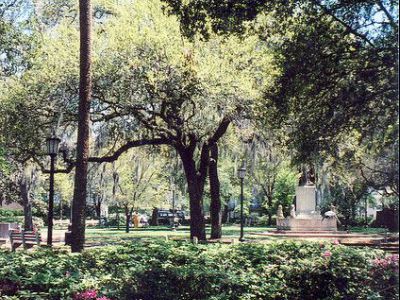
This park is noteworthy for its numerous monuments and historical features. One such feature is the Harbor Light, a gas-powered beacon erected 77 feet above the Savannah River to assist ships in navigating safely and avoiding the remnants of vessels sunk by British forces during the British occupation of Savannah. Additionally, the park houses the Irish Monument, a Celtic cross crafted from Irish limestone sourced from County Roscommon, Ireland. This monument serves as a tribute to Georgians of Irish heritage.
Emmet Park also boasts the Chatham Artillery Monument, which draws inspiration from the 101st Airborne Memorial in Arlington National Cemetery. Carved from dark gray granite and adorned with a bronze eagle, this monument is another prominent feature of the park.
This park is noteworthy for its numerous monuments and historical features. One such feature is the Harbor Light, a gas-powered beacon erected 77 feet above the Savannah River to assist ships in navigating safely and avoiding the remnants of vessels sunk by British forces during the British occupation of Savannah. Additionally, the park houses the Irish Monument, a Celtic cross crafted from Irish limestone sourced from County Roscommon, Ireland. This monument serves as a tribute to Georgians of Irish heritage.
Emmet Park also boasts the Chatham Artillery Monument, which draws inspiration from the 101st Airborne Memorial in Arlington National Cemetery. Carved from dark gray granite and adorned with a bronze eagle, this monument is another prominent feature of the park.
8) Owens-Thomas House and Slave Quarters (must see)
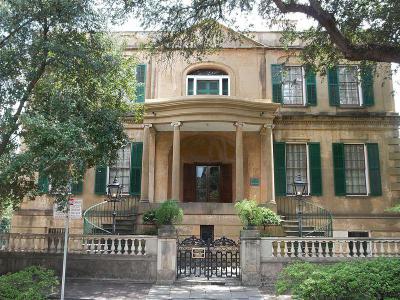
The historic Owens–Thomas House in Savannah, Georgia is one of the finest examples of English Regency architecture in the United States.
The building was completed in 1819 to a design by William Jay, an English architect. His plan was to create a house aesthetically compatible to Bath, England, which is evident in the use of the Bath stone as well as in the sophisticated architectural detail that was meant to add a gentrifying physical ornament to the then-newly emerging Southern port of Savannah. The structure is notable for its early cast-iron side veranda with elaborate acanthus scroll supports on which the Marquis de Lafayette addressed the citizens of Savannah on his visit in 1825.
The house was originally named for its first owner, Richard Richardson, whose family had earned fortune as cotton merchants and bankers. In 1830, the mansion was purchased by the local attorney and politician, George Welshman Owens, and remained in his family for several decades until Owens' granddaughter, Margaret Thomas, bequeathed it to the Telfair Academy of Arts and Sciences, in 1951.
In 1976, the house was designated a National Historic Landmark. Complete with the Slave Quarters, which were uncovered and restored during renovations in the 1990s, the property is now a museum. Its collection contains furnishings and decorative arts from the English Regency period, including possessions of the Owens family dating from 1790 to 1840. Among other exhibits here are English Georgian and American Federal period furniture, early Savannah textiles, silver, Chinese Export porcelain, and 18th- and 19th-century art.
The museum's highlight, though, is the carriage house that once functioned as slave quarters – one of the earliest in existence and best preserved in the American South. Previously inhabited by servants like the nanny, cook, butler and other enslaved workers, the place features slave artifacts of the period.
Although architecturally insignificant, the Slave Quarters is culturally and historically important as the showcase of the African slaves' attempt to maintain their ethnic heritage. The ceiling of the building is painted haint blue, which was customarily used in Gullah culture to deter ghosts or other malevolent spirits.
In the courtyard you can see a small parterre garden designed in 1820 English-American style.
The place is open Sunday through Monday from 12–5pm; and Tuesday through Saturday from 10am–5pm.
Tip:
Museum tours go off every 15 minutes – so try to go with a smaller group!
You can also get a pass to see the Jepson Art Center and the Telfair Museum of Art for a single price of $20 in the space of one week.
The building was completed in 1819 to a design by William Jay, an English architect. His plan was to create a house aesthetically compatible to Bath, England, which is evident in the use of the Bath stone as well as in the sophisticated architectural detail that was meant to add a gentrifying physical ornament to the then-newly emerging Southern port of Savannah. The structure is notable for its early cast-iron side veranda with elaborate acanthus scroll supports on which the Marquis de Lafayette addressed the citizens of Savannah on his visit in 1825.
The house was originally named for its first owner, Richard Richardson, whose family had earned fortune as cotton merchants and bankers. In 1830, the mansion was purchased by the local attorney and politician, George Welshman Owens, and remained in his family for several decades until Owens' granddaughter, Margaret Thomas, bequeathed it to the Telfair Academy of Arts and Sciences, in 1951.
In 1976, the house was designated a National Historic Landmark. Complete with the Slave Quarters, which were uncovered and restored during renovations in the 1990s, the property is now a museum. Its collection contains furnishings and decorative arts from the English Regency period, including possessions of the Owens family dating from 1790 to 1840. Among other exhibits here are English Georgian and American Federal period furniture, early Savannah textiles, silver, Chinese Export porcelain, and 18th- and 19th-century art.
The museum's highlight, though, is the carriage house that once functioned as slave quarters – one of the earliest in existence and best preserved in the American South. Previously inhabited by servants like the nanny, cook, butler and other enslaved workers, the place features slave artifacts of the period.
Although architecturally insignificant, the Slave Quarters is culturally and historically important as the showcase of the African slaves' attempt to maintain their ethnic heritage. The ceiling of the building is painted haint blue, which was customarily used in Gullah culture to deter ghosts or other malevolent spirits.
In the courtyard you can see a small parterre garden designed in 1820 English-American style.
The place is open Sunday through Monday from 12–5pm; and Tuesday through Saturday from 10am–5pm.
Tip:
Museum tours go off every 15 minutes – so try to go with a smaller group!
You can also get a pass to see the Jepson Art Center and the Telfair Museum of Art for a single price of $20 in the space of one week.
9) Cathedral of St. John the Baptist (must see)
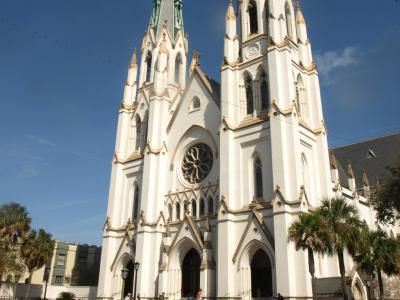
Back in the early days of America, the Roman Catholics were banned from settling in the South out of fear of their potential loyalty to the Spanish crown and possible secession of the southern colonies from the English-controlled North. As a result, Savannah had no Catholic church until 1799, when the French migrants from Haiti, fleeing the French Revolution, established it for the first time. The Cathedral of Saint John the Baptist was begun in 1873. It was commissioned in 1896 upon the completion of the majestic twin spires and addition of stucco and whitewash coating to the brick structure.
The cathedral boasts a number of notable artistic and architectural features, including the Great Rose Window, a Gothic quatrefoil with the image of Saint Cecilia in the center. The windows radiating from the center also contain figures – of players of musical instruments. The Original Window of the Blessed Virgin Mary is one of the few to have survived the great fire that ravaged the city in 1898. The Transept Windows feature the assumption of Virgin Mary into heaven, surrounded by angels and saints. In addition to this, the church houses several murals dating from 1912, depicting saints and other religious figures with the encoded symbols indicating their lives and deaths.
Locals lovingly dub the cathedral "America's Sistine Chapel", referring to its amazing stained glass work, ceiling paintings, and altar. Lovely to look at, this fine piece of French Gothic architecture is like a free 'trip' to Europe, particularly impressive to those who have not traveled extensively outside of the U.S.
Whilst inside, spare some time for a guided tour of the building – you'll be glad that you did. Also, be sure to drop a few bills in the donation box at the exit, which is quite unique, and don't forget to turn the handle.
The cathedral boasts a number of notable artistic and architectural features, including the Great Rose Window, a Gothic quatrefoil with the image of Saint Cecilia in the center. The windows radiating from the center also contain figures – of players of musical instruments. The Original Window of the Blessed Virgin Mary is one of the few to have survived the great fire that ravaged the city in 1898. The Transept Windows feature the assumption of Virgin Mary into heaven, surrounded by angels and saints. In addition to this, the church houses several murals dating from 1912, depicting saints and other religious figures with the encoded symbols indicating their lives and deaths.
Locals lovingly dub the cathedral "America's Sistine Chapel", referring to its amazing stained glass work, ceiling paintings, and altar. Lovely to look at, this fine piece of French Gothic architecture is like a free 'trip' to Europe, particularly impressive to those who have not traveled extensively outside of the U.S.
Whilst inside, spare some time for a guided tour of the building – you'll be glad that you did. Also, be sure to drop a few bills in the donation box at the exit, which is quite unique, and don't forget to turn the handle.
10) Flannery O'Connor Childhood Home
Fans of Southern literature are no doubt familiar with the work of Flannery O'Connor. Before her early death from systemic lupus at age 39, O'Connor wrote two novels ("Wise Blood" and "The Violent Bear It Away") and thirty-two short stories, primarily written in a Southern Gothic style, and usually involving grotesque characters and questions of morals. Many of her works also covered sensitive contemporary issues, like the Holocaust and racial integration.
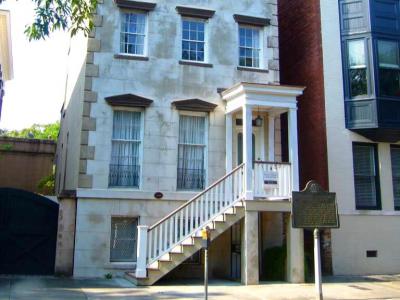
O'Connor's childhood home was built in 1856, as a very modest, one-story Greek revival home. It remained that way until the 1930s, when it has undergone major renovations, to both the interior and exterior. The living room has been refurbished to restore the beauty of the heart of pine flooring, florid furniture, and delicate lace curtains from O'Connor's time. In 1993, a walled garden was added to the backyard, where O'Connor taught a trained chicken to walk backwards. Her appearance with the chicken was her first taste of publicity, and she called it the "high point" of her life.
Filled with memorabilia from O'Connor's past, the home is operated as a historic house museum and literary center, and one can feel what it must have been like to live there in the 1930s. Admission is $8 for adults, $6 for students and military.
Why You Should Visit:
There are books about and by Flannery for sale, and the tour provides many interesting facts about the events and environment that shaped her unique personality.
Tip:
Try to catch a lecture or reading and enjoy the home in a literature context. The best idea would be to catch the annual Birthday Parade and street fair – everybody dresses up!
O'Connor's childhood home was built in 1856, as a very modest, one-story Greek revival home. It remained that way until the 1930s, when it has undergone major renovations, to both the interior and exterior. The living room has been refurbished to restore the beauty of the heart of pine flooring, florid furniture, and delicate lace curtains from O'Connor's time. In 1993, a walled garden was added to the backyard, where O'Connor taught a trained chicken to walk backwards. Her appearance with the chicken was her first taste of publicity, and she called it the "high point" of her life.
Filled with memorabilia from O'Connor's past, the home is operated as a historic house museum and literary center, and one can feel what it must have been like to live there in the 1930s. Admission is $8 for adults, $6 for students and military.
Why You Should Visit:
There are books about and by Flannery for sale, and the tour provides many interesting facts about the events and environment that shaped her unique personality.
Tip:
Try to catch a lecture or reading and enjoy the home in a literature context. The best idea would be to catch the annual Birthday Parade and street fair – everybody dresses up!
11) Armstrong House
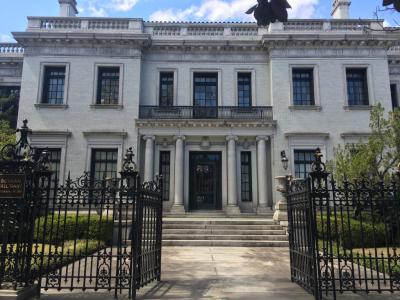
Designed by Savannah, Georgia-based architect Henrik Wallin, this handsome mansion – a nationally significant example of Italian Renaissance Revival style – was built between 1917 and 1919 for the home of Savannah magnate George Ferguson Armstrong (1868–1924), and subsequently was home to Armstrong Junior College.
The house made several appearances in popular culture, having been featured as the school of the daughter of the protagonist in "Cape Fear", the 1962 psychological thriller starring Robert Mitchum, Gregory Peck, Martin Balsam, and Polly Bergen. The house also appeared as the real-life law office of attorney Sonny Seiler in the film "Midnight in the Garden of Good and Evil", a 1997 American crime drama film based on a novel by John Berendt and directed by Clint Eastwood.
Stop by to take your selfie with this historic house before or after strolling to the Forsyth Park nearby!
The house made several appearances in popular culture, having been featured as the school of the daughter of the protagonist in "Cape Fear", the 1962 psychological thriller starring Robert Mitchum, Gregory Peck, Martin Balsam, and Polly Bergen. The house also appeared as the real-life law office of attorney Sonny Seiler in the film "Midnight in the Garden of Good and Evil", a 1997 American crime drama film based on a novel by John Berendt and directed by Clint Eastwood.
Stop by to take your selfie with this historic house before or after strolling to the Forsyth Park nearby!
12) ShopSCAD
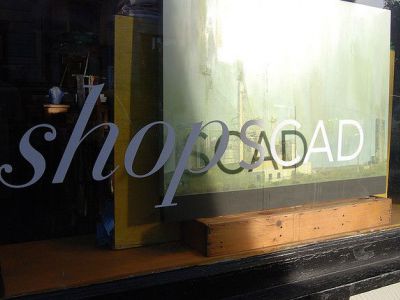
ShopSCAD in Savannah presents a unique and creative fusion of a gallery and a retail space. This 1,200 square-foot store, established in 2003, is a brainchild of the Savannah College of Arts and Design (SCAD), and was founded following the recommendations of Paula Wallace, who is now the President of the college. As a vibrant representation of the talent within SCAD, ShopSCAD features an eclectic collection of works from the college's students, alumni, faculty, and staff.
The store stands out for its broad range of artistic creations. Visitors can explore an ever-changing inventory that includes an impressive array of artworks alongside a variety of other items. These range from handcrafted jewelry and beauty products to books, stylish handbags, and clothing, all showcasing the diverse artistic fields offered at the college. The daily updates to the inventory ensure a fresh and dynamic shopping experience for visitors.
What makes ShopSCAD even more unique are its unconventional displays, which add an extra layer of artistic flair to the shopping experience. These creative displays are reflective of the innovative spirit of SCAD and its community.
Following the success of the Savannah location, the college has expanded this concept, opening similar stores in Atlanta and Lacoste. These additional locations further extend the reach of SCAD's creative community, allowing a wider audience to experience and purchase the unique creations of its members.
The store stands out for its broad range of artistic creations. Visitors can explore an ever-changing inventory that includes an impressive array of artworks alongside a variety of other items. These range from handcrafted jewelry and beauty products to books, stylish handbags, and clothing, all showcasing the diverse artistic fields offered at the college. The daily updates to the inventory ensure a fresh and dynamic shopping experience for visitors.
What makes ShopSCAD even more unique are its unconventional displays, which add an extra layer of artistic flair to the shopping experience. These creative displays are reflective of the innovative spirit of SCAD and its community.
Following the success of the Savannah location, the college has expanded this concept, opening similar stores in Atlanta and Lacoste. These additional locations further extend the reach of SCAD's creative community, allowing a wider audience to experience and purchase the unique creations of its members.
13) Saint John's Episcopal Church
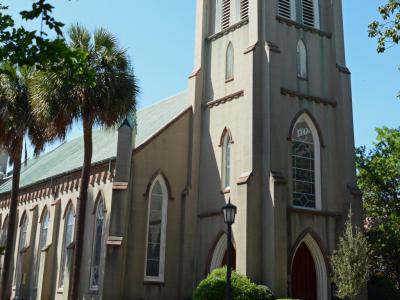
Saint John's Episcopal Church was founded in 1841 in an attempt to increase the Episcopal presence in America. Its very first members were converts from the Anglican Christ Church, and its first rector was the notable Right Reverend Stephen Elliott.
The building itself was designed by architect Calvin Otis in a Neo Gothic style, and built between 1852 and 1853. It was created to have the look of a simple parish house, though it does have several very interesting features- a ships mast is in the center of the church's only spire, it has several magnificent stained glass windows, and its known for its melodious chimes.
Saint John's stained glass windows are all circa the late 19th century. The church's north and south walls are bordered with a set of fourteen different windows depicting the life of Christ, including the Annunciation, Birth, Flight to Egypt, and Jesus in the Temple, to his Death and Resurrection.
Saint John's Episcopal Church also owns the neighboring Green-Meldrim House. This historic house was occupied by General Sherman during the Civil War, and purchased after the war by Judge Peter Meldrim. Today, it serves as a historical building alongside the church itself, and is a setting for church activities like weddings and get-togethers.
The building itself was designed by architect Calvin Otis in a Neo Gothic style, and built between 1852 and 1853. It was created to have the look of a simple parish house, though it does have several very interesting features- a ships mast is in the center of the church's only spire, it has several magnificent stained glass windows, and its known for its melodious chimes.
Saint John's stained glass windows are all circa the late 19th century. The church's north and south walls are bordered with a set of fourteen different windows depicting the life of Christ, including the Annunciation, Birth, Flight to Egypt, and Jesus in the Temple, to his Death and Resurrection.
Saint John's Episcopal Church also owns the neighboring Green-Meldrim House. This historic house was occupied by General Sherman during the Civil War, and purchased after the war by Judge Peter Meldrim. Today, it serves as a historical building alongside the church itself, and is a setting for church activities like weddings and get-togethers.
14) Savannah History Museum (must see)
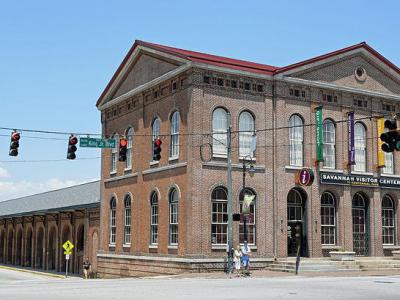
The Savannah History Museum is dedicated to the rich, dramatic history of the city, from its early establishment to today. It is located inside Savannah Visitor's Information Center, which is in turn housed in the passenger train shed of the old Savannah railway. The Museum holds a wide variety of exhibits about all of the people, places, things, and events that have shaped Savannah from 1733 onward.
Some of the exhibits include displays of antique and vintage evening gowns from the 1800s to the 1960s, an antique steam locomotive from the Central of Georgia Railway, a Revolutionary War exhibit, a carriage owned by the founder of the Girl Scouts, an 1830s cotton gin, Revolutionary War uniforms and weaponry, and props from some of the movies set in Savannah, like the bench from Forrest Gump.
At the far end of the building is the Whistle Stop Cafe, which is a breakfast and lunch cafe set inside of a railroad car. One block from the Savannah History Museum is the Roundhouse Railroad Museum, dedicated to Savannah's railway history. Both of these buildings are situated on top of the site of the Revolutionary era Battle of Savannah, fought in 1779, where American troops attempted to break the occupation of Savannah by the British.
Why You Should Visit:
Family-friendly with a few exhibits that will appeal to adults. The tour is one of the most in-depth and interesting – and completely free with admission as well!
Tip:
Watch the video in the Visitor's Center first to give you context for the displays, but make sure that you stick around for the Revolutionary War tour.
They run it on Thursdays to Sundays 3 times a day and you would know that one is about to start once you see a gentleman dressed as a militia soldier beating a drum.
Some of the exhibits include displays of antique and vintage evening gowns from the 1800s to the 1960s, an antique steam locomotive from the Central of Georgia Railway, a Revolutionary War exhibit, a carriage owned by the founder of the Girl Scouts, an 1830s cotton gin, Revolutionary War uniforms and weaponry, and props from some of the movies set in Savannah, like the bench from Forrest Gump.
At the far end of the building is the Whistle Stop Cafe, which is a breakfast and lunch cafe set inside of a railroad car. One block from the Savannah History Museum is the Roundhouse Railroad Museum, dedicated to Savannah's railway history. Both of these buildings are situated on top of the site of the Revolutionary era Battle of Savannah, fought in 1779, where American troops attempted to break the occupation of Savannah by the British.
Why You Should Visit:
Family-friendly with a few exhibits that will appeal to adults. The tour is one of the most in-depth and interesting – and completely free with admission as well!
Tip:
Watch the video in the Visitor's Center first to give you context for the displays, but make sure that you stick around for the Revolutionary War tour.
They run it on Thursdays to Sundays 3 times a day and you would know that one is about to start once you see a gentleman dressed as a militia soldier beating a drum.
