Custom Walk in New York, New York by lepp_beth_232efa created on 2026-03-28
Guide Location: USA » New York
Guide Type: Custom Walk
# of Sights: 14
Tour Duration: 6 Hour(s)
Travel Distance: 15.5 Km or 9.6 Miles
Share Key: 6QTQW
Guide Type: Custom Walk
# of Sights: 14
Tour Duration: 6 Hour(s)
Travel Distance: 15.5 Km or 9.6 Miles
Share Key: 6QTQW
How It Works
Please retrieve this walk in the GPSmyCity app. Once done, the app will guide you from one tour stop to the next as if you had a personal tour guide. If you created the walk on this website or come to the page via a link, please follow the instructions below to retrieve the walk in the app.
Retrieve This Walk in App
Step 1. Download the app "GPSmyCity: Walks in 1K+ Cities" on Apple App Store or Google Play Store.



Step 2. In the GPSmyCity app, download(or launch) the guide "New York Map and Walking Tours".
Step 3. Tap the menu button located at upper right corner of the "Walks" screen and select "Retrieve custom walk". Enter the share key: 6QTQW
1) Times Square (must see)
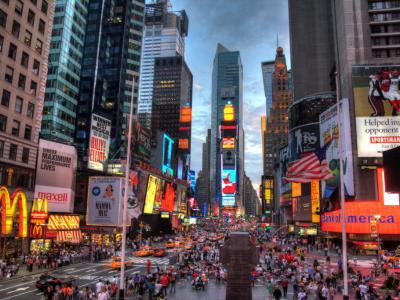
Long before Manhattan’s tidy street plan straightened everything out, Broadway, unlike other streets in New York, followed an older native pathway, wandering freely up the island. This is why it slices across Seventh Avenue and 42nd Street, forming two triangular pockets, like a bow tie. The southern one is called Times Square, while the northern, Duffy Square, is named for World War I chaplain Father Francis P. Duffy, whose statue now watches over the crowds with admirable patience.
The stretch of Broadway from 41st to 53rd Streets goes by a different name: the Great White Way. That nickname wasn’t poetic exaggeration-those glowing billboards, marquees, and oversized posters once made the area one of the brightest electrified spots on Earth. Today, it’s still blazing away with advertisements for Broadway’s latest musicals and plays, pulling in nearly 50 million visitors a year. That’s roughly 330,000 people a day, all weaving through the lights, noise, and spectacle in search of something unforgettable.
Before it was Times Square, this chaotic crossroads answered to the far calmer name of Longacre Square. Everything changed in 1904, when New York Times publisher Adolph S. Ochs moved his newspaper into the brand-new Times Building-now known as One Times Square-and happily lent his name to the neighborhood. The Times moved out within a decade, but not before launching a little tradition in 1907: the New Year’s Eve Ball Drop. A century later, the glittering descent still draws over a million people every year, along with countless viewers around the world.
Today, Times Square is a fluorescent buffet of attractions-ABC’s Times Square Studios, Planet Hollywood, Bubba Gump Shrimp Company, and whichever character impersonator is bravest that day. The towering illuminated signs, nicknamed “spectaculars” or “jumbotrons,” compete with the neon bravado of Las Vegas and often win.
Amid all that glow, shoppers duck into stores like Gap, Old Navy, Forever 21, Levi’s, the Disney Store, Hershey’s Chocolate World, and M&M’s World-each one flashing its own brand of temptation. Whether you’re hunting for a souvenir, a show, or just a moment to stand still and stare, this Midtown crossroads remains New York at its most unfiltered and unmistakable.
The stretch of Broadway from 41st to 53rd Streets goes by a different name: the Great White Way. That nickname wasn’t poetic exaggeration-those glowing billboards, marquees, and oversized posters once made the area one of the brightest electrified spots on Earth. Today, it’s still blazing away with advertisements for Broadway’s latest musicals and plays, pulling in nearly 50 million visitors a year. That’s roughly 330,000 people a day, all weaving through the lights, noise, and spectacle in search of something unforgettable.
Before it was Times Square, this chaotic crossroads answered to the far calmer name of Longacre Square. Everything changed in 1904, when New York Times publisher Adolph S. Ochs moved his newspaper into the brand-new Times Building-now known as One Times Square-and happily lent his name to the neighborhood. The Times moved out within a decade, but not before launching a little tradition in 1907: the New Year’s Eve Ball Drop. A century later, the glittering descent still draws over a million people every year, along with countless viewers around the world.
Today, Times Square is a fluorescent buffet of attractions-ABC’s Times Square Studios, Planet Hollywood, Bubba Gump Shrimp Company, and whichever character impersonator is bravest that day. The towering illuminated signs, nicknamed “spectaculars” or “jumbotrons,” compete with the neon bravado of Las Vegas and often win.
Amid all that glow, shoppers duck into stores like Gap, Old Navy, Forever 21, Levi’s, the Disney Store, Hershey’s Chocolate World, and M&M’s World-each one flashing its own brand of temptation. Whether you’re hunting for a souvenir, a show, or just a moment to stand still and stare, this Midtown crossroads remains New York at its most unfiltered and unmistakable.
2) Rockefeller Center (must see)
Back in 1801, a New York physician named David Hosack bought 22 acres of empty land from the city with an aim to establish America’s first botanical garden. And for the next ten years, the Elgin Botanic Garden really did bloom-until funding wilted, the plants went wild, and Columbia University had to step in to take over the property in 1823.
Fast-forward a century to 1926, when the Metropolitan Opera went searching for a grand new home. Columbia leased the land to its generous patron, John D. Rockefeller, Jr., setting the stage for a glittering cultural palace. Then the stock market crashed in 1929, the opera backed out, and Rockefeller found himself with prime New York real estate and no tenant. So, he pivoted-and decided to build a mass-media powerhouse instead.
In 1930, after months of negotiations involving Radio Corporation of America, National Broadcasting Company, and Radio-Keith-Orpheum, the plan was set: an entertainment complex of unprecedented scale. To make room, 228 buildings were cleared and 4,000 tenants relocated. Early name ideas included “Radio City,” “Rockefeller City,” and the dramatic “Metropolitan Square,” before the now-famous title finally stuck.
Today, Rockefeller Center stretches across all of Doctor Hosack’s original 22 acres-though the botanicals have long been replaced with 14 Art Deco buildings, a standalone tower along 51st Street, and four more rising on the west side of Sixth Avenue. There are rooftop gardens, but you’ll have to crane your neck to see anything green.
On the west side sits Radio City Music Hall, still flashing its neon glamour. And at the heart of it all lies the sunken Lower Plaza, praised by Chinese-American architect Ieoh Ming Pei as “the most successful open space in the United States, perhaps in the world.” Most visitors simply know it as “the place with the ice rink,” which has been delighting skaters since 1936.
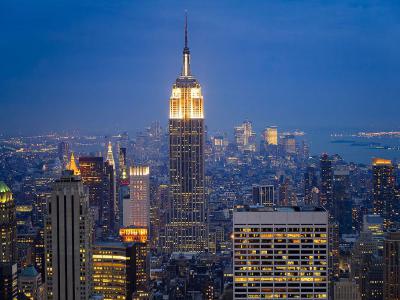
Then there’s the view. “Top of the Rock” offers three levels of indoor and outdoor decks with clear, cinematic vistas of the New York skyline. Back on the ground, the shops spread out in every direction-big names, small designers, and everything in between. It’s the kind of place where you realize: shopping isn’t just about what you buy; it’s about where you buy it...
Fast-forward a century to 1926, when the Metropolitan Opera went searching for a grand new home. Columbia leased the land to its generous patron, John D. Rockefeller, Jr., setting the stage for a glittering cultural palace. Then the stock market crashed in 1929, the opera backed out, and Rockefeller found himself with prime New York real estate and no tenant. So, he pivoted-and decided to build a mass-media powerhouse instead.
In 1930, after months of negotiations involving Radio Corporation of America, National Broadcasting Company, and Radio-Keith-Orpheum, the plan was set: an entertainment complex of unprecedented scale. To make room, 228 buildings were cleared and 4,000 tenants relocated. Early name ideas included “Radio City,” “Rockefeller City,” and the dramatic “Metropolitan Square,” before the now-famous title finally stuck.
Today, Rockefeller Center stretches across all of Doctor Hosack’s original 22 acres-though the botanicals have long been replaced with 14 Art Deco buildings, a standalone tower along 51st Street, and four more rising on the west side of Sixth Avenue. There are rooftop gardens, but you’ll have to crane your neck to see anything green.
On the west side sits Radio City Music Hall, still flashing its neon glamour. And at the heart of it all lies the sunken Lower Plaza, praised by Chinese-American architect Ieoh Ming Pei as “the most successful open space in the United States, perhaps in the world.” Most visitors simply know it as “the place with the ice rink,” which has been delighting skaters since 1936.
Then there’s the view. “Top of the Rock” offers three levels of indoor and outdoor decks with clear, cinematic vistas of the New York skyline. Back on the ground, the shops spread out in every direction-big names, small designers, and everything in between. It’s the kind of place where you realize: shopping isn’t just about what you buy; it’s about where you buy it...
3) Fifth Avenue
5th Avenue is a major thoroughfare in New York City's Manhattan, extending north from Washington Square Park in Greenwich Village to West 143rd Street in Harlem. It is considered one of the most expensive and luxurious stretches of retail in the U.S., if not the whole world, which has been drawing a steady stream of fashion addicts for over a century now.
Few things can be equally fun and indulgent as shopping (or even window-shopping) at 5th Avenue, as most of the high-end designer outposts here feature ornamental window displays and, on any given day, the street resembles a couture runway. However, the experience can also be just as daunting and overwhelming, particularly for first-time shoppers, so here are some of the top shops worth checking out primarily on 5th Avenue:
- Tiffany & Co. is the incredibly famous fine jewelry brand flagship store where the iconic “Breakfast at Tiffany's” movie was set.
- Known worldwide, despite this being their only location, Bergdorf Goodman is the premier shopping destination for all luxury items. Many celebrities have been quoted as saying "Scatter my ashes at Bergdorf's".
- If you look for high-quality cultured pearls as a memorable gift for a special lady in your life, then look no further than Mikimoto.
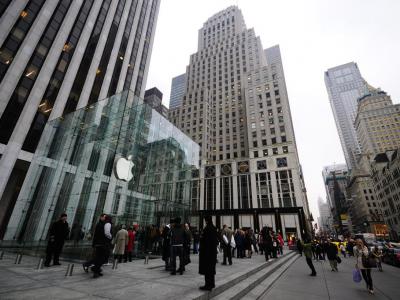
- If you're lusting after the new iPhone or are just a tech lover, a visit to The Apple Store is a must.
- The crème de la crème of leather handbags, the outpost of French Louis Vuitton will set you back a hefty sum for a purse, but, given the timeless style, you'll be able to wear it for years to come.
- The Italian brand Prada offers a wide variety of luxury items, from fashion to shoes and handbags, and everything in between.
- Well-made suits for the well-heeled set are found in abundance at Hugo Boss, notorious since the late 1990s, courtesy of “The Sopranos” series.
Why You Should Visit:
The main artery of New York City's shopping scene with mass brands, upscale department stores and multinational retailers offering something for everyone.
Few things can be equally fun and indulgent as shopping (or even window-shopping) at 5th Avenue, as most of the high-end designer outposts here feature ornamental window displays and, on any given day, the street resembles a couture runway. However, the experience can also be just as daunting and overwhelming, particularly for first-time shoppers, so here are some of the top shops worth checking out primarily on 5th Avenue:
- Tiffany & Co. is the incredibly famous fine jewelry brand flagship store where the iconic “Breakfast at Tiffany's” movie was set.
- Known worldwide, despite this being their only location, Bergdorf Goodman is the premier shopping destination for all luxury items. Many celebrities have been quoted as saying "Scatter my ashes at Bergdorf's".
- If you look for high-quality cultured pearls as a memorable gift for a special lady in your life, then look no further than Mikimoto.
- If you're lusting after the new iPhone or are just a tech lover, a visit to The Apple Store is a must.
- The crème de la crème of leather handbags, the outpost of French Louis Vuitton will set you back a hefty sum for a purse, but, given the timeless style, you'll be able to wear it for years to come.
- The Italian brand Prada offers a wide variety of luxury items, from fashion to shoes and handbags, and everything in between.
- Well-made suits for the well-heeled set are found in abundance at Hugo Boss, notorious since the late 1990s, courtesy of “The Sopranos” series.
Why You Should Visit:
The main artery of New York City's shopping scene with mass brands, upscale department stores and multinational retailers offering something for everyone.
4) St. Patrick's Cathedral (must see)
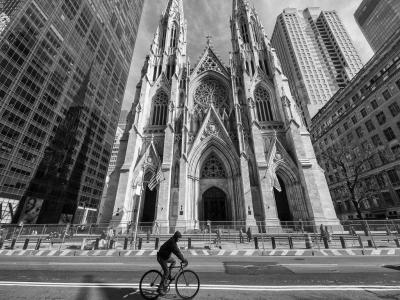
In case you wonder why New York has two Saint Patrick’s Cathedrals, it’s not because the city has twice as many saints-it’s because the first one simply couldn’t keep up. The Old Cathedral from 1815 did its best, but by the mid-1800s, the Archdiocese had outgrown it. So, in 1858, construction began on a new spiritual heavyweight: the towering Gothic Revival cathedral that now occupies the block between 50th and 51st Streets on Madison Avenue. Designed by James Renwick Jr. and formally opened in 1879, it rises directly across from Rockefeller Center, as if keeping an eye on the skating rink...
From the outside, the building is a full Gothic drama. Marble everywhere, pointed arches stacked like architectural exclamation marks, and stained-glass windows glowing in neat vertical ranks. The whole structure stretches 332 feet in length, with transepts spanning 174 feet. But the true attention-grabbers are the twin spires-330 feet of pure, sky-seeking ambition-framing the bronze entrance doors.
Step inside, and the scale refuses to let up. A broad central aisle is flanked by two narrower ones, separated by 32 marble columns that seem determined to out-pose each other. Look up, and you’ll see ribbed Gothic vaults meeting in elegant bosses overhead. Along the sides, twelve chapels create quieter pockets of devotion, while seating for 2,400 fills the nave with long lines of wooden pews.
Even the high altar has a story. The original version was shipped off to Fordham University Church in the Bronx, making room for the current altar carved from grey-white Italian marble and crowned by a bronze baldachin. It rises beneath a statue of Christ the King, complete with angels and decorative pinnacles.
Today, the “new” Saint Patrick’s Cathedral is firmly established as one of Manhattan’s defining landmarks, recognized both as a New York City designated landmark and listed on the National Register of Historic Places-a cathedral built to impress, and one that still succeeds brilliantly!
From the outside, the building is a full Gothic drama. Marble everywhere, pointed arches stacked like architectural exclamation marks, and stained-glass windows glowing in neat vertical ranks. The whole structure stretches 332 feet in length, with transepts spanning 174 feet. But the true attention-grabbers are the twin spires-330 feet of pure, sky-seeking ambition-framing the bronze entrance doors.
Step inside, and the scale refuses to let up. A broad central aisle is flanked by two narrower ones, separated by 32 marble columns that seem determined to out-pose each other. Look up, and you’ll see ribbed Gothic vaults meeting in elegant bosses overhead. Along the sides, twelve chapels create quieter pockets of devotion, while seating for 2,400 fills the nave with long lines of wooden pews.
Even the high altar has a story. The original version was shipped off to Fordham University Church in the Bronx, making room for the current altar carved from grey-white Italian marble and crowned by a bronze baldachin. It rises beneath a statue of Christ the King, complete with angels and decorative pinnacles.
Today, the “new” Saint Patrick’s Cathedral is firmly established as one of Manhattan’s defining landmarks, recognized both as a New York City designated landmark and listed on the National Register of Historic Places-a cathedral built to impress, and one that still succeeds brilliantly!
5) Bow Bridge
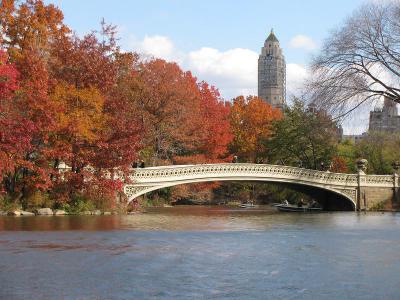
While passing by Central Park, you must go through the Bow Bridge – a marvelous-looking relic from the mid-1800s that offers sweet views and picture opportunities, either on the bridge itself or from the edge of the Lake with the bridge in the background.
Long and low to the water, the walkway gives enough elevation to get a wide view of the park, as well as of the rowboats traveling below and the buildings of the Upper West Side skyline peeking from behind the trees.
Although exquisitely gorgeous in fall, there are few things more romantic than the Bow Bridge at any time of year. It has figured in countless romantic moments in the lives of couples from not only New York City but all over the world. Anyone who is even remotely familiar with American cinema from the past 50 years has seen it in at least a half dozen movies ("Great Expectations", "Leap of Faith", "When Harry Met Sally", "Night at the Museum", "Autumn in New York", "Highlander", etc.).
Tip:
In warm weather, rent a rowboat to paddle around the adjacent lake, or get a pic with the rowboats, bridge and San Remo building in the background. You can also have lunch/dinner at the elegant Loeb Boathouse nearby.
Long and low to the water, the walkway gives enough elevation to get a wide view of the park, as well as of the rowboats traveling below and the buildings of the Upper West Side skyline peeking from behind the trees.
Although exquisitely gorgeous in fall, there are few things more romantic than the Bow Bridge at any time of year. It has figured in countless romantic moments in the lives of couples from not only New York City but all over the world. Anyone who is even remotely familiar with American cinema from the past 50 years has seen it in at least a half dozen movies ("Great Expectations", "Leap of Faith", "When Harry Met Sally", "Night at the Museum", "Autumn in New York", "Highlander", etc.).
Tip:
In warm weather, rent a rowboat to paddle around the adjacent lake, or get a pic with the rowboats, bridge and San Remo building in the background. You can also have lunch/dinner at the elegant Loeb Boathouse nearby.
6) Belvedere Castle
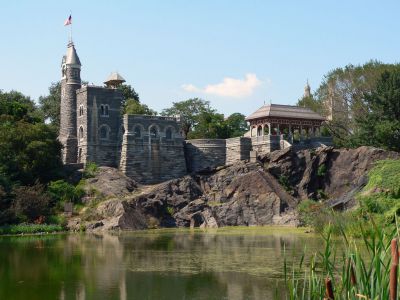
New York's version of Disneyland's Sleeping Beauty castle, this picturesque building seated on what locals call the Vista Rock. It is the area's second-highest natural elevation – lives up to its name ("beautiful view" in Italian), commanding spectacular views of Central Park and the city skyline. An architectural hybrid of Gothic and Romanesque styles, it was designed in the 1860s and recently renovated to serve as a visitor center and gift shop.
While the outdoor pavilion is a popular lookout, the best views are to be found two stories up at the top of a narrow winding staircase, climbing which does not cost any money. The span of view across the park's northern part is particularly stunning: a panorama of the Turtle Pond, with softball fields of the Great Lawn and skyscrapers on the other side of 5th Ave in the background.
Free family and community programs hosted at the castle include birding and other Central Park Conservancy discovery programs as well as a variety of history and natural history programs led by NYC Urban Park Rangers, including stargazing, astronomy, and wildlife-education events.
While the outdoor pavilion is a popular lookout, the best views are to be found two stories up at the top of a narrow winding staircase, climbing which does not cost any money. The span of view across the park's northern part is particularly stunning: a panorama of the Turtle Pond, with softball fields of the Great Lawn and skyscrapers on the other side of 5th Ave in the background.
Free family and community programs hosted at the castle include birding and other Central Park Conservancy discovery programs as well as a variety of history and natural history programs led by NYC Urban Park Rangers, including stargazing, astronomy, and wildlife-education events.
7) Central Park Carousel
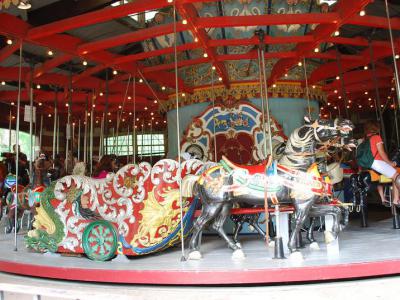
While in Central Park you can wander over to one of the largest and most popular carousels in the country. The one you see today is the fourth to occupy this spot. Two earlier ones were destroyed by fires. The current is a gift "to the children of New York" from the Michael Friedsam Foundation. It was built in 1951, though it looks much older – which is very likely what the architect intended, as it was replacing models from early in the 20th century.
There is no gravity-defying surge, no virtual reality, no computerized light show, no 3D projection – just simple mechanical horses that go round and round, and up and down while lovely-cheesy old-timey music plays on, which is the same ride people have been having for decades and decades! While there's a fee for rides, watching and listening to the music is free.
There are rarely queues that build up more than one ride long, so waiting times are quite short.
There is no gravity-defying surge, no virtual reality, no computerized light show, no 3D projection – just simple mechanical horses that go round and round, and up and down while lovely-cheesy old-timey music plays on, which is the same ride people have been having for decades and decades! While there's a fee for rides, watching and listening to the music is free.
There are rarely queues that build up more than one ride long, so waiting times are quite short.
8) Madison Avenue
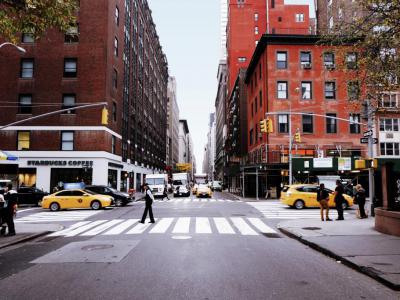
Running south-north from Madison Square (at 23rd Street) to Harlem River Drive (at 142nd Street), Madison Avenue passes through Midtown and further up the Upper East Side, East Harlem, and Harlem. The avenue is named after the place it arises from, Madison Square, which in turn has been named after James Madison, the fourth President of the United States.
The street's name has been metonymous with the American advertising industry since the 1920s. Thus, the term "Madison Avenue" refers specifically to the agencies and methodology of advertising ("Madison Avenue techniques" – the gimmicky, slick use of the communications media to play on emotions).
Interestingly enough, more recently, in 1984, the "Splash" movie gave rise to a new naming trend in the U.S. associated with Madison. In this film, a mermaid, who has adopted a human form, takes the name Madison after she sees it on a street sign. Ever since then, Madison, which had previously been an exclusively male name (meaning "son of Maud", Maud's son), has been used by females and become one of the most popular names for girls in the United States.
Similarly to London's Oxford Street and the neighboring Fifth Avenue, Madison Avenue is known for its fashionable shops, especially in the section between 57th and 85th Streets, exhibiting timeless elegance with a contemporary flavor that is distinctively New York. This premier luxury district is a home to flagship boutiques of the finest fashion (& jewelry) designers like Tom Ford, Giorgio Armani, Calvin Klein, Luca Luca, Hermes, and Carolina Herrera. Numerous world class art galleries and the Whitney Museum of American Art are also found here alongside internationally renowned hotels such as the Mark, the Pierre, and the Carlyle. The exquisite local restaurants, spas and salons are geared to deliver exclusive pampering to the rich and famous.
The street's name has been metonymous with the American advertising industry since the 1920s. Thus, the term "Madison Avenue" refers specifically to the agencies and methodology of advertising ("Madison Avenue techniques" – the gimmicky, slick use of the communications media to play on emotions).
Interestingly enough, more recently, in 1984, the "Splash" movie gave rise to a new naming trend in the U.S. associated with Madison. In this film, a mermaid, who has adopted a human form, takes the name Madison after she sees it on a street sign. Ever since then, Madison, which had previously been an exclusively male name (meaning "son of Maud", Maud's son), has been used by females and become one of the most popular names for girls in the United States.
Similarly to London's Oxford Street and the neighboring Fifth Avenue, Madison Avenue is known for its fashionable shops, especially in the section between 57th and 85th Streets, exhibiting timeless elegance with a contemporary flavor that is distinctively New York. This premier luxury district is a home to flagship boutiques of the finest fashion (& jewelry) designers like Tom Ford, Giorgio Armani, Calvin Klein, Luca Luca, Hermes, and Carolina Herrera. Numerous world class art galleries and the Whitney Museum of American Art are also found here alongside internationally renowned hotels such as the Mark, the Pierre, and the Carlyle. The exquisite local restaurants, spas and salons are geared to deliver exclusive pampering to the rich and famous.
Sight description based on Wikipedia.
9) Grand Central Terminal (must see)
It may be puzzling as to why New Yorkers use the terms “Grand Central Terminal” and “Grand Central Station” as if they’re the same thing... Here’s the secret: one is the rail terminal, the other is the post office attached to it, and the whole complex is busy enough that no one pauses to sort out the terminology.
The place's story began with Cornelius Vanderbilt, the 19th-century business titan, who collected railroads the way others collect postcards. After buying the Hudson River and New York Central lines in 1867, he fused them together and launched the construction of Grand Central Depot two years later.
The original depot, designed by architect John B. Snook, arrived in full Second Empire style-mansard roofs, ornate flourishes, and the confidence of a building that knew it had somewhere important to be. By 1874, it was ready for service. Trains glided into the Park Avenue Tunnel at 96th Street, slipping underground for the final approach. This solved the small problem of locomotives barreling down Manhattan streets, which city residents understandably found less than charming.
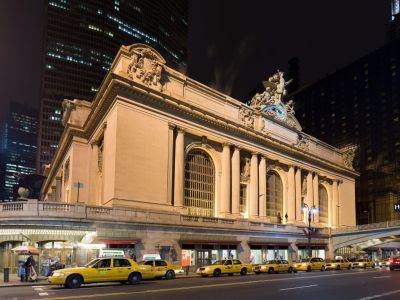
Then came 1902. A steam locomotive, blinded by smoke in the Park Avenue Tunnel, missed its signals and collided with another train. The crash sealed the depot’s fate. Within a few years, it was demolished, making way for the Grand Central Terminal we know today. The firms Reed & Stern and Warren & Wetmore teamed up to create the Beaux-Arts landmark-one focused on the functional layout, the other on the dramatic exterior.
Inside, the terminal doubled as an art gallery long before that was fashionable. The Main Concourse ceiling famously charts a glowing, backwards zodiac. The façade features the Glory of Commerce sculpture, a bronze statue of Vanderbilt stands guard out front, and cast-iron eagles keep watch over the whole scene.
Vanderbilt Hall regularly hosts exhibitions and seasonal events, while the Dining Concourse adds its own glow with rows of illuminated lightboxes. And every so often, the terminal surprises commuters with performance art-from choreographed flash mobs to unexpected installations-turning an everyday commute into something slightly cinematic.
The place's story began with Cornelius Vanderbilt, the 19th-century business titan, who collected railroads the way others collect postcards. After buying the Hudson River and New York Central lines in 1867, he fused them together and launched the construction of Grand Central Depot two years later.
The original depot, designed by architect John B. Snook, arrived in full Second Empire style-mansard roofs, ornate flourishes, and the confidence of a building that knew it had somewhere important to be. By 1874, it was ready for service. Trains glided into the Park Avenue Tunnel at 96th Street, slipping underground for the final approach. This solved the small problem of locomotives barreling down Manhattan streets, which city residents understandably found less than charming.
Then came 1902. A steam locomotive, blinded by smoke in the Park Avenue Tunnel, missed its signals and collided with another train. The crash sealed the depot’s fate. Within a few years, it was demolished, making way for the Grand Central Terminal we know today. The firms Reed & Stern and Warren & Wetmore teamed up to create the Beaux-Arts landmark-one focused on the functional layout, the other on the dramatic exterior.
Inside, the terminal doubled as an art gallery long before that was fashionable. The Main Concourse ceiling famously charts a glowing, backwards zodiac. The façade features the Glory of Commerce sculpture, a bronze statue of Vanderbilt stands guard out front, and cast-iron eagles keep watch over the whole scene.
Vanderbilt Hall regularly hosts exhibitions and seasonal events, while the Dining Concourse adds its own glow with rows of illuminated lightboxes. And every so often, the terminal surprises commuters with performance art-from choreographed flash mobs to unexpected installations-turning an everyday commute into something slightly cinematic.
10) New York Public Library (must see)
Officially known as the Stephen A. Schwarzman Building, but more commonly as the 42nd Street main branch, this is the New York Public Library in its most dramatic form. The building occupies a prime spot on Fifth Avenue between 40th and 42nd Streets, sharing the block with Bryant Park and wearing its Beaux-Arts architecture like a tailored suit that never went out of style.
The story dates back to 1895, when the Astor and Lenox Libraries merged and suddenly needed a home worthy of their combined ambitions. The chosen location sat beneath the old Croton Distributing Reservoir, a granite fortress that had outlived its usefulness. The firm Carrère & Hastings was brought in to replace it with something grander, brighter, and considerably more inviting than a municipal water tank.
When the library finally opened on May 24, 1911, New Yorkers poured in. The first borrowed book-an earnest study comparing Nietzsche and Tolstoy-set the tone for the building’s intellectual aspirations. Within its first week, a quarter of a million visitors wandered its halls, proving that the city was more than ready for a cultural showpiece.
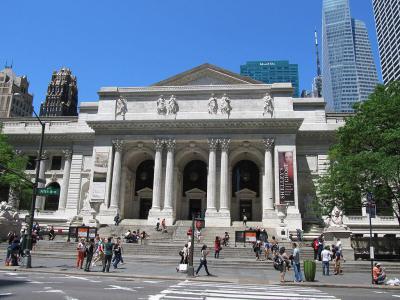
The exterior lives up to its reputation. Vermont marble and brick form the façade, while bronze windows and fixtures add a warm contrast. Above the central entrance, pediments display allegorical sculptures of Life, Painting, and Sculpture-just in case you needed a reminder that this building takes the arts seriously... A graceful balcony stretches along the Fifth Avenue side, tying the whole ensemble together.
Approach the main entrance, and you’ll ascend a grand staircase toward a deep portico with six Corinthian columns and three archways. And waiting to greet you-calm, composed, and eternally photogenic-are the two famous Tennessee marble lions flanking the steps. They’ve stood watch for more than a century, making sure everyone entering this library does so with a sense of occasion...
The story dates back to 1895, when the Astor and Lenox Libraries merged and suddenly needed a home worthy of their combined ambitions. The chosen location sat beneath the old Croton Distributing Reservoir, a granite fortress that had outlived its usefulness. The firm Carrère & Hastings was brought in to replace it with something grander, brighter, and considerably more inviting than a municipal water tank.
When the library finally opened on May 24, 1911, New Yorkers poured in. The first borrowed book-an earnest study comparing Nietzsche and Tolstoy-set the tone for the building’s intellectual aspirations. Within its first week, a quarter of a million visitors wandered its halls, proving that the city was more than ready for a cultural showpiece.
The exterior lives up to its reputation. Vermont marble and brick form the façade, while bronze windows and fixtures add a warm contrast. Above the central entrance, pediments display allegorical sculptures of Life, Painting, and Sculpture-just in case you needed a reminder that this building takes the arts seriously... A graceful balcony stretches along the Fifth Avenue side, tying the whole ensemble together.
Approach the main entrance, and you’ll ascend a grand staircase toward a deep portico with six Corinthian columns and three archways. And waiting to greet you-calm, composed, and eternally photogenic-are the two famous Tennessee marble lions flanking the steps. They’ve stood watch for more than a century, making sure everyone entering this library does so with a sense of occasion...
11) Bryant Park
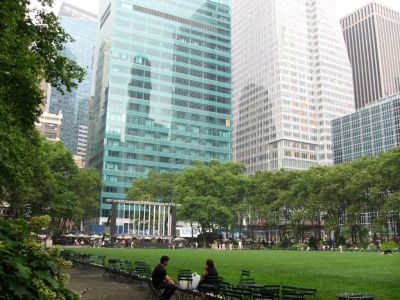
Bryant Park may only cover eight acres, but in Midtown terms, that’s practically a national park. It sits right in front of the New York Public Library-because even marble lions need a backyard-and it’s wrapped in a striking trio of skyscrapers: the sloping W.R. Grace Building, the glassy Bank of America Tower, and the stylish Bryant Park Hotel. For many New Yorkers, this is the unofficial lunchtime headquarters, power-nap zone, and outdoor living room all rolled into one.
Long before the café tables, fashion shows, and Instagram moments, this patch of land was pure wilderness. Back in 1686, Governor Thomas Dongan decided the city needed some public space and set this tract aside. Nearly a century later, George Washington’s troops marched right across it while retreating from the Battle of Long Island-proof that even in the 18th century, people were already cutting through Midtown to save time...
By the 19th century, the area had become Reservoir Square, named for the Croton distributing reservoir looming beside it. Over the years, the square witnessed its share of drama, too, including the New York Draft Riots of 1863. In 1884, it traded the utilitarian name for a poetic one-Bryant Park-in honor of the poet, editor, and abolitionist, William Cullen Bryant, whose statue now watches over the lawns, as if proofreading everyone’s behavior. The 1970s, however, were less glamorous, and the park slid into disrepair.
Things changed for the better in 1988 when the Bryant Park Restoration Corporation stepped in and gave the place the makeover it deserved. Out went the decay; in came movable chairs, chess tables, cafés, and a renewed sense of safety and openness. Today, Bryant Park hosts everything from summer movies to runway tents, and in winter, its ice-skating rink adds a flash of seasonal magic. It’s a compact, lively, endlessly entertaining pocket of green that proves-even in the midst of Manhattan, there’s always room for a breath of fresh air...
Long before the café tables, fashion shows, and Instagram moments, this patch of land was pure wilderness. Back in 1686, Governor Thomas Dongan decided the city needed some public space and set this tract aside. Nearly a century later, George Washington’s troops marched right across it while retreating from the Battle of Long Island-proof that even in the 18th century, people were already cutting through Midtown to save time...
By the 19th century, the area had become Reservoir Square, named for the Croton distributing reservoir looming beside it. Over the years, the square witnessed its share of drama, too, including the New York Draft Riots of 1863. In 1884, it traded the utilitarian name for a poetic one-Bryant Park-in honor of the poet, editor, and abolitionist, William Cullen Bryant, whose statue now watches over the lawns, as if proofreading everyone’s behavior. The 1970s, however, were less glamorous, and the park slid into disrepair.
Things changed for the better in 1988 when the Bryant Park Restoration Corporation stepped in and gave the place the makeover it deserved. Out went the decay; in came movable chairs, chess tables, cafés, and a renewed sense of safety and openness. Today, Bryant Park hosts everything from summer movies to runway tents, and in winter, its ice-skating rink adds a flash of seasonal magic. It’s a compact, lively, endlessly entertaining pocket of green that proves-even in the midst of Manhattan, there’s always room for a breath of fresh air...
12) Empire State Building (must see)
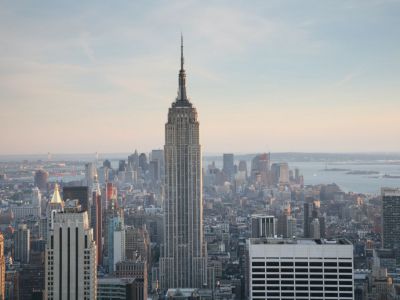
Meet the undisputed champion of New York’s Art Deco era: the Empire State Building, a 102-story giant that rises over 1,450 feet above Midtown’s daily hustle. It once ruled as the tallest building on Earth; today it’s still impressive enough to hold a lineup of titles-seventh-tallest in New York, ninth in the United States, and still one of the tallest freestanding structures anywhere in the Americas.
Its name comes straight from New York’s proud nickname, the “Empire State,” and its streamlined design was the work of the Shreve, Lamb & Harmon architectural firm. Construction began in 1930, wrapped up just a year later, and replaced the former Waldorf-Astoria Hotel that once stood on the same block. From the start, the goal was simple: to build the biggest, boldest skyscraper the world had ever seen.
You’ll find this landmark in Midtown South, planted along Fifth Avenue between 34th and 35th Streets. Three observatories-on the 80th, 86th, and 102nd floors-offer wraparound views that make the city look like an architectural toy box. And thanks to its starring role in more than 250 films and TV shows, beginning with King Kong in 1933, the building’s Hollywood résumé is nearly as tall as the tower itself.
The exterior keeps things classic: Indiana limestone, granite, and clean geometric ornamentation that embodies Art Deco style without telling a story in symbols. The main entrance features metal doors framed by sleek vertical piers topped with sculpted eagles, along with a gold-lettered transom that proudly spells out the building’s name.
In recognition of its cultural and architectural significance, the Empire State Building was declared a New York City Landmark in 1980 and added to the National Register of Historic Places in 1986. Today, it remains one of Manhattan’s most enduring icons-an unmistakable marker on the skyline and an essential stop for anyone wanting to feel the full vertical spirit of New York.
Its name comes straight from New York’s proud nickname, the “Empire State,” and its streamlined design was the work of the Shreve, Lamb & Harmon architectural firm. Construction began in 1930, wrapped up just a year later, and replaced the former Waldorf-Astoria Hotel that once stood on the same block. From the start, the goal was simple: to build the biggest, boldest skyscraper the world had ever seen.
You’ll find this landmark in Midtown South, planted along Fifth Avenue between 34th and 35th Streets. Three observatories-on the 80th, 86th, and 102nd floors-offer wraparound views that make the city look like an architectural toy box. And thanks to its starring role in more than 250 films and TV shows, beginning with King Kong in 1933, the building’s Hollywood résumé is nearly as tall as the tower itself.
The exterior keeps things classic: Indiana limestone, granite, and clean geometric ornamentation that embodies Art Deco style without telling a story in symbols. The main entrance features metal doors framed by sleek vertical piers topped with sculpted eagles, along with a gold-lettered transom that proudly spells out the building’s name.
In recognition of its cultural and architectural significance, the Empire State Building was declared a New York City Landmark in 1980 and added to the National Register of Historic Places in 1986. Today, it remains one of Manhattan’s most enduring icons-an unmistakable marker on the skyline and an essential stop for anyone wanting to feel the full vertical spirit of New York.
13) Flatiron Building
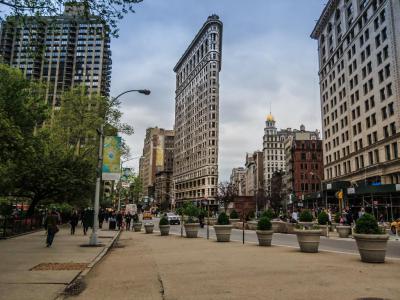
Perhaps the most photographed edifice in New York City, the Flatiron Building owes its popularity and name to the unique design. The isosceles triangle-shaped building may not be as high as the nearby high risers of today, but when it opened its doors for the first time in 1901, it surely was one of the tallest in New York – 307 feet, 21 floors – rising like a Greek column, contrary to the other New York skyscrapers rising from a lower base block.
The Flatiron building was designed by Chicago architect, Daniel Burnham, as an office building for the Fuller Construction Company. Styled renaissance palazzo with beaux art detailing, it has the exterior of steel clad with terra cotta. Upon inauguration, the building was dubbed Burnham’s Folly by skeptics who doubted it would stand against strong winds. The design, however, has defied their misgivings and remained structurally sound till the present. Nowadays, it houses the headquarters of the McMillan Publishing Company.
The Flatiron building symbolizes New York City in picture postcards, television commercials and documentaries. It became a New York City landmark in 1966 and was added to the National Register of Historic Places in 1976.
Why You Should Visit:
The exterior of the structure is certainly unique and well worth a photo!
Tip:
At the crossroads between 5th Avenue and Broadway, this should be not the only attraction in the area. The district is trendy, and you can sit outside at one of the many local cafes or in Madison Square Park and just watch people go about their lives all day long. Alternatively, if you're more creatively inclined, the area has plenty of stores catering to those loving artistic design, as well as hip cafes and restaurants.
The Flatiron building was designed by Chicago architect, Daniel Burnham, as an office building for the Fuller Construction Company. Styled renaissance palazzo with beaux art detailing, it has the exterior of steel clad with terra cotta. Upon inauguration, the building was dubbed Burnham’s Folly by skeptics who doubted it would stand against strong winds. The design, however, has defied their misgivings and remained structurally sound till the present. Nowadays, it houses the headquarters of the McMillan Publishing Company.
The Flatiron building symbolizes New York City in picture postcards, television commercials and documentaries. It became a New York City landmark in 1966 and was added to the National Register of Historic Places in 1976.
Why You Should Visit:
The exterior of the structure is certainly unique and well worth a photo!
Tip:
At the crossroads between 5th Avenue and Broadway, this should be not the only attraction in the area. The district is trendy, and you can sit outside at one of the many local cafes or in Madison Square Park and just watch people go about their lives all day long. Alternatively, if you're more creatively inclined, the area has plenty of stores catering to those loving artistic design, as well as hip cafes and restaurants.
14) High Line (must see)
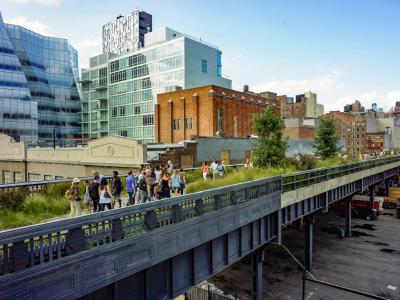
Constructed on a repurposed section of elevated freight train tracks, The High Line offers a dual experience as both an urban sanctuary, providing respite from the bustling city streets, and a tribute to Manhattan's West Side, particularly its remarkable architecture. The initial segment, spanning from Gansevoort Street to West 20th Street, opened in 2009 and became an instant hit, demonstrating that open spaces could be trendy and fashionable. This sudden success also caught the attention of the city tax assessor, who saw the surrounding properties in a new light. The park's second section opened in June 2011, doubling its length to 30th Street. The third section, completed in 2014, extends along the elevated tracks until 34th Street.
The High Line incorporates various environmentally friendly features, starting with the plant life that reflects the native ecology of the region, with half of the plants being indigenous to North America and 30% native to the Northeast. This design attracts birds and butterflies, creating a natural habitat. Additionally, the park employs rainwater absorption systems, preventing water from simply flowing into gutters. While the park aims for a low environmental impact, it has undeniably made a significant impact on the surrounding neighborhood. Not only does it offer an aesthetically pleasing pathway to the heart of Chelsea's art galleries, but it has also acted as a catalyst for both architectural and cultural developments, including the relocation of The Whitney Museum to the Meatpacking District.
By glancing upwards, visitors can appreciate the surrounding architecture. The High Line is flanked by notable structures such as The Standard, located just south of 14th Street, which features an upscale restaurant and a beer garden beneath the park. Other architectural gems visible from the High Line include Frank Gehry's first commercial office building in New York, the IAC Building owned by Barry Diller, and Jean Nouvel's 100 Eleventh Avenue condo building across the street. The IAC Building captivates with its radiant appearance, while Nouvel's facade, composed of variously sized glass panes, has become an instant classic.
The architectural brilliance of the High Line itself is simply awe-inspiring. Visitors particularly enjoy the 10th Avenue Square area, featuring amphitheater-style seating and a view of the northbound traffic on Tenth Avenue, making it a favorite spot for picnics (adjacent to the nearby Chelsea Market food vendors).
While the High Line can get crowded on weekends during the summer, taking an early morning or evening stroll is highly recommended. The nighttime cityscape views are breathtaking, while early mornings offer a tranquil and refreshing experience until the sun rises above the skyscrapers to the east of the park. In truth, any time of day is perfect for a visit to the High Line as the views are always splendid.
Tip:
Food enthusiasts will find a plethora of excellent dining options nearby. Hip establishments like Cookshop and cozy Italian eatery Bottino are great choices. For more affordable meals, try the classic diner Hector's or wait for the arrival of gourmet food trucks around the corner from the Gansevoort stairs. Alternatively, you can explore the culinary delights of Chelsea Market.
The High Line incorporates various environmentally friendly features, starting with the plant life that reflects the native ecology of the region, with half of the plants being indigenous to North America and 30% native to the Northeast. This design attracts birds and butterflies, creating a natural habitat. Additionally, the park employs rainwater absorption systems, preventing water from simply flowing into gutters. While the park aims for a low environmental impact, it has undeniably made a significant impact on the surrounding neighborhood. Not only does it offer an aesthetically pleasing pathway to the heart of Chelsea's art galleries, but it has also acted as a catalyst for both architectural and cultural developments, including the relocation of The Whitney Museum to the Meatpacking District.
By glancing upwards, visitors can appreciate the surrounding architecture. The High Line is flanked by notable structures such as The Standard, located just south of 14th Street, which features an upscale restaurant and a beer garden beneath the park. Other architectural gems visible from the High Line include Frank Gehry's first commercial office building in New York, the IAC Building owned by Barry Diller, and Jean Nouvel's 100 Eleventh Avenue condo building across the street. The IAC Building captivates with its radiant appearance, while Nouvel's facade, composed of variously sized glass panes, has become an instant classic.
The architectural brilliance of the High Line itself is simply awe-inspiring. Visitors particularly enjoy the 10th Avenue Square area, featuring amphitheater-style seating and a view of the northbound traffic on Tenth Avenue, making it a favorite spot for picnics (adjacent to the nearby Chelsea Market food vendors).
While the High Line can get crowded on weekends during the summer, taking an early morning or evening stroll is highly recommended. The nighttime cityscape views are breathtaking, while early mornings offer a tranquil and refreshing experience until the sun rises above the skyscrapers to the east of the park. In truth, any time of day is perfect for a visit to the High Line as the views are always splendid.
Tip:
Food enthusiasts will find a plethora of excellent dining options nearby. Hip establishments like Cookshop and cozy Italian eatery Bottino are great choices. For more affordable meals, try the classic diner Hector's or wait for the arrival of gourmet food trucks around the corner from the Gansevoort stairs. Alternatively, you can explore the culinary delights of Chelsea Market.
