Custom Walk in Vienna, Austria by rob_roy9263 created on 2026-03-28
Guide Location: Austria » Vienna
Guide Type: Custom Walk
# of Sights: 14
Tour Duration: 3 Hour(s)
Travel Distance: 5.2 Km or 3.2 Miles
Share Key: 3C6PL
Guide Type: Custom Walk
# of Sights: 14
Tour Duration: 3 Hour(s)
Travel Distance: 5.2 Km or 3.2 Miles
Share Key: 3C6PL
How It Works
Please retrieve this walk in the GPSmyCity app. Once done, the app will guide you from one tour stop to the next as if you had a personal tour guide. If you created the walk on this website or come to the page via a link, please follow the instructions below to retrieve the walk in the app.
Retrieve This Walk in App
Step 1. Download the app "GPSmyCity: Walks in 1K+ Cities" on Apple App Store or Google Play Store.



Step 2. In the GPSmyCity app, download(or launch) the guide "Vienna Map and Walking Tours".
Step 3. Tap the menu button located at upper right corner of the "Walks" screen and select "Retrieve custom walk". Enter the share key: 3C6PL
1) Stephansdom (St. Stephen's Cathedral) (must see)
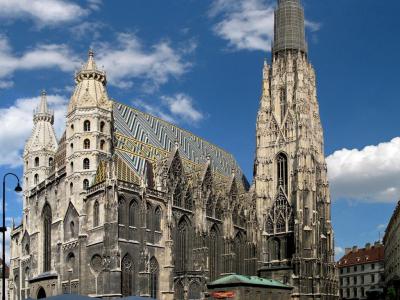
In a city where “stunning architecture” is practically the dress code, Saint Stephen’s Cathedral still manages to steal the spotlight-and possibly your neck muscles too, as you crane to admire that towering spire. Known locally as Stephansdom, this Gothic-Romanesque powerhouse has stood at the heart of Vienna’s skyline and soul since 1147, rising on the bones of two earlier churches like the overachiever it is.
In the 14th century, Duke Rudolf IV decided the cathedral needed a serious makeover. The idea worked. As a result, today we have the building stretching 107 meters long, 40 meters wide, and topped by the South Tower-or “Steffl,” if you're on nickname terms-a 136-meter-high feat of medieval determination that took 65 years to complete. It even moonlighted as a lookout post during Vienna’s sieges, complete with a live-in watchman until 1955. One heck of a long shift...
Meanwhile, the North Tower never quite hit its growth spurt. It stalled at 68 meters and got a Renaissance hat in 1578-basically the architectural equivalent of saying “this is fine” and walking away.
But the real showstopper here is the roof. A kaleidoscope of 230,000 glazed tiles arranged into imperial emblems like the double-headed eagle of the Habsburgs and the crests of Vienna and Austria. After being torched in World War II, it was rebuilt with steel instead of wood-600 metric tons of it-making the new roof not just durable, but also self-cleaning. Because even cathedrals love low-maintenance routines...
Inside, things get just as grand. There’s Pummerin, Europe’s second-largest swinging bell, forged from Turkish cannons in 1711 and recast in 1951-because nothing says peace like a bell made from wartime leftovers. Oh, and she lives in the North Tower, ringing out for special moments and daily rituals.
Musical legends haunt these hallowed halls too: Beethoven figured out he was deaf here (tragic), Haydn sang here as a kid (sweet), Strauss got married here-twice (bold), and Mozart? He got married and buried here. Yes, Saint Stephen's is basically the VIP lounge of Viennese music history.
Inside, you’ll find 18 altars, miraculous icons, bone relics-including those of Saint Valentine-and a maze of crypts holding 11,000 souls, including Habsburg royalty.
Tip:
Do a lap around the outside. Gargoyles, engravings, medieval graffiti-you never know what stories the stones will whisper...
In the 14th century, Duke Rudolf IV decided the cathedral needed a serious makeover. The idea worked. As a result, today we have the building stretching 107 meters long, 40 meters wide, and topped by the South Tower-or “Steffl,” if you're on nickname terms-a 136-meter-high feat of medieval determination that took 65 years to complete. It even moonlighted as a lookout post during Vienna’s sieges, complete with a live-in watchman until 1955. One heck of a long shift...
Meanwhile, the North Tower never quite hit its growth spurt. It stalled at 68 meters and got a Renaissance hat in 1578-basically the architectural equivalent of saying “this is fine” and walking away.
But the real showstopper here is the roof. A kaleidoscope of 230,000 glazed tiles arranged into imperial emblems like the double-headed eagle of the Habsburgs and the crests of Vienna and Austria. After being torched in World War II, it was rebuilt with steel instead of wood-600 metric tons of it-making the new roof not just durable, but also self-cleaning. Because even cathedrals love low-maintenance routines...
Inside, things get just as grand. There’s Pummerin, Europe’s second-largest swinging bell, forged from Turkish cannons in 1711 and recast in 1951-because nothing says peace like a bell made from wartime leftovers. Oh, and she lives in the North Tower, ringing out for special moments and daily rituals.
Musical legends haunt these hallowed halls too: Beethoven figured out he was deaf here (tragic), Haydn sang here as a kid (sweet), Strauss got married here-twice (bold), and Mozart? He got married and buried here. Yes, Saint Stephen's is basically the VIP lounge of Viennese music history.
Inside, you’ll find 18 altars, miraculous icons, bone relics-including those of Saint Valentine-and a maze of crypts holding 11,000 souls, including Habsburg royalty.
Tip:
Do a lap around the outside. Gargoyles, engravings, medieval graffiti-you never know what stories the stones will whisper...
2) Peterskirche (St. Peter's Church) (must see)
Tucked snugly among Vienna’s Baroque showpieces like a pearl in a pastry, Saint Peter’s Church has a front-row seat to history, and not much else, thanks to the buildings crowding around it. You’ll mostly catch it head-on, which, honestly, is its best angle.
This spot has seen churches come and go like emperors with changing tastes. Some say the very first church here dates back to the early 4th century AD, making it one of the oldest in Vienna-yes, back when sandals were in and Rome was still a big deal. In 792, none other than King Charlemagne is said to have popped by and said, “Let’s build.” There’s even a plaque on the façade bragging about it. Historical records, ever the skeptics, first mention the church in 1137, but who’s counting?
By the late 1100s, the church cozied up to the newly founded Schottenstift monastery. Then came fire, plague, and drama. After the 1661 fire, it got a bit of a patch job… until the plague of 1679 cleared the streets and cleared the way for Emperor Leopold I, who swore a divine vow to rebuild. And he did...
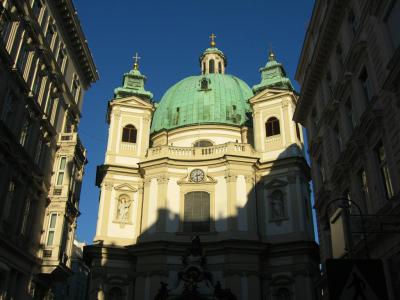
Construction began around 1701, drawing heavy inspiration from Saint Peter’s Basilica in Rome-because if you’re going to imitate, imitate the best. By 1733, Vienna had its first domed Baroque beauty, cleverly built with a compact, oval layout to fit the tight space.
Outside, it sports a neat combo of white and barely-there yellow, flanked by two towers that curve ever so slightly inward-apparently a cheeky nod to Turkish tent poles from the 1683 siege.
Step inside, and there you have it: gold stucco, opulent frescoes, and Johann Michael Rottmayr’s artistic fireworks overhead, including the Coronation of Our Lady. The high altar gets dramatic with a healing scene, starring Saint Peter and Saint John, and around the edges, you'll spot relics of Roman martyrs, reclining in crystal coffins like glittering saints on display.
The church was polished up in a major 1998–2004 renovation, and today it’s still a Baroque gem in Vienna’s crown.
Hot tip:
Drop in any day from 3 to 3:30 pm for a free organ concert-divine music, no ticket required (but donations are saintly). And if you're lucky, catch a choir in the crypts. Now that’s a holy experience...
This spot has seen churches come and go like emperors with changing tastes. Some say the very first church here dates back to the early 4th century AD, making it one of the oldest in Vienna-yes, back when sandals were in and Rome was still a big deal. In 792, none other than King Charlemagne is said to have popped by and said, “Let’s build.” There’s even a plaque on the façade bragging about it. Historical records, ever the skeptics, first mention the church in 1137, but who’s counting?
By the late 1100s, the church cozied up to the newly founded Schottenstift monastery. Then came fire, plague, and drama. After the 1661 fire, it got a bit of a patch job… until the plague of 1679 cleared the streets and cleared the way for Emperor Leopold I, who swore a divine vow to rebuild. And he did...
Construction began around 1701, drawing heavy inspiration from Saint Peter’s Basilica in Rome-because if you’re going to imitate, imitate the best. By 1733, Vienna had its first domed Baroque beauty, cleverly built with a compact, oval layout to fit the tight space.
Outside, it sports a neat combo of white and barely-there yellow, flanked by two towers that curve ever so slightly inward-apparently a cheeky nod to Turkish tent poles from the 1683 siege.
Step inside, and there you have it: gold stucco, opulent frescoes, and Johann Michael Rottmayr’s artistic fireworks overhead, including the Coronation of Our Lady. The high altar gets dramatic with a healing scene, starring Saint Peter and Saint John, and around the edges, you'll spot relics of Roman martyrs, reclining in crystal coffins like glittering saints on display.
The church was polished up in a major 1998–2004 renovation, and today it’s still a Baroque gem in Vienna’s crown.
Hot tip:
Drop in any day from 3 to 3:30 pm for a free organ concert-divine music, no ticket required (but donations are saintly). And if you're lucky, catch a choir in the crypts. Now that’s a holy experience...
3) Graben Street
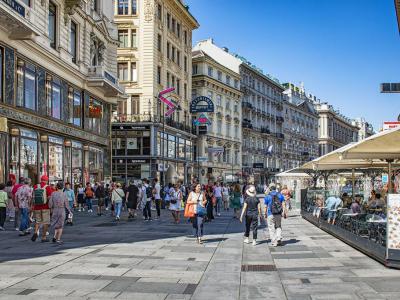
The Graben-Vienna’s glitzy catwalk of history, high fashion, and a bit of medieval ditch drama. Yes, believe it or not, this elegant boulevard began life as… a trench. That’s right-“Graben” means “ditch” in German, and it once ran right in front of the city walls back when this area was still the Roman outpost of Vindobona.
Fast forward to the 12th century: the ditch gets filled in-thanks in part to a juicy ransom paid for none other than Richard the Lionheart-and suddenly, Vienna’s growing faster than a Baroque wig in a windstorm. The Babenberg Dukes extended the city, and voilà-the Graben became a proper street. Still called "the Ditch," though. Old names die hard...
Look closely and you’ll notice the split personality of this street. On the north side, it's a bit of a chaotic maze. On the south, neat side streets fanning out like clockwork-proof of some seriously medieval city planning chops. Over time, the Graben morphed into Vienna’s main artery, pumping life, gossip, and powdered wigs through the city’s heart.
By the Baroque era, the Graben was the place to see and be seen. Think of it as 18th-century Instagram, but with actual human interaction. Nobles strolled, markets bustled, and the elite shopped, dined, and judged your fashion choices in real time. Come the 19th century, luxury shops arrived, and by the mid-20th, it became the pedestrian haven we know today-ditch-free and proudly strut-worthy.
Start your walk at Stock-im-Eisen-Platz, end at Tuchlauben, and enjoy a lineup of architectural heavyweights along the way. There’s the Ankerhaus, once home to architect Otto Wagner, and Bartolotti-Partenfeld Palace, the summer hangout of one very well-to-do Baron family.
Music lovers-don’t miss the Generalihof, once headquarters of the Musikalisches Magazin, which first published some of Mozart’s work back in 1784. And keep going till you reach the Grabenhof, built in 1876, now radiating all the grandeur of a Viennese power pose.
And before you go: tip your metaphorical hat to the Plague Column, that theatrical swirl of angels and anguish, erected by Emperor Leopold I after the Great Plague of 1679. A monument to survival, faith, and the baroque love of a dramatic statue.
Happy strolling-mind the history underfoot...
Fast forward to the 12th century: the ditch gets filled in-thanks in part to a juicy ransom paid for none other than Richard the Lionheart-and suddenly, Vienna’s growing faster than a Baroque wig in a windstorm. The Babenberg Dukes extended the city, and voilà-the Graben became a proper street. Still called "the Ditch," though. Old names die hard...
Look closely and you’ll notice the split personality of this street. On the north side, it's a bit of a chaotic maze. On the south, neat side streets fanning out like clockwork-proof of some seriously medieval city planning chops. Over time, the Graben morphed into Vienna’s main artery, pumping life, gossip, and powdered wigs through the city’s heart.
By the Baroque era, the Graben was the place to see and be seen. Think of it as 18th-century Instagram, but with actual human interaction. Nobles strolled, markets bustled, and the elite shopped, dined, and judged your fashion choices in real time. Come the 19th century, luxury shops arrived, and by the mid-20th, it became the pedestrian haven we know today-ditch-free and proudly strut-worthy.
Start your walk at Stock-im-Eisen-Platz, end at Tuchlauben, and enjoy a lineup of architectural heavyweights along the way. There’s the Ankerhaus, once home to architect Otto Wagner, and Bartolotti-Partenfeld Palace, the summer hangout of one very well-to-do Baron family.
Music lovers-don’t miss the Generalihof, once headquarters of the Musikalisches Magazin, which first published some of Mozart’s work back in 1784. And keep going till you reach the Grabenhof, built in 1876, now radiating all the grandeur of a Viennese power pose.
And before you go: tip your metaphorical hat to the Plague Column, that theatrical swirl of angels and anguish, erected by Emperor Leopold I after the Great Plague of 1679. A monument to survival, faith, and the baroque love of a dramatic statue.
Happy strolling-mind the history underfoot...
4) Karntner Straße (Carinthian Street)
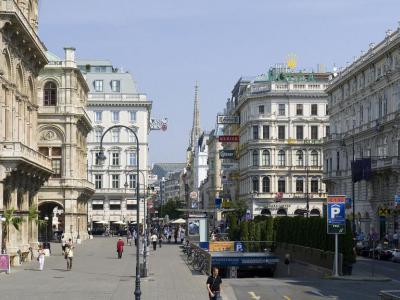
Some may regard Carinthian Street as Vienna’s answer to the question: “What if shopping felt like strolling through a history book with a platinum credit card?” As one leg of the city’s so-called “Golden U” (alongside the Graben and Kohlmarkt), this pedestrian paradise isn’t just about luxury bags and pastry breaks-it’s a street with serious pedigree.
Indeed, its roots are deep. We’re talking Roman-deep. First mentioned in 1257 as Strata Carinthianorum, it once served as a vital lifeline between Vienna’s city center and the Carinthian Gate, just around where the Vienna State Opera raises its curtain today. Back in the day, this was the road to the Mediterranean, linking traders to port cities like Venice and Trieste. So yes, shopping here has always had a bit of flair.
Named after the southern Austrian state of Carinthia, the street has worn many hats over the centuries. But it hit its architectural stride in the 19th century when Vienna said, “Let’s go big or go baroque.” The street was expanded, lined with palatial buildings, and decked out in full historicist regalia-dramatic façades and a flair for the ornate.
Then came World War II, and with it, devastation. Carinthian Street was badly damaged and later rebuilt with a sleek, modernist look-minimalist, functional, and, let’s be honest, a little less theatrical. But Vienna being Vienna, it didn’t stay plain for long...
In 1974, the city waved goodbye to cars and hello to café-lined promenades as Carinthian Street was reborn as a pedestrian zone, perfectly synced with the arrival of the U-Bahn below.
Today, it’s the city’s cultural catwalk. You’ve got the Vienna State Opera, Todesco Palace, Equitable Palace, the legendary Hotel Sacher (home of that devilishly good chocolate cake), and quieter gems like the Maltese Church and Esterházy Palace.
So whether you’re here for the architecture, the fashion, the music, or just a slice of Sacher Torte (that could bring a tear to your eye), Carinthian Street offers you Vienna in its full, glamorous stride. Just keep walking...
Indeed, its roots are deep. We’re talking Roman-deep. First mentioned in 1257 as Strata Carinthianorum, it once served as a vital lifeline between Vienna’s city center and the Carinthian Gate, just around where the Vienna State Opera raises its curtain today. Back in the day, this was the road to the Mediterranean, linking traders to port cities like Venice and Trieste. So yes, shopping here has always had a bit of flair.
Named after the southern Austrian state of Carinthia, the street has worn many hats over the centuries. But it hit its architectural stride in the 19th century when Vienna said, “Let’s go big or go baroque.” The street was expanded, lined with palatial buildings, and decked out in full historicist regalia-dramatic façades and a flair for the ornate.
Then came World War II, and with it, devastation. Carinthian Street was badly damaged and later rebuilt with a sleek, modernist look-minimalist, functional, and, let’s be honest, a little less theatrical. But Vienna being Vienna, it didn’t stay plain for long...
In 1974, the city waved goodbye to cars and hello to café-lined promenades as Carinthian Street was reborn as a pedestrian zone, perfectly synced with the arrival of the U-Bahn below.
Today, it’s the city’s cultural catwalk. You’ve got the Vienna State Opera, Todesco Palace, Equitable Palace, the legendary Hotel Sacher (home of that devilishly good chocolate cake), and quieter gems like the Maltese Church and Esterházy Palace.
So whether you’re here for the architecture, the fashion, the music, or just a slice of Sacher Torte (that could bring a tear to your eye), Carinthian Street offers you Vienna in its full, glamorous stride. Just keep walking...
5) Johann Strauss Monument
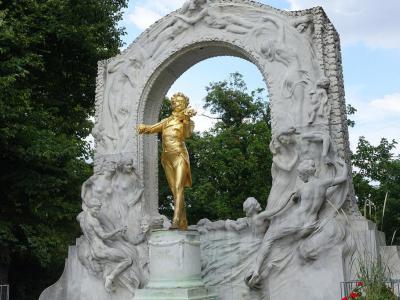
The gilded bronze tribute to the Waltz King is easily one of the most known and most frequently photographed monuments in Vienna – including after dark when beautifully illuminated. Compared to the many traditional 19th-century-style statues at Stadtpark, this certainly is a more playful, elegant and interesting composition to view. Framed by a marble relief made by founding member of the Vienna Secession, Edmund Hellmer, it was unveiled to the public on 26 June 1921.
The statue is located right behind the opulent Kursalon concert hall where Strauss Jr. gave his first concert on 15 October 1868, turning it into a popular place for concerts and for dancing ever since. After undergoing some renovation, the Kursalon is still used for balls and waltz concerts where one can hear the composer's music.
Tip:
Scattered throughout the park are other statues of famous Viennese artists, writers, and composers: Hans Canon, E. J. Schindler, Franz Schubert, Anton Bruckner.
The statue is located right behind the opulent Kursalon concert hall where Strauss Jr. gave his first concert on 15 October 1868, turning it into a popular place for concerts and for dancing ever since. After undergoing some renovation, the Kursalon is still used for balls and waltz concerts where one can hear the composer's music.
Tip:
Scattered throughout the park are other statues of famous Viennese artists, writers, and composers: Hans Canon, E. J. Schindler, Franz Schubert, Anton Bruckner.
6) Musikverein (Vienna Philharmonic)
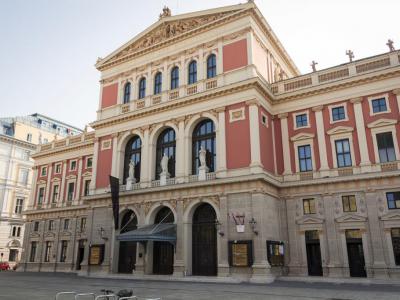
Two concert halls in one building, designed in the 1860s with dazzling gilding inside. The larger of the two, the Grosser Saal ("Great Hall"), has some of the best acoustics in the world – along with Berlin's Konzerthaus, the Concertgebouw in Amsterdam, and Boston's Symphony Hall – and is the unofficial home of the great Vienna Philharmonic Orchestra, which gives regular sell-out performances, while the other hall, the Brahms Saal, is used for smaller-scale chamber concerts.
The Musikverein's most prestigious event is the annual New Year's Day concert, a tradition started under the Nazis in 1939, and one which is now broadcast live around the world to an estimated 50 million viewers from 95 countries. If you are lucky to be in Vienna during the regular season (September-June), go for a real concert instead of a tourist-oriented one. While tickets for "proper" concerts may be sold out months in advance, other times they will be on sale up to the start of the performance. In any case, use the official box office on the left side of the building or the official website, as agencies are known to take a hefty commission.
The concert hall itself also has a rich musical history, as the place where Johann Strauss Jr. personally conducted the waltz "Freut Euch des Lebens" (Life Let Us Cherish – composed for the opening ball), and where Arnold Schönberg unleashed atonal music – or as Schönberg preferred to call it, "the emancipation of dissonance" – on an unsuspecting and unready Viennese public.
Why You Should Visit:
The building is intricately beautiful and the guided tour, fascinating.
The area itself is very happening so you should be checking it out.
Tip:
One must enter a computer lottery to win the chance to buy tickets for events, but it is well worth the effort.
One could also get a (cheaper) last-minute standing room ticket if one tries.
The Musikverein's most prestigious event is the annual New Year's Day concert, a tradition started under the Nazis in 1939, and one which is now broadcast live around the world to an estimated 50 million viewers from 95 countries. If you are lucky to be in Vienna during the regular season (September-June), go for a real concert instead of a tourist-oriented one. While tickets for "proper" concerts may be sold out months in advance, other times they will be on sale up to the start of the performance. In any case, use the official box office on the left side of the building or the official website, as agencies are known to take a hefty commission.
The concert hall itself also has a rich musical history, as the place where Johann Strauss Jr. personally conducted the waltz "Freut Euch des Lebens" (Life Let Us Cherish – composed for the opening ball), and where Arnold Schönberg unleashed atonal music – or as Schönberg preferred to call it, "the emancipation of dissonance" – on an unsuspecting and unready Viennese public.
Why You Should Visit:
The building is intricately beautiful and the guided tour, fascinating.
The area itself is very happening so you should be checking it out.
Tip:
One must enter a computer lottery to win the chance to buy tickets for events, but it is well worth the effort.
One could also get a (cheaper) last-minute standing room ticket if one tries.
7) Naschmarkt (must see)
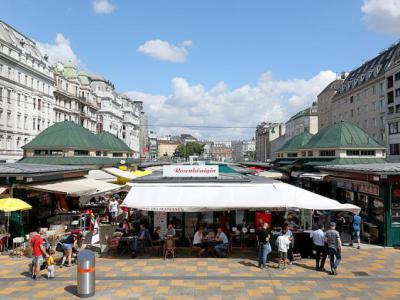
Vienna's most famous market boasts approximately 120 market stalls and restaurants, offering a diverse range of culinary delights that span from traditional Viennese dishes to Indian, Vietnamese, and Italian cuisine. The Naschmarkt has evolved into a popular gathering spot for both young and old alike. The Saturday Flea Market has even attained a cult-like status.
At the Naschmarkt, a vibrant mix of people can be seen purchasing fresh produce, vegetables, and various gourmet treats from around the world, from the early morning until sunset. In recent times, an increasing number of trendy establishments have found their place among the market's 120 or so stalls.
Do-An and Naschmarkt Deli were among the pioneering gastronomic ventures that succeeded in making the Naschmarkt an attractive destination for the young, urban crowd. On weekends, DJs provide entertainment at these locations. Consequently, numerous traditional market stalls have also garnered popularity due to their modern architectural designs.
Tewa at the Naschmarkt offers organic cuisine, while Neni serves Israeli-Oriental specialties ranging from shakshuka (eggs with vegetables) to taboulleh (a Lebanese salad). Orient & Occident, on the other hand, features Turkish home cooking prepared by the owner's wives. Umar is a haven for seafood enthusiasts and is often regarded as the best fish restaurant in Vienna.
Urbanek, initially a fine food and cheese store, doubles as a legendary wine bar-a quintessentially Viennese experience. The delicacies on offer here are simply a must-try. Kilgers am Naschmarkt also functions as a wine bar and gourmet grocery store, while the little market kitchen serves up delightful dishes. For a taste of traditional Viennese fare, Eiserne Zeit is an excellent choice; dining here is an experience in itself.
Many dining and drinking spots surround Naschmarkt. Drechsler offers all-day breakfast, Market serves Asian-inspired cuisine from morning to late night with colorful decor, and ChinaBar an der Wien serves Sichuan cuisine. Naschmarkt is vibrant, especially on Saturdays, with a diverse crowd and outdoor dining in the summer for food, drinks, and people-watching.
At the Naschmarkt, a vibrant mix of people can be seen purchasing fresh produce, vegetables, and various gourmet treats from around the world, from the early morning until sunset. In recent times, an increasing number of trendy establishments have found their place among the market's 120 or so stalls.
Do-An and Naschmarkt Deli were among the pioneering gastronomic ventures that succeeded in making the Naschmarkt an attractive destination for the young, urban crowd. On weekends, DJs provide entertainment at these locations. Consequently, numerous traditional market stalls have also garnered popularity due to their modern architectural designs.
Tewa at the Naschmarkt offers organic cuisine, while Neni serves Israeli-Oriental specialties ranging from shakshuka (eggs with vegetables) to taboulleh (a Lebanese salad). Orient & Occident, on the other hand, features Turkish home cooking prepared by the owner's wives. Umar is a haven for seafood enthusiasts and is often regarded as the best fish restaurant in Vienna.
Urbanek, initially a fine food and cheese store, doubles as a legendary wine bar-a quintessentially Viennese experience. The delicacies on offer here are simply a must-try. Kilgers am Naschmarkt also functions as a wine bar and gourmet grocery store, while the little market kitchen serves up delightful dishes. For a taste of traditional Viennese fare, Eiserne Zeit is an excellent choice; dining here is an experience in itself.
Many dining and drinking spots surround Naschmarkt. Drechsler offers all-day breakfast, Market serves Asian-inspired cuisine from morning to late night with colorful decor, and ChinaBar an der Wien serves Sichuan cuisine. Naschmarkt is vibrant, especially on Saturdays, with a diverse crowd and outdoor dining in the summer for food, drinks, and people-watching.
8) Mozart Monument
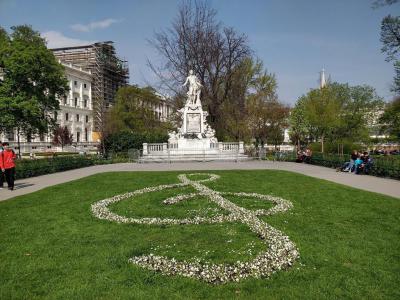
In the quiet oasis of Burggarten stands an elegant statue of Mozart, moved here from the Albertinaplatz after the war, when the city's charred ruins were being rebuilt. This intimate place is an excellent spot for Mozart lovers to have a photo with the 7.5-meter-high statue made by architect Karl König (1841–1915) and sculptor Viktor Tilgner (1844–96) which features Mozart with a music stand. The putti on the socle, representing the power of Mozart's music, are stylistically suggestive of Art Nouveau.
On the front, a relief refers to two scenes of Mozart's opera "Don Giovanni", while above it are a stone keyboard, masks, instruments and music-making cherubs. The rear side relief shows the six-year-old prodigy at the piano, with beloved sister Maria Anna ("Nannerl") and father Leopold by his side. Unfortunately, the siblings' partnership would experience a sudden and severe fracture in 1769, when Nannerl turned 18, meaning she was of marriageable age, which, as far as father Leopold was concerned, signaled the end of her performing career. As father and son continued to travel Europe and play to distinguished audiences, Nannerl remained at home with her mother.
From spring to autumn, the statue is surrounded by a small manicured lawn with a trebleclef-shaped flower bed. The steeples of Saint Stephen's and the Augustinerkirche, old trees and blooming shrubs add to the atmosphere. Noteworthy, also, is the nice sculpture of famous philosopher Goethe in the same area.
On the front, a relief refers to two scenes of Mozart's opera "Don Giovanni", while above it are a stone keyboard, masks, instruments and music-making cherubs. The rear side relief shows the six-year-old prodigy at the piano, with beloved sister Maria Anna ("Nannerl") and father Leopold by his side. Unfortunately, the siblings' partnership would experience a sudden and severe fracture in 1769, when Nannerl turned 18, meaning she was of marriageable age, which, as far as father Leopold was concerned, signaled the end of her performing career. As father and son continued to travel Europe and play to distinguished audiences, Nannerl remained at home with her mother.
From spring to autumn, the statue is surrounded by a small manicured lawn with a trebleclef-shaped flower bed. The steeples of Saint Stephen's and the Augustinerkirche, old trees and blooming shrubs add to the atmosphere. Noteworthy, also, is the nice sculpture of famous philosopher Goethe in the same area.
9) Albertina Museum (must see)
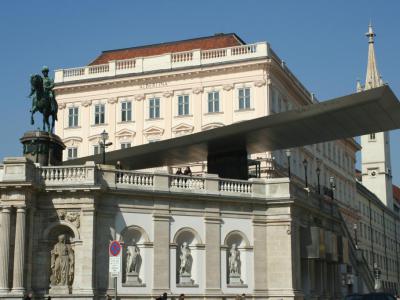
If you’re an art lover roaming Vienna with stars in your eyes and time to spare-stop right there. You’ve just found your holy grail: the Albertina. Housed in the largest residential palace of the ever-fancy Habsburgs, this museum is the heavyweight champ of graphic art. We’re talking over 65,000 watercolors and drawings, 70,000 photographs, and a stack of priceless prints that would make even da Vinci blush-and yes, he’s in the collection too, alongside Michelangelo, Raphael, Rembrandt, and the rest of the Renaissance dream team.
But wait, it’s not all parchment and powdered wigs. The Batliner Collection brings you straight into the bold world of modernism. Here, Monet, Degas, Cézanne, and Picasso throw a visual party with their impressionist pals, while Fauvism, Brücke, Cubism, and Surrealism crash the scene. It’s the perfect wild counterpoint to the orderly elegance of the Art History Museum-think of it as Vienna’s more rebellious cousin.
If Klimt or Schiele makes your heart flutter-well, good news. The Albertina’s got them too, in all their golden, tormented glory.
And speaking of atmosphere, recent renovations gave the place back its shine, from regal façades to a grand central courtyard. When you’re ready for a break from art-staring, the onsite DO & CO café offers delicious distractions-coffee, desserts, light meals, and unbeatable views over Vienna’s historic center. Don’t skip the nearby Burggarten either for a breezy pause among the greenery. And yes, there’s a gift shop on your way out-books, souvenirs, and Vienna-themed treasures to prove to your friends that you have excellent taste.
So, the answer to “Why swing by?” here is very simple. Because it’s stunning. Because the collection is world-class. Because you can skip the lines with an online ticket and feel like a VIP. And because the top-floor balcony is the ultimate selfie spot-Vienna’s historic skyline included.
Hot tip:
Block out at least 2.5 hours-you’ll need it. And if you want the full experience, grab the audio guide. It’s not just informative-it’s your witty, well-read companion through centuries of genius.
Now go, and let the masters blow your mind...
But wait, it’s not all parchment and powdered wigs. The Batliner Collection brings you straight into the bold world of modernism. Here, Monet, Degas, Cézanne, and Picasso throw a visual party with their impressionist pals, while Fauvism, Brücke, Cubism, and Surrealism crash the scene. It’s the perfect wild counterpoint to the orderly elegance of the Art History Museum-think of it as Vienna’s more rebellious cousin.
If Klimt or Schiele makes your heart flutter-well, good news. The Albertina’s got them too, in all their golden, tormented glory.
And speaking of atmosphere, recent renovations gave the place back its shine, from regal façades to a grand central courtyard. When you’re ready for a break from art-staring, the onsite DO & CO café offers delicious distractions-coffee, desserts, light meals, and unbeatable views over Vienna’s historic center. Don’t skip the nearby Burggarten either for a breezy pause among the greenery. And yes, there’s a gift shop on your way out-books, souvenirs, and Vienna-themed treasures to prove to your friends that you have excellent taste.
So, the answer to “Why swing by?” here is very simple. Because it’s stunning. Because the collection is world-class. Because you can skip the lines with an online ticket and feel like a VIP. And because the top-floor balcony is the ultimate selfie spot-Vienna’s historic skyline included.
Hot tip:
Block out at least 2.5 hours-you’ll need it. And if you want the full experience, grab the audio guide. It’s not just informative-it’s your witty, well-read companion through centuries of genius.
Now go, and let the masters blow your mind...
10) Michaelerkirche (St. Michael's Church)
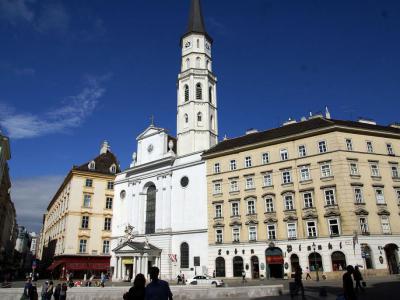
The oldest building on Michaelerplatz, and the source of its name, Michaelerkirche was first built in the 13th century, though the Neoclassical facade, added in 1792, somewhat obscures this fact. The high polygonal Gothic bell tower from the 16th century may be seen from far away, having become one of the Inner City's symbols. Above the entrance, on top of the pediment, resting on Doric columns, stands a group with winged angels and Saint Michael slaying Lucifer (1725). These sculptural figures were executed by the Italian sculptor Lorenzo Mattielli, who also sculpted the Hercules figures at the Hofburg entrance, just opposite the church.
Inside, the church retains its plain Gothic origins, but sculptor sculptor Karl Georg Merville's "Fall of Angels" steals the show: a monumental stucco alabaster Rococo sculpture, tumbling from the ceiling above the high altar. The gilded pipe organ (1714) – Vienna's largest Baroque organ – is very fine; it was once played by the 17-year-old Joseph Haydn, who lived next door in a small attic room. The very first playing of Mozart's unfinished "Requiem" first took place here on December 10, 1791, in a requiem service for the composer. Just to the right of the church's entrance, you will find two dark reliefs commemorating said performance.
Off the north choir is the entrance to a huge crypt, discovered by U.S. soldiers in 1945, when they forced open its doors, which had been sealed for 150 years. Found lying undisturbed for centuries were hundreds of mummified former wealthy parishioners, clothed in their burial finery that was perfectly preserved by the rarefied air within.
Inside, the church retains its plain Gothic origins, but sculptor sculptor Karl Georg Merville's "Fall of Angels" steals the show: a monumental stucco alabaster Rococo sculpture, tumbling from the ceiling above the high altar. The gilded pipe organ (1714) – Vienna's largest Baroque organ – is very fine; it was once played by the 17-year-old Joseph Haydn, who lived next door in a small attic room. The very first playing of Mozart's unfinished "Requiem" first took place here on December 10, 1791, in a requiem service for the composer. Just to the right of the church's entrance, you will find two dark reliefs commemorating said performance.
Off the north choir is the entrance to a huge crypt, discovered by U.S. soldiers in 1945, when they forced open its doors, which had been sealed for 150 years. Found lying undisturbed for centuries were hundreds of mummified former wealthy parishioners, clothed in their burial finery that was perfectly preserved by the rarefied air within.
11) Michaelerplatz (Saint Michael's Square)
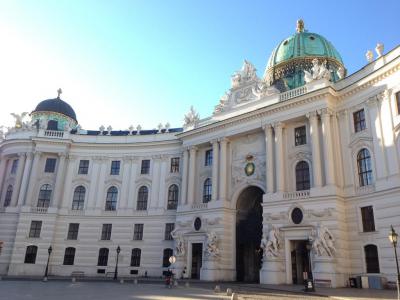
Saint Michael’s Square-or Michaelerplatz if you're feeling extra Austrian-is by far more than just a pretty roundabout. This baroque, star-shaped showstopper is the northeastern gateway to the Hofburg Palace-the kind of place where Roman legions, imperial drama, and architectural snobbery all collide in delightful chaos...
Let’s rewind a couple millennia: underneath your feet once stood Vindobona, a Roman military camp. You can still peek at the excavated remains in the center of the square-because Vienna doesn’t just bury its history, it displays it like a badge of honor.
Marching into view is the grand Michael’s Gate, a triumph of Neo-Baroque drama. It’s flanked by two dramatic 19th-century fountains sculpted by Rudolf Weyer-imagine “Roman gods doing acrobatics in water.” This is your official entrance into the imperial Hofburg, via Saint Michael’s Wing, which sounds like a fancy dessert but is actually just as rich in stone.
Across from all this pageantry stands the Church of Saint Michael, namesake of the square. Parts of it go back to 1221, though what you see now mostly dates from a sprucing-up in 1792. The church’s porch features a wild Baroque sculpture of the Fall of the Angels-very metal. Step inside and you’ll find 14th-century frescoes, Vienna’s largest gilded organ (once played by Haydn, no less), and a crypt that’s equal parts eerie and fascinating. Yes, they still have open coffins with mummified parishioners in full funeral chic. Welcome to Vienna...
Now turn your gaze to the Looshaus, a stark modernist rebel built in 1912 by architect Adolf Loos. At the time, it scandalized polite society-and Emperor Franz Joseph so hated its minimalist vibe, he refused to walk through Michael’s Gate ever again. Today, it's a working bank with a lavish interior clad in marble and mirrors. Moral of the story? Never judge a building by its cover.
Other star attractions ring the square like jewels, including the Spanish Riding School, the Sisi Museum, the Herberstein Palace, and a pair of 18th-century homes-one of which once belonged to Haydn himself.
Insider tip: spring for a horse-drawn carriage tour from here. This ride is a true slow-motion glide through centuries of imperial flair...
Let’s rewind a couple millennia: underneath your feet once stood Vindobona, a Roman military camp. You can still peek at the excavated remains in the center of the square-because Vienna doesn’t just bury its history, it displays it like a badge of honor.
Marching into view is the grand Michael’s Gate, a triumph of Neo-Baroque drama. It’s flanked by two dramatic 19th-century fountains sculpted by Rudolf Weyer-imagine “Roman gods doing acrobatics in water.” This is your official entrance into the imperial Hofburg, via Saint Michael’s Wing, which sounds like a fancy dessert but is actually just as rich in stone.
Across from all this pageantry stands the Church of Saint Michael, namesake of the square. Parts of it go back to 1221, though what you see now mostly dates from a sprucing-up in 1792. The church’s porch features a wild Baroque sculpture of the Fall of the Angels-very metal. Step inside and you’ll find 14th-century frescoes, Vienna’s largest gilded organ (once played by Haydn, no less), and a crypt that’s equal parts eerie and fascinating. Yes, they still have open coffins with mummified parishioners in full funeral chic. Welcome to Vienna...
Now turn your gaze to the Looshaus, a stark modernist rebel built in 1912 by architect Adolf Loos. At the time, it scandalized polite society-and Emperor Franz Joseph so hated its minimalist vibe, he refused to walk through Michael’s Gate ever again. Today, it's a working bank with a lavish interior clad in marble and mirrors. Moral of the story? Never judge a building by its cover.
Other star attractions ring the square like jewels, including the Spanish Riding School, the Sisi Museum, the Herberstein Palace, and a pair of 18th-century homes-one of which once belonged to Haydn himself.
Insider tip: spring for a horse-drawn carriage tour from here. This ride is a true slow-motion glide through centuries of imperial flair...
12) Hofburg Imperial Palace (must see)
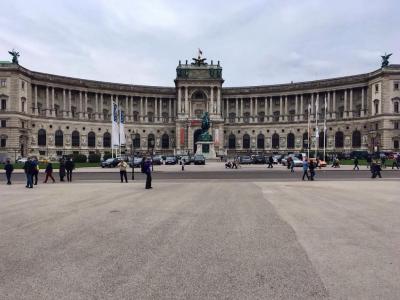
The Hofburg-or as it’s known in more regal circles, the “Castle of the Court”-is a sprawling architectural beast of a palace, a centuries-old flex of Habsburg power, pageantry, and perfectly symmetrical courtyards.
It all began back in 1279, when the Dukes of Austria needed a nice little place to call home. Fast forward a few empires and renovations later, and you've got the winter playground of the Holy Roman Emperors (until 1806) and the Emperors of Austria (until 1918). Today, the palace has swapped imperial intrigue for political paperwork-it’s now the official residence of the Austrian President and hosts the headquarters of the OSCE. Less crown, more conference...
Now, brace yourself: the Hofburg covers more than 240,000 square meters of space, comprising 18 wings, 19 courtyards, and a whopping 2,600 rooms. That’s not really a palace-it’s a small city. It houses everything from the elegant Amalienburg and Albertina museum, to the Imperial Chapel, the Court Library, the Treasure Chamber, and even the Spanish Riding School, where horses have more training than most people’s resumes.
The Swiss Wing is one of the oldest parts of the palace, dating back to the 13th century-yes, it’s older than your great-great-anything. Emperor Ferdinand I added the Swiss Gate in the 1550s, with his personal insignia on full display, just in case anyone forgot who was in charge.
The 17th-century Leopoldine Wing, built and later re-styled in Late Renaissance flair, adds even more imperial swagger, while the Court Library is basically a Baroque fever dream-with its majestic Prunksaal hall, frescoed ceilings, and emperors carved in stone, looking as dramatic as ever.
And it doesn’t stop there: the Winter Riding School, the Imperial Chancellery Wing (once home to Napoleon himself), and the elegant Redoute Wing-a former opera house-round out the complex. Even the Imperial Mews got a glow-up and now host those classy Lipizzaner horses.
Tip:
On Sundays, pop into the Imperial Chapel for Mass and catch the Vienna Boys Choir-angelic voices echoing through centuries of history. Because when in Vienna, you don’t just visit a palace… you enter a whole imperial universe.
It all began back in 1279, when the Dukes of Austria needed a nice little place to call home. Fast forward a few empires and renovations later, and you've got the winter playground of the Holy Roman Emperors (until 1806) and the Emperors of Austria (until 1918). Today, the palace has swapped imperial intrigue for political paperwork-it’s now the official residence of the Austrian President and hosts the headquarters of the OSCE. Less crown, more conference...
Now, brace yourself: the Hofburg covers more than 240,000 square meters of space, comprising 18 wings, 19 courtyards, and a whopping 2,600 rooms. That’s not really a palace-it’s a small city. It houses everything from the elegant Amalienburg and Albertina museum, to the Imperial Chapel, the Court Library, the Treasure Chamber, and even the Spanish Riding School, where horses have more training than most people’s resumes.
The Swiss Wing is one of the oldest parts of the palace, dating back to the 13th century-yes, it’s older than your great-great-anything. Emperor Ferdinand I added the Swiss Gate in the 1550s, with his personal insignia on full display, just in case anyone forgot who was in charge.
The 17th-century Leopoldine Wing, built and later re-styled in Late Renaissance flair, adds even more imperial swagger, while the Court Library is basically a Baroque fever dream-with its majestic Prunksaal hall, frescoed ceilings, and emperors carved in stone, looking as dramatic as ever.
And it doesn’t stop there: the Winter Riding School, the Imperial Chancellery Wing (once home to Napoleon himself), and the elegant Redoute Wing-a former opera house-round out the complex. Even the Imperial Mews got a glow-up and now host those classy Lipizzaner horses.
Tip:
On Sundays, pop into the Imperial Chapel for Mass and catch the Vienna Boys Choir-angelic voices echoing through centuries of history. Because when in Vienna, you don’t just visit a palace… you enter a whole imperial universe.
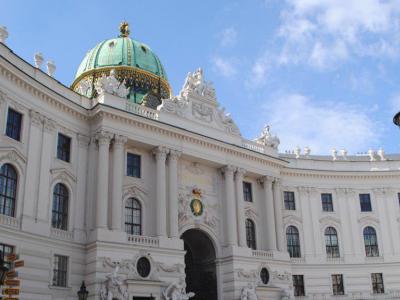
13) Spanische Reitschule (Spanish Riding School)
A place where grace trots, tradition gallops, and stallions pirouette like it’s the 18th century-welcome to Vienna's Spanish Riding School!
Founded back in 1565-yes, that’s way before Mozart-this is the world’s oldest school for classical dressage. In essence, it'd be fair to describe it as a choreography of hooves, history, and imperial flair. The current hall, a baroque beauty with 46 columns and a royal box fit for an emperor’s ego, was commissioned in 1729 by Emperor Karl VI-who still gets a tip of the hat from every rider, thanks to his portrait hanging proudly above the arena. The school courtyard is adorned with an equestrian statue of another emperor, Josef II.
Now, why "Spanish"? No, it's not because the horses love tapas. The name comes from the noble Spanish breeds that helped create the Lipizzaner-those elegant, snow-white stallions you’ve seen leaping like ballerinas (with better muscle tone). The breed was born by mixing Arab, Berber, and Spanish horses at the Lipizza stud farm near Trieste, Slovenia. Training starts when they're three, and from there, it’s years of disciplined dance moves-no shortcuts, no TikTok trends...
For centuries, only men could join this elite club, but as of 2008, the glass stirrup finally broke-women can ride too, and brilliantly so.
So what can you expect? Public performances run 70 to 90 minutes of precision, music, and magic that hasn't changed in decades-because when perfection works, you don’t fix it. Anyone who's a horse fanatic or just likes chandeliers and symmetry, will find the Spanish Riding School a uniquely Viennese blend of pomp, polish, and prancing. But even if you are not fond of horse shows, a guided tour (in English or German) through the stabling and the riding arena is worth a visit anytime.
Pro tips:
Morning training sessions are cheaper and give you a behind-the-scenes glimpse of the stallions at work.
Want the full airborne extravaganza? Book the official show. Just book early unless you enjoy queuing like it's 1765.
And here's the real scoop: grab a coffee at the on-site café. It's reasonably priced, and the terrace gives you free views of the horses warming up next door. That’s right-free of charge! Elegance on a budget? Yes, Vienna delivers...
Founded back in 1565-yes, that’s way before Mozart-this is the world’s oldest school for classical dressage. In essence, it'd be fair to describe it as a choreography of hooves, history, and imperial flair. The current hall, a baroque beauty with 46 columns and a royal box fit for an emperor’s ego, was commissioned in 1729 by Emperor Karl VI-who still gets a tip of the hat from every rider, thanks to his portrait hanging proudly above the arena. The school courtyard is adorned with an equestrian statue of another emperor, Josef II.
Now, why "Spanish"? No, it's not because the horses love tapas. The name comes from the noble Spanish breeds that helped create the Lipizzaner-those elegant, snow-white stallions you’ve seen leaping like ballerinas (with better muscle tone). The breed was born by mixing Arab, Berber, and Spanish horses at the Lipizza stud farm near Trieste, Slovenia. Training starts when they're three, and from there, it’s years of disciplined dance moves-no shortcuts, no TikTok trends...
For centuries, only men could join this elite club, but as of 2008, the glass stirrup finally broke-women can ride too, and brilliantly so.
So what can you expect? Public performances run 70 to 90 minutes of precision, music, and magic that hasn't changed in decades-because when perfection works, you don’t fix it. Anyone who's a horse fanatic or just likes chandeliers and symmetry, will find the Spanish Riding School a uniquely Viennese blend of pomp, polish, and prancing. But even if you are not fond of horse shows, a guided tour (in English or German) through the stabling and the riding arena is worth a visit anytime.
Pro tips:
Morning training sessions are cheaper and give you a behind-the-scenes glimpse of the stallions at work.
Want the full airborne extravaganza? Book the official show. Just book early unless you enjoy queuing like it's 1765.
And here's the real scoop: grab a coffee at the on-site café. It's reasonably priced, and the terrace gives you free views of the horses warming up next door. That’s right-free of charge! Elegance on a budget? Yes, Vienna delivers...
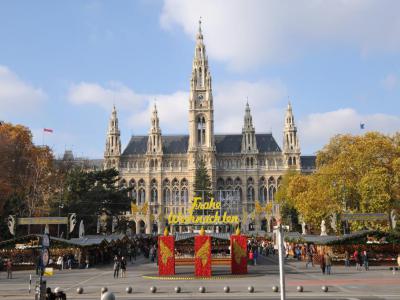
14) Rathausplatz (City Hall Square and Park)
City Hall Square-or as the locals say, Rat-haus-platz-is Vienna’s grande outdoor living room, with a flair for drama, history, and seasonal costume changes.
Back in the day, this spot was basically the city’s backyard-well outside the medieval walls and mostly used for marching, saluting, and other military routines. It wasn’t until the late 19th century, when the new City Hall rose in neo-Gothic glory, that someone thought, “How about building a proper square?” And so they did-big, grand, and perfect for future festivals.
Now, here’s where the plot thickens. Over the years, the square got a few name changes... thanks to politics! In 1938, it even bore the name “Adolf Hitler Square”-yikes-but Vienna, being true to herself, gave history a firm correction and restored the name Rathausplatz in 1945.
Today, this square is a year-round stage for some of the city's best-loved events. In winter, it transforms into the Vienna Ice Dream, complete with twinkling lights and a dreamy skating rink. Come December, it’s all mulled wine and gingerbread with the Christmas Market. Spring sees the Vienna Festival kick off here, and summer-open-air film nights with classical scores floating on warm breezes.
And let’s not forget the Life Ball, where glam, glitter, and good causes collide under the neo-Gothic arches of the City Hall. Oh, and since 1959, one of Austria’s federal states has gifted Vienna a giant Christmas tree each year, right here in the square-because nothing keeps holiday spirit up like interregional diplomacy in fir form...
Just behind the square is City Hall Park, one of Vienna’s favorite green lungs. Built in 1873 on a former military parade ground, it’s now home to cozy benches, shady paths, and statues of Austria’s cultural VIPs, like composers Johann Strauss Sr. and Josef Lanner.
And if you’re into trees with gravitas, look out for the London plane tree. Planted way back in 1783-before the park even existed-it now stands 30 meters tall with a trunk circumference that would make a sumo wrestler blush.
So, whether you're skating, sipping, strolling, or simply star-gazing, City Hall Square is the place where Vienna does its best impression of a civic fairy tale.
Back in the day, this spot was basically the city’s backyard-well outside the medieval walls and mostly used for marching, saluting, and other military routines. It wasn’t until the late 19th century, when the new City Hall rose in neo-Gothic glory, that someone thought, “How about building a proper square?” And so they did-big, grand, and perfect for future festivals.
Now, here’s where the plot thickens. Over the years, the square got a few name changes... thanks to politics! In 1938, it even bore the name “Adolf Hitler Square”-yikes-but Vienna, being true to herself, gave history a firm correction and restored the name Rathausplatz in 1945.
Today, this square is a year-round stage for some of the city's best-loved events. In winter, it transforms into the Vienna Ice Dream, complete with twinkling lights and a dreamy skating rink. Come December, it’s all mulled wine and gingerbread with the Christmas Market. Spring sees the Vienna Festival kick off here, and summer-open-air film nights with classical scores floating on warm breezes.
And let’s not forget the Life Ball, where glam, glitter, and good causes collide under the neo-Gothic arches of the City Hall. Oh, and since 1959, one of Austria’s federal states has gifted Vienna a giant Christmas tree each year, right here in the square-because nothing keeps holiday spirit up like interregional diplomacy in fir form...
Just behind the square is City Hall Park, one of Vienna’s favorite green lungs. Built in 1873 on a former military parade ground, it’s now home to cozy benches, shady paths, and statues of Austria’s cultural VIPs, like composers Johann Strauss Sr. and Josef Lanner.
And if you’re into trees with gravitas, look out for the London plane tree. Planted way back in 1783-before the park even existed-it now stands 30 meters tall with a trunk circumference that would make a sumo wrestler blush.
So, whether you're skating, sipping, strolling, or simply star-gazing, City Hall Square is the place where Vienna does its best impression of a civic fairy tale.
