Custom Walk in Bergen, Norway by je_warner_9ce544 created on 2026-06-01
Guide Location: Norway » Bergen
Guide Type: Custom Walk
# of Sights: 14
Tour Duration: 2 Hour(s)
Travel Distance: 3.4 Km or 2.1 Miles
Share Key: DYKNA
Guide Type: Custom Walk
# of Sights: 14
Tour Duration: 2 Hour(s)
Travel Distance: 3.4 Km or 2.1 Miles
Share Key: DYKNA
How It Works
Please retrieve this walk in the GPSmyCity app. Once done, the app will guide you from one tour stop to the next as if you had a personal tour guide. If you created the walk on this website or come to the page via a link, please follow the instructions below to retrieve the walk in the app.
Retrieve This Walk in App
Step 1. Download the app "GPSmyCity: Walks in 1K+ Cities" on Apple App Store or Google Play Store.



Step 2. In the GPSmyCity app, download(or launch) the guide "Bergen Map and Walking Tours".
Step 3. Tap the menu button located at upper right corner of the "Walks" screen and select "Retrieve custom walk". Enter the share key: DYKNA
1) Bryggen (The Wharf) (must see)
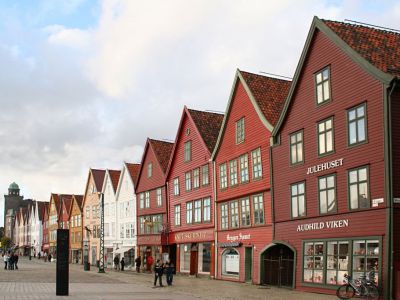
The Bryggen area originally covered all buildings between the sea and the Ovregaten road. The earliest pier is dated to about 1100 AD. The city of Bergen itself dates from before 1070. The existing buildings of Bryggen date no earlier than 1702. This is not surprising in a city so well acquainted with disastrous fires.
The Hanseatic League established itself in Bergen in 1350. They traded mostly cereal grains for stockfish. The town grew into an important center for international trade, and the buildings of Bryggen near the waterfront were, piece by piece, brought under the control of the Hanseatic merchants. The stockfish and the grains had found a home.
From 1702 until 1754 the Hanseatic league buildings were on fire, rebuilt, on fire, demolished, and on fire again. Finally the Hanseatic businesses in Bergen ended and the property at Bryggen was transferred to Norwegian citizens.
Bryggen suffered a fire again in 1955. In an archeological dig that followed, 670 ancient runic inscriptions were discovered carved mostly on pine chips or sticks. For a long time runes were thought to be used only for grave pronouncements or prayers.
These runes however, were concerned with more mundane day-to-day business. Such as: "Ast min, kyss mik." "My darling, kiss me." It is not known if the wish was granted. The inscriptions are at present held in Bryggens Museum in Bergen.
Hiding behind the classic Bryggen facades is a little world of alleyways, shops, galleries and studios. Local artists and designers have taken over the storage spaces for stockfish and grain. The rooms hold art, designs, jewelry, books and, wait for it, a cafe. Artists and designers are hiding in the narrow passeges among the houses.
The local artists want people to think of Bryggen not as some kind of museum where nothing happens, but a living thriving space for art.
Buildings at Bryggen that should be mentioned are Bellgarden (300 years old), Svensgarden, Ehnjorningsgarden, Bredsgarden, Bugarden, and Engelgarden. The tallest and oldest structure is Saint Mary's Church. Museums are Bryggen's Museum and Hanseatic Museum and Hanseatic Assembly Rooms.
Why You Should Visit:
To get a feeling of the Hanseatic influence on the city.
The Hanseatic League established itself in Bergen in 1350. They traded mostly cereal grains for stockfish. The town grew into an important center for international trade, and the buildings of Bryggen near the waterfront were, piece by piece, brought under the control of the Hanseatic merchants. The stockfish and the grains had found a home.
From 1702 until 1754 the Hanseatic league buildings were on fire, rebuilt, on fire, demolished, and on fire again. Finally the Hanseatic businesses in Bergen ended and the property at Bryggen was transferred to Norwegian citizens.
Bryggen suffered a fire again in 1955. In an archeological dig that followed, 670 ancient runic inscriptions were discovered carved mostly on pine chips or sticks. For a long time runes were thought to be used only for grave pronouncements or prayers.
These runes however, were concerned with more mundane day-to-day business. Such as: "Ast min, kyss mik." "My darling, kiss me." It is not known if the wish was granted. The inscriptions are at present held in Bryggens Museum in Bergen.
Hiding behind the classic Bryggen facades is a little world of alleyways, shops, galleries and studios. Local artists and designers have taken over the storage spaces for stockfish and grain. The rooms hold art, designs, jewelry, books and, wait for it, a cafe. Artists and designers are hiding in the narrow passeges among the houses.
The local artists want people to think of Bryggen not as some kind of museum where nothing happens, but a living thriving space for art.
Buildings at Bryggen that should be mentioned are Bellgarden (300 years old), Svensgarden, Ehnjorningsgarden, Bredsgarden, Bugarden, and Engelgarden. The tallest and oldest structure is Saint Mary's Church. Museums are Bryggen's Museum and Hanseatic Museum and Hanseatic Assembly Rooms.
Why You Should Visit:
To get a feeling of the Hanseatic influence on the city.
2) Fish Market (must see)
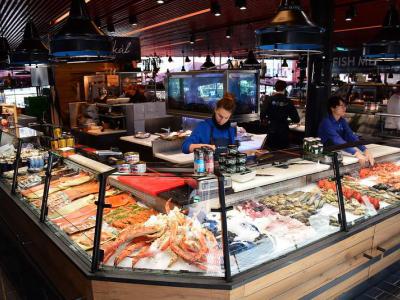
Nestling between the fjords and the seven mountains of Bergen, is the city's Fish Market. Besides fish and seafood, the market offers local farm products and fruit and vegetables. The restaurants, no surprise, sell a plentiful amount of seafood. The indoor market is open all year. The outdoor market opens in May for the summer.
The Fish Market has been in operation since 1200. It has always been a vital meeting place for fishermen, farmers, merchants and citizens. Fish are sold not only from shops in the Market, but also directly from boats at the quay.
The Fish Market was not always at the same location. The original market was next to Bryggen in the Nikolaikirkeallmanning. With the arrival of the Hanseatic League in the 14th century, the city became distinctly Germanic. In 1541 it was proposed strongly to move the market to keep the market free of Hanseatic influence.
Finally, in 1556 the Market was successfully moved to Vagen. The Market was then the central trading area of Bergen. In 2012 the indoor Fish Market was opened. The shops inside became permanent and business proceeded all year. The Market is now located at the inner harbor of Bergen, in the center of the city, easy to find.
Norway has a long convoluted coastline, stretching all the way to the Arctic. The fishing industry is extremely important to the local economy. Bergen is the the most active harbor in Norway with a busy and colorful fish market. It should not be missed.
Why You Should Visit:
"Why the fish alone are with the trip!"
The Fish Market has been in operation since 1200. It has always been a vital meeting place for fishermen, farmers, merchants and citizens. Fish are sold not only from shops in the Market, but also directly from boats at the quay.
The Fish Market was not always at the same location. The original market was next to Bryggen in the Nikolaikirkeallmanning. With the arrival of the Hanseatic League in the 14th century, the city became distinctly Germanic. In 1541 it was proposed strongly to move the market to keep the market free of Hanseatic influence.
Finally, in 1556 the Market was successfully moved to Vagen. The Market was then the central trading area of Bergen. In 2012 the indoor Fish Market was opened. The shops inside became permanent and business proceeded all year. The Market is now located at the inner harbor of Bergen, in the center of the city, easy to find.
Norway has a long convoluted coastline, stretching all the way to the Arctic. The fishing industry is extremely important to the local economy. Bergen is the the most active harbor in Norway with a busy and colorful fish market. It should not be missed.
Why You Should Visit:
"Why the fish alone are with the trip!"
3) Torgallmenningen Square
The old days are not missed so much in Bergen, Norway. The city had a lot of wooden buildings, close together and narrow streets. Fires would break out with alarming regularity. Flames easily roared from one house to another, leaping across streets and engaging whole neighborhoods.
Something had to be done. The answer was "allmenninger", or rebuild vulnerable districts. Widen the streets and create squares between districts to stop the spread of fires. Torgallmenningen is Norway's "best designed town square."
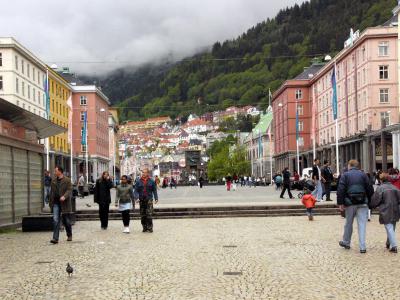
It is near impossible to move around Bergen and not cross Torgallmenningen once or twice. Shops and malls line the square. Roofs of glass before the store facades protect shoppers from the all too frequent rains.
The Maritime Monument, with statues of Norwegian sea rovers, is at one end of the Square. These hardy sailors get no protection from the rain, but they don't mind. After all, it's only water.
"We'll meet at the blue Stone" is an expression often heard in Bergen, The Blue Stone is just that; a large blue stone that casts a spell. It is located at the intersection Of Torgallmenningen and Ole Busll Plass. It's a great place to meet.
Something had to be done. The answer was "allmenninger", or rebuild vulnerable districts. Widen the streets and create squares between districts to stop the spread of fires. Torgallmenningen is Norway's "best designed town square."
It is near impossible to move around Bergen and not cross Torgallmenningen once or twice. Shops and malls line the square. Roofs of glass before the store facades protect shoppers from the all too frequent rains.
The Maritime Monument, with statues of Norwegian sea rovers, is at one end of the Square. These hardy sailors get no protection from the rain, but they don't mind. After all, it's only water.
"We'll meet at the blue Stone" is an expression often heard in Bergen, The Blue Stone is just that; a large blue stone that casts a spell. It is located at the intersection Of Torgallmenningen and Ole Busll Plass. It's a great place to meet.
4) Sailor's Monument
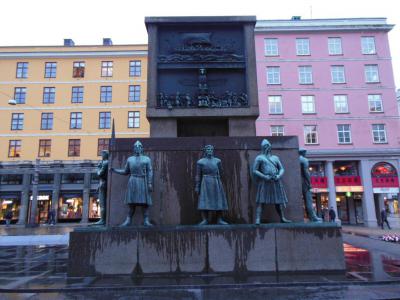
The Sailor's Monument in Bergen stands as a tribute to the country's maritime heritage, honoring the contributions of Norwegian sailors throughout the ages. Located at the northern end of Torgallmenningen, the city's main square, the monument reaches a height of 7 meters and presents a distinct cuboid shape. Designed by sculptor Dyre Vaa and unveiled on June 7, 1950, it serves as both an artistic and historical reflection on Norway’s long-standing relationship with the sea.
The monument features 12 bronze statues and four relief panels, with the statues grouped into four triads that face the cardinal directions-each direction representing a different era of Norwegian maritime history. The west-facing side depicts Viking Age adventurers, notable for their armed portrayal with swords and a conspicuously large spear. The north side celebrates early modern era (17th and 18th centuries) seafarers, the east side features 19th-century seamen, and the south side represents 20th-century sailors. Each group is symbolically divided into societal classes: the poor and servile, the middle classes, and the elite.
The relief panels add a layer of narrative depth, intertwining real maritime dangers with mythical and spiritual elements. They depict various historical and allegorical scenes, including Viking longships, encounters with native Americans symbolizing distant voyages, and more modern imagery such as whaling scenes and representations of sailors lost at sea.
The monument, while impressive, only depicts male figures and overlooks the later Middle Ages, a key era in Bergen's history. This biased portrayal reflects Norway's cultural focus on the Viking era as a masculine symbol of national identity, shaping public memory and monuments.
The monument features 12 bronze statues and four relief panels, with the statues grouped into four triads that face the cardinal directions-each direction representing a different era of Norwegian maritime history. The west-facing side depicts Viking Age adventurers, notable for their armed portrayal with swords and a conspicuously large spear. The north side celebrates early modern era (17th and 18th centuries) seafarers, the east side features 19th-century seamen, and the south side represents 20th-century sailors. Each group is symbolically divided into societal classes: the poor and servile, the middle classes, and the elite.
The relief panels add a layer of narrative depth, intertwining real maritime dangers with mythical and spiritual elements. They depict various historical and allegorical scenes, including Viking longships, encounters with native Americans symbolizing distant voyages, and more modern imagery such as whaling scenes and representations of sailors lost at sea.
The monument, while impressive, only depicts male figures and overlooks the later Middle Ages, a key era in Bergen's history. This biased portrayal reflects Norway's cultural focus on the Viking era as a masculine symbol of national identity, shaping public memory and monuments.
5) The Blue Stone Monument
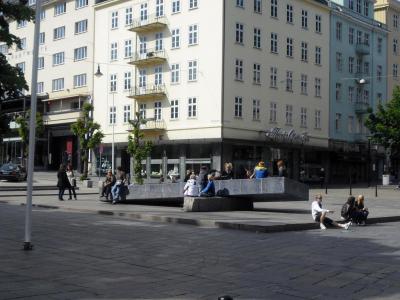
The Blue Stone Monument in Bergen is a notable city landmark, celebrated both for its artistic value and its role as a communal gathering point. Created by Asbjørn Andersen and unveiled on March 27, 1993, this striking monument was a gift from the Kavli Trust in honor of its 100th anniversary.
Constructed from Brazilian sodalite, the monument features a nine-meter-long (approximately 30 feet) stone that lies atop a stone block. This arrangement gives the stone a distinctive tilt toward the northeast. The setup includes a larger foundation that integrates a smaller gray square stone sculpture, resembling a cover over an opening at the foundation's end.
The Blue Stone is more than just a piece of public art; it has become a vital part of Bergen's social fabric, serving as a common meeting spot for residents. Its significance was highlighted in 2007 when the stone was enveloped in pink plastic for a marketing campaign, attracting both curiosity and attention. Moreover, following the tragic 2011 Norway attacks, the monument transformed into a poignant memorial site, where people gathered to lay flowers and pay their respects, underscoring its role as a symbolic and physical anchor in the community.
Constructed from Brazilian sodalite, the monument features a nine-meter-long (approximately 30 feet) stone that lies atop a stone block. This arrangement gives the stone a distinctive tilt toward the northeast. The setup includes a larger foundation that integrates a smaller gray square stone sculpture, resembling a cover over an opening at the foundation's end.
The Blue Stone is more than just a piece of public art; it has become a vital part of Bergen's social fabric, serving as a common meeting spot for residents. Its significance was highlighted in 2007 when the stone was enveloped in pink plastic for a marketing campaign, attracting both curiosity and attention. Moreover, following the tragic 2011 Norway attacks, the monument transformed into a poignant memorial site, where people gathered to lay flowers and pay their respects, underscoring its role as a symbolic and physical anchor in the community.
6) Byparken (City Park) (must see)
Byparken ("The City Park"), located in the very center of Bergen, is the city's first park. New municipal anti-fire regulations were put into effect in 1855. Following one more devastating fire, the city could not simply rebuild. A wide open space was needed to be a vast "fire break" in the middle of the city. Byparken was the answer.
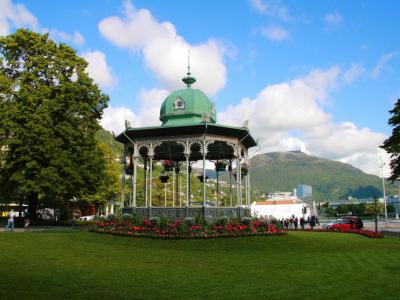
The park is split in two. One side of the park has a light rail stop and the Music Pavilion, donated to the city. On the other side is the ever popular Festplassen ("party place"), an open-air venue for celebrations and events. Norwegian Constitution Day, on May 17, is observed here and The Festival of Light at Christmas.
Two large ponds are maintained in the park. They were once one pond but the middle part was filled in. The ponds remain connected however by an underground tunnel. Lungegardsvannet "Large lung" is the name for the larger pond. The smaller pond is Smalungeren "Small Lung." No surprise there.
The park is split in two. One side of the park has a light rail stop and the Music Pavilion, donated to the city. On the other side is the ever popular Festplassen ("party place"), an open-air venue for celebrations and events. Norwegian Constitution Day, on May 17, is observed here and The Festival of Light at Christmas.
Two large ponds are maintained in the park. They were once one pond but the middle part was filled in. The ponds remain connected however by an underground tunnel. Lungegardsvannet "Large lung" is the name for the larger pond. The smaller pond is Smalungeren "Small Lung." No surprise there.
7) Lille Lungegårdsvannet (Lake Lungegard)
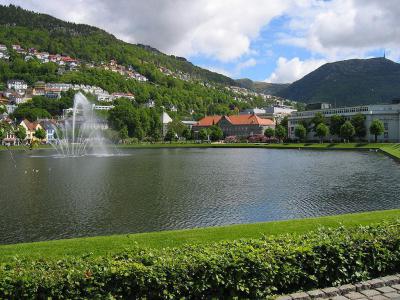
Lake Lungegard (Lille Lungegårdsvannet) is a small yet prominent lake situated in the heart of Bergen. Spanning an area of just 5 acres, this octagonal lake is enveloped by the urban landscape of the city and is a natural water body, historically linked to the larger Store Lungegårdsvannet Bay. The lake's connection to the bay was physically cut off in 1926 when the strait that linked them was filled in and replaced by an underground culvert system. This modification allows tidal fluctuations to influence the lake's water level, maintaining a subtle dynamic connection to its maritime origins.
The lake today is central to a city park and features a prominent decorative fountain, adding aesthetic value and serving as a focal point for visitors and locals alike. Over the years, the lake underwent significant transformations primarily due to urban expansion. Originally much larger, Lake Lungegard was systematically reduced in size through land reclamation efforts, where fill material was added around its edges. These modifications not only shrank the lake but also reshaped it into its current octagonal form, which was finalized by the mid-20th century.
The lake's historical and contemporary significance, coupled with its picturesque setting in a bustling city environment, makes it a cherished landmark in Bergen, reflecting both the city’s natural beauty and its urban development trajectory.
The lake today is central to a city park and features a prominent decorative fountain, adding aesthetic value and serving as a focal point for visitors and locals alike. Over the years, the lake underwent significant transformations primarily due to urban expansion. Originally much larger, Lake Lungegard was systematically reduced in size through land reclamation efforts, where fill material was added around its edges. These modifications not only shrank the lake but also reshaped it into its current octagonal form, which was finalized by the mid-20th century.
The lake's historical and contemporary significance, coupled with its picturesque setting in a bustling city environment, makes it a cherished landmark in Bergen, reflecting both the city’s natural beauty and its urban development trajectory.

8) Marken Street
Marken Street in Bergen presents a vibrant and picturesque destination for both tourists and locals. Situated conveniently by the railway station at the heart of Bergen's city center, Marken is renowned for its pedestrian-only status, which enhances its quaint and relaxed atmosphere. This charming street is lined with cobbled pathways and features a delightful array of historical buildings that add to its scenic beauty.
A major attraction of Marken Street is its extensive shopping offerings. Visitors can explore a wide variety of shops that include everything from local handicrafts to popular international brands. The street is particularly famous for its Norwegian sweaters, ceramics, and silver jewelry, alongside specialty shops selling unique items like trolls and antiques. Additionally, Marken Street boasts an array of cafes and restaurants, providing ample opportunities for visitors to savor local and international cuisine. Notably, the street even houses a Michelin-starred restaurant, adding a touch of luxury to its dining scene.
Marken's vibrant mix of shopping, dining, and historic appeal makes it a must-visit location in Bergen, encapsulating the essence of Norwegian charm in an urban setting.
A major attraction of Marken Street is its extensive shopping offerings. Visitors can explore a wide variety of shops that include everything from local handicrafts to popular international brands. The street is particularly famous for its Norwegian sweaters, ceramics, and silver jewelry, alongside specialty shops selling unique items like trolls and antiques. Additionally, Marken Street boasts an array of cafes and restaurants, providing ample opportunities for visitors to savor local and international cuisine. Notably, the street even houses a Michelin-starred restaurant, adding a touch of luxury to its dining scene.
Marken's vibrant mix of shopping, dining, and historic appeal makes it a must-visit location in Bergen, encapsulating the essence of Norwegian charm in an urban setting.
9) Bergen Railway Station
Bergen Railway Station, strategically positioned in the heart of Bergen, is a pivotal and historic transport hub that serves as the terminus for one of the world's most picturesque train journeys from Oslo. This station is not just a bustling gateway into the city but also an architectural marvel that entices both travelers and architecture enthusiasts alike.
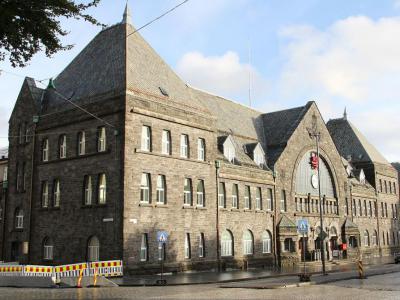
Opened in 1913, four years after the completion of the Oslo-Bergen rail link, Bergen Railway Station replaced an older station to the west and marked a significant enhancement in the city's transport infrastructure. The station was designed by Jens Zetlitz Monrad Kielland, a prominent Norwegian architect renowned for his contributions to the National Romantic movement. This architectural style is a blend of the medieval influences and the modernist Jugendstil (Art Nouveau) that was prevalent in Northern Europe during that era. The station's design reflects these influences, combining robust, medieval-style heavy stonework with the more elegant and organic forms of Art Nouveau.
The station's main hall is particularly striking, where the solid stone structures are beautifully contrasted with an elegant roof and expansive glass windows. These features not only create a visually impressive space but also highlight the station’s most cherished view-the surrounding mountain landscape.
In its early years, Bergen Railway Station also became a notable HoReCa (Hotel, Restaurant, Café) destination. By the 1920s and 1930s, the area around the station had developed significantly; the Hotel Terminus was established in 1922, and a restaurant opened within the station in 1937, enhancing its role as a social and cultural meeting point.
Recognizing its historical and architectural value, the station building has been protected since 2003, ensuring that no significant alterations compromise its original design and heritage. This protection helps preserve the station not only as a functional transport hub but also as a historical monument that embodies the architectural and cultural spirit of early 20th-century Norway.
Opened in 1913, four years after the completion of the Oslo-Bergen rail link, Bergen Railway Station replaced an older station to the west and marked a significant enhancement in the city's transport infrastructure. The station was designed by Jens Zetlitz Monrad Kielland, a prominent Norwegian architect renowned for his contributions to the National Romantic movement. This architectural style is a blend of the medieval influences and the modernist Jugendstil (Art Nouveau) that was prevalent in Northern Europe during that era. The station's design reflects these influences, combining robust, medieval-style heavy stonework with the more elegant and organic forms of Art Nouveau.
The station's main hall is particularly striking, where the solid stone structures are beautifully contrasted with an elegant roof and expansive glass windows. These features not only create a visually impressive space but also highlight the station’s most cherished view-the surrounding mountain landscape.
In its early years, Bergen Railway Station also became a notable HoReCa (Hotel, Restaurant, Café) destination. By the 1920s and 1930s, the area around the station had developed significantly; the Hotel Terminus was established in 1922, and a restaurant opened within the station in 1937, enhancing its role as a social and cultural meeting point.
Recognizing its historical and architectural value, the station building has been protected since 2003, ensuring that no significant alterations compromise its original design and heritage. This protection helps preserve the station not only as a functional transport hub but also as a historical monument that embodies the architectural and cultural spirit of early 20th-century Norway.
10) Kong Oscars Gate (King Oscars Street)
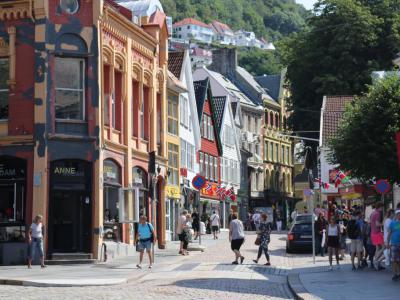
Named in honor of Oscar I, King of Norway and Sweden, in 1857. Prior to that date this street had a host of other names. It has been "shoemaker street", "tailor street", "hospital street", "Saint Jacobs street", "Potrgaden", and "Domkirkegaden."
The street is narrower than most others in Bergen. At the south-eastern end is the old city gate of Bergen. A number of significant buildings line the street. At No. 67 King Oscars Street is Zander Kaae's Foundation, built in the 18th century for a charity and now it rents rooms to students.
Saint Jorgen's Hospital was an 18th century leprosy hospital and now it is a leprosy museum. This is a sign that leprosy is down, an improvement, count your blessings. Next to the museum is Danekert Krohn's Foundation, another 18th century charity, this one for the elderly.
The street has its share of schools. There is Bergen katedralskole (cathedral school), one of three secondary schools on King Oscar Street. There are also Danielsen videregaende skole, and Tanks videregaende skole.
At the intersection of Lille Ovregate and Domkirkeplassen is Bergen Cathedral, a medieval church. Not far away is Holy Cross Church, also a medieval church.
A visit to King Oscars Street reveals a side of Bergen, hidden from ordinary sight. It is like a secret place, away from the chain shops and popular hang-outs. There are plenty shops and restaurants but they all have a personal style and charm that comes with the street.
The street is narrower than most others in Bergen. At the south-eastern end is the old city gate of Bergen. A number of significant buildings line the street. At No. 67 King Oscars Street is Zander Kaae's Foundation, built in the 18th century for a charity and now it rents rooms to students.
Saint Jorgen's Hospital was an 18th century leprosy hospital and now it is a leprosy museum. This is a sign that leprosy is down, an improvement, count your blessings. Next to the museum is Danekert Krohn's Foundation, another 18th century charity, this one for the elderly.
The street has its share of schools. There is Bergen katedralskole (cathedral school), one of three secondary schools on King Oscar Street. There are also Danielsen videregaende skole, and Tanks videregaende skole.
At the intersection of Lille Ovregate and Domkirkeplassen is Bergen Cathedral, a medieval church. Not far away is Holy Cross Church, also a medieval church.
A visit to King Oscars Street reveals a side of Bergen, hidden from ordinary sight. It is like a secret place, away from the chain shops and popular hang-outs. There are plenty shops and restaurants but they all have a personal style and charm that comes with the street.
11) Floibanen Funicular (must see)
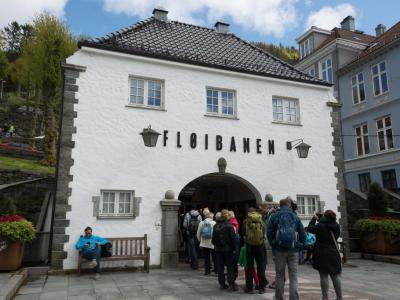
The 100-year old carriages of the Floibanen funicular will take one from Bergen center to the top of Mount Floyen. It's a six minute ride to a fabulous panoramic view over the city, mountains and fjord.
Norway is a land of hiking and climbing. A ride in the funicular allows a visit to a place of uncountable opportunities for walks and hikes. Arriving visitors on Mount Floyen discover miles of gravel roads and paths. The paths lead to stunning overlooks of the fjord, the mountains and the city spread out below.
A trail called Vidden will take a hiker from Mount Floyen to Mount Ulriken. This popular hike takes about five hours. Most people prefer to hike from Ulriken to Mount Floyen. This is a path for more serious hikers. Mount Floyen has both short and long hikes. The trails are accessible to wheelchairs, strollers, young, and old.
Hungry pioneers need not suffer on the trail. On arriving at Floyen a visitor finds the Floisten shop offering pastry, ice cream and hot and cold drinks to the fasting voyageur. A short walk to Floien Folkerestaurant can get one a fuller meal and a spectacular view of things below.
A ten minute walk from the station find Lake Skomakerdiket and the cafe Skomakerstuen. Sit by the water and have a drink with your Norwegian "Svele", a griddle cake with sour cream.
There is an obstacle course and a large playground for children. For the adventurous, take a stroll though the Mysterious Troll Forest. Rent a motorbike or a canoe, not everything must involve hiking.
Why You Should Visit:
For the excitement. And yes, the views.
Tips:
With the Bergen Card round trips are free. Ask about discounts.
Norway is a land of hiking and climbing. A ride in the funicular allows a visit to a place of uncountable opportunities for walks and hikes. Arriving visitors on Mount Floyen discover miles of gravel roads and paths. The paths lead to stunning overlooks of the fjord, the mountains and the city spread out below.
A trail called Vidden will take a hiker from Mount Floyen to Mount Ulriken. This popular hike takes about five hours. Most people prefer to hike from Ulriken to Mount Floyen. This is a path for more serious hikers. Mount Floyen has both short and long hikes. The trails are accessible to wheelchairs, strollers, young, and old.
Hungry pioneers need not suffer on the trail. On arriving at Floyen a visitor finds the Floisten shop offering pastry, ice cream and hot and cold drinks to the fasting voyageur. A short walk to Floien Folkerestaurant can get one a fuller meal and a spectacular view of things below.
A ten minute walk from the station find Lake Skomakerdiket and the cafe Skomakerstuen. Sit by the water and have a drink with your Norwegian "Svele", a griddle cake with sour cream.
There is an obstacle course and a large playground for children. For the adventurous, take a stroll though the Mysterious Troll Forest. Rent a motorbike or a canoe, not everything must involve hiking.
Why You Should Visit:
For the excitement. And yes, the views.
Tips:
With the Bergen Card round trips are free. Ask about discounts.
12) Kjottbasaren Market (Meat Bazaar)
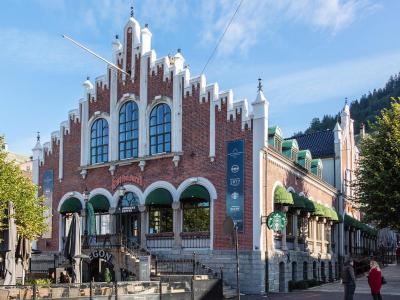
The Meat Bazaar (Kjottbasaren), Bergen's historic meat market, is an architectural and cultural gem founded in 1872. Located on Vetrlidsallmenningen, this ornate gabled brick building with a crenelated roof stands as a testament to the city's rich history and vibrant market culture. Originally designed by architect Conrad Fredrik von der Lippe in a neo-Romanesque style, the market has served as a hub for local food trade for over a century.
The Meat Bazaar in Bergen originated in the late 18th century when butchers in Skuteviken set up "meat huts" on Kjødtorvet to keep the city center clean. These simple stalls were established around 1776, offering a designated space for meat trade away from homes. Eventually, in 1877, the Meat Bazaar was constructed, featuring 44 sales stalls and 27 cellar stalls, becoming a unique establishment in Norway.
Today, the Meat Bazaar is a bustling food emporium offering a diverse array of products. Shoppers can find chocolates, cheeses, meats, cakes, breads, and souvenirs amidst the charming stalls. The market, restored in 1990, retains its historical ambiance while accommodating contemporary needs. Visitors can shop and dine, with several restaurants on the first floor and additional stalls and shops above. Weather permitting, tables and chairs are set up outside the café/restaurant, providing a pleasant dining experience-though diners should be mindful of the wind direction to avoid the fishy smells wafting from the nearby Fish Market.
The Meat Bazaar not only serves as a marketplace but also as a cultural landmark that encapsulates Bergen's historical progression and architectural heritage. Its establishment marked a significant improvement in market regulation, hygiene, and trade practices, influencing the urban development of the city. The building's architectural style and subsequent renovations highlight the evolving needs and tastes of Bergen's populace over the years.
The Meat Bazaar in Bergen originated in the late 18th century when butchers in Skuteviken set up "meat huts" on Kjødtorvet to keep the city center clean. These simple stalls were established around 1776, offering a designated space for meat trade away from homes. Eventually, in 1877, the Meat Bazaar was constructed, featuring 44 sales stalls and 27 cellar stalls, becoming a unique establishment in Norway.
Today, the Meat Bazaar is a bustling food emporium offering a diverse array of products. Shoppers can find chocolates, cheeses, meats, cakes, breads, and souvenirs amidst the charming stalls. The market, restored in 1990, retains its historical ambiance while accommodating contemporary needs. Visitors can shop and dine, with several restaurants on the first floor and additional stalls and shops above. Weather permitting, tables and chairs are set up outside the café/restaurant, providing a pleasant dining experience-though diners should be mindful of the wind direction to avoid the fishy smells wafting from the nearby Fish Market.
The Meat Bazaar not only serves as a marketplace but also as a cultural landmark that encapsulates Bergen's historical progression and architectural heritage. Its establishment marked a significant improvement in market regulation, hygiene, and trade practices, influencing the urban development of the city. The building's architectural style and subsequent renovations highlight the evolving needs and tastes of Bergen's populace over the years.
13) Bergenhus Fortress and Rosenkrantz Tower (must see)
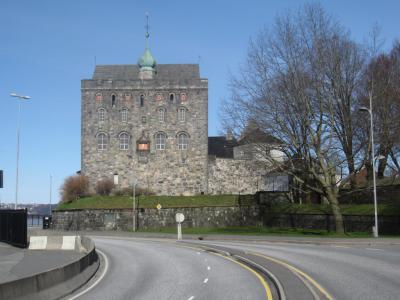
The tower and the Fortress must be thought of as one establishment. The Fortress has been a royal seat and residence, episcopal see and a military power base. The grounds within the walls of the island fortress are Holmen, Koengen and Sverresborg. The Fortress was built in the early 1500s. It was considered complete in 1700.
The Fortress was under siege only once during the second Dutch-English War. In August, 1665, a squadron of Dutch vessels took shelter in neutral Bergen Harbor. The neutrality was not respected. The English warships fired on the Dutch ships and the Fortress. Fire was returned. The battle was a short one. It came to be known as The Battle of Vagen.
The English were attacking vessels of the Dutch East India Company. The attack failed. No ships were sunk. In the Second World War Bergenhus was once again in service. This time however it was a German occupying force that used the fort as their western headquarters.
Begenhus has been a military facility without interruption since 1628. Presently 220 military and civilian personnel are stationed at the fort.
The Rosenkrantz Tower is the dominant building of the fort complex. It was named for governor Erik Rosenkrantz. The tower got its present form during Rosenkrantz's reign, 1559-1568. There is a yet older part of the tower. It is a medieval tower called the "keep by the Sea." It was built by King Magnus the Lawmaker in 1270.
Rosenkrantz's building held dungeons on the first floor and cannons on the roof. With residential rooms in between it must have been insufferably loud in a battle. Not a good place for meditation.
The other medieval structure to remain is Haakon's Hall, built about 1270. It was incorporated in Rosenkrantz's Tower. Several Churches, including Bergen's Christ Church were included in the premises. The churches were demolished by 1531 and the isle of Holmen became strictly military.
The Fortress was under siege only once during the second Dutch-English War. In August, 1665, a squadron of Dutch vessels took shelter in neutral Bergen Harbor. The neutrality was not respected. The English warships fired on the Dutch ships and the Fortress. Fire was returned. The battle was a short one. It came to be known as The Battle of Vagen.
The English were attacking vessels of the Dutch East India Company. The attack failed. No ships were sunk. In the Second World War Bergenhus was once again in service. This time however it was a German occupying force that used the fort as their western headquarters.
Begenhus has been a military facility without interruption since 1628. Presently 220 military and civilian personnel are stationed at the fort.
The Rosenkrantz Tower is the dominant building of the fort complex. It was named for governor Erik Rosenkrantz. The tower got its present form during Rosenkrantz's reign, 1559-1568. There is a yet older part of the tower. It is a medieval tower called the "keep by the Sea." It was built by King Magnus the Lawmaker in 1270.
Rosenkrantz's building held dungeons on the first floor and cannons on the roof. With residential rooms in between it must have been insufferably loud in a battle. Not a good place for meditation.
The other medieval structure to remain is Haakon's Hall, built about 1270. It was incorporated in Rosenkrantz's Tower. Several Churches, including Bergen's Christ Church were included in the premises. The churches were demolished by 1531 and the isle of Holmen became strictly military.
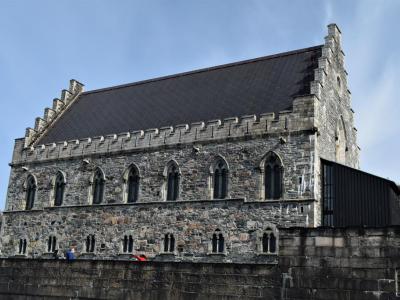
14) Haakon's Hall
Haakon's Hall, located within the Bergenhus Fortress in Bergen, is a medieval stone hall built in the mid-13th century during the reign of King Håkon Håkonsson (1217-1263). As the largest secular medieval building in Norway, it stands as a significant monument of Gothic architecture. Constructed to replace earlier wooden structures, the hall showcases the influence of English design, likely due to the friendly relations between King Håkon and King Henry III of England, and possibly designed by English architects.
The hall, built between 1247 and 1261, served as a royal residence and feasting hall. It played a central role in major national events, such as the marriage of King Håkon's son, Magnus Håkonsson Lagabøte, to the Danish princess Ingeborg in 1261, an event which hosted 2000 guests across three buildings. During medieval times, Bergen was the largest and most important city in Norway, and Haakon's Hall was the venue for significant state affairs, including the proclamation of Norway's first complete set of laws.
Haakon's Hall comprises three floors: a large festive room on the top floor, a middle floor originally used for administration and the King's council, and a cellar likely used for storage. Despite its initial prominence, the hall's role diminished after the royal family left Norway in the late Middle Ages. It then served various utilitarian purposes, including as a storeroom and an ammunition depot, and even lost its roof at one point.
In 1916, Haakon's Hall underwent its first restoration and interior decoration. However, in 1944, it was heavily damaged by an explosion from the Dutch ammunition ship Voorbode in Bergen harbor. The hall was left with only its walls standing and underwent significant restoration in the 1950s to achieve its current form.
Today, Haakon's Hall is a cultural heritage site and museum. It continues to be used for royal dinners, official occasions, and concerts, preserving its historical significance and continuing its legacy as a centerpiece of Norwegian medieval architecture and history.
The hall, built between 1247 and 1261, served as a royal residence and feasting hall. It played a central role in major national events, such as the marriage of King Håkon's son, Magnus Håkonsson Lagabøte, to the Danish princess Ingeborg in 1261, an event which hosted 2000 guests across three buildings. During medieval times, Bergen was the largest and most important city in Norway, and Haakon's Hall was the venue for significant state affairs, including the proclamation of Norway's first complete set of laws.
Haakon's Hall comprises three floors: a large festive room on the top floor, a middle floor originally used for administration and the King's council, and a cellar likely used for storage. Despite its initial prominence, the hall's role diminished after the royal family left Norway in the late Middle Ages. It then served various utilitarian purposes, including as a storeroom and an ammunition depot, and even lost its roof at one point.
In 1916, Haakon's Hall underwent its first restoration and interior decoration. However, in 1944, it was heavily damaged by an explosion from the Dutch ammunition ship Voorbode in Bergen harbor. The hall was left with only its walls standing and underwent significant restoration in the 1950s to achieve its current form.
Today, Haakon's Hall is a cultural heritage site and museum. It continues to be used for royal dinners, official occasions, and concerts, preserving its historical significance and continuing its legacy as a centerpiece of Norwegian medieval architecture and history.
