Custom Walk in Warsaw, Poland by lenkamosna1403_a2cd78 created on 2026-07-18
Guide Location: Poland » Warsaw
Guide Type: Custom Walk
# of Sights: 16
Tour Duration: 2 Hour(s)
Travel Distance: 2.2 Km or 1.4 Miles
Share Key: 7LYYK
Guide Type: Custom Walk
# of Sights: 16
Tour Duration: 2 Hour(s)
Travel Distance: 2.2 Km or 1.4 Miles
Share Key: 7LYYK
How It Works
Please retrieve this walk in the GPSmyCity app. Once done, the app will guide you from one tour stop to the next as if you had a personal tour guide. If you created the walk on this website or come to the page via a link, please follow the instructions below to retrieve the walk in the app.
Retrieve This Walk in App
Step 1. Download the app "GPSmyCity: Walks in 1K+ Cities" on Apple App Store or Google Play Store.



Step 2. In the GPSmyCity app, download(or launch) the guide "Warsaw Map and Walking Tours".
Step 3. Tap the menu button located at upper right corner of the "Walks" screen and select "Retrieve custom walk". Enter the share key: 7LYYK
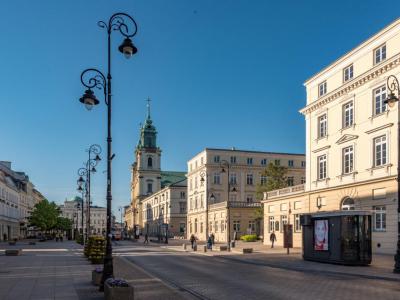
1) Royal Route (must see)
The Royal Route began as a communication route that led from the Royal Castle and Castle Square to King Jan III Sobieski's personal residence, known as Wilanów. The route runs through Old Town Warsaw, connecting many notable points and containing many monuments and sights.
The route spans south from Castle Square along Krakowskie Przedmieście Street, New World Street, Ujazdow Avenue, Belweder Street, and Sobieski Street. The route is named as an official historical monument in Poland.
The first part of the Royal Route, Krakowskie Przedmiescie, is one of Warsaw's best known and most prestigious streets. Around it, you will find many historical structures and sights. The north end of the road starts at the Presidential Palace and passes Warsaw University, the Polish Academy of Sciences. You'll also see Potocki Palace, Kazimierz Palace, Tyszkiewicz Palace, Czetwertyński Palace, Hotel Bristol, Saint Anne's Church, and Holy Cross Church.
Do not miss a stroll through the grounds of Lazienki Park. This 76-hectare park contains palaces, villas, monuments, and decorative structures. In the center of the park is the much-photographed Palace on the Isle. If you're in Warsaw during the summer, keep an ear out for the Sunday Chopin Concerts at the Fryderyk Chopin monument.
The Royal Route connects most of the must-see sights in Warsaw. Strolling the sidewalks here and taking your time to visit each monument, garden, and palace is well worth your time. There is much to explore and many quiet hidden treasures along the way.
One of the best-kept secrets is the summer residence of King Jan III Sobieski, known as Marysieńka. The palace is operated as a museum, with elaborate and authentic 17th, 18th, and 19th-century interiors throughout. It's also home to the Polish Portrait Gallery. The gardens are not to be missed. The house is often called the "Polish Versailles."
The route spans south from Castle Square along Krakowskie Przedmieście Street, New World Street, Ujazdow Avenue, Belweder Street, and Sobieski Street. The route is named as an official historical monument in Poland.
The first part of the Royal Route, Krakowskie Przedmiescie, is one of Warsaw's best known and most prestigious streets. Around it, you will find many historical structures and sights. The north end of the road starts at the Presidential Palace and passes Warsaw University, the Polish Academy of Sciences. You'll also see Potocki Palace, Kazimierz Palace, Tyszkiewicz Palace, Czetwertyński Palace, Hotel Bristol, Saint Anne's Church, and Holy Cross Church.
Do not miss a stroll through the grounds of Lazienki Park. This 76-hectare park contains palaces, villas, monuments, and decorative structures. In the center of the park is the much-photographed Palace on the Isle. If you're in Warsaw during the summer, keep an ear out for the Sunday Chopin Concerts at the Fryderyk Chopin monument.
The Royal Route connects most of the must-see sights in Warsaw. Strolling the sidewalks here and taking your time to visit each monument, garden, and palace is well worth your time. There is much to explore and many quiet hidden treasures along the way.
One of the best-kept secrets is the summer residence of King Jan III Sobieski, known as Marysieńka. The palace is operated as a museum, with elaborate and authentic 17th, 18th, and 19th-century interiors throughout. It's also home to the Polish Portrait Gallery. The gardens are not to be missed. The house is often called the "Polish Versailles."
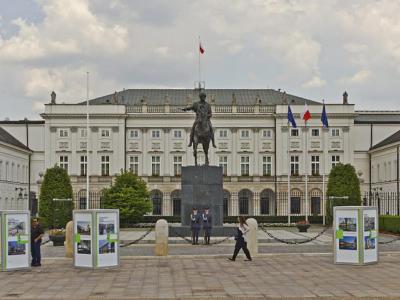
2) Presidential Palace
Home to the Polish head of state, the Presidential Palace was built in 1643 as a home for local aristocrat Crown Great Hetman Stanislaw Koniecpolski. Koniecpolski owned so much of eastern Poland that he could cross the Commonwealth and spend each night in one of his own manors. The palace was designed by architect Constantino Tencalla, who also designed Sigismund's Column in Castle Square.
It's had several refurbishments since then. The current neoclassical style has been in place since 1818. Ever since then, it has served various government functions.
The first historical events occurred even earlier, though. In 1791, the home hosted the authors of the Constitution of May 3, 1791. That constitution was the first of its kind in Europe and the second of its kind in the world. In 1818, the house became the seat of the Viceroy. The council of ministers sat here between World Wars I and II. Since the German occupiers used the house, it survived World War II intact. After the war, the Warsaw Pact between the Soviet Union and the Eastern Bloc countries was signed here.
Since 1994, the palace has been the seat of the President of the Republic of Poland. As this is a functioning government building, visitors are not allowed inside, and the building is heavily guarded. But you can admire the impressive neoclassical facade from Nowy Street.
You'll also notice the large equestrian statue of Prince Jozef Poniatowski, created by Danish artist Bertel Thorvaldsen. The statue is modeled after a similar one of Roman Emperor Marcus Aurelius from Capitoline Hill in Rome. The original statue was destroyed during the Nazi occupation of Poland, and this recreation was made in 1950. It was based on Thorvaldsen's original models, donated from the Thorvaldsen Museum in Copenhagen.
It's had several refurbishments since then. The current neoclassical style has been in place since 1818. Ever since then, it has served various government functions.
The first historical events occurred even earlier, though. In 1791, the home hosted the authors of the Constitution of May 3, 1791. That constitution was the first of its kind in Europe and the second of its kind in the world. In 1818, the house became the seat of the Viceroy. The council of ministers sat here between World Wars I and II. Since the German occupiers used the house, it survived World War II intact. After the war, the Warsaw Pact between the Soviet Union and the Eastern Bloc countries was signed here.
Since 1994, the palace has been the seat of the President of the Republic of Poland. As this is a functioning government building, visitors are not allowed inside, and the building is heavily guarded. But you can admire the impressive neoclassical facade from Nowy Street.
You'll also notice the large equestrian statue of Prince Jozef Poniatowski, created by Danish artist Bertel Thorvaldsen. The statue is modeled after a similar one of Roman Emperor Marcus Aurelius from Capitoline Hill in Rome. The original statue was destroyed during the Nazi occupation of Poland, and this recreation was made in 1950. It was based on Thorvaldsen's original models, donated from the Thorvaldsen Museum in Copenhagen.
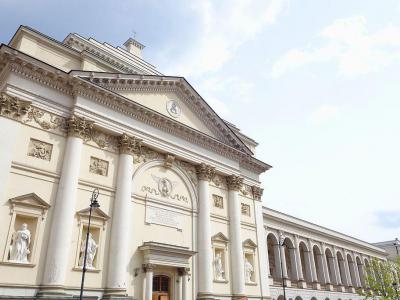
3) St. Anne's Church
The Neoclassical Saint Anne's Church is one of Warsaw's oldest buildings and most notable churches. Even though it has been rebuilt and reconstructed several times, its appearance has remained mostly unchanged since 1788.
The foundations were laid for the church back in 1454 when the Duchess of Masovia Anna Fiodorowna set it up for the Franciscan friars. In the 1700s, the facade was done in a Late-Baroque style. After suffering heavy damage in World War II, the church was restored between the late 1940s and 1970s.
The church impresses with its baroque style. It has a richly decorated interior that is full of beautiful frescoes. The only diamond vaulted ceiling is found here, in the cloister leading to the vestry. During the summer at noon, a 30 minutes organ concert is played every day except Sundays and holidays.
Inside the church, you will also find a simple wooden cross with an interesting history. The cross was built to commemorate the tragic loss of 96 lives in a 2010 Polish Air Force crash. The fatalities included the President of Poland, Lech Kaczyński, and his wife, Maria. The cross was displayed for a time at the Presidential Palace. However, the cross became a flashpoint in local politics, as it raised questions of the separation of church and state, religion, and Polish patriotism.
Why You Should Visit:
This church is completely painted from floor to ceiling with magnificent frescos. The illusions painted on the columns and walls are very beautiful.
Tip:
Try to schedule your visit around noon or 2pm to catch the daily organ concert (lasting 30 mins). It's also possible to climb to the top of the tower, which will earn you some impressive views over the city in a clear day.
The foundations were laid for the church back in 1454 when the Duchess of Masovia Anna Fiodorowna set it up for the Franciscan friars. In the 1700s, the facade was done in a Late-Baroque style. After suffering heavy damage in World War II, the church was restored between the late 1940s and 1970s.
The church impresses with its baroque style. It has a richly decorated interior that is full of beautiful frescoes. The only diamond vaulted ceiling is found here, in the cloister leading to the vestry. During the summer at noon, a 30 minutes organ concert is played every day except Sundays and holidays.
Inside the church, you will also find a simple wooden cross with an interesting history. The cross was built to commemorate the tragic loss of 96 lives in a 2010 Polish Air Force crash. The fatalities included the President of Poland, Lech Kaczyński, and his wife, Maria. The cross was displayed for a time at the Presidential Palace. However, the cross became a flashpoint in local politics, as it raised questions of the separation of church and state, religion, and Polish patriotism.
Why You Should Visit:
This church is completely painted from floor to ceiling with magnificent frescos. The illusions painted on the columns and walls are very beautiful.
Tip:
Try to schedule your visit around noon or 2pm to catch the daily organ concert (lasting 30 mins). It's also possible to climb to the top of the tower, which will earn you some impressive views over the city in a clear day.
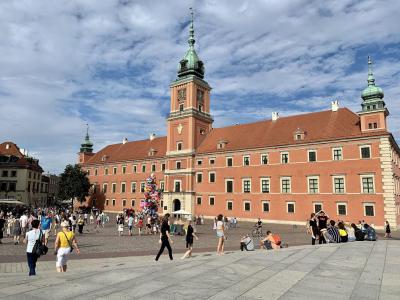
4) Royal Castle (must see)
The Royal Castle as it stands today was rebuilt and restored in the late 1970s and early 1980s. The Germans had destroyed it during World War II, but the foundation and many components were rescued and used in the reconstruction.
The original structure was built in the Middle Ages. Sometime around 1410, the first parts of the Curia Maior, or Big Manor, were built. It functioned as a prince manor. When Masovia was incorporated into the Kingdom of Poland in 1526, the building became a royal residence. Between 1569 and 1572, King Sigismund II Augustus began altering the structure to accommodate the new parliament. Next to Curia Maior, the king built a Renaissance-style building known as Royal House, where he resided when parliament was in session. Over the years, the castle continued to expand.
The castle was destroyed during The Deluge from 1655 to 1657 when Sweden and Russia invaded. Reconstruction began in 1657, but the royal purse was stretched, so construction was limited to rebuilding what had already been there.
Why You Should Visit:
The castle operates as a museum while also being the setting of state functions. Inside the castle, you'll see one of the most impressive art collections in Europe.
The Jagiellonian Rooms contain the modern Gallery of Painting, Sculpture, and Decorative Arts. The Houses of Parliament, where the world's second-oldest constitution was signed into effect, is available to be toured. The Royal Apartments provide a glimpse into the lavish lifestyles of the royal families and the chance to view many masterpieces from the 1700s. The Lanckoronski Collection includes two Rembrandts and a Stradivari violin.
The castle, together with Old Town Warsaw, is a UNESCO World Heritage Site.
The original structure was built in the Middle Ages. Sometime around 1410, the first parts of the Curia Maior, or Big Manor, were built. It functioned as a prince manor. When Masovia was incorporated into the Kingdom of Poland in 1526, the building became a royal residence. Between 1569 and 1572, King Sigismund II Augustus began altering the structure to accommodate the new parliament. Next to Curia Maior, the king built a Renaissance-style building known as Royal House, where he resided when parliament was in session. Over the years, the castle continued to expand.
The castle was destroyed during The Deluge from 1655 to 1657 when Sweden and Russia invaded. Reconstruction began in 1657, but the royal purse was stretched, so construction was limited to rebuilding what had already been there.
Why You Should Visit:
The castle operates as a museum while also being the setting of state functions. Inside the castle, you'll see one of the most impressive art collections in Europe.
The Jagiellonian Rooms contain the modern Gallery of Painting, Sculpture, and Decorative Arts. The Houses of Parliament, where the world's second-oldest constitution was signed into effect, is available to be toured. The Royal Apartments provide a glimpse into the lavish lifestyles of the royal families and the chance to view many masterpieces from the 1700s. The Lanckoronski Collection includes two Rembrandts and a Stradivari violin.
The castle, together with Old Town Warsaw, is a UNESCO World Heritage Site.
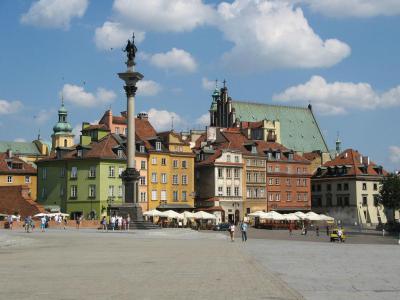
5) Castle Square (Plac Zamkowy) (must see)
Located in the middle of Old Town, this square was first built in 1821. It's roughly triangular, with one side facing the Royal Castle.
One of the most prominent features of the square is Sigismund's Column, a 17th-century monument to King Sigismund III. It was built in 1644 and is the world's oldest secular column built in modern history. It's a landmark that you can't miss.
One of Warsaw's biggest highways runs underneath Castle Square. Besides the castle, the rest of the square is surrounded by historic townhouses. This is the center of exploration in Warsaw-it's a meeting point for locals and tourists alike, and it's full of life. There are street musicians, horse carriages, churches, and restaurants all around. The main attraction here, though, is the Royal Castle.
Castle Square also marks the northern point of the Royal Route, which led from the castle southward to King Jan III Sobieski's personal residence at Wilanów. Along that route, you'll pass many must-see Warsaw sights.
One of the most prominent features of the square is Sigismund's Column, a 17th-century monument to King Sigismund III. It was built in 1644 and is the world's oldest secular column built in modern history. It's a landmark that you can't miss.
One of Warsaw's biggest highways runs underneath Castle Square. Besides the castle, the rest of the square is surrounded by historic townhouses. This is the center of exploration in Warsaw-it's a meeting point for locals and tourists alike, and it's full of life. There are street musicians, horse carriages, churches, and restaurants all around. The main attraction here, though, is the Royal Castle.
Castle Square also marks the northern point of the Royal Route, which led from the castle southward to King Jan III Sobieski's personal residence at Wilanów. Along that route, you'll pass many must-see Warsaw sights.
6) St. Martin's Church
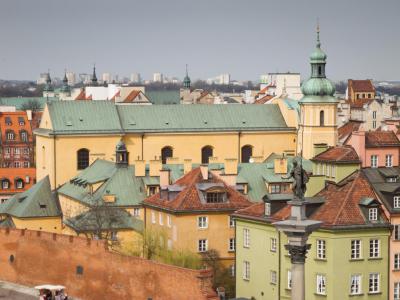
Saint Martin's Church, situated on Beer Street (ulica Piwna) in the Old Town of Warsaw, is a historic site with a rich history dating back to 1353. Established by Duke Siemowit III of Masovia and his wife Eufemia, the church was part of a larger complex that included the adjacent Augustinians cloister and the Hospital of the Holy Spirit intra muros.
The original church, a stone Gothic structure, was erected around the turn of the 14th and 15th centuries. Interestingly, its initial entrance faced the town walls, not Piwna Street as it does today. The church housed three altars: the main Saint Martin altar and two side altars dedicated to the Holy Ghost and Saint Dorothy.
The church underwent several transformations due to fires in the 15th and 17th centuries. Italian architect Giovanni Spinola was instrumental in its Baroque conversion. This included reorienting the church, moving the main entrance to Piwna Street, and relocating the altar to the southwestern side.
A significant reconstruction occurred around 1744, based on the design of Karol Bay. The main façade, featuring waved lines, is a prime example of the 'Melted Sugar' style in Rococo architecture. The central altar was revamped in 1751, featuring sculptures by Jan Jerzy Plersch, as per Bay's design.
While the exterior is Baroque, the interior underwent modernization. The original early Baroque furnishings by Jan Henel from the 1630s and the Rococo decorations of the 1750s were destroyed during the Warsaw Uprising by German bombing. Post World War II, the church was reconstructed.
Inside, the church features several chapels: the Chapel of Our Lady of Consolation with a 15th-century painting replica, the Chapel of Jesus Christ, and the Chapel of Saint Francis, which houses the church's most valuable item - a polychromed figure of the Virgin Mary with Child.
The original church, a stone Gothic structure, was erected around the turn of the 14th and 15th centuries. Interestingly, its initial entrance faced the town walls, not Piwna Street as it does today. The church housed three altars: the main Saint Martin altar and two side altars dedicated to the Holy Ghost and Saint Dorothy.
The church underwent several transformations due to fires in the 15th and 17th centuries. Italian architect Giovanni Spinola was instrumental in its Baroque conversion. This included reorienting the church, moving the main entrance to Piwna Street, and relocating the altar to the southwestern side.
A significant reconstruction occurred around 1744, based on the design of Karol Bay. The main façade, featuring waved lines, is a prime example of the 'Melted Sugar' style in Rococo architecture. The central altar was revamped in 1751, featuring sculptures by Jan Jerzy Plersch, as per Bay's design.
While the exterior is Baroque, the interior underwent modernization. The original early Baroque furnishings by Jan Henel from the 1630s and the Rococo decorations of the 1750s were destroyed during the Warsaw Uprising by German bombing. Post World War II, the church was reconstructed.
Inside, the church features several chapels: the Chapel of Our Lady of Consolation with a 15th-century painting replica, the Chapel of Jesus Christ, and the Chapel of Saint Francis, which houses the church's most valuable item - a polychromed figure of the Virgin Mary with Child.
7) St. John's Archcathedral
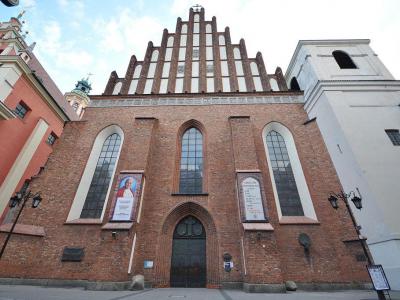
Saint John's Archcathedral, located in Warsaw, is a historically and architecturally significant landmark. Found in the Old Town area, this Catholic church sits on Świętojańska Street, near the Jesuit Church. It distinguishes itself as one of the three major cathedrals in Warsaw and holds the unique title of an archcathedral. As the primary church of the Archdiocese of Warsaw, it is also considered one of Poland's national pantheons. This cathedral, along with Warsaw's Old City, is designated as a UNESCO World Heritage Site.
The cathedral's origins date back to the 14th century when it was constructed in the Masovian Gothic style. Historically, it served as a site for the coronation and burial of many Dukes of Masovia. An interesting feature is the elevated 80-meter-long corridor connecting it to the Royal Castle, built in the late 16th century by Queen Anna Jagiellonka and extended in the 1620s.
Over the course of its history, Saint John's Archcathedral underwent several renovations. The most notable of these took place in the 19th century, preserving its English Gothic Revival architectural style until World War II. In 1944, during the Warsaw Uprising, the cathedral became a battleground between insurgents and the German army.
After World War II, the cathedral underwent significant reconstruction. The exterior was restored to its presumed 14th-century appearance based on 17th-century illustrations. The interior was redesigned to reflect a more authentic Gothic style, featuring a three-nave structure and various notable elements, including a 1959 pulpit, replica baroque stalls, chapels, gravestones, and epitaphs.
Why You Should Visit:
Not only is this, by itself, a beautiful building worth seeing, but it is also an important international centre to promote sacred music and its value certainly increases when you attend an organ concert (schedules can be found online).
Tip:
If you visit, make sure that your pictures are taken from the bottom up!
The small crypt can be viewed for a small fee, whereas the rest of the church is free.
Do wander through the tiny streets around the cathedral as they are atmospheric as well.
The cathedral's origins date back to the 14th century when it was constructed in the Masovian Gothic style. Historically, it served as a site for the coronation and burial of many Dukes of Masovia. An interesting feature is the elevated 80-meter-long corridor connecting it to the Royal Castle, built in the late 16th century by Queen Anna Jagiellonka and extended in the 1620s.
Over the course of its history, Saint John's Archcathedral underwent several renovations. The most notable of these took place in the 19th century, preserving its English Gothic Revival architectural style until World War II. In 1944, during the Warsaw Uprising, the cathedral became a battleground between insurgents and the German army.
After World War II, the cathedral underwent significant reconstruction. The exterior was restored to its presumed 14th-century appearance based on 17th-century illustrations. The interior was redesigned to reflect a more authentic Gothic style, featuring a three-nave structure and various notable elements, including a 1959 pulpit, replica baroque stalls, chapels, gravestones, and epitaphs.
Why You Should Visit:
Not only is this, by itself, a beautiful building worth seeing, but it is also an important international centre to promote sacred music and its value certainly increases when you attend an organ concert (schedules can be found online).
Tip:
If you visit, make sure that your pictures are taken from the bottom up!
The small crypt can be viewed for a small fee, whereas the rest of the church is free.
Do wander through the tiny streets around the cathedral as they are atmospheric as well.
8) Warsaw Old Town (must see)
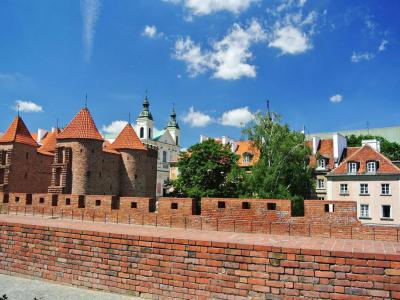
Warsaw's Old Town, nestled in the core of Poland's capital, stands as a beacon of historical and cultural significance, providing a window into the city's storied past. Referred to locally as "Stare Miasto," this district is recognized by UNESCO as a World Heritage Site, drawing tourists and history buffs alike. The Old Town, heavily damaged in World War II, has been meticulously restored, symbolizing Warsaw's revival.
The area is distinguished by its conservation of medieval and Renaissance architectural styles. It features an array of vibrant townhouses, cobblestone pathways, and heritage-rich squares. The Market Square, the epicenter of the Old Town, is a quaint area encircled by multicolored townhouses, hosting cafes and eateries. The Warsaw Mermaid statue, an emblematic figure of the city, takes pride of place in the square's center.
The Royal Castle, formerly the abode of Polish royalty, dominates Castle Square. It invites exploration of its opulent rooms, halls, and galleries, along with the Castle Museum, showcasing a vast collection of art and historical pieces. Saint John's Archcathedral, a notable Gothic edifice dating to the 14th century, stands as another prominent landmark, celebrated for its architectural grandeur and historical significance.
Enclosed by reconstructed defensive walls and a medieval Barbican, the Old Town offers insights into Warsaw's history as a fortified city. The area abounds with quaint cafes, restaurants, and bars, serving traditional Polish fare, global cuisine, and delectable sweets, perfect for enjoying a meal or coffee amidst the ambiance.
Throughout the year, the Old Town becomes a hub of cultural events, festivals, and open-air concerts, animating the historic quarter and providing opportunities to engage with local customs and entertainment. Additionally, it houses various souvenir shops, boutiques, and artisanal stores, offering unique keepsakes and Polish crafts as lasting reminders of one's visit.
The area is distinguished by its conservation of medieval and Renaissance architectural styles. It features an array of vibrant townhouses, cobblestone pathways, and heritage-rich squares. The Market Square, the epicenter of the Old Town, is a quaint area encircled by multicolored townhouses, hosting cafes and eateries. The Warsaw Mermaid statue, an emblematic figure of the city, takes pride of place in the square's center.
The Royal Castle, formerly the abode of Polish royalty, dominates Castle Square. It invites exploration of its opulent rooms, halls, and galleries, along with the Castle Museum, showcasing a vast collection of art and historical pieces. Saint John's Archcathedral, a notable Gothic edifice dating to the 14th century, stands as another prominent landmark, celebrated for its architectural grandeur and historical significance.
Enclosed by reconstructed defensive walls and a medieval Barbican, the Old Town offers insights into Warsaw's history as a fortified city. The area abounds with quaint cafes, restaurants, and bars, serving traditional Polish fare, global cuisine, and delectable sweets, perfect for enjoying a meal or coffee amidst the ambiance.
Throughout the year, the Old Town becomes a hub of cultural events, festivals, and open-air concerts, animating the historic quarter and providing opportunities to engage with local customs and entertainment. Additionally, it houses various souvenir shops, boutiques, and artisanal stores, offering unique keepsakes and Polish crafts as lasting reminders of one's visit.
9) The Mermaid
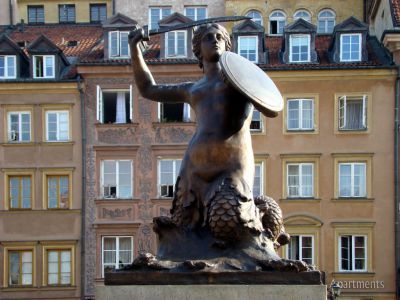
The Baltic Sea was home to two mermaids once upon a time. These half-women, half-fish sisters eventually got bored of their aquatic life. Their decision to come to the shore led the first sister to the Danish Straits. She settled at the Port of Copenhagen entrance. The other sister reached the port of Gdansk and then swam across the river Vistula right to the end. She finally rested on a sandy bank at the foot of Old Town in Warsaw.
When the fishermen here found that someone was letting their hard caught fishes go, they were furious and decided to punish the culprit. When they found that it was none other than the mermaid, they decided to let her stay. For their generosity, the villagers were entertained by the mermaid every evening with lilting songs.
When a rich merchant decided to make money showcasing here at a fair, he captured her and kept her in a wooden shed. A village lad heard her cries and set her free with the help of his friends. In gratitude, the mermaid promised to defend the village which later grew into the city of Warsaw.
Today, the mermaid stands in defense wielding a sword and carrying a shield. She continues to protect the city of Warsaw. Enjoy a visit to the mermaid’s statue at the Old Town.
When the fishermen here found that someone was letting their hard caught fishes go, they were furious and decided to punish the culprit. When they found that it was none other than the mermaid, they decided to let her stay. For their generosity, the villagers were entertained by the mermaid every evening with lilting songs.
When a rich merchant decided to make money showcasing here at a fair, he captured her and kept her in a wooden shed. A village lad heard her cries and set her free with the help of his friends. In gratitude, the mermaid promised to defend the village which later grew into the city of Warsaw.
Today, the mermaid stands in defense wielding a sword and carrying a shield. She continues to protect the city of Warsaw. Enjoy a visit to the mermaid’s statue at the Old Town.
10) Old Town Market Place (Rynek Starego Miasta) (must see)
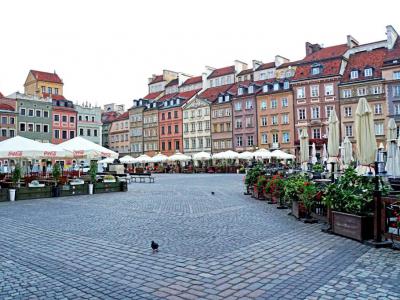
In the very center of Old Town Warsaw, you'll find the Old Town Market Place. Since the city was founded in the 13th century, merchants would meet here to sell their goods. The square has been the center of Warsaw life since, with everything from festivals to executions occurring here.
The townhouses built around the Old Town Market Place were Gothic until a fire destroyed them in 1607. Renaissance-style buildings replaced them, only to be replaced by the current late-Baroque style that you see today. There was a large town hall building here, but the German Luftwaffe destroyed it and the rest of the square during World War II.
The square was rebuilt in the 1950s, and efforts were taken to mimic its appearance from the 17th century. Each side of the square is named to an 18th-century parliamentarian. Dekert's Side on the north is named for Jan Dekert, a merchant and political activist. Barss' Side contains the Adam Mickiewicz Museum, honoring its namesake's poetry. Kollataj's Side honors Hugo Stumberg Kołłataj’s, a constitutional reformer and educationalist, while Zakrzewski's Side is named for mayor of Warsaw, nobleman, and art collector Ignacy Wyssogota Zakrzewski.
Several of the buildings on the square house the Warsaw Museum. Here, you can see collections of historical artifacts from the city that depict daily life. Their collection includes more than 300,000 objects spread over 21 themed rooms. The main entrance is in house No. 42 on Dekert's Side.
In the square, you will also see a statue of Syrenka, the "little mermaid" of Warsaw. She has appeared on the city's official coat of arms since at least the 14th century. The statue has stood here since 1855.
The townhouses built around the Old Town Market Place were Gothic until a fire destroyed them in 1607. Renaissance-style buildings replaced them, only to be replaced by the current late-Baroque style that you see today. There was a large town hall building here, but the German Luftwaffe destroyed it and the rest of the square during World War II.
The square was rebuilt in the 1950s, and efforts were taken to mimic its appearance from the 17th century. Each side of the square is named to an 18th-century parliamentarian. Dekert's Side on the north is named for Jan Dekert, a merchant and political activist. Barss' Side contains the Adam Mickiewicz Museum, honoring its namesake's poetry. Kollataj's Side honors Hugo Stumberg Kołłataj’s, a constitutional reformer and educationalist, while Zakrzewski's Side is named for mayor of Warsaw, nobleman, and art collector Ignacy Wyssogota Zakrzewski.
Several of the buildings on the square house the Warsaw Museum. Here, you can see collections of historical artifacts from the city that depict daily life. Their collection includes more than 300,000 objects spread over 21 themed rooms. The main entrance is in house No. 42 on Dekert's Side.
In the square, you will also see a statue of Syrenka, the "little mermaid" of Warsaw. She has appeared on the city's official coat of arms since at least the 14th century. The statue has stood here since 1855.

11) Museum of Warsaw (Muzeum Warszawy)
Located within the Old Town Market, this institution was established back in 1936 as the Museum of Old Warsaw. It found its initial home in three buildings that were acquired by the municipality in the market square. Unfortunately, the museum, along with its collection, suffered destruction during the Warsaw Uprising. Following World War II, the museum was revived under its current name, and its facilities were reconstructed between 1948 and 1954 as part of the extensive efforts to restore historic Warsaw.
Today, the museum houses a diverse array of collections spanning fields such as archaeology, painting, graphics, iconography, sculpture, decorative arts, numismatics, and architectural drawings. These collections now encompass over 250,000 objects. In addition to its exhibitions, the museum is known for its prolific publishing endeavors, producing numerous publications on its collections and the history of Warsaw. Furthermore, the institution plays an active role in education, offering lessons and competitions for schools, organizing conferences, and participating in significant events like "A Night at the Museum," the Science Picnic of Polish Radio and the Copernicus Science Centre, the Festival of Science, and the University of the Third Age. It also collaborates as a co-producer on documentary films centered around the capital city.
A visit to this museum offers a unique opportunity to immerse oneself in the rich essence of the captivating city of Warsaw.
Tip:
Once you get inside, it feels like a maze with lots of rooms and stairs. Don't forget to get a map as well as the well-organized audio tour (English available) so that you won't miss a single room!
Today, the museum houses a diverse array of collections spanning fields such as archaeology, painting, graphics, iconography, sculpture, decorative arts, numismatics, and architectural drawings. These collections now encompass over 250,000 objects. In addition to its exhibitions, the museum is known for its prolific publishing endeavors, producing numerous publications on its collections and the history of Warsaw. Furthermore, the institution plays an active role in education, offering lessons and competitions for schools, organizing conferences, and participating in significant events like "A Night at the Museum," the Science Picnic of Polish Radio and the Copernicus Science Centre, the Festival of Science, and the University of the Third Age. It also collaborates as a co-producer on documentary films centered around the capital city.
A visit to this museum offers a unique opportunity to immerse oneself in the rich essence of the captivating city of Warsaw.
Tip:
Once you get inside, it feels like a maze with lots of rooms and stairs. Don't forget to get a map as well as the well-organized audio tour (English available) so that you won't miss a single room!
12) City Walls (Miejskie Mury Obronne)
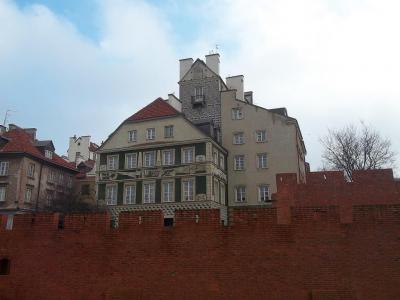
The City Walls (Miejskie Mury Obronne) represent a significant historical structure, encircling the Warsaw Old Town. These walls consist of two distinct lines - an inner and an outer line, complemented by several gates around the city. Their history dates back to between the 13th and 16th centuries, with a notable rebuilding phase occurring between 1950 and 1963, and some parts being reconstructed later.
One of the best-preserved sections of these fortifications runs parallel to Podwale Street, stretching from the Warsaw Royal Castle to the Barbican and further towards the Vistula Embankment. This part notably showcases the historical depth and architectural prowess of the walls.
The initial construction of the first line of the walls likely started around 1280, resulting in a 1,200-meter-long (3,900 feet) structure, enclosing an area of 8.5 hectares. This formidable barrier boasted numerous towers and turrets, most of which were rectangular. The inner ring of the wall was completed before 1339. By 1379, Prince Janusz I the Elder granted the townspeople a special privilege, making them responsible for the maintenance of these walls.
Further expansions and reinforcements were made in the late 15th and early 16th centuries, following a privilege granted in 1413. This phase saw the construction of the outer ring, which was approximately 4 meters shorter but about 0.6 meters thicker than the inner line. The entire structure was further protected by a 4-meter-deep (13 feet) moat encircling it.
The Barbican, designed by Jan Baptist the Venetian in 1548, is a key part of Warsaw's city defenses, dividing the New and Old Towns. In the 16th century, it was a modern military stronghold. Today, it's a popular tourist spot and hosts a summer art gallery, showcasing Warsaw's historic defensive architecture.
One of the best-preserved sections of these fortifications runs parallel to Podwale Street, stretching from the Warsaw Royal Castle to the Barbican and further towards the Vistula Embankment. This part notably showcases the historical depth and architectural prowess of the walls.
The initial construction of the first line of the walls likely started around 1280, resulting in a 1,200-meter-long (3,900 feet) structure, enclosing an area of 8.5 hectares. This formidable barrier boasted numerous towers and turrets, most of which were rectangular. The inner ring of the wall was completed before 1339. By 1379, Prince Janusz I the Elder granted the townspeople a special privilege, making them responsible for the maintenance of these walls.
Further expansions and reinforcements were made in the late 15th and early 16th centuries, following a privilege granted in 1413. This phase saw the construction of the outer ring, which was approximately 4 meters shorter but about 0.6 meters thicker than the inner line. The entire structure was further protected by a 4-meter-deep (13 feet) moat encircling it.
The Barbican, designed by Jan Baptist the Venetian in 1548, is a key part of Warsaw's city defenses, dividing the New and Old Towns. In the 16th century, it was a modern military stronghold. Today, it's a popular tourist spot and hosts a summer art gallery, showcasing Warsaw's historic defensive architecture.
13) Warsaw Barbican (Barbakan warszawski)
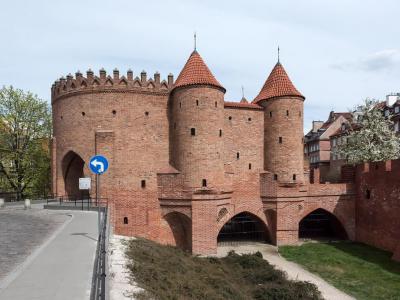
The Warsaw Barbican is one of the last remaining relics of the extensive network of walls, fortifications, and gates that once surrounded the city. It was built in 1540 and designed by Italian Renaissance architect Jan Baptist the Venetian. It replaced a gate on Nowomiejska Street.
In the 16th century, while Jan Baptist was living and working in Mazovia, the city's 14th-century walls were in disrepair. The barbican was part of his revitalization project. It took shape as a three-level semicircular bastion that was 14 meters wide and 15 meters tall. There was also a 30-meter-wide moat around the outside of the city walls.
Unfortunately, by the time the barbican was completed, it had become obsolete. Artillery technology had advanced considerably. It was used for its designed defensive purpose only once during the Swedish Invasion in 1656. Over the following years, the barbican was partially dismantled and modified to allow for a larger gate into the city. In the 1800s, part of the structure was incorporated into new apartment buildings.
Like many other Warsaw buildings, the barbican was more or less destroyed during World War II. It was rebuilt in the 1950s from 17th-century etchings. The Museum of Warsaw operates The Barbican. For more information about the history of the city, visit them in Old Town Market Place.
In the 16th century, while Jan Baptist was living and working in Mazovia, the city's 14th-century walls were in disrepair. The barbican was part of his revitalization project. It took shape as a three-level semicircular bastion that was 14 meters wide and 15 meters tall. There was also a 30-meter-wide moat around the outside of the city walls.
Unfortunately, by the time the barbican was completed, it had become obsolete. Artillery technology had advanced considerably. It was used for its designed defensive purpose only once during the Swedish Invasion in 1656. Over the following years, the barbican was partially dismantled and modified to allow for a larger gate into the city. In the 1800s, part of the structure was incorporated into new apartment buildings.
Like many other Warsaw buildings, the barbican was more or less destroyed during World War II. It was rebuilt in the 1950s from 17th-century etchings. The Museum of Warsaw operates The Barbican. For more information about the history of the city, visit them in Old Town Market Place.
14) St. Hyacinth's Church
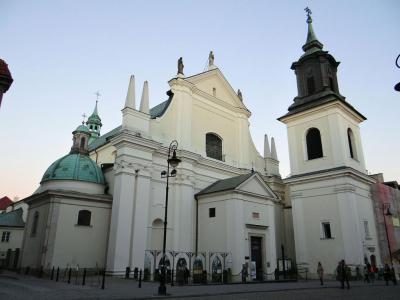
Saint Hyacinth’s Church stands as a prominent tourist destination in Warsaw, showcasing splendid Baroque architecture that came into being during the years 1603 to 1639, courtesy of the Dominican order. This architectural masterpiece boasts an immaculate white interior, designed by none other than the renowned architect Joannes Italus.
The Chapel of Saint Dominic, an integral part of this church, was skillfully crafted by Tylman Van Gameren, a prominent architect of the seventeenth century in Poland. This chapel is intricately connected to Warsaw's largest monastery and remarkably stands as one of the few sections of the church that managed to survive the ravages of war.
In the eighteenth century, Saint Hyacinth’s Church experienced a period of great prosperity. During this time, it housed Poland's most opulent collection of volumines within the monastery's library. Unfortunately, this precious collection met its demise in later years, leaving behind only memories of its grandeur.
While the interior of the church has undergone modernization, with none of its original furnishings retained, its exterior façade remains a splendid example of Baroque architecture. Noteworthy within its hallowed walls are several prominent tomb monuments, including the striking tomb of Anna Tarnowska, carved in 1616 from brown marble, portraying the founder in a peaceful slumber. The Kararzyna Ossoliska monument, dating back to 1607, and the black marble epitaph commemorating a prosperous Polish merchant from Krakow, Regina Sroczyska, are among other notable features.
Within the confines of the Chapel of Saint Dominic, visitors can lay their eyes upon a precious 18th-century wooden statue of Ecce Homo, a masterpiece painstakingly crafted by Antoni Asiski. The chapel further boasts a grand altar crafted from black marble, a porta, and exquisite stucco decorations that add to the church's overall splendor.
The Chapel of Saint Dominic, an integral part of this church, was skillfully crafted by Tylman Van Gameren, a prominent architect of the seventeenth century in Poland. This chapel is intricately connected to Warsaw's largest monastery and remarkably stands as one of the few sections of the church that managed to survive the ravages of war.
In the eighteenth century, Saint Hyacinth’s Church experienced a period of great prosperity. During this time, it housed Poland's most opulent collection of volumines within the monastery's library. Unfortunately, this precious collection met its demise in later years, leaving behind only memories of its grandeur.
While the interior of the church has undergone modernization, with none of its original furnishings retained, its exterior façade remains a splendid example of Baroque architecture. Noteworthy within its hallowed walls are several prominent tomb monuments, including the striking tomb of Anna Tarnowska, carved in 1616 from brown marble, portraying the founder in a peaceful slumber. The Kararzyna Ossoliska monument, dating back to 1607, and the black marble epitaph commemorating a prosperous Polish merchant from Krakow, Regina Sroczyska, are among other notable features.
Within the confines of the Chapel of Saint Dominic, visitors can lay their eyes upon a precious 18th-century wooden statue of Ecce Homo, a masterpiece painstakingly crafted by Antoni Asiski. The chapel further boasts a grand altar crafted from black marble, a porta, and exquisite stucco decorations that add to the church's overall splendor.
15) Monument to the Warsaw Uprising Fighters
The Warsaw Uprising was a pivotal moment in World War II for Poland. From August until October in 1944, the underground Polish resistance movement and the Home Army fought to retake Warsaw from the Germans. The uprising was timed to coincide with the German retreat from Poland as the Soviets advanced.
Being against the communist party, the resistance was not supported by the Soviet troops who stopped short of the town. Their pause allowed the Germans to regroup and defeat the uprising. In retaliation, the German troops destroyed virtually every building in Warsaw, spending the remainder of 1944 pillaging and looting the city before leaving it abandoned. The Soviets, who held their position outside of town and prevented Allied support from reaching Warsaw, only retook the town only after the Germans had left.
For many years after the war, the significance of the uprising was downplayed. Communist propaganda condemned the Home Army and their insurgent actions.
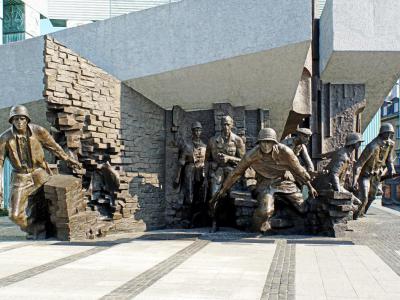
The monument to the tragic events was unveiled in 1989 on the 45th anniversary of the uprising. Wincenty Kucma and architect Jacek Budyn sculpted it. The monument is located just outside the Palace of Justice, the seat of the Polish Supreme Court.
If you'd like to learn a little more about the 1944 Uprising, don't miss the Warsaw Rising Museum. The museum's exhibits depict the fighting and everyday life during the uprising and cover the political issues and post-war Communist regime.
Being against the communist party, the resistance was not supported by the Soviet troops who stopped short of the town. Their pause allowed the Germans to regroup and defeat the uprising. In retaliation, the German troops destroyed virtually every building in Warsaw, spending the remainder of 1944 pillaging and looting the city before leaving it abandoned. The Soviets, who held their position outside of town and prevented Allied support from reaching Warsaw, only retook the town only after the Germans had left.
For many years after the war, the significance of the uprising was downplayed. Communist propaganda condemned the Home Army and their insurgent actions.
The monument to the tragic events was unveiled in 1989 on the 45th anniversary of the uprising. Wincenty Kucma and architect Jacek Budyn sculpted it. The monument is located just outside the Palace of Justice, the seat of the Polish Supreme Court.
If you'd like to learn a little more about the 1944 Uprising, don't miss the Warsaw Rising Museum. The museum's exhibits depict the fighting and everyday life during the uprising and cover the political issues and post-war Communist regime.
16) Krasiński Palace
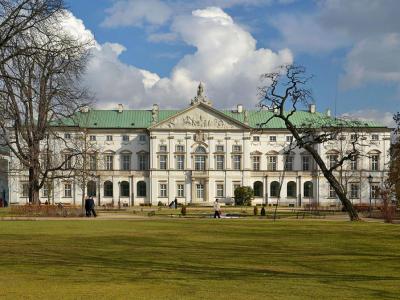
Sometimes called the Palace of the Commonwealth, Krasiński Palace was built between 1677 and 1683 and reconstructed after World War II. It was initially designed and built for the Voivode of Plock, Jan Dobrogost Krasiński.
Krasiński came from an old Mazovian noble family. He was heir to a large fortune, and he was interested in French culture and architecture. He hired French artists for the work on his home, in addition to Michelangelo Palloni, who did the frescoes.
The palace was purchased by the state in 1765 and turned into the Treasury Commission and later the Supreme Court of Poland's home. It was burned down and mostly demolished during the German occupation of Poland during World War II. The Germans deliberately destroyed most of the artwork housed in the palace during the Warsaw Uprising; today, the collection contains only about five percent of its former catalog.
Today Krasiński Palace is part of the Polish National Library's Special Collections Section. The garden is a beautiful place to take a walk, look for the Baroque gate from Bohaterów Getta Street. The gardens are made up of a public park with fountains, walking paths, and many monuments. If you're visiting Krasiński Palace, take a detour across the street to visit the Warsaw Uprising Fighters monument.
Krasiński came from an old Mazovian noble family. He was heir to a large fortune, and he was interested in French culture and architecture. He hired French artists for the work on his home, in addition to Michelangelo Palloni, who did the frescoes.
The palace was purchased by the state in 1765 and turned into the Treasury Commission and later the Supreme Court of Poland's home. It was burned down and mostly demolished during the German occupation of Poland during World War II. The Germans deliberately destroyed most of the artwork housed in the palace during the Warsaw Uprising; today, the collection contains only about five percent of its former catalog.
Today Krasiński Palace is part of the Polish National Library's Special Collections Section. The garden is a beautiful place to take a walk, look for the Baroque gate from Bohaterów Getta Street. The gardens are made up of a public park with fountains, walking paths, and many monuments. If you're visiting Krasiński Palace, take a detour across the street to visit the Warsaw Uprising Fighters monument.
