

Audio Guide: Basseterre Introduction Walking Tour (Self Guided), Basseterre
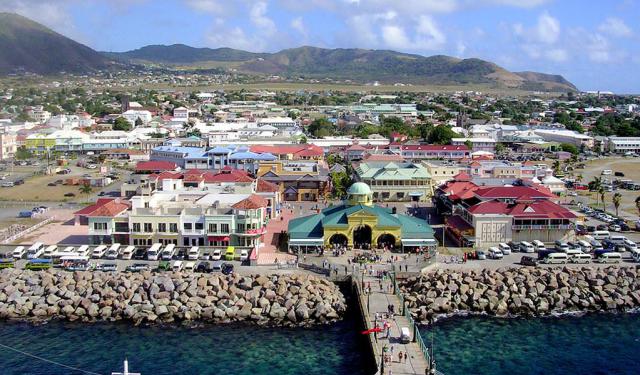
Basseterre is the capital city of the Federation of Saint Christopher (commonly known as Saint Kitts) and Nevis, two small islands in the Caribbean nestled between Antigua and Saint Maarten. The city has one of the most tragic histories of any Caribbean capital, destroyed many times by colonial wars, fire, earthquakes, floods, riots, and hurricanes. Despite all this, however, it is incredibly beautiful and has something to get everyone’s holiday vibe going.
The name "Basseterre" is of French origin. It translates to "lowland," reflecting the city's coastal location, low-lying within the large Basseterre Valley, almost completely surrounded by lush green hills and mountains. The name can also be attributed to the island's advantageous positioning, sheltered from prevailing winds and providing a secure harbor for anchorage.
Basseterre was founded in 1627 as the capital of the French colony of Saint-Christophe. By 1639, it had grown into a large, successful port, commanding Eastern Caribbean trade and colonization.
The city soon became the capital of the entire French West Indies colony, comprising the islands of Guadeloupe and Martinique, and remained so until 1660. Following the expulsion of the French from the island and the establishment of full British control, Basseterre was made the capital of Saint Kitts in 1727.
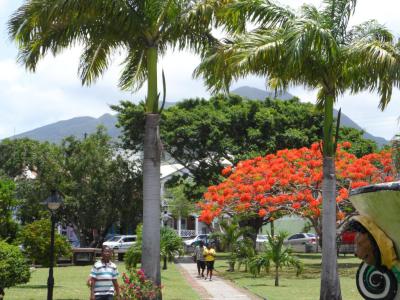
A considerable number of well-restored buildings in the center of the city reveal colonial heritage and cultural influences, seamlessly blending European and Caribbean elements. Most of Basseterre's architecture was built after the great fire of 1867. The Circus was modelled after Piccadilly Circus in London, with the fountain in the center, added in 1883, dedicated to The Honorable Thomas Berkeley, the British colonial official.
Port Zante, a bustling waterfront development, serves as a gateway for tourists, offering shopping, dining, and entertainment options. For those interested in delving deeper into the island's past, the National Museum of Saint Kitts showcases artifacts and documents spanning centuries of history.
Independence Square, once a slave market, now serves as a central gathering place and a symbol of freedom and independence. The grandeur of religious architecture is on display at the Basseterre Co-Cathedral of Immaculate Conception and Saint George's Anglican Church, both exemplifying the island's spiritual heritage.
A captivating blend of history and natural beauty, the enchanting capital of Saint Kitts and Nevis promises an unforgettable journey filled with warmth and discovery. If you're yearning for a taste of Caribbean adventure and hospitality, embark on this self-guided walk in Basseterre and enjoy yourself!
The name "Basseterre" is of French origin. It translates to "lowland," reflecting the city's coastal location, low-lying within the large Basseterre Valley, almost completely surrounded by lush green hills and mountains. The name can also be attributed to the island's advantageous positioning, sheltered from prevailing winds and providing a secure harbor for anchorage.
Basseterre was founded in 1627 as the capital of the French colony of Saint-Christophe. By 1639, it had grown into a large, successful port, commanding Eastern Caribbean trade and colonization.
The city soon became the capital of the entire French West Indies colony, comprising the islands of Guadeloupe and Martinique, and remained so until 1660. Following the expulsion of the French from the island and the establishment of full British control, Basseterre was made the capital of Saint Kitts in 1727.
A considerable number of well-restored buildings in the center of the city reveal colonial heritage and cultural influences, seamlessly blending European and Caribbean elements. Most of Basseterre's architecture was built after the great fire of 1867. The Circus was modelled after Piccadilly Circus in London, with the fountain in the center, added in 1883, dedicated to The Honorable Thomas Berkeley, the British colonial official.
Port Zante, a bustling waterfront development, serves as a gateway for tourists, offering shopping, dining, and entertainment options. For those interested in delving deeper into the island's past, the National Museum of Saint Kitts showcases artifacts and documents spanning centuries of history.
Independence Square, once a slave market, now serves as a central gathering place and a symbol of freedom and independence. The grandeur of religious architecture is on display at the Basseterre Co-Cathedral of Immaculate Conception and Saint George's Anglican Church, both exemplifying the island's spiritual heritage.
A captivating blend of history and natural beauty, the enchanting capital of Saint Kitts and Nevis promises an unforgettable journey filled with warmth and discovery. If you're yearning for a taste of Caribbean adventure and hospitality, embark on this self-guided walk in Basseterre and enjoy yourself!
How it works: Download the app "GPSmyCity: Walks in 1K+ Cities" from Apple App Store or Google Play Store to your mobile phone or tablet. The app turns your mobile device into a personal tour guide and its built-in GPS navigation functions guide you from one tour stop to next. The app works offline, so no data plan is needed when traveling abroad.
Basseterre Introduction Walking Tour Map
Guide Name: Basseterre Introduction Walking Tour
Guide Location: St Kitts and Nevis » Basseterre (See other walking tours in Basseterre)
Guide Type: Self-guided Walking Tour (Sightseeing)
# of Attractions: 8
Tour Duration: 1 Hour(s)
Travel Distance: 1.7 Km or 1.1 Miles
Author: DanaOffice
Sight(s) Featured in This Guide:
Guide Location: St Kitts and Nevis » Basseterre (See other walking tours in Basseterre)
Guide Type: Self-guided Walking Tour (Sightseeing)
# of Attractions: 8
Tour Duration: 1 Hour(s)
Travel Distance: 1.7 Km or 1.1 Miles
Author: DanaOffice
Sight(s) Featured in This Guide:
- Port Zante
- Amina Craft Market
- National Museum of Saint Kitts
- The Circus and Berkeley Memorial
- Independence Square
- Basseterre Co-Cathedral of Immaculate Conception
- St. George's Anglican Church
- Public Market
1) Port Zante
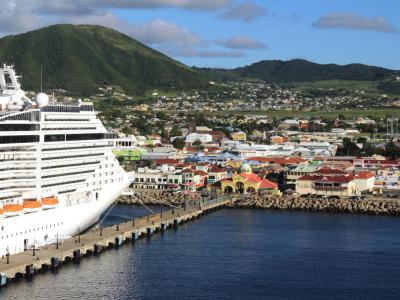
Port Zante, nestled in the heart of Basseterre, stands as a radiant world-class port that serves as an elegant gateway to the historic town. With its beautiful promenades and sophisticated shops, Port Zante offers visitors a seamless blend of luxury, commerce, and cultural richness.
The port boasts proximity to a marina thoughtfully designed to accommodate not only the largest cruise ships but also luxury yachts, adding to its allure as a premier maritime destination. Port Zante has been undergoing a revitalization process, bouncing back from the slowdown associated with the COVID-19 pandemic. Today, it stands re-energized and ready to welcome thousands of visitors to the picturesque shores of the Federation of St. Kitts and Nevis.
Port Zante is a true shopper's paradise, enticing visitors with a diverse array of offerings that include designer goods, jewelry, cigars, spirits, and souvenirs, all available at duty-free prices. The shopping experience is elevated by the elegant surroundings and a curated selection of high-quality products.
Culinary enthusiasts will find Port Zante to be a multicultural dining haven. The food court caters to diverse tastes, featuring an array of international culinary delights alongside a tantalizing taste of local cuisine and culture. Visitors can savor a variety of flavors, adding a culinary dimension to their overall Port Zante experience.
The port boasts proximity to a marina thoughtfully designed to accommodate not only the largest cruise ships but also luxury yachts, adding to its allure as a premier maritime destination. Port Zante has been undergoing a revitalization process, bouncing back from the slowdown associated with the COVID-19 pandemic. Today, it stands re-energized and ready to welcome thousands of visitors to the picturesque shores of the Federation of St. Kitts and Nevis.
Port Zante is a true shopper's paradise, enticing visitors with a diverse array of offerings that include designer goods, jewelry, cigars, spirits, and souvenirs, all available at duty-free prices. The shopping experience is elevated by the elegant surroundings and a curated selection of high-quality products.
Culinary enthusiasts will find Port Zante to be a multicultural dining haven. The food court caters to diverse tastes, featuring an array of international culinary delights alongside a tantalizing taste of local cuisine and culture. Visitors can savor a variety of flavors, adding a culinary dimension to their overall Port Zante experience.
2) Amina Craft Market
The Amina Craft Market offers a refreshing departure from conventional souvenir shopping, providing visitors with a vibrant and diverse array of locally crafted treasures. Located strategically near Port Zante, it beckons cruise ship passengers and tourists alike to explore its pastel-pink stalls adorned with an enticing assortment of artisanal products.
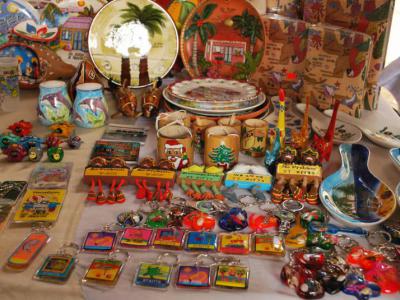
As you step into the Amina Craft Market, you'll be greeted by a kaleidoscope of batik fabrics and clothing, each stall a testament to the skill and creativity of local artists. The market is a treasure trove of handcrafted items, including pottery, bags, jewelry, and unique keepsakes that capture the essence of St Kitts and Nevis.
One of the market's distinctive features is its friendly atmosphere, where vendors, some of whom are the artists themselves, provide a warm welcome without employing aggressive sales tactics. While exploring the stalls, you might find that some vendors are open to negotiating prices, adding an element of flexibility to your shopping experience.
If you’re looking for gifts to take home or hoping to find a special keepsake from your trip, the Amina Craft Market offers a curated selection of local products. Visitors can browse delicate embroideries, beautiful batiks, and colorful paintings that capture island life, all highlighting the creativity and craftsmanship of artisans from St. Kitts and Nevis.
As you step into the Amina Craft Market, you'll be greeted by a kaleidoscope of batik fabrics and clothing, each stall a testament to the skill and creativity of local artists. The market is a treasure trove of handcrafted items, including pottery, bags, jewelry, and unique keepsakes that capture the essence of St Kitts and Nevis.
One of the market's distinctive features is its friendly atmosphere, where vendors, some of whom are the artists themselves, provide a warm welcome without employing aggressive sales tactics. While exploring the stalls, you might find that some vendors are open to negotiating prices, adding an element of flexibility to your shopping experience.
If you’re looking for gifts to take home or hoping to find a special keepsake from your trip, the Amina Craft Market offers a curated selection of local products. Visitors can browse delicate embroideries, beautiful batiks, and colorful paintings that capture island life, all highlighting the creativity and craftsmanship of artisans from St. Kitts and Nevis.
3) National Museum of Saint Kitts (must see)
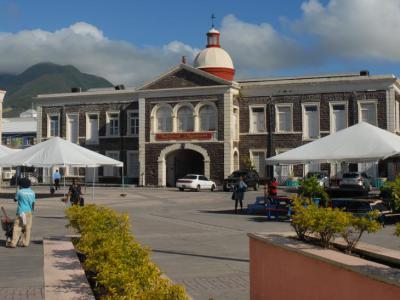
The National Museum of Saint Kitts, housed in the picturesque Old Treasury Building on the waterfront of Basseterre is dating back to 1894. It stands as a splendid example of colonial architecture with its pedimented facade, making it a fitting setting for preserving the nation's heritage.
Originally known as the gateway to the island, the Treasury Building's archway once served as the entry point for passengers arriving by ship. Over the years, it has undergone a transformation and now serves as a repository of the nation's history and culture. The museum is managed by the Saint Christopher National Trust and offers visitors a comprehensive overview of the islands' diverse heritage.
Lady Haynes-Smith laid the foundation stone for the Treasury Building in 1894, marking the beginning of its legacy. The two-story stone structure exhibits a distinctive blend of Georgian architecture adapted to the Caribbean context. Its axial relationship to Fort Street and the former Treasury Pier further enhances its historical significance.
During the late 19th century, when a new Treasury was deemed necessary, the building was financed through the unused passage monies contributed by planters who imported indentured labor from Madeira, Portugal. This labor force was initially brought to address the island's labor shortage issues following Emancipation and Apprenticeship in 1838. Many Portuguese laborers chose to stay on the island, contributing to its cultural diversity.
Constructed by a contracting firm from Barbados using local stone, the completed Treasury Building housed various government departments, including the Administrator's Office, after its completion. Today, this architectural gem is home to the National Museum of Saint Kitts, inviting visitors to explore and appreciate the vibrant history, cultural heritage, and contributions of St Kitts and Nevis.
Originally known as the gateway to the island, the Treasury Building's archway once served as the entry point for passengers arriving by ship. Over the years, it has undergone a transformation and now serves as a repository of the nation's history and culture. The museum is managed by the Saint Christopher National Trust and offers visitors a comprehensive overview of the islands' diverse heritage.
Lady Haynes-Smith laid the foundation stone for the Treasury Building in 1894, marking the beginning of its legacy. The two-story stone structure exhibits a distinctive blend of Georgian architecture adapted to the Caribbean context. Its axial relationship to Fort Street and the former Treasury Pier further enhances its historical significance.
During the late 19th century, when a new Treasury was deemed necessary, the building was financed through the unused passage monies contributed by planters who imported indentured labor from Madeira, Portugal. This labor force was initially brought to address the island's labor shortage issues following Emancipation and Apprenticeship in 1838. Many Portuguese laborers chose to stay on the island, contributing to its cultural diversity.
Constructed by a contracting firm from Barbados using local stone, the completed Treasury Building housed various government departments, including the Administrator's Office, after its completion. Today, this architectural gem is home to the National Museum of Saint Kitts, inviting visitors to explore and appreciate the vibrant history, cultural heritage, and contributions of St Kitts and Nevis.
4) The Circus and Berkeley Memorial
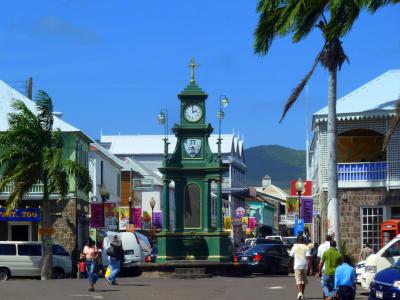
The Berkeley Memorial is a prominent monument situated in the center of the Circus, a historic square in Basseterre. This memorial, erected in honor of Thomas Berkeley, pays tribute to his contributions as a former president of the General Legislative Council during the 1880s. The structure is a remarkable combination of a drinking fountain and a clock, serving both functional and commemorative purposes.
The memorial, designed and built by George Smith and Co. from Glasgow, Scotland, stands as a testament to the craftsmanship and artistry of its creators. It is noteworthy for its distinctive features, including four clock faces, each oriented toward one of the four streets leading to the Circus. This design ensures that the clock is visible and accessible from various vantage points around the square.
The memorial fountain not only serves as a decorative element but also carries historical significance. While two other similar structures were produced by George Smith and Co., the Berkeley Memorial in Saint Kitts and Nevis is the sole survivor. Its presence in the Circus contributes to the historical charm of the area, inviting both locals and visitors to appreciate its architectural beauty and the legacy it represents.
The memorial, designed and built by George Smith and Co. from Glasgow, Scotland, stands as a testament to the craftsmanship and artistry of its creators. It is noteworthy for its distinctive features, including four clock faces, each oriented toward one of the four streets leading to the Circus. This design ensures that the clock is visible and accessible from various vantage points around the square.
The memorial fountain not only serves as a decorative element but also carries historical significance. While two other similar structures were produced by George Smith and Co., the Berkeley Memorial in Saint Kitts and Nevis is the sole survivor. Its presence in the Circus contributes to the historical charm of the area, inviting both locals and visitors to appreciate its architectural beauty and the legacy it represents.
5) Independence Square (must see)
Independence Square, originally known as Pall Mall Square, was renamed to commemorate St. Kitts and Nevis achieving independence on September 19, 1983. The square dates back to 1750 and has long served as the administrative, commercial, and social heart of Basseterre. Over the centuries, it has been a central gathering place for both locals and visitors, witnessing the evolution of the city from a colonial hub to a modern capital.
A significant part of Independence Square’s history is its connection to the transatlantic slave trade. The location where a fountain now stands was once a market where enslaved men, women, and children were sold. On the south side of the square, the basement of one building, still visible today, was used to temporarily hold enslaved Africans. The space, fitted with barred windows, likely functioned as an auction house. Its low-lying location—reflected in the name Basseterre, meaning “low land”—made it prone to flooding, adding to the harsh conditions faced by those imprisoned there.
The square was also a center for the business activities of slave traders, including those along Liverpool Row, where the buying and selling of enslaved individuals took place. These operations cemented Independence Square’s role in the island’s colonial history.
Today, Independence Square blends its historical significance with modern life. Visitors can explore the area, learning about its past while observing the vibrant commerce and daily life of Basseterre. The square offers an opportunity to reflect on the island’s history and its journey toward freedom, making it a meaningful stop for anyone visiting St. Kitts.
A significant part of Independence Square’s history is its connection to the transatlantic slave trade. The location where a fountain now stands was once a market where enslaved men, women, and children were sold. On the south side of the square, the basement of one building, still visible today, was used to temporarily hold enslaved Africans. The space, fitted with barred windows, likely functioned as an auction house. Its low-lying location—reflected in the name Basseterre, meaning “low land”—made it prone to flooding, adding to the harsh conditions faced by those imprisoned there.
The square was also a center for the business activities of slave traders, including those along Liverpool Row, where the buying and selling of enslaved individuals took place. These operations cemented Independence Square’s role in the island’s colonial history.
Today, Independence Square blends its historical significance with modern life. Visitors can explore the area, learning about its past while observing the vibrant commerce and daily life of Basseterre. The square offers an opportunity to reflect on the island’s history and its journey toward freedom, making it a meaningful stop for anyone visiting St. Kitts.
6) Basseterre Co-Cathedral of Immaculate Conception (must see)
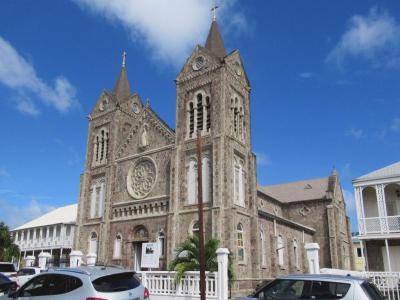
The Basseterre Co-Cathedral of the Immaculate Conception has a rich history that dates back to the early stages of the French occupation of Basseterre.
During this period, a Roman Catholic church was constructed in the town by the Jesuits and dedicated to Our Lady. This church, named Notre Dame, suffered destruction in 1706 during the Anglo-French War when English soldiers, billeted in the area, set it ablaze. Following this unfortunate event, the church was reconstructed by 1710 and renamed Saint George's. In the 1720s, it transitioned into a place of worship for the Anglican community.
After the English took control of the island in 1713, Roman Catholics faced restrictions and were forbidden by law to worship in public. It wasn't until the passage of an Act in 1829 that lifted these restrictions, leading to a revival of Roman Catholicism. The growth of the Roman Catholic community received a substantial boost with the arrival of Portuguese migrants from Madeira starting in 1835. Around 1856, a church called the Church of the Immaculate Conception was built, marking a pivotal moment in the resurgence of Roman Catholicism on the island.
In 1927, the original church was demolished and replaced by a modern edifice on the same site on East Square Street. This new church, designed by Father Claeys, an architect of repute, was dedicated on December 6, 1928. The cathedral, known as the Basseterre Co-Cathedral of the Immaculate Conception, has since served as a spiritual center for the Roman Catholic community in Basseterre. Additionally, the Formation House, which housed Catholic nuns, and the Manse, serving as the residence for priests, contributed to the religious life of the community.
During this period, a Roman Catholic church was constructed in the town by the Jesuits and dedicated to Our Lady. This church, named Notre Dame, suffered destruction in 1706 during the Anglo-French War when English soldiers, billeted in the area, set it ablaze. Following this unfortunate event, the church was reconstructed by 1710 and renamed Saint George's. In the 1720s, it transitioned into a place of worship for the Anglican community.
After the English took control of the island in 1713, Roman Catholics faced restrictions and were forbidden by law to worship in public. It wasn't until the passage of an Act in 1829 that lifted these restrictions, leading to a revival of Roman Catholicism. The growth of the Roman Catholic community received a substantial boost with the arrival of Portuguese migrants from Madeira starting in 1835. Around 1856, a church called the Church of the Immaculate Conception was built, marking a pivotal moment in the resurgence of Roman Catholicism on the island.
In 1927, the original church was demolished and replaced by a modern edifice on the same site on East Square Street. This new church, designed by Father Claeys, an architect of repute, was dedicated on December 6, 1928. The cathedral, known as the Basseterre Co-Cathedral of the Immaculate Conception, has since served as a spiritual center for the Roman Catholic community in Basseterre. Additionally, the Formation House, which housed Catholic nuns, and the Manse, serving as the residence for priests, contributed to the religious life of the community.
7) St. George's Anglican Church (must see)
Saint George's Anglican Church is situated on the site of the former Catholic Church, Notre Dame, which met a tragic fate when it was set ablaze by English soldiers in 1706 during the conflict. Following this event, in 1710, it was reconstructed as an Anglican church and christened Saint George's in honor of the patron saint. However, the challenges for the church were far from over.
Saint George's faced further adversity when it suffered fire damage in 1763, followed by a series of earthquakes and hurricanes between 1831 and 1843. Undeterred by these setbacks, the church underwent a process of reconstruction. In October 1844, the foundation stone was laid, and the church was rebuilt, completing the process in March 1859.
Unfortunately, the challenges persisted, and seven years later, in 1866, a devastating fire swept through Basseterre, consuming the church along with much of the town. Despite this setback, the indomitable spirit of the community prevailed, and the rebuilding process commenced once again. The reconstructed Saint George's Anglican Church was completed in 1869 and has stood the test of time ever since.
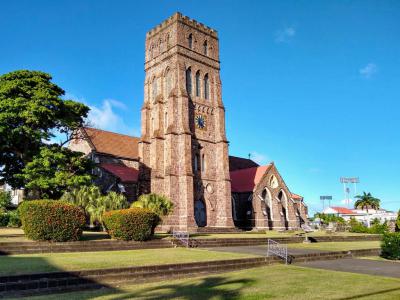
One of Saint George’s most recognizable features is its large square tower, which rises prominently above Basseterre and is visible from many points around the town. The tower was designed both as a visual landmark and as a practical guide for residents, historically helping people orient themselves within the town. Its strong, square structure reflects the architectural needs of the time, built to withstand hurricanes, earthquakes, and other natural events.
Saint George's faced further adversity when it suffered fire damage in 1763, followed by a series of earthquakes and hurricanes between 1831 and 1843. Undeterred by these setbacks, the church underwent a process of reconstruction. In October 1844, the foundation stone was laid, and the church was rebuilt, completing the process in March 1859.
Unfortunately, the challenges persisted, and seven years later, in 1866, a devastating fire swept through Basseterre, consuming the church along with much of the town. Despite this setback, the indomitable spirit of the community prevailed, and the rebuilding process commenced once again. The reconstructed Saint George's Anglican Church was completed in 1869 and has stood the test of time ever since.
One of Saint George’s most recognizable features is its large square tower, which rises prominently above Basseterre and is visible from many points around the town. The tower was designed both as a visual landmark and as a practical guide for residents, historically helping people orient themselves within the town. Its strong, square structure reflects the architectural needs of the time, built to withstand hurricanes, earthquakes, and other natural events.
8) Public Market
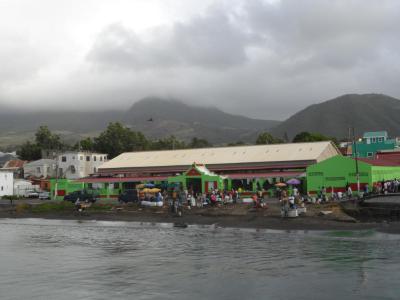
The Basseterre Public Market is a lively center of local commerce and a favorite gathering spot for both residents and visitors. Unlike the traditional straw markets, which focus on handicrafts and souvenirs, the Public Market highlights locally sourced goods, offering an authentic look at the flavors and produce of St. Kitts and Nevis. Walking through the market, visitors can experience a vibrant atmosphere where farmers, fishermen, and small vendors proudly display fresh fruits, vegetables, spices, and seafood. The interactions with local sellers provide a chance to learn about the products, the island’s agricultural traditions, and even cooking tips from those who know the land and sea best.
In recent years, the market has embraced modern convenience by offering online shopping options. Customers can now order fresh produce directly from local vendors through a digital portal, bringing the market experience to their homes and making the island’s fresh goods more accessible to a wider audience.
The Public Market has long been central to the economic and cultural life of Basseterre. It serves as a platform for local farmers and fishermen to showcase their harvests and catches, supporting livelihoods while preserving traditions that have shaped the island for generations. Beyond commerce, the market fosters a sense of community, offering a space for social interaction and connection among locals and visitors alike.
Exploring the Basseterre Public Market is more than a shopping trip—it’s an opportunity to experience the authentic flavors and vibrant spirit of St. Kitts and Nevis. From fresh fruits and vegetables to seafood straight from the ocean, the market provides a true taste of island life.
In recent years, the market has embraced modern convenience by offering online shopping options. Customers can now order fresh produce directly from local vendors through a digital portal, bringing the market experience to their homes and making the island’s fresh goods more accessible to a wider audience.
The Public Market has long been central to the economic and cultural life of Basseterre. It serves as a platform for local farmers and fishermen to showcase their harvests and catches, supporting livelihoods while preserving traditions that have shaped the island for generations. Beyond commerce, the market fosters a sense of community, offering a space for social interaction and connection among locals and visitors alike.
Exploring the Basseterre Public Market is more than a shopping trip—it’s an opportunity to experience the authentic flavors and vibrant spirit of St. Kitts and Nevis. From fresh fruits and vegetables to seafood straight from the ocean, the market provides a true taste of island life.
The Most Popular Cities
/ view all