

Audio Guide: Castries Introduction Walking Tour (Self Guided), Castries
Nobel Prize-winning poet and playwright Derek Walcott could have easily moved on from his home country, both physically and spiritually. His famous line, "The sea is history" proves otherwise. He felt a deep bond with the sea that once "cradled" him.
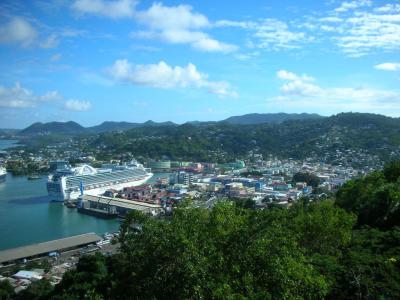
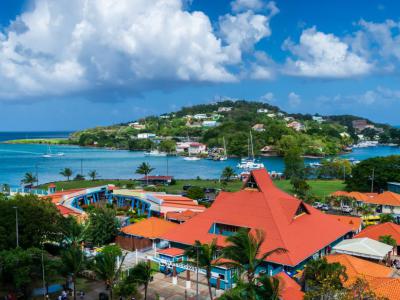
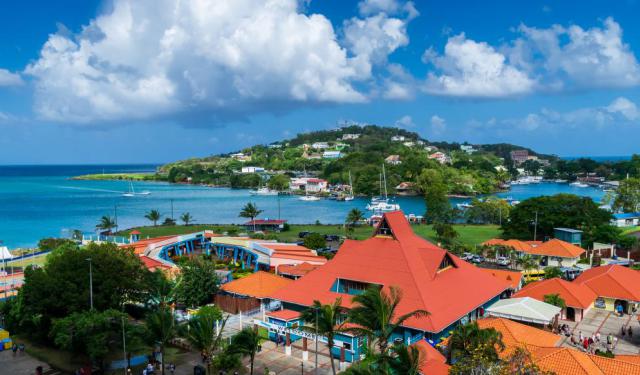
Castries, the capital of Saint Lucia, stretches along a wide, sheltered bay on the island’s northwest coast. Its name pays tribute to Charles de Castries, the French Minister of the Navy and Colonies in the late 18th century. In 1785 the French officially renamed the growing settlement “Castries,” reflecting both his influence and France’s desire to strengthen its Caribbean foothold.
Long before European ships entered the bay, the island was home to the Arawak and later the Kalinago peoples. The French first claimed Saint Lucia in 1650, establishing a settlement named Carenage near present-day Castries. The island soon became one of the most fiercely contested territories in the Caribbean. Between the 17th and 19th centuries, France and Britain fought for control no fewer than fourteen times, earning Saint Lucia the nickname “Helen of the West Indies.” Castries, with its deep natural harbor, lay at the center of this long struggle.
In 1769 Governor de Micoud undertook the formal development of the town, reclaiming mangrove swampland and laying out a street grid that still shapes the historic center. When Britain secured permanent control in 1814 under the Treaty of Paris, Castries evolved into a major colonial port and coaling station for transatlantic steamships. Its deep bay made it an essential naval stopover for the Royal Navy, while the island’s sugar economy fed commercial growth. The surrounding hills—including Morne Fortuné —were fortified to protect the harbor from rival powers.
Castries’ appearance has changed dramatically over time, shaped by conflict, disaster, and rebuilding. A devastating fire in 1813 destroyed much of the early town, and the Great Fire of 1948 obliterated nearly 80 percent of its buildings. Postwar reconstruction introduced modern concrete architecture and wider streets, giving Castries much of its present-day character. Only a few colonial-era structures survived the blaze.
A walk through Castries reveals a lively Caribbean capital filled with color and movement. Visitors encounter the bustling Castries Market with its spices and crafts, the landmark Cathedral Basilica with its painted interior, and Derek Walcott Square shaded by centuries-old trees. Along the waterfront, the busy harbor frames views of ships and fishing boats, while nearby streets offer boutiques, murals, and the rhythm of island life unfolding in restaurants and open-air stalls.
As your walk comes to an end, return to the shoreline. In its shifting reflections, you may find what Derek Walcott understood so well: here, the sea doesn’t just shape the city’s story — it is the story.
Castries, the capital of Saint Lucia, stretches along a wide, sheltered bay on the island’s northwest coast. Its name pays tribute to Charles de Castries, the French Minister of the Navy and Colonies in the late 18th century. In 1785 the French officially renamed the growing settlement “Castries,” reflecting both his influence and France’s desire to strengthen its Caribbean foothold.
Long before European ships entered the bay, the island was home to the Arawak and later the Kalinago peoples. The French first claimed Saint Lucia in 1650, establishing a settlement named Carenage near present-day Castries. The island soon became one of the most fiercely contested territories in the Caribbean. Between the 17th and 19th centuries, France and Britain fought for control no fewer than fourteen times, earning Saint Lucia the nickname “Helen of the West Indies.” Castries, with its deep natural harbor, lay at the center of this long struggle.
In 1769 Governor de Micoud undertook the formal development of the town, reclaiming mangrove swampland and laying out a street grid that still shapes the historic center. When Britain secured permanent control in 1814 under the Treaty of Paris, Castries evolved into a major colonial port and coaling station for transatlantic steamships. Its deep bay made it an essential naval stopover for the Royal Navy, while the island’s sugar economy fed commercial growth. The surrounding hills—including Morne Fortuné —were fortified to protect the harbor from rival powers.
Castries’ appearance has changed dramatically over time, shaped by conflict, disaster, and rebuilding. A devastating fire in 1813 destroyed much of the early town, and the Great Fire of 1948 obliterated nearly 80 percent of its buildings. Postwar reconstruction introduced modern concrete architecture and wider streets, giving Castries much of its present-day character. Only a few colonial-era structures survived the blaze.
A walk through Castries reveals a lively Caribbean capital filled with color and movement. Visitors encounter the bustling Castries Market with its spices and crafts, the landmark Cathedral Basilica with its painted interior, and Derek Walcott Square shaded by centuries-old trees. Along the waterfront, the busy harbor frames views of ships and fishing boats, while nearby streets offer boutiques, murals, and the rhythm of island life unfolding in restaurants and open-air stalls.
As your walk comes to an end, return to the shoreline. In its shifting reflections, you may find what Derek Walcott understood so well: here, the sea doesn’t just shape the city’s story — it is the story.
How it works: Download the app "GPSmyCity: Walks in 1K+ Cities" from Apple App Store or Google Play Store to your mobile phone or tablet. The app turns your mobile device into a personal tour guide and its built-in GPS navigation functions guide you from one tour stop to next. The app works offline, so no data plan is needed when traveling abroad.
Castries Introduction Walking Tour Map
Guide Name: Castries Introduction Walking Tour
Guide Location: St Lucia » Castries (See other walking tours in Castries)
Guide Type: Self-guided Walking Tour (Sightseeing)
# of Attractions: 9
Tour Duration: 2 Hour(s)
Travel Distance: 2.7 Km or 1.7 Miles
Author: DanaOffice
Sight(s) Featured in This Guide:
Guide Location: St Lucia » Castries (See other walking tours in Castries)
Guide Type: Self-guided Walking Tour (Sightseeing)
# of Attractions: 9
Tour Duration: 2 Hour(s)
Travel Distance: 2.7 Km or 1.7 Miles
Author: DanaOffice
Sight(s) Featured in This Guide:
- La Place Carenage Cruise Port Terminal
- La Place Carenage Shopping Mall
- Central Library
- Derek Walcott Square
- Cathedral Basilica of the Immaculate Conception
- Castries Market and Vendor's Arcade
- Holy Trinity Anglican Church
- Duty Free Pointe Seraphine
- Antillia Brewing Company Bar
1) La Place Carenage Cruise Port Terminal
Saint Lucia’s main cruise port features two primary piers and terminals, each offering a slightly different experience for arriving passengers. La Place Carenage Cruise Port Terminal is located in downtown Castries, while the Pointe Seraphine Cruise Port Terminal sits across the bay on the northern side.
Although the bay is large, very big cruise ships such as the Queen Mary II may anchor outside due to their size. Passengers are then brought ashore by tender boats, arriving at La Place Carenage, where they can easily begin exploring the city.
Once you step off the ship at La Place Carenage, you’re right in the heart of Castries. The downtown area is lively and compact, making it simple to explore on foot. Colorful shops, local vendors, and busy streets create an inviting atmosphere for visitors looking to experience everyday island life.
From the terminal, you can walk to several key points of interest. Castries Market is nearby and offers local crafts, fresh produce, and handmade goods. Derek Walcott Square provides a pleasant place to pause, surrounded by historic buildings and shaded pathways. The waterfront promenade is another enjoyable route, offering open views of the bay as you walk along.
Although the bay is large, very big cruise ships such as the Queen Mary II may anchor outside due to their size. Passengers are then brought ashore by tender boats, arriving at La Place Carenage, where they can easily begin exploring the city.
Once you step off the ship at La Place Carenage, you’re right in the heart of Castries. The downtown area is lively and compact, making it simple to explore on foot. Colorful shops, local vendors, and busy streets create an inviting atmosphere for visitors looking to experience everyday island life.
From the terminal, you can walk to several key points of interest. Castries Market is nearby and offers local crafts, fresh produce, and handmade goods. Derek Walcott Square provides a pleasant place to pause, surrounded by historic buildings and shaded pathways. The waterfront promenade is another enjoyable route, offering open views of the bay as you walk along.
2) La Place Carenage Shopping Mall
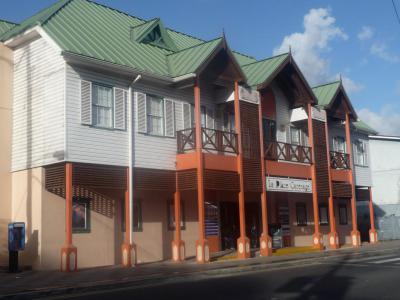
Located on the south side of Castries Harbor, close to the pier and bustling markets, La Place Carenage becomes especially lively when a cruise ship is in port.
The mall features a broad mix of shops, ranging from luxury boutiques to stores selling locally made souvenirs and artwork. Visitors can browse for fashion, jewelry, and accessories, or pick up handmade crafts, spices, and small gifts that reflect Saint Lucia’s cultural traditions. There are good bargains to be found on wood carvings, paintings, baskets, clothing, and more—but be prepared to negotiate for a better price.
After browsing the shops, you can take a break at one of the mall’s dining spots. Options include local Caribbean dishes as well as familiar international choices, making it easy to find something that suits your appetite. On the upper level, you can enjoy a snack and a few beers at Chef Robby’s restaurant, which also offers free Wi-Fi. Dining on the balcony at Chef Robby’s provides a pleasant view of the activity in Castries Harbour.
Throughout the shopping mall, amenities are designed with cruise passengers in mind. Cafés, bars, and restaurants provide comfortable places to unwind, while the many small shops offer practical items as well as locally sourced products, such as rum, spices, and handmade goods. It is recommended to set aside a few minutes to browse these specialty stores, as they offer an easy way to pick up authentic Saint Lucian products before heading back to the ship.
The mall features a broad mix of shops, ranging from luxury boutiques to stores selling locally made souvenirs and artwork. Visitors can browse for fashion, jewelry, and accessories, or pick up handmade crafts, spices, and small gifts that reflect Saint Lucia’s cultural traditions. There are good bargains to be found on wood carvings, paintings, baskets, clothing, and more—but be prepared to negotiate for a better price.
After browsing the shops, you can take a break at one of the mall’s dining spots. Options include local Caribbean dishes as well as familiar international choices, making it easy to find something that suits your appetite. On the upper level, you can enjoy a snack and a few beers at Chef Robby’s restaurant, which also offers free Wi-Fi. Dining on the balcony at Chef Robby’s provides a pleasant view of the activity in Castries Harbour.
Throughout the shopping mall, amenities are designed with cruise passengers in mind. Cafés, bars, and restaurants provide comfortable places to unwind, while the many small shops offer practical items as well as locally sourced products, such as rum, spices, and handmade goods. It is recommended to set aside a few minutes to browse these specialty stores, as they offer an easy way to pick up authentic Saint Lucian products before heading back to the ship.
3) Central Library
Located in the heart of Castries, the Central Library is an important cultural landmark and a welcoming place for visitors interested in the city’s literary and community life. Its central position makes it easy to reach, and it continues to serve as a gathering point for learning, research, and local activities.
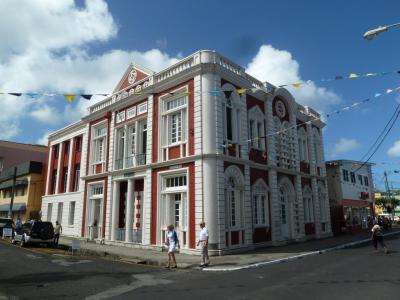
The library is housed in a two-story building from the late 19th century. Its architecture features a mix of window shapes framed in stone and columns inspired by Greek design, giving the structure a distinctive historical character. Even a quick stop outside offers a sense of the city’s architectural heritage.
Castries is proud of its strong literary tradition, having produced two Nobel Prize winners. Economist Arthur Lewis, born in the city, received the Nobel Memorial Prize in 1979, and writer Derek Walcott was awarded the Nobel Prize in Literature in 1992. Their achievements continue to influence the cultural identity of the island.
Inside, the Central Library functions as more than a place for books. It hosts community programs, workshops, and events that promote reading and lifelong learning. Visitors interested in local culture may enjoy stepping inside to see how the library supports education and creativity within the community.
The library is housed in a two-story building from the late 19th century. Its architecture features a mix of window shapes framed in stone and columns inspired by Greek design, giving the structure a distinctive historical character. Even a quick stop outside offers a sense of the city’s architectural heritage.
Castries is proud of its strong literary tradition, having produced two Nobel Prize winners. Economist Arthur Lewis, born in the city, received the Nobel Memorial Prize in 1979, and writer Derek Walcott was awarded the Nobel Prize in Literature in 1992. Their achievements continue to influence the cultural identity of the island.
Inside, the Central Library functions as more than a place for books. It hosts community programs, workshops, and events that promote reading and lifelong learning. Visitors interested in local culture may enjoy stepping inside to see how the library supports education and creativity within the community.
4) Derek Walcott Square (must see)
Welcome to Derek Walcott Square – the heart of Castries! This lively square has had a few names over the years—originally known as Arms Square, it then went on to become Promenade Square before finally assuming its current name, in 1993, in honor of Saint Lucia’s Nobel Prize-winning poet, Derek Walcott.
On the western side of the square, facing Bourbon Street, you’ll find a commemorative placard highlighting his achievements in poetry and theater. Take a moment to read it and appreciate his lasting contribution to literature and the island’s cultural life.
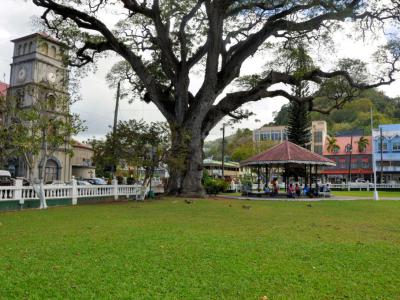
Looking to the eastern side of the square, in front of the Cathedral Basilica of the Immaculate Conception, you will see the large “Massav” tree, locally known as the Samaan tree. Estimated to be over 400 years old, it provides generous shade and is a symbol of resilience. It’s a favorite spot for both locals and visitors to pause, relax, and enjoy the surroundings.
Flanking the eastern side of the square, the Cathedral Basilica itself adds to the atmosphere, while on the northwest corner, you can spot the Castries Central Library, another key landmark in the city. Shaded pathways, manicured lawns, and clusters of greenery make the square a pleasant place for a short walk or a quiet rest amid the busy streets of downtown Castries.
Take your time to stroll through the square, read the placard, and enjoy the mix of history, literature, and urban life all around you. This location is well worth it, offering both cultural insight and a peaceful pause during your exploration of Castries.
On the western side of the square, facing Bourbon Street, you’ll find a commemorative placard highlighting his achievements in poetry and theater. Take a moment to read it and appreciate his lasting contribution to literature and the island’s cultural life.
Looking to the eastern side of the square, in front of the Cathedral Basilica of the Immaculate Conception, you will see the large “Massav” tree, locally known as the Samaan tree. Estimated to be over 400 years old, it provides generous shade and is a symbol of resilience. It’s a favorite spot for both locals and visitors to pause, relax, and enjoy the surroundings.
Flanking the eastern side of the square, the Cathedral Basilica itself adds to the atmosphere, while on the northwest corner, you can spot the Castries Central Library, another key landmark in the city. Shaded pathways, manicured lawns, and clusters of greenery make the square a pleasant place for a short walk or a quiet rest amid the busy streets of downtown Castries.
Take your time to stroll through the square, read the placard, and enjoy the mix of history, literature, and urban life all around you. This location is well worth it, offering both cultural insight and a peaceful pause during your exploration of Castries.
5) Cathedral Basilica of the Immaculate Conception (must see)
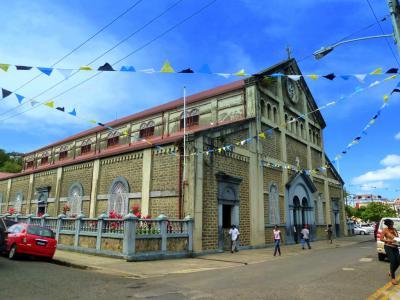
The Cathedral Basilica of the Immaculate Conception is one of the most recognizable landmarks in Castries, easily spotted across the city’s skyline. Dedicated to Mary under her title of Our Lady of the Immaculate Conception, the cathedral is known for its size and architectural presence. At 61 meters long and 30 meters wide, it is the largest church in the Caribbean, drawing visitors from across Saint Lucia and beyond.
Construction of the current cathedral began in 1894, after earlier churches were destroyed and builders faced challenges such as muddy terrain and limited resources. By 1897, the cathedral was completed, providing a solid and welcoming space for worship and community gatherings. Its design blends European influences with adaptations for Caribbean conditions, creating a structure that is both strong and elegant. Over the years, the cathedral has hosted ceremonies, religious festivals, and public events, establishing itself as a central part of Castries’ spiritual and cultural life.
Inside, the cathedral is filled with bright colors and distinctive details. The walls are painted in red, green, and yellow, reflecting Caribbean influence and creating a lively, inviting atmosphere. Trompe l’oeil columns line the nave, giving the appearance of sculpted stone, while detailed biblical scenes and decorative elements add depth and a sense of history. The ceiling and arches are designed to let in light and enhance the sense of space, making the large interior feel open and airy.
Above the altar, a depiction of Saint Lucia, the island’s patron saint, serves as a central focal point, linking the cathedral to the island’s identity. The combination of color, artistic detail, and careful design makes the cathedral both a working place of worship and a landmark that reflects the history and culture of Saint Lucia.
Construction of the current cathedral began in 1894, after earlier churches were destroyed and builders faced challenges such as muddy terrain and limited resources. By 1897, the cathedral was completed, providing a solid and welcoming space for worship and community gatherings. Its design blends European influences with adaptations for Caribbean conditions, creating a structure that is both strong and elegant. Over the years, the cathedral has hosted ceremonies, religious festivals, and public events, establishing itself as a central part of Castries’ spiritual and cultural life.
Inside, the cathedral is filled with bright colors and distinctive details. The walls are painted in red, green, and yellow, reflecting Caribbean influence and creating a lively, inviting atmosphere. Trompe l’oeil columns line the nave, giving the appearance of sculpted stone, while detailed biblical scenes and decorative elements add depth and a sense of history. The ceiling and arches are designed to let in light and enhance the sense of space, making the large interior feel open and airy.
Above the altar, a depiction of Saint Lucia, the island’s patron saint, serves as a central focal point, linking the cathedral to the island’s identity. The combination of color, artistic detail, and careful design makes the cathedral both a working place of worship and a landmark that reflects the history and culture of Saint Lucia.
6) Castries Market and Vendor's Arcade (must see)
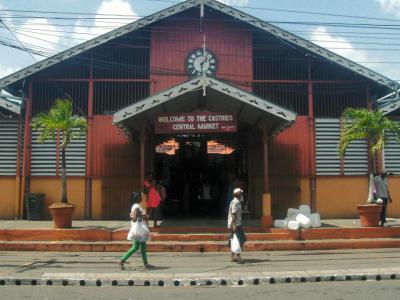
The Castries Market and Vendor’s Arcade are the largest market buildings in Castries, offering visitors a lively introduction to local culture and daily life. The market has been a central hub for commerce for well over a century. Built in 1891, the market was officially opened on July 2, 1894. It was originally designed to provide a central space for trade while enhancing the town’s layout and accessibility.
As you step inside, you’ll notice over 300 regular vendors and many more local sellers on market days. On your left-hand side, you’ll find stalls with fresh fruits, vegetables, and spices, while to the right, there are dry goods, handmade crafts, and locally produced products. Fish is no longer sold here, and meat is not processed on-site, but the market still gives a great sense of Saint Lucian daily life and traditions.
If you cross the John Compton Highway, you’ll find yourself at the Vendor’s Arcade, added in 1996 to ease congestion. Here, you can explore extra vendor spaces, sample traditional dishes at small food stalls, or pick up unique handmade crafts. On your walk through the arcade, check out the small restaurants where you can enjoy a snack or taste local specialties.
Strolling through both the market and the arcade offers a full sensory experience. It’s a practical and engaging way to connect with Saint Lucia’s culture, giving you insight into daily life while offering plenty of opportunities to shop, taste, and explore.
As you step inside, you’ll notice over 300 regular vendors and many more local sellers on market days. On your left-hand side, you’ll find stalls with fresh fruits, vegetables, and spices, while to the right, there are dry goods, handmade crafts, and locally produced products. Fish is no longer sold here, and meat is not processed on-site, but the market still gives a great sense of Saint Lucian daily life and traditions.
If you cross the John Compton Highway, you’ll find yourself at the Vendor’s Arcade, added in 1996 to ease congestion. Here, you can explore extra vendor spaces, sample traditional dishes at small food stalls, or pick up unique handmade crafts. On your walk through the arcade, check out the small restaurants where you can enjoy a snack or taste local specialties.
Strolling through both the market and the arcade offers a full sensory experience. It’s a practical and engaging way to connect with Saint Lucia’s culture, giving you insight into daily life while offering plenty of opportunities to shop, taste, and explore.
7) Holy Trinity Anglican Church
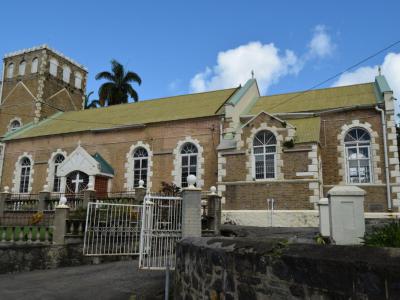
The Holy Trinity Anglican Church is an integral part of the Anglican Diocese of the Windward Islands, which is one of eight dioceses within the Province of the West Indies. Construction of the Holy Trinity Anglican Church commenced in 1830 and was completed in 1832. Originally built in a different style, the present brick church was erected in 1894 in the Romanesque Revival architectural style, under the design expertise of architect S.T. Wenbork.
The church's façade features distinctive Romanesque architectural elements, characterized by a white stone Romanesque arch framing the main entrance. A towering spire adorned with louvered windows and rounded arches ascends above the entrance, creating a striking focal point. The tower of the Holy Trinity Anglican Church boasts intricate details, including a staircase leading to a door on the second level and louvered windows with rounded tops adorning each side. A line of stones at the top of the tower forms a crenellated roof, adding to its grandeur.
The north side of the church features large Romanesque style windows framed by white stone blocks, while the south side includes an auxiliary entrance pavilion and additional Romanesque windows. Both sides showcase the meticulous craftsmanship and attention to detail prevalent in the church's design. A two-story addition at the back of the church enhances its functionality and architectural appeal, providing additional space while maintaining the integrity of the original structure.
The church's façade features distinctive Romanesque architectural elements, characterized by a white stone Romanesque arch framing the main entrance. A towering spire adorned with louvered windows and rounded arches ascends above the entrance, creating a striking focal point. The tower of the Holy Trinity Anglican Church boasts intricate details, including a staircase leading to a door on the second level and louvered windows with rounded tops adorning each side. A line of stones at the top of the tower forms a crenellated roof, adding to its grandeur.
The north side of the church features large Romanesque style windows framed by white stone blocks, while the south side includes an auxiliary entrance pavilion and additional Romanesque windows. Both sides showcase the meticulous craftsmanship and attention to detail prevalent in the church's design. A two-story addition at the back of the church enhances its functionality and architectural appeal, providing additional space while maintaining the integrity of the original structure.
8) Duty Free Pointe Seraphine (must see)
Duty Free Pointe Seraphine is conveniently located just five minutes from both the city center and George F. L. Charles Airport, making it an easy stop for visitors arriving in Saint Lucia by cruise ship or plane. Its location near the cruise terminal means travelers can reach the complex quickly and comfortably.
The shopping options at Duty Free Pointe Seraphine are extensive, with over forty stores offering a wide range of duty-free and tax-free items. Shoppers can explore jewelry, watches, liquor, fragrances, electronics, and souvenirs, all in one location. The variety of goods provides something for every visitor, whether looking for gifts, keepsakes, or personal items.
In addition to shopping, the complex offers dining options for those ready to take a break. Visitors can enjoy local Caribbean cuisine or international dishes at several restaurants. The Pink Papaya Restaurant is a popular choice, offering a relaxed atmosphere and a variety of meals. Guests can also enjoy a cold Piton beer, a local favorite, while taking in the surroundings. Complimentary Wi-Fi is available throughout the complex, allowing travelers to stay connected during their visit.
Duty Free Pointe Seraphine also serves as a starting point for exploring the area. Land and boat tours depart from the location, giving visitors the chance to experience more of Saint Lucia. The Hibiscus Trolley Train offers a convenient tour around the area, including stops in Castries and at Vigie Beach, where travelers can enjoy swimming and a lunch break.
The shopping options at Duty Free Pointe Seraphine are extensive, with over forty stores offering a wide range of duty-free and tax-free items. Shoppers can explore jewelry, watches, liquor, fragrances, electronics, and souvenirs, all in one location. The variety of goods provides something for every visitor, whether looking for gifts, keepsakes, or personal items.
In addition to shopping, the complex offers dining options for those ready to take a break. Visitors can enjoy local Caribbean cuisine or international dishes at several restaurants. The Pink Papaya Restaurant is a popular choice, offering a relaxed atmosphere and a variety of meals. Guests can also enjoy a cold Piton beer, a local favorite, while taking in the surroundings. Complimentary Wi-Fi is available throughout the complex, allowing travelers to stay connected during their visit.
Duty Free Pointe Seraphine also serves as a starting point for exploring the area. Land and boat tours depart from the location, giving visitors the chance to experience more of Saint Lucia. The Hibiscus Trolley Train offers a convenient tour around the area, including stops in Castries and at Vigie Beach, where travelers can enjoy swimming and a lunch break.
9) Antillia Brewing Company Bar
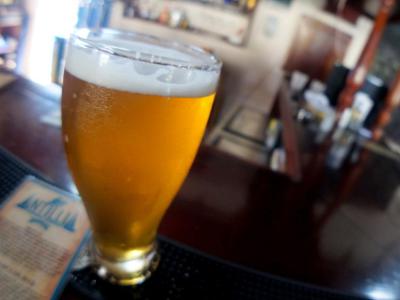
Antillia Brewing Company offers visitors a taste of Saint Lucia’s history, culture, and natural resources through its craft beers. Founded in 2015, it is the island’s only craft brewery, earning a reputation for producing high-quality, artisanal ales that reflect local traditions and flavors.
The brewery produces a range of beers, from classic ales and stouts to specialty brews made with fresh, locally sourced ingredients. Each batch is carefully crafted to highlight the island’s unique character, often drawing on flavors and techniques inspired by Saint Lucia’s culture and heritage.
Antillia Brewing Company operates a modern production facility in Odsan, Castries, where skilled brewers manage every stage of the brewing process. Visitors interested in learning about how these beers are made can explore the facility and see the brewing process in action. For a more hands-on experience, the brewery’s beer garden and retail center at Point Seraphine allow guests to sample a selection of Antillia beers, purchase bottles to take home, and enjoy a relaxed environment to try the different varieties.
The brewery produces a range of beers, from classic ales and stouts to specialty brews made with fresh, locally sourced ingredients. Each batch is carefully crafted to highlight the island’s unique character, often drawing on flavors and techniques inspired by Saint Lucia’s culture and heritage.
Antillia Brewing Company operates a modern production facility in Odsan, Castries, where skilled brewers manage every stage of the brewing process. Visitors interested in learning about how these beers are made can explore the facility and see the brewing process in action. For a more hands-on experience, the brewery’s beer garden and retail center at Point Seraphine allow guests to sample a selection of Antillia beers, purchase bottles to take home, and enjoy a relaxed environment to try the different varieties.
The Most Popular Cities
/ view all