

Fort Myers Downtown Walking Tour, Fort Myers

Fort Myers Downtown Walking Tour (Self Guided), Fort Myers

Fort Myers, Florida is widely known for its beautiful beaches and proximity to popular islands. The city proudly shares its history as the winter home of inventor Thomas Edison and industrial pioneer Henry Ford. However, the interesting and complicated history of the city goes much further back than the late 19th century.

The area, like much of southeastern Florida, was the home of the Calusa people. The Calusa did not survive the emergence of European settlers to the region, having been driven out by disease and relocation. Florida became a state in 1821, after which time Ft. Myers was established and named after Colonel Abraham C. Myers.

Florida joined the Confederacy and seceded from the Union in 1861. Though Florida rejoined the country after the Civil War, the connection to the confederacy remains through the county's name, which is controversially named for Robert E. Lee.

After the war, farming became important to the growth of Ft. Myers. The arrival of Thomas Edison and his new lab in 1885 encouraged even more visitors and new residents. Today, the city itself has roughly 66,000 residents, but it is part of a metropolitan area of more than 700,000.

Visitors to Ft. Myers enjoy the historic buildings and the beauty of nature. Water sports, beach walks and shopping are all popular pastimes in this beloved Florida city. Some of the most visited spots include the Edison and Ford Winter Estates, the Old Lee County Courthouse and the Burroughs Home and Gardens.

Take this self-guided walking tour to see the best of Ft. Myers.
How it works: Download the app "GPSmyCity: Walks in 1K+ Cities" from Apple App Store or Google Play Store to your mobile phone or tablet. The app turns your mobile device into a personal tour guide and its built-in GPS navigation functions guide you from one tour stop to next. The app works offline, so no data plan is needed when traveling abroad.

Download The GPSmyCity App

Fort Myers Downtown Walking Tour Map

Guide Name: Fort Myers Downtown Walking Tour
Guide Location: USA » Fort Myers (See other walking tours in Fort Myers)
Guide Type: Self-guided Walking Tour (Sightseeing)
# of Attractions: 7
Tour Duration: 2 Hour(s)
Travel Distance: 2.8 Km or 1.7 Miles
Author: Cathy
Sight(s) Featured in This Guide:
  • Edison and Ford Winter Estates
  • Centennial Park
  • Old Lee County Courthouse
  • Edison Theatre
  • Sidney and Berne Davis Art Center
  • Murphy-Burroughs House
  • Gilmer Heitman House
1
Edison and Ford Winter Estates

1) Edison and Ford Winter Estates (must see)

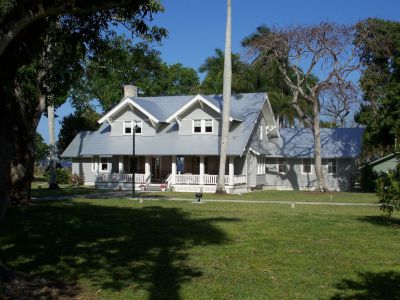
Thomas Edison and Henry Ford, long-time friends, purchased neighboring winter estates in Fort Myers where they could relax with their families and pursue personal projects. After Edison’s death, his widow, Mina, donated their property to the city. Ford’s nearby estate followed a different path: Henry Ford sold it to a private owner in 1945, and it remained a private residence until the City of Fort Myers purchased it in 1988.

Edison’s home, Seminole Lodge, was assembled in 1886 from pre-cut house kits shipped from Maine. He purchased the land the previous year, and he and his wife, Mina, honeymooned there soon after construction was finished. Over time, the property expanded to include a guest house, a caretaker’s residence, a pool house, and a private study, creating a small compound along the Caloosahatchee River.

As you walk toward Ford’s estate, look for the large two-story frame house known as The Mangoes on your right. If you stop at the edge of the lawn and face the house, you will see the wide first-floor porch stretching the length of the façade and the simple, straight rooflines characteristic of early Florida homes. To your left, just a few steps away, the smaller caretaker’s cottage now operates as the estate’s gift shop. Its location helps you understand how staff supported the Ford family during their seasonal stays.

Continue along the path toward the river and you will reach the Edison Botanic Research Laboratory. When you enter the building, look immediately to the long wooden workbenches running parallel to the windows. The glass beakers, drying racks, and testing devices arranged across the tables recreate the environment Edison, Ford, and Harvey Firestone, founder of Firestone Tire and Rubber Company, used as they searched for a reliable domestic rubber plant. The machinery in the rear of the room shows the scale of their experiments and explains why the lab later received National Historic Chemical Landmark status.

The on-site Edison Ford Museum displays thousands of artifacts linked to both men, including tools, household items, and early prototypes. Visitors can explore more than 20 acres of historic homes, gardens, the laboratory, and the surrounding riverside grounds. A research library is available by appointment.
2
Centennial Park

2) Centennial Park

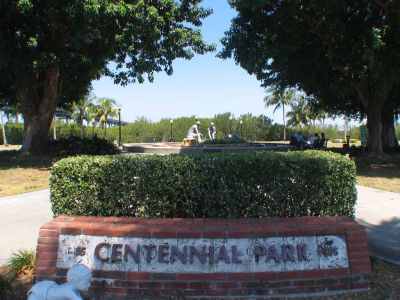
Centennial Park is an 11-acre green space along the banks of the Caloosahatchee River. Visitors will find a playground, sand volleyball courts, boat docks and a fishing pier. There is plenty of room for picnicking, including covered pavilions that offer shelter on rainy days.

The park is a well-known gathering spot in Fort Myers, appreciated for its open lawns and winding sidewalks that make it ideal for a relaxed walk by the river.

One of its most recognizable features is Uncommon Friends, a large sculpture depicting Thomas Edison, Henry Ford and Harvey Firestone seated together. The piece sits at the center of a water pool and is a popular backdrop for photos. Centennial Park also hosts outdoor events throughout the year, as well as a weekly farmers market every Thursday.

Visitors who want to enjoy the river can use the park’s docks and fishing areas. While the park does not offer on-site rentals, nearby businesses provide access to boat rentals, fishing supplies and guided trips.

Centennial Park is easy to reach on foot thanks to sidewalks that connect it with downtown Fort Myers and the River District, making it a convenient stop for anyone exploring the area.
3
Old Lee County Courthouse

3) Old Lee County Courthouse

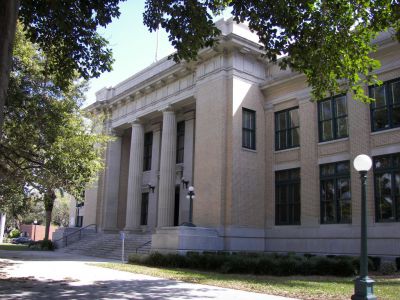
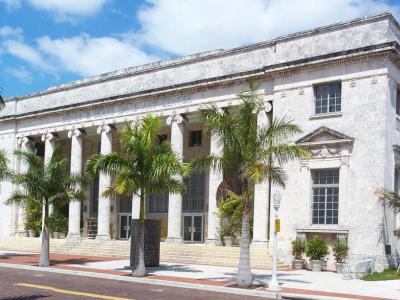
The Old Lee County Courthouse was built in 1915 and designed by architect Francis J. Kennard in the Classical Revival style. Its Neoclassical character is highlighted by Doric fluted columns that frame the main entrance, giving the building a strong civic presence.

Visitors are welcome to tour the courthouse and its grounds. Historical markers and artifacts are found throughout the area, including a World War I memorial plaque erected in 1922 to honor Lee County residents who served and died in the war. A later Veterans Memorial Plaque, added in 1967, commemorates those lost in conflicts across the previous two centuries.

The Old Courthouse sits near the modern Lee County Justice Center, though the two buildings serve different functions. The historic courthouse is no longer the county’s primary judicial facility. Today, it houses the offices of the Lee County Board of Commissioners and the local representatives of the state legislature.

Guests touring the courthouse can learn how the county received its name—chosen in tribute to Confederate General Robert E. Lee. Inside, the former commission chambers display a portrait of Lee and additional historical items. Visitors can also see reminders of the area’s segregated past, including the balcony where Black residents were once required to sit during public proceedings.
4
Edison Theatre

4) Edison Theatre

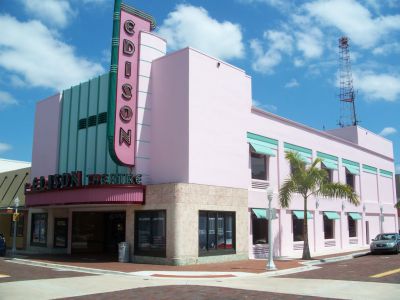
The Edison Theatre is a landmark in downtown Fort Myers and a reminder of the early years of moviegoing. Built in 1941, the theater reflects the Streamline Moderne style, a branch of Art Deco known for curved forms, horizontal bands and a sleek, modern look. Its façade helped signal a new, modern era for entertainment in the city.

Although little documentation survives about its construction, the Edison Theatre became an immediate success. With about 800 seats, it replaced older silent-film venues and offered a more comfortable space for watching feature films, newsreels and short subjects. Residents from across southwest Florida often traveled into Fort Myers to see the latest Hollywood releases, making the theater a lively gathering place for several decades.

The building took its name from Thomas Edison, but the inventor had no direct connection to the theater beyond his winter residence in the city. It was operated by E.J. Sparks, a subsidiary of Paramount Theatres, and remained active through the 1980s, even as multiplexes grew in popularity.

Today, the former theater has been converted into law offices, though the exterior still hints at its cinematic past. Visitors can find the Edison Theatre in the historic downtown district at the corner of Hendry and Main Streets.
5
Sidney and Berne Davis Art Center

5) Sidney and Berne Davis Art Center

The Sidney & Berne Davis Art Center is a vibrant cultural venue that presents performances, films, special events and rotating art exhibits. Because exhibitions change on the first Friday of every month, visitors can expect something different each time they come to Fort Myers. The center often highlights both internationally known creators and emerging local artists, giving guests a broad look at contemporary work. Exhibits are displayed in the Grand Atrium and the Capital Gallery, two spaces known for their striking architecture and flexible layouts.

Music plays a major role in the center’s programming. Throughout the year, audiences can enjoy chamber music, jazz concerts, bluegrass performances and other genre-spanning events. These concerts often feature regional musicians as well as visiting ensembles.

In addition to visual art and music, the center hosts a wide range of special events. Book talks, independent film screenings, fashion shows and cultural programs regularly appear on the calendar. Workshops, lectures and even yoga classes are offered as well, giving travelers a chance to participate rather than simply observe. Registration is available online or in person.

The Sidney & Berne Davis Art Center is located in downtown Fort Myers, just a short walk from the Caloosahatchee River, making it an easy stop during a day of exploring the historic district.
6
Murphy-Burroughs House

6) Murphy-Burroughs House

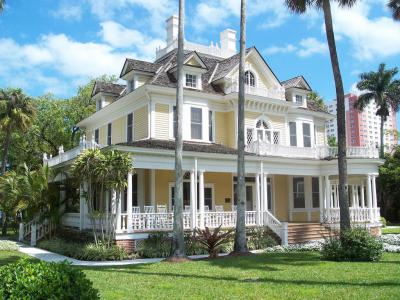
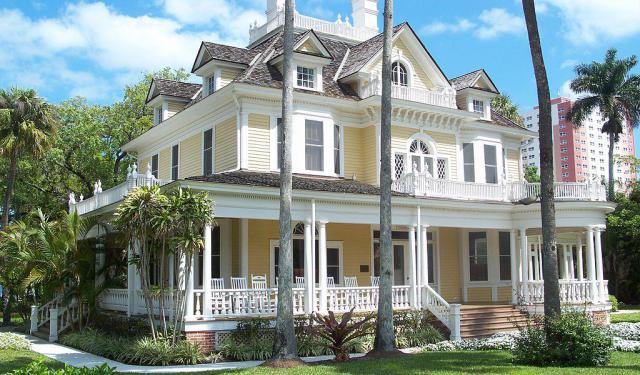
The Murphy-Burroughs House, also known as the Burroughs Home, is one of Fort Myers’ best-preserved early 20th-century residences and a key landmark along the Caloosahatchee River. Completed in 1901, it was built for businessman John T. Murphy and later purchased by the Burroughs family in 1918. The two-story Georgian Revival home stands out for its symmetrical façade, broad verandas, and tall Corinthian columns, which reflect the architectural tastes of prosperous families in the region during that era.

Visitors approaching the house can see how its raised foundation, wraparound porch, and large windows were designed to catch breezes from the river. Inside, the rooms retain original woodwork, chandeliers, and decorative details that show the lifestyle of one of Fort Myers’ most prominent families. Photographs, furniture, and personal items from the Burroughs era provide additional context, giving a sense of how the home functioned as both a residence and a social gathering place.

The landscaped grounds surrounding the house add to its appeal. Live oaks, palms, and gardens frame the riverfront, offering shaded walkways and open areas that were historically used for community events. The property was once central to Fort Myers society, hosting dances, teas, and holiday celebrations attended by local leaders and seasonal residents.

Today, the Murphy-Burroughs House operates as a historic site and event venue. Visitors can explore the home through tours that highlight its architecture, family stories, and role in the development of Fort Myers. The riverfront location makes it a popular stop for those interested in the city’s early history and preserved residential architecture.
7
Gilmer Heitman House

7) Gilmer Heitman House (must see)

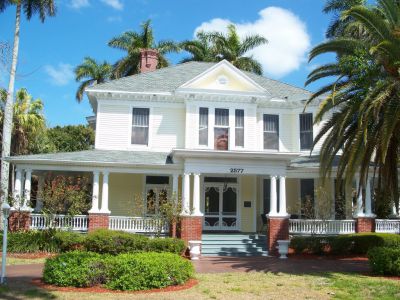
The Gilmer Heitman House, completed in 1908, is one of the most notable early residences in Fort Myers. Built in the Queen Anne style, the fourteen-room structure features a wide wraparound porch supported by Ionic columns, a rounded southeast corner, and detailed interior woodwork typical of the period. Although it is not open for public tours, visitors can admire its beauty from outside. Positioned close to the Burroughs Home and Gardens and facing the Caloosahatchee River, the house now functions primarily as a waterfront wedding and event venue.

As you approach the property from First Street, pause at the edge of the front lawn and look up at the full width of the wraparound porch. You will notice the tall Ionic columns that define the façade and the curved southeast corner that softens the building’s otherwise symmetrical lines. Walk a little farther along the sidewalk and you’ll see how the elevated foundation and deep porch were designed to catch breezes from the river, a practical feature in the era before air-conditioning. From this vantage point, the house’s Queen Anne details—gable accents, decorative trim, and varied rooflines—are easy to pick out.

If you continue around the side of the property and look through the fence toward the backyard, you will get a sense of how the grounds extend toward the river. The open lawn, shaded by mature trees, helps explain why the house is now popular for outdoor ceremonies and events. You may also spot portions of the carriage entry and small garden areas that once served everyday household needs in the early 1900s.

The house was constructed for Gilmer Heitman, an influential civic and business leader in the city’s early development. Originally from North Carolina, he joined his brother Harvie in Fort Myers in 1896, later establishing the region’s first telephone service in 1900 and expanding into banking, real estate, and community planning. The home stayed in the Heitman family for decades before undergoing a major restoration in 2001 to stabilize the structure and preserve its historic features. In 2014, it began its current use as a private event venue, relying on the building’s preserved architecture and riverfront setting.