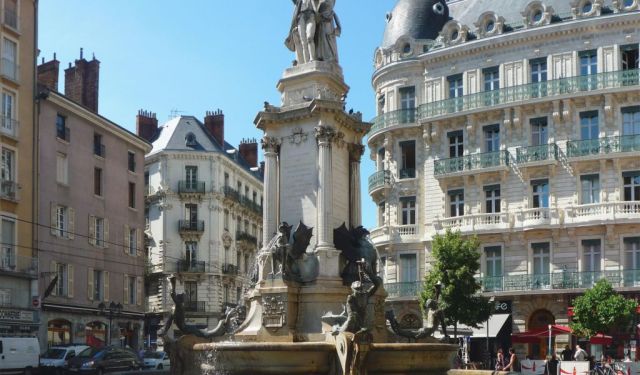


Grenoble Introduction Walking Tour (Self Guided), Grenoble
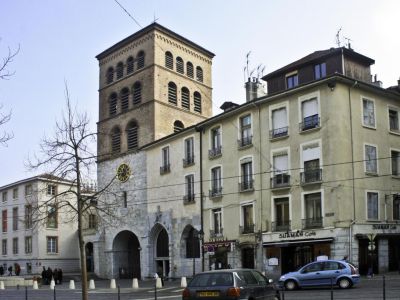
Grenoble, often called the “capital of the Alps,” sits where the Drac and Isère rivers meet, framed by mountain ridges that have shaped both its history and identity. Its story begins long before France existed, when the Gallic Allobroges tribe founded a fortified settlement named Cularo. By the end of the 4th century CE, the town was renamed Gratianopolis in honor of the Roman Emperor Gratian. Over the centuries, this Latin name softened into Grenoble.
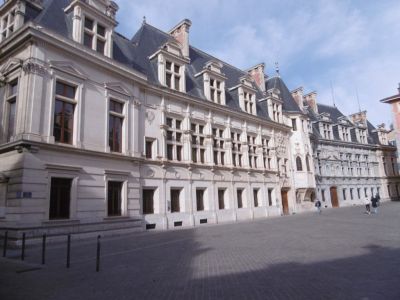
During the Middle Ages, Grenoble became the capital of the Dauphiné, a province on the frontier between France and the Holy Roman Empire. In 1349, the last Dauphin sold the territory to the French crown on the condition that the heir to the throne carry the title “Dauphin.” Grenoble’s role as a provincial capital gave it prestige and influence, symbolized by the Old Parliament Building, a Renaissance structure where the Parliament of Dauphiné once met. This institution became a voice for local rights and played a role in the unrest that foreshadowed the French Revolution. The “Day of the Tiles” in 1788, when townspeople hurled roof tiles at royal troops, is remembered as one of the first sparks of that revolution.
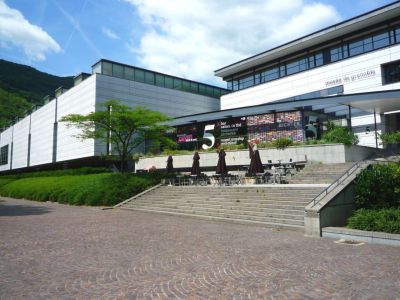
As centuries turned, Grenoble modernized. By the 19th century, it was renowned for glove-making, and by the early 20th century, it had become a pioneer in harnessing hydroelectric power from surrounding rivers, fueling industries that shaped the city’s growth. Grenoble’s cultural life also deepened; the Museum of Grenoble, founded in 1798, became one of France’s oldest museums and is now known for its rich collections of European painting and modern art.
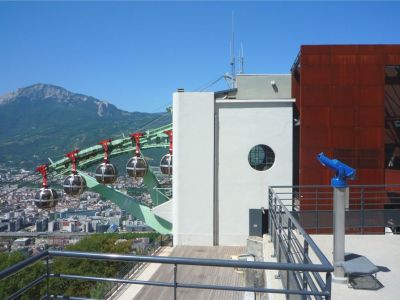
The city’s alpine geography also played a role in shaping its image. Fortifications were expanded across the centuries, and Bastille Hill, overlooking Grenoble, became a key defensive site. Today, the Grenoble-Bastille Cable Car whisks visitors up to those ramparts, offering panoramic views that remind us why this site was chosen for defense-and why it remains one of the city’s most iconic landmarks.
Grenoble’s 20th century brought both hardship and renewal. It suffered occupation by both Italy and Nazi Germany during World War II. However, the city later emerged as a center of science and education, hosting the 1968 Winter Olympics and building a reputation as a hub of research and technology.
Walking through Grenoble today means experiencing these layers: Roman origins, medieval institutions, Renaissance exteriors, and modern innovation. As French General Charles de Gaulle once said, “Grenoble never gave away its identity; it always stood tall and opened its arms wide.” Go accept the invitation.
During the Middle Ages, Grenoble became the capital of the Dauphiné, a province on the frontier between France and the Holy Roman Empire. In 1349, the last Dauphin sold the territory to the French crown on the condition that the heir to the throne carry the title “Dauphin.” Grenoble’s role as a provincial capital gave it prestige and influence, symbolized by the Old Parliament Building, a Renaissance structure where the Parliament of Dauphiné once met. This institution became a voice for local rights and played a role in the unrest that foreshadowed the French Revolution. The “Day of the Tiles” in 1788, when townspeople hurled roof tiles at royal troops, is remembered as one of the first sparks of that revolution.
As centuries turned, Grenoble modernized. By the 19th century, it was renowned for glove-making, and by the early 20th century, it had become a pioneer in harnessing hydroelectric power from surrounding rivers, fueling industries that shaped the city’s growth. Grenoble’s cultural life also deepened; the Museum of Grenoble, founded in 1798, became one of France’s oldest museums and is now known for its rich collections of European painting and modern art.
The city’s alpine geography also played a role in shaping its image. Fortifications were expanded across the centuries, and Bastille Hill, overlooking Grenoble, became a key defensive site. Today, the Grenoble-Bastille Cable Car whisks visitors up to those ramparts, offering panoramic views that remind us why this site was chosen for defense-and why it remains one of the city’s most iconic landmarks.
Grenoble’s 20th century brought both hardship and renewal. It suffered occupation by both Italy and Nazi Germany during World War II. However, the city later emerged as a center of science and education, hosting the 1968 Winter Olympics and building a reputation as a hub of research and technology.
Walking through Grenoble today means experiencing these layers: Roman origins, medieval institutions, Renaissance exteriors, and modern innovation. As French General Charles de Gaulle once said, “Grenoble never gave away its identity; it always stood tall and opened its arms wide.” Go accept the invitation.
How it works: Download the app "GPSmyCity: Walks in 1K+ Cities" from Apple App Store or Google Play Store to your mobile phone or tablet. The app turns your mobile device into a personal tour guide and its built-in GPS navigation functions guide you from one tour stop to next. The app works offline, so no data plan is needed when traveling abroad.
Download The GPSmyCity App



Grenoble Introduction Walking Tour Map
Guide Name: Grenoble Introduction Walking Tour
Guide Location: France » Grenoble (See other walking tours in Grenoble)
Guide Type: Self-guided Walking Tour (Sightseeing)
Tour Duration: 2 Hour(s)
Travel Distance: 2.5 Km or 1.6 Miles
Guide Location: France » Grenoble (See other walking tours in Grenoble)
Guide Type: Self-guided Walking Tour (Sightseeing)
Tour Duration: 2 Hour(s)
Travel Distance: 2.5 Km or 1.6 Miles
Sights Featured in This Walk
The Most Popular Cities
/ view all