

Historical Buildings Walking Tour (Self Guided), Carmel
Back in the early 1900s, little about Carmel-by-the-Sea rivaled the appeal of the magnificent ocean front. What is seen now as a quaint, European-like town on the coast of Central California, started off at the turn of the last century with the planting of 100 pine trees right down Main Street – today's Ocean Avenue. This was followed by the arrival of the young architect, Michael J. Murphy, specifically invited to come over and build the city from scratch.
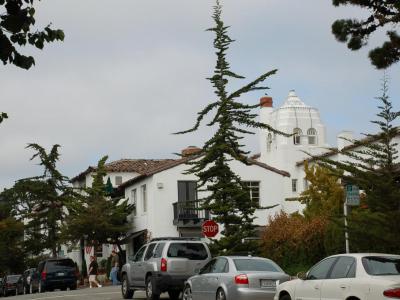
The architectural patterns that shaped the downtown character emerged predominantly in the 1920s and 1930s and were mostly Northern and Southern European–influenced Romantic Revival styles. Mock Tudor, fairy-tale storybook homes, with a touch of medieval influence, give the town its signature charm, while the abundance of Mediterranean and Spanish Revival designs, mixed up with a few Western false-front and Craftsman-style buildings from the start of the 20th century, nicely contribute the eclectic mix.
Here are some of the noteworthy samples of the historic Carmel-by-the-Sea architecture not to be missed:
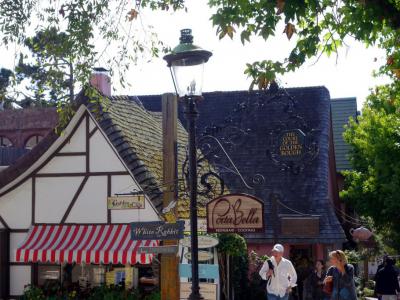
Cottage of Sweets – a popular sweets store inspired by traditional candy shops in the UK; originally built in 1922 as a weaving shop, then served as a theater box office.
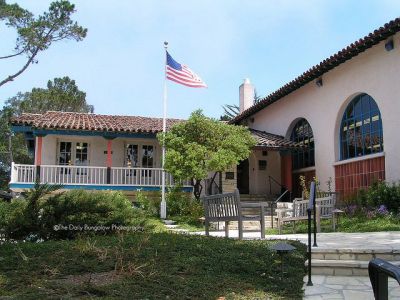
Harrison Memorial Library – a historic building designed in 1928; named after California Supreme Court Justice, Ralph Chandler Harrison.
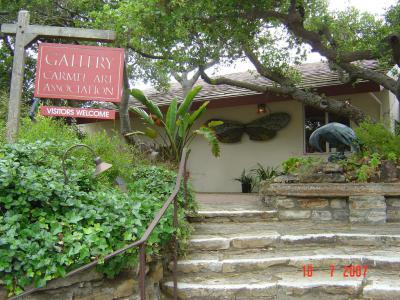
Carmel Art Association Gallery – founded in 1927, the oldest art gallery in Carmel and the second oldest non-profit art organization in the US.
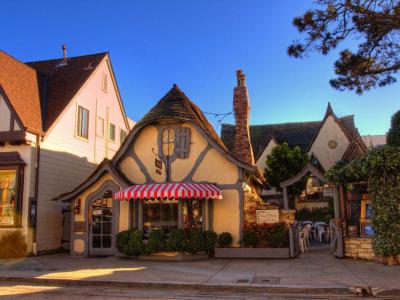
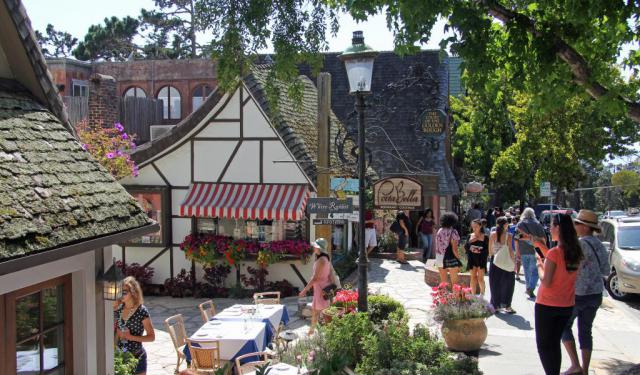
Fairy Tale Cottages (The Tuck Box) – a series of whimsical renditions of Tudor-style homes - uneven rooflines, stone chimneys, ornate metalwork and English-style gardens; built from 1924.
To discover these and other historic buildings in more detail and to see what makes Carmel-by-the-Sea truly unique, embark on the self-guided walking journey!
The architectural patterns that shaped the downtown character emerged predominantly in the 1920s and 1930s and were mostly Northern and Southern European–influenced Romantic Revival styles. Mock Tudor, fairy-tale storybook homes, with a touch of medieval influence, give the town its signature charm, while the abundance of Mediterranean and Spanish Revival designs, mixed up with a few Western false-front and Craftsman-style buildings from the start of the 20th century, nicely contribute the eclectic mix.
Here are some of the noteworthy samples of the historic Carmel-by-the-Sea architecture not to be missed:
Cottage of Sweets – a popular sweets store inspired by traditional candy shops in the UK; originally built in 1922 as a weaving shop, then served as a theater box office.
Harrison Memorial Library – a historic building designed in 1928; named after California Supreme Court Justice, Ralph Chandler Harrison.
Carmel Art Association Gallery – founded in 1927, the oldest art gallery in Carmel and the second oldest non-profit art organization in the US.
Fairy Tale Cottages (The Tuck Box) – a series of whimsical renditions of Tudor-style homes - uneven rooflines, stone chimneys, ornate metalwork and English-style gardens; built from 1924.
To discover these and other historic buildings in more detail and to see what makes Carmel-by-the-Sea truly unique, embark on the self-guided walking journey!
How it works: Download the app "GPSmyCity: Walks in 1K+ Cities" from Apple App Store or Google Play Store to your mobile phone or tablet. The app turns your mobile device into a personal tour guide and its built-in GPS navigation functions guide you from one tour stop to next. The app works offline, so no data plan is needed when traveling abroad.
Historical Buildings Walking Tour Map
Guide Name: Historical Buildings Walking Tour
Guide Location: USA » Carmel (See other walking tours in Carmel)
Guide Type: Self-guided Walking Tour (Sightseeing)
# of Attractions: 6
Tour Duration: 1 Hour(s)
Travel Distance: 0.8 Km or 0.5 Miles
Author: DanaG
Sight(s) Featured in This Guide:
Guide Location: USA » Carmel (See other walking tours in Carmel)
Guide Type: Self-guided Walking Tour (Sightseeing)
# of Attractions: 6
Tour Duration: 1 Hour(s)
Travel Distance: 0.8 Km or 0.5 Miles
Author: DanaG
Sight(s) Featured in This Guide:
- Cottage of Sweets
- Harrison Memorial Library
- Carmel Art Association Gallery
- Fairy Tale Cottages and The Tuck Box
- Cypress Inn
- L'Auberge Carmel
1) Cottage of Sweets
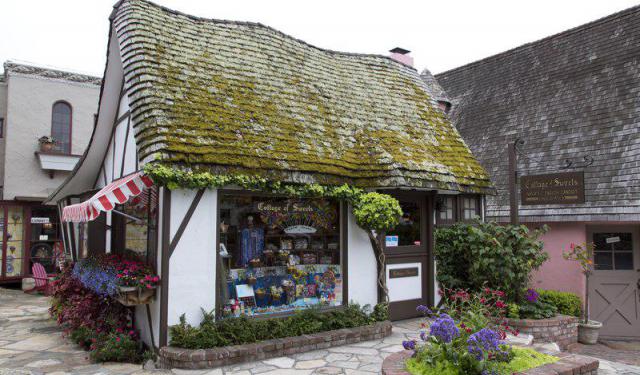
Cottage of Sweets is a popular sweets shop in Carmel. The inspiration for this shop comes from traditional candy shops in the U.K. Visitors enjoy the quaint cottage setting with its thatched-style roof. This building originated as weaving shop, as well as a box office for the theater that stood behind the cottage from 1923 to 1959.
The shop building was initially built in 1922 on Dolores Street and later transplanted using logs to roll the building to its current location on Ocean Avenue. The distinct look of this historical building has made it a popular local attraction.
What being offered inside the shop is also worth checking out. Some of the highlights of this sweets shop include homemade chocolate and fudge, which are always in high demand. You can also choose from a selection of imported candies and licorice. This store has been consistently named one of the top candy stores in the United States for years.
Visitors can easily stop by this shop while on the way to the beach. Even though the shop draws a crowd, you'll find the selection of sweets worth the time. Most of the sweets sold here are by the pound, allowing you to stock up on your favorite.
The shop building was initially built in 1922 on Dolores Street and later transplanted using logs to roll the building to its current location on Ocean Avenue. The distinct look of this historical building has made it a popular local attraction.
What being offered inside the shop is also worth checking out. Some of the highlights of this sweets shop include homemade chocolate and fudge, which are always in high demand. You can also choose from a selection of imported candies and licorice. This store has been consistently named one of the top candy stores in the United States for years.
Visitors can easily stop by this shop while on the way to the beach. Even though the shop draws a crowd, you'll find the selection of sweets worth the time. Most of the sweets sold here are by the pound, allowing you to stock up on your favorite.
2) Harrison Memorial Library
Harrison Memorial Library is a quiet public space that offers visitors a calm break from sightseeing. The building reflects an early-twentieth-century civic design approach, with a simple exterior and an inviting interior organized around open reading areas. Travelers often stop here to rest, read, or spend some time in a slower setting during their trip.
Inside, the library holds general collections for adults and children, along with a section dedicated to regional history and literature. This area includes photographs, documents, and references that help visitors learn more about the cultural development of the surrounding area. Staff members are welcoming and can point guests toward materials or displays that match their interests.
The library also hosts rotating exhibitions, book groups, and community programs throughout the year. While many activities are geared toward residents, travelers are welcome to attend when space is available, making it a practical way to experience local everyday life.
Entry is free, and visitors can usually access seating, Wi-Fi, and public computers. Hours and services may vary by season, so it is a good idea to check the current schedule before arriving. The library is best enjoyed as a peaceful stop during a day of exploring, especially for those who appreciate quiet spaces and local history.
Inside, the library holds general collections for adults and children, along with a section dedicated to regional history and literature. This area includes photographs, documents, and references that help visitors learn more about the cultural development of the surrounding area. Staff members are welcoming and can point guests toward materials or displays that match their interests.
The library also hosts rotating exhibitions, book groups, and community programs throughout the year. While many activities are geared toward residents, travelers are welcome to attend when space is available, making it a practical way to experience local everyday life.
Entry is free, and visitors can usually access seating, Wi-Fi, and public computers. Hours and services may vary by season, so it is a good idea to check the current schedule before arriving. The library is best enjoyed as a peaceful stop during a day of exploring, especially for those who appreciate quiet spaces and local history.
3) Carmel Art Association Gallery
Founded in 1927, Carmel Art Association is the oldest gallery in Carmel and the second oldest non-profit art organization in America. It shows a rich variety of art styles, presenting the works of more than 120 prominent Californian artists.
The originator of the plan was Jennie V. Cannon of Berkeley, California, who was a frequent visitor to Carmel and owned a summer cottage there. In October 1927 , the first show of 41 artists took place in the Seven Arts building of Herbert Heron. In 1933, the gallery was moved to its present location on Dolores Street.
One of the first CAA exhibitions was on June 3, 1928 at the Stanford Art Gallery of oil paintings and watercolors by 25 of its members. Jo Mora was active in the Carmel community and served on the board of directors of the CAA, where his sculptures were exhibited between 1927 and 1934. Salvador Dalí joined the CAA. On June 8, 1947, he participated as an art expert and juror in a contest sponsored by CAA that awarded high school students from Albany High School in Oakland, California.
The historic building provides exhibition space for its members' works. Besides photographs and art prints, this gallery has an impressive collection of drawings and sculptures, offering only the finest works, most of them for sale at the gallery.
The originator of the plan was Jennie V. Cannon of Berkeley, California, who was a frequent visitor to Carmel and owned a summer cottage there. In October 1927 , the first show of 41 artists took place in the Seven Arts building of Herbert Heron. In 1933, the gallery was moved to its present location on Dolores Street.
One of the first CAA exhibitions was on June 3, 1928 at the Stanford Art Gallery of oil paintings and watercolors by 25 of its members. Jo Mora was active in the Carmel community and served on the board of directors of the CAA, where his sculptures were exhibited between 1927 and 1934. Salvador Dalí joined the CAA. On June 8, 1947, he participated as an art expert and juror in a contest sponsored by CAA that awarded high school students from Albany High School in Oakland, California.
The historic building provides exhibition space for its members' works. Besides photographs and art prints, this gallery has an impressive collection of drawings and sculptures, offering only the finest works, most of them for sale at the gallery.
4) Fairy Tale Cottages and The Tuck Box (must see)
The Fairy Tale Cottages are a small group of storybook-style buildings constructed in the early 1920s and closely associated with designer-builder Hugh Comstock. Created on a deliberately modest scale, these cottages feature steep and irregular rooflines, small leaded windows, textured stucco walls, and visible handcrafted details. The designs were intended to feel informal and imaginative rather than formal or monumental. Collectively, the cottages helped shape Carmel-by-the-Sea’s architectural identity and remain one of the town’s most recognizable visual features.
Begin your walk around Torres Street between Fifth and Sixth Avenues, where several early examples are grouped close together. As you move along the street, notice how the cottages share common elements while still appearing distinct from one another. Rooflines tilt at different angles, chimneys are offset rather than centered, and windows vary in size and placement. These irregularities were intentional and reflect the handcrafted approach behind the style. Most of the cottages in this area are private residences, so the best way to experience them is from the sidewalk, where their scale and detailing are easiest to observe.
Continue walking toward Dolores Street, where the Fairy Tale Cottage style extends beyond residential use. Here, the buildings become part of Carmel’s small commercial core, adapting the same design language to shops and gathering places. One of the best-known examples is The Tuck Box, built in 1926 and now operating as a tea room. Its curved roofline, compact form, and textured exterior closely match the surrounding cottages, while its continued use allows visitors to experience the style as part of daily life rather than as a static historic display.
As you explore nearby courtyards and side streets, look for additional storybook-style buildings that echo the same design principles. Seeing the cottages together provides useful context for understanding how the style developed as a cohesive idea rather than a single landmark. You’ll notice that no two cottages are exactly the same, even when they’re built right next to each other.
Begin your walk around Torres Street between Fifth and Sixth Avenues, where several early examples are grouped close together. As you move along the street, notice how the cottages share common elements while still appearing distinct from one another. Rooflines tilt at different angles, chimneys are offset rather than centered, and windows vary in size and placement. These irregularities were intentional and reflect the handcrafted approach behind the style. Most of the cottages in this area are private residences, so the best way to experience them is from the sidewalk, where their scale and detailing are easiest to observe.
Continue walking toward Dolores Street, where the Fairy Tale Cottage style extends beyond residential use. Here, the buildings become part of Carmel’s small commercial core, adapting the same design language to shops and gathering places. One of the best-known examples is The Tuck Box, built in 1926 and now operating as a tea room. Its curved roofline, compact form, and textured exterior closely match the surrounding cottages, while its continued use allows visitors to experience the style as part of daily life rather than as a static historic display.
As you explore nearby courtyards and side streets, look for additional storybook-style buildings that echo the same design principles. Seeing the cottages together provides useful context for understanding how the style developed as a cohesive idea rather than a single landmark. You’ll notice that no two cottages are exactly the same, even when they’re built right next to each other.
5) Cypress Inn
Cypress Inn has been in Carmel since 1929 and is the most well-known hotel in the United States that is dog-friendly. The hotel has been co-owned by actress and animal activist Doris Day for over 20 years. Over the years, the hotel has gotten a reputation for being a gathering place for pets and their owners.
The outside of the Cypress Inn features beautiful stone, Mediterranean-style architecture. One of the highlights is a restaurant called Terry's Lounge, which also features an outdoor seating area. Visitors can enjoy an array of Mediterranean-inspired dishes, as well as cocktails and delicious dessert items.
Terry's Lounge is also a popular place for entertainment. Some of the most popular Carmel-based artists perform here on a regular schedule, offering everything from vocals and piano to full bands with guitars and percussion. The atmosphere is relaxing.
The outside of the Cypress Inn features beautiful stone, Mediterranean-style architecture. One of the highlights is a restaurant called Terry's Lounge, which also features an outdoor seating area. Visitors can enjoy an array of Mediterranean-inspired dishes, as well as cocktails and delicious dessert items.
Terry's Lounge is also a popular place for entertainment. Some of the most popular Carmel-based artists perform here on a regular schedule, offering everything from vocals and piano to full bands with guitars and percussion. The atmosphere is relaxing.
6) L'Auberge Carmel
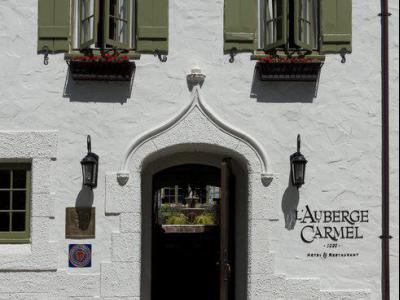
L'Auberge Carmel is a popular Carmel hotel dating to 1929. It was commissioned by Allen Knight, one of the best known residents in Carmel's early day. Knight initially wanted to create a Bohemian styled residential apartment building similar to what he saw during his travels in Prague. Knight worked with the noted San Francisco architect Albert Far who was also known as the architect of “Glen Allyn”, the first home of Jack London in Sonoma County. The resulted three story wood frame and stucco building has been a highlight in Carmel's architectural landscape since its inception.
Visitors enjoy the hotel's Old World style, as well as the antique furniture and decor. The hotel is a great sight to see as well as a cozy place to stay. One of its main attractions is Aubergine, a celebrated restaurant that boasts Mediterranean-style cuisine and an eight-course tasting menu. The wine cellar boasts 2,500 varieties, featuring wines from Monterey County and around the world. The restaurant staff can recommend pairings course-by-course to help you get the best wines.
Visitors will enjoy the landscaping used for the courtyard. This area provides an excellent place to enjoy Carmel's fantastic weather. Regardless of whether you're stopping to enjoy a meal at the restaurant, enjoying the architecture, or both, you'll find this hotel worth your time.
Visitors enjoy the hotel's Old World style, as well as the antique furniture and decor. The hotel is a great sight to see as well as a cozy place to stay. One of its main attractions is Aubergine, a celebrated restaurant that boasts Mediterranean-style cuisine and an eight-course tasting menu. The wine cellar boasts 2,500 varieties, featuring wines from Monterey County and around the world. The restaurant staff can recommend pairings course-by-course to help you get the best wines.
Visitors will enjoy the landscaping used for the courtyard. This area provides an excellent place to enjoy Carmel's fantastic weather. Regardless of whether you're stopping to enjoy a meal at the restaurant, enjoying the architecture, or both, you'll find this hotel worth your time.
Walking Tours in Carmel, California
Create Your Own Walk in Carmel
Creating your own self-guided walk in Carmel is easy and fun. Choose the city attractions that you want to see and a walk route map will be created just for you. You can even set your hotel as the start point of the walk.
Carmel Introduction Walking Tour
Robert Louis Stevenson, author of Treasure Island, once said: "The atmosphere of Carmel is like nowhere else I have ever been. It is a true place of retreat, where the air seems to promise inspiration." Carmel-by-the-Sea has long attracted writers, artists, and people who appreciated its small scale and quiet surroundings.
The city’s name comes from El Carmelo, given by Spanish... view more
Tour Duration: 2 Hour(s)
Travel Distance: 4.8 Km or 3 Miles
The city’s name comes from El Carmelo, given by Spanish... view more
Tour Duration: 2 Hour(s)
Travel Distance: 4.8 Km or 3 Miles
Wine Tasting Walk
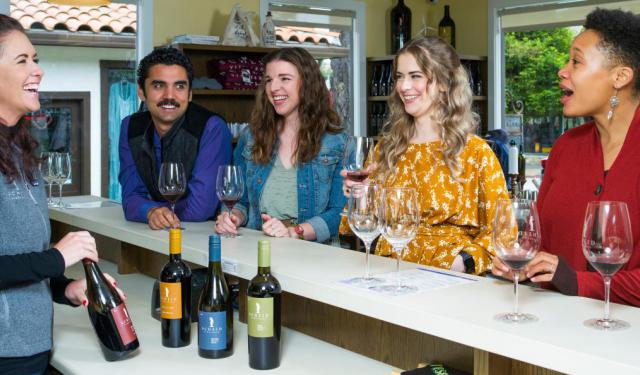
While it takes no more than a dozen minutes to stroll from one corner of Carmel to the other, it is quite easy to get lost. There are no street numbers in Carmel but the wine bars and bottle shops are plentiful, and the tasting rooms are even more so – enough to keep visitors busy for days!
This charming city is indeed a bona fide wine tasting destination at its best! Regardless of your... view more
Tour Duration: 1 Hour(s)
Travel Distance: 0.7 Km or 0.4 Miles
This charming city is indeed a bona fide wine tasting destination at its best! Regardless of your... view more
Tour Duration: 1 Hour(s)
Travel Distance: 0.7 Km or 0.4 Miles
The Most Popular Cities
/ view all