

Kiev's Architectural Jewels, Kiev

Kiev's Architectural Jewels (Self Guided), Kiev

Kiev is a city with such a wide diversity of architectural styles from various periods of time. The best European, Russian and Ukrainian architects and artists worked on the buildings of the capital of Ukraine. Some of the elements are absolutely unique and can be seen exclusively in Kiev. Some of the most famed architects who contributed to the city's beauty and originality are Vikentiy Beretti, Emilio Sala and other talented masters. The architecture tour is organized in the Lipki district.
How it works: Download the app "GPSmyCity: Walks in 1K+ Cities" from Apple App Store or Google Play Store to your mobile phone or tablet. The app turns your mobile device into a personal tour guide and its built-in GPS navigation functions guide you from one tour stop to next. The app works offline, so no data plan is needed when traveling abroad.

Download The GPSmyCity App

Kiev's Architectural Jewels Map

Guide Name: Kiev's Architectural Jewels
Guide Location: Ukraine » Kiev (See other walking tours in Kiev)
Guide Type: Self-guided Walking Tour (Sightseeing)
# of Attractions: 12
Tour Duration: 2 Hour(s)
Travel Distance: 4.1 Km or 2.5 Miles
Author: Cathy
Sight(s) Featured in This Guide:
  • Saint Michael's Golden-Domed Cathedral and Monastery
  • National Philharmonic Society
  • Kiev Academic Puppet Show Theatre
  • October Palace
  • National Bank of Ukraine
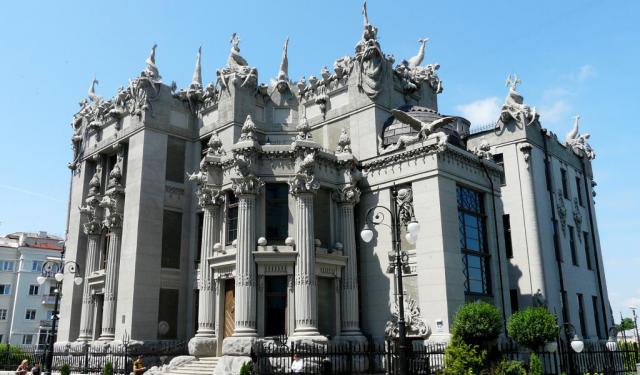
  • The House with Chimaeras
  • Saint Catherine's German Lutheran Church
  • House of Weeping Widow
  • Tenement House (Dohodny Dom)
  • The Chocolate House
  • Kovalevsky House
  • Mariinsky Palace
1
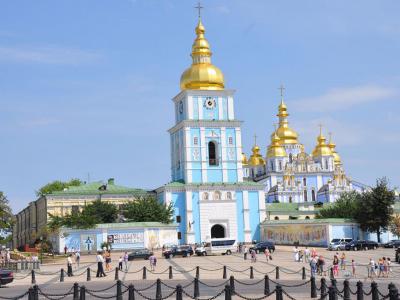
Saint Michael's Golden-Domed Cathedral and Monastery

1) Saint Michael's Golden-Domed Cathedral and Monastery (must see)

Saint Michael’s Golden-Domed Cathedral and Monastery is one of the capital's most striking and symbolically powerful landmarks, embodying the resilience of both the city and its faith. Founded in the 12th century by Prince Sviatopolk II Iziaslavych, the cathedral was dedicated to Saint Michael the Archangel, the celestial protector of Kyiv. In medieval times, its shimmering golden domes—among the first in Kyivan Rus’—and richly painted frescoes made it a masterpiece of Eastern Orthodox architecture, drawing pilgrims and travelers from across the region.

Standing on a bluff overlooking the Dnipro River, the cathedral once formed part of a thriving monastic complex, serving as both a place of worship and a center of learning. Its mosaics and frescoes, crafted by Byzantine and local artists, reflected a fusion of artistic traditions that shaped early Ukrainian religious art.

Tragically, in the 1930s, during the height of Soviet anti-religious campaigns, the cathedral was demolished, and its sacred grounds were turned into a sports and administrative area. Some priceless mosaics and fresco fragments were salvaged and sent to museums in Moscow and Saint Petersburg, though many were lost forever.

In the years following Ukraine’s independence, Saint Michael’s became a powerful symbol of national and spiritual revival. Reconstruction began in 1997, guided by historical records, photographs, and artistic reconstructions. By 2000, the golden domes once again crowned the Kyiv skyline, restored to their original Byzantine brilliance.

Inside, visitors find a dazzling iconostasis, hand-painted murals, and mosaics that reflect both ancient techniques and modern craftsmanship. The monastery complex around the cathedral remains active, housing clergy and supporting community and charitable initiatives. Since December 2018, it has also served as the headquarters of the Orthodox Church of Ukraine.
2
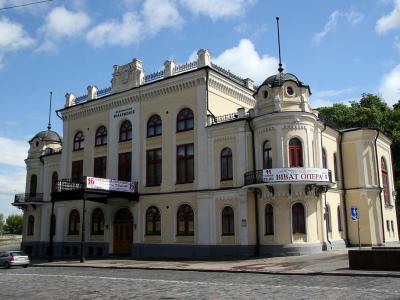
National Philharmonic Society

2) National Philharmonic Society

The National Philharmonic Society is a central institution for classical music, supporting both Ukrainian musicians and international artists. While the society itself was founded in 1863, it did not have a permanent home until moving into the Merchants’ Assembly House, constructed in 1882. The building, which later became the philharmonic’s headquarters, combines historic architecture with spaces designed for performances and public gatherings.

In October 1994, the institution was granted its “national” status and took its current name, reflecting its prominent role in Ukraine’s cultural life. Its main concert hall, formally known as the Mykola Lysenko Column Hall, honors the Ukrainian composer who played a key role in establishing the philharmonic.

Over the years, the venue has hosted famous performers and composers, including Sergei Rachmaninoff, Pyotr Ilyich Tchaikovsky, and Franz Liszt, contributing to its rich musical history.

The building underwent a major restoration in the 1990s after a flood in the 1980s damaged its archives.

Today, the interior emphasizes both functionality and acoustics, allowing audiences to enjoy a wide range of musical performances, from symphonies and chamber music to piano recitals and contemporary works. The philharmonic also organizes festivals, special events, and educational programs for aspiring musicians.
3
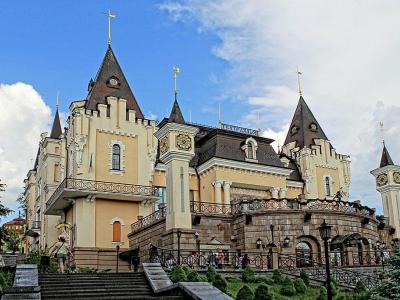
Kiev Academic Puppet Show Theatre

3) Kiev Academic Puppet Show Theatre

The Kyiv Academic Puppet Show Theatre is one of the city’s longstanding cultural institutions, offering performances that blend traditional puppetry with modern theatrical techniques. Established in 1927, the theatre has been dedicated to entertaining audiences of all ages, particularly children, through a diverse repertoire of puppet shows ranging from folk tales to contemporary stories.

Its programs often incorporate elements of music, dance, and visual arts, making each performance a rich sensory experience.

The building itself, located in a central part of the city, features a cozy auditorium designed to create an intimate atmosphere between the performers and the audience. The theatre also hosts workshops and educational activities, allowing visitors to learn about the art of puppetry and the history behind this unique form of storytelling. This hands-on approach helps engage younger visitors and fosters an appreciation for cultural traditions.

Over the years, the Kyiv Academic Puppet Show Theatre has developed a reputation for creativity and innovation in its productions, often experimenting with new puppetry styles and techniques.

The company collaborates with artists and playwrights to create performances that reflect both Ukrainian heritage and universal themes, making the theatre relevant to a wide audience.
4
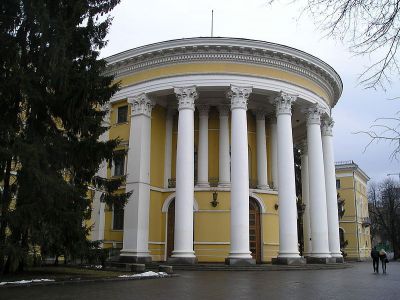
October Palace

4) October Palace

The October Palace was originally constructed between 1838 and 1842 as the Kyiv Institute for Noble Maidens, a school for girls from noble families. Its design features Neoclassical architecture with later stylistic additions, reflecting both its educational purpose and subsequent adaptations.

After the 1917 Revolution, the building was taken over by the Soviet government and served as the headquarters and execution site for the Cheka, the precursor to the KGB.

Following significant damage during World War II, the palace underwent a major restoration between 1952 and 1959. During this period, it was renamed the October Palace of Culture and repurposed as a concert and cultural venue. This established the building’s role as a center for performances, exhibitions, and public gatherings, a tradition that continues today.

After Ukraine gained independence, the palace was renamed the International Center of Culture and Arts of the Trade Union Federation of Ukraine, though it is still widely referred to as the October Palace.

In recent history, it also played a role in the 2014 Euromaidan Revolution, when protestors briefly occupied the building.
5
National Bank of Ukraine

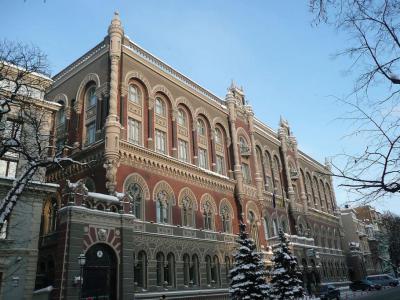
5) National Bank of Ukraine

The National Bank of Ukraine is the country’s central bank and plays a key role in managing Ukraine’s monetary policy, currency issuance, and financial stability. Established in 1991 following Ukraine’s independence, the bank continues the legacy of earlier banking institutions in the region and serves as the main authority overseeing the national currency, the hryvnia. Its work is central to the functioning of Ukraine’s economy and financial system.

The bank is housed in an architecturally significant building in the city, which reflects early 20th-century design with a blend of classical and modern elements. Visitors can admire the exterior and the surrounding square, which is often visited by tourists and locals alike.

While public access to the interior is limited due to its operational functions, the building remains an important landmark in the city center.

The National Bank of Ukraine also has a small museum and exhibition area open to visitors. Here, guests can learn about the history of money in Ukraine, see historical coins and banknotes, and explore the evolution of the country’s financial institutions. The exhibits provide context for understanding Ukraine’s economic development and the role of the central bank in national history.
6
The House with Chimaeras

6) The House with Chimaeras

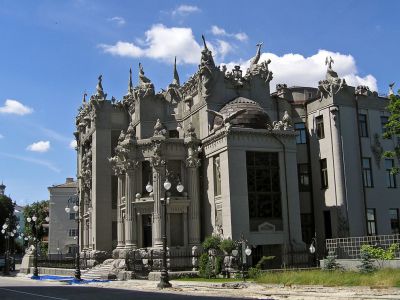
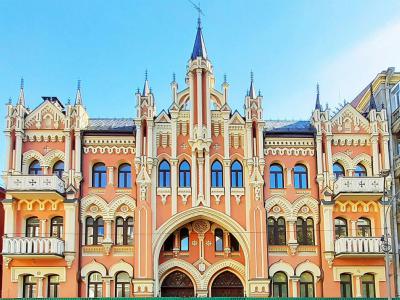
The House with Chimaeras is one of Kyiv’s most recognizable architectural landmarks, designed by architect Vladyslav Horodetsky and completed in 1902. Built as a high-end apartment building, it was intended both as an income property and a showcase for Horodetsky’s architectural skill. The architect himself lived in one of the apartments, while the others were rented out to affluent residents. Its prominent location on Bankova Street, facing what is now the Presidential Office, adds to its historical significance.

The building’s popular name is somewhat misleading—its sculptures do not feature mythological chimeras but rather real and exotic animals, sea creatures, and hunting scenes. These decorative elements, created by Italian sculptor Emilio Sala, give the structure its whimsical and imaginative character. Horodetsky’s use of reinforced concrete, then a modern innovation, allowed for the bold design and elaborate sculptural detail that make the building stand out even today.

Over the decades, the House with Chimeras has served various purposes, including administrative offices and a medical facility during the Soviet period. It underwent major restoration in the early 2000s to stabilize its structure and restore the sculptures and interior details.

Currently, the building belongs to the Presidential Administration of Ukraine and is primarily used for official receptions and events.
7
Saint Catherine's German Lutheran Church

7) Saint Catherine's German Lutheran Church

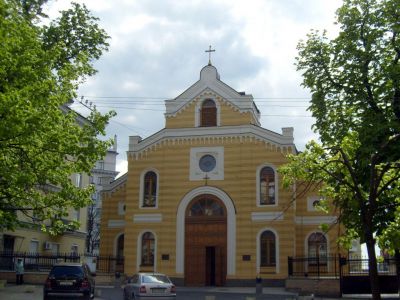
Saint Catherine's German Lutheran Church serves as a historic center for the German Lutheran community in Kyiv. While a German Lutheran congregation has existed in the city since 1767, the current church building was constructed in 1857. It was designed by the architect Paul Shleifer in the Neoclassical style, featuring a balanced façade, simple geometric lines, and a spacious interior suited for worship and community gatherings.

Throughout its history, the church has undergone periods of change. During the Soviet era, it was closed for religious services and repurposed for secular uses. After Ukraine regained independence, the church was restored and returned to the Lutheran community, enabling the resumption of worship and cultural activities.

Restoration efforts preserved the architectural features while making the building functional for contemporary use.

The interior reflects Neoclassical principles, emphasizing proportion, symmetry, and clarity. Visitors can see a central altar, galleries, and understated decorative elements, which provide a calm and harmonious environment.

The church also tells the story of Kyiv’s German community and its contribution to the city’s cultural diversity over the centuries.
8
House of Weeping Widow

8) House of Weeping Widow

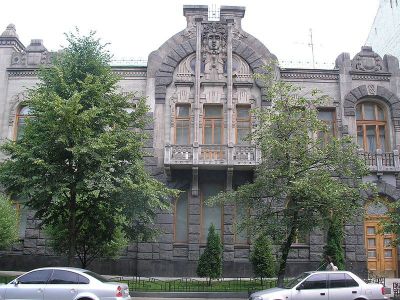
The House of the Weeping Widow is an early 20th-century building located on Lyuteranska Street, known for its distinctive Art Nouveau design. Constructed in 1907 for the wealthy merchant Serhiy Arshavsky, the building was designed by architect Eduard Bradtman, who was among the leading figures in Kyiv’s architectural scene of that period.

The house takes its name from a sculpted female face above the entrance—when it rains, water flows down her cheeks, giving the impression that she is weeping.

Architecturally, the building marks the transition from late 19th-century eclecticism to early Art Nouveau. Its asymmetrical façade, flowing lines, and naturalistic ornamentation—such as floral and geometric motifs—reflect European design trends of the era. The interiors were originally decorated with elaborate details that showcased the refinement and wealth of its owner.

After the revolution of 1917, the property was nationalized and used for various government purposes. During the Soviet era and afterward, it was repurposed as a state residence for visiting officials and dignitaries. Despite these changes in function, much of its original character and detail have been preserved through careful maintenance and restoration efforts.

Today, the House of the Weeping Widow remains one of the best-known examples of early modernist architecture in the city. Though it is not generally open to the public, visitors often stop to view its façade and the striking sculpture that gives the building its name.
9
Tenement House (Dohodny Dom)

9) Tenement House (Dohodny Dom)

The Tenement House, also known as Dohodny Dom, is a historic residential and commercial building in central Kyiv. Constructed in the early 20th century, it was designed to generate rental income, a common practice for urban properties at the time.

The building reflects the architectural trends of its era, combining practical residential spaces with commercial storefronts on the ground floor.

The structure has changed hands and purposes over the years. During the Soviet period, it was repurposed for communal housing and administrative offices.

Despite these changes, many of the building’s original architectural features, such as decorative facades, balconies, and ornamental details, have been preserved or restored, giving visitors a sense of Kyiv’s urban development in the late 19th and early 20th centuries.

The tenement’s layout illustrates the typical design of income houses of its time, including apartments of varying sizes and shared spaces for residents. Its ground floor commercial areas historically hosted shops, cafes, and small businesses, maintaining the building’s role as an active part of the city’s daily life.
10
The Chocolate House

10) The Chocolate House

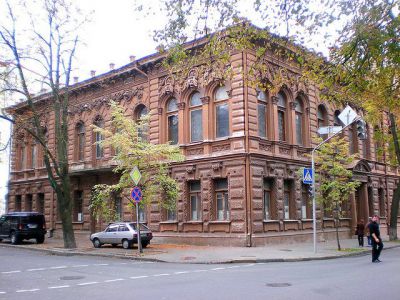
The Chocolate House is a late 19th-century mansion built in the Venetian Renaissance style, commissioned by Semen Semenovich Mogilevtsev and designed by the architect Vladimir Nikolayev. Its dark brown exterior, which resembles chocolate, gave the building its unusual and memorable name.

For over fifteen years, it served as a private residence for the Mogilevtsev family, limiting access to the general public.

During the Soviet period, the building was repurposed for public use, housing the Central Civil Registration Office and, in 1986, the Children’s Picture Gallery. These functions gave the historic structure a civic role, but much of its original interior decoration and design were neglected over time.

In 2009, the Chocolate House came under the jurisdiction of the Kyiv Museum of Russian Art and underwent a careful restoration. Several rooms—the White Room, the Art Nouveau Room, and the New Russian Room—have been restored and opened to visitors. Original wall paintings and wood inlays were preserved and reinstalled wherever possible, providing a sense of the mansion’s original elegance.

Once fully restored, the Chocolate House is planned to host the Museum of Paintings, a Private Collection Museum, and a picture gallery. For visitors today, it offers a chance to explore the building’s distinctive architecture, historical interiors, and ongoing efforts to preserve Kyiv’s cultural heritage.
11
Kovalevsky House

11) Kovalevsky House

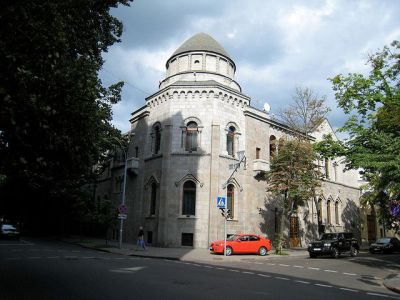
Tucked away in the elegant Lypky district, the Kovalevsky House was built between 1911 and 1914 for government official Mykola Kovalevskyi and designed by architect Pavlo Alyoshin. Though the plot was small, the mansion featured modern innovations for its time—reinforced concrete, central heating, and even an elevator connecting all floors. A small garden with a fountain and service buildings completed the estate.

Locals often call it the “Arabic House” because of its oriental-inspired facade, which stands out among the classical buildings nearby. Another, less common nickname is the “House of Sighs,” said to come from Kovalevskyi’s frustration over the project’s rising construction costs. These names add a bit of folklore to a structure already rich in architectural character.

The design mixes Romanesque and Eastern elements, drawing on Transcaucasian church architecture and medieval motifs. Inside, one of its most personal details was a room decorated like a train compartment—a sentimental nod to the couple’s first meeting on a train.

After the revolution, the Kovalevsky family left, and the house later served various official purposes.

Today, it’s managed by the Presidential Office of Ukraine, so the interior isn’t open to visitors. Still, the building is well worth a stop on a stroll through Lypky—an intriguing example of early-20th-century Kyiv architecture with stories carved into its walls.
12
Mariinsky Palace

12) Mariinsky Palace (must see)

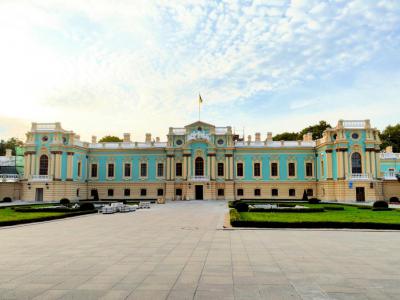
Mariinsky Palace is one of the city's most striking and historically significant landmarks, serving today as one of the official ceremonial residences of the President of Ukraine. The palace was commissioned by Empress Elizabeth of Russia in the mid-18th century, reflecting her desire to expand imperial presence in the city.

While the project is often associated with Italian architect Bartolomeo Rastrelli, the design is more accurately attributed to his student, Ivan Michurin, who adapted plans originally intended for a palace near Moscow. Construction began around 1750 and was completed in 1755, long after Empress Elizabeth’s death.

The palace’s architectural style reflects the elegant Baroque tradition, with ornate façades, grand staircases, and elaborately decorated interiors designed to convey both imperial prestige and refined artistry. Its position overlooking the Dnipro River adds to its dramatic presence, while the surrounding landscaped gardens have long provided a serene complement to the palace’s formal grandeur.

Mariinsky Palace experienced a turbulent history. Following a fire around 1819, the building fell into disrepair and remained largely derelict for decades. In the 1870s, it underwent a major renovation by order of Emperor Alexander II, who named the restored palace after his wife, Empress Maria Alexandrovna, marking its renewed significance in the imperial landscape of Kyiv. Over the years, it has hosted state ceremonies, official receptions, and cultural events, linking the palace to both political life and public memory.

During World War II, the palace suffered additional damage, and later restoration efforts in the late 1940s and again in the 1980s focused on returning the building to its original Baroque splendor while preserving historical elements. Although public access to the interiors is limited due to its ongoing official function, visitors can admire the palace’s impressive exterior façades and explore its gardens, which offer sweeping views of the Dnipro River and the city’s historic districts.

Walking Tours in Kiev, Ukraine

Create Your Own Walk in Kiev

Create Your Own Walk in Kiev

Creating your own self-guided walk in Kiev is easy and fun. Choose the city attractions that you want to see and a walk route map will be created just for you. You can even set your hotel as the start point of the walk.
Kiev Introduction Walking Tour

Kiev Introduction Walking Tour

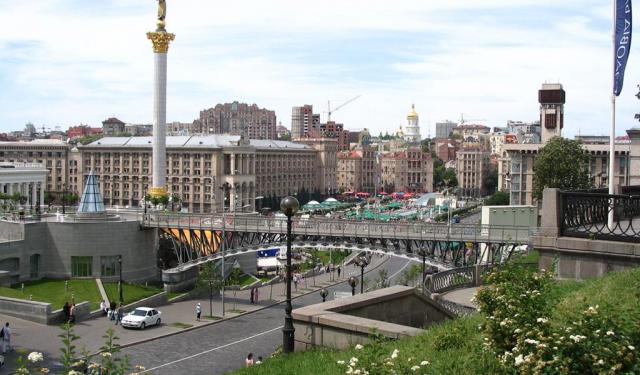
Kiev is a very old city. It was initiated approximately 1500 years ago. Since 1934, it was Soviet Ukraine's capital and remained the main city of the country with the collapse of the Soviet Union. Being one of the biggest cities in Europe, it has a very specific history, architecture and cultural life. One can never be bored in Kiev, as it has endless interesting and captivating places to...  view more

Tour Duration: 2 Hour(s)
Travel Distance: 3.6 Km or 2.2 Miles
Monastery of Kiev Caves Tour

Monastery of Kiev Caves Tour

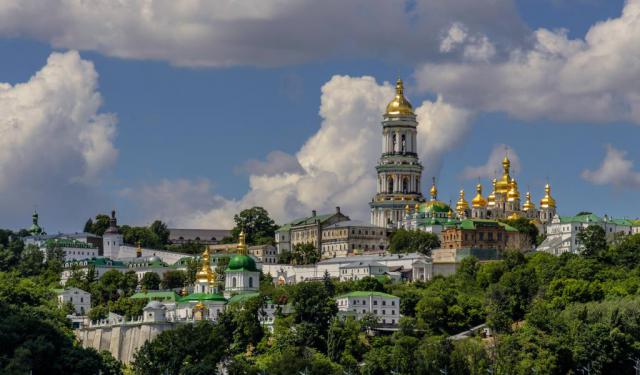
Some sources say that Kievo-Pecherskaya Lavra (Monastery of Kiev Caves Tour) was initiated in 1051, when Reverend Anthony arrived there. He, together with some of his followers, built an entire complex composed of caves and monasteries. When the monks moved to a monastery which is on Lavra's territory, the caves were utilized as burial sites. Nowadays it is included in the UNESCO World...  view more

Tour Duration: 1 Hour(s)
Travel Distance: 1.5 Km or 0.9 Miles
Andriyivskyy Descent Walk

Andriyivskyy Descent Walk

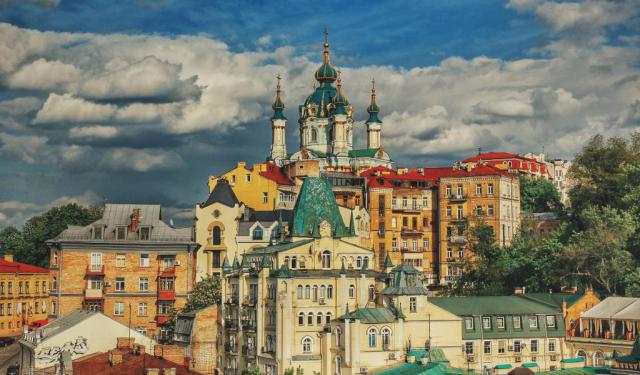
Andriyivskyy (Andrew's) Descent is a historic cobblestone street, running 720 meters (2,360 ft) downhill from the Upper (Old) Town of Kiev to the once commercial neighborhood of Podil (Lower Town), ending at Kontraktova Square.

According to a legend, there was once a sea where the Dnieper River now flows. When Saint Andrew, the Apostle came to Kiev and erected a cross on the spot where St...  view more

Tour Duration: 1 Hour(s)
Travel Distance: 0.6 Km or 0.4 Miles
Useful Travel Guides for Planning Your Trip


Kiev Souvenirs: 12 Distinctively Ukrainian Products to Bring Home

Kiev Souvenirs: 12 Distinctively Ukrainian Products to Bring Home

In recent years, Ukraine has made the news rather distant from welcoming tourism. Still, despite some controversial publicity, the country - for the most part - continues normal life and retains its traditional hospitality. There are quite a few things in Kiev, distinctively Ukrainian, that a...