

Koblenz Introduction Walking Tour, Koblenz

Koblenz Introduction Walking Tour (Self Guided), Koblenz

Local legends say that one 16th century robber stuck out his tongue before being executed. Instead of finding this event grim, Koblenz residents made the cheeky robber a symbol, nowadays immortalized in the shape of a little boy's statue.

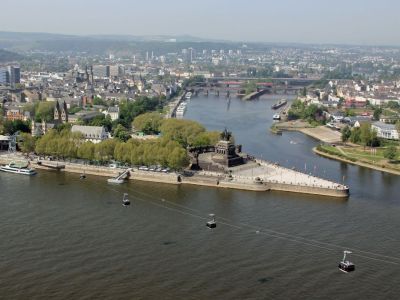
The city's name comes from the Latin ad confluentes, meaning “at the confluence”, referring to the meeting point of the great rivers Moselle and Rhine. Over time, Confluentes evolved into Coblenz and eventually the modern Koblenz.

Around the year 8 BC, the Romans established a military post on the site under General Drusus. Its location made it a perfect vantage point to control river traffic and defend the northern frontier of the Roman Empire. Koblenz quickly grew beyond its role as a garrison as traders, craftsmen, and settlers prospered from the steady movement of goods along the waterways.

In the early Middle Ages, the region came under Frankish rule. By 1018, Emperor Henry II gifted Koblenz to the Archbishopric of Trier, making it part of ecclesiastical territory. Later, in the High Middle Ages, Koblenz gained prominence as a trade center, mainly for wine, timber and grains. In 1214, the settlement was officially chartered as a city, gaining the right to hold markets and fortify its walls.

Through the centuries, it passed through varying hands—French, Prussian, and local powers. After the Napoleonic Wars, it became part of Prussia’s Rhine Province. Tired of being passed around, Koblenz heavily fortified itself. The fortress systems around the city, especially across the Rhine, became a major military stronghold.

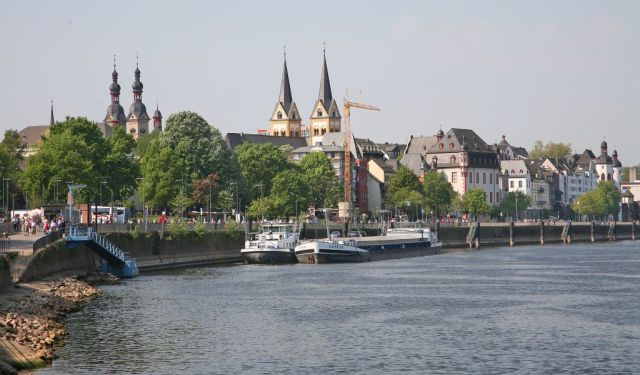
Walking through the old town, you’ll pass narrow cobbled alleys, colorful half-timbered houses, and the lofty spire of St. Castor’s Basilica. You’ll arrive at the German Corner, where the Rhine and Moselle rivers meet, crowned by the statue of Emperor Wilhelm I – a symbol of German unity. Riverside promenades, charming cafés, peaceful parks, and ferries decorate the confluence further.

In 1992, Koblenz celebrated its 2,000th anniversary—a milestone few cities can claim. Despite its age, the city is still going strong by being a true hidden gem along the course of the Rhine. Take the chance and go see for yourself how Koblenz sticks out its tongue at time itself.
How it works: Download the app "GPSmyCity: Walks in 1K+ Cities" from Apple App Store or Google Play Store to your mobile phone or tablet. The app turns your mobile device into a personal tour guide and its built-in GPS navigation functions guide you from one tour stop to next. The app works offline, so no data plan is needed when traveling abroad.

Download The GPSmyCity App

Koblenz Introduction Walking Tour Map

Guide Name: Koblenz Introduction Walking Tour
Guide Location: Germany » Koblenz (See other walking tours in Koblenz)
Guide Type: Self-guided Walking Tour (Sightseeing)
# of Attractions: 17
Tour Duration: 3 Hour(s)
Travel Distance: 4.2 Km or 2.6 Miles
Author: DanaOffice
Sight(s) Featured in This Guide:
  • Electoral Palace
  • Preußisches Regierungsgebäude (Prussian Government Building)
  • Pegelhaus (Gauge House)
  • Koblenz Cable Car
  • Kaiser-Wilhelm-Denkmal (Kaiser-Wilhelm Monument)
  • Deutsches Eck (German Corner)
  • Basilica of Saint Castor
  • Gorres Square and History Column
  • Jesuitenplatz (Jesuit Square)
  • Koblenz Rathaus (Town hall)
  • Altes Brauhaus (The Old Brewery)
  • Liebfrauenkirche (Church of Our Lady)
  • Alte Burg (Old Castle)
  • Munzplatz (Mint Square)
  • Vier Turme (Four Towers)
  • Herz Jesu Kirche (Church of the Sacred Heart of Jesus)
  • Lohrstraße (Löhr Street)
1
Electoral Palace

1) Electoral Palace

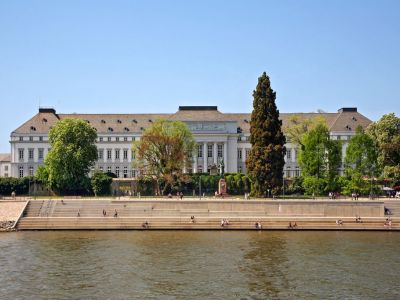
The Electoral Palace (Kurfürstliches Schloss) is one of the city’s most impressive landmarks, a neoclassical masterpiece that stands proudly along the banks of the Rhine. Completed in 1786, it was commissioned by Elector Clemens Wenzeslaus of Saxony as a lavish residence befitting his status as Archbishop-Elector of Trier. Its elegant symmetry, columned portico, and riverside gardens embody the refined taste of the late 18th century, when Koblenz was a hub of political and cultural life in the Rhineland. Although war and time have left their marks, the palace has been carefully restored, allowing visitors to appreciate its grandeur much as it was originally conceived.

History resonates through every corridor of the palace. After the fall of the Electorate of Trier, the building was used by Prussian royalty and later by occupying forces during the Napoleonic Wars and both World Wars. In the aftermath of World War II, it served as the headquarters of French military authorities. Each chapter of its past is visible in the subtle changes of architecture and design, making it not only a showcase of neoclassical aesthetics but also a mirror of European history.

Visitors today can explore the palace’s stately halls and enjoy its picturesque riverside setting, framed by manicured gardens that invite leisurely walks. The terrace, which opens onto the Rhine, is a favorite vantage point for taking in the confluence of the Rhine and Moselle rivers at the famous Deutsches Eck, just a short stroll away. Inside, exhibitions and events highlight the cultural life of Koblenz and the historical significance of the residence.

For those discovering the city, the Electoral Palace stands as both an architectural gem and a reminder of Koblenz’s layered history. From strolling through its leafy gardens and admiring the calm symmetry of its classical façade to joining one of its cultural events, the palace offers a graceful contrast to the medieval fortresses and bustling squares nearby.
2
Preußisches Regierungsgebäude (Prussian Government Building)

2) Preußisches Regierungsgebäude (Prussian Government Building)

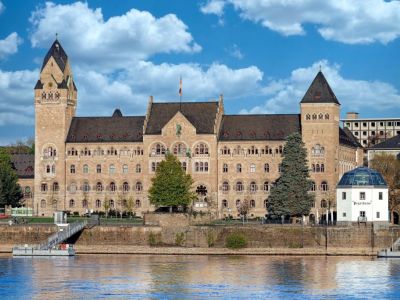
At the meeting point of the Rhine and Moselle rivers, the Prussian Government Building (Preußisches Regierungsgebaude) stands as one of Koblenz’s most commanding landmarks. Built between 1902 and 1906, this monumental structure once housed the provincial government of the Prussian Rhineland, underscoring the city’s importance within the expanding Prussian state. Designed in a striking neo-Romanesque style, its sheer scale and fortress-like solidity reflect both imperial ambition and the symbolic authority of Berlin’s western stronghold. The building’s placement along the riverbank also linked it visually to the Deutsches Eck, where the Rhine and Moselle meet beneath the towering statue of Emperor Wilhelm I.

The architecture makes an immediate impression. Constructed from rugged sandstone, the edifice resembles a medieval palace, with arcades, round-arched windows, and a prominent central tower that rises above the riverside skyline. The design came from architect Paul Kieschke, who drew inspiration from Rhenish castles and Romanesque cathedrals, embedding the structure within the region’s historical identity while serving the political present. During its early years, the building functioned as the administrative headquarters for the Prussian Rhine Province, a reminder of Prussia’s power in this strategic corner of Germany.

History, however, was not always kind. Much of Koblenz suffered during the Second World War, and the Regierungsgebäude was badly damaged in air raids. Reconstruction restored its imposing form, though traces of wartime destruction remain visible. Today, the building no longer serves as a government seat, but its silhouette continues to dominate the riverfront, a visual link between the medieval old town and the grand 19th-century urban expansion.

For visitors, the Prussian Government Building offers both an architectural spectacle and a tangible reminder of the city’s layered history, from Roman settlement through medieval rule to Prussian administration and beyond.
3
Pegelhaus (Gauge House)

3) Pegelhaus (Gauge House)

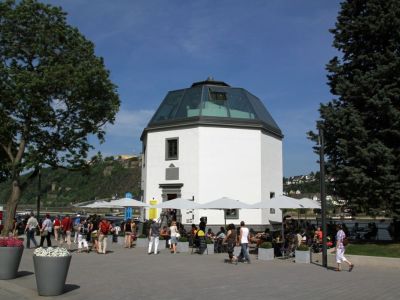
Rising along the banks of the Moselle, the Gauge House (Pegelhaus) stands as one of Koblenz’s most distinctive riverfront landmarks. Built between 1609 and 1611 under the direction of Elector Lothar von Metternich, with master builder Johann Pasqualini overseeing the project, the octagonal structure was originally constructed as a Rhine crane. In its early years, it played a crucial role in loading and unloading goods from ships, a reminder of the city’s centuries-old importance as a hub of river trade at the meeting point of the Rhine and Moselle.

The building’s function evolved. After the crane machinery was removed in 1839, the structure was adapted as a gauging station, where officials measured the ever-changing water levels of the Rhine. This work was essential to navigation and commerce, ensuring that tolls could be fairly assessed and river traffic could proceed safely. Today, the Gauge House is still associated with this heritage, as the water level recorded here is one of 22 official gauges used to regulate navigation along the Rhine.

Architecturally, the Gauge House is notable for its compact, octagonal shape and profiled base, reflecting the practical yet elegant style of early 17th-century design. The façade carries a sense of sturdy functionality, while the addition of a glazed roof over the entrance café area has given the building a contemporary dimension. To the right of the entrance, you can trace centuries of local history by examining the carved flood marks that record the river’s most dramatic rises. On the opposite wall, a distinctive blue water-level clock continues to register the Moselle’s height, connecting present-day visitors to generations of navigators who once relied on this very gauge.

Today, the Gauge House has found a new life as a restaurant, allowing visitors to dine with panoramic views of the river while surrounded by layers of history. Be it a leisurely meal or a brief visit, the building offers a moment to reflect on Koblenz’s enduring relationship with its rivers and the vital role they have played in shaping the city’s story.
4
Koblenz Cable Car

4) Koblenz Cable Car (must see)

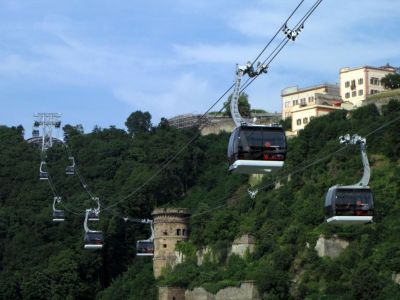
Gliding high above the confluence of the Rhine and Moselle rivers, the Koblenz Cable Car offers one of the most striking perspectives on the city. Opened in 2010 as part of preparations for the Federal Horticultural Show the following year, it quickly became more than just a temporary attraction. Linking the historic old town with the Ehrenbreitstein Fortress on the opposite bank, the cable car has since become an essential part of the city’s cultural and tourist landscape, combining practical transport with sweeping scenery.

The ride itself is a highlight of any visit. Modern cabins, some with glass floors, glide smoothly across the water, rising above rooftops to reveal the iconic Deutsches Eck (German Corner) where the two great rivers meet. On clear days, passengers are treated to panoramic views stretching over the Rhine Gorge and the surrounding hillsides. The journey lasts only a few minutes, but it provides a perspective on Koblenz that no walking tour can replicate.

At the top, the Ehrenbreitstein Fortress, one of Europe’s largest preserved fortresses, awaits exploration. The medieval stronghold has stood watch over the city for centuries and now houses museums, cultural exhibitions, and even concert spaces. The spacious terraces offer some of the best vantage points in the region, perfect for photographers and history enthusiasts alike.

Used as a quick shortcut across the Rhine or savored as an experience in itself, the Koblenz Cable Car is far more than transport-it’s a floating balcony over one of Germany’s most scenic landscapes and an unmissable part of any visit to the city.
5
Kaiser-Wilhelm-Denkmal (Kaiser-Wilhelm Monument)

5) Kaiser-Wilhelm-Denkmal (Kaiser-Wilhelm Monument)

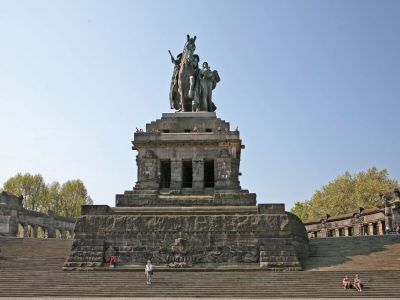
Rising proudly at the confluence of the Rhine and Moselle rivers, the Kaiser-Wilhelm Monument is one of the city’s most recognizable landmarks. This monumental equestrian statue of Emperor Wilhelm I marks the tip of the Deutsches Eck (“German Corner”), where the two rivers meet. Originally unveiled in 1897, just a few years after Wilhelm I’s death, it was designed as a tribute to the first German Emperor and a symbol of national unity following the unification of Germany in 1871.

The monument was badly damaged during World War II and stood in ruins for decades, a poignant reminder of the city’s destruction. For years, the site served as a memorial to peace and unity in a divided Germany. It wasn’t until 1993, after reunification, that the statue was reconstructed with a new bronze equestrian figure, restoring the monument’s original grandeur. The rebuilt Kaiser-Wilhelm Monument now combines historical remembrance with a message of reconciliation and national pride.

For visitors, the site offers more than a glimpse into Germany’s imperial past. Standing beneath the towering 14-metre statue, you can admire the sweeping panoramic views over the Rhine and Moselle, as well as the surrounding hills and fortifications. The monument’s scale and its ornate base, decorated with allegorical figures, make it a striking example of late 19th-century historicist sculpture.

Today, the Kaiser-Wilhelm Monument anchors the lively promenade of Deutsches Eck, where riverboats dock and locals gather to enjoy festivals and riverside strolls. It is both a place of commemoration and a scenic vantage point, offering travelers an evocative introduction to Koblenz’s long history as a crossroads of cultures and a gateway to the picturesque landscapes of the Upper Middle Rhine Valley.
6
Deutsches Eck (German Corner)

6) Deutsches Eck (German Corner) (must see)

At the confluence of the Rhine and Moselle rivers lies the German Corner (Deutsches Eck), one of the most iconic landmarks in the Rhineland. This striking headland has long been a symbol of unity and strength, a natural meeting point where two of Europe’s great waterways merge beneath the gaze of castles and vine-covered hills. For visitors arriving in Koblenz, the sight of the wide Rhine flowing northward while the Moselle joins from the west is both dramatic and memorable.

The defining feature of the German Corner is the towering equestrian statue of Emperor William I, the first German Emperor, who played a key role in the country’s unification in 1871. The original monument, erected in 1897, was heavily damaged during World War II and stood as a ruin for decades before being restored and rededicated in 1993, this time as a national symbol of unity following German reunification. Today, the imposing bronze figure of William I atop his horse remains a commanding presence, visible from across the rivers.

As you stroll along the spacious promenade, you’ll find sweeping views over the UNESCO-listed Upper Middle Rhine Valley, dotted with vineyards, church spires, and medieval fortresses clinging to the hillsides. The site is also a popular departure point for Rhine river cruises, making it both a historic landmark and a gateway to the surrounding landscape.

The German Corner is more than just a scenic lookout; it’s a place where layers of German history converge. From its 19th-century nationalist symbolism to its modern role as a site of remembrance and celebration, it embodies the evolving story of Germany itself.
7
Basilica of Saint Castor

7) Basilica of Saint Castor (must see)

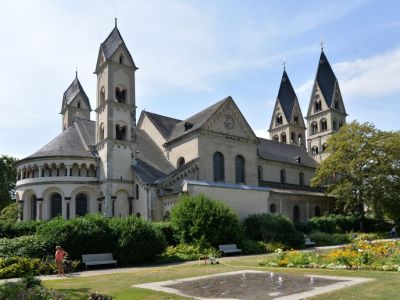
Rising near the confluence of the Rhine and Moselle rivers, the Basilica of Saint Castor is the oldest preserved church in Koblenz and a landmark deeply woven into the city’s history. Founded in the early 9th century under the rule of Emperor Louis the Pious, the basilica was dedicated to Saint Castor, a 4th-century priest venerated for his missionary work in the region. Over the centuries, the church has witnessed imperial councils, political negotiations, and religious ceremonies, making it a silent witness to pivotal moments in European history.

Architecturally, the basilica is a striking example of Romanesque design, later enriched with Gothic and Baroque elements. Its twin western towers, symmetrical and commanding, are a defining feature of the Koblenz skyline. Inside, visitors find a serene blend of soaring arches, rounded windows, and a nave lined with columns that lead the eye toward the high altar. The interior also preserves medieval frescoes and intricately carved details that hint at the craftsmanship and devotion of the artisans who shaped the building.

Beyond its architectural beauty, the basilica holds deep historical resonance. In 842, the Treaty of Verdun was negotiated here, a defining event that divided the Carolingian Empire and laid the groundwork for the modern states of France and Germany. Over the years, the church has endured periods of war, destruction, and restoration, yet it has remained a place of worship and a cultural touchstone for the people of Koblenz.

Today, the Basilica of Saint Castor offers travelers both a place of reflection and a window into the city’s layered past. Admiring its historic crypt, lingering in the quiet of its cloisters, or looking out toward the Deutsches Eck where two great rivers converge, visitors encounter a basilica that weaves spiritual heritage with the broader story of European history.
8
Gorres Square and History Column

8) Gorres Square and History Column (must see)

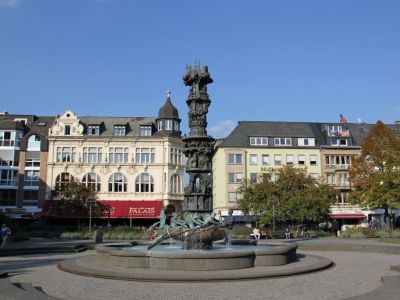
Gorres Square (Görresplatz), one of the most historic squares in Koblenz, is a lively open space that blends centuries of history with the rhythm of modern city life. Located just a short walk from the old town and the River Moselle, the square takes its name from Joseph Gorres, a renowned 19th-century writer and political thinker born in Koblenz. The square has long served as a gathering place for markets, civic events, and everyday strolls, and today it continues to be a favorite meeting point for both residents and visitors.

Dominating the Gorres Square is the striking History Column (Historiensäule), a 10-metre-tall bronze monument unveiled in 2000 to mark the city’s 2,000th anniversary. The column is decorated with intricate reliefs that spiral upward, narrating Koblenz’s turbulent history from Roman times through the Middle Ages, the Thirty Years’ War, the Napoleonic era, and into the 20th century. Each level depicts a chapter of resilience, destruction, and renewal, culminating in a symbolic fountain at the base where water trickles down as a metaphor for life’s continuity. It is often described as a “history book in bronze,” inviting visitors to circle the monument and read the city’s story through art.

Around the square, you’ll find leafy trees, benches, cafés, and open space where locals gather, creating a welcoming atmosphere. In summer, the area becomes particularly vibrant, hosting cultural events and providing a refreshing pause for those exploring Koblenz’s historic core. It also serves as a convenient crossroads, linking major attractions such as the Jesuit Square, the Electoral Palace, and the Rhine promenade.

For visitors, Gorres Square serves as both a window into history and a welcome pause amid sightseeing. You might linger over the tales etched into the History Column or simply absorb the square’s atmosphere, but either way it captures the spirit of Koblenz-a city deeply rooted in its past yet vibrant with community and culture today.
9
Jesuitenplatz (Jesuit Square)

9) Jesuitenplatz (Jesuit Square)

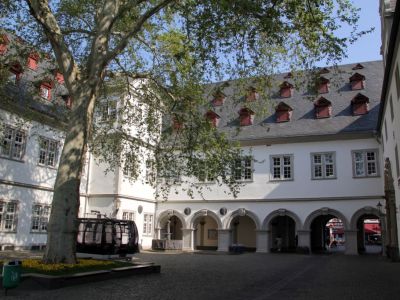
Tucked into the heart of Koblenz’s picturesque old town, Jesuit Square (Jesuitenplatz) is often described as the city’s most beautiful square-and it’s easy to see why. Encircled by elegant, centuries-old townhouses that have been lovingly restored, the square exudes a timeless charm. Strolling across its cobblestones, you’ll find inviting cafés and small boutiques that encourage you to pause, sip a coffee, and watch the rhythm of local life unfold.

At the centre of Jesuit Square stands the Jesuit Square Monument, an impressive fountain erected in 1899. It honours the renowned physiologist and anatomist Johannes Müller, a native of Koblenz, whose groundbreaking research left a lasting mark on science. The monument, with its detailed sculptures, is a favourite spot for photographs and serves as a focal point for the square.

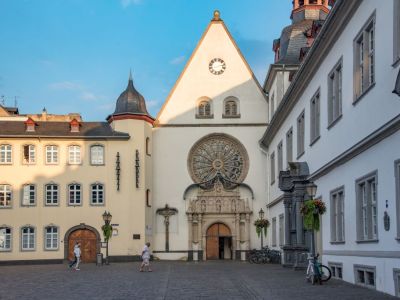
Dominating the south side is the Koblenz Town Hall, a striking building with towers and ornate portals that give it the air of a castle. Originally constructed between 1694 and 1701 as the Jesuit Gymnasium, it has been the city’s administrative centre since 1805. Close by stands the Jesuit Church, a splendid Baroque structure dating from 1613–1617. Its beautifully decorated interior is well worth a visit for anyone interested in art and architecture.

Beyond its historic landmarks, Jesuit Square is a living public space. Markets and civic events have taken place here for centuries, and today the square still hosts lively gatherings, from seasonal Christmas markets to cheerful wine festivals that celebrate the region’s famous vintages.
10
Koblenz Rathaus (Town hall)

10) Koblenz Rathaus (Town hall)

The Koblenz Town Hall stands as a prominent landmark in the heart of this historic Rhine city, embodying centuries of civic life and architectural heritage. Housed in a former Jesuit College dating back to the late 17th century, the building combines baroque grandeur with the civic pride of one of Germany’s oldest cities. Its imposing façade, arched windows, and elegant proportions make it a striking presence on the Jesuitenplatz, a lively square often filled with cafés, markets, and street performers. For visitors exploring Koblenz, the Rathaus serves not only as a functioning seat of city administration but also as a gateway to understanding the city’s rich past.

Stepping into the complex, you’ll find echoes of its original religious purpose. Built by the Jesuits between 1698 and 1701, the structure once housed classrooms, a library, and spaces for scholarly and spiritual life. After the dissolution of the Jesuit order in the 18th century, the building gradually took on a civic role, eventually becoming the official Town Hall. Today, the blend of monastic architecture and governmental function gives the Rathaus a distinctive character, tying together the city’s spiritual and civic heritage.

Beyond its architectural interest, the Town Hall is a living centre of Koblenz’s cultural identity. Its interiors contain historic rooms, ceremonial halls, and exhibition spaces that are occasionally open to the public, offering glimpses into the city’s administrative and social history. Visitors will also notice the colorful mosaics on the façade, which depict scenes from Koblenz’s storied past and add a decorative flourish to the building’s otherwise classical design.

As you wander the cobbled lanes of the Altstadt or pause in Jesuitenplatz to watch daily life unfold, the Koblenz Town Hall recalls the city’s enduring role as a crossroads of cultures, faiths, and political power. For travelers, it is a rewarding stop that unites the elegance of Baroque architecture with the continuing story of Koblenz.
11
Altes Brauhaus (The Old Brewery)

11) Altes Brauhaus (The Old Brewery)

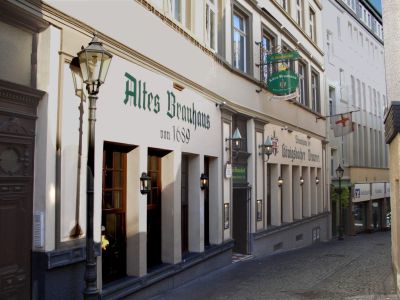
In the historic heart of Koblenz, just steps from the bustling Münzplatz, stands the Old Brewery (Altes Brauhaus), a beloved beer hall and restaurant with centuries of tradition behind its sturdy stone walls. Housed in a building dating back to 1689, this former brewery embodies the convivial spirit of the Rhineland, where food, drink, and fellowship have long been central to daily life. Its timber-framed exterior and warm, wood-paneled interiors create an inviting setting that blends history with the hum of contemporary conversation. For visitors exploring Koblenz’s winding old town, the Old Brewery offers a welcome pause and a taste of the city’s enduring hospitality.

Step inside and you’ll be greeted by a lively atmosphere where locals gather at long communal tables under rustic beams, raising their glasses of freshly poured beer. The menu celebrates hearty Rhenish and German cuisine-think sausages, schnitzel, roast pork, and generous platters meant for sharing. Many dishes are still rooted in recipes that reflect Koblenz’s culinary traditions, making the brewery both a restaurant and a cultural institution. The beer, brewed in-house for centuries, is a particular point of pride, and tasting a crisp local Kölsch or a seasonal specialty is considered a must.

The Old Brewery is more than a place to eat-it’s a living piece of Koblenz’s social fabric. In a city shaped by its location at the confluence of the Rhine and Moselle rivers, the brewery has long served as a gathering point for travellers, townsfolk, and students. You might drop by for a quick lunch, linger over an evening drink, or settle in for a full traditional meal, but in every case you’ll be drawn into the easygoing, communal rhythm of life in Koblenz.
12
Liebfrauenkirche (Church of Our Lady)

12) Liebfrauenkirche (Church of Our Lady)

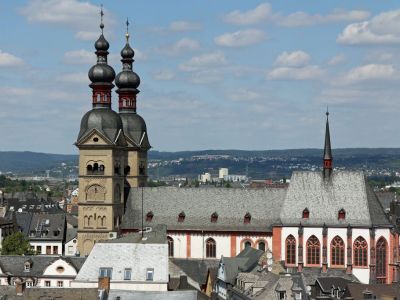
In the heart of Koblenz’s old town, the Church of Our Lady (Liebfrauenkirche) rises above a tangle of narrow streets with its distinctive twin onion-domed towers. One of the city’s most important landmarks, the church stands on the site of a late Roman fort and an early Christian place of worship, its foundations reaching back to the 5th century. Over the centuries, it has evolved from a modest parish church into a grand Gothic hall church, reflecting the city’s shifting fortunes as a strategic stronghold at the confluence of the Rhine and Moselle rivers.

The Church of Our Lady was rebuilt and expanded several times, particularly during the 12th and 15th centuries, when the striking Gothic nave and choir were added. The twin towers, capped with their distinctive bulbous Baroque domes, were completed in the 17th century and remain a defining feature of Koblenz’s skyline. Although the church was heavily damaged during Allied air raids in World War II, it was carefully reconstructed after 1945, restoring its historical character while incorporating sensitive modern touches.

Stepping inside, visitors encounter a serene interior marked by soaring Gothic arches, luminous stained-glass windows, and a harmonious blend of medieval and postwar design. The high vaulted ceilings create an atmosphere of reverence, while works of sacred art and the richly carved altars highlight the church’s long spiritual tradition. The space continues to serve as a vibrant parish church, hosting regular services, concerts, and community events.

For travelers exploring Koblenz, the Church of Our Lady offers more than architectural beauty-it provides a link to the city’s deep Christian heritage and its resilience through centuries of change. Seen from the cobbled square outside or experienced within its tranquil interior, the Liebfrauenkirche endures as a place of reflection and cultural meaning, grounding visitors in the wider story of Koblenz.
13
Alte Burg (Old Castle)

13) Alte Burg (Old Castle)

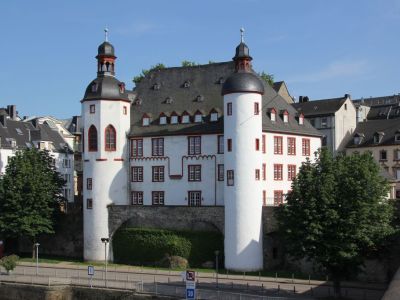
The Old Castle (Alte Burg) is a reminder of Koblenz’s medieval past, standing directly on the banks of the Moselle River. Originally built in the late 13th century by Archbishop Diether von Trier, the castle was intended to strengthen the city’s defenses and assert the archbishop’s control over the region. Its location at the confluence of the Moselle and Rhine rivers made Koblenz a strategic hub, and the Alte Burg served both as a fortress and a residence for the archbishops of Trier. Over the centuries, the building underwent several modifications, reflecting the changing military and political needs of the city.

Though much of its original defensive function has faded, the Alte Burg still retains a distinctly medieval character, with its thick stone walls, towers, and riverside setting. Visitors will notice the remnants of the old city fortifications integrated into the structure, offering a glimpse into how Koblenz once fortified itself against rivals and invaders. The castle’s design embodies the practical strength of Gothic military architecture while hinting at its residential role through more refined details added during later renovations.

Today, the Alte Burg serves a very different purpose. It houses the Koblenz City Library, blending the medieval atmosphere of the building with the modern pursuit of knowledge. While the interior is generally not open for exploration in the way of a traditional castle museum, the exterior is a highlight for visitors strolling along the Moselle promenade. Its riverside location provides excellent views and photo opportunities, particularly with the contrast of the castle’s weathered stone against the vibrant flow of the river.
14
Munzplatz (Mint Square)

14) Munzplatz (Mint Square)

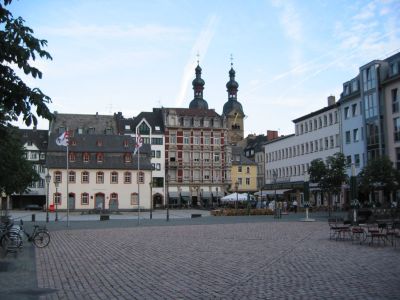
Mint Square (Munzplatz) is one of the central spaces in the old town of Koblenz, and its name recalls the city’s long role in coin production. From the mid-11th century, coins for the electors of Trier were struck in Koblenz, and by the 15th century, the city had even replaced Trier as the prince-bishop’s main mint. The complex once included a range of workshops and facilities such as smelters, furnaces, and tasting houses. Although these structures were cleared in the early 19th century, their presence shaped the history of the square. Today, the only surviving building from this era is the mint master’s house, a plain but elegant Baroque residence that offers a tangible link to the site’s original function.

Over the centuries, Mint Square transformed from a working mint into a public gathering place. Its location in the heart of Koblenz’s pedestrian zone made it a natural hub for trade and commerce. The Second World War brought destruction to much of the city, including areas around the square, and reconstruction in the post-war years introduced modern architecture and open spaces that still define its appearance today. Despite these changes, the Mint Square retained its historic resonance, continuing to be a central meeting point where daily life plays out against the backdrop of centuries of change.

Modern visitors experience the Mint Square as a lively square surrounded by shops, cafés, and restaurants. Seasonal events and decorations-from Christmas lights to spring flowers-add atmosphere, while occasional performances and markets lend extra vibrancy. Sitting at one of the outdoor cafés provides a chance to watch the city in motion, where history and contemporary life meet in the rhythm of Koblenz’s old town.
15
Vier Turme (Four Towers)

15) Vier Turme (Four Towers)

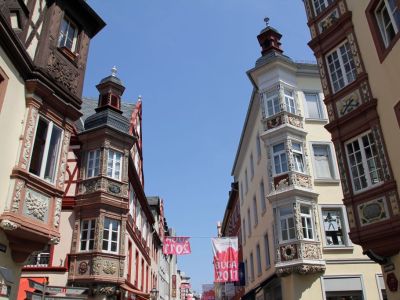
At the busy crossroads where Am Plan, Lohrstrasse, Marktstrasse, and Altengraben converge in the heart of Koblenz’s old town, four striking houses rise above the bustle. Each corner is crowned with an ornate, octagonal oriel tower capped by a pointed roof, together forming what locals call the Four Towers (Vier Türme). These elegant structures were first erected in 1608 under the direction of Elector Lothar von Metternich and the fortress architect Johann Pasqualini. Their symmetry and decorative façades were meant to embody civic pride, marking this intersection as a central point in the city.

The towers have endured a turbulent history. Around eighty years after their construction, all four were destroyed during the Palatinate War of Succession. Between 1689 and 1692, the houses were carefully restored, reinstating their distinctive appearance as guardians of the crossing. Their resilience was tested again in 1944, when wartime bombing ravaged Koblenz and three of the towers were reduced to ruins. In the post-war years, reconstruction efforts brought them back to life, and by 1960, the quartet of towers once again framed the streets of the old town.

Today, the Four Towers are considered among Koblenz’s most recognizable landmarks. Blending Renaissance and Baroque influences with the character of the city’s medieval fabric, they add both charm and order to the urban scene. Standing beneath their gabled façades, visitors can trace the layers of history etched into the stonework, from the ambitions of seventeenth-century rulers to the scars and restorations of the twentieth century.

A visit to the intersection is as much about atmosphere as it is about architecture. Cafés and shops line the streets, while the towers draw the eye upward with their decorative projections and harmonious silhouettes.
16
Herz Jesu Kirche (Church of the Sacred Heart of Jesus)

16) Herz Jesu Kirche (Church of the Sacred Heart of Jesus)

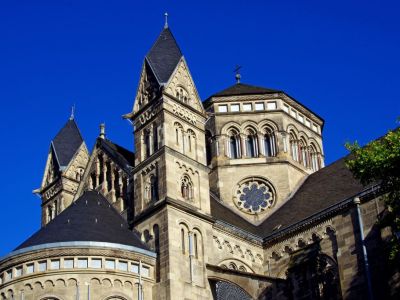
Church of the Sacred Heart of Jesus (Herz Jesu Kirche) is one of Koblenz’s most striking architectural landmarks, blending Romanesque revival style with a sense of serene spirituality. Completed in 1903, this Catholic church was designed by the Munich architect Ludwig Becker, who drew inspiration from medieval cathedrals along the Rhine. Its commanding twin towers and intricate façade make it a distinctive silhouette in the city’s skyline, especially when viewed from the opposite bank of the river.

The church was constructed during a period of renewed interest in historic architectural styles, and its design reflects a fascination with Romanesque forms-round arches, massive stone walls, and symmetrical towers-while also integrating elements of the emerging Jugendstil (Art Nouveau) aesthetic. This synthesis gives the church both a sense of timelessness and a subtle modern flair that sets it apart from Koblenz’s Gothic and Baroque churches. Despite suffering severe damage during World War II, the building was meticulously restored, ensuring that its character and beauty would endure.

Inside, visitors find a luminous, harmonious space that emphasizes height and balance. The interior is adorned with detailed stonework, stained-glass windows, and a high vaulted ceiling that draws the eye upward, creating an atmosphere of contemplation. The church is not just a place of worship but also a venue for concerts, thanks to its excellent acoustics, making it a cultural as well as a spiritual destination.

For travelers exploring Koblenz, a stop at Church of the Sacred Heart of Jesus offers a peaceful contrast to the city’s bustling squares and riverside promenades. Drawn by its architecture, a moment of quiet reflection, or the atmosphere of a performance, visitors find a church that stands as a testament to Koblenz’s layered history and its enduring devotion to beauty, resilience, and faith.
17
Lohrstraße (Löhr Street)

17) Lohrstraße (Löhr Street)

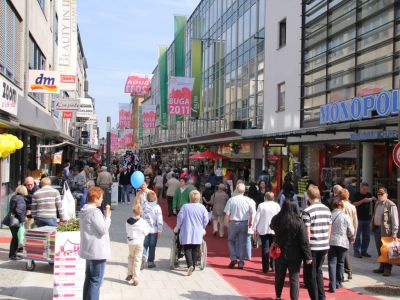
Lohr Street (Lohrstrasse) is one of the main shopping and strolling avenues in the historic city of Koblenz. Stretching from the elegant Gorresplatz toward the bustling Lohr-Center and the main train station, it is a lively pedestrian street that blends centuries of history with the rhythm of modern urban life. Once a traditional thoroughfare leading toward the medieval city gates, it has transformed into a central artery where locals and visitors alike gather to shop, eat, and enjoy the atmosphere of the old town.

Along its length, Lohr Street offers a mix of familiar international brands, German retailers, and smaller boutiques that give travelers a sense of the city’s contemporary character. The street is lined with cafés, bakeries, and restaurants, making it an inviting place to pause for a coffee, a slice of cake, or a leisurely lunch while watching the flow of people pass by. Seasonal markets, street musicians, and local events often animate the area, adding to its dynamic feel.

Beyond commerce, Lohr Street serves as a convenient link between some of Koblenz’s key landmarks. A short walk connects you to the elegant Lohr-Center shopping mall, while just a few steps further bring you closer to the historic heart of the city and the confluence of the Rhine and Moselle rivers at Deutsches Eck. Architectural details along the street reveal layers of history, from 19th-century facades to modern additions, reflecting Koblenz’s ability to balance tradition with a forward-looking spirit.

Lohr Street is more than a place to shop; it is a vibrant cross-section of Koblenz’s daily life. Browsing the shops, sampling regional dishes, or simply taking in the atmosphere, this thoroughfare encourages visitors to slow down and experience the city’s mix of history, culture, and contemporary energy.