

Montpelier Introduction Walking Tour, Montpelier

Montpelier Introduction Walking Tour (Self Guided), Montpelier

Montpelier, the capital of Vermont, traces its origins to the late 18th century, when settlers began arriving in the area following the American Revolution. The land, originally inhabited by Indigenous peoples, including the Abenaki, became part of a wave of new town charters issued as Vermont transitioned from contested territory into an independent republic and, eventually, the 14th U.S. state in 1791.

The city’s name, “Montpelier,” is believed to have been inspired by Montpellier in southern France. It was chosen by Colonel Jacob Davis, an early settler and influential figure in the town’s development, who is said to have admired French culture and possibly wished to reflect the young nation’s alliance with France during the Revolutionary War. The name itself derives from the French mont pelé, meaning “bare hill,” likely referencing the open, treeless slopes that characterized the landscape at the time.

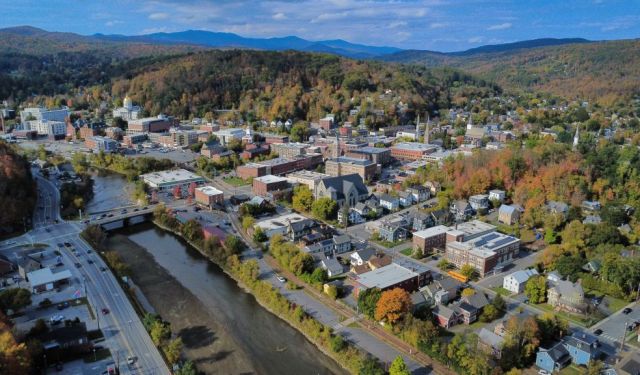
Montpelier developed at the meeting point of the Winooski River and its tributaries, a location that naturally supported milling and small-scale industry. In the early 19th century, it grew steadily as a commercial and administrative centre. In 1805, Montpelier was selected as the state capital, partly due to its central location and accessibility within Vermont’s largely rural geography.

Unlike many American capitals, Montpelier remained small in scale. It never industrialized heavily, and its growth was shaped more by government activity, local commerce, and community institutions than by large factories. The arrival of the railroad in the mid-19th century improved connections to other parts of New England, supporting trade and movement without dramatically altering the city’s character.

Throughout the 20th century, Montpelier maintained its identity as a compact administrative centre, with a focus on public service, education, and local enterprise.

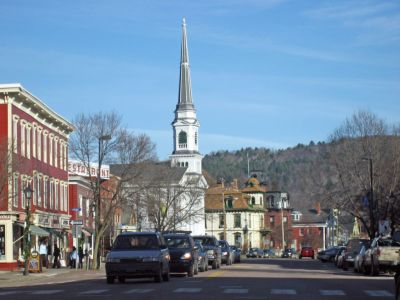
Walking through downtown Montpelier, visitors move along compact streets lined with 19th-century buildings housing independent shops, bookstores, cafés, and galleries. State Street leads toward the Vermont State House, its gold dome visible above the treetops, while Main Street offers a steady rhythm of local businesses and everyday activity. Along the Winooski River, small bridges and quiet corners provide contrast to the civic centre, creating a setting that feels both active and unhurried.

Today, Montpelier stands out as the smallest state capital in the United States by population. Yet, that is not a drawback—quite the opposite. Step into its centre, and you may find that this small capital offers far more than it first seems.
How it works: Download the app "GPSmyCity: Walks in 1K+ Cities" from Apple App Store or Google Play Store to your mobile phone or tablet. The app turns your mobile device into a personal tour guide and its built-in GPS navigation functions guide you from one tour stop to next. The app works offline, so no data plan is needed when traveling abroad.

Download The GPSmyCity App

Montpelier Introduction Walking Tour Map

Guide Name: Montpelier Introduction Walking Tour
Guide Location: USA » Montpelier (See other walking tours in Montpelier)
Guide Type: Self-guided Walking Tour (Sightseeing)
# of Attractions: 8
Tour Duration: 1 Hour(s)
Travel Distance: 1.6 Km or 1 Miles
Author: Sandra
Sight(s) Featured in This Guide:
  • Vermont State House
  • State Street
  • The Pavilion
  • Christ Episcopal Church
  • Main Street
  • Three Penny Taproom
  • Montpelier City Hall
  • Saint Augustine Church
1
Vermont State House

1) Vermont State House

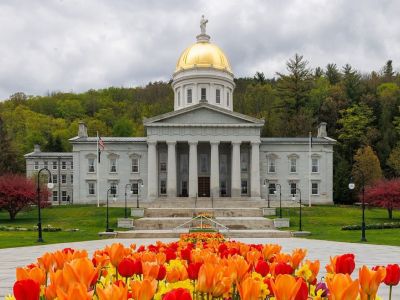
The Vermont State House serves as the seat of the state’s legislature and stands as one of the most recognizable symbols of civic life in Vermont. Completed in 1859, the current structure is the third statehouse built on the same site, replacing an earlier building destroyed by fire in 1857. Designed by architect Thomas Silloway, the building reflects a refined blend of Neoclassical and Greek Revival architecture, a style that conveys balance, order, and democratic ideals.

Constructed largely from local granite, the State House is notable for its elegant proportions and distinctive gilded dome, crowned by a statue representing Ceres, the Roman goddess of agriculture—a nod to Vermont’s rural heritage. Elements of the earlier structure, including the Doric portico, were preserved and incorporated into the new design, linking past and present. Today, the building remains one of the oldest and best-preserved state capitols in the United States, with legislative chambers that continue to function while retaining much of their historic character.
2
State Street

2) State Street

State Street forms the central spine of Montpelier, linking the compact downtown with the seat of state government in a way that feels both practical and quietly picturesque. Running gently uphill toward the golden-domed Vermont State House, the street offers a clear sense of place: this is a capital city, but one scaled to pedestrians rather than crowds.

As you move along State Street, the architecture reflects Montpelier’s steady 19th-century growth, with brick commercial blocks, modest civic buildings, and occasional wooden structures that hint at earlier periods. The street feels lived-in rather than staged—home to local cafés, bookstores, and small businesses that serve both residents and visitors drawn to Vermont’s political and cultural centre.

Closer to the State House, the atmosphere opens up and becomes more formal. The wide lawn, shaded by mature trees, creates a visual pause and frames the approach to the capitol building. From this point, State Street reveals its dual role—both a working corridor and a symbolic avenue. Whether seen in autumn with bright foliage or in winter under fresh snow, it presents Montpelier as it is: small in scale, grounded in history, and quietly confident.
3
The Pavilion

3) The Pavilion

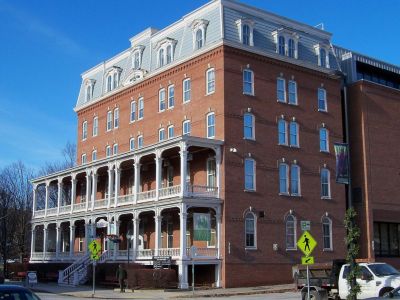
The Pavilion serves as the principal workplace of the governor of Vermont, occupying a prominent position on State Street in Montpelier, the state’s capital. Designed in the French Second Empire style, the building brings together the functional and ceremonial aspects of government, housing the governor’s offices, reception and briefing rooms, and residential quarters, alongside offices for other statewide officials and cultural institutions. The phrase “The Fifth Floor” has become a shorthand reference to the governor’s administration, reflecting the location of the executive offices within the building.

Behind its current form lies a long and layered history. The present structure, completed in 1971, stands on the site of a series of earlier buildings, most notably the 19th-century Pavilion hotel, once known as Vermont’s “third house” for its close ties to the state’s political life. Over time, the grand hotel declined and was ultimately demolished, replaced by a reconstructed version that echoes its predecessor’s exterior while adapting the interior for modern governmental use.

In addition to housing executive offices, The Pavilion is home to the Vermont Historical Society Museum. It offers a comprehensive look at the state’s history, spanning from the time of the Abenaki to the early 21st century.
4
Christ Episcopal Church

4) Christ Episcopal Church

Christ Episcopal Church is a historic parish that has been part of the city’s religious and civic life since its founding in 1840. Established with the involvement of prominent local figures such as Dr. Julius Yemans Dewey—physician, entrepreneur, and father of Admiral George Dewey—the church reflects both the spiritual and social fabric of Vermont’s capital during the 19th century.

Over time, the congregation has remained an active presence in the community, with its church building evolving through periods of construction, damage, and restoration. Beyond its architectural and historical significance, Christ Episcopal Church is also noted for its musical heritage, particularly its organs, which have been the subject of detailed study, underscoring the church’s role not only as a place of worship but also as a centre of cultural interest.
5
Main Street

5) Main Street

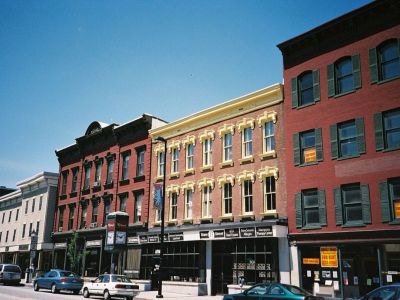
Main Street in Montpelier forms the compact, lively spine of Vermont’s capital, where civic landmarks, local businesses, and everyday life converge within a walkable stretch. The buildings lining the street reflect the city’s 19th- and early 20th-century growth, with brick facades, large display windows, and modest decorative details that give the area a cohesive historic character without feeling overly formal. Seasonal changes shape the experience as well—outdoor seating appears in warmer months, while autumn brings a backdrop of color from the surrounding hills.

Main Street is also where Montpelier’s cultural life becomes most visible. Community events, small festivals, and casual gatherings often spill into the street, reinforcing its role as both a commercial corridor and a shared public space. Whether stopping for coffee, browsing local goods, or simply walking its length, visitors encounter a setting that feels approachable and grounded, offering a clear introduction to the character of Vermont’s capital.
6
Three Penny Taproom

6) Three Penny Taproom

Three Penny Taproom is a cornerstone of Montpelier’s dining and craft beer scene, known for pairing a carefully curated draft list with a relaxed, community-focused atmosphere. Opened in 2009, it arrived at a moment when craft beer culture in Vermont was still taking shape, positioning itself as one of the state’s earliest bars dedicated not just to local brews, but to a wider spectrum of styles from across the country and beyond.

The concept began as something else entirely—a planned brewery or brewpub that never materialized. Reimagined instead as a “craft beer bar,” the founders aimed to treat beer with the same attention usually reserved for wine: thoughtful selection, proper glassware, and an informed approach to style and nuance. At the time, this was a relatively new idea in Vermont, where most venues focused on a limited range of familiar local beers.

In 2012, the space expanded into a full-service restaurant, adding a menu of elevated pub fare built around local and sustainable ingredients. This shift transformed the taproom into a broader gathering place—part bar, part restaurant, and part “third place,” where people come not just to eat and drink, but to linger.
7
Montpelier City Hall

7) Montpelier City Hall

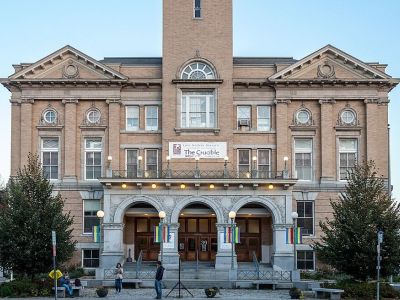
Montpelier City Hall serves as the main administrative centre for Vermont’s capital. Completed in 1911 and designed by architect George G. Adams, the building reflects the Italian Renaissance Revival style, with its yellow brick façade, granite detailing, and a prominent clock tower that rises like a campanile above the surrounding streets. Built on the site of a former open-air market, it embodies early 20th-century ideals of civic pride and urban design, aligning with the City Beautiful movement’s vision of dignified public spaces.

The construction of City Hall marked a turning point for Montpelier, providing a permanent municipal headquarters after years of operating from rented offices. Its completion was accelerated to host the 1911 governor’s ball, reinforcing the city’s role as the state capital.

Today, beyond its administrative function, the building continues to play an active role in community life, hosting cultural events such as performances by the Lost Nation Theater. Open on weekdays, it remains a central point where governance, history, and local culture come together in Vermont’s smallest capital city.
8
Saint Augustine Church

8) Saint Augustine Church

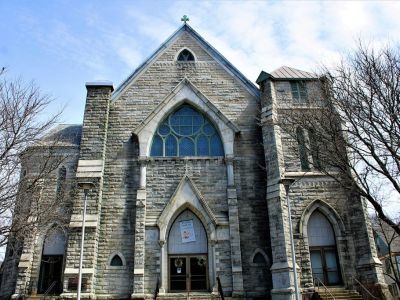
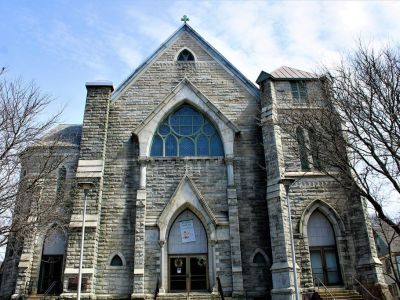
Saint Augustine Church in Montpelier is a Roman Catholic parish church, completed in 1903 after more than a decade of construction. Built in the Gothic Revival style, it is constructed of locally quarried gray granite and features a slate roof, twin towers, and a central rose window. The building forms part of the Montpelier Historic District and continues to serve an active congregation.

The parish dates back to 1830, when the first Catholic Mass in the city was held for a small group of mainly French Canadian residents. Early services took place in private homes and temporary spaces before a permanent church was established. As the community grew, successive buildings were replaced or expanded, leading to the present structure. The interior originally included decorative painting and stained glass in keeping with the Gothic style, though some of these details were simplified in later years.