

Ponsonby Walking Tour (Self Guided), Auckland
Ponsonby is one of Auckland’s most vibrant neighborhoods, known for its lively atmosphere, stylish boutiques, and buzzing café culture. Just minutes from the city center, this historic suburb blends old-world charm with modern flair, featuring beautifully restored Victorian villas alongside contemporary shops, art galleries, and design studios. It’s a favorite destination for those seeking Auckland’s trendier side, offering a mix of fashion, art, and culture within a walkable and welcoming setting.
Food lovers will find Ponsonby especially appealing, as its main thoroughfare, Ponsonby Road, is lined with an eclectic range of restaurants, bars, and eateries serving cuisine from around the world. Whether you’re after casual street food, fine dining, or a night out with live music and cocktails, Ponsonby has something to offer. The area’s vibrant nightlife and relaxed daytime vibe make it a must-visit for travelers looking to experience a lively and creative slice of Auckland.
How it works: Download the app "GPSmyCity: Walks in 1K+ Cities" from Apple App Store or Google Play Store to your mobile phone or tablet. The app turns your mobile device into a personal tour guide and its built-in GPS navigation functions guide you from one tour stop to next. The app works offline, so no data plan is needed when traveling abroad.
Ponsonby Walking Tour Map
Guide Name: Ponsonby Walking Tour
Guide Location: New Zealand » Auckland (See other walking tours in Auckland)
Guide Type: Self-guided Walking Tour (Sightseeing)
# of Attractions: 13
Tour Duration: 2 Hour(s)
Travel Distance: 2.9 Km or 1.8 Miles
Author: leticia
Sight(s) Featured in This Guide:
Guide Location: New Zealand » Auckland (See other walking tours in Auckland)
Guide Type: Self-guided Walking Tour (Sightseeing)
# of Attractions: 13
Tour Duration: 2 Hour(s)
Travel Distance: 2.9 Km or 1.8 Miles
Author: leticia
Sight(s) Featured in This Guide:
- Three Lamps
- Gluepot Tavern
- Former Ponsonby Post Office
- Leys Institute
- Bishop's House
- St. Mary's Old Convent Chapel
- Ponsonby Baptist Church
- St. Stephens Church
- Renall Street
- St. John's Church
- Holmdene
- Braemar Building
- Ponsonby Road
1) Three Lamps
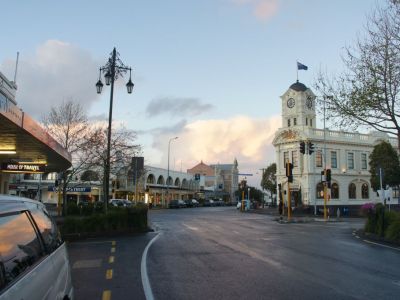
The Three Lamps area in Ponsonby takes its name from a distinctive cast-iron lamppost that once stood at the busy intersection of Ponsonby Road, Saint Mary's Road, Jervois Road, and College Hill. Installed in the 19th century, the triple-headed lamp quickly became a landmark and a popular meeting spot. By the 1930s, however, it was considered a traffic hazard and was removed. Decades later, in 2012, a replica was placed on the footpath to preserve its memory and restore the symbol that gave the district its enduring name.
Over the years, Three Lamps became more than just a reference to a streetlight. It marked the heart of Ponsonby’s social and cultural life, attracting a mix of communities and serving as a hub of activity. In the 20th century, the area was home to a diverse population, including many Māori and Pacific Island families. It developed a reputation for being both vibrant and gritty, with pubs, boarding houses, and live music venues shaping its character. By the 1970s and 1980s, it also gained recognition as a centre for counterculture, activism, and creative expression, further cementing its place in Auckland’s cultural history.
Today, Three Lamps reflects both its layered past and its modern appeal. Visitors can enjoy the lively mix of cafés, bars, and restaurants, alongside boutique shops and galleries that highlight Ponsonby’s contemporary style. The replica lamp serves as a reminder of the area’s heritage while the streets around it buzz with energy, offering a blend of history and modern urban life.
Over the years, Three Lamps became more than just a reference to a streetlight. It marked the heart of Ponsonby’s social and cultural life, attracting a mix of communities and serving as a hub of activity. In the 20th century, the area was home to a diverse population, including many Māori and Pacific Island families. It developed a reputation for being both vibrant and gritty, with pubs, boarding houses, and live music venues shaping its character. By the 1970s and 1980s, it also gained recognition as a centre for counterculture, activism, and creative expression, further cementing its place in Auckland’s cultural history.
Today, Three Lamps reflects both its layered past and its modern appeal. Visitors can enjoy the lively mix of cafés, bars, and restaurants, alongside boutique shops and galleries that highlight Ponsonby’s contemporary style. The replica lamp serves as a reminder of the area’s heritage while the streets around it buzz with energy, offering a blend of history and modern urban life.
2) Gluepot Tavern
Built on a storied site along Ponsonby Road, at the well-known Three Lamps Corner, the Gluepot Tavern became a landmark in Auckland’s social and cultural life. The building was completed in 1937, designed by architect Frederick Browne, replacing an earlier hotel that had occupied the site since the 1870s. Though officially known as the Ponsonby Club Hotel, the nickname “Gluepot” became the public identity over time-rumoured to stem from patrons getting “stuck” in the pub for hours.
Originally set in what was then a working-class district just at the cusp of central Auckland, the Gluepot’s location was strategic. It sat at a crossroads connecting Ponsonby, Herne Bay, and Freemans Bay, and was also served by tram lines at the time, making it a natural gathering place. The hotel gained prominence not only as a drinking establishment but as a social hub: one of its more famous patrons was Michael Joseph Savage, New Zealand’s first Labour Prime Minister, who lived nearby.
From the late 1960s onward, as licensing restrictions relaxed, the Gluepot reinvented itself as a live music venue and became integral to New Zealand’s music history. It nurtured Māori and Pacific audiences initially, including a long-term residency by the blind Māori ensemble The Radars. Over time, it expanded its musical scope: rock, indie, and alternative bands became fixtures, with legendary local and international acts performing in its moveable, energetic spaces. Though the venue closed in 1994, the building remains-and was granted a Category II heritage listing-serving as a tangible reminder of the Gluepot Tavern’s role in Auckland’s cultural memory.
Originally set in what was then a working-class district just at the cusp of central Auckland, the Gluepot’s location was strategic. It sat at a crossroads connecting Ponsonby, Herne Bay, and Freemans Bay, and was also served by tram lines at the time, making it a natural gathering place. The hotel gained prominence not only as a drinking establishment but as a social hub: one of its more famous patrons was Michael Joseph Savage, New Zealand’s first Labour Prime Minister, who lived nearby.
From the late 1960s onward, as licensing restrictions relaxed, the Gluepot reinvented itself as a live music venue and became integral to New Zealand’s music history. It nurtured Māori and Pacific audiences initially, including a long-term residency by the blind Māori ensemble The Radars. Over time, it expanded its musical scope: rock, indie, and alternative bands became fixtures, with legendary local and international acts performing in its moveable, energetic spaces. Though the venue closed in 1994, the building remains-and was granted a Category II heritage listing-serving as a tangible reminder of the Gluepot Tavern’s role in Auckland’s cultural memory.
3) Former Ponsonby Post Office
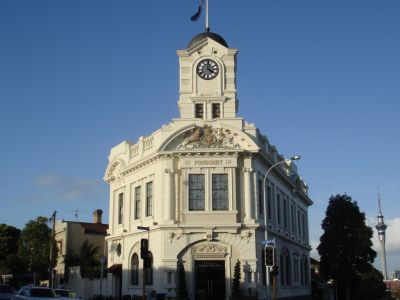
The former Ponsonby Post Office is one of the most recognisable landmarks in Ponsonby, a district of Auckland known for its lively mix of history, culture, and style. Opened in 1912, the building reflects the early 20th-century push to provide Auckland’s growing suburbs with prominent civic structures. Its architecture carries the stamp of government architect John Campbell, who was responsible for many post offices across New Zealand. With its solid brickwork, arched windows, and clock tower rising above the intersection of College Hill and Ponsonby Road, the building was designed to be both functional and a source of civic pride.
For more than a century, the Ponsonby Post Office served as a hub of communication, connecting locals to the rest of the country and beyond. In an era before email and smartphones, the building was a place where news, parcels, and letters passed through daily, weaving together the personal and commercial life of the suburb. Its clock tower quickly became a familiar reference point, anchoring Ponsonby’s identity as the area developed into one of Auckland’s most dynamic neighbourhoods.
Although no longer used solely as a post office, the building remains central to Ponsonby’s streetscape. Its distinctive profile stands out against the surrounding shops, cafés, and heritage houses, a reminder of the suburb’s transition from working-class roots to a fashionable destination. Today, visitors can admire the restored façade, photograph the clock tower, and appreciate how this piece of Edwardian architecture continues to shape the character of the area.
For more than a century, the Ponsonby Post Office served as a hub of communication, connecting locals to the rest of the country and beyond. In an era before email and smartphones, the building was a place where news, parcels, and letters passed through daily, weaving together the personal and commercial life of the suburb. Its clock tower quickly became a familiar reference point, anchoring Ponsonby’s identity as the area developed into one of Auckland’s most dynamic neighbourhoods.
Although no longer used solely as a post office, the building remains central to Ponsonby’s streetscape. Its distinctive profile stands out against the surrounding shops, cafés, and heritage houses, a reminder of the suburb’s transition from working-class roots to a fashionable destination. Today, visitors can admire the restored façade, photograph the clock tower, and appreciate how this piece of Edwardian architecture continues to shape the character of the area.
4) Leys Institute
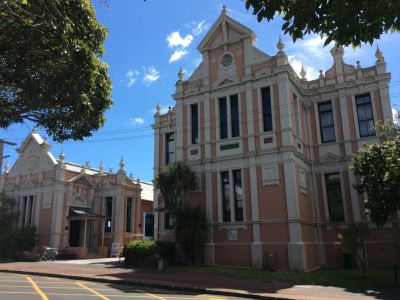
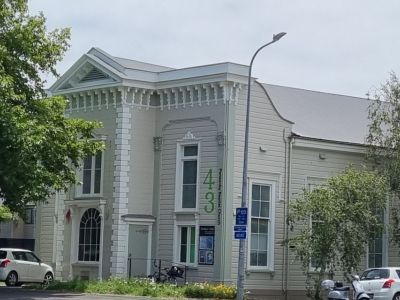
The Leys Institute in Ponsonby is a landmark of both cultural and architectural significance. Established in 1905, it was the gift of William Leys and his brother Thomson, who envisioned a place that would foster education, self-improvement, and community spirit. Designed by architect Robert Martin in a dignified Edwardian Baroque style, the complex originally housed a public library, a lecture hall, and a gymnasium, reflecting the founders’ belief in nurturing both mind and body. With its red-brick façade, classical details, and imposing corner presence, the building quickly became a focal point for residents.
For decades, the Leys Institute was more than just a library-it was a hub of learning and social activity in Ponsonby. Generations of Aucklanders attended lectures, read newspapers in its reading rooms, or joined cultural and sporting clubs held under its roof. It stood as one of the earliest purpose-built public libraries in New Zealand, reflecting the growing commitment to accessible knowledge at the turn of the 20th century. The building was registered as a Category I historic place, acknowledging its importance in Auckland’s civic development and cultural history.
Although closed in 2019 due to seismic concerns, the Leys Institute remains a strong part of the community’s identity. Locals still regard it as a treasured symbol of Ponsonby’s heritage, with plans for strengthening and restoration keeping alive the promise of its return. For visitors exploring Ponsonby, the Leys Institute offers not just a glimpse into Auckland’s architectural past but also a story of philanthropy and civic pride that continues to resonate today.
For decades, the Leys Institute was more than just a library-it was a hub of learning and social activity in Ponsonby. Generations of Aucklanders attended lectures, read newspapers in its reading rooms, or joined cultural and sporting clubs held under its roof. It stood as one of the earliest purpose-built public libraries in New Zealand, reflecting the growing commitment to accessible knowledge at the turn of the 20th century. The building was registered as a Category I historic place, acknowledging its importance in Auckland’s civic development and cultural history.
Although closed in 2019 due to seismic concerns, the Leys Institute remains a strong part of the community’s identity. Locals still regard it as a treasured symbol of Ponsonby’s heritage, with plans for strengthening and restoration keeping alive the promise of its return. For visitors exploring Ponsonby, the Leys Institute offers not just a glimpse into Auckland’s architectural past but also a story of philanthropy and civic pride that continues to resonate today.
5) Bishop's House
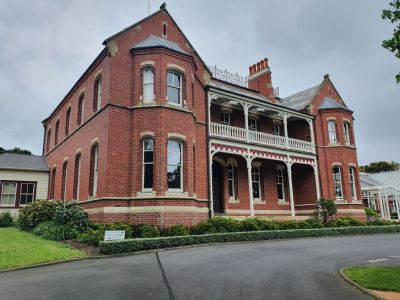
Bishop’s House is one of Ponsonby’s most important heritage landmarks and the long-standing residence of the Catholic Bishop of Auckland. Built between 1893 and 1894, the present building was commissioned by Bishop John Edmund Luck following his fundraising tour of Europe, replacing the original timber house with a two-storey Gothic Revival brick residence that reflected the confidence and growth of the Catholic community in late 19th-century Auckland.
The architect, Peter Paul Pugin, son of the renowned Gothic Revival designer Augustus Pugin, created a striking H-shaped plan in dark red brick, described as the finest example of Pugin architecture in New Zealand. Inside, the house displays imported encaustic tiles from France, imitation stained glass by Alexander Booker, and parquetry floors crafted from New Zealand timbers by Father Augustine Luck. Bishop Luck also ensured the building was equipped with modern features for its time, including gas lines and electricity, making it one of the first in Auckland to be lit entirely by electric power. Remarkably, one of its bathrooms still preserves a rare Twyford Unitas toilet from the 1880s.
At the northern end stands a chapel, still housing its marble altar brought from Italy and imitation stained glass windows. Since its completion, Bishop’s House has remained the residence of Auckland’s bishops, linking generations of Catholic leadership with the city’s history. Today, as part of the wider Pompallier Diocesan Centre, it is recognised as a Category 1 Historic Place for its outstanding heritage value, offering visitors a rare glimpse into both the architectural elegance and spiritual legacy of Auckland’s past.
The architect, Peter Paul Pugin, son of the renowned Gothic Revival designer Augustus Pugin, created a striking H-shaped plan in dark red brick, described as the finest example of Pugin architecture in New Zealand. Inside, the house displays imported encaustic tiles from France, imitation stained glass by Alexander Booker, and parquetry floors crafted from New Zealand timbers by Father Augustine Luck. Bishop Luck also ensured the building was equipped with modern features for its time, including gas lines and electricity, making it one of the first in Auckland to be lit entirely by electric power. Remarkably, one of its bathrooms still preserves a rare Twyford Unitas toilet from the 1880s.
At the northern end stands a chapel, still housing its marble altar brought from Italy and imitation stained glass windows. Since its completion, Bishop’s House has remained the residence of Auckland’s bishops, linking generations of Catholic leadership with the city’s history. Today, as part of the wider Pompallier Diocesan Centre, it is recognised as a Category 1 Historic Place for its outstanding heritage value, offering visitors a rare glimpse into both the architectural elegance and spiritual legacy of Auckland’s past.
6) St. Mary's Old Convent Chapel
Saint Mary’s Old Convent Chapel is one of Auckland’s most enduring religious landmarks, tied closely to the city’s Catholic heritage. Built in 1866, it served as the chapel for the Sisters of Mercy, who had arrived in Auckland a decade earlier at the request of Bishop Jean-Baptiste Pompallier. The order played an essential role in education, healthcare, and social welfare, and the chapel became a focal point for their mission. Its construction reflected both the growing Catholic community and the importance placed on creating a permanent spiritual home for the sisters and the wider faithful.
The building was designed by Edward Mahoney, one of Auckland’s leading architects of the 19th century. Executed in the Gothic Revival style, the chapel features pointed-arch windows, a steeply pitched roof, and elegant timber detailing, hallmarks of Mahoney’s ecclesiastical work. Though modest in scale compared to Auckland’s grander churches, its craftsmanship and proportions give it a quiet dignity. Inside, the light-filled nave and timber ceiling evoke a sense of simplicity and devotion, a contrast to the bustling streets outside.
Over the decades, the chapel bore witness to key moments in the Catholic life of Auckland, from solemn services to community gatherings. While its original convent setting has changed, the chapel remains an important heritage site, symbolising the pioneering efforts of the Sisters of Mercy. Today, it is recognised as one of Ponsonby’s treasures, not only for its architectural character but also for the role it played in shaping education and charitable work in the city.
The building was designed by Edward Mahoney, one of Auckland’s leading architects of the 19th century. Executed in the Gothic Revival style, the chapel features pointed-arch windows, a steeply pitched roof, and elegant timber detailing, hallmarks of Mahoney’s ecclesiastical work. Though modest in scale compared to Auckland’s grander churches, its craftsmanship and proportions give it a quiet dignity. Inside, the light-filled nave and timber ceiling evoke a sense of simplicity and devotion, a contrast to the bustling streets outside.
Over the decades, the chapel bore witness to key moments in the Catholic life of Auckland, from solemn services to community gatherings. While its original convent setting has changed, the chapel remains an important heritage site, symbolising the pioneering efforts of the Sisters of Mercy. Today, it is recognised as one of Ponsonby’s treasures, not only for its architectural character but also for the role it played in shaping education and charitable work in the city.
7) Ponsonby Baptist Church
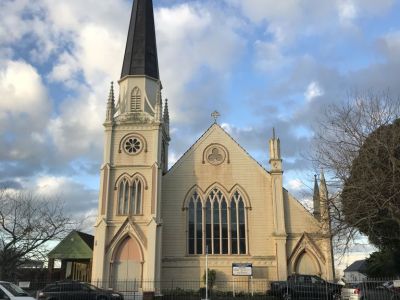
Ponsonby Baptist Church represents one of the most important surviving Baptist complexes in New Zealand. Built in stages between 1875 and 1905, the site incorporates three historic buildings: the earliest known purpose-built Baptist chapel and Sunday School in Auckland (1875), a large timber church from 1886, and a Sunday School hall added in 1905. Together, they illustrate the growth of the Baptist community in late 19th-century Auckland and the evolution of church architecture during this period. The complex is also home to a remarkable musical treasure: a rare 1779 organ by London maker John Avery, believed to be the oldest organ in Australasia and one of only ten surviving worldwide.
The church’s origins lie in the 1870s, when land from the Dedwood subdivision was purchased to establish a daughter chapel of the main Baptist church on Wellesley Street. Initially a modest timber structure with Gothic Revival influences, the chapel was relocated to the rear of the property in 1885 to make way for a new church designed by Edmund Bell, a Baptist deacon and noted Auckland architect. Bell’s building, influenced by classical and Italianate styles, was designed to enhance the experience of preaching, with an emphasis on acoustics, visibility, and subsidiary facilities for community life. The Avery organ, installed in 1897, further enhanced its standing as a major centre of worship.
Today, Ponsonby Baptist Church is recognised as the oldest and longest continuously used Baptist place of worship in Auckland. For visitors, it offers not only a glimpse into New Zealand’s religious and architectural history but also an enduring example of faith linked with social action. Standing amid Ponsonby’s lively mix of historic villas, cafés, and shops, the church complex remains both a heritage landmark and a living centre of community life.
The church’s origins lie in the 1870s, when land from the Dedwood subdivision was purchased to establish a daughter chapel of the main Baptist church on Wellesley Street. Initially a modest timber structure with Gothic Revival influences, the chapel was relocated to the rear of the property in 1885 to make way for a new church designed by Edmund Bell, a Baptist deacon and noted Auckland architect. Bell’s building, influenced by classical and Italianate styles, was designed to enhance the experience of preaching, with an emphasis on acoustics, visibility, and subsidiary facilities for community life. The Avery organ, installed in 1897, further enhanced its standing as a major centre of worship.
Today, Ponsonby Baptist Church is recognised as the oldest and longest continuously used Baptist place of worship in Auckland. For visitors, it offers not only a glimpse into New Zealand’s religious and architectural history but also an enduring example of faith linked with social action. Standing amid Ponsonby’s lively mix of historic villas, cafés, and shops, the church complex remains both a heritage landmark and a living centre of community life.
8) St. Stephens Church
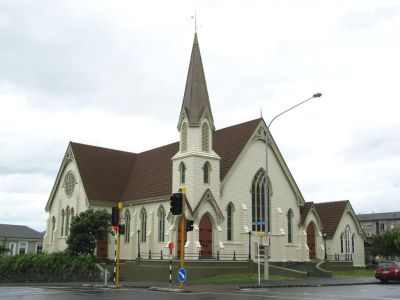
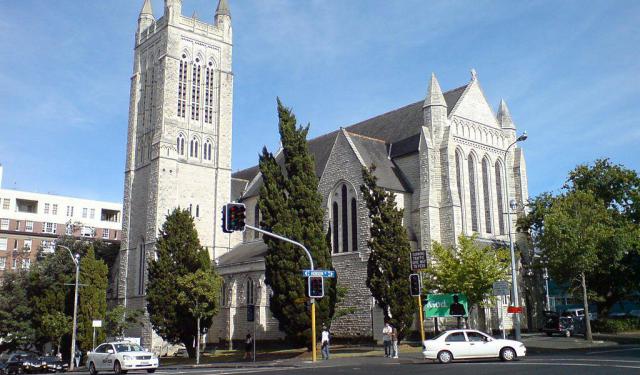
Saint Stephen’s Church has been a landmark of Auckland’s religious and cultural life for over 145 years. Established in 1876 and officially opened in 1879, the church was designed by prominent architect Edward Mahoney in the Gothic Revival style. Built from native kauri timber, it is recognized today as a Historic Place Category 2, a testament to both its architectural merit and enduring role in the community. Its pointed arches, stained glass windows, and tall spire reflect the aspirations of a growing 19th-century congregation while offering a glimpse into Auckland’s early ecclesiastical design.
As Ponsonby expanded in the early 20th century, so too did the church. In 1907, a major extension was designed by Robert Martin Watt, incorporating Edwardian influences with emerging Baroque elements. Despite the blend of styles, the building presents a seamless whole, admired for its harmony and grace. Not long after, Alex Wiseman designed the first church hall in 1908, and a second hall was completed in 1914 to accommodate the Sunday school and parish activities. These additions underscore the church’s role not just as a place of worship but as a centre for education, fellowship, and local life.
Later developments, including William Algie’s 1994 renovations, linked the church more closely with its halls, adding porches, verandahs, and new facilities to serve the modern congregation. Though the original manse was sold in 1997, the heart of the complex remains vibrant.
Today, Saint Stephen’s continues to stand as both a spiritual haven and a cultural landmark in Ponsonby. Its layered history, from Gothic Revival beginnings to Edwardian expansions, mirrors the suburb’s own evolution, making it a compelling stop for visitors interested in heritage, architecture, and community traditions.
As Ponsonby expanded in the early 20th century, so too did the church. In 1907, a major extension was designed by Robert Martin Watt, incorporating Edwardian influences with emerging Baroque elements. Despite the blend of styles, the building presents a seamless whole, admired for its harmony and grace. Not long after, Alex Wiseman designed the first church hall in 1908, and a second hall was completed in 1914 to accommodate the Sunday school and parish activities. These additions underscore the church’s role not just as a place of worship but as a centre for education, fellowship, and local life.
Later developments, including William Algie’s 1994 renovations, linked the church more closely with its halls, adding porches, verandahs, and new facilities to serve the modern congregation. Though the original manse was sold in 1997, the heart of the complex remains vibrant.
Today, Saint Stephen’s continues to stand as both a spiritual haven and a cultural landmark in Ponsonby. Its layered history, from Gothic Revival beginnings to Edwardian expansions, mirrors the suburb’s own evolution, making it a compelling stop for visitors interested in heritage, architecture, and community traditions.
9) Renall Street
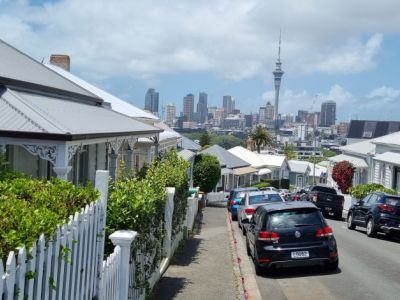
Renall Street reflects the layered history of one of the city’s most distinctive suburbs. Originally part of the settlement known as Dedwood until it was renamed in 1873, Ponsonby grew rapidly in the late nineteenth century as Auckland expanded westward. The introduction of a tram line from Queen Street in 1884-later electrified in 1899-strengthened its ties to the city and encouraged both residential growth and small-scale commerce. Renall Street developed during this era, with rows of timber villas and cottages that housed tradespeople, labourers, and their families, giving the area its working-class character.
Through much of the twentieth century, Renall Street shared in the fortunes and struggles of Ponsonby itself. Post–World War II changes brought suburban sprawl, spurred on by the opening of the Auckland Harbour Bridge in 1959. Many of the older homes along the street were subdivided into flats, attracting a mix of Pacific Island families, students, and low-income tenants. While overcrowding became a concern, this period also infused the neighbourhood with cultural diversity and a strong sense of community.
From the mid-1970s, a renewed appreciation for Ponsonby’s inner-city location and historic housing stock led to widespread restoration efforts. Renall Street’s villas, once viewed as outdated, were carefully restored, transforming the street into one of the suburb’s most sought-after residential pockets. Today, it offers a glimpse into Auckland’s architectural past while sitting just steps away from Ponsonby Road’s cafés, boutiques, and nightlife. For visitors, a walk down Renall Street provides more than just heritage charm-it captures the story of Auckland’s changing social fabric over the past 150 years.
Through much of the twentieth century, Renall Street shared in the fortunes and struggles of Ponsonby itself. Post–World War II changes brought suburban sprawl, spurred on by the opening of the Auckland Harbour Bridge in 1959. Many of the older homes along the street were subdivided into flats, attracting a mix of Pacific Island families, students, and low-income tenants. While overcrowding became a concern, this period also infused the neighbourhood with cultural diversity and a strong sense of community.
From the mid-1970s, a renewed appreciation for Ponsonby’s inner-city location and historic housing stock led to widespread restoration efforts. Renall Street’s villas, once viewed as outdated, were carefully restored, transforming the street into one of the suburb’s most sought-after residential pockets. Today, it offers a glimpse into Auckland’s architectural past while sitting just steps away from Ponsonby Road’s cafés, boutiques, and nightlife. For visitors, a walk down Renall Street provides more than just heritage charm-it captures the story of Auckland’s changing social fabric over the past 150 years.
10) St. John's Church
Saint John’s Church is a striking heritage landmark deeply rooted in Auckland’s ecclesiastical and architectural history. Officially opened for worship on 30 April 1882, the church was built at a time when Ponsonby was emerging as an important suburban centre, reflecting both the ambitions and growth of Auckland’s Methodist community. It now carries a Category II Heritage New Zealand designation in recognition of its cultural significance and contribution to the local streetscape.
Architecturally, Saint John’s is an elegant example of timber Gothic Revival design, conceived by architect Edward Bartley in the 1880s. The church features a steeply pitched gable roof clad in Marseilles-pattern clay tiles, with pointed-arch windows (some with stained glass) lining its sides. Inside, the original tongue-and-groove timber linings remain, supported by ornate timber roof trusses decorated with quatrefoil motifs and elegant brackets and corbels. The internal height is impressive, with a stud of 12.8 metres at the peak.
Today, being more than just a relic of the past, Saint John’s continues to engage the community as a venue for events, cultural programmes, and heritage walks. Later additions include a hall built in 1977 to support the Methodist Samoan community, offering additional functional space while respecting the original structure’s character. For visitors exploring Ponsonby, Saint John’s provides a quiet moment to appreciate Auckland’s religious heritage, historic timber craftsmanship, and the evolving story of this vibrant inner-city suburb.
Architecturally, Saint John’s is an elegant example of timber Gothic Revival design, conceived by architect Edward Bartley in the 1880s. The church features a steeply pitched gable roof clad in Marseilles-pattern clay tiles, with pointed-arch windows (some with stained glass) lining its sides. Inside, the original tongue-and-groove timber linings remain, supported by ornate timber roof trusses decorated with quatrefoil motifs and elegant brackets and corbels. The internal height is impressive, with a stud of 12.8 metres at the peak.
Today, being more than just a relic of the past, Saint John’s continues to engage the community as a venue for events, cultural programmes, and heritage walks. Later additions include a hall built in 1977 to support the Methodist Samoan community, offering additional functional space while respecting the original structure’s character. For visitors exploring Ponsonby, Saint John’s provides a quiet moment to appreciate Auckland’s religious heritage, historic timber craftsmanship, and the evolving story of this vibrant inner-city suburb.
11) Holmdene
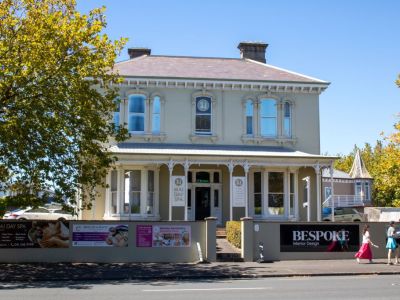
Holmdene is a quietly fascinating heritage landmark that offers visitors a glimpse into the area’s rich colonial past. An elegant Italianate residence built in the 1880s, Holmdene was commissioned for a prominent local businessman and reflects the architectural aspirations of that era, when Ponsonby was emerging as a fashionable suburb on Auckland’s western ridge.
What gives Holmdene its deeper significance is its connection to one of New Zealand’s early maritime pioneers. The home was owned by a key figure involved in the founding of the Northern Steamship Company, which helped connect coastal communities around Auckland in the late 19th century. The owner died at Holmdene in January 1901, cementing the building’s place not just as an architectural ornament, but as home to a person integral to Auckland’s transport and communication networks of that time.
Over time, Holmdene’s role evolved. By the 1980s, it had become a boarding house, reflecting changing urban housing dynamics and the shifting character of Ponsonby itself. While its exterior retains much of its old-world charm, today its story draws the eye of heritage enthusiasts walking the Ponsonby Heritage Trail or strolling along Ponsonby Road’s eclectic mix of cafés, boutiques, and historic villas.
For visitors, Holmdene makes an ideal stop when exploring Ponsonby’s blend of style and substance. Its presence helps stitch together the narrative of how this inner-city suburb transitioned from coastal farmland and transport hub to a trendy, character-rich district. Pair your visit with nearby landmarks like the Leys Institute, Bishop’s House, or the Three Lamps corner, and you’ll start to appreciate how each building contributes to Ponsonby’s vibrant architectural tapestry.
What gives Holmdene its deeper significance is its connection to one of New Zealand’s early maritime pioneers. The home was owned by a key figure involved in the founding of the Northern Steamship Company, which helped connect coastal communities around Auckland in the late 19th century. The owner died at Holmdene in January 1901, cementing the building’s place not just as an architectural ornament, but as home to a person integral to Auckland’s transport and communication networks of that time.
Over time, Holmdene’s role evolved. By the 1980s, it had become a boarding house, reflecting changing urban housing dynamics and the shifting character of Ponsonby itself. While its exterior retains much of its old-world charm, today its story draws the eye of heritage enthusiasts walking the Ponsonby Heritage Trail or strolling along Ponsonby Road’s eclectic mix of cafés, boutiques, and historic villas.
For visitors, Holmdene makes an ideal stop when exploring Ponsonby’s blend of style and substance. Its presence helps stitch together the narrative of how this inner-city suburb transitioned from coastal farmland and transport hub to a trendy, character-rich district. Pair your visit with nearby landmarks like the Leys Institute, Bishop’s House, or the Three Lamps corner, and you’ll start to appreciate how each building contributes to Ponsonby’s vibrant architectural tapestry.
12) Braemar Building
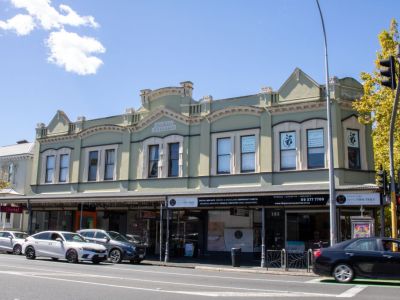
The Braemar Building is one of the standout historic landmarks in Ponsonby, a suburb known for its mix of heritage charm and contemporary culture. Completed in 1906, the building reflects the Edwardian Baroque style that was popular in Auckland at the turn of the 20th century. Its ornate façade, complete with arched windows and decorative detailing, was designed to project a sense of permanence and prestige, marking Ponsonby’s transformation into a fashionable commercial and residential district during this period.
Originally built for the Auckland Savings Bank, the Braemar Building quickly became a central feature of local life. For decades, it housed financial and professional offices, connecting Ponsonby to the city’s wider economic growth. Over time, the building adapted to changing needs, with shops and businesses moving in to serve the growing community. Despite these shifts, its exterior has remained largely intact, allowing visitors today to see much of the early 20th-century character that first defined it.
Today, the Braemar Building contributes to Ponsonby’s lively mix of old and new. Standing among trendy cafés, restaurants, and boutiques, it offers a reminder of the area’s layered history. Its preservation reflects Auckland’s broader efforts to maintain heritage buildings as part of the city’s evolving urban identity. For visitors strolling along Ponsonby Road, the building serves not just as an architectural landmark but also as a gateway into the stories of the suburb’s development, where historic character continues to shape the area’s vibrant, cosmopolitan atmosphere.
Originally built for the Auckland Savings Bank, the Braemar Building quickly became a central feature of local life. For decades, it housed financial and professional offices, connecting Ponsonby to the city’s wider economic growth. Over time, the building adapted to changing needs, with shops and businesses moving in to serve the growing community. Despite these shifts, its exterior has remained largely intact, allowing visitors today to see much of the early 20th-century character that first defined it.
Today, the Braemar Building contributes to Ponsonby’s lively mix of old and new. Standing among trendy cafés, restaurants, and boutiques, it offers a reminder of the area’s layered history. Its preservation reflects Auckland’s broader efforts to maintain heritage buildings as part of the city’s evolving urban identity. For visitors strolling along Ponsonby Road, the building serves not just as an architectural landmark but also as a gateway into the stories of the suburb’s development, where historic character continues to shape the area’s vibrant, cosmopolitan atmosphere.
13) Ponsonby Road
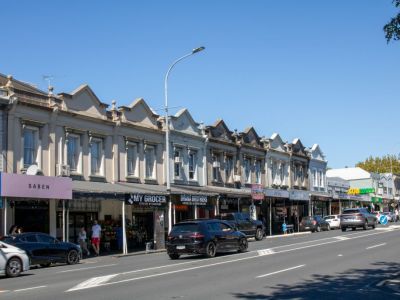
Ponsonby Road is one of Auckland’s most famous streets, known for its lively mix of cafés, restaurants, boutiques, and nightlife. Running through the heart of the Ponsonby suburb, it combines heritage charm with a modern, cosmopolitan edge. The road is lined with beautifully preserved Victorian and Edwardian villas alongside contemporary architecture, creating a streetscape that reflects the suburb’s layered history. Once a residential area for the city’s working and middle classes, Ponsonby Road has grown into a hub where food, fashion, and culture come together.
The area’s identity has been shaped by constant change. In the mid-20th century, Ponsonby became home to a strong Pacific Island community, whose cultural influence remains part of the neighborhood’s character. By the 1970s and 1980s, the suburb had gained a reputation for its vibrant arts scene, attracting musicians, writers, and members of the LGBTQ+ community. Though once known for its run-down buildings and bohemian energy, Ponsonby has since undergone a dramatic transformation, and today it is one of Auckland’s most affluent and fashionable suburbs.
Food lovers will find Ponsonby Road especially rewarding. The strip offers everything from casual eateries serving pizza and seafood to high-end dining experiences showcasing New Zealand’s culinary creativity. Alongside its dining scene, visitors can browse art galleries, fashion boutiques, and specialty shops, or simply enjoy people-watching from a café terrace. At night, the area comes alive with stylish bars and cocktail lounges, often attracting both locals and well-known faces.
For tourists, a walk along Ponsonby Road is more than a chance to shop or dine-it is a way to experience Auckland’s cultural diversity and creative spirit. With its blend of history, modern flair, and constant energy, the street captures the essence of the city’s evolution and remains one of its most dynamic destinations.
The area’s identity has been shaped by constant change. In the mid-20th century, Ponsonby became home to a strong Pacific Island community, whose cultural influence remains part of the neighborhood’s character. By the 1970s and 1980s, the suburb had gained a reputation for its vibrant arts scene, attracting musicians, writers, and members of the LGBTQ+ community. Though once known for its run-down buildings and bohemian energy, Ponsonby has since undergone a dramatic transformation, and today it is one of Auckland’s most affluent and fashionable suburbs.
Food lovers will find Ponsonby Road especially rewarding. The strip offers everything from casual eateries serving pizza and seafood to high-end dining experiences showcasing New Zealand’s culinary creativity. Alongside its dining scene, visitors can browse art galleries, fashion boutiques, and specialty shops, or simply enjoy people-watching from a café terrace. At night, the area comes alive with stylish bars and cocktail lounges, often attracting both locals and well-known faces.
For tourists, a walk along Ponsonby Road is more than a chance to shop or dine-it is a way to experience Auckland’s cultural diversity and creative spirit. With its blend of history, modern flair, and constant energy, the street captures the essence of the city’s evolution and remains one of its most dynamic destinations.
Walking Tours in Auckland, New Zealand

Create Your Own Walk in Auckland
Creating your own self-guided walk in Auckland is easy and fun. Choose the city attractions that you want to see and a walk route map will be created just for you. You can even set your hotel as the start point of the walk.
Auckland Introduction Walking Tour
Perched between harbours, volcanoes, and sea lanes, Auckland – known in Māori as Tāmaki Makaurau („desired by many“) – has a story that’s equal parts ancestral land, colonial ambition, and modern melting pot. Long before European settlers ever arrived, the region’s volcanic cones and fertile isthmus were home to Māori tribes (especially Ngāti Whātua and Waiohua). These original... view more
Tour Duration: 2 Hour(s)
Travel Distance: 3.3 Km or 2.1 Miles
Tour Duration: 2 Hour(s)
Travel Distance: 3.3 Km or 2.1 Miles
Parnell Introduction Walking Tour
Parnell, Auckland’s oldest suburb, is a charming blend of history, culture, and modern lifestyle. Just minutes from the city center, it is known for its beautifully restored Victorian and Edwardian buildings that now house boutique shops, art galleries, and cafes. One of the suburb’s highlights is Parnell Road, the main street lined with stylish eateries, fashion boutiques, and specialty... view more
Tour Duration: 2 Hour(s)
Travel Distance: 2.2 Km or 1.4 Miles
Tour Duration: 2 Hour(s)
Travel Distance: 2.2 Km or 1.4 Miles
Auckland Historical Buildings Tour
Auckland, New Zealand may not be known as a historical city, but it does contain some historical buildings all right. These old structures, dating back to the 19th century, reflect the diverse heritage and architectural evolution of the city and are cherished as landmarks.
The Ferry Building, an iconic waterfront edifice, is a fine example of Edwardian Baroque style. Built in 1912, it once... view more
Tour Duration: 2 Hour(s)
Travel Distance: 4.6 Km or 2.9 Miles
The Ferry Building, an iconic waterfront edifice, is a fine example of Edwardian Baroque style. Built in 1912, it once... view more
Tour Duration: 2 Hour(s)
Travel Distance: 4.6 Km or 2.9 Miles
Useful Travel Guides for Planning Your Trip
Souvenir Shopping Guide: 17 Kiwi Things to Buy in Auckland
Although closer than it used to be, courtesy of “The Lord of the Rings” movie trilogy, New Zealand still remains below “Down Under” to many. If you're privileged to visit Auckland, make sure to bring home something memorable to “extend” your trip. Here are some ideas for signature...
The Most Popular Cities
/ view all