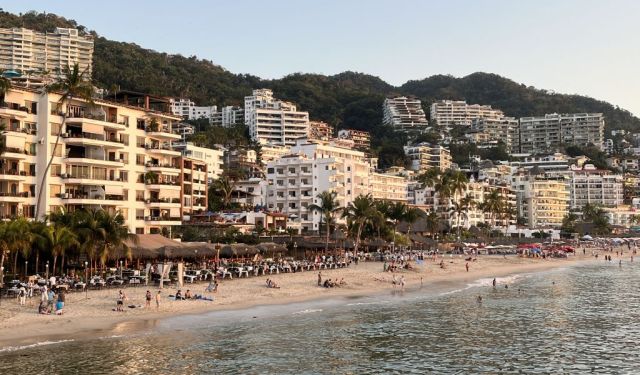


Puerto Vallarta Introduction Walking Tour (Self Guided), Puerto Vallarta
English actor Richard Burton valued privacy-so much so that he built a pink bridge, known as Lover's Bridge, to slip from his house into Elizabeth Taylor’s without being spotted. Both were living in Puerto Vallarta. Given that both were married to other people at the time, their affair had to stay out of the paparazzi’s lens-hence, the bridge. The scandal, far from hurting the town, put Puerto Vallarta on the international map.
This place was home to Indigenous groups who fished its waters and farmed in the valleys. Spanish ships dropped by in the 1500s, but unlike the larger ports of Acapulco or Veracruz, this stretch of coast remained a sleepy pit stop for supplies. For centuries, the region’s isolation limited its growth, and the rhythms of daily life were carried out by small ranching and fishing communities.
In the 19th century, things began to change. Timber and minerals from the Sierra Madre Mountains found their way to the bay, and trade slowly increased. By 1851, a small settlement called Las Peñas took shape, named after the rocky landscape around it. It wasn’t much-a scattering of houses and businesses-but it was enough to set down roots for the future city.
By the early 20th century, the town gained recognition under a new name, Puerto Vallarta, to honor Ignacio Vallarta, a 19th-century governor of the Jalisco region and foreign minister, remembered for his role in Mexico’s legal and political life. Agriculture, especially cattle and tropical crops, kept the economy afloat, while the deep bay made it an attractive point for shipping. The town was not large, but its combination of sea, river, and mountains gave it a character distinct from inland Jalisco.
The true turning point for Puerto Vallarta came in the mid-20th century, when better road connections and a small airport opened it to the rest of Mexico. By the 1960s, tourism began to replace subsistence trade as the town’s main economic engine.
Hollywood played its part in this transformation when the 1964 film The Night of the Iguana was filmed nearby, drawing the aforementioned Richard Burton. He made the most of the role, bringing Elizabeth Taylor along. After filming wrapped, he decided to put down roots here and built the now-famous bridge to connect his house to Taylor’s. The pair famously married twice, first in 1964 and then again in 1975, though both unions ended in divorce. Even though they weren’t permanent residents, Puerto Vallarta became a beloved retreat for them-sometimes together, sometimes apart.
Today, Puerto Vallarta’s charm lies in the very mix that shaped it: the whispers of its fishing past, the glamour of its Hollywood moment, and the rhythm of a city that grew between mountains, river, and sea. As you begin your walk, let the cobblestones guide you-not to secret scandals, but to the stories, legends, and beauty that keep Puerto Vallarta unforgettable.
This place was home to Indigenous groups who fished its waters and farmed in the valleys. Spanish ships dropped by in the 1500s, but unlike the larger ports of Acapulco or Veracruz, this stretch of coast remained a sleepy pit stop for supplies. For centuries, the region’s isolation limited its growth, and the rhythms of daily life were carried out by small ranching and fishing communities.
In the 19th century, things began to change. Timber and minerals from the Sierra Madre Mountains found their way to the bay, and trade slowly increased. By 1851, a small settlement called Las Peñas took shape, named after the rocky landscape around it. It wasn’t much-a scattering of houses and businesses-but it was enough to set down roots for the future city.
By the early 20th century, the town gained recognition under a new name, Puerto Vallarta, to honor Ignacio Vallarta, a 19th-century governor of the Jalisco region and foreign minister, remembered for his role in Mexico’s legal and political life. Agriculture, especially cattle and tropical crops, kept the economy afloat, while the deep bay made it an attractive point for shipping. The town was not large, but its combination of sea, river, and mountains gave it a character distinct from inland Jalisco.
The true turning point for Puerto Vallarta came in the mid-20th century, when better road connections and a small airport opened it to the rest of Mexico. By the 1960s, tourism began to replace subsistence trade as the town’s main economic engine.
Hollywood played its part in this transformation when the 1964 film The Night of the Iguana was filmed nearby, drawing the aforementioned Richard Burton. He made the most of the role, bringing Elizabeth Taylor along. After filming wrapped, he decided to put down roots here and built the now-famous bridge to connect his house to Taylor’s. The pair famously married twice, first in 1964 and then again in 1975, though both unions ended in divorce. Even though they weren’t permanent residents, Puerto Vallarta became a beloved retreat for them-sometimes together, sometimes apart.
Today, Puerto Vallarta’s charm lies in the very mix that shaped it: the whispers of its fishing past, the glamour of its Hollywood moment, and the rhythm of a city that grew between mountains, river, and sea. As you begin your walk, let the cobblestones guide you-not to secret scandals, but to the stories, legends, and beauty that keep Puerto Vallarta unforgettable.
How it works: Download the app "GPSmyCity: Walks in 1K+ Cities" from Apple App Store or Google Play Store to your mobile phone or tablet. The app turns your mobile device into a personal tour guide and its built-in GPS navigation functions guide you from one tour stop to next. The app works offline, so no data plan is needed when traveling abroad.
Download The GPSmyCity App



Puerto Vallarta Introduction Walking Tour Map
Guide Name: Puerto Vallarta Introduction Walking Tour
Guide Location: Mexico » Puerto Vallarta (See other walking tours in Puerto Vallarta)
Guide Type: Self-guided Walking Tour (Sightseeing)
Tour Duration: 2 Hour(s)
Travel Distance: 2.6 Km or 1.6 Miles
Guide Location: Mexico » Puerto Vallarta (See other walking tours in Puerto Vallarta)
Guide Type: Self-guided Walking Tour (Sightseeing)
Tour Duration: 2 Hour(s)
Travel Distance: 2.6 Km or 1.6 Miles
Sights Featured in This Walk
The Most Popular Cities
/ view all