

West Palm Beach Introduction Walking Tour, West Palm Beach

West Palm Beach Introduction Walking Tour (Self Guided), West Palm Beach

West Palm Beach is a city built by people looking for good weather, steady work, and a manageable place to build a community. Business owners, railroad workers, and early residents shaped the area into what it is today, and many of their decisions still influence how the city looks and feels. It’s a practical place, easy to navigate, and that’s one reason it has continued to grow.

The name of the city came from the larger identity of the Palm Beaches, tied closely to the region’s early coastal settlements and its long stretches of palm-lined shoreline. When West Palm Beach was incorporated in 1894, it became one of South Florida’s first major communities, its name chosen to distinguish it from Palm Beach across the Intracoastal Waterway. The distinction stuck, and each side of the water developed its own character.

West Palm Beach’s early growth was driven by Henry Flagler’s railroad and hotel projects, which transformed the area into a hub for travel and commerce. While nearby Palm Beach became known for luxury resorts, West Palm Beach developed into the practical, hardworking side of the region. After fires and hurricanes in the early 20th century, the city rebuilt with stronger structures, wider streets, and a layout that encouraged small businesses. Over time, new neighborhoods, cultural institutions, and public spaces shaped the city into the center it is today.

Modern West Palm Beach has a relaxed but active rhythm. The downtown area is easy to explore on foot, with shops, restaurants, and local businesses filling the blocks between the waterfront and the residential neighborhoods. The city’s warm weather and regular events—markets, outdoor concerts, and street festivals—give it a friendly, everyday energy. Many historic buildings still stand, mixed in with newer developments that reflect ongoing growth.

A few places highlight the city’s character especially well. Clematis Street, one of the oldest streets in the city, shows how West Palm Beach blends history with daily life. It’s lined with local restaurants, small shops, and public spaces that have been part of the city’s routine for generations. Just a short distance away, the Norton Museum of Art presents a wide range of American, European, and Chinese art, as well as contemporary works, making it one of South Florida’s leading cultural institutions.

As you make your way through the downtown streets or along the waterfront, you start to see how West Palm Beach fits together. It’s organized, easy to move through, and built for day-to-day living. Visitors quickly pick up on that, and locals rely on it. It’s a simple, functional city—and that’s a big part of why people stay.
How it works: Download the app "GPSmyCity: Walks in 1K+ Cities" from Apple App Store or Google Play Store to your mobile phone or tablet. The app turns your mobile device into a personal tour guide and its built-in GPS navigation functions guide you from one tour stop to next. The app works offline, so no data plan is needed when traveling abroad.

Download The GPSmyCity App

West Palm Beach Introduction Walking Tour Map

Guide Name: West Palm Beach Introduction Walking Tour
Guide Location: USA » West Palm Beach (See other walking tours in West Palm Beach)
Guide Type: Self-guided Walking Tour (Sightseeing)
# of Attractions: 8
Tour Duration: 2 Hour(s)
Travel Distance: 3.8 Km or 2.4 Miles
Author: Dan
Sight(s) Featured in This Guide:
  • Centennial Square Fountains
  • Clematis Street
  • West Palm Beach City Center
  • CityPlace
  • Harriet Himmel Theater
  • Norton Museum of Art
  • The Royal Park Bridge
  • South Cove Natural Area
1
Centennial Square Fountains

1) Centennial Square Fountains

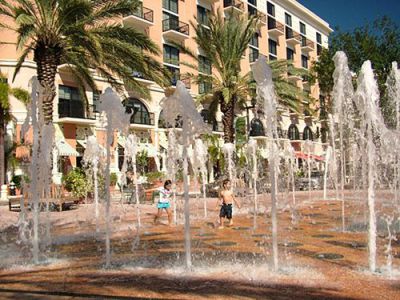
The Centennial Square Fountain is a central feature of downtown West Palm Beach and a familiar gathering point along Clematis Street. Located within Centennial Square—a public plaza created to celebrate the city’s 100th anniversary—the fountain functions as both a visual landmark and a community space. Its open design makes it easy to spot as visitors approach the waterfront end of Clematis Street.

The fountain features a circular basin with water jets that rise and fall in programmed sequences. During the day, the motion of the water provides a refreshing focal point for people passing through the square or pausing on nearby benches. Children often play at the fountain’s edge, especially during warm weather, while surrounding shade structures and palm trees create a comfortable environment for sitting and people-watching.

In the evenings, the fountain becomes more vivid as colored lights illuminate the water patterns. These light displays change throughout the year and are often coordinated with nearby events, such as concerts, holiday celebrations, and the city’s popular waterfront festivals. The surrounding plaza frequently hosts markets, performances, and public gatherings, making the fountain a natural meeting spot.

Located just a short walk from the Intracoastal Waterway and the West Palm Beach Waterfront, the Centennial Square Fountain is well-situated for visitors exploring the downtown area. Its proximity to shops, cafés, and the waterfront promenade makes it a convenient pause point before continuing toward the pier, parks, or nearby cultural attractions.
2
Clematis Street

2) Clematis Street (must see)

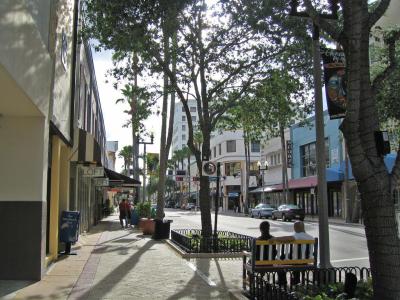
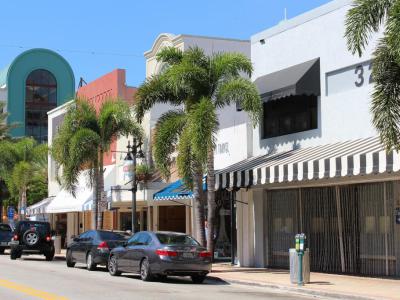
Clematis Street is the historic main street of downtown West Palm Beach, known for its mix of early 20th-century architecture, sidewalk cafés, galleries, shops, and steady foot traffic throughout the day. It has served as the city’s commercial and cultural spine for more than a century, and many of its original structures still stand alongside newer additions, giving the street a layered, lived-in character. As one of the most walkable corridors in West Palm Beach, it remains a central route for locals and visitors exploring the downtown area.

Start your exploration from Centennial Square Fountain, where the water jets and open plaza create a natural gathering point at the eastern entrance to Clematis Street. Standing at the fountain’s edge and facing west, you’ll notice the slight upward rise of the street and a clear row of façades leading into the next two blocks. Take a moment to look closely at the buildings nearest the plaza—many preserve original architectural details, such as decorative trim above the doorways, narrow second-story windows, and tiled accents that hint at the street’s early commercial era. This view gives you a sense of how the street has evolved while still retaining its historic framework.

As you continue walking west, pause at the intersection of South Olive Avenue. From this corner, turn slightly to observe both sides of the street. You’ll notice a growing number of cafés, small shops, and sidewalk seating that help shape Clematis Street’s social atmosphere. Facing west from this point, you can see the gradual transition into the busier blocks ahead, where modern storefronts mix with restored historic buildings. The palm-lined sidewalks and outdoor tables make this section especially active during lunch hours and evening outings.

Continuing farther inland, Clematis Street broadens. Public art installations, independent boutiques, and local restaurants appear throughout the next several blocks, reflecting the area’s ongoing revitalization efforts. Throughout the week, the street hosts farmers markets, craft fairs, food events, and small performances, contributing to its reputation as one of the city’s most engaging public spaces.
3
West Palm Beach City Center

3) West Palm Beach City Center

West Palm Beach City Center is the civic hub of downtown, bringing together several major public institutions in one modern complex. The development includes the Mandel Public Library of West Palm Beach, the City Hall building, and the Palm Beach Photographic Centre, all located just off Clematis Street and within walking distance of the waterfront, shops, and restaurants.

The architecture is contemporary, marked by glass façades, open walkways, and shaded outdoor areas that link the buildings. Entering from the Clematis Street side, visitors first encounter the Mandel Public Library, which features large reading rooms, computer access, and regular programs for adults and children. Its upper floors offer quiet study spaces with views toward downtown and the Intracoastal Waterway.

City Hall sits at the center of the complex, housing public service counters and meeting rooms used for city administration. The layout emphasizes accessibility, with clear entrances, wide paths, and a central plaza that connects all parts of the site.

Across the plaza, the Palm Beach Photographic Centre functions as a cultural anchor. Its galleries feature rotating photography exhibitions, and the associated photography school hosts workshops and classes year-round. The lobby often displays smaller exhibitions visitors can browse without attending a full program. Together, the institutions at West Palm Beach City Center create a compact district where civic services, cultural activities, and public learning come together in the heart of downtown.
4
CityPlace

4) CityPlace (must see)

CityPlace is one of the main shopping, dining, and entertainment districts in downtown West Palm Beach. Originally opened in 2000 on the grounds of a former railroad and warehouse district, it was designed as a mixed-use, pedestrian-focused complex with Mediterranean and Venetian architectural influences. After undergoing several rebrandings, the development officially returned to its original name, CityPlace, in 2024 due to strong public recognition and local preference.

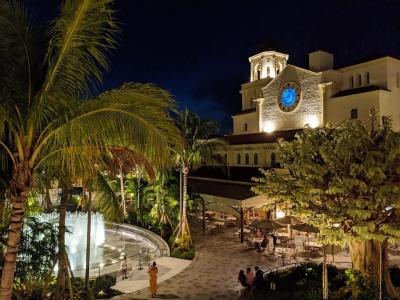
If you enter CityPlace from Rosemary Avenue, pause at the edge of the central plaza and take in the layout around you. The pastel-toned façades, arcades, and upper-level balconies frame the open square, giving you a clear sense of its European-inspired design. To your right is the show fountain, which performs timed water displays choreographed to music. If you walk a few steps closer to the edge of the basin, you can watch the jets rise and shift in patterns during scheduled performances. To the left of the plaza, outdoor seating areas offer good vantage points for observing activity and planning your route through the district.

As you continue toward the northern side of the plaza, look for the large banyan tree that anchors the space. If you stand near the staircase below it and look upward, you will see how the tree’s branches extend across both levels of the complex, providing shade and a recognizable landmark for orientation. From this point, follow the covered walkways lined with shops and restaurants; the upper-level terraces above you overlook the pedestrian routes. Along the way, look closely at the murals and art installations positioned along the walls and open corridors.

CityPlace connects easily to the rest of downtown. A short walk south along Rosemary Avenue brings you to the Brightline station, while heading east links you to Clematis Street and the waterfront promenade. The district hosts live music, fitness sessions, pop-up markets, and seasonal programming throughout the week, making it a busy part of the city’s commercial and social life.
5
Harriet Himmel Theater

5) Harriet Himmel Theater

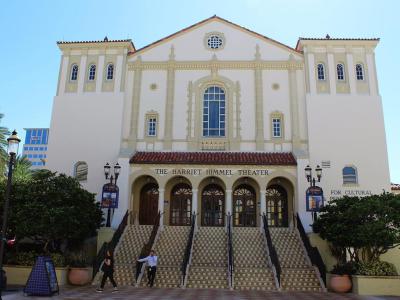
The Harriet Himmel Theater is one of the landmark buildings at the center of CityPlace in West Palm Beach. Completed in 1926 as the First Methodist Church, it later became an event venue and cultural space before undergoing a major transformation in 2024. Today, the building has been adaptively reused and now operates as Eataly, a large Italian food hall that combines restaurants, specialty market areas, and a performance stage.

The exterior still reflects its original Mediterranean Revival architecture, with arched windows, stucco walls, and a prominent central tower. Though the building’s overall historic appearance has been preserved, portions of the north-side grand staircase—once a defining feature—were modified or removed during the renovation, reflecting the building’s shift toward a more open, public-facing layout.

Inside, the former sanctuary has been reconfigured into a bright, expansive food hall. The high ceilings and tall arched windows remain as architectural anchors, while the interior now features food counters, open kitchens, wine bars, and retail spaces arranged throughout the main hall. A performance stage has been incorporated into the new design, continuing the building’s tradition as a gathering space, but within a contemporary setting.

With the conversion to Eataly, the building is now accessible throughout regular business hours, allowing visitors to experience its preserved structure while enjoying modern dining and shopping options. The project marks one of the most significant adaptive reuse efforts within CityPlace, blending historic architecture with a new community purpose.
6
Norton Museum of Art

6) Norton Museum of Art (must see)

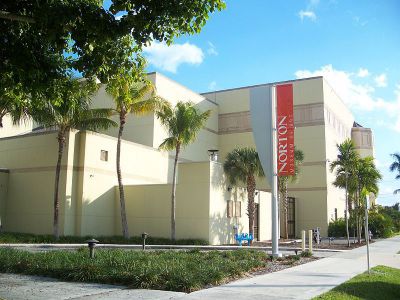
The Norton Museum of Art is the largest art museum in Florida’s Palm Beaches and one of the region’s most important cultural institutions. Founded in 1941, the museum has grown around a core collection focused on American, European, and Chinese art, along with contemporary works and photography. A major expansion in 2019 reshaped the campus with new galleries, a sculpture garden, and a striking entrance pavilion designed by architect Lord Norman Foster, making the Norton a central destination for both art lovers and casual visitors.

As you step into the main entrance pavilion, look toward the soaring glass atrium that anchors the lobby. The large banyan tree outside—preserved during the redesign—frames the view, and the natural light that enters the atrium highlights the clean architectural lines. If you turn to your right, you’ll find the first set of permanent collection galleries, where American and European paintings are displayed chronologically. These rooms often include works by artists such as Jackson Pollock, Georgia O’Keeffe, and Claude Monet, giving you an immediate sense of the museum’s breadth.

Farther inside, walk toward the galleries dedicated to Chinese art, one of the Norton’s founding strengths. As you enter, notice the shift in lighting and display style: ceramics, jade pieces, and ritual objects are arranged in well-lit cases that emphasize texture and detail. If you continue past this section, you’ll reach the contemporary art wing and the Photography Gallery, where rotating exhibitions highlight modern perspectives and new media. The museum’s sculpture garden is accessible from nearby doors, offering an outdoor extension of the art experience.

The Norton Museum of Art also features a café, a store, and a full schedule of public programs, including tours, lectures, film screenings, and family activities. Its combination of historic collections, bold architecture, and dynamic exhibitions makes it a major cultural anchor in West Palm Beach, with spaces designed to be explored at your own pace.
7
The Royal Park Bridge

7) The Royal Park Bridge

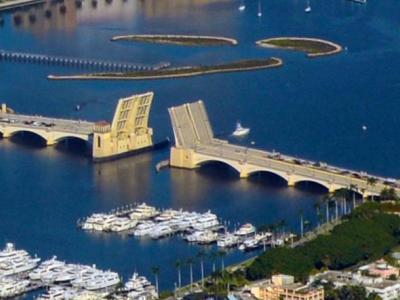
The Royal Park Bridge is one of the key connections between West Palm Beach and Palm Beach, carrying Royal Palm Way across the Intracoastal Waterway. First opened in 1929 and later rebuilt, the current bascule bridge is a familiar landmark for locals and visitors traveling between the mainland and the island’s beaches, shops, and historic neighborhoods. Its central location makes it one of the most frequently crossed bridges in the city.

Architecturally, the bridge features a clean, functional design with decorative touches that reference the Mediterranean Revival style seen throughout Palm Beach. The bascule section lifts to allow yachts and sailboats to pass along the Intracoastal, offering a regular reminder of the area’s active boating culture. From the sidewalks on either side, pedestrians have broad views of the waterway, marina, and skyline, making it a popular route for walkers, joggers, and photographers.

At the eastern end of the bridge, Royal Palm Way leads directly into Palm Beach’s well-known attractions, including Worth Avenue, the island’s luxury shopping district, and a series of landscaped parks and beaches. On the western end, the bridge connects to downtown West Palm Beach, where visitors can explore the waterfront promenade, Clematis Street, and CityPlace.
8
South Cove Natural Area

8) South Cove Natural Area

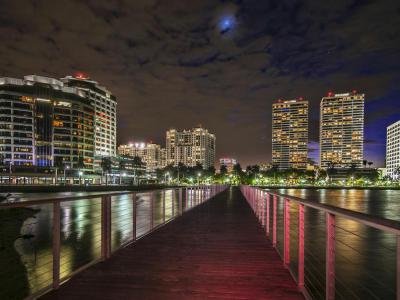
South Cove Natural Area is a waterfront habitat along the Intracoastal Waterway in downtown West Palm Beach, designed to reintroduce native coastal environments into an urban setting. Completed in 2012, the project transformed a stretch of shoreline into a small chain of mangrove islands, boardwalks, and shallow-water ecosystems that attract wildlife while offering visitors a calm place to walk and observe nature.

A long wooden boardwalk extends from the shoreline into the water, passing through restored seagrass beds and oyster reef habitats. From the viewing platforms, visitors often spot wading birds such as ibis, herons, and egrets, along with fish moving through the clear shallows. Interpretive signs explain the role of mangroves and estuarine habitats in supporting coastal ecology, making the site both scenic and educational.

Despite its natural focus, South Cove sits just steps from the city’s busy waterfront. Its entrance is located along Flagler Drive, across from the downtown district, allowing travelers to easily combine a stop here with nearby attractions such as Clematis Street, the Meyer Amphitheater, and the West Palm Beach Waterfront. The contrast between the peaceful boardwalk and the surrounding urban skyline gives the area a distinctive character.

For those looking to experience local wildlife without leaving the city, South Cove provides an accessible option. The site is open during daylight hours, and the flat boardwalk makes it suitable for visitors of all ages. It’s a good place for photography, a short walk, or a quiet break along the water.