Custom Walk in Liverpool, England by cindy_raugriswold_84489 created on 2025-07-11
Guide Location: England » Liverpool
Guide Type: Custom Walk
# of Sights: 10
Tour Duration: 7 Hour(s)
Travel Distance: 16.8 Km or 10.4 Miles
Share Key: 3HVNG
Guide Type: Custom Walk
# of Sights: 10
Tour Duration: 7 Hour(s)
Travel Distance: 16.8 Km or 10.4 Miles
Share Key: 3HVNG
How It Works
Please retrieve this walk in the GPSmyCity app. Once done, the app will guide you from one tour stop to the next as if you had a personal tour guide. If you created the walk on this website or come to the page via a link, please follow the instructions below to retrieve the walk in the app.
Retrieve This Walk in App
Step 1. Download the app "GPSmyCity: Walks in 1K+ Cities" on Apple App Store or Google Play Store.



Step 2. In the GPSmyCity app, download(or launch) the guide "Liverpool Map and Walking Tours".
Step 3. Tap the menu button located at upper right corner of the "Walks" screen and select "Retrieve custom walk". Enter the share key: 3HVNG
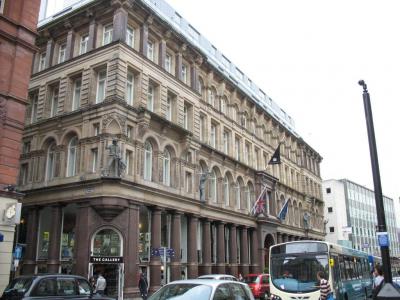
1) Hard Days Night (Beatles-themed Hotel)
The Hard Days Night Hotel on North John Street in Liverpool is a one-of-a-kind, four-star Beatles-themed hotel, offering a luxurious and immersive homage to the Fab Four. Opened in February 2008 during Liverpool’s tenure as the European Capital of Culture, the hotel is housed in the stunning, Grade II listed Central Buildings, originally designed by Thomas C. Clarke in 1884. This meticulously restored property combines historic elegance with a playful celebration of Beatles history.
Boasting 110 individually designed rooms, the hotel integrates Beatles-inspired artwork and memorabilia into every corner. Among its highlights are the exclusive McCartney and Lennon Suites, offering fans a touch of Beatles magic with unparalleled comfort. The walls of the hotel showcase commissioned pieces, exclusive photographs, and even a Yellow Submarine jukebox in the lobby.
The hotel’s facilities include several stylish dining and relaxation venues such as Blakes Restaurant, Bar Four, The Lounge & Bar, and the Live Lounge, where guests can indulge in gourmet meals or cocktails while soaking up the Beatles-inspired ambiance. For an extra touch of nostalgia, don’t miss Hari’s Bar, which features unique Ringo Starr memorabilia and photography.
Situated in the heart of Liverpool’s iconic Beatles Quarter, the hotel is adjacent to the world-famous Cavern Club, the launching pad of the Beatles’ global fame. Guests are also within walking distance of other key landmarks that pay tribute to the band’s legacy. Whether you’re an ardent Beatles enthusiast or simply seeking a luxurious cultural getaway, the Hard Days Night Hotel offers an unforgettable experience steeped in music, history, and charm.
Boasting 110 individually designed rooms, the hotel integrates Beatles-inspired artwork and memorabilia into every corner. Among its highlights are the exclusive McCartney and Lennon Suites, offering fans a touch of Beatles magic with unparalleled comfort. The walls of the hotel showcase commissioned pieces, exclusive photographs, and even a Yellow Submarine jukebox in the lobby.
The hotel’s facilities include several stylish dining and relaxation venues such as Blakes Restaurant, Bar Four, The Lounge & Bar, and the Live Lounge, where guests can indulge in gourmet meals or cocktails while soaking up the Beatles-inspired ambiance. For an extra touch of nostalgia, don’t miss Hari’s Bar, which features unique Ringo Starr memorabilia and photography.
Situated in the heart of Liverpool’s iconic Beatles Quarter, the hotel is adjacent to the world-famous Cavern Club, the launching pad of the Beatles’ global fame. Guests are also within walking distance of other key landmarks that pay tribute to the band’s legacy. Whether you’re an ardent Beatles enthusiast or simply seeking a luxurious cultural getaway, the Hard Days Night Hotel offers an unforgettable experience steeped in music, history, and charm.
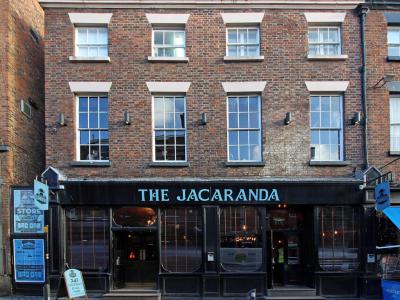
2) The Jacaranda
A famed music bar founded by the first manager of the Beatles, Allan Williams, The Jacaranda – or simply Jac – has been an important part of the Liverpool music scene since 1958. Another must-see spot on any Beatles tour, it is the place where the band used to rehearse, play and hang out when they were called The Silver Beetles.
As soon as the four met Allan Williams, they hounded him for a chance to play at the venue. Allan agreed with one condition: they must paint the place. John and Stuart painted the lady's toilets, and the band would start rehearsing in the basement. Without those hours of rehearsal time, it is unlikely they would have become the stars we know today. After a dozen or so performances at Jacaranda, for which they were paid with free drinks, Allan became their manager and booked their first Hamburg tour.
Reopened and refurbished in 2014, The Jacaranda has once again put itself at the epicenter of unsigned music of the city. With the famous open mics on every Thursday and Sunday, there are live bands playing every Friday and Saturday from 8pm.
Upstairs is now home to Jacaranda Records – a distinctly unique concept that combines vinyl, coffee and cake! With vinyl record players sunk into the tables, you can listen to a huge range of music whilst enjoying an incredible range of cocktails and hot drinks selection. The club is also home to a 1948 voice-o-graph machine that records a track directly to vinyl; one of only two in the world open to the public!
As soon as the four met Allan Williams, they hounded him for a chance to play at the venue. Allan agreed with one condition: they must paint the place. John and Stuart painted the lady's toilets, and the band would start rehearsing in the basement. Without those hours of rehearsal time, it is unlikely they would have become the stars we know today. After a dozen or so performances at Jacaranda, for which they were paid with free drinks, Allan became their manager and booked their first Hamburg tour.
Reopened and refurbished in 2014, The Jacaranda has once again put itself at the epicenter of unsigned music of the city. With the famous open mics on every Thursday and Sunday, there are live bands playing every Friday and Saturday from 8pm.
Upstairs is now home to Jacaranda Records – a distinctly unique concept that combines vinyl, coffee and cake! With vinyl record players sunk into the tables, you can listen to a huge range of music whilst enjoying an incredible range of cocktails and hot drinks selection. The club is also home to a 1948 voice-o-graph machine that records a track directly to vinyl; one of only two in the world open to the public!
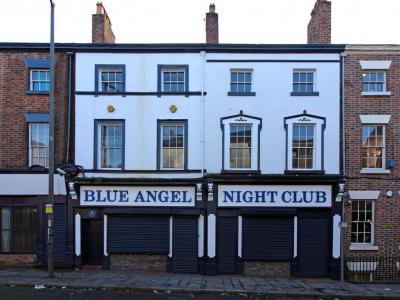
3) The Blue Angel Nightclub (The Raz)
Especially popular amongst university students, this Liverpool institution, known locally as The Raz, is revered by many as equally as it is feared and loathed. Historically a jazz club, it was at one point owned by the Beatles' first manager, Alan Williams, and served as setting for the band's first audition for a tour outside of Liverpool, but also for the band's original drummer, Pete Best. During his time managing the club, Williams refused entry to Bob Dylan and is said to have ejected Judy Garland.
Nowadays, Blue Angel is the type of place where you can have a good dance and enjoy a few drinks, granted you have a few hours and a reasonable number of friends. It is not the kind of club you spend your entire night in if you're planning to stay out for more than a few hours. In essence, The Raz works as either a starter club or an end-of-the-night, last resort kind of place, to enjoy a few drinks with friends as well as a guilt-ridden dance to cheesy pop music (the guilt-ridden dance is, of course, optional). Just make sure you don't wear anything white, or any pricey footwear!
Nowadays, Blue Angel is the type of place where you can have a good dance and enjoy a few drinks, granted you have a few hours and a reasonable number of friends. It is not the kind of club you spend your entire night in if you're planning to stay out for more than a few hours. In essence, The Raz works as either a starter club or an end-of-the-night, last resort kind of place, to enjoy a few drinks with friends as well as a guilt-ridden dance to cheesy pop music (the guilt-ridden dance is, of course, optional). Just make sure you don't wear anything white, or any pricey footwear!
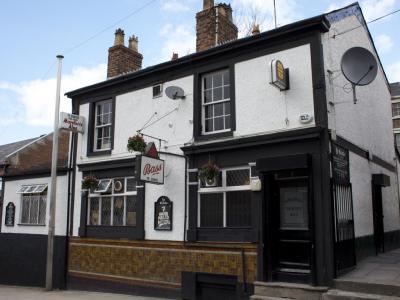
4) Ye Cracke Pub
A proper unspoiled back street pub, Ye Cracke trades on Beatles connections, like many other places in Liverpool. Actually, its artistic history goes a little further back; it was home to the Mersey Beat scene, a group of poets and artists who aimed to emulate the late 1950s New York Beat scene. That scene nurtured the Beatles and others but the only real Beatles connection is that as a louche, leather-jacketed student at the nearby Art College, John Lennon used to hang out here to sit at the feet of Adrian Henri, Arthur Dooley, and other poets and artists. His girlfriend Cynthia, who was also an art student, started joining him later.
Still full of unconventional arty types seeking inspiration in some local brew, Ye Cracke is much more than just Lennon's old hangout – it boasts a great jukebox to put some tunes on, a magnificent secluded beer garden, and one of the city's best-kept secrets – the historic and atmospheric War Room, which is a Grade II listed space where war veterans once sat and recited old war stories.
Grab a pint, walk around, absorb the old-world ambiance, and then talk to the locals who frequent here – you will be warmly accepted!
Still full of unconventional arty types seeking inspiration in some local brew, Ye Cracke is much more than just Lennon's old hangout – it boasts a great jukebox to put some tunes on, a magnificent secluded beer garden, and one of the city's best-kept secrets – the historic and atmospheric War Room, which is a Grade II listed space where war veterans once sat and recited old war stories.
Grab a pint, walk around, absorb the old-world ambiance, and then talk to the locals who frequent here – you will be warmly accepted!
5) Strawberry Field
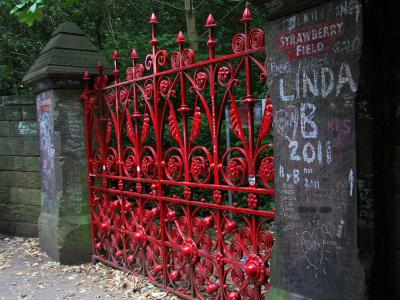
Strawberry Field is a former Salvation Army children’s home in the Liverpool suburb of Woolton, situated on Beaconsfield Road, a short walk from John Lennon’s childhood home. The building that existed during Lennon’s time in Liverpool opened in 1936, and was demolished in 1973 due to structural problems to be replaced with purpose-built units. The name of the children’s home was used by Lennon in the single ‘Strawberry Fields Forever’. Released in 1967, it was the first song to be recorded for “Sergeant Pepper’s Lonely Hearts Club Band”, considered by many to be the greatest album of all time. The song is regularly voted as one of the band’s five best.
The song does not directly reference the children’s home, but its hazy, summery melody is believed to be influenced by the afternoons spent by young Lennon in woodland behind the Strawberry Field grounds. Lennon also attended the home’s summer fête with his aunt each year; she claimed that he would listen to the Salvation Army marching band warming up from his bedroom window.
In time, the old red-painted entrance gates on Beaconsfield Road became a place of pilgrimage for Beatles fans. Strawberry Field is opened to the public. There is an exhibition on its history, plus a café and a shop. It is free to visit the Strawberry Field garden, care and shop. There is a small fee for viewing the exhibition.
The gates were stolen on 11 May 2000, allegedly by two men in a transit van, and were sold to an unsuspecting antiques dealer who never realized they were the actual gates from Strawberry Field. He returned them to the police upon request, and they now stand in the grounds of Strawberry Field.
Opening times:
Summer (1st April to 31st October)
Daily 09:00-19.00 (last admission 18:00)
Winter (1st November to 31st March)
Daily 09:30-17:00 (last admission 16:00)
Why You Should Visit:
This is one of the few places associated with the Beatles' childhood that you can visit for free. Do it as part of the whole Beatles experience.
Tip:
Strawberry Field operates a minibus to take people from Albert Dock in the city center to Strawberry Field and back. The minibus leaves Royal Albert Dock at the following times: 10:00, 11:15, 13:15, 14:15, 15:15. The last bus returning to Royal Albert Dock leaves Strawberry Field at 17:00.
The song does not directly reference the children’s home, but its hazy, summery melody is believed to be influenced by the afternoons spent by young Lennon in woodland behind the Strawberry Field grounds. Lennon also attended the home’s summer fête with his aunt each year; she claimed that he would listen to the Salvation Army marching band warming up from his bedroom window.
In time, the old red-painted entrance gates on Beaconsfield Road became a place of pilgrimage for Beatles fans. Strawberry Field is opened to the public. There is an exhibition on its history, plus a café and a shop. It is free to visit the Strawberry Field garden, care and shop. There is a small fee for viewing the exhibition.
The gates were stolen on 11 May 2000, allegedly by two men in a transit van, and were sold to an unsuspecting antiques dealer who never realized they were the actual gates from Strawberry Field. He returned them to the police upon request, and they now stand in the grounds of Strawberry Field.
Opening times:
Summer (1st April to 31st October)
Daily 09:00-19.00 (last admission 18:00)
Winter (1st November to 31st March)
Daily 09:30-17:00 (last admission 16:00)
Why You Should Visit:
This is one of the few places associated with the Beatles' childhood that you can visit for free. Do it as part of the whole Beatles experience.
Tip:
Strawberry Field operates a minibus to take people from Albert Dock in the city center to Strawberry Field and back. The minibus leaves Royal Albert Dock at the following times: 10:00, 11:15, 13:15, 14:15, 15:15. The last bus returning to Royal Albert Dock leaves Strawberry Field at 17:00.
6) Penny Lane
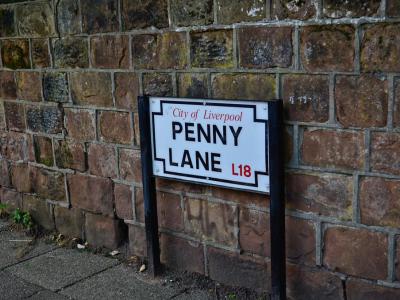
Penny Lane, a fairly typical suburban shopping street in the eastern suburb of Mossley Hill, has become world famous thanks to the Beatles hit that bears its name. It was written by Paul McCartney, who attended Saint Barnabas Church on the street and often met here his childhood friend and fellow Beatle, John Lennon, before catching a bus to Liverpool’s city centre. The many sights referenced in the lyrics can still be found on Penny Lane, including a bus shelter, a barber shop and a fire station. Street signs bearing the famous name were stolen so regularly that the council began painting the street name onto buildings instead.
“Penny Lane” was released in 1967 as a double A-side single with “Strawberry Fields Forever”, another song which references a Liverpool landmark. Beatles producer, George Martin, believed that it was collectively their finest single. It went to No.1 in the US, but only reached No.2 in the UK charts. The street has grown in stature as the result of its Beatles connections, and has become an attraction for tourists and locals alike. It caused some embarrassment to the council officials at one point, when they proposed that all Liverpool streets named after slave traders be renamed, unaware that Penny Lane was indeed named after the local slave trader James Penny. The famous street thus kept its name, whilst the other street names in the city were changed.
“Penny Lane” was released in 1967 as a double A-side single with “Strawberry Fields Forever”, another song which references a Liverpool landmark. Beatles producer, George Martin, believed that it was collectively their finest single. It went to No.1 in the US, but only reached No.2 in the UK charts. The street has grown in stature as the result of its Beatles connections, and has become an attraction for tourists and locals alike. It caused some embarrassment to the council officials at one point, when they proposed that all Liverpool streets named after slave traders be renamed, unaware that Penny Lane was indeed named after the local slave trader James Penny. The famous street thus kept its name, whilst the other street names in the city were changed.
7) Statue of Eleanor Rigby
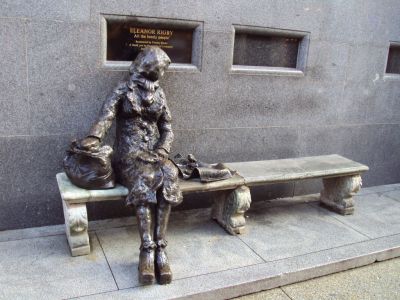
The Statue of Eleanor Rigby can be found on the pavement of Stanley Street, a couple of blocks from the Cavern Club on Mathew Street. A sculpture of an apparently middle aged woman, wearing a head scarf and holding a hand bag, it is placed on a bench with a space for visitors to sit next to it.
Dedicated to “all the lonely people” of Liverpool, it was crafted, remarkably enough, by English entertainer Tommy Steele, who had a lesser known talent for sculpture. London-based performer Steele donated the statue to Liverpool out of fondness for performing in the city. He claims to have placed a number of items inside the sculpture, including a four leafed clover, a football sock and a page of the Bible.
The statue is of course a tribute to the Beatles’ hit song ‘Eleanor Rigby’. Released in 1966, it was a No.1 hit in the UK. The title character is portrayed as a melancholy soul, reflected in her solitary, bedraggled appearance in Steele’s sculpture. Eleanor Rigby is a fictional character, though the name has been found on a gravestone in the Liverpool suburb of Woolton. The ‘real’ Eleanor Rigby died in 1939, and her tomb has become an attraction for many Beatles fans visiting the city.
Dedicated to “all the lonely people” of Liverpool, it was crafted, remarkably enough, by English entertainer Tommy Steele, who had a lesser known talent for sculpture. London-based performer Steele donated the statue to Liverpool out of fondness for performing in the city. He claims to have placed a number of items inside the sculpture, including a four leafed clover, a football sock and a page of the Bible.
The statue is of course a tribute to the Beatles’ hit song ‘Eleanor Rigby’. Released in 1966, it was a No.1 hit in the UK. The title character is portrayed as a melancholy soul, reflected in her solitary, bedraggled appearance in Steele’s sculpture. Eleanor Rigby is a fictional character, though the name has been found on a gravestone in the Liverpool suburb of Woolton. The ‘real’ Eleanor Rigby died in 1939, and her tomb has become an attraction for many Beatles fans visiting the city.
8) The White Star Pub
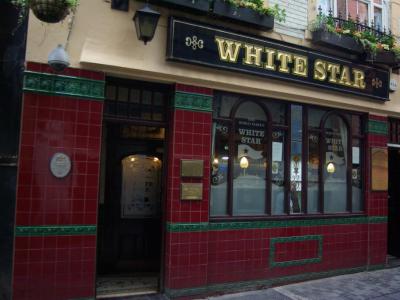
No trip to Liverpool is complete without a visit to the backroom of The White Star, one of Matthew Street's longest-running pubs, traced back as far back as 1880 and named after the shipping company of Titanic fame. A crowded locals pub on matchdays, otherwise a quiet boozer housed in a traditional Victorian building, it features lots of Liverpool memorabilia and a connection, obviously, to The Beatles.
The pub is known as the place where the Fab Four played their first gig, also where Alan Williams and Bob Wooler (the original deejay of Cavern Club across the road) would pay their artists. Every once a while, the Beatles would come here to receive their money after their Cavern performances, and in that backroom, there is a wall decorated with Beatles memorabilia, known as the "Beatles back wall".
For any overseas visitors looking for a proper English pub, The White Star is still the absolute real thing. The bar staff are friendly and the ales on sale are top class, all well kept and promptly served. Oftentimes, there are visitors to Liverpool drinking alongside locals who want to share their personal experiences and memories of the Fab Four. The only downside is that food is not available.
The pub is known as the place where the Fab Four played their first gig, also where Alan Williams and Bob Wooler (the original deejay of Cavern Club across the road) would pay their artists. Every once a while, the Beatles would come here to receive their money after their Cavern performances, and in that backroom, there is a wall decorated with Beatles memorabilia, known as the "Beatles back wall".
For any overseas visitors looking for a proper English pub, The White Star is still the absolute real thing. The bar staff are friendly and the ales on sale are top class, all well kept and promptly served. Oftentimes, there are visitors to Liverpool drinking alongside locals who want to share their personal experiences and memories of the Fab Four. The only downside is that food is not available.
9) The Grapes Pub
One of the main reasons why British pubs have such peculiar names is that the first pub signs were pictorial, as many of the customers could not read at the time. These were some of the earliest logos – a Roman taberna, for example, was marked by a vine or perhaps a bunch of grapes, and there are plenty of pubs called The Vines, the Grapes or the Bunch of Grapes around, especially in cities associated with the wine trade.
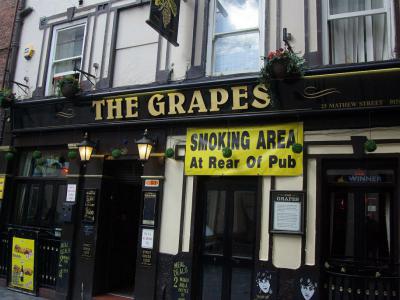
Liverpool has seemingly dozens of Grapes, the best-known probably being the one in Mathew Street, diagonally opposite the world-famous Cavern Club, where the Fab Four used to refresh themselves before or after a gig. They were joined by other bands just off their gigs, as well: Gerry and the Pacemakers, The Big Three, The Searchers and the Swinging Blue Jeans. When the queues of predominantly teenage fans stretched down the street, whatever the weather, The Grapes was guaranteed to be always crowded – particularly as the Cavern was an alcohol-free venue.
Although it doesn't look the same as it did in Beatle days, The Grapes on Mathew Street is clean, has sufficient amounts of comfortable seating available, as well as karaoke. One moment you can be listening to someone strangling animals with their voice and by the very next song feel like you've stumbled upon a singer who might be the next big thing. All the while, people out for the evening are content to just carry on supping their Guinnesses and catching up like it's no big deal.
Liverpool has seemingly dozens of Grapes, the best-known probably being the one in Mathew Street, diagonally opposite the world-famous Cavern Club, where the Fab Four used to refresh themselves before or after a gig. They were joined by other bands just off their gigs, as well: Gerry and the Pacemakers, The Big Three, The Searchers and the Swinging Blue Jeans. When the queues of predominantly teenage fans stretched down the street, whatever the weather, The Grapes was guaranteed to be always crowded – particularly as the Cavern was an alcohol-free venue.
Although it doesn't look the same as it did in Beatle days, The Grapes on Mathew Street is clean, has sufficient amounts of comfortable seating available, as well as karaoke. One moment you can be listening to someone strangling animals with their voice and by the very next song feel like you've stumbled upon a singer who might be the next big thing. All the while, people out for the evening are content to just carry on supping their Guinnesses and catching up like it's no big deal.
10) The Cavern Club (must see)
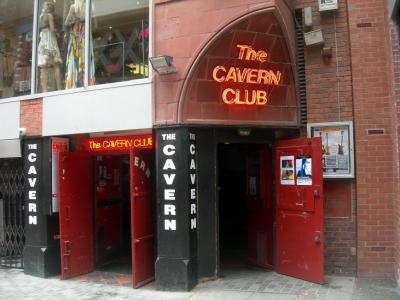
Opened on 16 January 1957 as a jazz club and later becoming a center of Liverpool's rock-and-roll scene in the early 1960s, the Cavern Club became closely associated with the Merseybeat music genre and, famously, regularly played host to The Beatles in their early years, initially as part of the weekday "beat sessions" at lunchtime.
The Beatles made their first appearance at the club after returning to Liverpool from Hamburg, Germany where they had been playing at the Indra and the Kaiserkeller clubs. There and then, on Tuesday, February 9, 1961, they were signed up as the club's resident lunchtime group, working in alternation with Gerry and the Pacemakers. Narrow, cobbled, uneventful Mathew Street thus began to lead an unexpected new life in daylight hours. At noon, Mondays to Fridays, a four-abreast line would begin to form at the Cavern's hatchlike entrance, growing by the minute until it stretched back past the warehouses and delivery trucks and piled-up fruit crates, eighty-odd yards to the junction with Whitechapel. Inside, there was no "security" whatsoever, and no alcohol was sold either at lunchtimes or at night, only coffee and soft drinks.
From 1961 to 1963, the Beatles made 292 appearances at The Cavern. By summer of 1963, "Beatlemania" was sprouting across England, and with girls demanding to see the Beatles and screaming just to get a glimpse of them, the group had to hide or sneak into concerts, and the small club could no longer satisfy audience demand. So on 3 August 1963, the Beatles made their final appearance at The Cavern.
In the decade that followed, a wide variety of popular acts appeared at the club, including The Rolling Stones, The Yardbirds, The Hollies, The Kinks, Elton John, Black Sabbath, Queen, The Who, and John Lee Hooker.
Even if you're not that bothered about the Beatles, The Cavern is a must-visit experience when in Liverpool. The live music is still brilliant, and the door charge of £2.50 per person after noon is not much to pay for such a historic place.
Why You Should Visit:
To check out the most legendary cellar club on the planet that has been the beating heart of Liverpool’s iconic music scene for over seven decades, visited by millions of people from all over the world passing down its famous stairway.
The Beatles made their first appearance at the club after returning to Liverpool from Hamburg, Germany where they had been playing at the Indra and the Kaiserkeller clubs. There and then, on Tuesday, February 9, 1961, they were signed up as the club's resident lunchtime group, working in alternation with Gerry and the Pacemakers. Narrow, cobbled, uneventful Mathew Street thus began to lead an unexpected new life in daylight hours. At noon, Mondays to Fridays, a four-abreast line would begin to form at the Cavern's hatchlike entrance, growing by the minute until it stretched back past the warehouses and delivery trucks and piled-up fruit crates, eighty-odd yards to the junction with Whitechapel. Inside, there was no "security" whatsoever, and no alcohol was sold either at lunchtimes or at night, only coffee and soft drinks.
From 1961 to 1963, the Beatles made 292 appearances at The Cavern. By summer of 1963, "Beatlemania" was sprouting across England, and with girls demanding to see the Beatles and screaming just to get a glimpse of them, the group had to hide or sneak into concerts, and the small club could no longer satisfy audience demand. So on 3 August 1963, the Beatles made their final appearance at The Cavern.
In the decade that followed, a wide variety of popular acts appeared at the club, including The Rolling Stones, The Yardbirds, The Hollies, The Kinks, Elton John, Black Sabbath, Queen, The Who, and John Lee Hooker.
Even if you're not that bothered about the Beatles, The Cavern is a must-visit experience when in Liverpool. The live music is still brilliant, and the door charge of £2.50 per person after noon is not much to pay for such a historic place.
Why You Should Visit:
To check out the most legendary cellar club on the planet that has been the beating heart of Liverpool’s iconic music scene for over seven decades, visited by millions of people from all over the world passing down its famous stairway.
