Custom Walk in Istanbul, Turkey by esahiner_2eba26 created on 2026-01-29
Guide Location: Turkey » Istanbul
Guide Type: Custom Walk
# of Sights: 14
Tour Duration: 3 Hour(s)
Travel Distance: 6 Km or 3.7 Miles
Share Key: KKWLZ
Guide Type: Custom Walk
# of Sights: 14
Tour Duration: 3 Hour(s)
Travel Distance: 6 Km or 3.7 Miles
Share Key: KKWLZ
How It Works
Please retrieve this walk in the GPSmyCity app. Once done, the app will guide you from one tour stop to the next as if you had a personal tour guide. If you created the walk on this website or come to the page via a link, please follow the instructions below to retrieve the walk in the app.
Retrieve This Walk in App
Step 1. Download the app "GPSmyCity: Walks in 1K+ Cities" on Apple App Store or Google Play Store.



Step 2. In the GPSmyCity app, download(or launch) the guide "Istanbul Map and Walking Tours".
Step 3. Tap the menu button located at upper right corner of the "Walks" screen and select "Retrieve custom walk". Enter the share key: KKWLZ

1) Topkapi Palace (must see)
For most tourists, the Topkapi Palace is usually the number one attraction in Istanbul. And if you don’t have it on your list, are you sure you're visiting Istanbul? Constructed soon after the Ottoman conquest of Constantinople in 1453, it was commissioned by Sultan Mehmed II and was completed in the late 15th century. For nearly 400 years, it served as the political and ceremonial center of the Ottoman Empire, as well as the primary residence of its sultans.
Unlike many European royal residences, which typically consist of a single grand building, Topkapi was designed as a sprawling complex, covering about 700,000 square meters on the tip of the historic peninsula. It includes numerous pavilions, courtyards, gardens, mosques, and state rooms, each added and modified by different sultans over time. One of its most famous sections is the Harem, where the sultan’s family, including Valide Sultan (or the Queen Mother) and other influential women of the court, lived. This private space played an important role in politics, especially during a period often called the “Sultanate of Women,” when leading females inside the Harem influenced major state decisions.
Although Topkapi symbolized imperial authority for centuries, its role changed in the 19th century as the empire modernized. Sultan Abdulmejid I moved the royal court to the newly constructed Dolmabahçe Palace, which offered European-style luxury and modern conveniences. Even after the move, Topkapi retained great importance by housing sacred relics of Islam, including personal items (notably, the swords) of the Prophet Muhammad and his close companions.
After the fall of the Ottoman Empire and the founding of the Republic of Turkey in 1923, Topkapi Palace was turned into a museum the following year by the country's first president, Mustafa Kemal Atatürk. In 1985, it was recognized as part of Istanbul’s UNESCO World Heritage Sites.
At Topkapi, every stone whispers a secret, every doorway leads to another chapter of history, and the views of the Bosphorus Strait are always throne-worthy. To take it all in, especially the Harem and Holy Relics that really steal the show, visitors are encouraged to allocate a whole day. Practical tips include arriving early to avoid crowds, renting an audio guide with a valid ID, and respecting photography restrictions in many exhibit areas.
So, get ready: enjoy the royal treatment-minus the sultan’s responsibilities...
Unlike many European royal residences, which typically consist of a single grand building, Topkapi was designed as a sprawling complex, covering about 700,000 square meters on the tip of the historic peninsula. It includes numerous pavilions, courtyards, gardens, mosques, and state rooms, each added and modified by different sultans over time. One of its most famous sections is the Harem, where the sultan’s family, including Valide Sultan (or the Queen Mother) and other influential women of the court, lived. This private space played an important role in politics, especially during a period often called the “Sultanate of Women,” when leading females inside the Harem influenced major state decisions.
Although Topkapi symbolized imperial authority for centuries, its role changed in the 19th century as the empire modernized. Sultan Abdulmejid I moved the royal court to the newly constructed Dolmabahçe Palace, which offered European-style luxury and modern conveniences. Even after the move, Topkapi retained great importance by housing sacred relics of Islam, including personal items (notably, the swords) of the Prophet Muhammad and his close companions.
After the fall of the Ottoman Empire and the founding of the Republic of Turkey in 1923, Topkapi Palace was turned into a museum the following year by the country's first president, Mustafa Kemal Atatürk. In 1985, it was recognized as part of Istanbul’s UNESCO World Heritage Sites.
At Topkapi, every stone whispers a secret, every doorway leads to another chapter of history, and the views of the Bosphorus Strait are always throne-worthy. To take it all in, especially the Harem and Holy Relics that really steal the show, visitors are encouraged to allocate a whole day. Practical tips include arriving early to avoid crowds, renting an audio guide with a valid ID, and respecting photography restrictions in many exhibit areas.
So, get ready: enjoy the royal treatment-minus the sultan’s responsibilities...
2) Arasta Bazaar
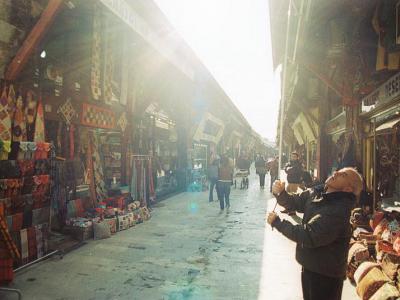
The Arasta Bazaar can be easily regarded as the Blue Mosque’s stylish backyard market. Built back in the 17th century, its original purpose was very practical: its shop rent helped pay for the mosque’s maintenance. You could say it was history’s most elegant fundraising program. For a long time, though, the shops sat empty… until the tourism boom of the 1980s and ’90s breathed life (and bargaining) back into the place.
Now, if Grand Bazaar feels like too much cardio or too many elbows, Arasta Bazaar is your happy middle ground. It offers a slimmed-down version of the Istanbul shopping experience: fewer crowds, less chaos, and still plenty of temptation. With over 70 shops selling everything from carpets and kilims to ceramic tiles, spices, teas, and jewelry, you can tick all your souvenir boxes in one relaxed stroll. And don’t worry - the salesmen here are multilingual charm-machines who can joke, flatter, and caffeinate you into seeing why that extra scarf is suddenly essential. Prices start reasonably and get friendlier the moment you start negotiating.
While you’re browsing, look down - literally beneath your feet lies a piece of Byzantine luxury. Excavations revealed that this area once belonged to the Great Palace, the imperial stomping grounds of Constantinople. Today, you can head downstairs to the Great Palace Mosaic Museum and admire vivid scenes of ancient life: animals, hunters, mythical creatures… basically the original “floor stickers.”
So, take your time. Enjoy a coffee, admire the craftsmanship, and leave with a story - plus at least one more bag than you intended. Arasta Bazaar may be modest in size, but it’s rich in history, charm, and shopping victories.
Now, if Grand Bazaar feels like too much cardio or too many elbows, Arasta Bazaar is your happy middle ground. It offers a slimmed-down version of the Istanbul shopping experience: fewer crowds, less chaos, and still plenty of temptation. With over 70 shops selling everything from carpets and kilims to ceramic tiles, spices, teas, and jewelry, you can tick all your souvenir boxes in one relaxed stroll. And don’t worry - the salesmen here are multilingual charm-machines who can joke, flatter, and caffeinate you into seeing why that extra scarf is suddenly essential. Prices start reasonably and get friendlier the moment you start negotiating.
While you’re browsing, look down - literally beneath your feet lies a piece of Byzantine luxury. Excavations revealed that this area once belonged to the Great Palace, the imperial stomping grounds of Constantinople. Today, you can head downstairs to the Great Palace Mosaic Museum and admire vivid scenes of ancient life: animals, hunters, mythical creatures… basically the original “floor stickers.”
So, take your time. Enjoy a coffee, admire the craftsmanship, and leave with a story - plus at least one more bag than you intended. Arasta Bazaar may be modest in size, but it’s rich in history, charm, and shopping victories.
3) Blue Mosque (must see)
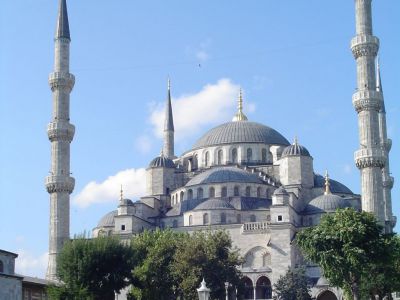
If there's one “celebrity monument” with its own fan club in Istanbul, it is undoubtedly the Sultan Ahmed Mosque - better known as the “Blue Mosque.” Why this nickname? Step inside and you’ll see for yourself -thousands of shimmering blue tiles that turn the whole interior into a calming ocean of color. Built between 1609 and 1616 under Sultan Ahmed I, this place isn’t just a pretty façade but is also home to the Sultan’s tomb. Formerly a religious school (or madrassah), it also housed, once, what used to be a hospice. And despite welcoming tourists from sunrise to sunset, it still functions as a real mosque. That means the call to prayer - five times a day - pauses sightseeing (for approximately half an hour) and reminds everyone that this is primarily a place of worship rather than a photo backdrop...
The Blue Mosque stands right across from Hagia Sophia, making Sultanahmet Square the heavyweight championship ring of world architecture. Surrounded by museums, cafés, parks, and postcard-perfect views in every direction, it’s basically the center of Istanbul’s charm offensive. Curious fact: the mosque was built on top of the old Byzantine Imperial Palace grounds and parts of the Hippodrome. Inside, the walls are covered with breathtaking Islamic art and masterful calligraphy that feels like history’s own handwriting.
The fact that it’s free, world-famous, and (unlike many other similar attractions) is incredibly easy to reach, makes this mosque a definite must-visit. Yes, there are dress codes, security checks, and lines that might make you consider new career paths while waiting… but once inside that peaceful, domed interior - despite all the crowds - you will gladly realize it's been worth it.
Pro tip: Arrive early to avoid queues - your future self will thank you. While waiting, instead of counting heads in line, admire the details around you; Islamic design rewards those who actually look up. And when hunger strikes, don’t worry - great food and drinks are just steps away. Even from the outside, the mosque is a dream for photographers… So, go ahead, circle it like a curious cat and capture every angle.
The Blue Mosque stands right across from Hagia Sophia, making Sultanahmet Square the heavyweight championship ring of world architecture. Surrounded by museums, cafés, parks, and postcard-perfect views in every direction, it’s basically the center of Istanbul’s charm offensive. Curious fact: the mosque was built on top of the old Byzantine Imperial Palace grounds and parts of the Hippodrome. Inside, the walls are covered with breathtaking Islamic art and masterful calligraphy that feels like history’s own handwriting.
The fact that it’s free, world-famous, and (unlike many other similar attractions) is incredibly easy to reach, makes this mosque a definite must-visit. Yes, there are dress codes, security checks, and lines that might make you consider new career paths while waiting… but once inside that peaceful, domed interior - despite all the crowds - you will gladly realize it's been worth it.
Pro tip: Arrive early to avoid queues - your future self will thank you. While waiting, instead of counting heads in line, admire the details around you; Islamic design rewards those who actually look up. And when hunger strikes, don’t worry - great food and drinks are just steps away. Even from the outside, the mosque is a dream for photographers… So, go ahead, circle it like a curious cat and capture every angle.
4) Sultanahmet Square (must see)
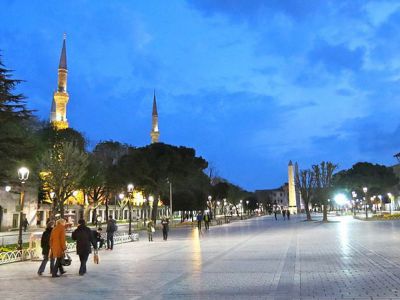
Roll back the clock some 1,500 years and you’d find yourself cheering on thundering chariots at the Hippodrome of Constantinople. Nowadays, that same spot has traded in its roaring crowds for camera-clicking tourists: welcome to Sultanahmet Square, the beating heart of Istanbul’s Old City! It’s the kind of place where history is casually hanging out right beside you. Ancient monuments, world-famous landmarks-all here. The Blue Mosque, Hagia Sophia, the Museum of Turkish & Islamic Arts, even the Serpent Column-have gathered like celebrities on a very exclusive red carpet...
And if you’re wondering about the Basilica Cistern-yes, that mysterious underground palace of water and marble columns-is barely a 40-meter stroll away. The Grand Bazaar, with its labyrinth of stalls and endless bargaining opportunities, is also close by. Basically, from this square, everything you want to see has decided to arrange itself within walking distance. How thoughtful...
Sultanahmet Square is big enough to stretch your legs and dotted with benches perfect for regrouping after a marathon of sightseeing. Feeling hungry? Not a problem. Food carts pop up everywhere, tempting you with roasted corn, warm chestnuts, and simit-the Turkish cousin of the pretzel-sometimes even filled with chocolate for the sweet-toothed adventurer. Along the tram line, cafés and shops are ready to caffeinate you, feed you Turkish Delights, and send you home with gift packs that may or may not make it through airport security unopened.
This square never really rests. Families enjoy the colorful fountain, kids race through the greenery, and Istanbul’s famously relaxed street cats and dogs seem rather friendly and keep to themselves. Just one tip: the area is open to the elements and provides very little shelter, so carrying an umbrella or raincoat, if the weather looks moody, is highly recommended-unless, of course, you enjoy dramatic, cinematic rainfall during vacations...
So, take a seat, grab a simit, and soak it all in-you’re standing where empires once entertained the masses, and where Istanbul still gathers the world...
And if you’re wondering about the Basilica Cistern-yes, that mysterious underground palace of water and marble columns-is barely a 40-meter stroll away. The Grand Bazaar, with its labyrinth of stalls and endless bargaining opportunities, is also close by. Basically, from this square, everything you want to see has decided to arrange itself within walking distance. How thoughtful...
Sultanahmet Square is big enough to stretch your legs and dotted with benches perfect for regrouping after a marathon of sightseeing. Feeling hungry? Not a problem. Food carts pop up everywhere, tempting you with roasted corn, warm chestnuts, and simit-the Turkish cousin of the pretzel-sometimes even filled with chocolate for the sweet-toothed adventurer. Along the tram line, cafés and shops are ready to caffeinate you, feed you Turkish Delights, and send you home with gift packs that may or may not make it through airport security unopened.
This square never really rests. Families enjoy the colorful fountain, kids race through the greenery, and Istanbul’s famously relaxed street cats and dogs seem rather friendly and keep to themselves. Just one tip: the area is open to the elements and provides very little shelter, so carrying an umbrella or raincoat, if the weather looks moody, is highly recommended-unless, of course, you enjoy dramatic, cinematic rainfall during vacations...
So, take a seat, grab a simit, and soak it all in-you’re standing where empires once entertained the masses, and where Istanbul still gathers the world...
5) Hagia Sophia (Ayasofya) (must see)
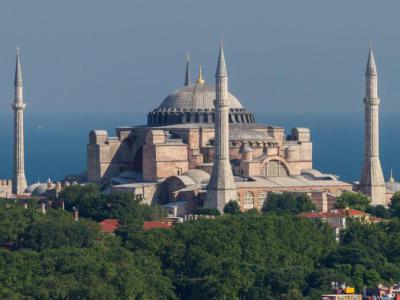
Hagia Sophia is the ultimate overachiever of both architecture and religion. Built in the 6th century for Emperor Justinian I, it began life as a grand Christian cathedral-basically the power seat of the Eastern Orthodox world. Its giant dome was such an engineering feat that people said it hung from heaven by a chain. At 180 feet tall and 100 feet wide, it still gets a lot of impressed neck-craning today.
Still, history wasn’t satisfied with just one identity for Hagia Sophia. When the Ottomans conquered Constantinople in 1453, Sultan Mehmed II turned it into a mosque. Up went the minarets, out came the church bells, and Christian images were masterly covered-like someone switching décor for a very different house party... Today, you’ll see a fascinating mash-up: Islamic calligraphy panels right beside shimmering mosaics of the Virgin Mary and Jesus. History lesson and cultural fusion rolled into one.
Inside, look for the famous Deësis mosaic from the 13th century, featuring Christ, John the Baptist, and the Virgin Mary, expressing emotion so well it almost feels like they’re watching you back. And don’t miss the “wishing column.” Legend says that if you stick your thumb in the little hole and rotate it just right, you get a miracle. Rumor has it, even Emperor Justinian tried it for headaches-indeed, who needs aspirin when you have ancient architecture?
Recognized as a UNESCO World Heritage Site, Hagia Sophia continues to reinvent itself. After a stretch as a museum, it has returned to its original mission as a place of worship, while its historical displays now live at the nearby Ibrahim Pasha Palace.
Indeed, one shouldn't miss the opportunity to visit here, because where else can you stand in one spot and admire 1,500 years of spiritual remixing? Hagia Sophia’s layers of faith, art, and genius design make it impossible to look away-so go ahead and stare in awe!
Still, history wasn’t satisfied with just one identity for Hagia Sophia. When the Ottomans conquered Constantinople in 1453, Sultan Mehmed II turned it into a mosque. Up went the minarets, out came the church bells, and Christian images were masterly covered-like someone switching décor for a very different house party... Today, you’ll see a fascinating mash-up: Islamic calligraphy panels right beside shimmering mosaics of the Virgin Mary and Jesus. History lesson and cultural fusion rolled into one.
Inside, look for the famous Deësis mosaic from the 13th century, featuring Christ, John the Baptist, and the Virgin Mary, expressing emotion so well it almost feels like they’re watching you back. And don’t miss the “wishing column.” Legend says that if you stick your thumb in the little hole and rotate it just right, you get a miracle. Rumor has it, even Emperor Justinian tried it for headaches-indeed, who needs aspirin when you have ancient architecture?
Recognized as a UNESCO World Heritage Site, Hagia Sophia continues to reinvent itself. After a stretch as a museum, it has returned to its original mission as a place of worship, while its historical displays now live at the nearby Ibrahim Pasha Palace.
Indeed, one shouldn't miss the opportunity to visit here, because where else can you stand in one spot and admire 1,500 years of spiritual remixing? Hagia Sophia’s layers of faith, art, and genius design make it impossible to look away-so go ahead and stare in awe!
6) Basilica Cistern (Yerebatan Sarnıcı) (must see)
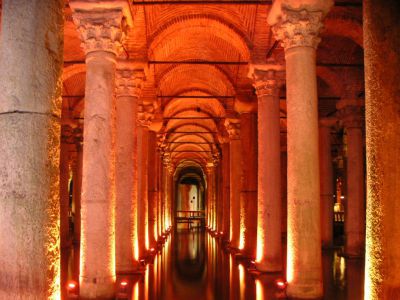
Deep beneath the busy streets near Hagia Sophia lies one of Istanbul’s coolest secrets - literally - the Basilica Cistern. Its Turkish name, translating to something like “the cistern that sank into the ground,” sounds dramatic… and honestly, it lives up to the hype. Built in the 6th century AD by Emperor Justinian I, this underground wonder once helped supply water to the Great Palace of Constantinople. And yes, history tells us, more than 7,000 slaves worked on it, which in turn explains how it became so massive.
The endless rows of columns, dim lighting, and still water reflecting everything like a spooky mirror... If this feels a bit like stepping into a fantasy movie set, that’s because thousands of years ago, the Byzantines were already masters of atmospheric design. Even when the Ottomans took over, the cistern kept doing its job quietly - providing water to Topkapi Palace and proving itself far more reliable than your average plumbing system.
These days, the Basilica Cistern is less about water supply and more about blowing visitors’ minds. You can stroll past ancient triumphal arches, admire rows of marble pillars, and, of course, meet the most famous residents: two giant Medusa heads casually holding up columns in the northwest corner. One sideways, one upside-down… because when you have mythological monster heads lying around, why not get creative?
And if you like incredible photos, mysterious echoes, and that thrilling “did I just feel a ghost breeze?” vibe - this place delivers. Plus, it’s right next to Hagia Sophia, Topkapi Palace, and the Blue Mosque, so you can easily squeeze it into your ancient-monument marathon.
A word of warning: surfaces can get slippery - especially around Medusa - so walk like you’re in a suspense movie. And also bring a jacket, for it gets rather chilly underground... Ready to descend into Istanbul’s past? The cistern is waiting below… just mind the water.
The endless rows of columns, dim lighting, and still water reflecting everything like a spooky mirror... If this feels a bit like stepping into a fantasy movie set, that’s because thousands of years ago, the Byzantines were already masters of atmospheric design. Even when the Ottomans took over, the cistern kept doing its job quietly - providing water to Topkapi Palace and proving itself far more reliable than your average plumbing system.
These days, the Basilica Cistern is less about water supply and more about blowing visitors’ minds. You can stroll past ancient triumphal arches, admire rows of marble pillars, and, of course, meet the most famous residents: two giant Medusa heads casually holding up columns in the northwest corner. One sideways, one upside-down… because when you have mythological monster heads lying around, why not get creative?
And if you like incredible photos, mysterious echoes, and that thrilling “did I just feel a ghost breeze?” vibe - this place delivers. Plus, it’s right next to Hagia Sophia, Topkapi Palace, and the Blue Mosque, so you can easily squeeze it into your ancient-monument marathon.
A word of warning: surfaces can get slippery - especially around Medusa - so walk like you’re in a suspense movie. And also bring a jacket, for it gets rather chilly underground... Ready to descend into Istanbul’s past? The cistern is waiting below… just mind the water.
7) Antique Market at Grand Bazaar
The Grand Bazaar in Istanbul is a symbol of Turkey's cultural heritage and enduring charm. As one of the largest and oldest covered markets in the world, the Grand Bazaar offers an immersive shopping experience that is unparalleled, attracting travelers from around the globe. This comprehensive guide delves into the bustling markets of Istanbul, with a special focus on the enchanting grandeur of the Grand Bazaar, a testament to centuries of trade and tradition.
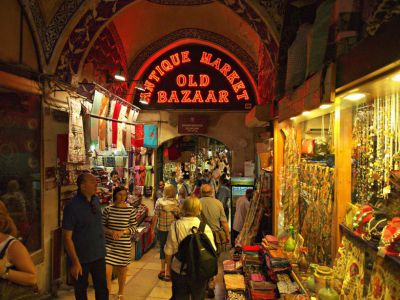
At the heart of the Grand Bazaar lies the Antique Market, situated in the hall of Cevahir Bedesten. This area is a treasure trove for collectors and enthusiasts of vintage or collectible items. The Antique Market is home to a diverse collection of items, including antique mirrors, water pipes, watches and clocks, candlesticks, old coins, and silver and gold jewelry sets adorned with coral and turquoise. In addition, visitors can find furniture, copperware, amber prayer beads, inlaid weapons, icons, and much more. Each piece found here tells a unique story, offering a glimpse into the rich history and cultural diversity of Turkey.
The Grand Bazaar's Antique Market is not just a place for purchasing items; it is a destination that offers a journey through time. It provides an opportunity for visitors to connect with the past, appreciate the beauty of craftsmanship, and experience the vibrant culture of Istanbul. The Antique Market at Istanbul's Grand Bazaar offers a captivating blend of history, culture, and commerce for collectors and enthusiasts alike.
Tip:
Just don't expect to find there any actual “antiques”, like a real Roman statue or ancient Greek coins. But even if you do find some old treasures of this sort, please note that it is against the law in Turkey to take antiques out of the country and may involve even a jail sentence.
At the heart of the Grand Bazaar lies the Antique Market, situated in the hall of Cevahir Bedesten. This area is a treasure trove for collectors and enthusiasts of vintage or collectible items. The Antique Market is home to a diverse collection of items, including antique mirrors, water pipes, watches and clocks, candlesticks, old coins, and silver and gold jewelry sets adorned with coral and turquoise. In addition, visitors can find furniture, copperware, amber prayer beads, inlaid weapons, icons, and much more. Each piece found here tells a unique story, offering a glimpse into the rich history and cultural diversity of Turkey.
The Grand Bazaar's Antique Market is not just a place for purchasing items; it is a destination that offers a journey through time. It provides an opportunity for visitors to connect with the past, appreciate the beauty of craftsmanship, and experience the vibrant culture of Istanbul. The Antique Market at Istanbul's Grand Bazaar offers a captivating blend of history, culture, and commerce for collectors and enthusiasts alike.
Tip:
Just don't expect to find there any actual “antiques”, like a real Roman statue or ancient Greek coins. But even if you do find some old treasures of this sort, please note that it is against the law in Turkey to take antiques out of the country and may involve even a jail sentence.
8) Grand Bazaar (must see)
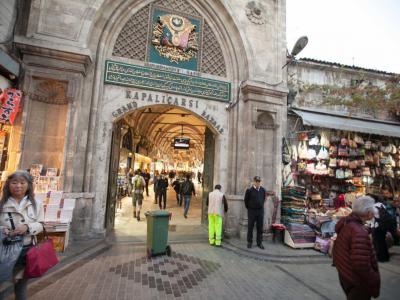
Imagine stepping into a shopping mall built in the 1400s. Welcome to the Grand Bazaar, Istanbul’s legendary “Covered Market,” where more than 4,000 shops squeeze into 58 winding streets-all under one gigantic roof! Naturally, it gets crowded, with hundreds of thousands of visitors per day, all hunting for treasures, Turkish delights, or maybe just a good excuse to bargain like a pro.
The bazaar's story began shortly after the Ottoman conquest of Constantinople in 1453, when Sultan Mehmed II ordered a marketplace to support the economy of the new capital. Initially designed as a secure trading place for valuable goods, it featured domed structures called “bedestens” that stored textiles, jewelry, and precious metals.
As trade expanded, the Sandal Bedesten was constructed to accommodate the thriving silk market. Soon, shops and workshops gradually formed a vast commercial maze around the main halls. By the 17th century, the Grand Bazaar had reached a size close to what visitors can see today. Its strategic location on historic trade routes, including the Silk Road, helped it grow into a major economic and cultural crossroads connecting Europe, Asia, and the Middle East.
Throughout its long history, the bazaar has endured fires and earthquakes that led to repeated restorations. A major one took place after the 1894 earthquake. Over time, it got split into sections specializing in carpets, leather, pottery, spices, gold, and many other products. It is especially known for the Turkish Evil Eye amulet, commonly sold across its colorful streets.
During the late Ottoman and early Turkish Republic periods, modernization brought electricity and updated shop designs. Tourism became increasingly significant, transforming the place into a global attraction. Today, the Grand Bazaar covers more than 30,000 square meters and continues to function not only as a marketplace but as a cultural monument complete with its two hammams, two mosques, four fountains, and numerous cafes and restaurants-because shopping for hours can get really tiresome and thus demands rehabilitation...
Best of all, despite the influence of modern commerce, the bazaar keeps its traditional atmosphere alive. Haggling isn’t just encouraged-it’s expected here as a customary part of shopping, and the spirit of craftsmanship continues to define many stalls. Each narrow passage offers unexpected discoveries, making it an exciting place to explore even without buying anything.
So, take a deep breath, dive into the whirlwind, and let the Grand Bazaar remind you that Istanbul has always been the world’s busiest crossroads-with excellent shopping!
The bazaar's story began shortly after the Ottoman conquest of Constantinople in 1453, when Sultan Mehmed II ordered a marketplace to support the economy of the new capital. Initially designed as a secure trading place for valuable goods, it featured domed structures called “bedestens” that stored textiles, jewelry, and precious metals.
As trade expanded, the Sandal Bedesten was constructed to accommodate the thriving silk market. Soon, shops and workshops gradually formed a vast commercial maze around the main halls. By the 17th century, the Grand Bazaar had reached a size close to what visitors can see today. Its strategic location on historic trade routes, including the Silk Road, helped it grow into a major economic and cultural crossroads connecting Europe, Asia, and the Middle East.
Throughout its long history, the bazaar has endured fires and earthquakes that led to repeated restorations. A major one took place after the 1894 earthquake. Over time, it got split into sections specializing in carpets, leather, pottery, spices, gold, and many other products. It is especially known for the Turkish Evil Eye amulet, commonly sold across its colorful streets.
During the late Ottoman and early Turkish Republic periods, modernization brought electricity and updated shop designs. Tourism became increasingly significant, transforming the place into a global attraction. Today, the Grand Bazaar covers more than 30,000 square meters and continues to function not only as a marketplace but as a cultural monument complete with its two hammams, two mosques, four fountains, and numerous cafes and restaurants-because shopping for hours can get really tiresome and thus demands rehabilitation...
Best of all, despite the influence of modern commerce, the bazaar keeps its traditional atmosphere alive. Haggling isn’t just encouraged-it’s expected here as a customary part of shopping, and the spirit of craftsmanship continues to define many stalls. Each narrow passage offers unexpected discoveries, making it an exciting place to explore even without buying anything.
So, take a deep breath, dive into the whirlwind, and let the Grand Bazaar remind you that Istanbul has always been the world’s busiest crossroads-with excellent shopping!
9) Bayezid II Mosque
The Bayezid Mosque is an Ottoman imperial mosque located near the ruins of the Forum of Theodosius in Bayezid Square in Istanbul. Commissioned by the Ottoman Sultan Bayezid II, it was one of the largest mosque complexes erected after the conquest of Istanbul.
The complex consists of a madrassah (Islamic school), imaret (public kitchen), shops and a hammam (Turkish bath). The shops and the kitchen were designed by famous imperial architect Mimar Sinan, and the rental proceeds from them were used to support the mosque. Presently, the kitchen premises accommodate the State Library of Istanbul.
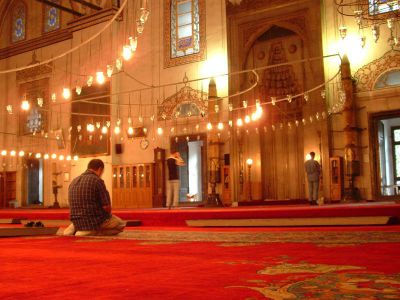
The interior of the mosque has been fashioned after the Hagia Sophia, but on a much smaller scale. The architectural style is classic Ottoman and, unlike the Fatih Mosque – repeatedly damaged by earthquakes, the Bayezid Mosque has never undergone any major renovations, except for minor repairs to the dome and minarets done in 1573-74 following an earthquake, and also to the minarets – after a fire – in 1767.
Behind the mosque, there is a garden holding the tombs of Sultan Bayezid II, his daughter Selcuk Hatun, and Grand Vizier Koca Mustafa Resid Pasha.
The complex consists of a madrassah (Islamic school), imaret (public kitchen), shops and a hammam (Turkish bath). The shops and the kitchen were designed by famous imperial architect Mimar Sinan, and the rental proceeds from them were used to support the mosque. Presently, the kitchen premises accommodate the State Library of Istanbul.
The interior of the mosque has been fashioned after the Hagia Sophia, but on a much smaller scale. The architectural style is classic Ottoman and, unlike the Fatih Mosque – repeatedly damaged by earthquakes, the Bayezid Mosque has never undergone any major renovations, except for minor repairs to the dome and minarets done in 1573-74 following an earthquake, and also to the minarets – after a fire – in 1767.
Behind the mosque, there is a garden holding the tombs of Sultan Bayezid II, his daughter Selcuk Hatun, and Grand Vizier Koca Mustafa Resid Pasha.
10) Beyazıt Square
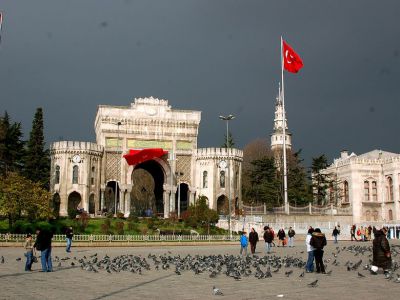
Beyazıt Square is found in the Fatih district of the European part of Istanbul, and is officially called Freedom Square. The more colloquial name – “Beyazıt Square” – comes after the Bayezid II Mosque which dominates the square on the one side. Another major local attraction is the majestic entrance to Istanbul University, the campus of which is a home to the Beyazıt Tower, also visible from the square. The history of the place started 1700 years ago as the site of the Forum of Theodosius built by Constantine the Great.
Today, Beyazit Square appears serene and it is quite hard to imagine that only a century ago it witnessed some truly tragic events, such as revolts and public executions (hanging of 20 Armenian activists – the so-called “20 Hunchakian gallows” – took place here on June 15, 1915).
Not so touristy and with only some low-end commerce going on, the square is nonetheless always lively, thanks to the abundance of the locals feeding countless pigeons, and the university students who give it a certain vibe. An ideal place for people watching, it is also close to some major tourist hotspots of Istanbul and, if you are a good walker, you can walk from Divanyolu via Beyazit Square and Ordu Caddesi to Aksaray. Sahaflar Çarşısı (the Old Book Bazaar) is close by, and the Grand Bazaar is not far off either.
Today, Beyazit Square appears serene and it is quite hard to imagine that only a century ago it witnessed some truly tragic events, such as revolts and public executions (hanging of 20 Armenian activists – the so-called “20 Hunchakian gallows” – took place here on June 15, 1915).
Not so touristy and with only some low-end commerce going on, the square is nonetheless always lively, thanks to the abundance of the locals feeding countless pigeons, and the university students who give it a certain vibe. An ideal place for people watching, it is also close to some major tourist hotspots of Istanbul and, if you are a good walker, you can walk from Divanyolu via Beyazit Square and Ordu Caddesi to Aksaray. Sahaflar Çarşısı (the Old Book Bazaar) is close by, and the Grand Bazaar is not far off either.
11) Beyazıt Tower
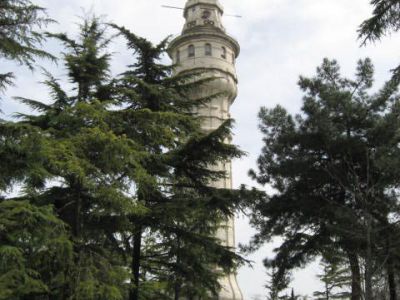
The Beyazıt Tower is an old fire watch tower built in 1828 by Aga Huseyin Pasa. Made of stone, it succeeds on this site two wooden fire towers that were subsequently, and ironically so, all swallowed up by flames. In the olden days, fires all across the Bosphorus Strait, from the Golden Horn all the way to Yesilkoy, could be well spotted from this vantage point in the garden of Istanbul University. At 85 meter high, the structure dominates the cityscape, and is still in use as a fire tower even today, for which purpose it is manned 24 hours a day.
The tower is open to visitors, but a special permit is necessary. Nowadays, it is also used by the local meteorological service to report weather, since visibility has been greatly reduced due to air pollution. Colored lights fitted onto the tower are used to indicate weather conditions (e.g. red color indicates “rain”) as well as to guide ships sailing into the Golden Horn when the Ataturk and Galata bridges are closed off.
The tower is open to visitors, but a special permit is necessary. Nowadays, it is also used by the local meteorological service to report weather, since visibility has been greatly reduced due to air pollution. Colored lights fitted onto the tower are used to indicate weather conditions (e.g. red color indicates “rain”) as well as to guide ships sailing into the Golden Horn when the Ataturk and Galata bridges are closed off.
12) Suleymaniye Mosque (must see)
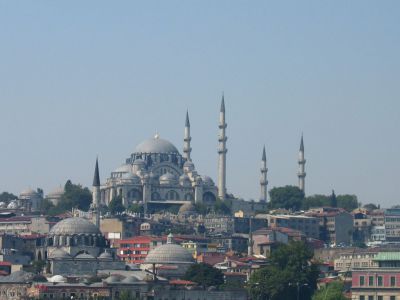
If Istanbul’s skyline were a crown, the Suleymaniye Mosque would be one of its brightest jewels - designed in 1557 by the superstar architect Mimar Sinan for none other than Suleiman the Magnificent himself. Sinan took inspiration from the legendary Hagia Sophia and a classic Byzantine basilica, blending old imperial swagger with fresh Ottoman confidence. The result was a monument with the statement: “We know our history - and we can top it!”
Of course, even magnificent things have bad days. In 1660, a fire ripped through the mosque, and the repair crew of the time decided to get “creative,” adding Baroque touches - something that modern historians perceive as rather dreadful. Many restorations later, the mosque has returned to its original elegance and now stands proudly as one of Istanbul’s most beloved landmarks.
Apart from being a mosque, Suleymaniye is a full-on historical lifestyle complex. It has a caravanserai (or inn) for travelers, a hospital for the unwell, a hammam for bath lovers, an Islamic school for the studious, and a public kitchen that once fed those in need. Behind the mosque, peaceful gardens hold the tombs of Suleiman, his famous wife Roxelana, his mother, daughter, and sister - all resting in structures inspired by the Dome of the Rock in Jerusalem. And just a few steps away lies Sinan’s own tomb - modest in size, but genius in design (because, indeed, if you're the greatest architect of the Ottoman Empire, you don’t need a flashy gravestone...).
Overall, the surrounding neighborhood gives you Istanbul at its most cinematic. Fewer crowds, sweeping Bosphorus views, and a calm atmosphere perfect for daydreaming about empires.
In case you want a photo that will make everyone back home jealous, head to one of the nearby rooftop restaurants and enjoy the skyline like a sultan. And if the hill feels a bit too steep - no judgment - hail a taxi to do the climbing for you...
Of course, even magnificent things have bad days. In 1660, a fire ripped through the mosque, and the repair crew of the time decided to get “creative,” adding Baroque touches - something that modern historians perceive as rather dreadful. Many restorations later, the mosque has returned to its original elegance and now stands proudly as one of Istanbul’s most beloved landmarks.
Apart from being a mosque, Suleymaniye is a full-on historical lifestyle complex. It has a caravanserai (or inn) for travelers, a hospital for the unwell, a hammam for bath lovers, an Islamic school for the studious, and a public kitchen that once fed those in need. Behind the mosque, peaceful gardens hold the tombs of Suleiman, his famous wife Roxelana, his mother, daughter, and sister - all resting in structures inspired by the Dome of the Rock in Jerusalem. And just a few steps away lies Sinan’s own tomb - modest in size, but genius in design (because, indeed, if you're the greatest architect of the Ottoman Empire, you don’t need a flashy gravestone...).
Overall, the surrounding neighborhood gives you Istanbul at its most cinematic. Fewer crowds, sweeping Bosphorus views, and a calm atmosphere perfect for daydreaming about empires.
In case you want a photo that will make everyone back home jealous, head to one of the nearby rooftop restaurants and enjoy the skyline like a sultan. And if the hill feels a bit too steep - no judgment - hail a taxi to do the climbing for you...
13) Spice Bazaar
No visit to Istanbul is truly complete until your nose leads you straight into the Spice Bazaar - the city’s most aromatic attraction and a place where your senses officially clock in for overtime. Sitting close to the Galata Bridge, this bustling market is smaller than the Grand Bazaar… but who needs size when you’ve got fragrance, flavor, and enough dried herbs to season a whole empire?
Built in 1664 as part of the New Mosque complex, this bazaar is traditionally referred to by locals as either the Egyptian Bazaar or the Corn Market (the Turkish language can be efficient like that). Historical documents, however, suggest it was first called the “New Bazaar,” but when construction funds arrived from Egypt, the then province of the Ottoman Empire, the name took a very practical turn. For centuries afterward, the money made from renting out the bazaar shops was used to support the New Mosque.
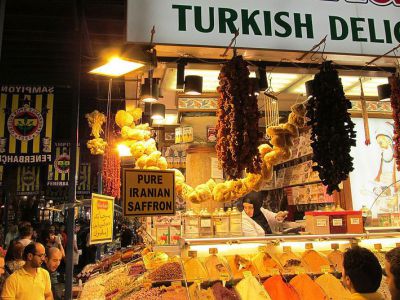
Traditionally, this was the beating heart of Istanbul’s spice trade - a place where life smelled like cinnamon, saffron, and a little bit of mystery. Today, you’ll still find piles of colorful spices, but also Turkish delight glistening like edible jewels, dried fruits, and nuts stacked like treasure. There's also enough tea and coffee on sale to caffeinate everyone on both sides of the Bosphorus. Add to this pottery, jewelry, and souvenirs, and you’ve got a total of 80+ shops of sensory temptation.
So, grab the opportunity and take your time strolling, sniffing, and sampling - it’s all part of the experience. And when the moment comes to pay, remember: this is Istanbul. Haggling isn’t rude… it’s a tradition.
Built in 1664 as part of the New Mosque complex, this bazaar is traditionally referred to by locals as either the Egyptian Bazaar or the Corn Market (the Turkish language can be efficient like that). Historical documents, however, suggest it was first called the “New Bazaar,” but when construction funds arrived from Egypt, the then province of the Ottoman Empire, the name took a very practical turn. For centuries afterward, the money made from renting out the bazaar shops was used to support the New Mosque.
Traditionally, this was the beating heart of Istanbul’s spice trade - a place where life smelled like cinnamon, saffron, and a little bit of mystery. Today, you’ll still find piles of colorful spices, but also Turkish delight glistening like edible jewels, dried fruits, and nuts stacked like treasure. There's also enough tea and coffee on sale to caffeinate everyone on both sides of the Bosphorus. Add to this pottery, jewelry, and souvenirs, and you’ve got a total of 80+ shops of sensory temptation.
So, grab the opportunity and take your time strolling, sniffing, and sampling - it’s all part of the experience. And when the moment comes to pay, remember: this is Istanbul. Haggling isn’t rude… it’s a tradition.
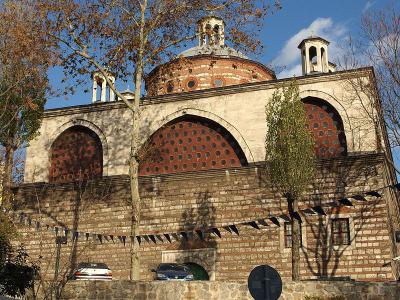
14) Tophane-I Amire Culture and Art Center
Although architecturally this fine structure resembles a mosque, it has nothing to do with religion, having been originally commissioned by Sultan Mehmed the Conqueror to manufacture artillery equipment for the Ottoman army – cannons and cannonballs, more specifically. As time went by, it became a center of the arms industry and trade in the Empire, and for a period in the 1900s, was used as an educational center. In 1958 it became the home of the Military Museum, and in 1992, it was turned over to the Mimar Sinan University of Fine Arts.
Following restoration, the very historic building now hosts important contemporary art exhibitions in three different exhibition halls, which you can easily visit free of charge. While exploring the building's architecture, you may be reminded of some of Mimar Sinan's mosques whose domes are interrupted by rows of windows. Symmetrical, well balanced, harmonious and elegant, the structure itself is a real masterpiece.
Following restoration, the very historic building now hosts important contemporary art exhibitions in three different exhibition halls, which you can easily visit free of charge. While exploring the building's architecture, you may be reminded of some of Mimar Sinan's mosques whose domes are interrupted by rows of windows. Symmetrical, well balanced, harmonious and elegant, the structure itself is a real masterpiece.
