Custom Walk in Edinburgh, Scotland by tneukam70_7f57e9 created on 2026-05-03
Guide Location: Scotland » Edinburgh
Guide Type: Custom Walk
# of Sights: 16
Tour Duration: 4 Hour(s)
Travel Distance: 7.9 Km or 4.9 Miles
Share Key: J4PV5
Guide Type: Custom Walk
# of Sights: 16
Tour Duration: 4 Hour(s)
Travel Distance: 7.9 Km or 4.9 Miles
Share Key: J4PV5
How It Works
Please retrieve this walk in the GPSmyCity app. Once done, the app will guide you from one tour stop to the next as if you had a personal tour guide. If you created the walk on this website or come to the page via a link, please follow the instructions below to retrieve the walk in the app.
Retrieve This Walk in App
Step 1. Download the app "GPSmyCity: Walks in 1K+ Cities" on Apple App Store or Google Play Store.



Step 2. In the GPSmyCity app, download(or launch) the guide "Edinburgh Map and Walking Tours".
Step 3. Tap the menu button located at upper right corner of the "Walks" screen and select "Retrieve custom walk". Enter the share key: J4PV5
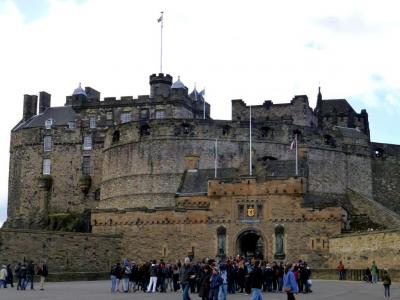
1) Edinburgh Castle (must see)
Edinburgh Castle, looming large over the Scottish capital, is the second most visited attraction in the UK (after the Tower of London, which is still number one). The history of Scotland is deeply etched into its ancient stones, making it a timeline in fortress form.
Perched atop Castle Rock (a hardened basaltic plug from an extinct volcano eroded by glaciers), this area has been drawing humans since the 9th millennium BC. The first castle on the site was built in the 12th century by King David I. It remained a royal residence until 1603, when the monarchy packed up and moved to London-presumably for better weather and indoor plumbing...
Indeed, as a fortress, it was virtually impregnable, except for one major-geological-drawback: the basalt rock on which it stands doesn’t hold water (literally). The 28-meter-deep well inside the fortress was about as useful as a chocolate teapot during a siege. So, when the well ran dry, surrender-or dehydration-was the only choice for those inside.
The original castle was mostly destroyed during the Lang Siege of 1573. The only remainder from its early days is St. Margaret’s Chapel. By the 17th century, it had shifted from royal digs to military barracks, housing troops up to the 1920s.
Presently, the castle hosts the Scottish National War Memorial, the National War Museum, and enough regimental museums to keep military buffs busy till closing time. Don't miss the One O’Clock Gun, which is fired daily (except Sundays) at 1 PM with Swiss-watch precision-yes, Edinburgh literally sets its clocks by it...
Also, in the Crown Room, you will see Scotland’s royal bling-crown, scepter, and sword-resting under heavy guard. Period-costumed actors occasionally swoop in to re-enact history with full flair. And if you’re visiting in August, the Military Tattoo takes over the esplanade with kilts, cannons, and bagpipes galore.
Oh, and in the north-east corner of the esplanade, don't miss that rather unassuming little iron fountain. Called Witches' Well, it marks the spot where, back in the day, many women accused of witchcraft were burned at the stake. Spooky, grim, and sadly true...
The panoramic views are postcard-worthy, the historical nooks are endlessly fascinating, and honestly, it just feels epic to stand where centuries of royals, rebels, and rock-solid drama unfolded.
Pro Tips:
The entry is cheaper, and more importantly, faster, if you book online.
Take a free guided tour – running every hour. Otherwise, consider grabbing the £3 audio guide if you like facts with flair.
Being at the mountain's top, it may get breezy, so definitely bring a windproof jacket if visiting in cold weather.
Perched atop Castle Rock (a hardened basaltic plug from an extinct volcano eroded by glaciers), this area has been drawing humans since the 9th millennium BC. The first castle on the site was built in the 12th century by King David I. It remained a royal residence until 1603, when the monarchy packed up and moved to London-presumably for better weather and indoor plumbing...
Indeed, as a fortress, it was virtually impregnable, except for one major-geological-drawback: the basalt rock on which it stands doesn’t hold water (literally). The 28-meter-deep well inside the fortress was about as useful as a chocolate teapot during a siege. So, when the well ran dry, surrender-or dehydration-was the only choice for those inside.
The original castle was mostly destroyed during the Lang Siege of 1573. The only remainder from its early days is St. Margaret’s Chapel. By the 17th century, it had shifted from royal digs to military barracks, housing troops up to the 1920s.
Presently, the castle hosts the Scottish National War Memorial, the National War Museum, and enough regimental museums to keep military buffs busy till closing time. Don't miss the One O’Clock Gun, which is fired daily (except Sundays) at 1 PM with Swiss-watch precision-yes, Edinburgh literally sets its clocks by it...
Also, in the Crown Room, you will see Scotland’s royal bling-crown, scepter, and sword-resting under heavy guard. Period-costumed actors occasionally swoop in to re-enact history with full flair. And if you’re visiting in August, the Military Tattoo takes over the esplanade with kilts, cannons, and bagpipes galore.
Oh, and in the north-east corner of the esplanade, don't miss that rather unassuming little iron fountain. Called Witches' Well, it marks the spot where, back in the day, many women accused of witchcraft were burned at the stake. Spooky, grim, and sadly true...
The panoramic views are postcard-worthy, the historical nooks are endlessly fascinating, and honestly, it just feels epic to stand where centuries of royals, rebels, and rock-solid drama unfolded.
Pro Tips:
The entry is cheaper, and more importantly, faster, if you book online.
Take a free guided tour – running every hour. Otherwise, consider grabbing the £3 audio guide if you like facts with flair.
Being at the mountain's top, it may get breezy, so definitely bring a windproof jacket if visiting in cold weather.
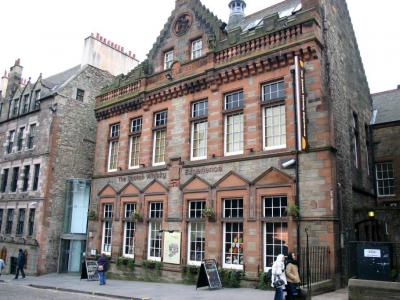
2) Scotch Whisky Experience (must see)
So, what is the difference between “whisky” and “whiskey”? If that little “e” is driving you to drink, head straight to The Scotch Whisky Experience, where answers-and drams-await. This is Scotland’s answer to Disneyland, but with fewer cartoon mice and significantly more peat smoke.
Indeed, this interactive museum doesn’t just cater to connoisseurs and curious adults. Even the wee (the Scottish word for “little” ones) get a slice of the fun, thanks to “Peat the Cat”-their feline guide through a world of whisky facts and playful games. Meanwhile, the grown-ups hop aboard a moving barrel (yes, you heard that right) for a slow cruise through a mechanical distillery, narrated by none other than the ethereal “Whisky Ghost.” He knows his mash from his malt, and he’s not afraid to share-within reason, of course...
Next stop: the MacIntyre Whisky Gallery, where you'll learn how different flavours are crafted. Well, some of the flavours (trade secrets are revealed only partially...). Then it’s on to the Sense of Scotland room, where your nose gets a full workout sniffing everything from smoky campfires to sweet toffee notes-basically a perfume department for whisky fans.
Your grand finale is the tasting room. Here, you’ll find your whisky-yes, even you who swore you didn’t like the stuff. But do yourself a favour: don’t ask for ice or soda. You’ll get looks colder than the Highlands in January.
Before you stumble out, swing by the gift shop. With over 300 malts and miniatures on offer, it’s practically a whisky library. Tour guests even get a discount-because education should come with perks...
So, in case you're still wondering why go?-Here's the answer: Because where else can you ogle 3,400 unopened bottles of whisky worth a fortune, sip your way through centuries of liquid history, and pair it all with cheese and chocolate that’d make a Highlander weep?
Top Tip:
Spring for the “Gold Tour” if you’re in it for the full whisky safari. And if you're not all that keen on whisky but prefer to look, sniff, and learn without the burn-The “Silver Tour” has your name on it. Slàinte!
Indeed, this interactive museum doesn’t just cater to connoisseurs and curious adults. Even the wee (the Scottish word for “little” ones) get a slice of the fun, thanks to “Peat the Cat”-their feline guide through a world of whisky facts and playful games. Meanwhile, the grown-ups hop aboard a moving barrel (yes, you heard that right) for a slow cruise through a mechanical distillery, narrated by none other than the ethereal “Whisky Ghost.” He knows his mash from his malt, and he’s not afraid to share-within reason, of course...
Next stop: the MacIntyre Whisky Gallery, where you'll learn how different flavours are crafted. Well, some of the flavours (trade secrets are revealed only partially...). Then it’s on to the Sense of Scotland room, where your nose gets a full workout sniffing everything from smoky campfires to sweet toffee notes-basically a perfume department for whisky fans.
Your grand finale is the tasting room. Here, you’ll find your whisky-yes, even you who swore you didn’t like the stuff. But do yourself a favour: don’t ask for ice or soda. You’ll get looks colder than the Highlands in January.
Before you stumble out, swing by the gift shop. With over 300 malts and miniatures on offer, it’s practically a whisky library. Tour guests even get a discount-because education should come with perks...
So, in case you're still wondering why go?-Here's the answer: Because where else can you ogle 3,400 unopened bottles of whisky worth a fortune, sip your way through centuries of liquid history, and pair it all with cheese and chocolate that’d make a Highlander weep?
Top Tip:
Spring for the “Gold Tour” if you’re in it for the full whisky safari. And if you're not all that keen on whisky but prefer to look, sniff, and learn without the burn-The “Silver Tour” has your name on it. Slàinte!
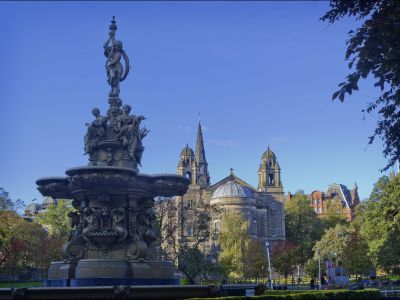
3) Princes Street Gardens (must see)
Between the volcanic drama of Edinburgh Castle and the shopping temptation of Princes Street, you'll stumble across a surprisingly serene stretch of green: Princes Street Gardens. Yes, in a city built on myth, mist, and medieval grit, here's your central patch of peace-complete with ducks, monuments, and the occasional bagpiper soundtrack.
Some 110,000 years ago, the area that is now the quiet garden was a glacial accident waiting to happen. As an ancient glacier oozed its way around the hulking basalt of Castle Rock, it carved out a natural dip-basically scooping out what would later become, and for thousands of years remained, a marshy, defensive moat at the foot of Castle Rock. Humans started settling here by the 9th century BC, presumably appreciating the defensive perks and the view.
Then, in 1460, King James III ordered the marsh to be flooded, turning it into Nor Loch-a grim, murky moat that made invading Edinburgh Castle even less appealing. Further ahead, in 1759, the loch was drained to make way for the New Town. Even today, this area still occasionally gets flooded.
When construction on the New Town kicked off, a handy solution for all that leftover dirt (some millions of tons of earth) was to dump it into the former loch. And thus the Mound, upon which many prestigious buildings stand today, was born. By 1820, the area was transformed into Princes Street Gardens: 8.5 acres to the east and 29 acres to the west, flanking The Mound like leafy bookends.
The gardens now come with a side of Scottish fame. The towering Scott Monument takes center stage, joined by statues of local legends like author John Wilson, Christian missionary David Livingstone, and poet Allan Ramsay. There’s a playground for kids, shade under grand trees, countless benches for people-watching, and even a café if you need caffeine with your contemplation.
In December, this peaceful patch gets seriously festive, with carnival rides, mulled wine, twinkling lights, Edinburgh’s main Christmas Market, and even an ice rink-because few things can contribute to a “holiday spirit” as greatly as skating under a Gothic spire!
Some 110,000 years ago, the area that is now the quiet garden was a glacial accident waiting to happen. As an ancient glacier oozed its way around the hulking basalt of Castle Rock, it carved out a natural dip-basically scooping out what would later become, and for thousands of years remained, a marshy, defensive moat at the foot of Castle Rock. Humans started settling here by the 9th century BC, presumably appreciating the defensive perks and the view.
Then, in 1460, King James III ordered the marsh to be flooded, turning it into Nor Loch-a grim, murky moat that made invading Edinburgh Castle even less appealing. Further ahead, in 1759, the loch was drained to make way for the New Town. Even today, this area still occasionally gets flooded.
When construction on the New Town kicked off, a handy solution for all that leftover dirt (some millions of tons of earth) was to dump it into the former loch. And thus the Mound, upon which many prestigious buildings stand today, was born. By 1820, the area was transformed into Princes Street Gardens: 8.5 acres to the east and 29 acres to the west, flanking The Mound like leafy bookends.
The gardens now come with a side of Scottish fame. The towering Scott Monument takes center stage, joined by statues of local legends like author John Wilson, Christian missionary David Livingstone, and poet Allan Ramsay. There’s a playground for kids, shade under grand trees, countless benches for people-watching, and even a café if you need caffeine with your contemplation.
In December, this peaceful patch gets seriously festive, with carnival rides, mulled wine, twinkling lights, Edinburgh’s main Christmas Market, and even an ice rink-because few things can contribute to a “holiday spirit” as greatly as skating under a Gothic spire!
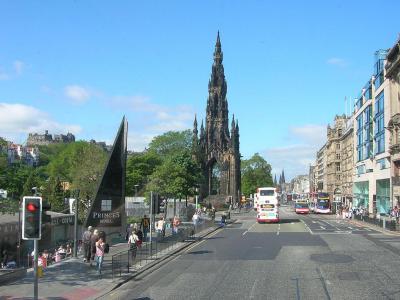
4) Princes Street
Stretching from Leith Street to Lothian Road like Edinburgh’s own stylish catwalk, Princes Street is an over-a-mile-long stretch of shopping temptation-the city’s main artery, buzzing with cafés, pubs, department stores, and selfie opportunities galore.
The street was named after two of King George III’s sons-Prince George (who later became King George IV) and Prince Frederick. While the early 18th-century buildings once stood prim and proper, the 19th century and later the 1960s had other plans. Cue the “Princes Street Plan,” a bold makeover that saw some old façades pulled down in favor of boxy modern storefronts, all in the name of progress and window-shopping efficiency.
The resulting new layout appears as follows: shops and commercial buzz line the north side, while the south side takes the scenic route, offering unbeatable views of the Old Town and the ever-dramatic Edinburgh Castle. Between them lies what was once a murky loch-or Nor Loch to be exact-drained in 1820 and transformed into the much more appealing Princes Street Gardens.
The gardens span 38 acres of greenery, split neatly by the Mound and sprinkled with statues like an outdoor sculpture gallery. One especially moving highlight is the War Memorial to Scottish-American soldiers, a spot for reflection amid the buskers and picnic blankets.
In the summer, the Ross Bandstand kicks into gear with concerts and open-air theatre. And don’t miss the city’s prettiest timekeeper-a floral clock that blooms right on cue.
The street was named after two of King George III’s sons-Prince George (who later became King George IV) and Prince Frederick. While the early 18th-century buildings once stood prim and proper, the 19th century and later the 1960s had other plans. Cue the “Princes Street Plan,” a bold makeover that saw some old façades pulled down in favor of boxy modern storefronts, all in the name of progress and window-shopping efficiency.
The resulting new layout appears as follows: shops and commercial buzz line the north side, while the south side takes the scenic route, offering unbeatable views of the Old Town and the ever-dramatic Edinburgh Castle. Between them lies what was once a murky loch-or Nor Loch to be exact-drained in 1820 and transformed into the much more appealing Princes Street Gardens.
The gardens span 38 acres of greenery, split neatly by the Mound and sprinkled with statues like an outdoor sculpture gallery. One especially moving highlight is the War Memorial to Scottish-American soldiers, a spot for reflection amid the buskers and picnic blankets.
In the summer, the Ross Bandstand kicks into gear with concerts and open-air theatre. And don’t miss the city’s prettiest timekeeper-a floral clock that blooms right on cue.
5) Scott Monument (must see)
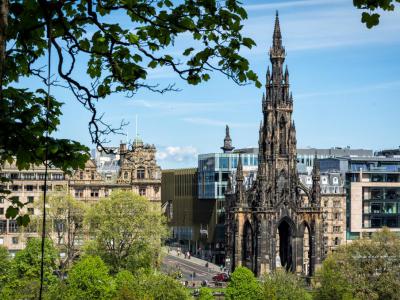
Sir Walter Scott-Scotland’s literary darling, national treasure, and master of the pen-was so loved by the country that they figured one statue for him wasn't enough. Instead, they built him a giant Gothic spire right in Princes Street Gardens-the Scott Monument. Because, indeed, what better way to honour a writer than with a stone rocket aimed at the heavens?
When Scott passed away in 1832, the city held a grand design competition for his monument. Out of the great many prestigious architects who entered, the winning design came from... a draughtsman with zero architectural credentials. George Meikle Kemp, feeling cheeky, submitted his entry under the pseudonym “John Morvo,” borrowing the name of a 15th-century stonemason to boost his street cred. And it worked.
Now, if you’re up for a challenge, you can tackle the 61-metre-tall monument that has several viewing platforms accessed by narrow winding stairways. The highest of them is only 287 steps away. Yes, 287. But rest assured-if your legs don’t give out en route to the top, you’ll be rewarded with sweeping city views and an actual certificate for surviving the climb. Bragging rights included.
The whole structure is made of Binny Sandstone, a material with a peculiar talent: it is so oily that it attracts dirt almost immediately. Just one year after its completion, the monument looked like it had been standing there for centuries. American writer Bill Bryson once lovingly described it as a “Gothic rocket-ship”-which, honestly, is spot-on.
Inside the base, you’ll find a marble statue of Sir Walter himself, complete with quill, paper, and his loyal dog Maida. Scattered across the monument are 64 statues of characters from his novels, plus a healthy dose of grotesques-those wonderfully creepy Gothic faces that the architect deliberately added to his design to make the monument look more “ancient” and moodier than it is.
For the ease of it, you can admire the monument casually from the safety of the grass. Otherwise, go full adventurer and climb for a 360-degree panoramic view-just don’t expect a lift-and note a fee attached to that.
Tip:
The staircase gets narrow and twisty, and yes, you’ll likely meet people coming down as you're going up. Not particularly recommended for the fainthearted... or the claustrophobic.
When Scott passed away in 1832, the city held a grand design competition for his monument. Out of the great many prestigious architects who entered, the winning design came from... a draughtsman with zero architectural credentials. George Meikle Kemp, feeling cheeky, submitted his entry under the pseudonym “John Morvo,” borrowing the name of a 15th-century stonemason to boost his street cred. And it worked.
Now, if you’re up for a challenge, you can tackle the 61-metre-tall monument that has several viewing platforms accessed by narrow winding stairways. The highest of them is only 287 steps away. Yes, 287. But rest assured-if your legs don’t give out en route to the top, you’ll be rewarded with sweeping city views and an actual certificate for surviving the climb. Bragging rights included.
The whole structure is made of Binny Sandstone, a material with a peculiar talent: it is so oily that it attracts dirt almost immediately. Just one year after its completion, the monument looked like it had been standing there for centuries. American writer Bill Bryson once lovingly described it as a “Gothic rocket-ship”-which, honestly, is spot-on.
Inside the base, you’ll find a marble statue of Sir Walter himself, complete with quill, paper, and his loyal dog Maida. Scattered across the monument are 64 statues of characters from his novels, plus a healthy dose of grotesques-those wonderfully creepy Gothic faces that the architect deliberately added to his design to make the monument look more “ancient” and moodier than it is.
For the ease of it, you can admire the monument casually from the safety of the grass. Otherwise, go full adventurer and climb for a 360-degree panoramic view-just don’t expect a lift-and note a fee attached to that.
Tip:
The staircase gets narrow and twisty, and yes, you’ll likely meet people coming down as you're going up. Not particularly recommended for the fainthearted... or the claustrophobic.
6) St. Giles' Cathedral (must see)
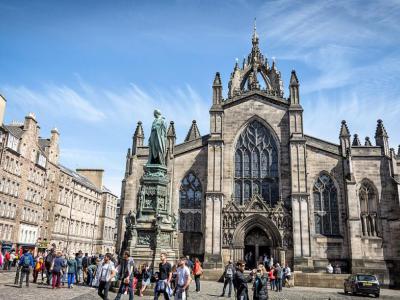
Smack in the middle of the Royal Mile, St Giles’ Cathedral-otherwise known as the High Kirk (or High Church) of Edinburgh-isn't one to be missed. The original building went up in the 12th century but didn’t survive a nasty fire-only the central pillars lived to tell the tale. The replacement was built in 1385. Over the years, it had numerous chapels added-known as aisles-resulting in a kind of charming architectural chaos. At one point, the church had over 50 side altars, like a medieval supermarket of holiness...
In 1466, St Giles’ became a collegiate church, which, in 1490, saw the now-iconic, crown-shaped lantern tower completed. During the Reformation, in 1560, things got a bit dramatic. Most of the church’s treasures vanished-stolen, sold, or just spirited away-including its star relic: Saint Giles’ withered arm and hand, complete with a diamond ring on one skeletal finger (macabre bling at its finest...). In addition to that, the church was partitioned by walls into multiple preaching zones-a kind of Protestant “feng shui,” if you will...
Despite being called a cathedral, it only technically wore that title twice, briefly, during the 17th-century Bishop Wars. The statute of “High Kirk” remains its real claim to fame. A 19th-century restoration gave the church a glow-up-partitions were removed and several chapels pulled down. Among the surviving chapels, perhaps the most beautiful is the Thistle Chapel from 1911: a jaw-dropping High Gothic gem dripping in wood and stone carvings, fluttering heraldic banners, and a breathtaking, delicately carved vaulted ceiling.
Once here, look out for a bronze plaque to Robert Louis Stevenson, author of Treasure Island, in the Moray Aisle, a marble tribute to the dashing but doomed 1st Marquis of Montrose, in the Chapman Aisle, and another to his bitter rival, Archibald Campbell, the 1st Marquis of Argyll, in the Saint Eloi Aisle. Fun fact: these two, once the main signatories of the National Covenant in 1638 (the document signed to oppose attempts to impose Anglican religious practices on the Church of Scotland), became sworn enemies towards the end of their lives. Edinburgh drama, anyone?
Aside from all that, the place is absolutely gorgeous, packed to the rim with stained glass beauty. You’ll walk out with neck cramp from all the ceiling admiration-and it’ll be worth it.
Pro tips:
Entry is free or by donation, but if you’re planning a photo shoot, prepare to fork over £2 for a "permit".
Best to get onto a tour, as there's much you could miss just wandering on your own. Also, if you're feeling adventurous, take the rooftop tour (worth £6).
And yes-don't miss a cozy café downstairs that serves tasty bites. Praise be!
In 1466, St Giles’ became a collegiate church, which, in 1490, saw the now-iconic, crown-shaped lantern tower completed. During the Reformation, in 1560, things got a bit dramatic. Most of the church’s treasures vanished-stolen, sold, or just spirited away-including its star relic: Saint Giles’ withered arm and hand, complete with a diamond ring on one skeletal finger (macabre bling at its finest...). In addition to that, the church was partitioned by walls into multiple preaching zones-a kind of Protestant “feng shui,” if you will...
Despite being called a cathedral, it only technically wore that title twice, briefly, during the 17th-century Bishop Wars. The statute of “High Kirk” remains its real claim to fame. A 19th-century restoration gave the church a glow-up-partitions were removed and several chapels pulled down. Among the surviving chapels, perhaps the most beautiful is the Thistle Chapel from 1911: a jaw-dropping High Gothic gem dripping in wood and stone carvings, fluttering heraldic banners, and a breathtaking, delicately carved vaulted ceiling.
Once here, look out for a bronze plaque to Robert Louis Stevenson, author of Treasure Island, in the Moray Aisle, a marble tribute to the dashing but doomed 1st Marquis of Montrose, in the Chapman Aisle, and another to his bitter rival, Archibald Campbell, the 1st Marquis of Argyll, in the Saint Eloi Aisle. Fun fact: these two, once the main signatories of the National Covenant in 1638 (the document signed to oppose attempts to impose Anglican religious practices on the Church of Scotland), became sworn enemies towards the end of their lives. Edinburgh drama, anyone?
Aside from all that, the place is absolutely gorgeous, packed to the rim with stained glass beauty. You’ll walk out with neck cramp from all the ceiling admiration-and it’ll be worth it.
Pro tips:
Entry is free or by donation, but if you’re planning a photo shoot, prepare to fork over £2 for a "permit".
Best to get onto a tour, as there's much you could miss just wandering on your own. Also, if you're feeling adventurous, take the rooftop tour (worth £6).
And yes-don't miss a cozy café downstairs that serves tasty bites. Praise be!
7) Mary King's Close (must see)
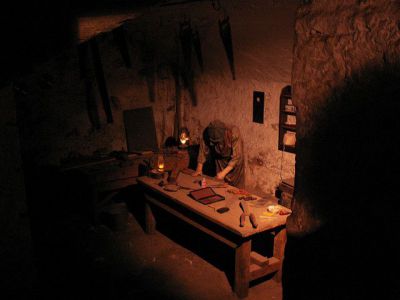
If ghost stories give you chills in a good way, then Real Mary King’s Close might just be your perfect haunt in Edinburgh. Tucked beneath the Royal Exchange, this underground maze of shadowy alleyways and crumbling tenement rooms has a reputation for being one of the most haunted corners of the city-and in Edinburgh, that’s saying something...
Originally a bustling neighborhood, the close was sealed off after the Great Plague of 1645 rolled into town, carried by flea-infested rats from merchant ships. With zero plumbing and not a bar of soap in sight, these cramped quarters became ground zero for infection. In a desperate attempt to contain the spread, entire blocks-predominantly the poorer areas, including Mary King’s Close-were bricked in as urgent quarantine measures. Legend has it, some unlucky souls were trapped inside at the mercy of plague or starvation... and they never left. At least, not in spirit.
One ghost in particular likes to make her presence known: Annie, a small girl, who is said to have lost her doll-and possibly much more-when the plague swept through. Visitors claim to feel her presence, and many bring her gifts: toys, trinkets, or coins, all of which are passed on to children’s hospitals and local charities. So, even the ghostly get a little goodwill...
The area was uncovered during renovations to the Royal Exchange and was opened to the public in 2003 as a tourist attraction. Since then, costumed guides have been leading brave guests through these 17th-century underground time capsules, sharing tales of the little Annie and Mary King-a respected businesswoman and seamstress after whom it is named-as well as the dark chapters etched into every cobbled corner.
So, if you’re in the mood for a little historical horror with a charitable twist, Mary King’s Close is calling. Just... don’t forget Annie’s doll.
Originally a bustling neighborhood, the close was sealed off after the Great Plague of 1645 rolled into town, carried by flea-infested rats from merchant ships. With zero plumbing and not a bar of soap in sight, these cramped quarters became ground zero for infection. In a desperate attempt to contain the spread, entire blocks-predominantly the poorer areas, including Mary King’s Close-were bricked in as urgent quarantine measures. Legend has it, some unlucky souls were trapped inside at the mercy of plague or starvation... and they never left. At least, not in spirit.
One ghost in particular likes to make her presence known: Annie, a small girl, who is said to have lost her doll-and possibly much more-when the plague swept through. Visitors claim to feel her presence, and many bring her gifts: toys, trinkets, or coins, all of which are passed on to children’s hospitals and local charities. So, even the ghostly get a little goodwill...
The area was uncovered during renovations to the Royal Exchange and was opened to the public in 2003 as a tourist attraction. Since then, costumed guides have been leading brave guests through these 17th-century underground time capsules, sharing tales of the little Annie and Mary King-a respected businesswoman and seamstress after whom it is named-as well as the dark chapters etched into every cobbled corner.
So, if you’re in the mood for a little historical horror with a charitable twist, Mary King’s Close is calling. Just... don’t forget Annie’s doll.

8) Scottish Parliament Building
Now, here’s a building that’s sparked more heated debates than a family Christmas dinner: the Scottish Parliament Building. Sitting right at the foot of Arthur’s Seat on Holyrood Road, in the middle of a UNESCO World Heritage Site, this bold piece of architecture has been poked, praised, and publicly puzzled over since the day it was announced. Construction began in June 1999, with an initial plan to open in 2001. In reality, however, the doors finally opened only in October 2004, with Queen Elizabeth II doing the honours, and everyone politely pretending not to notice the three-year delay.
The mastermind behind this architectural enigma, spanning 1.6 hectares, was the late Spanish architect Enric Miralles, who set out to fuse Scotland’s landscape, spirit, and capital city into one expressive structure. Think leaf-shaped skylights in the Garden Lobby, sweeping wooden curves, massive abstract windows, and more local stone and oak than a luxury Highland lodge. Inside, you’ll also spot sycamore finishes and views of Holyrood Park that probably cost more than your annual rent.
Public reaction to the Parliament Building was, let’s say, divided: some thought it a poetic blend of nature and democracy; others-a modernist jigsaw someone forgot to finish. But you don’t have to take their word for it-take a guided tour. That way, you’ll get to see the bits the average passerby can’t peek into. And if you’d rather stay outside, the public gardens are open for wandering: wildflowers, shrubs, trees, a water pool, leafy paths, lawns, pathways, and more tranquility than you’d expect from a place where laws are made.
And here’s the twist-after all the initial public grumbling and eye-rolling criticisms from the tabloids, the building went on to scoop up some serious praise. Among the several accolades, it even bagged the prestigious 2005 Stirling Prize. Architectural critic Charles Jencks called it one of the finest pieces of craftsmanship and design Britain has seen in a century. Not too shabby for a structure that once got compared to a broken biscuit tin...
The mastermind behind this architectural enigma, spanning 1.6 hectares, was the late Spanish architect Enric Miralles, who set out to fuse Scotland’s landscape, spirit, and capital city into one expressive structure. Think leaf-shaped skylights in the Garden Lobby, sweeping wooden curves, massive abstract windows, and more local stone and oak than a luxury Highland lodge. Inside, you’ll also spot sycamore finishes and views of Holyrood Park that probably cost more than your annual rent.
Public reaction to the Parliament Building was, let’s say, divided: some thought it a poetic blend of nature and democracy; others-a modernist jigsaw someone forgot to finish. But you don’t have to take their word for it-take a guided tour. That way, you’ll get to see the bits the average passerby can’t peek into. And if you’d rather stay outside, the public gardens are open for wandering: wildflowers, shrubs, trees, a water pool, leafy paths, lawns, pathways, and more tranquility than you’d expect from a place where laws are made.
And here’s the twist-after all the initial public grumbling and eye-rolling criticisms from the tabloids, the building went on to scoop up some serious praise. Among the several accolades, it even bagged the prestigious 2005 Stirling Prize. Architectural critic Charles Jencks called it one of the finest pieces of craftsmanship and design Britain has seen in a century. Not too shabby for a structure that once got compared to a broken biscuit tin...
9) Holyroodhouse (must see)
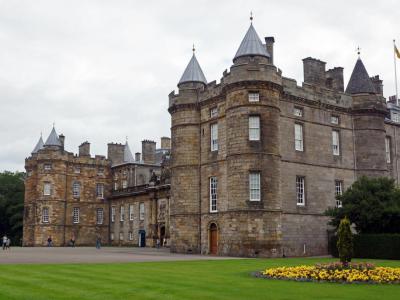
If you're ticking off Edinburgh landmarks, Holyroodhouse is one you can't skip-not unless you're on the run from the crown... Sitting at the royal end of the Royal Mile, this stately pad is the official Scottish residence of the British monarch and once housed none other than Mary, Queen of Scots. That’s right, drama lives here rent-free...
The whole saga begins with King David I, who founded the nearby Holyrood Abbey in 1128 (after a divine deer encounter, according to legend). A few centuries later, precisely by 1501, a palace was built beside the abbey. Now, calling it a “palace”, back then, was maybe a touch ambitious-a grand country house, more like it, rather than Versailles-but it did get bigger in 1532 and 1536. The property was thoroughly renovated in 1633, only to be trashed when Cromwell’s soldiers used it as barracks and then a fire added insult to injury...
Then came the 1670s, when Sir William Bruce, the architectural fixer of the day, rebuilt the place. The abbey chapel became the Chapel Royal, hosting pious activity until 1768, when the roof rather unceremoniously fell in. More restorations followed after that-first in 1822 for a royal visit, and then again in the 20th century when King George V and Queen Mary decided the palace could really use indoor plumbing. Royal flush, anyone?
When the royals are away, the house is open to the public. Inside, you can marvel at ceiling stucco so delicate it practically whispers, and gawk at an entire lineup of Scottish monarchs-some real, some as fictional as their hairlines-painted by the Dutch Golden Age artist Jacob de Wet. Then, dive into the Royal Collection, a five-century mix of armor, jewels, manuscripts, and silverware. Basically, it’s the attic of your dreams-if your attic had Rembrandts and 17th-century clocks.
Oh, and don’t wander off alone unless you're cool with ghosts. Legend has it that Agnes Sampson, accused of witchcraft and executed in 1592, still makes the occasional appearance here. So, if you feel a chill or hear something whispering about herbal remedies... maybe don’t investigate.
Palace, ghosts, ceilings, swords, and sovereign bling-are all here. Holyroodhouse doesn’t just bring the royal drama-it curates it.
The whole saga begins with King David I, who founded the nearby Holyrood Abbey in 1128 (after a divine deer encounter, according to legend). A few centuries later, precisely by 1501, a palace was built beside the abbey. Now, calling it a “palace”, back then, was maybe a touch ambitious-a grand country house, more like it, rather than Versailles-but it did get bigger in 1532 and 1536. The property was thoroughly renovated in 1633, only to be trashed when Cromwell’s soldiers used it as barracks and then a fire added insult to injury...
Then came the 1670s, when Sir William Bruce, the architectural fixer of the day, rebuilt the place. The abbey chapel became the Chapel Royal, hosting pious activity until 1768, when the roof rather unceremoniously fell in. More restorations followed after that-first in 1822 for a royal visit, and then again in the 20th century when King George V and Queen Mary decided the palace could really use indoor plumbing. Royal flush, anyone?
When the royals are away, the house is open to the public. Inside, you can marvel at ceiling stucco so delicate it practically whispers, and gawk at an entire lineup of Scottish monarchs-some real, some as fictional as their hairlines-painted by the Dutch Golden Age artist Jacob de Wet. Then, dive into the Royal Collection, a five-century mix of armor, jewels, manuscripts, and silverware. Basically, it’s the attic of your dreams-if your attic had Rembrandts and 17th-century clocks.
Oh, and don’t wander off alone unless you're cool with ghosts. Legend has it that Agnes Sampson, accused of witchcraft and executed in 1592, still makes the occasional appearance here. So, if you feel a chill or hear something whispering about herbal remedies... maybe don’t investigate.
Palace, ghosts, ceilings, swords, and sovereign bling-are all here. Holyroodhouse doesn’t just bring the royal drama-it curates it.
10) Holyrood Abbey
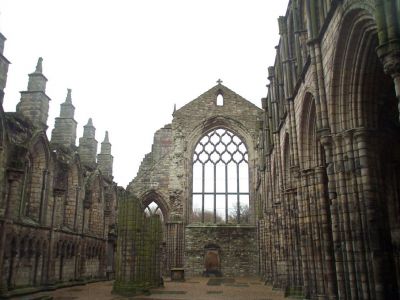
If you wander to the far end of Edinburgh’s Royal Mile, you’ll stumble upon the hauntingly beautiful remains of Holyrood Abbey-an epic blend of crumbled stone, royal drama, and deer-related miracles. Founded in 1128 by King David I, the abbey takes its name from an old Scottish term for the "Holy Cross" on which Jesus was crucified. Legend says that the king had a brush with death while hunting when a stag with a glowing crucifix between its antlers (or maybe just a particularly shiny sun reflection) charged him. Divine intervention or optical illusion, but the king took it as a holy sign and built an abbey right there in gratitude.
The original abbey evolved a lot over the years. Between 1195 and 1230, it went from simple sanctuary to Gothic grandeur. It played host to more than just monks, housing royal ceremonies, meetings of the Scottish Parliament, and even seeing the signing of the Treaty of Edinburgh-Northampton in 1328, which ended the First War of Scottish Independence. So yes, this abbey has receipts.
Charles I had the place spruced up in 1633 for his Scottish coronation, but things went downhill after 1688, when a post-Glorious-Revolution mob gave the building a not-so-glorious makeover, desecrating it. By 1768, the roof had given up entirely and collapsed, turning the abbey into the picturesque ruin it is today. Restoration plans have come and gone, but so far, Holyrood Abbey remains roofless and moody-just how romantics like it.
Right next door is the Palace of Holyroodhouse, and surrounding it all is Holyrood Park-home to Arthur’s Seat, scenic trails, and a recurring cast of joggers, photographers, and mildly confused tourists.
The original abbey evolved a lot over the years. Between 1195 and 1230, it went from simple sanctuary to Gothic grandeur. It played host to more than just monks, housing royal ceremonies, meetings of the Scottish Parliament, and even seeing the signing of the Treaty of Edinburgh-Northampton in 1328, which ended the First War of Scottish Independence. So yes, this abbey has receipts.
Charles I had the place spruced up in 1633 for his Scottish coronation, but things went downhill after 1688, when a post-Glorious-Revolution mob gave the building a not-so-glorious makeover, desecrating it. By 1768, the roof had given up entirely and collapsed, turning the abbey into the picturesque ruin it is today. Restoration plans have come and gone, but so far, Holyrood Abbey remains roofless and moody-just how romantics like it.
Right next door is the Palace of Holyroodhouse, and surrounding it all is Holyrood Park-home to Arthur’s Seat, scenic trails, and a recurring cast of joggers, photographers, and mildly confused tourists.
11) Arthur's Seat (must see)
Edinburgh is a busy city, but even here, Scotland doesn’t let you forget its wild origins. To the east of Edinburgh Castle, you will find Arthur’s Seat, a testimony of the ancient land.
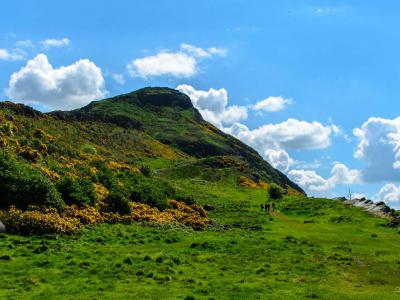
About 350 million years ago this main peak of a cluster of hills was an active volcano. During the last Ice Age two million years ago, a huge glacier that moved slowly across the land from west to east eroded the volcano, which was by that time, extinct. Located in Holyrood Park, Arthur’s Seat today is a favourite place for hill walkers as it is relatively easy to climb and you have great views of the city from the top.
The peak’s name comes from a corruption of “Ard-na-Said” which translates roughly as “height of arrows”, although legend likes to claim that this was once the site of Camelot and Arthur’s Round Table. There are remains of old forts on the top of the peak, probably built in the Iron Age by the Votadini, who settled here until after Roman times.
An ancient tradition suggests that if a young girl washes her face in the dew here on May Day, she will become beautiful. The peak today is jealously guarded by the population and no building is allowed here. It is a natural habitat for several wild animals, including foxes, squirrels, weasels and badgers, and for some rather rare species of butterflies.
In 1836, seventeen tiny coffins containing wooden figures were found in a cave on the peak. This led to speculation about the site being used for witch’s rites, but this has never been proved. The coffins and their contents remain a mystery.
Why You Should Visit:
Ruins of an old church, hiking trails, fresh air all around, all on a lovely dormant volcano!
Tip:
Go early in the morning to catch the light over the city and to avoid crowds.
Bring water, snacks, comfortable (closed-toe) shoes, and a light windbreaker too, because it's gusty at the top.
Plan your route carefully, as there are multiple routes up, some more direct and steeper, some more leisurely and meandering.
About 350 million years ago this main peak of a cluster of hills was an active volcano. During the last Ice Age two million years ago, a huge glacier that moved slowly across the land from west to east eroded the volcano, which was by that time, extinct. Located in Holyrood Park, Arthur’s Seat today is a favourite place for hill walkers as it is relatively easy to climb and you have great views of the city from the top.
The peak’s name comes from a corruption of “Ard-na-Said” which translates roughly as “height of arrows”, although legend likes to claim that this was once the site of Camelot and Arthur’s Round Table. There are remains of old forts on the top of the peak, probably built in the Iron Age by the Votadini, who settled here until after Roman times.
An ancient tradition suggests that if a young girl washes her face in the dew here on May Day, she will become beautiful. The peak today is jealously guarded by the population and no building is allowed here. It is a natural habitat for several wild animals, including foxes, squirrels, weasels and badgers, and for some rather rare species of butterflies.
In 1836, seventeen tiny coffins containing wooden figures were found in a cave on the peak. This led to speculation about the site being used for witch’s rites, but this has never been proved. The coffins and their contents remain a mystery.
Why You Should Visit:
Ruins of an old church, hiking trails, fresh air all around, all on a lovely dormant volcano!
Tip:
Go early in the morning to catch the light over the city and to avoid crowds.
Bring water, snacks, comfortable (closed-toe) shoes, and a light windbreaker too, because it's gusty at the top.
Plan your route carefully, as there are multiple routes up, some more direct and steeper, some more leisurely and meandering.
12) Calton Hill (must see)
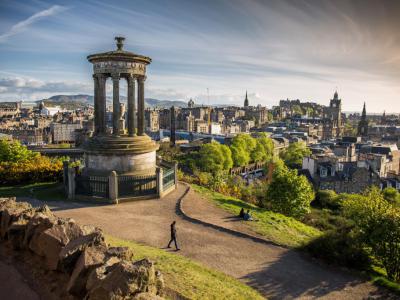
Calton Hill, located in the heart of Edinburgh, extends beyond the eastern terminus of Princes Street and is part of the city's UNESCO World Heritage Site. It is a popular subject for photography and art, both offering scenic vistas of the city and being featured in various depictions of it.
The Scottish Government has its headquarters on Calton Hill, specifically at Saint Andrew's House, situated on the steep southern slope of the hill. Nearby, at the base of the hill, you'll find significant landmarks like the Scottish Parliament Building and Holyrood Palace. Additionally, Calton Hill boasts several iconic monuments and structures, including the National Monument, the Nelson Monument, the Dugald Stewart Monument, the old Royal High School, the Robert Burns Monument, the Political Martyrs' Monument, and the City Observatory.
Calton Hill hosts various events throughout the year, with the most significant being the Beltane Fire Festival occurring annually on April 30th, drawing a crowd of over 12,000 attendees. Additionally, the Dussehra Hindu Festival is celebrated on Calton Hill at the beginning of October, and the Samhuinn Fire Festival takes place there at the end of October. Notably, Calton Hill has served as a filming location for movies like "Sunshine on Leith," where Davy and Yvonne perform "Misty Blue," "Death Defying Acts" featuring Houdini, and "Greyfriars Bobby," offering scenic views of the city.
The Scottish Government has its headquarters on Calton Hill, specifically at Saint Andrew's House, situated on the steep southern slope of the hill. Nearby, at the base of the hill, you'll find significant landmarks like the Scottish Parliament Building and Holyrood Palace. Additionally, Calton Hill boasts several iconic monuments and structures, including the National Monument, the Nelson Monument, the Dugald Stewart Monument, the old Royal High School, the Robert Burns Monument, the Political Martyrs' Monument, and the City Observatory.
Calton Hill hosts various events throughout the year, with the most significant being the Beltane Fire Festival occurring annually on April 30th, drawing a crowd of over 12,000 attendees. Additionally, the Dussehra Hindu Festival is celebrated on Calton Hill at the beginning of October, and the Samhuinn Fire Festival takes place there at the end of October. Notably, Calton Hill has served as a filming location for movies like "Sunshine on Leith," where Davy and Yvonne perform "Misty Blue," "Death Defying Acts" featuring Houdini, and "Greyfriars Bobby," offering scenic views of the city.
13) Greyfriars Bobby Bar
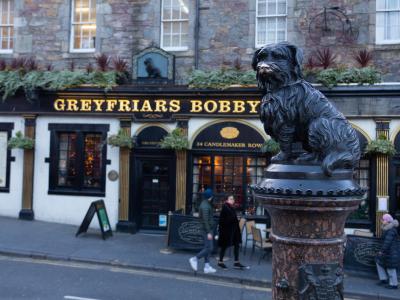
Greyfriars Bobby Bar in Edinburgh, is a heartwarming destination for dog lovers and those with an appreciation for history and ale. Nestled on the ground floor of a Georgian building, this old establishment shares its walls with the historic Candlemakers Hall, dating back to 1722. The bar's name honors Greyfriars Bobby, a Skye terrier known for his extraordinary loyalty. After his owner's death in 1858, Bobby famously spent every day watching over his master's grave at Greyfriars Kirkyard until his own death in 1872, when he was laid to rest beside his beloved owner.
The Greyfriars Bobby statue, a tribute to this symbol of devotion, stands proudly outside the bar, offering visitors a chance to toast to his memory with one of the bar's award-winning ales. For those unsure of which ale to choose, the bar's in-house cask master is available to share expert advice, ensuring every patron can fully enjoy their experience. This unique bar not only offers a rich taste of Edinburgh's history but also a warm, inviting atmosphere where the legend of Greyfriars Bobby continues to inspire.
The Greyfriars Bobby statue, a tribute to this symbol of devotion, stands proudly outside the bar, offering visitors a chance to toast to his memory with one of the bar's award-winning ales. For those unsure of which ale to choose, the bar's in-house cask master is available to share expert advice, ensuring every patron can fully enjoy their experience. This unique bar not only offers a rich taste of Edinburgh's history but also a warm, inviting atmosphere where the legend of Greyfriars Bobby continues to inspire.
14) The Elephant House
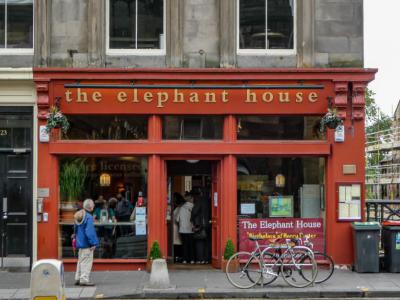
If you’ve ever wanted to sip a cappuccino where magic once brewed-quite literally-then The Elephant House might just be your pilgrimage stop. Open since 1995, this unassuming café earned worldwide fame not just for its tea and coffee (which are excellent, by the way), but for serving as a launchpad for a certain bespectacled boy wizard. Yes, J.K. Rowling once holed up in the back room here, penning early chapters of Harry Potter while eyeing up the brooding silhouette of Edinburgh Castle. Talk about dramatic inspiration...
But Rowling wasn’t the only literary mind to haunt these elephant-adorned halls. Other patrons like Ian Rankin, the mastermind behind the gritty Rebus detective novels, and Alexander McCall Smith, author of The No.1 Ladies' Detective Agency and 44 Scotland Street fame, have also warmed the seats here. Apparently, there’s something about the mix of caffeine, castle views, and atmospheric chatter that gets the creative juices flowing.
So, whether you’re nursing dreams of becoming the next literary sensation or just need a sturdy espresso before wandering into Edinburgh’s medieval maze-drop by The Elephant House. Who knows? That scribble on your napkin might just be the next bestseller...
But Rowling wasn’t the only literary mind to haunt these elephant-adorned halls. Other patrons like Ian Rankin, the mastermind behind the gritty Rebus detective novels, and Alexander McCall Smith, author of The No.1 Ladies' Detective Agency and 44 Scotland Street fame, have also warmed the seats here. Apparently, there’s something about the mix of caffeine, castle views, and atmospheric chatter that gets the creative juices flowing.
So, whether you’re nursing dreams of becoming the next literary sensation or just need a sturdy espresso before wandering into Edinburgh’s medieval maze-drop by The Elephant House. Who knows? That scribble on your napkin might just be the next bestseller...
15) Victoria Street
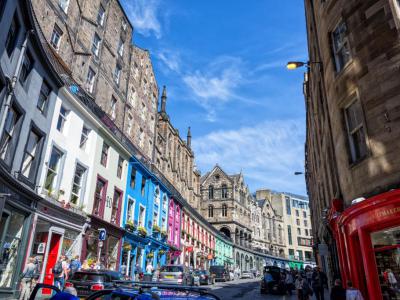
Perhaps the most photographed location in all of Edinburgh, Victoria Street-with its gentle curve, candy-coloured shopfronts, and fairytale charm-is the Old Town icon that throughout the decades has graced everything from tourist postcards to glossy TV ads. Indeed, if streets had agents, this one would have been booked solid.
Built between 1829 and 1834, Victoria Street wasn’t always the whimsical rainbow we know today, though. Credit-or creative blame for it, rather-goes to Thomas Hamilton, a mastermind behind Edinburgh’s numerous architectural wonders, better known for his love affair with all things neoclassical. On this occasion, however, he deviated from his habitual neoclassical stamp, being told to create something mimicking the Old Flemish style. For this purpose, many of the area's old buildings were torn down. The result of such a dramatic medieval makeover was the appearance of arches, lining the new terrace, which now house some of the city’s most charming little shops.
And then came the magic. In recent years, Victoria Street-along with its downhill cousin, the West Bow-has gained notoriety as possible real-world prototypes for none other than Diagon Alley, featured in the Harry Potter books (you know, wizards, magic wands, and all that...).
Given that Edinburgh was home turf for JK Rowling while she penned her famous boy-wizard saga, it’s not a stretch to imagine Victoria Street as an inspiration for the ever-so fabulous wizard market after all. Packed with the cobbled stones, higgledy-piggledy medley of vibrant buildings, quirky boutiques, and a general air of eccentricity, it practically shouts Diagon Alley. So, whether you're here for the architecture, the shopping, or the spellcasting vibes, just know-this street has layers, arches, and more than a dash of enchantment...
Built between 1829 and 1834, Victoria Street wasn’t always the whimsical rainbow we know today, though. Credit-or creative blame for it, rather-goes to Thomas Hamilton, a mastermind behind Edinburgh’s numerous architectural wonders, better known for his love affair with all things neoclassical. On this occasion, however, he deviated from his habitual neoclassical stamp, being told to create something mimicking the Old Flemish style. For this purpose, many of the area's old buildings were torn down. The result of such a dramatic medieval makeover was the appearance of arches, lining the new terrace, which now house some of the city’s most charming little shops.
And then came the magic. In recent years, Victoria Street-along with its downhill cousin, the West Bow-has gained notoriety as possible real-world prototypes for none other than Diagon Alley, featured in the Harry Potter books (you know, wizards, magic wands, and all that...).
Given that Edinburgh was home turf for JK Rowling while she penned her famous boy-wizard saga, it’s not a stretch to imagine Victoria Street as an inspiration for the ever-so fabulous wizard market after all. Packed with the cobbled stones, higgledy-piggledy medley of vibrant buildings, quirky boutiques, and a general air of eccentricity, it practically shouts Diagon Alley. So, whether you're here for the architecture, the shopping, or the spellcasting vibes, just know-this street has layers, arches, and more than a dash of enchantment...
16) World's End Pub
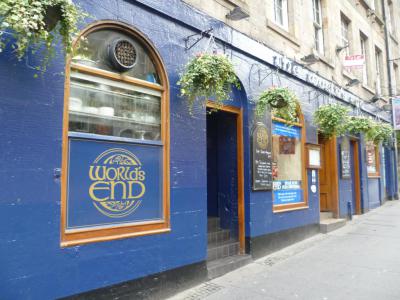
A thirsty history buff in Edinburgh, looking for a pub steeped in history, should look nor further than The World’s End on the Royal Mile.
This old watering hole takes its name from the 16th century when the City Walls surrounded Edinburgh. Following the Battle of Flodden which saw Scotland’s defeat by the English, Edinburgh had to wall itself for protection. The gates in that wall were situated right outside the pub, reminding of which today are the brass cobbles in the road, marking their exact location. In the opinion of the Edinburgh folk, the world outside the gates was no longer theirs, so they called it The World’s End.
The “old style” character of the pub proves to be its main lure for tourists walking the cobbled streets and anxious to quench their thirst. Venturing inside the tavern, above the bar, you can see scores of foreign banknotes vividly illustrating the broad, international clientele who have drunk here over the years. True to its “old-fashioned feel”, the place keeps television to the minimal, so as to allow the patrons – up to 140 men at a time – to drink in peace. The hospitality of this kind makes the whole world of difference!
This old watering hole takes its name from the 16th century when the City Walls surrounded Edinburgh. Following the Battle of Flodden which saw Scotland’s defeat by the English, Edinburgh had to wall itself for protection. The gates in that wall were situated right outside the pub, reminding of which today are the brass cobbles in the road, marking their exact location. In the opinion of the Edinburgh folk, the world outside the gates was no longer theirs, so they called it The World’s End.
The “old style” character of the pub proves to be its main lure for tourists walking the cobbled streets and anxious to quench their thirst. Venturing inside the tavern, above the bar, you can see scores of foreign banknotes vividly illustrating the broad, international clientele who have drunk here over the years. True to its “old-fashioned feel”, the place keeps television to the minimal, so as to allow the patrons – up to 140 men at a time – to drink in peace. The hospitality of this kind makes the whole world of difference!
