Custom Walk in Oxford, England by madisonmenard_38abab created on 2026-06-11
Guide Location: England » Oxford
Guide Type: Custom Walk
# of Sights: 16
Tour Duration: 3 Hour(s)
Travel Distance: 4.3 Km or 2.7 Miles
Share Key: GD3YG
Guide Type: Custom Walk
# of Sights: 16
Tour Duration: 3 Hour(s)
Travel Distance: 4.3 Km or 2.7 Miles
Share Key: GD3YG
How It Works
Please retrieve this walk in the GPSmyCity app. Once done, the app will guide you from one tour stop to the next as if you had a personal tour guide. If you created the walk on this website or come to the page via a link, please follow the instructions below to retrieve the walk in the app.
Retrieve This Walk in App
Step 1. Download the app "GPSmyCity: Walks in 1K+ Cities" on Apple App Store or Google Play Store.



Step 2. In the GPSmyCity app, download(or launch) the guide "Oxford Map and Walking Tours".
Step 3. Tap the menu button located at upper right corner of the "Walks" screen and select "Retrieve custom walk". Enter the share key: GD3YG
1) University College (must see)
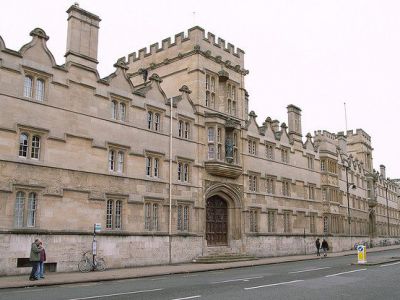
University College, usually known simply as “Univ,” stands on Oxford’s High Street and is often regarded as Oxford’s oldest college. A long-standing legend claimed that it was founded by King Alfred in 872, but its real origins lie in a bequest made in 1249 by William of Durham, who left money to support masters of arts studying theology at Oxford.
Very little survives from the medieval college. Much of what visitors see today belongs to later phases of rebuilding, and inside, the college offers an evocative collection of architectural styles. The Main Quad, begun in 1634 and completed in 1676, forms the historic core, while the Radcliffe Quad followed in 1719, the New Building in 1842, and the Library in 1861.
The central entrance area is located within the main gatehouse on High Street, which marks the transition from the busy city into a quieter academic setting. To find the first highlight, stand directly under the tower at the main entrance and look up to see the 17th-century fan vaulting. Once you find yourself beneath the stone canopy, look for the intricate “ribs” of the masonry that meet at a central point, showcasing the late Gothic style that persisted in Oxford long after it had faded elsewhere.
Visitors can then pass into enclosed spaces that feel quieter and more private than the street outside. One distinctive feature is Logic Lane, a cobbled passage that divides the college and is crossed by a short covered bridge. The lane is believed to have been associated with schools or teaching rooms where logic was studied, one of the core subjects in the medieval university curriculum. Earlier, however, it had a more practical name. In the 13th and 14th centuries, it was known as Horseman Lane or Horsemull Lane, probably because a horse-powered mill once stood nearby.
Further into the grounds, a dedicated shrine reflects a curious piece of the college’s literary history. The college is known for the Shelley Memorial, housed in a small domed room built in 1892. To reach this highlight, walk toward the corner of the Front Quad near the High Street; once you find yourself inside the dim, atmospheric chamber, look for Edward Onslow Ford’s white marble sculpture of writer and poet Percy Bysshe Shelley. Notice the realistic details of the poet lying on an Italian shore, which contrast sharply with the dark bronze base.
Shelley studied at Univ but was expelled in 1811 after publishing The Necessity of Atheism. Over time, however, the solemn memorial became the target of student humour; at one point, the room was reportedly filled with water and goldfish.
University College has strong connections with notable figures, including British prime ministers Clement Attlee and Harold Wilson, U.S. President Bill Clinton, physicist Stephen Hawking, and C. S. Lewis.
Very little survives from the medieval college. Much of what visitors see today belongs to later phases of rebuilding, and inside, the college offers an evocative collection of architectural styles. The Main Quad, begun in 1634 and completed in 1676, forms the historic core, while the Radcliffe Quad followed in 1719, the New Building in 1842, and the Library in 1861.
The central entrance area is located within the main gatehouse on High Street, which marks the transition from the busy city into a quieter academic setting. To find the first highlight, stand directly under the tower at the main entrance and look up to see the 17th-century fan vaulting. Once you find yourself beneath the stone canopy, look for the intricate “ribs” of the masonry that meet at a central point, showcasing the late Gothic style that persisted in Oxford long after it had faded elsewhere.
Visitors can then pass into enclosed spaces that feel quieter and more private than the street outside. One distinctive feature is Logic Lane, a cobbled passage that divides the college and is crossed by a short covered bridge. The lane is believed to have been associated with schools or teaching rooms where logic was studied, one of the core subjects in the medieval university curriculum. Earlier, however, it had a more practical name. In the 13th and 14th centuries, it was known as Horseman Lane or Horsemull Lane, probably because a horse-powered mill once stood nearby.
Further into the grounds, a dedicated shrine reflects a curious piece of the college’s literary history. The college is known for the Shelley Memorial, housed in a small domed room built in 1892. To reach this highlight, walk toward the corner of the Front Quad near the High Street; once you find yourself inside the dim, atmospheric chamber, look for Edward Onslow Ford’s white marble sculpture of writer and poet Percy Bysshe Shelley. Notice the realistic details of the poet lying on an Italian shore, which contrast sharply with the dark bronze base.
Shelley studied at Univ but was expelled in 1811 after publishing The Necessity of Atheism. Over time, however, the solemn memorial became the target of student humour; at one point, the room was reportedly filled with water and goldfish.
University College has strong connections with notable figures, including British prime ministers Clement Attlee and Harold Wilson, U.S. President Bill Clinton, physicist Stephen Hawking, and C. S. Lewis.
2) Radcliffe Camera (must see)
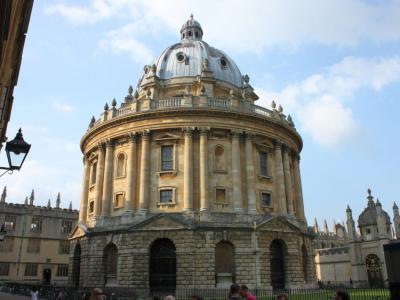
The Radcliffe Camera is one of the most recognizable landmarks in Oxford and a defining feature of the city’s skyline. Despite its name, it is not a camera in the modern sense but the first circular library built in the United Kingdom. In this context, the word camera comes from Latin and means “room” or “chamber.”
The building was funded through a bequest from royal physician and scholar John Radcliffe, who wished to create a library to house scientific materials for the university. Several colleges debated where it should stand, but in the end, an independent site was selected in the centre of Oxford. To make way for the new library, a group of terraced houses, Black Hall, and nearby college outbuildings were demolished to clear the site now known as Radcliffe Square.
Construction began in 1737 and was completed in 1749. Designed in the English Palladian style, the building presents the appearance of three levels. The central highlight of the exterior is the rusticated ground floor, which supports the more decorative upper sections. To find this highlight, walk around the circular base of the building; look for the eight massive stone arches topped with pediments. These were originally designed as an open arcade for the public before being enclosed to provide more storage for the library’s expanding collection. The upper section is marked by pairs of Corinthian columns, while a lantern and lead-covered dome crown the structure.
Inside, the building offers a quiet yet evocative atmosphere focused on the academic past of the university. An open gallery runs around the first floor, and a statue of John Radcliffe by sculptor John Michael Rysbrack stands prominently within the interior. To find this highlight if you are on a tour, look toward the northern side of the ground floor gallery; look for the lifelike marble figure positioned in a grand niche. Carved in 1747, it depicts the physician in his robes, serving as a permanent tribute to the man whose wealth made the library possible.
Originally intended as a scientific library, the building later became part of the Bodleian Library system. In 1912, an underground storage room was added and linked to the Bodleian through a passageway. Above the entire structure, the final notable highlight is the lead-covered dome and lantern. To find this highlight from the square, look toward the very peak of the circular roof; look for the 16-sided lead dome and the stone lantern that sits at the highest point, which was a revolutionary engineering feat for the 18th century.
Today, the Radcliffe Camera contains more than 600,000 books and functions primarily as a reading room for students and researchers. Although the interior is not generally open to the public, visitors can access it by booking an official guided tour through the Bodleian Library. Visitors should note that as this is a working library, silence is strictly enforced, so checking the tour schedule ahead of time is advisable.
The building was funded through a bequest from royal physician and scholar John Radcliffe, who wished to create a library to house scientific materials for the university. Several colleges debated where it should stand, but in the end, an independent site was selected in the centre of Oxford. To make way for the new library, a group of terraced houses, Black Hall, and nearby college outbuildings were demolished to clear the site now known as Radcliffe Square.
Construction began in 1737 and was completed in 1749. Designed in the English Palladian style, the building presents the appearance of three levels. The central highlight of the exterior is the rusticated ground floor, which supports the more decorative upper sections. To find this highlight, walk around the circular base of the building; look for the eight massive stone arches topped with pediments. These were originally designed as an open arcade for the public before being enclosed to provide more storage for the library’s expanding collection. The upper section is marked by pairs of Corinthian columns, while a lantern and lead-covered dome crown the structure.
Inside, the building offers a quiet yet evocative atmosphere focused on the academic past of the university. An open gallery runs around the first floor, and a statue of John Radcliffe by sculptor John Michael Rysbrack stands prominently within the interior. To find this highlight if you are on a tour, look toward the northern side of the ground floor gallery; look for the lifelike marble figure positioned in a grand niche. Carved in 1747, it depicts the physician in his robes, serving as a permanent tribute to the man whose wealth made the library possible.
Originally intended as a scientific library, the building later became part of the Bodleian Library system. In 1912, an underground storage room was added and linked to the Bodleian through a passageway. Above the entire structure, the final notable highlight is the lead-covered dome and lantern. To find this highlight from the square, look toward the very peak of the circular roof; look for the 16-sided lead dome and the stone lantern that sits at the highest point, which was a revolutionary engineering feat for the 18th century.
Today, the Radcliffe Camera contains more than 600,000 books and functions primarily as a reading room for students and researchers. Although the interior is not generally open to the public, visitors can access it by booking an official guided tour through the Bodleian Library. Visitors should note that as this is a working library, silence is strictly enforced, so checking the tour schedule ahead of time is advisable.
3) University Church of Saint Mary the Virgin (must see)
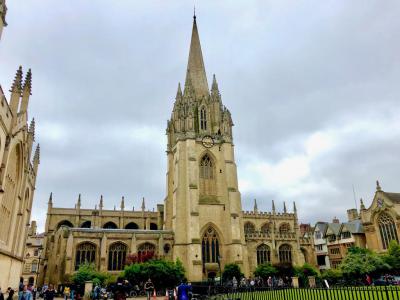
The University Church of Saint Mary the Virgin is the largest parish church in the city. Located on High Street and surrounded by colleges, it has long been closely connected to university life. A church has occupied this site for more than a thousand years, with the first known building dating to 1086. When the University of Oxford emerged in the 13th century, the church effectively became its first building, serving as a centre for lectures, meetings, ceremonies, and academic gatherings before dedicated university structures existed.
In 1320, a two-storey building was added to the north side of the chancel. The lower floor served as the university’s Convocation House, while the upper level became Oxford’s first library. The church continued to play a formal role in university life into the 17th century, when graduation ceremonies were still held here. Eventually, church officials grew frustrated with the lively celebrations that followed, leading to the construction of the nearby Sheldonian Theatre as a dedicated ceremonial venue.
Much of the church was rebuilt between the late 15th and early 16th centuries in the Perpendicular Gothic style, although its 13th-century tower and spire survived unchanged. The graceful steeple is often described as one of the most beautiful in England. The central architectural highlight is the Baroque porch on the south side of the church facing High Street. To find this feature, stand outside the main entrance and look for the ornate 1637 gateway, along with the distinctive twisting “barley-sugar” columns and the statue of the Virgin and Child added long after the medieval nave was completed.
Inside, visitors can admire the richly detailed interior, stained glass, and memorials. The church also carries traces of the Reformation: in 1555, the Oxford Martyrs were tried and condemned here, and a missing section of pillar near the pulpit remains a relic of this turbulent period. To find the “Cranmer Pillar,” walk toward the front of the nave near the pulpit and look for the distinct indentation cut into the stone where a wooden platform once located. Thomas Cranmer stood on this platform during his trial, where he publicly withdrew his recantation before being led to his execution.
For many visitors, the final highlight is the tower climb, which rewards them with sweeping views over Oxford’s rooftops. To reach the tower, enter near the church shop and climb the 127 steps of the narrow 13th-century spiral staircase. From the open-air observation deck, look for the nearby Radcliffe Camera and the city’s famous skyline of spires. Alongside these historic features, the church remains an active place of worship.
In 1320, a two-storey building was added to the north side of the chancel. The lower floor served as the university’s Convocation House, while the upper level became Oxford’s first library. The church continued to play a formal role in university life into the 17th century, when graduation ceremonies were still held here. Eventually, church officials grew frustrated with the lively celebrations that followed, leading to the construction of the nearby Sheldonian Theatre as a dedicated ceremonial venue.
Much of the church was rebuilt between the late 15th and early 16th centuries in the Perpendicular Gothic style, although its 13th-century tower and spire survived unchanged. The graceful steeple is often described as one of the most beautiful in England. The central architectural highlight is the Baroque porch on the south side of the church facing High Street. To find this feature, stand outside the main entrance and look for the ornate 1637 gateway, along with the distinctive twisting “barley-sugar” columns and the statue of the Virgin and Child added long after the medieval nave was completed.
Inside, visitors can admire the richly detailed interior, stained glass, and memorials. The church also carries traces of the Reformation: in 1555, the Oxford Martyrs were tried and condemned here, and a missing section of pillar near the pulpit remains a relic of this turbulent period. To find the “Cranmer Pillar,” walk toward the front of the nave near the pulpit and look for the distinct indentation cut into the stone where a wooden platform once located. Thomas Cranmer stood on this platform during his trial, where he publicly withdrew his recantation before being led to his execution.
For many visitors, the final highlight is the tower climb, which rewards them with sweeping views over Oxford’s rooftops. To reach the tower, enter near the church shop and climb the 127 steps of the narrow 13th-century spiral staircase. From the open-air observation deck, look for the nearby Radcliffe Camera and the city’s famous skyline of spires. Alongside these historic features, the church remains an active place of worship.
4) Corpus Christi College
Corpus Christi College is one of Oxford’s smaller but historically rich colleges. It was founded in 1517 by Richard Foxe, Bishop of Winchester, a statesman and churchman who had served under Henry VII and Henry VIII. Shaped by Renaissance humanist ideals, the college placed strong emphasis on classical languages, biblical scholarship, and the study of original texts. Its library was established alongside the college and became notable for its remarkable collection of books in English, Latin, Greek, and Hebrew.
Corpus Christi is especially remembered for its role in the translation of the King James Bible. Commissioned by the Crown, scholars connected with the college formed part of the groups responsible for translating Scripture from Hebrew and Greek into English. Their work included books from the Prophets, from Isaiah to Malachi, as well as the four Gospels, Acts, and Revelation. The project took eleven years and was completed with the Bible’s publication in 1611.
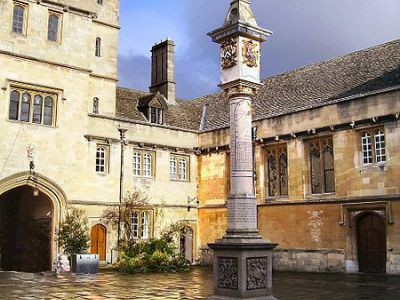
The Main Quad has the enclosed, honey-coloured character many people associate with old Oxford, with the tower, dining hall, and chapel among its key features. At its centre stands the Pelican Sundial, placed there in 1581. Crowned by a pelican, the college’s emblem, it refers to the old legend of the bird feeding its young with its own blood, a symbol of Christ’s self-sacrifice. A second quad was added in the 18th century, with the Neo-classical Fellows’ Building and views toward Christ Church Meadow. Corpus is also known for Oxford’s eccentric inter-collegiate tortoise race, which takes place every June.
Corpus Christi is especially remembered for its role in the translation of the King James Bible. Commissioned by the Crown, scholars connected with the college formed part of the groups responsible for translating Scripture from Hebrew and Greek into English. Their work included books from the Prophets, from Isaiah to Malachi, as well as the four Gospels, Acts, and Revelation. The project took eleven years and was completed with the Bible’s publication in 1611.
The Main Quad has the enclosed, honey-coloured character many people associate with old Oxford, with the tower, dining hall, and chapel among its key features. At its centre stands the Pelican Sundial, placed there in 1581. Crowned by a pelican, the college’s emblem, it refers to the old legend of the bird feeding its young with its own blood, a symbol of Christ’s self-sacrifice. A second quad was added in the 18th century, with the Neo-classical Fellows’ Building and views toward Christ Church Meadow. Corpus is also known for Oxford’s eccentric inter-collegiate tortoise race, which takes place every June.
5) Merton College (must see)
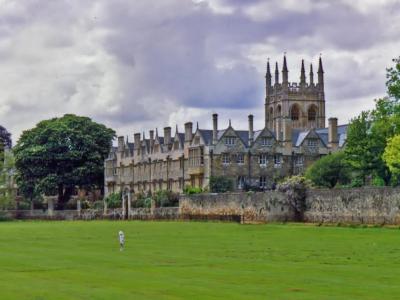
Merton College stands on Merton Street, close to the quieter south-eastern side of Oxford’s historic centre. It was founded in 1264 by Walter de Merton, who served as Lord Chancellor to Henry III and later to Edward I. Merton is often described as the first fully self-governing college in Oxford, and its statutes helped shape the model followed by later colleges.
The college offers a rich combination of architecture, enclosed courtyards, and scholarly history. Among its earliest buildings were the Hall and Chapel, both completed in 1297, though only the chapel survives today. Merton College Chapel is a fine example of Early English Gothic architecture, with an imposing scale unusual for a college chapel. The central highlight of the interior is the Great East Window, located at the far end of the choir. To find this feature, walk toward the high altar and look for the original 13th-century stained glass, which reveals an intricate wheel-like design and serves as a vibrant centrepiece of the sanctuary.
One of Merton’s most famous spaces is Mob Quad, built in stages between the late 13th and 14th centuries and often described as the oldest quadrangle in the university. To reach this highlight, walk through the passageway south of the chapel; once you find yourself in this small courtyard, look for the narrow medieval windows and irregular stone masonry that mark the very beginning of the college-quadrangle layout.
Around Mob Quad stands the Old Library, completed in the 1370s and regarded as one of the oldest continuously functioning libraries for university academics and students in Europe. Beneath the timbered ceilings of the library, the most notable details are the remnants of the medieval chained-book system. Once you find yourself inside the gallery, look for the iron rods and rings still attached to the wooden bookcases, which were once used to secure rare and valuable manuscripts from theft.
Merton’s history also reaches beyond academic life. After the dissolution of the monasteries, it acquired Saint Alban Hall from Littlemore Convent, though this remained a separate institution until 1881. During the English Civil War, the college served as a Royalist headquarters and hosted members of Charles I’s court, including Queen Henrietta Maria of France, who stayed in what is now called the Queen’s Room.
Over time, Merton expanded along Merton Street, incorporating the former parish church of Saint John and nearby houses into the Front Quad. Its alumni and academics include four Nobel laureates and writer J. R. R. Tolkien, who was Merton Professor of English Language and Literature from 1945 to 1959.
The college offers a rich combination of architecture, enclosed courtyards, and scholarly history. Among its earliest buildings were the Hall and Chapel, both completed in 1297, though only the chapel survives today. Merton College Chapel is a fine example of Early English Gothic architecture, with an imposing scale unusual for a college chapel. The central highlight of the interior is the Great East Window, located at the far end of the choir. To find this feature, walk toward the high altar and look for the original 13th-century stained glass, which reveals an intricate wheel-like design and serves as a vibrant centrepiece of the sanctuary.
One of Merton’s most famous spaces is Mob Quad, built in stages between the late 13th and 14th centuries and often described as the oldest quadrangle in the university. To reach this highlight, walk through the passageway south of the chapel; once you find yourself in this small courtyard, look for the narrow medieval windows and irregular stone masonry that mark the very beginning of the college-quadrangle layout.
Around Mob Quad stands the Old Library, completed in the 1370s and regarded as one of the oldest continuously functioning libraries for university academics and students in Europe. Beneath the timbered ceilings of the library, the most notable details are the remnants of the medieval chained-book system. Once you find yourself inside the gallery, look for the iron rods and rings still attached to the wooden bookcases, which were once used to secure rare and valuable manuscripts from theft.
Merton’s history also reaches beyond academic life. After the dissolution of the monasteries, it acquired Saint Alban Hall from Littlemore Convent, though this remained a separate institution until 1881. During the English Civil War, the college served as a Royalist headquarters and hosted members of Charles I’s court, including Queen Henrietta Maria of France, who stayed in what is now called the Queen’s Room.
Over time, Merton expanded along Merton Street, incorporating the former parish church of Saint John and nearby houses into the Front Quad. Its alumni and academics include four Nobel laureates and writer J. R. R. Tolkien, who was Merton Professor of English Language and Literature from 1945 to 1959.
6) Christ Church Meadow (must see)
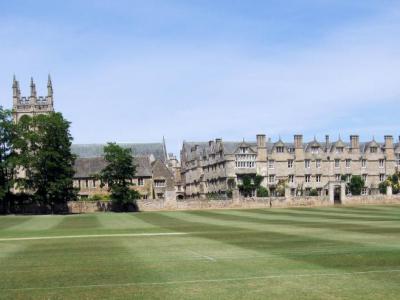
If it is a nice day and you don’t feel like having lunch in one of Oxford’s many excellent restaurants, why not take a picnic out to Christ Church Meadow, which is open to the public every day until sunset.
This roughly triangular-shaped stretch of land is a flood-meadow, which differs from a water-meadow which is man-made. The Meadow is bordered by the River Thames, called the Isis, the River Cherwell and Christ Church, which owns and maintains the land.
The upper part of the Meadow is given over to sports fields, while cattle graze for much of the year on the lower section. Deer are also brought here in the summer and autumn months.
Where the two rivers meet there is a small island on which stand several boathouses. Oxford’s Torpids bumping races are held here in March, and the Eights Week Regatta takes place in May.
You can see a plaque dedicated to James Sadler, who, in 1784, became the first Englishman to go up in a hot air balloon from the Meadow.
There are three entrances to the Meadow: one through the Memorial Gardens on Saint Aldate’s; a gate on Merton Street between Corpus Christi and Merton Colleges and the third, a gate at the eastern end next to the Botanical Garden. You are asked to please observe the rules on the notice boards outside each entrance.
This roughly triangular-shaped stretch of land is a flood-meadow, which differs from a water-meadow which is man-made. The Meadow is bordered by the River Thames, called the Isis, the River Cherwell and Christ Church, which owns and maintains the land.
The upper part of the Meadow is given over to sports fields, while cattle graze for much of the year on the lower section. Deer are also brought here in the summer and autumn months.
Where the two rivers meet there is a small island on which stand several boathouses. Oxford’s Torpids bumping races are held here in March, and the Eights Week Regatta takes place in May.
You can see a plaque dedicated to James Sadler, who, in 1784, became the first Englishman to go up in a hot air balloon from the Meadow.
There are three entrances to the Meadow: one through the Memorial Gardens on Saint Aldate’s; a gate on Merton Street between Corpus Christi and Merton Colleges and the third, a gate at the eastern end next to the Botanical Garden. You are asked to please observe the rules on the notice boards outside each entrance.
7) Christ Church Cathedral (must see)
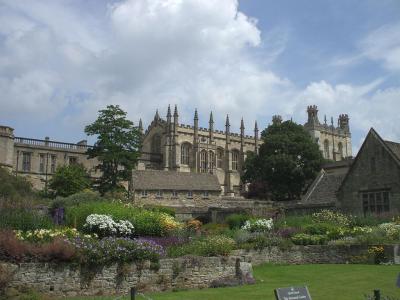
Christ Church Cathedral holds a unique place in Oxford as both the cathedral of the Diocese of Oxford and the college chapel of Christ Church, Oxford. Before the 20th century, it was also the smallest cathedral in the United Kingdom.
Its origins reach back to the Saxon period, when a shrine was established in honour of Saint Frideswide, a 7th-century princess and abbess who became Oxford’s patron saint. According to tradition, she fled persecution to protect her chastity from King Algar, one of the rulers of Saxon England. By 1122, the site had become part of Saint Frideswide Priory, where Augustinian canons rebuilt the church in the Romanesque style. Elements of this Norman architecture still survive today, particularly in the eastern nave, choir, and tower.
The cathedral entered a new chapter in the 16th century. In 1520, Cardinal Wolsey seized the priory buildings to create Cardinal College, demolishing five western bays of the nave to make room for what is now Tom Quad. After Wolsey’s fall, Henry VIII took control, refounded the institution as Christ Church in 1546, and elevated the remaining priory church to cathedral status. Much of the later structure reflects the Perpendicular Gothic style, creating a layered combination of Norman stonework, Gothic vaulting, medieval glass, and Victorian restoration.
Inside, visitors will find richly carved choir stalls, medieval details, and a number of notable stained-glass windows. The Botanical-style rose window, formed by ten petals around a central panel, is especially worth seeing. Other highlights include the Becket Window from around 1320, which survived the Reformation, and the Jonah Window from 1632 depicting the City of Nineveh. The restored shrine of Saint Frideswide stands before a stained-glass screen illustrating scenes from her life; one Victorian panel even includes a water closet.
The cathedral choir remains internationally respected, with regular choral services taking place. Nearby, the Cathedral Shop occupies the 12th-century Chapter House, where visitors can also admire a vaulted ceiling decorated with 13th-century medallions of saints.
Its origins reach back to the Saxon period, when a shrine was established in honour of Saint Frideswide, a 7th-century princess and abbess who became Oxford’s patron saint. According to tradition, she fled persecution to protect her chastity from King Algar, one of the rulers of Saxon England. By 1122, the site had become part of Saint Frideswide Priory, where Augustinian canons rebuilt the church in the Romanesque style. Elements of this Norman architecture still survive today, particularly in the eastern nave, choir, and tower.
The cathedral entered a new chapter in the 16th century. In 1520, Cardinal Wolsey seized the priory buildings to create Cardinal College, demolishing five western bays of the nave to make room for what is now Tom Quad. After Wolsey’s fall, Henry VIII took control, refounded the institution as Christ Church in 1546, and elevated the remaining priory church to cathedral status. Much of the later structure reflects the Perpendicular Gothic style, creating a layered combination of Norman stonework, Gothic vaulting, medieval glass, and Victorian restoration.
Inside, visitors will find richly carved choir stalls, medieval details, and a number of notable stained-glass windows. The Botanical-style rose window, formed by ten petals around a central panel, is especially worth seeing. Other highlights include the Becket Window from around 1320, which survived the Reformation, and the Jonah Window from 1632 depicting the City of Nineveh. The restored shrine of Saint Frideswide stands before a stained-glass screen illustrating scenes from her life; one Victorian panel even includes a water closet.
The cathedral choir remains internationally respected, with regular choral services taking place. Nearby, the Cathedral Shop occupies the 12th-century Chapter House, where visitors can also admire a vaulted ceiling decorated with 13th-century medallions of saints.
8) Christ Church College (must see)
Christ Church is one of Oxford’s best-known colleges and one of the most visited places in the city. Founded in 1546 by King Henry VIII, it is unusual because it is both an Oxford college and the cathedral church of the Diocese of Oxford. Christ Church Cathedral therefore serves as the college chapel as well as an active place of worship. The college is also known as “The House,” from its Latin name, Aedes Christi, meaning “House of Christ.”
Historically, Christ Church has held an important place in British public life. It is one of Oxford’s largest and wealthiest colleges and counts thirteen British prime ministers among its alumni, more than any other Oxbridge college. Its former students also include King Edward VII, King William II of the Netherlands, several archbishops, and Lewis Carroll, the author of Alice’s Adventures in Wonderland.
Architecturally, the college is known for Tom Tower, designed by Sir Christopher Wren; Tom Quad, Oxford’s largest quadrangle; and the Great Hall, which was used by King Charles I’s parliament during the English Civil War. Christ Church also has a major art collection, with paintings and drawings by artists such as Leonardo da Vinci, Raphael, and Michelangelo displayed in the Christ Church Picture Gallery.
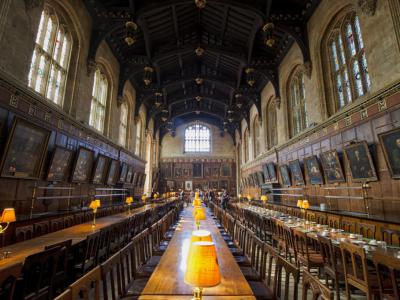
Regarding the Harry Potter connection, the Great Hall is especially important as a central highlight of the college experience. The entrance to this area is located at the top of Bodley Tower. To find this highlight, walk toward the southeast corner of Tom Quad and ascend the stairs. Once inside, look for the long rows of oak tables and the hammerbeam roof. Contrary to popular belief, the Great Hall itself was not used for filming, but it strongly inspired the design of Hogwarts’ Great Hall at the Warner Bros. studios. Its long tables, portraits, and formal dining-room layout made it an obvious model for the film version of Hogwarts.
Actual filming did take place at the grand stone staircase in Bodley Tower. To reach this highlight, look for the wide stone steps leading up to the Hall. Once you are standing on the landing, look up at the magnificent fan-vaulted ceiling, completed in 1640. This is one of the most recognisable Oxford locations from the first two films. It appears when Professor McGonagall welcomes Harry and the other first-years to Hogwarts in Harry Potter and the Philosopher’s Stone. The staircase is also associated with the flashback scene involving Tom Riddle and Dumbledore, and with Harry’s reunion with Ron and Hermione after leaving the infirmary.
Another notable feature is the Christ Church cloisters, which also appeared as Hogwarts hallways. To find this highlight, walk through the archway leading from the Cathedral toward the Meadow Building, and look for the vaulted stone corridors surrounding the quiet courtyard. Once you are in these ancient hallways, look for the setting where Hermione tells Harry that being a Seeker is “in his blood,” before showing him a Quidditch trophy bearing his father’s name.
Historically, Christ Church has held an important place in British public life. It is one of Oxford’s largest and wealthiest colleges and counts thirteen British prime ministers among its alumni, more than any other Oxbridge college. Its former students also include King Edward VII, King William II of the Netherlands, several archbishops, and Lewis Carroll, the author of Alice’s Adventures in Wonderland.
Architecturally, the college is known for Tom Tower, designed by Sir Christopher Wren; Tom Quad, Oxford’s largest quadrangle; and the Great Hall, which was used by King Charles I’s parliament during the English Civil War. Christ Church also has a major art collection, with paintings and drawings by artists such as Leonardo da Vinci, Raphael, and Michelangelo displayed in the Christ Church Picture Gallery.
Regarding the Harry Potter connection, the Great Hall is especially important as a central highlight of the college experience. The entrance to this area is located at the top of Bodley Tower. To find this highlight, walk toward the southeast corner of Tom Quad and ascend the stairs. Once inside, look for the long rows of oak tables and the hammerbeam roof. Contrary to popular belief, the Great Hall itself was not used for filming, but it strongly inspired the design of Hogwarts’ Great Hall at the Warner Bros. studios. Its long tables, portraits, and formal dining-room layout made it an obvious model for the film version of Hogwarts.
Actual filming did take place at the grand stone staircase in Bodley Tower. To reach this highlight, look for the wide stone steps leading up to the Hall. Once you are standing on the landing, look up at the magnificent fan-vaulted ceiling, completed in 1640. This is one of the most recognisable Oxford locations from the first two films. It appears when Professor McGonagall welcomes Harry and the other first-years to Hogwarts in Harry Potter and the Philosopher’s Stone. The staircase is also associated with the flashback scene involving Tom Riddle and Dumbledore, and with Harry’s reunion with Ron and Hermione after leaving the infirmary.
Another notable feature is the Christ Church cloisters, which also appeared as Hogwarts hallways. To find this highlight, walk through the archway leading from the Cathedral toward the Meadow Building, and look for the vaulted stone corridors surrounding the quiet courtyard. Once you are in these ancient hallways, look for the setting where Hermione tells Harry that being a Seeker is “in his blood,” before showing him a Quidditch trophy bearing his father’s name.
9) Saint John's College
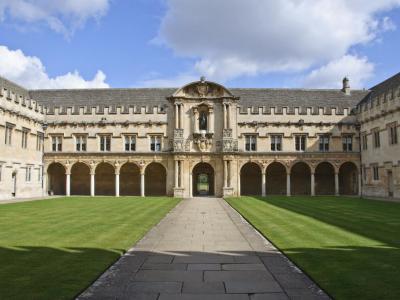
Saint John's College, one of the esteemed and ancient institutions at Oxford University, has a rich history. It was established in 1555 by Sir Thomas White, a prominent merchant who had previously served as the Lord Mayor of London. The college's construction took place in and around the premises of the former Saint Bernard's College, which served as a place of learning and the Saint Bernard's Monastery.
The college is organized into seven quadrangles, each with its own unique character. The Front Quad predominantly consists of buildings dating back to the 14th century, originally part of the monastery. The Canterbury Quad, with its 17th-century Italian Renaissance architecture, is home to the college's Library.
Moving on, the North Quad is a mix of buildings from the 18th to the 20th century. Notably, the buttery staircase connecting to the Hall and Senior Common Room dates back to the 18th century. Along Saint Giles' Street, you'll find 19th-century buildings, while the "Beehive" was constructed in the 1930s.
The Dolphin, the Sir Thomas White, and the Garden Quads feature 20th-century structures, while the Kendrew Quad represents a modern touch as it was completed in 2010, firmly establishing itself in the 21st century. Additionally, the college owns and operates the Lamb and Flag pub.
Throughout its history, Saint John's College has had a spirited rivalry with Keble College. In response, Saint John's initiated a secret society where membership required students to steal a brick from Keble College. The color of the stolen brick determined the member's status: red bricks granted ordinary membership, white bricks provided access to higher membership, and the rarer blue bricks secured chairmanship within the society.
The college is organized into seven quadrangles, each with its own unique character. The Front Quad predominantly consists of buildings dating back to the 14th century, originally part of the monastery. The Canterbury Quad, with its 17th-century Italian Renaissance architecture, is home to the college's Library.
Moving on, the North Quad is a mix of buildings from the 18th to the 20th century. Notably, the buttery staircase connecting to the Hall and Senior Common Room dates back to the 18th century. Along Saint Giles' Street, you'll find 19th-century buildings, while the "Beehive" was constructed in the 1930s.
The Dolphin, the Sir Thomas White, and the Garden Quads feature 20th-century structures, while the Kendrew Quad represents a modern touch as it was completed in 2010, firmly establishing itself in the 21st century. Additionally, the college owns and operates the Lamb and Flag pub.
Throughout its history, Saint John's College has had a spirited rivalry with Keble College. In response, Saint John's initiated a secret society where membership required students to steal a brick from Keble College. The color of the stolen brick determined the member's status: red bricks granted ordinary membership, white bricks provided access to higher membership, and the rarer blue bricks secured chairmanship within the society.
10) University Parks (must see)
If you want to spend an agreeable, relaxing afternoon away from visiting colleges and museums, you should head for the University Parks to the northeast of the town.
The University bought this large parkland little by little from Merton College between 1853 and 1864. At first it covered 91 acres, today some of the land has been taken up by the Science Area and the University Museum, so the parks now total 74 acres.
It comprises beautiful gardens, rare plants and sports fields. It lies mostly on the west bank of the River Cherwell, with an area known as Mesopotamia which lies between the upper and lower levels of the river.
The parks are bordered to the west by Parks Road, to the south by the Science Area and to the north by Northam Gardens. There are plenty of benches and lawns to relax on, and the winding paths are bicycle-free.
You can sit under the shade of one of the seven giant Sequoias or the Japanese Pagoda, which were all planted in 1888, or watch a cricket match on the only cricket ground in the UK that lets spectators watch free of charge. The cricket pavilion was built in 1881 by Sir Thomas Jackson.
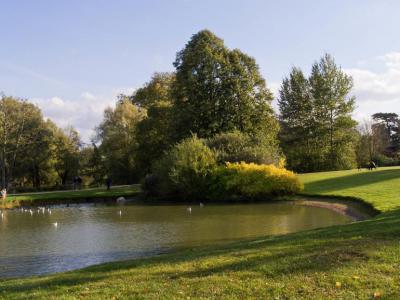
There is a lovely duck pond with a small island in its centre and the High Bridge, also called the Rainbow Bridge, built in 1924. You can stroll through the Genetic Garden where you will learn about the evolution of plant-life. A small copse of trees called the Coronation Clump was planted in 1953 to celebrate Queen Elizabeth II’s ascension to the throne.
The University bought this large parkland little by little from Merton College between 1853 and 1864. At first it covered 91 acres, today some of the land has been taken up by the Science Area and the University Museum, so the parks now total 74 acres.
It comprises beautiful gardens, rare plants and sports fields. It lies mostly on the west bank of the River Cherwell, with an area known as Mesopotamia which lies between the upper and lower levels of the river.
The parks are bordered to the west by Parks Road, to the south by the Science Area and to the north by Northam Gardens. There are plenty of benches and lawns to relax on, and the winding paths are bicycle-free.
You can sit under the shade of one of the seven giant Sequoias or the Japanese Pagoda, which were all planted in 1888, or watch a cricket match on the only cricket ground in the UK that lets spectators watch free of charge. The cricket pavilion was built in 1881 by Sir Thomas Jackson.
There is a lovely duck pond with a small island in its centre and the High Bridge, also called the Rainbow Bridge, built in 1924. You can stroll through the Genetic Garden where you will learn about the evolution of plant-life. A small copse of trees called the Coronation Clump was planted in 1953 to celebrate Queen Elizabeth II’s ascension to the throne.
11) Trinity College (must see)
Trinity College was founded in 1555 by Sir Thomas Pope during the reign of Queen Mary I, though the site has a much older academic history. Oxford’s earliest centres of learning grew from monastery buildings where theology formed the core of study. Trinity now occupies the grounds of Durham College, a monastic institution established in 1268 to educate Benedictine monks.
After the Dissolution of the Monasteries under Henry VIII, the property changed hands before Pope purchased the land and existing buildings to create a new college. Having no children, he hoped his foundation would preserve his memory through the prayers of future generations. His tomb still lies inside the college chapel, beside the altar.
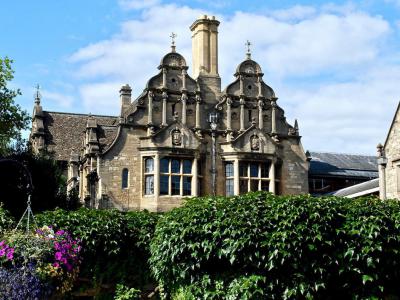
The oldest surviving part of the medieval monastery is the eastern side of Durham Quad, which today houses the college library. Over the centuries, Trinity expanded while preserving a calm and balanced architectural character. The West Tower is decorated with statues representing Astronomy, Geometry, Medicine, and Music. In 1688, a two-storey building designed by Christopher Wren was added to Garden Quad to provide student accommodation, while the neoclassical chapel, designed by Henry Aldrich, followed in 1694.
Set just off Broad Street, Trinity feels quieter than many neighbouring colleges. Visitors enter a sequence of lawns, quadrangles, and gardens that create a sense of separation from Oxford’s busy streets. The main quad is framed by harmonious classical buildings rather than dramatic Gothic façades, giving the college a refined and understated appearance. Behind the main buildings lies an unusually spacious garden with long lawns, mature trees, and seasonal flowerbeds that become especially attractive in spring and summer.
Although Trinity occupies a sizeable footprint, it maintains a relatively small student population of around 400. Originally founded as a men’s college, it became coeducational in 1979. Among its notable alumni are three British prime ministers.
After the Dissolution of the Monasteries under Henry VIII, the property changed hands before Pope purchased the land and existing buildings to create a new college. Having no children, he hoped his foundation would preserve his memory through the prayers of future generations. His tomb still lies inside the college chapel, beside the altar.
The oldest surviving part of the medieval monastery is the eastern side of Durham Quad, which today houses the college library. Over the centuries, Trinity expanded while preserving a calm and balanced architectural character. The West Tower is decorated with statues representing Astronomy, Geometry, Medicine, and Music. In 1688, a two-storey building designed by Christopher Wren was added to Garden Quad to provide student accommodation, while the neoclassical chapel, designed by Henry Aldrich, followed in 1694.
Set just off Broad Street, Trinity feels quieter than many neighbouring colleges. Visitors enter a sequence of lawns, quadrangles, and gardens that create a sense of separation from Oxford’s busy streets. The main quad is framed by harmonious classical buildings rather than dramatic Gothic façades, giving the college a refined and understated appearance. Behind the main buildings lies an unusually spacious garden with long lawns, mature trees, and seasonal flowerbeds that become especially attractive in spring and summer.
Although Trinity occupies a sizeable footprint, it maintains a relatively small student population of around 400. Originally founded as a men’s college, it became coeducational in 1979. Among its notable alumni are three British prime ministers.
12) Bridge of Sighs (must see)
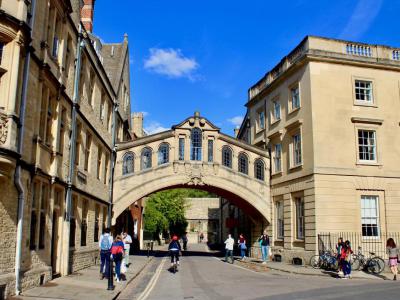
The Oxford “Bridge of Sighs,” officially known as the Hertford Bridge, is one of the city’s most photographed landmarks. Spanning New College Lane, it links the Old Quad and New Quad of Hertford College and was completed in 1914.
The bridge was built as a practical connection between college buildings, yet its enclosed form and decorative stonework quickly turned it into an architectural icon. Its popular nickname comes from the supposed resemblance to the famous Bridge of Sighs in Venice, though many observers note that it actually bears a closer resemblance to the Rialto Bridge. Still, “Bridge of Sighs” carries a more romantic appeal, and the name has remained.
Although visitors cannot cross the bridge unless they are students or members of Hertford College, it remains easy to admire from street level. New College Lane offers the best viewpoint, where the bridge appears framed by historic stone buildings and narrow medieval streets. The structure is covered and glass-panelled, giving it an elegant appearance that changes with the light throughout the day.
The bridge is also tied to Oxford folklore. A long-running legend claims that Hertford College once restricted overweight students from using it, encouraging them to take the longer route between buildings instead.
Just behind the bridge, within the grounds of New College, stands an ancient oak tree. It appears in Harry Potter and the Goblet of Fire. In one scene, Harry finds Cedric Diggory sitting nearby and quietly warns him that the first task of the Triwizard Tournament will involve dragons. The same area is also used for the more famous Draco Malfoy scene. Draco appears near the oak tree and taunts Harry before trying to curse him from behind; “Mad-Eye” Moody intervenes, transforms Draco into a white ferret, and bounces him around the courtyard before Professor McGonagall steps in.
While the tree and the cloisters are only a short walk away, they lie within the college grounds and typically require paid admission to New College for a closer view.
The bridge was built as a practical connection between college buildings, yet its enclosed form and decorative stonework quickly turned it into an architectural icon. Its popular nickname comes from the supposed resemblance to the famous Bridge of Sighs in Venice, though many observers note that it actually bears a closer resemblance to the Rialto Bridge. Still, “Bridge of Sighs” carries a more romantic appeal, and the name has remained.
Although visitors cannot cross the bridge unless they are students or members of Hertford College, it remains easy to admire from street level. New College Lane offers the best viewpoint, where the bridge appears framed by historic stone buildings and narrow medieval streets. The structure is covered and glass-panelled, giving it an elegant appearance that changes with the light throughout the day.
The bridge is also tied to Oxford folklore. A long-running legend claims that Hertford College once restricted overweight students from using it, encouraging them to take the longer route between buildings instead.
Just behind the bridge, within the grounds of New College, stands an ancient oak tree. It appears in Harry Potter and the Goblet of Fire. In one scene, Harry finds Cedric Diggory sitting nearby and quietly warns him that the first task of the Triwizard Tournament will involve dragons. The same area is also used for the more famous Draco Malfoy scene. Draco appears near the oak tree and taunts Harry before trying to curse him from behind; “Mad-Eye” Moody intervenes, transforms Draco into a white ferret, and bounces him around the courtyard before Professor McGonagall steps in.
While the tree and the cloisters are only a short walk away, they lie within the college grounds and typically require paid admission to New College for a closer view.
13) Bodleian Library (must see)
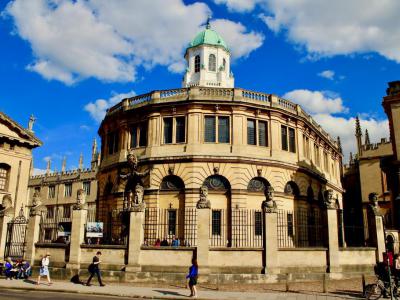
The Bodleian Library is one of the oldest libraries in Europe and among the most important historic institutions in Oxford. Serving as the main research library of the University of Oxford, it traces its origins to the 14th century, when Thomas Cobham founded a university library above the Old Congregation House at the University Church of Saint Mary the Virgin. This early collection operated as a chained library, with books fastened to shelves to prevent theft. In 1437, a major donation of manuscripts from Humphrey, Duke of Gloucester outgrew the available space, leading to the creation of Duke Humfrey’s Library above the Divinity School.
The central architectural highlight is the Tower of the Five Orders, located on the eastern side of the Old Schools Quad. To find this feature, stand in the centre of the courtyard and look up at the gateway. Look for the five distinct levels of classical columns—Tuscan, Doric, Ionic, Corinthian, and Composite—designed as a “textbook in stone” for students entering the library in the 17th century.
Over the centuries, the library expanded into a complex of historic buildings connected across central Oxford. The New Bodleian, completed in 1937, is linked to the older sections by a tunnel beneath Broad Street. Together, the library’s collections include more than 13 million items spread across roughly 153 miles of shelving. Among its treasures are copies of the Magna Carta, the medieval epic The Song of Roland, and one of the surviving copies of the Gutenberg Bible.
Guided tours, which should be booked in advance, allow non-students to enter spaces normally reserved for researchers. Duke Humfrey’s Library is especially striking, and other notable details include the original timbered ceilings and remnants of the ancient chained-book system. Once on the upper level, look for the small iron rings attached to the shelves where books were once secured to prevent theft.
Located on the ground floor of the complex, and often visible before ascending to the upper libraries, is the Divinity School. It reveals the architectural foundations of the university dating from the 15th century. To find this highlight, enter the room directly below Duke Humfrey’s Library and look up at the ceiling to see the 455 intricate stone bosses carved into the fan vaulting, considered a pinnacle of medieval craftsmanship.
The library has a quiet, almost theatrical atmosphere, making it one of the most rewarding stops in Oxford for Harry Potter fans. Film fans may recognize Duke Humfrey’s Library from Harry Potter and the Philosopher’s Stone, where it appeared as the Hogwarts Library, more specifically the forbidden Restricted Section. In the film, Harry slips inside at night under his invisibility cloak, moving between the old wooden bookcases in search of information about Nicolas Flamel. One memorable moment shows Harry pulling out a chained book, only for it to let out a piercing scream and expose his secret visit.
The central architectural highlight is the Tower of the Five Orders, located on the eastern side of the Old Schools Quad. To find this feature, stand in the centre of the courtyard and look up at the gateway. Look for the five distinct levels of classical columns—Tuscan, Doric, Ionic, Corinthian, and Composite—designed as a “textbook in stone” for students entering the library in the 17th century.
Over the centuries, the library expanded into a complex of historic buildings connected across central Oxford. The New Bodleian, completed in 1937, is linked to the older sections by a tunnel beneath Broad Street. Together, the library’s collections include more than 13 million items spread across roughly 153 miles of shelving. Among its treasures are copies of the Magna Carta, the medieval epic The Song of Roland, and one of the surviving copies of the Gutenberg Bible.
Guided tours, which should be booked in advance, allow non-students to enter spaces normally reserved for researchers. Duke Humfrey’s Library is especially striking, and other notable details include the original timbered ceilings and remnants of the ancient chained-book system. Once on the upper level, look for the small iron rings attached to the shelves where books were once secured to prevent theft.
Located on the ground floor of the complex, and often visible before ascending to the upper libraries, is the Divinity School. It reveals the architectural foundations of the university dating from the 15th century. To find this highlight, enter the room directly below Duke Humfrey’s Library and look up at the ceiling to see the 455 intricate stone bosses carved into the fan vaulting, considered a pinnacle of medieval craftsmanship.
The library has a quiet, almost theatrical atmosphere, making it one of the most rewarding stops in Oxford for Harry Potter fans. Film fans may recognize Duke Humfrey’s Library from Harry Potter and the Philosopher’s Stone, where it appeared as the Hogwarts Library, more specifically the forbidden Restricted Section. In the film, Harry slips inside at night under his invisibility cloak, moving between the old wooden bookcases in search of information about Nicolas Flamel. One memorable moment shows Harry pulling out a chained book, only for it to let out a piercing scream and expose his secret visit.
14) University of Oxford (must see)
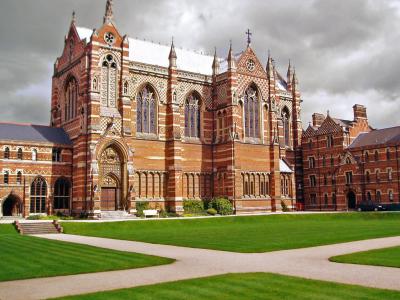
The University of Oxford, officially known as The Chancellor, Masters and Scholars of the University of Oxford, is a prestigious research university with a rich history. Its origins trace back to as early as 1096, making it the oldest university in the English-speaking world and the second-oldest continuously operating university globally. Its rapid growth began in 1167 when King Henry II prohibited English students from attending the University of Paris. In 1209, due to conflicts between Oxford students and the local townspeople, some academics relocated to the northeast, establishing what we now know as the University of Cambridge. These two venerable institutions, often referred to collectively as "Oxbridge," share many similarities.
Oxford University comprises 39 semi-autonomous constituent colleges, six permanent private halls, and various academic departments organized into four divisions. Each college operates independently within the university, managing its own membership, internal structure, and activities. Every student belongs to a specific college. Unlike universities with a central campus, Oxford's facilities and buildings are spread throughout the city center. Undergraduate education at Oxford revolves around small-group tutorials held at the colleges and halls, a distinctive feature of the Oxbridge system. These tutorials are supplemented by classes, lectures, seminars, laboratory work, and occasional additional tutorials offered by the central university faculties and departments. Postgraduate education primarily takes place centrally.
Oxford University is home to the world's oldest university museum, the largest university press globally, and the most extensive academic library system in the country. Oxford boasts an impressive list of alumni, including 28 British prime ministers, numerous heads of state and government worldwide, 72 Nobel Prize laureates, 3 Fields Medalists, and 6 Turing Award winners as of November 2019. Its alumni have also earned a remarkable 160 Olympic medals. Oxford is renowned for its scholarship opportunities, including the prestigious Rhodes Scholarship, one of the oldest international graduate scholarship programs in existence.
Oxford University comprises 39 semi-autonomous constituent colleges, six permanent private halls, and various academic departments organized into four divisions. Each college operates independently within the university, managing its own membership, internal structure, and activities. Every student belongs to a specific college. Unlike universities with a central campus, Oxford's facilities and buildings are spread throughout the city center. Undergraduate education at Oxford revolves around small-group tutorials held at the colleges and halls, a distinctive feature of the Oxbridge system. These tutorials are supplemented by classes, lectures, seminars, laboratory work, and occasional additional tutorials offered by the central university faculties and departments. Postgraduate education primarily takes place centrally.
Oxford University is home to the world's oldest university museum, the largest university press globally, and the most extensive academic library system in the country. Oxford boasts an impressive list of alumni, including 28 British prime ministers, numerous heads of state and government worldwide, 72 Nobel Prize laureates, 3 Fields Medalists, and 6 Turing Award winners as of November 2019. Its alumni have also earned a remarkable 160 Olympic medals. Oxford is renowned for its scholarship opportunities, including the prestigious Rhodes Scholarship, one of the oldest international graduate scholarship programs in existence.
15) New College (must see)
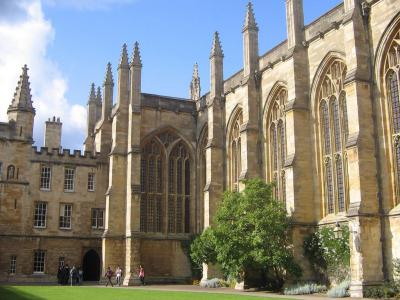
New College is one of Oxford’s most impressive historic colleges. It was founded in 1379 by William of Wykeham, Bishop of Winchester, under the formal name Saint Mary College of Winchester in Oxenford. The “New” label helped distinguish it from Oriel College, which was also dedicated to the Virgin Mary. In reality, New College is one of Oxford’s older colleges and was unusually ambitious for its time. Wykeham founded it alongside Winchester College, which served as its feeder school, and New College became one of the early Oxford colleges to admit and tutor undergraduate students in an organised way.
The college has played a significant role in Oxford’s academic life and has long been associated with strong undergraduate performance, including a first-place ranking in the Norrington Table in 2017. Moreover, after nearly six centuries as a male-only institution, New College admitted its first mixed-sex cohort in 1979. The college is also known for its choral tradition. Its choir is one of Oxford’s major choral foundations and has built an international reputation through recordings, performances, and major awards.
The medieval cloisters are located on the western side of the college, often visible through a narrow stone entrance. To find this highlight, walk through the small wooden door near the chapel. Once you are within the vaulted stone walkways, look for the arched openings that face the quiet quadrangle. These spaces are now also famous for their role in Harry Potter and the Goblet of Fire; several corridor scenes were filmed here, including the moment when Harry passes students wearing “Potter Stinks” badges.
Beneath the towering chapel and hall, large stone bastions survive as relics of the old city wall. After the college was founded, William of Wykeham was required to maintain Oxford’s defences in exchange for the land. Once you are in the college gardens, look for the tall, crenellated limestone wall that borders the north and east sides of the grounds. The original stone bastions and the wall-walk have been carefully preserved for more than 600 years and remain a distinctive feature of the college landscape.
Another notable feature is the large holm oak, a massive tree situated in the Cloister Quad. To find it, look for the ancient tree with thick, twisted branches and a wide canopy near the cloisters. This spot is linked to a memorable scene from the film Harry Potter and the Goblet of Fire. In that scene, Draco Malfoy, one of Harry Potter’s school rivals, tries to curse Harry from behind, only to be stopped by Professor “Mad-Eye” Moody, who magically turns him into a ferret.
The college has played a significant role in Oxford’s academic life and has long been associated with strong undergraduate performance, including a first-place ranking in the Norrington Table in 2017. Moreover, after nearly six centuries as a male-only institution, New College admitted its first mixed-sex cohort in 1979. The college is also known for its choral tradition. Its choir is one of Oxford’s major choral foundations and has built an international reputation through recordings, performances, and major awards.
The medieval cloisters are located on the western side of the college, often visible through a narrow stone entrance. To find this highlight, walk through the small wooden door near the chapel. Once you are within the vaulted stone walkways, look for the arched openings that face the quiet quadrangle. These spaces are now also famous for their role in Harry Potter and the Goblet of Fire; several corridor scenes were filmed here, including the moment when Harry passes students wearing “Potter Stinks” badges.
Beneath the towering chapel and hall, large stone bastions survive as relics of the old city wall. After the college was founded, William of Wykeham was required to maintain Oxford’s defences in exchange for the land. Once you are in the college gardens, look for the tall, crenellated limestone wall that borders the north and east sides of the grounds. The original stone bastions and the wall-walk have been carefully preserved for more than 600 years and remain a distinctive feature of the college landscape.
Another notable feature is the large holm oak, a massive tree situated in the Cloister Quad. To find it, look for the ancient tree with thick, twisted branches and a wide canopy near the cloisters. This spot is linked to a memorable scene from the film Harry Potter and the Goblet of Fire. In that scene, Draco Malfoy, one of Harry Potter’s school rivals, tries to curse Harry from behind, only to be stopped by Professor “Mad-Eye” Moody, who magically turns him into a ferret.
16) Magdalen College (must see)
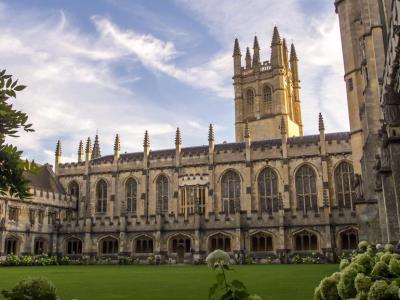
Magdalen College is one of Oxford’s most memorable colleges, admired for its medieval architecture, spacious grounds, and picturesque setting beside the River Cherwell. Founded in 1458 by William of Waynflete, Bishop of Winchester and Lord Chancellor of England, it grew out of Magdalen Hall, established in 1448.
The college took over the site of the former Hospital of Saint John the Baptist after its dissolution in 1457, and some of that earlier history still lingers: the Old Kitchen Bar, now the college bar, occupies what was once the hospital’s kitchen. Its name is pronounced “Maudlin,” a useful detail to know before saying it aloud in Oxford.
Much of Magdalen’s historic character comes from the major building work begun in 1470 under the mason William Orchard. He oversaw the construction of the Chapel, Hall, and Cloister, including the Muniment and Founder’s Towers.
The central architectural highlight is located within the Cloister Quad, where it can often be seen as you walk through the covered stone walkways. Here, you will find the strange and allegorical stone figures known as the “Hieroglyphs.” To find these highlights, look at the tops of the stone buttresses lining the courtyard; you will see carved figures such as the Lion, the Pelican, and the Hippopotamus, which have stood as symbolic guardians of the college since the early 16th century.
The most recognizable feature is Magdalen Tower, one of Oxford’s defining landmarks. Completed in the early 16th century, it rises above the eastern approach to the city centre. To find this highlight, look toward the corner where the college meets Magdalen Bridge; notice the 144-foot-tall limestone structure and the ornate pinnacles at its summit. Once you find yourself at the base, you are standing below the tower where the college choir has sung every May Day at 6 a.m. since the reign of Henry VII, a tradition now closely associated with Oxford’s May Morning celebrations.
Beyond the main college buildings, the large wooded area known as the Grove preserves a sense of Oxford’s older landscape. After you pass the 18th-century New Building, walk toward the boundary railings and look for the herd of fallow deer that live in this centuries-old park. Once you find yourself at the edge of the meadow, you may see the deer grazing beneath the mature trees. This distinctive feature is complemented by Addison’s Walk, which links the Meadow to Fellows’ Garden and follows a peaceful route near the Cherwell.
Notable residents include Oscar Wilde, who studied here from 1874 to 1878, and C. S. Lewis, who was a Fellow and English tutor from 1925 to 1954. His rooms became a meeting place for the Inklings, the literary circle that included J. R. R. Tolkien.
The college took over the site of the former Hospital of Saint John the Baptist after its dissolution in 1457, and some of that earlier history still lingers: the Old Kitchen Bar, now the college bar, occupies what was once the hospital’s kitchen. Its name is pronounced “Maudlin,” a useful detail to know before saying it aloud in Oxford.
Much of Magdalen’s historic character comes from the major building work begun in 1470 under the mason William Orchard. He oversaw the construction of the Chapel, Hall, and Cloister, including the Muniment and Founder’s Towers.
The central architectural highlight is located within the Cloister Quad, where it can often be seen as you walk through the covered stone walkways. Here, you will find the strange and allegorical stone figures known as the “Hieroglyphs.” To find these highlights, look at the tops of the stone buttresses lining the courtyard; you will see carved figures such as the Lion, the Pelican, and the Hippopotamus, which have stood as symbolic guardians of the college since the early 16th century.
The most recognizable feature is Magdalen Tower, one of Oxford’s defining landmarks. Completed in the early 16th century, it rises above the eastern approach to the city centre. To find this highlight, look toward the corner where the college meets Magdalen Bridge; notice the 144-foot-tall limestone structure and the ornate pinnacles at its summit. Once you find yourself at the base, you are standing below the tower where the college choir has sung every May Day at 6 a.m. since the reign of Henry VII, a tradition now closely associated with Oxford’s May Morning celebrations.
Beyond the main college buildings, the large wooded area known as the Grove preserves a sense of Oxford’s older landscape. After you pass the 18th-century New Building, walk toward the boundary railings and look for the herd of fallow deer that live in this centuries-old park. Once you find yourself at the edge of the meadow, you may see the deer grazing beneath the mature trees. This distinctive feature is complemented by Addison’s Walk, which links the Meadow to Fellows’ Garden and follows a peaceful route near the Cherwell.
Notable residents include Oscar Wilde, who studied here from 1874 to 1878, and C. S. Lewis, who was a Fellow and English tutor from 1925 to 1954. His rooms became a meeting place for the Inklings, the literary circle that included J. R. R. Tolkien.
