Custom Walk in Bergen, Norway by meery94_effe7b created on 2026-06-17
Guide Location: Norway » Bergen
Guide Type: Custom Walk
# of Sights: 14
Tour Duration: 2 Hour(s)
Travel Distance: 2.4 Km or 1.5 Miles
Share Key: QFR5A
Guide Type: Custom Walk
# of Sights: 14
Tour Duration: 2 Hour(s)
Travel Distance: 2.4 Km or 1.5 Miles
Share Key: QFR5A
How It Works
Please retrieve this walk in the GPSmyCity app. Once done, the app will guide you from one tour stop to the next as if you had a personal tour guide. If you created the walk on this website or come to the page via a link, please follow the instructions below to retrieve the walk in the app.
Retrieve This Walk in App
Step 1. Download the app "GPSmyCity: Walks in 1K+ Cities" on Apple App Store or Google Play Store.



Step 2. In the GPSmyCity app, download(or launch) the guide "Bergen Map and Walking Tours".
Step 3. Tap the menu button located at upper right corner of the "Walks" screen and select "Retrieve custom walk". Enter the share key: QFR5A
1) Bergen Public Library
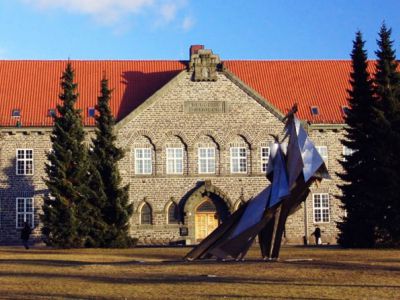
Bergen Public Library (BPL) in Bergen serves as a cornerstone of cultural and historical preservation and access in the region. Established in 1872, BPL is Norway’s second-largest public library, continuing a legacy of literacy that dates back to the Middle Ages. Historically, Bergen was a central hub of literacy with most books held in monasteries and churches. A notable early collection was housed in Saint Mary's Church.
The foundations for the library were laid in 1766 when the vicar of Saint Mary's Church donated part of the church's book collection and some funds towards establishing a public library. This institution would eventually evolve into the BPL. The church's entire collection was formally transferred to the library in 1876 and remained there until it was moved to the University Library of Bergen nearly a century later.
The library’s holdings were significantly enhanced in 1871 with the acquisition of another 12,000 volumes from Paul Botten-Hansen, the university librarian at that time. The initial site of the library, a former brewery, soon became inadequate due to the expanding collection, prompting a move to a former meat market.
The early 20th century underscored the need for a purpose-built facility to house the growing library. This need was met when Olaf Nordhagen won an architectural competition in 1906 to design a new building. His neo-Romanesque design was realized in 1917, providing a modern and spacious home for the library's extensive collections.
Today, the Bergen Public Library not only continues to function from this historical building, which is now a protected property, but it has also expanded its reach with six district branches throughout the city, serving as a vital educational and cultural resource for the community.
The foundations for the library were laid in 1766 when the vicar of Saint Mary's Church donated part of the church's book collection and some funds towards establishing a public library. This institution would eventually evolve into the BPL. The church's entire collection was formally transferred to the library in 1876 and remained there until it was moved to the University Library of Bergen nearly a century later.
The library’s holdings were significantly enhanced in 1871 with the acquisition of another 12,000 volumes from Paul Botten-Hansen, the university librarian at that time. The initial site of the library, a former brewery, soon became inadequate due to the expanding collection, prompting a move to a former meat market.
The early 20th century underscored the need for a purpose-built facility to house the growing library. This need was met when Olaf Nordhagen won an architectural competition in 1906 to design a new building. His neo-Romanesque design was realized in 1917, providing a modern and spacious home for the library's extensive collections.
Today, the Bergen Public Library not only continues to function from this historical building, which is now a protected property, but it has also expanded its reach with six district branches throughout the city, serving as a vital educational and cultural resource for the community.
2) Nonneseter Abbey
Nonneseter Abbey, located in Bergen, boasts a rich history that traces back to its first recorded mention in 1262, although its foundation likely occurred around 1150. Initially dedicated to the Virgin Mary, the abbey's nuns were part of the Cistercian Order. The abbey also hosted a hospital from as early as 1411, believed to be a precursor to the Saint George's Lepers' Hospital.
However, the abbey's narrative took a dramatic turn in 1507 when the nuns were expelled due to allegations of immoral behavior. Subsequently, the buildings were handed over to the Hospital Brothers of Saint Anthony. The monastery was secularized in 1528, with the property transformed into a private fortified residence known as Lungegården by Vincens Lunge.
Tragically, most of the original structures were destroyed in a fire in 1891, leaving only minimal remnants of the abbey's former architectural splendor. What survived includes the base of the abbey church's west tower and the Nonneseter Chapel, which were secured by the Society for the Preservation of Ancient Norwegian Monuments post-fire.
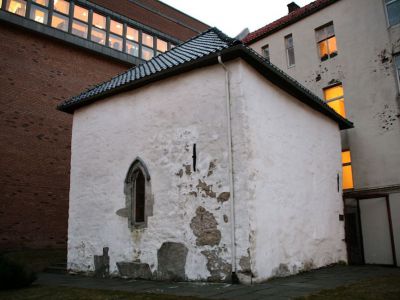
The remaining west tower base, known as Tårnfoten, is located near Bergen's public library and features a portal with a round arch in the west wall and another in the east wall, suggesting its original connection to the church. This tower, now clad in dressed stone, serves as a memorial chapel to those who fell during World War II. Its Romanesque style indicates it may predate the Cistercians, suggesting a possible older structure at the site.
Adjacent to Tårnfoten was the abbey church, originally small and expanded in the late 13th century with new choir and choir chapels. Only the Nonneseter Chapel remains from this expansion. Situated at Kaigaten 3, this chapel is distinguished by its Gothic arched windows and vaulted ceiling, indicative of its 1250 construction date. Historically a church for the deaf from 1951 to 1989, it is currently utilized as a concert hall among other functions.
However, the abbey's narrative took a dramatic turn in 1507 when the nuns were expelled due to allegations of immoral behavior. Subsequently, the buildings were handed over to the Hospital Brothers of Saint Anthony. The monastery was secularized in 1528, with the property transformed into a private fortified residence known as Lungegården by Vincens Lunge.
Tragically, most of the original structures were destroyed in a fire in 1891, leaving only minimal remnants of the abbey's former architectural splendor. What survived includes the base of the abbey church's west tower and the Nonneseter Chapel, which were secured by the Society for the Preservation of Ancient Norwegian Monuments post-fire.
The remaining west tower base, known as Tårnfoten, is located near Bergen's public library and features a portal with a round arch in the west wall and another in the east wall, suggesting its original connection to the church. This tower, now clad in dressed stone, serves as a memorial chapel to those who fell during World War II. Its Romanesque style indicates it may predate the Cistercians, suggesting a possible older structure at the site.
Adjacent to Tårnfoten was the abbey church, originally small and expanded in the late 13th century with new choir and choir chapels. Only the Nonneseter Chapel remains from this expansion. Situated at Kaigaten 3, this chapel is distinguished by its Gothic arched windows and vaulted ceiling, indicative of its 1250 construction date. Historically a church for the deaf from 1951 to 1989, it is currently utilized as a concert hall among other functions.
3) Bergen Railway Station
Bergen Railway Station, strategically positioned in the heart of Bergen, is a pivotal and historic transport hub that serves as the terminus for one of the world's most picturesque train journeys from Oslo. This station is not just a bustling gateway into the city but also an architectural marvel that entices both travelers and architecture enthusiasts alike.
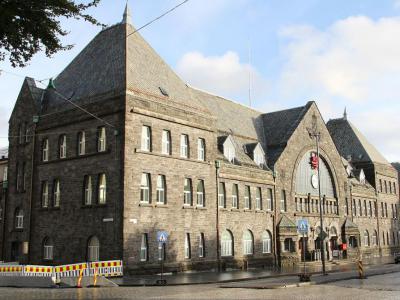
Opened in 1913, four years after the completion of the Oslo-Bergen rail link, Bergen Railway Station replaced an older station to the west and marked a significant enhancement in the city's transport infrastructure. The station was designed by Jens Zetlitz Monrad Kielland, a prominent Norwegian architect renowned for his contributions to the National Romantic movement. This architectural style is a blend of the medieval influences and the modernist Jugendstil (Art Nouveau) that was prevalent in Northern Europe during that era. The station's design reflects these influences, combining robust, medieval-style heavy stonework with the more elegant and organic forms of Art Nouveau.
The station's main hall is particularly striking, where the solid stone structures are beautifully contrasted with an elegant roof and expansive glass windows. These features not only create a visually impressive space but also highlight the station’s most cherished view-the surrounding mountain landscape.
In its early years, Bergen Railway Station also became a notable HoReCa (Hotel, Restaurant, Café) destination. By the 1920s and 1930s, the area around the station had developed significantly; the Hotel Terminus was established in 1922, and a restaurant opened within the station in 1937, enhancing its role as a social and cultural meeting point.
Recognizing its historical and architectural value, the station building has been protected since 2003, ensuring that no significant alterations compromise its original design and heritage. This protection helps preserve the station not only as a functional transport hub but also as a historical monument that embodies the architectural and cultural spirit of early 20th-century Norway.
Opened in 1913, four years after the completion of the Oslo-Bergen rail link, Bergen Railway Station replaced an older station to the west and marked a significant enhancement in the city's transport infrastructure. The station was designed by Jens Zetlitz Monrad Kielland, a prominent Norwegian architect renowned for his contributions to the National Romantic movement. This architectural style is a blend of the medieval influences and the modernist Jugendstil (Art Nouveau) that was prevalent in Northern Europe during that era. The station's design reflects these influences, combining robust, medieval-style heavy stonework with the more elegant and organic forms of Art Nouveau.
The station's main hall is particularly striking, where the solid stone structures are beautifully contrasted with an elegant roof and expansive glass windows. These features not only create a visually impressive space but also highlight the station’s most cherished view-the surrounding mountain landscape.
In its early years, Bergen Railway Station also became a notable HoReCa (Hotel, Restaurant, Café) destination. By the 1920s and 1930s, the area around the station had developed significantly; the Hotel Terminus was established in 1922, and a restaurant opened within the station in 1937, enhancing its role as a social and cultural meeting point.
Recognizing its historical and architectural value, the station building has been protected since 2003, ensuring that no significant alterations compromise its original design and heritage. This protection helps preserve the station not only as a functional transport hub but also as a historical monument that embodies the architectural and cultural spirit of early 20th-century Norway.
4) Kong Oscars Gate (King Oscars Street)
Named in honor of Oscar I, King of Norway and Sweden, in 1857. Prior to that date this street had a host of other names. It has been "shoemaker street", "tailor street", "hospital street", "Saint Jacobs street", "Potrgaden", and "Domkirkegaden."
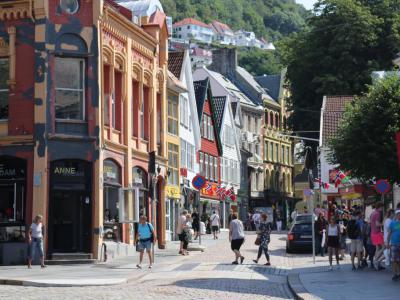
The street is narrower than most others in Bergen. At the south-eastern end is the old city gate of Bergen. A number of significant buildings line the street. At No. 67 King Oscars Street is Zander Kaae's Foundation, built in the 18th century for a charity and now it rents rooms to students.
Saint Jorgen's Hospital was an 18th century leprosy hospital and now it is a leprosy museum. This is a sign that leprosy is down, an improvement, count your blessings. Next to the museum is Danekert Krohn's Foundation, another 18th century charity, this one for the elderly.
The street has its share of schools. There is Bergen katedralskole (cathedral school), one of three secondary schools on King Oscar Street. There are also Danielsen videregaende skole, and Tanks videregaende skole.
At the intersection of Lille Ovregate and Domkirkeplassen is Bergen Cathedral, a medieval church. Not far away is Holy Cross Church, also a medieval church.
A visit to King Oscars Street reveals a side of Bergen, hidden from ordinary sight. It is like a secret place, away from the chain shops and popular hang-outs. There are plenty shops and restaurants but they all have a personal style and charm that comes with the street.
The street is narrower than most others in Bergen. At the south-eastern end is the old city gate of Bergen. A number of significant buildings line the street. At No. 67 King Oscars Street is Zander Kaae's Foundation, built in the 18th century for a charity and now it rents rooms to students.
Saint Jorgen's Hospital was an 18th century leprosy hospital and now it is a leprosy museum. This is a sign that leprosy is down, an improvement, count your blessings. Next to the museum is Danekert Krohn's Foundation, another 18th century charity, this one for the elderly.
The street has its share of schools. There is Bergen katedralskole (cathedral school), one of three secondary schools on King Oscar Street. There are also Danielsen videregaende skole, and Tanks videregaende skole.
At the intersection of Lille Ovregate and Domkirkeplassen is Bergen Cathedral, a medieval church. Not far away is Holy Cross Church, also a medieval church.
A visit to King Oscars Street reveals a side of Bergen, hidden from ordinary sight. It is like a secret place, away from the chain shops and popular hang-outs. There are plenty shops and restaurants but they all have a personal style and charm that comes with the street.
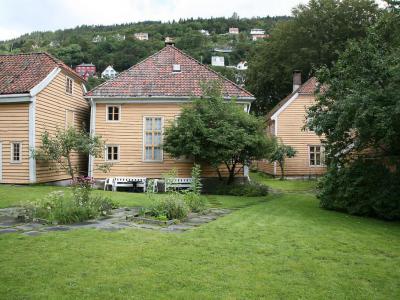
5) Museum Lepramuseet St. Jørgens Hospital (Leprosy Museum)
The Leprosy Museum in Bergen offers a profound historical insight into the treatment and study of leprosy, particularly during the significant advancements of the 19th century. Situated in the central Marken area of Bergen and managed by the City Museum, this institution stands out as one of the few remaining leprosy hospitals in Northern Europe, preserved as a hospital environment from the 18th century.
The museum is dedicated to Saint Jørgen, the protector of lepers, reflecting its deep cultural and historical significance. It became a pivotal site for leprosy research when Dr. Daniel Cornelius Danielssen took charge in 1849, fostering groundbreaking scientific developments. The most notable of these was the discovery of the leprosy bacillus by Gerhard Henrik Armauer Hansen in 1873, marking a significant breakthrough in medical research of the time. This discovery was instrumental in shaping the future of leprosy treatment and research globally.
Today, the Leprosy Museum not only showcases the history of the disease in Norway but also highlights the daily life of the hospital's inhabitants and the broader impact of Norwegian scientific contributions to leprosy research. Moreover, it houses part of the Leprosy Archives in Bergen, which have been recognized internationally, being included in UNESCO’s Memory of the World program.
In recent years, the museum has gained notable attention, receiving nominations for several national and international awards. This recognition underscores the museum's importance as both a historical and educational resource, offering visitors a unique perspective on a part of medical history that has had lasting global implications.
The museum is dedicated to Saint Jørgen, the protector of lepers, reflecting its deep cultural and historical significance. It became a pivotal site for leprosy research when Dr. Daniel Cornelius Danielssen took charge in 1849, fostering groundbreaking scientific developments. The most notable of these was the discovery of the leprosy bacillus by Gerhard Henrik Armauer Hansen in 1873, marking a significant breakthrough in medical research of the time. This discovery was instrumental in shaping the future of leprosy treatment and research globally.
Today, the Leprosy Museum not only showcases the history of the disease in Norway but also highlights the daily life of the hospital's inhabitants and the broader impact of Norwegian scientific contributions to leprosy research. Moreover, it houses part of the Leprosy Archives in Bergen, which have been recognized internationally, being included in UNESCO’s Memory of the World program.
In recent years, the museum has gained notable attention, receiving nominations for several national and international awards. This recognition underscores the museum's importance as both a historical and educational resource, offering visitors a unique perspective on a part of medical history that has had lasting global implications.
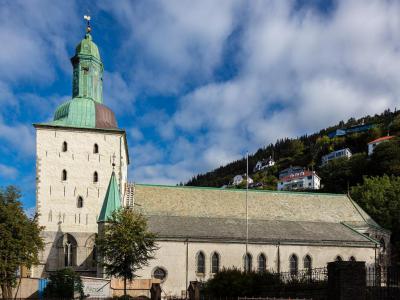
6) Bergen Cathedral
Since 12th century, Bergen Cathedral has been through the fire. Through the fire several times in fact, more than most, in a city famous for devastating fires. And to top it all off it has been hit by a cannon ball, which sticks in the wall to this day. Fires and wars, but there is peace and beauty inside.
Bergen Cathedral is episcopal seat of home parish of the Church of Norway. Word of the church appears for the first time in 1181. To this day it remains dedicated to Saint Olaf.
In 1181, Jon Kutiza, a peasant rebel and his men chased a number of King Sverre's men into the cathedral (then known as Olavskirken). Under the reign of King Haakon IV, Franciscans built a friary connecting to the church. The church had a long design in a Romanesque style. It burned down in 1248.
A new stone church was erected and that caught fire in 1270. The church wasn't fully reconstructed until 1537, when it was designated the new cathedral of the Protestant persuasion. In 1702 there was another fire and another reconstruction. By the 1880s the Cathedral's interior was restored to its original Rococo appearance.
In the second English-Dutch war, in the sea battle of Vagen in 1665, the cathedral sustained a hit from a cannon shot gone wild. The ball sits today, ensconced in the front wall.
The cathedral today is used mainly for musical events.
Bergen Cathedral is episcopal seat of home parish of the Church of Norway. Word of the church appears for the first time in 1181. To this day it remains dedicated to Saint Olaf.
In 1181, Jon Kutiza, a peasant rebel and his men chased a number of King Sverre's men into the cathedral (then known as Olavskirken). Under the reign of King Haakon IV, Franciscans built a friary connecting to the church. The church had a long design in a Romanesque style. It burned down in 1248.
A new stone church was erected and that caught fire in 1270. The church wasn't fully reconstructed until 1537, when it was designated the new cathedral of the Protestant persuasion. In 1702 there was another fire and another reconstruction. By the 1880s the Cathedral's interior was restored to its original Rococo appearance.
In the second English-Dutch war, in the sea battle of Vagen in 1665, the cathedral sustained a hit from a cannon shot gone wild. The ball sits today, ensconced in the front wall.
The cathedral today is used mainly for musical events.
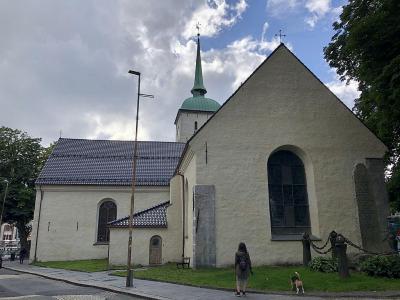
7) Korskirken (Holy Cross Church)
Holy Cross Church (Korskirken) in Bergen is a notable parish church located in the heart of Bergen city. The origins of the church trace back to around 1150 when it was first constructed in a straightforward rectangular plan. This church, built from stone in a cruciform design, was initially positioned on the shore of Vågen Bay, delineating the southern boundary of settlement in Bergen during the 12th century. The name "Holy Cross Church" derives from its possession of a relic from the True Cross, a distinction that few Norwegian churches held.
Throughout its history, Holy Cross Church has experienced several adversities, including multiple fires. The 1582 fire was particularly damaging, leading to the destruction of one of its two towers, which was never rebuilt. It wasn't until between 1615 and 1623 that the church acquired its cruciform shape through the addition of transepts.
Historically, the church has played an integral role in Norway's political evolution, notably serving as an election church in 1814. It was one of over 300 churches across Norway used as polling stations during the elections to the Norwegian Constituent Assembly, which drafted the Constitution of Norway.
Despite ceasing to function as a regular parish church in 2002, after the merging of several urban parishes into the Bergen Cathedral parish, Holy Cross Church transitioned to a new role. It was handed over to the Church City Mission (Kirkens Bymisjon) and now serves as a special church within the urban parish. This church is staffed daily and remains open to the public for various activities, including silent reflection, candle lighting, community engagement, and attendance at church services.
With seating for approximately 600 people, the church today stands as a testament to historical resilience and evolving community roles, continuing to be a beacon of faith and social service in central Bergen.
Throughout its history, Holy Cross Church has experienced several adversities, including multiple fires. The 1582 fire was particularly damaging, leading to the destruction of one of its two towers, which was never rebuilt. It wasn't until between 1615 and 1623 that the church acquired its cruciform shape through the addition of transepts.
Historically, the church has played an integral role in Norway's political evolution, notably serving as an election church in 1814. It was one of over 300 churches across Norway used as polling stations during the elections to the Norwegian Constituent Assembly, which drafted the Constitution of Norway.
Despite ceasing to function as a regular parish church in 2002, after the merging of several urban parishes into the Bergen Cathedral parish, Holy Cross Church transitioned to a new role. It was handed over to the Church City Mission (Kirkens Bymisjon) and now serves as a special church within the urban parish. This church is staffed daily and remains open to the public for various activities, including silent reflection, candle lighting, community engagement, and attendance at church services.
With seating for approximately 600 people, the church today stands as a testament to historical resilience and evolving community roles, continuing to be a beacon of faith and social service in central Bergen.
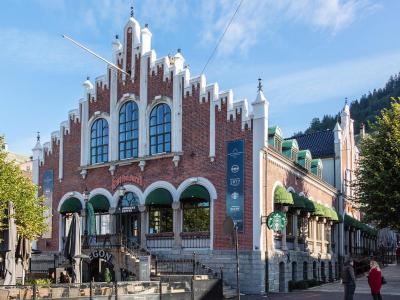
8) Kjottbasaren Market (Meat Bazaar)
The Meat Bazaar (Kjottbasaren), Bergen's historic meat market, is an architectural and cultural gem founded in 1872. Located on Vetrlidsallmenningen, this ornate gabled brick building with a crenelated roof stands as a testament to the city's rich history and vibrant market culture. Originally designed by architect Conrad Fredrik von der Lippe in a neo-Romanesque style, the market has served as a hub for local food trade for over a century.
The Meat Bazaar in Bergen originated in the late 18th century when butchers in Skuteviken set up "meat huts" on Kjødtorvet to keep the city center clean. These simple stalls were established around 1776, offering a designated space for meat trade away from homes. Eventually, in 1877, the Meat Bazaar was constructed, featuring 44 sales stalls and 27 cellar stalls, becoming a unique establishment in Norway.
Today, the Meat Bazaar is a bustling food emporium offering a diverse array of products. Shoppers can find chocolates, cheeses, meats, cakes, breads, and souvenirs amidst the charming stalls. The market, restored in 1990, retains its historical ambiance while accommodating contemporary needs. Visitors can shop and dine, with several restaurants on the first floor and additional stalls and shops above. Weather permitting, tables and chairs are set up outside the café/restaurant, providing a pleasant dining experience-though diners should be mindful of the wind direction to avoid the fishy smells wafting from the nearby Fish Market.
The Meat Bazaar not only serves as a marketplace but also as a cultural landmark that encapsulates Bergen's historical progression and architectural heritage. Its establishment marked a significant improvement in market regulation, hygiene, and trade practices, influencing the urban development of the city. The building's architectural style and subsequent renovations highlight the evolving needs and tastes of Bergen's populace over the years.
The Meat Bazaar in Bergen originated in the late 18th century when butchers in Skuteviken set up "meat huts" on Kjødtorvet to keep the city center clean. These simple stalls were established around 1776, offering a designated space for meat trade away from homes. Eventually, in 1877, the Meat Bazaar was constructed, featuring 44 sales stalls and 27 cellar stalls, becoming a unique establishment in Norway.
Today, the Meat Bazaar is a bustling food emporium offering a diverse array of products. Shoppers can find chocolates, cheeses, meats, cakes, breads, and souvenirs amidst the charming stalls. The market, restored in 1990, retains its historical ambiance while accommodating contemporary needs. Visitors can shop and dine, with several restaurants on the first floor and additional stalls and shops above. Weather permitting, tables and chairs are set up outside the café/restaurant, providing a pleasant dining experience-though diners should be mindful of the wind direction to avoid the fishy smells wafting from the nearby Fish Market.
The Meat Bazaar not only serves as a marketplace but also as a cultural landmark that encapsulates Bergen's historical progression and architectural heritage. Its establishment marked a significant improvement in market regulation, hygiene, and trade practices, influencing the urban development of the city. The building's architectural style and subsequent renovations highlight the evolving needs and tastes of Bergen's populace over the years.
9) Hanseatic Museum (must see)
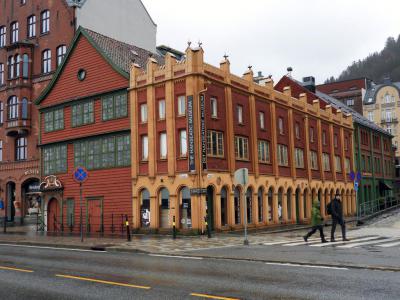
In the 14th century the Hanseatic League reached Norway, They sailed to Bergen to open up a trade in grain for stockfish. Bergen soon became one of Northern Europe's trading centers. The Hanseatic Museum today belongs on UNESCO's World Heritage List.
The museum gives us a picture of how the Hanseatic merchant lived and influenced life in the Wharf. Walk through Bryggen today in the narrow alleyways and travel through time. See the men speaking Plattdeutsch and pushing barrels of stockfish to the quay. A group of 62 buildings from the Hanseatic era has been preserved.
The Hanseatic Assembly Rooms were originally single houses behind each Building on the wharf. The houses have names. Jakobsfjorden and Bellgaarden cover the period before 1702. Svensgaarden is from 1708. A third room, Bredsgaarden is from 1709 but it was rebuilt in 1761.
Hanseatic Assembly Rooms were part of the tenements. They were assembly rooms for company personnel in the winter. Only the assembly rooms were heated. Fire was forbidden in all other houses. Bergen was Fires-R-Us for centuries. An assembly room was a classroom for apprentices, church services, and funerals. Even punishments were meted out here.
The Hanseatic Assembly Rooms are next to the Hanseatic merchants' church, Saint Mary's Church.
The museum gives us a picture of how the Hanseatic merchant lived and influenced life in the Wharf. Walk through Bryggen today in the narrow alleyways and travel through time. See the men speaking Plattdeutsch and pushing barrels of stockfish to the quay. A group of 62 buildings from the Hanseatic era has been preserved.
The Hanseatic Assembly Rooms were originally single houses behind each Building on the wharf. The houses have names. Jakobsfjorden and Bellgaarden cover the period before 1702. Svensgaarden is from 1708. A third room, Bredsgaarden is from 1709 but it was rebuilt in 1761.
Hanseatic Assembly Rooms were part of the tenements. They were assembly rooms for company personnel in the winter. Only the assembly rooms were heated. Fire was forbidden in all other houses. Bergen was Fires-R-Us for centuries. An assembly room was a classroom for apprentices, church services, and funerals. Even punishments were meted out here.
The Hanseatic Assembly Rooms are next to the Hanseatic merchants' church, Saint Mary's Church.
10) Bryggen (The Wharf) (must see)
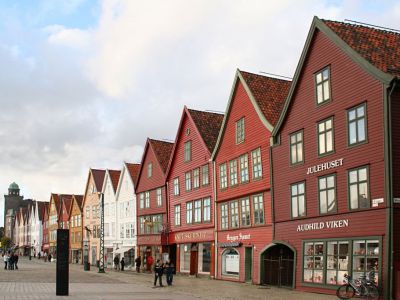
The Bryggen area originally covered all buildings between the sea and the Ovregaten road. The earliest pier is dated to about 1100 AD. The city of Bergen itself dates from before 1070. The existing buildings of Bryggen date no earlier than 1702. This is not surprising in a city so well acquainted with disastrous fires.
The Hanseatic League established itself in Bergen in 1350. They traded mostly cereal grains for stockfish. The town grew into an important center for international trade, and the buildings of Bryggen near the waterfront were, piece by piece, brought under the control of the Hanseatic merchants. The stockfish and the grains had found a home.
From 1702 until 1754 the Hanseatic league buildings were on fire, rebuilt, on fire, demolished, and on fire again. Finally the Hanseatic businesses in Bergen ended and the property at Bryggen was transferred to Norwegian citizens.
Bryggen suffered a fire again in 1955. In an archeological dig that followed, 670 ancient runic inscriptions were discovered carved mostly on pine chips or sticks. For a long time runes were thought to be used only for grave pronouncements or prayers.
These runes however, were concerned with more mundane day-to-day business. Such as: "Ast min, kyss mik." "My darling, kiss me." It is not known if the wish was granted. The inscriptions are at present held in Bryggens Museum in Bergen.
Hiding behind the classic Bryggen facades is a little world of alleyways, shops, galleries and studios. Local artists and designers have taken over the storage spaces for stockfish and grain. The rooms hold art, designs, jewelry, books and, wait for it, a cafe. Artists and designers are hiding in the narrow passeges among the houses.
The local artists want people to think of Bryggen not as some kind of museum where nothing happens, but a living thriving space for art.
Buildings at Bryggen that should be mentioned are Bellgarden (300 years old), Svensgarden, Ehnjorningsgarden, Bredsgarden, Bugarden, and Engelgarden. The tallest and oldest structure is Saint Mary's Church. Museums are Bryggen's Museum and Hanseatic Museum and Hanseatic Assembly Rooms.
Why You Should Visit:
To get a feeling of the Hanseatic influence on the city.
The Hanseatic League established itself in Bergen in 1350. They traded mostly cereal grains for stockfish. The town grew into an important center for international trade, and the buildings of Bryggen near the waterfront were, piece by piece, brought under the control of the Hanseatic merchants. The stockfish and the grains had found a home.
From 1702 until 1754 the Hanseatic league buildings were on fire, rebuilt, on fire, demolished, and on fire again. Finally the Hanseatic businesses in Bergen ended and the property at Bryggen was transferred to Norwegian citizens.
Bryggen suffered a fire again in 1955. In an archeological dig that followed, 670 ancient runic inscriptions were discovered carved mostly on pine chips or sticks. For a long time runes were thought to be used only for grave pronouncements or prayers.
These runes however, were concerned with more mundane day-to-day business. Such as: "Ast min, kyss mik." "My darling, kiss me." It is not known if the wish was granted. The inscriptions are at present held in Bryggens Museum in Bergen.
Hiding behind the classic Bryggen facades is a little world of alleyways, shops, galleries and studios. Local artists and designers have taken over the storage spaces for stockfish and grain. The rooms hold art, designs, jewelry, books and, wait for it, a cafe. Artists and designers are hiding in the narrow passeges among the houses.
The local artists want people to think of Bryggen not as some kind of museum where nothing happens, but a living thriving space for art.
Buildings at Bryggen that should be mentioned are Bellgarden (300 years old), Svensgarden, Ehnjorningsgarden, Bredsgarden, Bugarden, and Engelgarden. The tallest and oldest structure is Saint Mary's Church. Museums are Bryggen's Museum and Hanseatic Museum and Hanseatic Assembly Rooms.
Why You Should Visit:
To get a feeling of the Hanseatic influence on the city.
11) St. Mary's Church
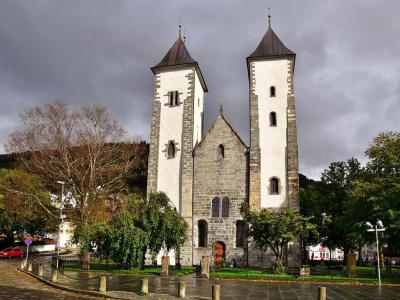
Saint Mary's church is a "long" style church of grey stone built around 1135. The architect is unknown but he would have been pleased to know his structure has withstood time and fortune so well. The church is used today and it seats about 240 people. It is definitely the oldest building in the City of Bergen.
Saint Mary's is only survivor of the 12 churches and three monasteries that were built during the ring of Olav Kyrre (1066-1093). The church was probably built by craftsmen from Scania, in Denmark. The sryle of the church resembles that of Lund Cathedral in Scania.
The church was intended for the Norwegian people of Bergen, but it was taken over by the German population the town in 1408. It was locally named the "German" church and it served mainly the rich Hanseatic merchants. While it belonged to the Germans, Saint Mary's prospered and did not fall into ruin like several other churches of Bergen.
In January 2010 major restoration work was undertaken. When finished the Church became associated with the Bergen Anglican denomination and began offering services in English.
The church has two towers and three naves and is mostly Romanesque in style. The choir is a bit Gothic like Haakon's Hall. The main building material is three grades of soapstone and some shale. The soapstone was likely quarried locally.
Saint Mary's is only survivor of the 12 churches and three monasteries that were built during the ring of Olav Kyrre (1066-1093). The church was probably built by craftsmen from Scania, in Denmark. The sryle of the church resembles that of Lund Cathedral in Scania.
The church was intended for the Norwegian people of Bergen, but it was taken over by the German population the town in 1408. It was locally named the "German" church and it served mainly the rich Hanseatic merchants. While it belonged to the Germans, Saint Mary's prospered and did not fall into ruin like several other churches of Bergen.
In January 2010 major restoration work was undertaken. When finished the Church became associated with the Bergen Anglican denomination and began offering services in English.
The church has two towers and three naves and is mostly Romanesque in style. The choir is a bit Gothic like Haakon's Hall. The main building material is three grades of soapstone and some shale. The soapstone was likely quarried locally.
12) Bryggens Museum
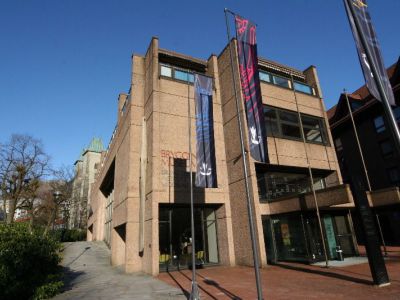
Bryggens Museum, situated in the historic heart of Bergen, serves as a cultural and historical repository dedicated to medieval Bergen and Western Norway. The museum was established in 1976 in response to a significant archaeological discovery following a devastating fire in 1955 that destroyed parts of Bryggen, the city's historic district. This event sparked extensive archaeological excavations that lasted for 13 years, unearthing hundreds of thousands of artifacts that provided unprecedented insights into medieval commerce, shipping, handicrafts, and daily life.
The museum is designed by architect Øivind Maurseth, who is also known for his work on the nearby Radisson SAS Hotel. Asbjørn Herteig, a notable archaeologist, was the museum's first curator and a key figure in its establishment. Since 2005, Bryggens Museum has been a part of the Bergen City Museum network.
Bryggens Museum's main exhibit, "Under Ground," showcases thousands of artifacts from Bryggen excavations, coupled with modern research. It provides insight into medieval life with runic inscriptions sharing personal stories and social dynamics. The exhibit also features ceramics from Europe and the Middle East, showcasing Bergen's global trade connections. Highlighting the collection is the Guddal garment, a rare intact piece of Norwegian medieval clothing dating back nearly a thousand years.
Moreover, the museum is built over the foundations of Bergen's oldest buildings from the first half of the 1100s, making these architectural remains a vital part of the permanent exhibition. This setup provides visitors with a tangible connection to life in medieval Bergen.
Bryggens Museum not only chronicles the history but also plays a crucial role in the preservation of Bryggen. After the 1955 fire, there was considerable debate over the future of the remaining wooden buildings with many locals initially favoring demolition. However, the revelations from the excavations shifted public opinion, leading to the preservation of Bryggen, which is now recognized as a UNESCO World Heritage site.
The museum is designed by architect Øivind Maurseth, who is also known for his work on the nearby Radisson SAS Hotel. Asbjørn Herteig, a notable archaeologist, was the museum's first curator and a key figure in its establishment. Since 2005, Bryggens Museum has been a part of the Bergen City Museum network.
Bryggens Museum's main exhibit, "Under Ground," showcases thousands of artifacts from Bryggen excavations, coupled with modern research. It provides insight into medieval life with runic inscriptions sharing personal stories and social dynamics. The exhibit also features ceramics from Europe and the Middle East, showcasing Bergen's global trade connections. Highlighting the collection is the Guddal garment, a rare intact piece of Norwegian medieval clothing dating back nearly a thousand years.
Moreover, the museum is built over the foundations of Bergen's oldest buildings from the first half of the 1100s, making these architectural remains a vital part of the permanent exhibition. This setup provides visitors with a tangible connection to life in medieval Bergen.
Bryggens Museum not only chronicles the history but also plays a crucial role in the preservation of Bryggen. After the 1955 fire, there was considerable debate over the future of the remaining wooden buildings with many locals initially favoring demolition. However, the revelations from the excavations shifted public opinion, leading to the preservation of Bryggen, which is now recognized as a UNESCO World Heritage site.
13) Bergenhus Fortress and Rosenkrantz Tower (must see)
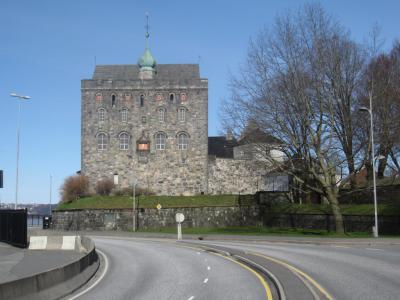
The tower and the Fortress must be thought of as one establishment. The Fortress has been a royal seat and residence, episcopal see and a military power base. The grounds within the walls of the island fortress are Holmen, Koengen and Sverresborg. The Fortress was built in the early 1500s. It was considered complete in 1700.
The Fortress was under siege only once during the second Dutch-English War. In August, 1665, a squadron of Dutch vessels took shelter in neutral Bergen Harbor. The neutrality was not respected. The English warships fired on the Dutch ships and the Fortress. Fire was returned. The battle was a short one. It came to be known as The Battle of Vagen.
The English were attacking vessels of the Dutch East India Company. The attack failed. No ships were sunk. In the Second World War Bergenhus was once again in service. This time however it was a German occupying force that used the fort as their western headquarters.
Begenhus has been a military facility without interruption since 1628. Presently 220 military and civilian personnel are stationed at the fort.
The Rosenkrantz Tower is the dominant building of the fort complex. It was named for governor Erik Rosenkrantz. The tower got its present form during Rosenkrantz's reign, 1559-1568. There is a yet older part of the tower. It is a medieval tower called the "keep by the Sea." It was built by King Magnus the Lawmaker in 1270.
Rosenkrantz's building held dungeons on the first floor and cannons on the roof. With residential rooms in between it must have been insufferably loud in a battle. Not a good place for meditation.
The other medieval structure to remain is Haakon's Hall, built about 1270. It was incorporated in Rosenkrantz's Tower. Several Churches, including Bergen's Christ Church were included in the premises. The churches were demolished by 1531 and the isle of Holmen became strictly military.
The Fortress was under siege only once during the second Dutch-English War. In August, 1665, a squadron of Dutch vessels took shelter in neutral Bergen Harbor. The neutrality was not respected. The English warships fired on the Dutch ships and the Fortress. Fire was returned. The battle was a short one. It came to be known as The Battle of Vagen.
The English were attacking vessels of the Dutch East India Company. The attack failed. No ships were sunk. In the Second World War Bergenhus was once again in service. This time however it was a German occupying force that used the fort as their western headquarters.
Begenhus has been a military facility without interruption since 1628. Presently 220 military and civilian personnel are stationed at the fort.
The Rosenkrantz Tower is the dominant building of the fort complex. It was named for governor Erik Rosenkrantz. The tower got its present form during Rosenkrantz's reign, 1559-1568. There is a yet older part of the tower. It is a medieval tower called the "keep by the Sea." It was built by King Magnus the Lawmaker in 1270.
Rosenkrantz's building held dungeons on the first floor and cannons on the roof. With residential rooms in between it must have been insufferably loud in a battle. Not a good place for meditation.
The other medieval structure to remain is Haakon's Hall, built about 1270. It was incorporated in Rosenkrantz's Tower. Several Churches, including Bergen's Christ Church were included in the premises. The churches were demolished by 1531 and the isle of Holmen became strictly military.
14) Haakon's Hall
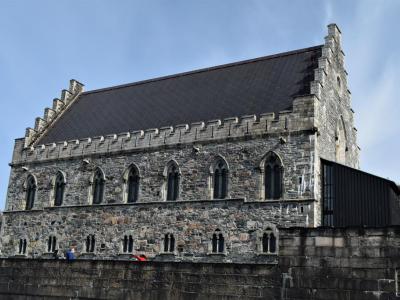
Haakon's Hall, located within the Bergenhus Fortress in Bergen, is a medieval stone hall built in the mid-13th century during the reign of King Håkon Håkonsson (1217-1263). As the largest secular medieval building in Norway, it stands as a significant monument of Gothic architecture. Constructed to replace earlier wooden structures, the hall showcases the influence of English design, likely due to the friendly relations between King Håkon and King Henry III of England, and possibly designed by English architects.
The hall, built between 1247 and 1261, served as a royal residence and feasting hall. It played a central role in major national events, such as the marriage of King Håkon's son, Magnus Håkonsson Lagabøte, to the Danish princess Ingeborg in 1261, an event which hosted 2000 guests across three buildings. During medieval times, Bergen was the largest and most important city in Norway, and Haakon's Hall was the venue for significant state affairs, including the proclamation of Norway's first complete set of laws.
Haakon's Hall comprises three floors: a large festive room on the top floor, a middle floor originally used for administration and the King's council, and a cellar likely used for storage. Despite its initial prominence, the hall's role diminished after the royal family left Norway in the late Middle Ages. It then served various utilitarian purposes, including as a storeroom and an ammunition depot, and even lost its roof at one point.
In 1916, Haakon's Hall underwent its first restoration and interior decoration. However, in 1944, it was heavily damaged by an explosion from the Dutch ammunition ship Voorbode in Bergen harbor. The hall was left with only its walls standing and underwent significant restoration in the 1950s to achieve its current form.
Today, Haakon's Hall is a cultural heritage site and museum. It continues to be used for royal dinners, official occasions, and concerts, preserving its historical significance and continuing its legacy as a centerpiece of Norwegian medieval architecture and history.
The hall, built between 1247 and 1261, served as a royal residence and feasting hall. It played a central role in major national events, such as the marriage of King Håkon's son, Magnus Håkonsson Lagabøte, to the Danish princess Ingeborg in 1261, an event which hosted 2000 guests across three buildings. During medieval times, Bergen was the largest and most important city in Norway, and Haakon's Hall was the venue for significant state affairs, including the proclamation of Norway's first complete set of laws.
Haakon's Hall comprises three floors: a large festive room on the top floor, a middle floor originally used for administration and the King's council, and a cellar likely used for storage. Despite its initial prominence, the hall's role diminished after the royal family left Norway in the late Middle Ages. It then served various utilitarian purposes, including as a storeroom and an ammunition depot, and even lost its roof at one point.
In 1916, Haakon's Hall underwent its first restoration and interior decoration. However, in 1944, it was heavily damaged by an explosion from the Dutch ammunition ship Voorbode in Bergen harbor. The hall was left with only its walls standing and underwent significant restoration in the 1950s to achieve its current form.
Today, Haakon's Hall is a cultural heritage site and museum. It continues to be used for royal dinners, official occasions, and concerts, preserving its historical significance and continuing its legacy as a centerpiece of Norwegian medieval architecture and history.
