Custom Walk in Edinburgh, Scotland by dfaasse_8288ad created on 2026-06-23
Guide Location: Scotland » Edinburgh
Guide Type: Custom Walk
# of Sights: 16
Tour Duration: 3 Hour(s)
Travel Distance: 6.1 Km or 3.8 Miles
Share Key: Q6CV6
Guide Type: Custom Walk
# of Sights: 16
Tour Duration: 3 Hour(s)
Travel Distance: 6.1 Km or 3.8 Miles
Share Key: Q6CV6
How It Works
Please retrieve this walk in the GPSmyCity app. Once done, the app will guide you from one tour stop to the next as if you had a personal tour guide. If you created the walk on this website or come to the page via a link, please follow the instructions below to retrieve the walk in the app.
Retrieve This Walk in App
Step 1. Download the app "GPSmyCity: Walks in 1K+ Cities" on Apple App Store or Google Play Store.



Step 2. In the GPSmyCity app, download(or launch) the guide "Edinburgh Map and Walking Tours".
Step 3. Tap the menu button located at upper right corner of the "Walks" screen and select "Retrieve custom walk". Enter the share key: Q6CV6
1) Charlotte Square
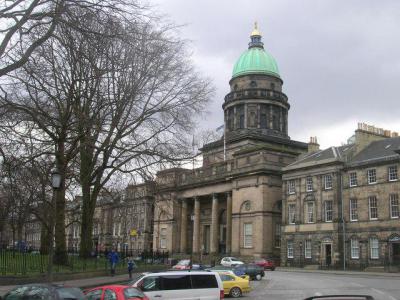
Marking the west end of George Street, Charlotte Square was constructed as a complement to St Andrew Square that is found on the opposite – east – end of the same street.
The square was named after King George III’s first daughter. Its construction began in 1820 and the last part of it, the north-west corner, was completed only in the 1990s, with the original plan duly adhered to, so there is nothing in its appearance suggesting a modern look.
The Number 5 house on the north side of the square is the former residence of John-Crichton-Stuart. Upon his death, the property was bequeathed to the National Trust of Scotland, and today it accommodates the Edinburgh World Heritage Trust headquarters.
Number 6, the Bute House, is also owned by the National Trust of Scotland and is the official home of the First Minister of Scotland. Number 7, the Georgian House, is the third National Trust of Scotland building in the square and is currently a house museum, open to the public.
In the square’s gardens there is a fine equestrian memorial statue of Prince Albert, Queen Victoria’s husband, erected by Sir John Steell. The gardens are open only to the local residents though, except in August, when for three weeks it hosts the Edinburgh International Book Festival.
The square was named after King George III’s first daughter. Its construction began in 1820 and the last part of it, the north-west corner, was completed only in the 1990s, with the original plan duly adhered to, so there is nothing in its appearance suggesting a modern look.
The Number 5 house on the north side of the square is the former residence of John-Crichton-Stuart. Upon his death, the property was bequeathed to the National Trust of Scotland, and today it accommodates the Edinburgh World Heritage Trust headquarters.
Number 6, the Bute House, is also owned by the National Trust of Scotland and is the official home of the First Minister of Scotland. Number 7, the Georgian House, is the third National Trust of Scotland building in the square and is currently a house museum, open to the public.
In the square’s gardens there is a fine equestrian memorial statue of Prince Albert, Queen Victoria’s husband, erected by Sir John Steell. The gardens are open only to the local residents though, except in August, when for three weeks it hosts the Edinburgh International Book Festival.
2) Princes Street Gardens (must see)
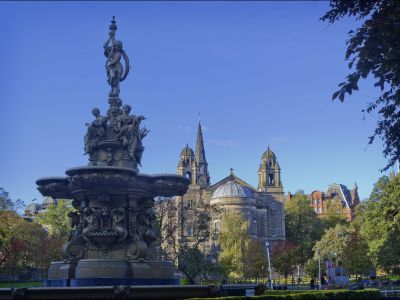
Between the volcanic drama of Edinburgh Castle and the shopping temptation of Princes Street, you'll stumble across a surprisingly serene stretch of green: Princes Street Gardens. Yes, in a city built on myth, mist, and medieval grit, here's your central patch of peace-complete with ducks, monuments, and the occasional bagpiper soundtrack.
Some 110,000 years ago, the area that is now the quiet garden was a glacial accident waiting to happen. As an ancient glacier oozed its way around the hulking basalt of Castle Rock, it carved out a natural dip-basically scooping out what would later become, and for thousands of years remained, a marshy, defensive moat at the foot of Castle Rock. Humans started settling here by the 9th century BC, presumably appreciating the defensive perks and the view.
Then, in 1460, King James III ordered the marsh to be flooded, turning it into Nor Loch-a grim, murky moat that made invading Edinburgh Castle even less appealing. Further ahead, in 1759, the loch was drained to make way for the New Town. Even today, this area still occasionally gets flooded.
When construction on the New Town kicked off, a handy solution for all that leftover dirt (some millions of tons of earth) was to dump it into the former loch. And thus the Mound, upon which many prestigious buildings stand today, was born. By 1820, the area was transformed into Princes Street Gardens: 8.5 acres to the east and 29 acres to the west, flanking The Mound like leafy bookends.
The gardens now come with a side of Scottish fame. The towering Scott Monument takes center stage, joined by statues of local legends like author John Wilson, Christian missionary David Livingstone, and poet Allan Ramsay. There’s a playground for kids, shade under grand trees, countless benches for people-watching, and even a café if you need caffeine with your contemplation.
In December, this peaceful patch gets seriously festive, with carnival rides, mulled wine, twinkling lights, Edinburgh’s main Christmas Market, and even an ice rink-because few things can contribute to a “holiday spirit” as greatly as skating under a Gothic spire!
Some 110,000 years ago, the area that is now the quiet garden was a glacial accident waiting to happen. As an ancient glacier oozed its way around the hulking basalt of Castle Rock, it carved out a natural dip-basically scooping out what would later become, and for thousands of years remained, a marshy, defensive moat at the foot of Castle Rock. Humans started settling here by the 9th century BC, presumably appreciating the defensive perks and the view.
Then, in 1460, King James III ordered the marsh to be flooded, turning it into Nor Loch-a grim, murky moat that made invading Edinburgh Castle even less appealing. Further ahead, in 1759, the loch was drained to make way for the New Town. Even today, this area still occasionally gets flooded.
When construction on the New Town kicked off, a handy solution for all that leftover dirt (some millions of tons of earth) was to dump it into the former loch. And thus the Mound, upon which many prestigious buildings stand today, was born. By 1820, the area was transformed into Princes Street Gardens: 8.5 acres to the east and 29 acres to the west, flanking The Mound like leafy bookends.
The gardens now come with a side of Scottish fame. The towering Scott Monument takes center stage, joined by statues of local legends like author John Wilson, Christian missionary David Livingstone, and poet Allan Ramsay. There’s a playground for kids, shade under grand trees, countless benches for people-watching, and even a café if you need caffeine with your contemplation.
In December, this peaceful patch gets seriously festive, with carnival rides, mulled wine, twinkling lights, Edinburgh’s main Christmas Market, and even an ice rink-because few things can contribute to a “holiday spirit” as greatly as skating under a Gothic spire!
3) St. Andrew Square
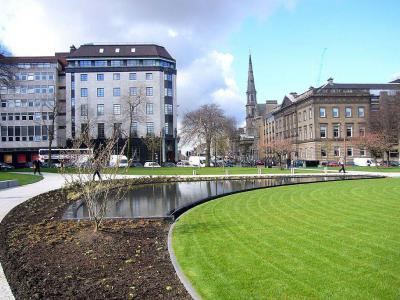
If you want to spend a little time out visiting Edinburgh’s marvellous houses and museums, but don’t feel up to a long walk, the best place to go is Saint Andrew Square. This square was constructed in 1772 as the first part of James Craig’s design for the New Town.
The lovely houses surrounding it were once homes of the city’s elite, and Dundas House, on the east side of the square, is a fine example of the 18th century architecture. There are also some up-market designer shops, restaurants and pubs to be found here. But the best part about this square is undoubtedly the gardens. Once open to the local residents only, they are now a favourite summer spot for tourists and those who work in the area.
In the middle of the lovely gardens you will find the Melville Monument. It was erected in 1823 in honour of the 1st Viscount of Melville, Henry Dundas, a politician who wielded so much power in his day that was dubbed the “uncrowned king of Scotland”. The monument was designed by great architect, William Burn, who modelled it on Trajan’s Column in Rome, but without intricate inscriptions.
On the south-west side of the gardens is a small pond with benches around it. The lawns are well-kept and there is an air of tranquillity about this place, even if cars and buses somewhat break the illusion of being in the countryside. The gardens have an excellent pavilion café that serves snacks, tea, coffee and soft drinks.
The lovely houses surrounding it were once homes of the city’s elite, and Dundas House, on the east side of the square, is a fine example of the 18th century architecture. There are also some up-market designer shops, restaurants and pubs to be found here. But the best part about this square is undoubtedly the gardens. Once open to the local residents only, they are now a favourite summer spot for tourists and those who work in the area.
In the middle of the lovely gardens you will find the Melville Monument. It was erected in 1823 in honour of the 1st Viscount of Melville, Henry Dundas, a politician who wielded so much power in his day that was dubbed the “uncrowned king of Scotland”. The monument was designed by great architect, William Burn, who modelled it on Trajan’s Column in Rome, but without intricate inscriptions.
On the south-west side of the gardens is a small pond with benches around it. The lawns are well-kept and there is an air of tranquillity about this place, even if cars and buses somewhat break the illusion of being in the countryside. The gardens have an excellent pavilion café that serves snacks, tea, coffee and soft drinks.
4) Calton Hill (must see)
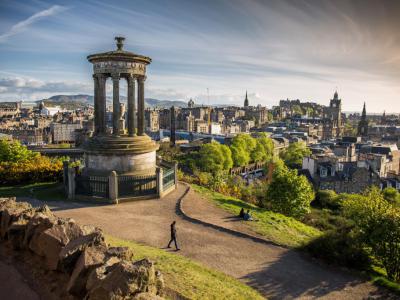
Calton Hill, located in the heart of Edinburgh, extends beyond the eastern terminus of Princes Street and is part of the city's UNESCO World Heritage Site. It is a popular subject for photography and art, both offering scenic vistas of the city and being featured in various depictions of it.
The Scottish Government has its headquarters on Calton Hill, specifically at Saint Andrew's House, situated on the steep southern slope of the hill. Nearby, at the base of the hill, you'll find significant landmarks like the Scottish Parliament Building and Holyrood Palace. Additionally, Calton Hill boasts several iconic monuments and structures, including the National Monument, the Nelson Monument, the Dugald Stewart Monument, the old Royal High School, the Robert Burns Monument, the Political Martyrs' Monument, and the City Observatory.
Calton Hill hosts various events throughout the year, with the most significant being the Beltane Fire Festival occurring annually on April 30th, drawing a crowd of over 12,000 attendees. Additionally, the Dussehra Hindu Festival is celebrated on Calton Hill at the beginning of October, and the Samhuinn Fire Festival takes place there at the end of October. Notably, Calton Hill has served as a filming location for movies like "Sunshine on Leith," where Davy and Yvonne perform "Misty Blue," "Death Defying Acts" featuring Houdini, and "Greyfriars Bobby," offering scenic views of the city.
The Scottish Government has its headquarters on Calton Hill, specifically at Saint Andrew's House, situated on the steep southern slope of the hill. Nearby, at the base of the hill, you'll find significant landmarks like the Scottish Parliament Building and Holyrood Palace. Additionally, Calton Hill boasts several iconic monuments and structures, including the National Monument, the Nelson Monument, the Dugald Stewart Monument, the old Royal High School, the Robert Burns Monument, the Political Martyrs' Monument, and the City Observatory.
Calton Hill hosts various events throughout the year, with the most significant being the Beltane Fire Festival occurring annually on April 30th, drawing a crowd of over 12,000 attendees. Additionally, the Dussehra Hindu Festival is celebrated on Calton Hill at the beginning of October, and the Samhuinn Fire Festival takes place there at the end of October. Notably, Calton Hill has served as a filming location for movies like "Sunshine on Leith," where Davy and Yvonne perform "Misty Blue," "Death Defying Acts" featuring Houdini, and "Greyfriars Bobby," offering scenic views of the city.
5) Holyrood Abbey
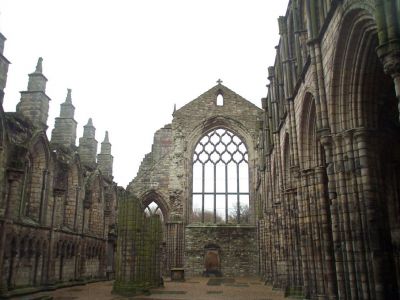
If you wander to the far end of Edinburgh’s Royal Mile, you’ll stumble upon the hauntingly beautiful remains of Holyrood Abbey-an epic blend of crumbled stone, royal drama, and deer-related miracles. Founded in 1128 by King David I, the abbey takes its name from an old Scottish term for the "Holy Cross" on which Jesus was crucified. Legend says that the king had a brush with death while hunting when a stag with a glowing crucifix between its antlers (or maybe just a particularly shiny sun reflection) charged him. Divine intervention or optical illusion, but the king took it as a holy sign and built an abbey right there in gratitude.
The original abbey evolved a lot over the years. Between 1195 and 1230, it went from simple sanctuary to Gothic grandeur. It played host to more than just monks, housing royal ceremonies, meetings of the Scottish Parliament, and even seeing the signing of the Treaty of Edinburgh-Northampton in 1328, which ended the First War of Scottish Independence. So yes, this abbey has receipts.
Charles I had the place spruced up in 1633 for his Scottish coronation, but things went downhill after 1688, when a post-Glorious-Revolution mob gave the building a not-so-glorious makeover, desecrating it. By 1768, the roof had given up entirely and collapsed, turning the abbey into the picturesque ruin it is today. Restoration plans have come and gone, but so far, Holyrood Abbey remains roofless and moody-just how romantics like it.
Right next door is the Palace of Holyroodhouse, and surrounding it all is Holyrood Park-home to Arthur’s Seat, scenic trails, and a recurring cast of joggers, photographers, and mildly confused tourists.
The original abbey evolved a lot over the years. Between 1195 and 1230, it went from simple sanctuary to Gothic grandeur. It played host to more than just monks, housing royal ceremonies, meetings of the Scottish Parliament, and even seeing the signing of the Treaty of Edinburgh-Northampton in 1328, which ended the First War of Scottish Independence. So yes, this abbey has receipts.
Charles I had the place spruced up in 1633 for his Scottish coronation, but things went downhill after 1688, when a post-Glorious-Revolution mob gave the building a not-so-glorious makeover, desecrating it. By 1768, the roof had given up entirely and collapsed, turning the abbey into the picturesque ruin it is today. Restoration plans have come and gone, but so far, Holyrood Abbey remains roofless and moody-just how romantics like it.
Right next door is the Palace of Holyroodhouse, and surrounding it all is Holyrood Park-home to Arthur’s Seat, scenic trails, and a recurring cast of joggers, photographers, and mildly confused tourists.
6) Holyroodhouse (must see)
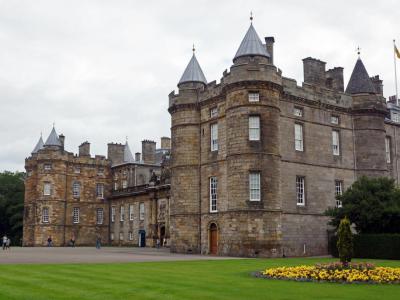
If you're ticking off Edinburgh landmarks, Holyroodhouse is one you can't skip-not unless you're on the run from the crown... Sitting at the royal end of the Royal Mile, this stately pad is the official Scottish residence of the British monarch and once housed none other than Mary, Queen of Scots. That’s right, drama lives here rent-free...
The whole saga begins with King David I, who founded the nearby Holyrood Abbey in 1128 (after a divine deer encounter, according to legend). A few centuries later, precisely by 1501, a palace was built beside the abbey. Now, calling it a “palace”, back then, was maybe a touch ambitious-a grand country house, more like it, rather than Versailles-but it did get bigger in 1532 and 1536. The property was thoroughly renovated in 1633, only to be trashed when Cromwell’s soldiers used it as barracks and then a fire added insult to injury...
Then came the 1670s, when Sir William Bruce, the architectural fixer of the day, rebuilt the place. The abbey chapel became the Chapel Royal, hosting pious activity until 1768, when the roof rather unceremoniously fell in. More restorations followed after that-first in 1822 for a royal visit, and then again in the 20th century when King George V and Queen Mary decided the palace could really use indoor plumbing. Royal flush, anyone?
When the royals are away, the house is open to the public. Inside, you can marvel at ceiling stucco so delicate it practically whispers, and gawk at an entire lineup of Scottish monarchs-some real, some as fictional as their hairlines-painted by the Dutch Golden Age artist Jacob de Wet. Then, dive into the Royal Collection, a five-century mix of armor, jewels, manuscripts, and silverware. Basically, it’s the attic of your dreams-if your attic had Rembrandts and 17th-century clocks.
Oh, and don’t wander off alone unless you're cool with ghosts. Legend has it that Agnes Sampson, accused of witchcraft and executed in 1592, still makes the occasional appearance here. So, if you feel a chill or hear something whispering about herbal remedies... maybe don’t investigate.
Palace, ghosts, ceilings, swords, and sovereign bling-are all here. Holyroodhouse doesn’t just bring the royal drama-it curates it.
The whole saga begins with King David I, who founded the nearby Holyrood Abbey in 1128 (after a divine deer encounter, according to legend). A few centuries later, precisely by 1501, a palace was built beside the abbey. Now, calling it a “palace”, back then, was maybe a touch ambitious-a grand country house, more like it, rather than Versailles-but it did get bigger in 1532 and 1536. The property was thoroughly renovated in 1633, only to be trashed when Cromwell’s soldiers used it as barracks and then a fire added insult to injury...
Then came the 1670s, when Sir William Bruce, the architectural fixer of the day, rebuilt the place. The abbey chapel became the Chapel Royal, hosting pious activity until 1768, when the roof rather unceremoniously fell in. More restorations followed after that-first in 1822 for a royal visit, and then again in the 20th century when King George V and Queen Mary decided the palace could really use indoor plumbing. Royal flush, anyone?
When the royals are away, the house is open to the public. Inside, you can marvel at ceiling stucco so delicate it practically whispers, and gawk at an entire lineup of Scottish monarchs-some real, some as fictional as their hairlines-painted by the Dutch Golden Age artist Jacob de Wet. Then, dive into the Royal Collection, a five-century mix of armor, jewels, manuscripts, and silverware. Basically, it’s the attic of your dreams-if your attic had Rembrandts and 17th-century clocks.
Oh, and don’t wander off alone unless you're cool with ghosts. Legend has it that Agnes Sampson, accused of witchcraft and executed in 1592, still makes the occasional appearance here. So, if you feel a chill or hear something whispering about herbal remedies... maybe don’t investigate.
Palace, ghosts, ceilings, swords, and sovereign bling-are all here. Holyroodhouse doesn’t just bring the royal drama-it curates it.
7) Queen's Gallery
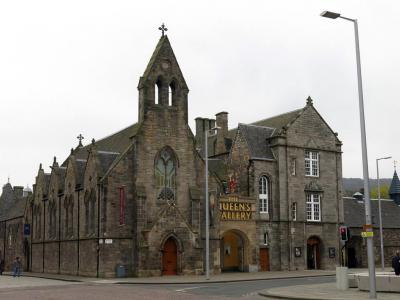
The King's Gallery, previously known as The Queen’s Gallery, opened in 2002 to mark Queen Elizabeth II’s Golden Jubilee. This royal splash of culture in Edinburgh-tucked right beside the Scottish Parliament and Holyrood Park-is part of the Palace of Holyroodhouse and is set within the Palace Mews. But here's the twist: the gallery was built inside the shell of a Victorian church and school that once stood at the Palace gates. Talk about a second life-one moment sermons, the next moment storage space, and now? Regal art on display...
Originally, this little building housed a church which once belonged to the Free Church of Scotland, and later the United Free Church, hosting worship until 1915. After that, it became more broom cupboard than cathedral-right until Queen Elizabeth II herself cut the ribbon and gave it its current royal role.
Inside, the gallery rotates treasures from the Royal Collection, including paintings, jewels, furniture, and the occasional surprise object you didn’t even know you needed to see. The exhibitions change regularly, so even if you’ve been here before, you’ll likely spot something new the next time.
And it’s not just about looking, either. The gallery doubles as a classroom with workshops for kids and school groups-in portrait drawing, landscape sketching in the Palace gardens, even model-making. It’s art history all right, but hands-on and a little more fun than your average lecture.
And when the masterpieces have left you cross-eyed, there’s a café bar next door. Because nothing says “royal day out” like a cup of tea after admiring a few centuries’ worth of crown-approved creativity...
Originally, this little building housed a church which once belonged to the Free Church of Scotland, and later the United Free Church, hosting worship until 1915. After that, it became more broom cupboard than cathedral-right until Queen Elizabeth II herself cut the ribbon and gave it its current royal role.
Inside, the gallery rotates treasures from the Royal Collection, including paintings, jewels, furniture, and the occasional surprise object you didn’t even know you needed to see. The exhibitions change regularly, so even if you’ve been here before, you’ll likely spot something new the next time.
And it’s not just about looking, either. The gallery doubles as a classroom with workshops for kids and school groups-in portrait drawing, landscape sketching in the Palace gardens, even model-making. It’s art history all right, but hands-on and a little more fun than your average lecture.
And when the masterpieces have left you cross-eyed, there’s a café bar next door. Because nothing says “royal day out” like a cup of tea after admiring a few centuries’ worth of crown-approved creativity...
8) Dunbar's Close Garden
Shopping and sightseeing in the Royal Mile can be tiring, so if you don’t feel like having lunch in a crowded pub or restaurant, grab a packed lunch or pick up a sandwich, and sneak off to Dunbar’s Close Garden. Tucked near the Canongate Kirkyard, this hidden gem is one of those places that makes you feel like you’ve just fallen through a medieval trapdoor.
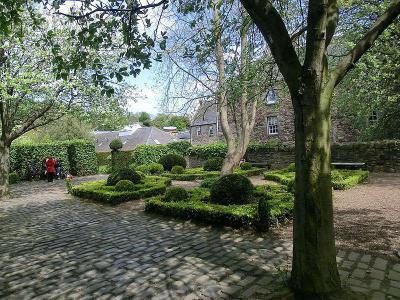
Dunbar’s Close is one of about 80 medieval alleys still threading their way through the Old Town. At the end of it lies a garden that feels like it was designed for time travel. Truly a secret garden, many locals don’t even know it exists, which means you can enjoy your lunch here in peace.
The garden is surrounded by high, ancient stone walls shutting out the noise. The plot is long and rather narrow, with three-quarters of an acre laid out in a proper 17th-century style, featuring gravel paths and beds of herbs, shrubs, and flowers neatly bordered by ting hedges. Conical topiary points the way, while mature fig and sycamore trees lean in to offer a bit of shade over stone benches-perfect for a quiet pause or some light sandwich meditation.
The garden’s story adds another layer. It was created by Sir Patrick Geddes, a visionary biologist who dreamed of filling Edinburgh with pocket gardens like this. Sadly, he passed away shortly after Dunbar’s Close Garden was completed. By the 1970s, the place had gone wild from neglect.
Luckily, around that time, the Mushroom Trust-a charity promoting the creation of urban green spaces-took over the garden and asked landscape architect Seamus Filor to bring it back to life. In 1977, the Trust gifted the restored garden to the city, and by 1978, it was open to the public. So now, whenever you need a break from tartan overload while in Edinburgh, you’ve got your own secret garden waiting...
Dunbar’s Close is one of about 80 medieval alleys still threading their way through the Old Town. At the end of it lies a garden that feels like it was designed for time travel. Truly a secret garden, many locals don’t even know it exists, which means you can enjoy your lunch here in peace.
The garden is surrounded by high, ancient stone walls shutting out the noise. The plot is long and rather narrow, with three-quarters of an acre laid out in a proper 17th-century style, featuring gravel paths and beds of herbs, shrubs, and flowers neatly bordered by ting hedges. Conical topiary points the way, while mature fig and sycamore trees lean in to offer a bit of shade over stone benches-perfect for a quiet pause or some light sandwich meditation.
The garden’s story adds another layer. It was created by Sir Patrick Geddes, a visionary biologist who dreamed of filling Edinburgh with pocket gardens like this. Sadly, he passed away shortly after Dunbar’s Close Garden was completed. By the 1970s, the place had gone wild from neglect.
Luckily, around that time, the Mushroom Trust-a charity promoting the creation of urban green spaces-took over the garden and asked landscape architect Seamus Filor to bring it back to life. In 1977, the Trust gifted the restored garden to the city, and by 1978, it was open to the public. So now, whenever you need a break from tartan overload while in Edinburgh, you’ve got your own secret garden waiting...
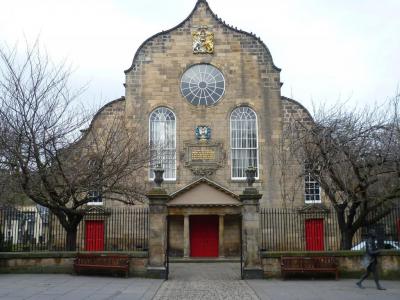
9) Kirk of the Canongate Chapel
The Kirk of the Canongate Chapel is the church attended by British monarchs whenever they are in town, taking residence at Holyrood Palace. From the outside, you might think it’s just another unassuming stone church-plain, modest, almost shy. But once inside, it’s like walking into a totally different world, full of colour, light, and carefully crafted details. That surprise is part of its charm.
The chapel was built in the late 1600s, designed by master mason James Smith. Its look is simple but refined: a rectangular body topped with a Dutch-style end gable, and a Doric columned portico giving it a touch of classical elegance. Right outside, you’ll see a bronze statue of Robert Fergusson-the 18th-century poet immortalized mid-stride, forever keeping an eye on the comings and goings of the Canongate.
Now, here’s where it gets ceremonial. The chapel is tied to the Order of the Thistle, which is the highest order of Scotland’s chivalry. Although the Order's official chapel is found inside St. Giles Cathedral, investitures and other grand ceremonies have been staged here, at the Kirk of Canongate, in even-numbered years since the reign of King James II. It’s tradition with a twist-part sacred, part royal pomp...
Over the centuries, the church has changed several times. First remodelled in 1882 with galleries and a central pulpit, it was then stripped back to something closer to its original form after World War II. Restoration between 1946 and 1954 reopened the apse, while a new pipe organ, installed in 1988, filled the space with music worthy of its history.
Inside, the chapel doesn’t hold back. The cruciform layout feels light and airy, the walls gleam white, and the pews shine in sky blue. Look closer and you’ll spot rainbow-coloured cushions in the apse, bright banners hanging above, and a bold red carpet tying it all together. Indeed, for a place that hides behind a modest exterior, the Kirk of the Canongate is full of surprises once you cross the threshold...
The chapel was built in the late 1600s, designed by master mason James Smith. Its look is simple but refined: a rectangular body topped with a Dutch-style end gable, and a Doric columned portico giving it a touch of classical elegance. Right outside, you’ll see a bronze statue of Robert Fergusson-the 18th-century poet immortalized mid-stride, forever keeping an eye on the comings and goings of the Canongate.
Now, here’s where it gets ceremonial. The chapel is tied to the Order of the Thistle, which is the highest order of Scotland’s chivalry. Although the Order's official chapel is found inside St. Giles Cathedral, investitures and other grand ceremonies have been staged here, at the Kirk of Canongate, in even-numbered years since the reign of King James II. It’s tradition with a twist-part sacred, part royal pomp...
Over the centuries, the church has changed several times. First remodelled in 1882 with galleries and a central pulpit, it was then stripped back to something closer to its original form after World War II. Restoration between 1946 and 1954 reopened the apse, while a new pipe organ, installed in 1988, filled the space with music worthy of its history.
Inside, the chapel doesn’t hold back. The cruciform layout feels light and airy, the walls gleam white, and the pews shine in sky blue. Look closer and you’ll spot rainbow-coloured cushions in the apse, bright banners hanging above, and a bold red carpet tying it all together. Indeed, for a place that hides behind a modest exterior, the Kirk of the Canongate is full of surprises once you cross the threshold...
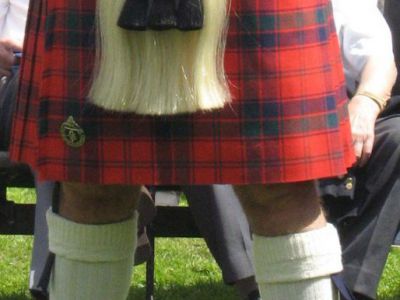
10) Geoffrey Taylor Kiltmakers
Now, if you’ve ever fancied strutting down the Royal Mile looking like you just stepped out of Scottish history-or a whisky commercial-it's time to buy yourself a kilt or a tartan scarf. And in that case, Geoffrey Tailor Kiltmakers is the place to do it. Since 1971, when Geoffrey, the Master Tailor, and his wife Lorna set up shop, this family-run business has been one of the big names in authentic Highland dress. We’re talking kilts made to measure, head-to-toe ensembles, and accessories for men, women, and even kids. Basically, if it can be worn to a ceilidh (which is a Scottish folk music party with a lot of traditional singing and dancing involved) or a castle, they’ve got you covered.
And here’s the fun part-they don’t just sell you a kilt, they can design an entire tartan just for you only-on real powerlooms! Think of it as couture, but with more bagpipes... Indeed, they’ve crafted tartans for Harley Davidson, Hard Rock Café, Edinburgh Castle, and even Holyrood Palace. When it comes to pedigree, you’re in solid hands here. Quality is the rule, not the exception-so no knock-offs or “plastic tartans” in sight. Prices are anywhere between $40 and $450 apiece, depending on what you’re after.
Of course, if a full kilt feels a bit… ambitious, there’s always the trusty tartan scarf. These beauties come in wool, silk, and cashmere, and they don’t just keep you warm-they make you look like you belong in a portrait. Men, women, children, even dogs (well, unofficially)-a tartan scarf suits everyone. Wear it wrapped, draped, or flung casually over your shoulder like you’ve got a castle waiting back home. Prices range from $10 to $200, which means you can grab one as a stylish souvenir or splash out on something truly luxurious.
So, whether you’re kilt-curious or just scarf-hunting, Geoffrey Tailor Kiltmakers is where Scottish tradition meets a bit of panache...
And here’s the fun part-they don’t just sell you a kilt, they can design an entire tartan just for you only-on real powerlooms! Think of it as couture, but with more bagpipes... Indeed, they’ve crafted tartans for Harley Davidson, Hard Rock Café, Edinburgh Castle, and even Holyrood Palace. When it comes to pedigree, you’re in solid hands here. Quality is the rule, not the exception-so no knock-offs or “plastic tartans” in sight. Prices are anywhere between $40 and $450 apiece, depending on what you’re after.
Of course, if a full kilt feels a bit… ambitious, there’s always the trusty tartan scarf. These beauties come in wool, silk, and cashmere, and they don’t just keep you warm-they make you look like you belong in a portrait. Men, women, children, even dogs (well, unofficially)-a tartan scarf suits everyone. Wear it wrapped, draped, or flung casually over your shoulder like you’ve got a castle waiting back home. Prices range from $10 to $200, which means you can grab one as a stylish souvenir or splash out on something truly luxurious.
So, whether you’re kilt-curious or just scarf-hunting, Geoffrey Tailor Kiltmakers is where Scottish tradition meets a bit of panache...

11) Crest Of Edinburgh
Keep an eye out on the Royal Mile for a riot of tartan-kilts, scarves, even the occasional plaid-clad dog mannequin. That’s your cue, you’ve landed at the Crest of Edinburgh, a compact shop crammed with all things Scottish attire. Inside, the racks groan with tartan and tweed, but the real treasures are the clan-crested Highland accessories-like sporrans (those leather/fur pouches worn at the front of a kilt to hold personal items), cufflinks, sgian dubhs (which means "black knives" or "black daggers" in Scottish Gaelic), and, of course, the star of the show: Scottish crest badges.
These little emblems aren’t just shiny souvenirs. They’re heraldic badges, each one pairing a clan crest with a motto, traditionally worn to signal allegiance to a chief. Think of it as a wearable family banner, in silver or white metal, polished up to pin proudly on your lapel-or, if you’re following tradition, as a brooch on the left side. Women often wear them as a statement piece, but they look just as sharp on a kilt jacket.
Now, a fun fact: the crests technically belong to the clan chief, not just every member, but that doesn’t stop anyone from snapping them up. Prices range from 20 to 150 dollars apiece, depending on how fancy you want to go. So, if you’re looking for a gift that screams Scotland without literally screaming, a crest badge is a clever choice-heritage, sparkle, and a dash of Highland pride all in one pin...
These little emblems aren’t just shiny souvenirs. They’re heraldic badges, each one pairing a clan crest with a motto, traditionally worn to signal allegiance to a chief. Think of it as a wearable family banner, in silver or white metal, polished up to pin proudly on your lapel-or, if you’re following tradition, as a brooch on the left side. Women often wear them as a statement piece, but they look just as sharp on a kilt jacket.
Now, a fun fact: the crests technically belong to the clan chief, not just every member, but that doesn’t stop anyone from snapping them up. Prices range from 20 to 150 dollars apiece, depending on how fancy you want to go. So, if you’re looking for a gift that screams Scotland without literally screaming, a crest badge is a clever choice-heritage, sparkle, and a dash of Highland pride all in one pin...
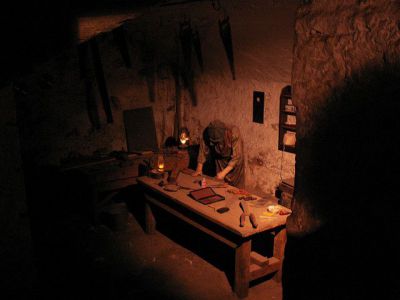
12) Mary King's Close (must see)
If ghost stories give you chills in a good way, then Real Mary King’s Close might just be your perfect haunt in Edinburgh. Tucked beneath the Royal Exchange, this underground maze of shadowy alleyways and crumbling tenement rooms has a reputation for being one of the most haunted corners of the city-and in Edinburgh, that’s saying something...
Originally a bustling neighborhood, the close was sealed off after the Great Plague of 1645 rolled into town, carried by flea-infested rats from merchant ships. With zero plumbing and not a bar of soap in sight, these cramped quarters became ground zero for infection. In a desperate attempt to contain the spread, entire blocks-predominantly the poorer areas, including Mary King’s Close-were bricked in as urgent quarantine measures. Legend has it, some unlucky souls were trapped inside at the mercy of plague or starvation... and they never left. At least, not in spirit.
One ghost in particular likes to make her presence known: Annie, a small girl, who is said to have lost her doll-and possibly much more-when the plague swept through. Visitors claim to feel her presence, and many bring her gifts: toys, trinkets, or coins, all of which are passed on to children’s hospitals and local charities. So, even the ghostly get a little goodwill...
The area was uncovered during renovations to the Royal Exchange and was opened to the public in 2003 as a tourist attraction. Since then, costumed guides have been leading brave guests through these 17th-century underground time capsules, sharing tales of the little Annie and Mary King-a respected businesswoman and seamstress after whom it is named-as well as the dark chapters etched into every cobbled corner.
So, if you’re in the mood for a little historical horror with a charitable twist, Mary King’s Close is calling. Just... don’t forget Annie’s doll.
Originally a bustling neighborhood, the close was sealed off after the Great Plague of 1645 rolled into town, carried by flea-infested rats from merchant ships. With zero plumbing and not a bar of soap in sight, these cramped quarters became ground zero for infection. In a desperate attempt to contain the spread, entire blocks-predominantly the poorer areas, including Mary King’s Close-were bricked in as urgent quarantine measures. Legend has it, some unlucky souls were trapped inside at the mercy of plague or starvation... and they never left. At least, not in spirit.
One ghost in particular likes to make her presence known: Annie, a small girl, who is said to have lost her doll-and possibly much more-when the plague swept through. Visitors claim to feel her presence, and many bring her gifts: toys, trinkets, or coins, all of which are passed on to children’s hospitals and local charities. So, even the ghostly get a little goodwill...
The area was uncovered during renovations to the Royal Exchange and was opened to the public in 2003 as a tourist attraction. Since then, costumed guides have been leading brave guests through these 17th-century underground time capsules, sharing tales of the little Annie and Mary King-a respected businesswoman and seamstress after whom it is named-as well as the dark chapters etched into every cobbled corner.
So, if you’re in the mood for a little historical horror with a charitable twist, Mary King’s Close is calling. Just... don’t forget Annie’s doll.
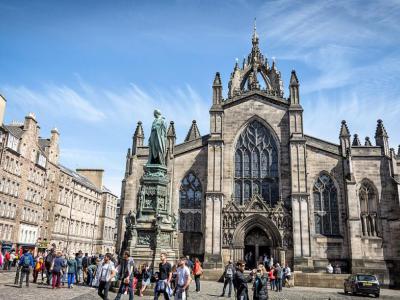
13) St. Giles' Cathedral (must see)
Smack in the middle of the Royal Mile, St Giles’ Cathedral-otherwise known as the High Kirk (or High Church) of Edinburgh-isn't one to be missed. The original building went up in the 12th century but didn’t survive a nasty fire-only the central pillars lived to tell the tale. The replacement was built in 1385. Over the years, it had numerous chapels added-known as aisles-resulting in a kind of charming architectural chaos. At one point, the church had over 50 side altars, like a medieval supermarket of holiness...
In 1466, St Giles’ became a collegiate church, which, in 1490, saw the now-iconic, crown-shaped lantern tower completed. During the Reformation, in 1560, things got a bit dramatic. Most of the church’s treasures vanished-stolen, sold, or just spirited away-including its star relic: Saint Giles’ withered arm and hand, complete with a diamond ring on one skeletal finger (macabre bling at its finest...). In addition to that, the church was partitioned by walls into multiple preaching zones-a kind of Protestant “feng shui,” if you will...
Despite being called a cathedral, it only technically wore that title twice, briefly, during the 17th-century Bishop Wars. The statute of “High Kirk” remains its real claim to fame. A 19th-century restoration gave the church a glow-up-partitions were removed and several chapels pulled down. Among the surviving chapels, perhaps the most beautiful is the Thistle Chapel from 1911: a jaw-dropping High Gothic gem dripping in wood and stone carvings, fluttering heraldic banners, and a breathtaking, delicately carved vaulted ceiling.
Once here, look out for a bronze plaque to Robert Louis Stevenson, author of Treasure Island, in the Moray Aisle, a marble tribute to the dashing but doomed 1st Marquis of Montrose, in the Chapman Aisle, and another to his bitter rival, Archibald Campbell, the 1st Marquis of Argyll, in the Saint Eloi Aisle. Fun fact: these two, once the main signatories of the National Covenant in 1638 (the document signed to oppose attempts to impose Anglican religious practices on the Church of Scotland), became sworn enemies towards the end of their lives. Edinburgh drama, anyone?
Aside from all that, the place is absolutely gorgeous, packed to the rim with stained glass beauty. You’ll walk out with neck cramp from all the ceiling admiration-and it’ll be worth it.
Pro tips:
Entry is free or by donation, but if you’re planning a photo shoot, prepare to fork over £2 for a "permit".
Best to get onto a tour, as there's much you could miss just wandering on your own. Also, if you're feeling adventurous, take the rooftop tour (worth £6).
And yes-don't miss a cozy café downstairs that serves tasty bites. Praise be!
In 1466, St Giles’ became a collegiate church, which, in 1490, saw the now-iconic, crown-shaped lantern tower completed. During the Reformation, in 1560, things got a bit dramatic. Most of the church’s treasures vanished-stolen, sold, or just spirited away-including its star relic: Saint Giles’ withered arm and hand, complete with a diamond ring on one skeletal finger (macabre bling at its finest...). In addition to that, the church was partitioned by walls into multiple preaching zones-a kind of Protestant “feng shui,” if you will...
Despite being called a cathedral, it only technically wore that title twice, briefly, during the 17th-century Bishop Wars. The statute of “High Kirk” remains its real claim to fame. A 19th-century restoration gave the church a glow-up-partitions were removed and several chapels pulled down. Among the surviving chapels, perhaps the most beautiful is the Thistle Chapel from 1911: a jaw-dropping High Gothic gem dripping in wood and stone carvings, fluttering heraldic banners, and a breathtaking, delicately carved vaulted ceiling.
Once here, look out for a bronze plaque to Robert Louis Stevenson, author of Treasure Island, in the Moray Aisle, a marble tribute to the dashing but doomed 1st Marquis of Montrose, in the Chapman Aisle, and another to his bitter rival, Archibald Campbell, the 1st Marquis of Argyll, in the Saint Eloi Aisle. Fun fact: these two, once the main signatories of the National Covenant in 1638 (the document signed to oppose attempts to impose Anglican religious practices on the Church of Scotland), became sworn enemies towards the end of their lives. Edinburgh drama, anyone?
Aside from all that, the place is absolutely gorgeous, packed to the rim with stained glass beauty. You’ll walk out with neck cramp from all the ceiling admiration-and it’ll be worth it.
Pro tips:
Entry is free or by donation, but if you’re planning a photo shoot, prepare to fork over £2 for a "permit".
Best to get onto a tour, as there's much you could miss just wandering on your own. Also, if you're feeling adventurous, take the rooftop tour (worth £6).
And yes-don't miss a cozy café downstairs that serves tasty bites. Praise be!
14) Edinburgh Castle (must see)
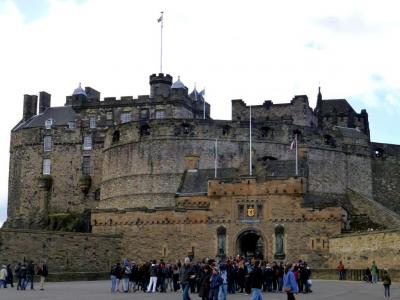
Edinburgh Castle, looming large over the Scottish capital, is the second most visited attraction in the UK (after the Tower of London, which is still number one). The history of Scotland is deeply etched into its ancient stones, making it a timeline in fortress form.
Perched atop Castle Rock (a hardened basaltic plug from an extinct volcano eroded by glaciers), this area has been drawing humans since the 9th millennium BC. The first castle on the site was built in the 12th century by King David I. It remained a royal residence until 1603, when the monarchy packed up and moved to London-presumably for better weather and indoor plumbing...
Indeed, as a fortress, it was virtually impregnable, except for one major-geological-drawback: the basalt rock on which it stands doesn’t hold water (literally). The 28-meter-deep well inside the fortress was about as useful as a chocolate teapot during a siege. So, when the well ran dry, surrender-or dehydration-was the only choice for those inside.
The original castle was mostly destroyed during the Lang Siege of 1573. The only remainder from its early days is St. Margaret’s Chapel. By the 17th century, it had shifted from royal digs to military barracks, housing troops up to the 1920s.
Presently, the castle hosts the Scottish National War Memorial, the National War Museum, and enough regimental museums to keep military buffs busy till closing time. Don't miss the One O’Clock Gun, which is fired daily (except Sundays) at 1 PM with Swiss-watch precision-yes, Edinburgh literally sets its clocks by it...
Also, in the Crown Room, you will see Scotland’s royal bling-crown, scepter, and sword-resting under heavy guard. Period-costumed actors occasionally swoop in to re-enact history with full flair. And if you’re visiting in August, the Military Tattoo takes over the esplanade with kilts, cannons, and bagpipes galore.
Oh, and in the north-east corner of the esplanade, don't miss that rather unassuming little iron fountain. Called Witches' Well, it marks the spot where, back in the day, many women accused of witchcraft were burned at the stake. Spooky, grim, and sadly true...
The panoramic views are postcard-worthy, the historical nooks are endlessly fascinating, and honestly, it just feels epic to stand where centuries of royals, rebels, and rock-solid drama unfolded.
Pro Tips:
The entry is cheaper, and more importantly, faster, if you book online.
Take a free guided tour – running every hour. Otherwise, consider grabbing the £3 audio guide if you like facts with flair.
Being at the mountain's top, it may get breezy, so definitely bring a windproof jacket if visiting in cold weather.
Perched atop Castle Rock (a hardened basaltic plug from an extinct volcano eroded by glaciers), this area has been drawing humans since the 9th millennium BC. The first castle on the site was built in the 12th century by King David I. It remained a royal residence until 1603, when the monarchy packed up and moved to London-presumably for better weather and indoor plumbing...
Indeed, as a fortress, it was virtually impregnable, except for one major-geological-drawback: the basalt rock on which it stands doesn’t hold water (literally). The 28-meter-deep well inside the fortress was about as useful as a chocolate teapot during a siege. So, when the well ran dry, surrender-or dehydration-was the only choice for those inside.
The original castle was mostly destroyed during the Lang Siege of 1573. The only remainder from its early days is St. Margaret’s Chapel. By the 17th century, it had shifted from royal digs to military barracks, housing troops up to the 1920s.
Presently, the castle hosts the Scottish National War Memorial, the National War Museum, and enough regimental museums to keep military buffs busy till closing time. Don't miss the One O’Clock Gun, which is fired daily (except Sundays) at 1 PM with Swiss-watch precision-yes, Edinburgh literally sets its clocks by it...
Also, in the Crown Room, you will see Scotland’s royal bling-crown, scepter, and sword-resting under heavy guard. Period-costumed actors occasionally swoop in to re-enact history with full flair. And if you’re visiting in August, the Military Tattoo takes over the esplanade with kilts, cannons, and bagpipes galore.
Oh, and in the north-east corner of the esplanade, don't miss that rather unassuming little iron fountain. Called Witches' Well, it marks the spot where, back in the day, many women accused of witchcraft were burned at the stake. Spooky, grim, and sadly true...
The panoramic views are postcard-worthy, the historical nooks are endlessly fascinating, and honestly, it just feels epic to stand where centuries of royals, rebels, and rock-solid drama unfolded.
Pro Tips:
The entry is cheaper, and more importantly, faster, if you book online.
Take a free guided tour – running every hour. Otherwise, consider grabbing the £3 audio guide if you like facts with flair.
Being at the mountain's top, it may get breezy, so definitely bring a windproof jacket if visiting in cold weather.
15) Grassmarket
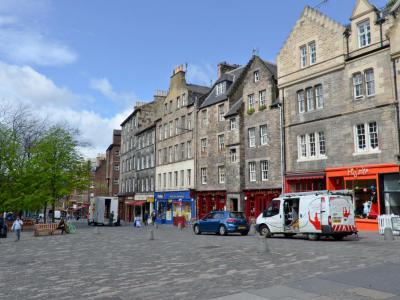
If you're looking to shop, snack, or relax over a pint while in Edinburgh, the Grassmarket is undoubtedly your one-stop cobbled playground. Once the city’s bustling horse-and-cattle bazaar which drew crowds between 1477 and 1911, it also doubled as a top place for executions-because, apparently, back in the day, nothing did for the public entertainment more than hooves and hangings...
Keep an eye out for “The Shadow of the Gibbet”-the dark paving stones laid out in the form of a gallows near the Covenanter’s Monument. It’s a charmingly grim touch, in case you needed a reminder that this scenic square once served as the city’s unofficial “dead-end.” And over to one side of it stands the Bow Well that has been around since 1681.
According to legend, once upon a time, there was a woman named Maggie Dickson, a fishwife who made headlines by dying and... remarkably coming back again. Hanged right here for the alleged murder of her child, she stunned everyone when she unexpectedly woke up en route to the cemetery. Apparently, in those days, the “until dead” provision didn’t quite yet settle in the sentence proceedings (legal loophole of the day...). So, once hanged, her debt was considered paid and Maggie was set free. Today, you can toast her improbable resurrection at Maggie Dickson’s pub, conveniently located on the very spot where she was hanged but miraculously survived the ordeal.
Fast forward a few centuries and the Grassmarket swapped gallows for gastropubs. A formerly scruffy patch of the city, it became a magnet for students in the 1980s-likely lured by cheap beer and late-night kebabs. Nowadays gentrified, it’s all terraces, boutique shops, vintage finds, and indie charm.
Quirky, safe and interesting, this area is a great destination for those who need a regular change of scenery, complete with a variety of retail and dining opportunities to suit every wallet and taste, and enough character to fill a tartan suitcase.
Hot tip:
Check out Carnivàle Vintage for a wonderful selection of fun vintage clothing, Tasty Buns for pastry and coffee, Hula Juice Bar for guilt-free fuel, and Mary’s Milk Bar for glorious indulgence. And when you're done, wind your way up Victoria Street and onto the Royal Mile (further up)-because one eccentric shopping spree always deserves another...
Keep an eye out for “The Shadow of the Gibbet”-the dark paving stones laid out in the form of a gallows near the Covenanter’s Monument. It’s a charmingly grim touch, in case you needed a reminder that this scenic square once served as the city’s unofficial “dead-end.” And over to one side of it stands the Bow Well that has been around since 1681.
According to legend, once upon a time, there was a woman named Maggie Dickson, a fishwife who made headlines by dying and... remarkably coming back again. Hanged right here for the alleged murder of her child, she stunned everyone when she unexpectedly woke up en route to the cemetery. Apparently, in those days, the “until dead” provision didn’t quite yet settle in the sentence proceedings (legal loophole of the day...). So, once hanged, her debt was considered paid and Maggie was set free. Today, you can toast her improbable resurrection at Maggie Dickson’s pub, conveniently located on the very spot where she was hanged but miraculously survived the ordeal.
Fast forward a few centuries and the Grassmarket swapped gallows for gastropubs. A formerly scruffy patch of the city, it became a magnet for students in the 1980s-likely lured by cheap beer and late-night kebabs. Nowadays gentrified, it’s all terraces, boutique shops, vintage finds, and indie charm.
Quirky, safe and interesting, this area is a great destination for those who need a regular change of scenery, complete with a variety of retail and dining opportunities to suit every wallet and taste, and enough character to fill a tartan suitcase.
Hot tip:
Check out Carnivàle Vintage for a wonderful selection of fun vintage clothing, Tasty Buns for pastry and coffee, Hula Juice Bar for guilt-free fuel, and Mary’s Milk Bar for glorious indulgence. And when you're done, wind your way up Victoria Street and onto the Royal Mile (further up)-because one eccentric shopping spree always deserves another...
16) National Museum of Scotland (must see)
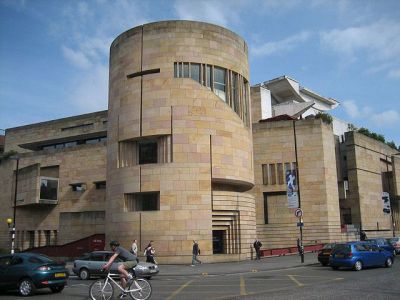
Right off Chambers Street and sidling up to George IV Bridge, the National Museum of Scotland seems like an entire universe cleverly disguised as one building. As the country’s crown jewel of curiosity, it houses everything from ancient artefacts, science and technology to Elton John’s finest feathered fashion. Indeed, sequins and sarcophagi under one roof...
The museum, in its current all-in-one glory, came to life in 2006 when the Royal Museum and the Museum of Scotland decided to merge (believing they’d work better as roommates). Having linked internally by utilizing some repurposed storage space, they created the stunning Grand Gallery-a light-drenched cathedral of wonder, stretching from basement to rooftop. The vaulted Entrance Hall alone is a whopping 1,400 square metres of pure “whoa.”
Wandering into the Grand Gallery, you’re bound to find some big stuff-literally! Oversized treasures too large for the regular exhibits-like the 20-metre-tall Window on the World, a vertical buffet of 800+ oddities-camp out here in joyful disarray. On its sides, Scotland shows off its brainpower in the form of “Discoveries” made by local inventors.
It’s a feast for all ages and attention spans. One moment you’re peering at ancient Egyptian mummies (CT scans included, like historical X-ray vision, revealing everything that is hidden under their wrappings), and the next you’re staring at something extravagant that once belonged to a glam rock legend. The Natural History floor, meanwhile, is a dino-lover’s paradise, complete with extinct beasts and bones the size of furniture.
In 2011, they added 16 shiny new galleries, just to keep things fresh-resulting in over 8,000 original objects awaiting your awe. Bonus points is that the entry is completely free. So, you can marvel at the mysteries of the universe and still afford a snack from the on-site café & bistro, if you are feeling peckish or just want to take a break from exploring.
By far not a typical museum-but rather an “everythingium”-it’s a real treat both inside and out, especially following its hefty £47-million refurbishment and extension. Definitely more than just a place to learn-but a place to linger...
Top Tips:
Get there early. Start on the top floor and descend like an archaeologist of modern wonder. There are some great 'hands-on' exhibits, so take your time if you are with kids. And if you're feeling fancy, book a private guided tour. Just check ahead for any exhibits that may cost extra-they’re rare, and usually a bargain.
The museum, in its current all-in-one glory, came to life in 2006 when the Royal Museum and the Museum of Scotland decided to merge (believing they’d work better as roommates). Having linked internally by utilizing some repurposed storage space, they created the stunning Grand Gallery-a light-drenched cathedral of wonder, stretching from basement to rooftop. The vaulted Entrance Hall alone is a whopping 1,400 square metres of pure “whoa.”
Wandering into the Grand Gallery, you’re bound to find some big stuff-literally! Oversized treasures too large for the regular exhibits-like the 20-metre-tall Window on the World, a vertical buffet of 800+ oddities-camp out here in joyful disarray. On its sides, Scotland shows off its brainpower in the form of “Discoveries” made by local inventors.
It’s a feast for all ages and attention spans. One moment you’re peering at ancient Egyptian mummies (CT scans included, like historical X-ray vision, revealing everything that is hidden under their wrappings), and the next you’re staring at something extravagant that once belonged to a glam rock legend. The Natural History floor, meanwhile, is a dino-lover’s paradise, complete with extinct beasts and bones the size of furniture.
In 2011, they added 16 shiny new galleries, just to keep things fresh-resulting in over 8,000 original objects awaiting your awe. Bonus points is that the entry is completely free. So, you can marvel at the mysteries of the universe and still afford a snack from the on-site café & bistro, if you are feeling peckish or just want to take a break from exploring.
By far not a typical museum-but rather an “everythingium”-it’s a real treat both inside and out, especially following its hefty £47-million refurbishment and extension. Definitely more than just a place to learn-but a place to linger...
Top Tips:
Get there early. Start on the top floor and descend like an archaeologist of modern wonder. There are some great 'hands-on' exhibits, so take your time if you are with kids. And if you're feeling fancy, book a private guided tour. Just check ahead for any exhibits that may cost extra-they’re rare, and usually a bargain.
