Custom Walk in Athens, Greece by mk_autho_9c47ed created on 2026-06-23
Guide Location: Greece » Athens
Guide Type: Custom Walk
# of Sights: 15
Tour Duration: 3 Hour(s)
Travel Distance: 3.9 Km or 2.4 Miles
Share Key: 54UKZ
Guide Type: Custom Walk
# of Sights: 15
Tour Duration: 3 Hour(s)
Travel Distance: 3.9 Km or 2.4 Miles
Share Key: 54UKZ
How It Works
Please retrieve this walk in the GPSmyCity app. Once done, the app will guide you from one tour stop to the next as if you had a personal tour guide. If you created the walk on this website or come to the page via a link, please follow the instructions below to retrieve the walk in the app.
Retrieve This Walk in App
Step 1. Download the app "GPSmyCity: Walks in 1K+ Cities" on Apple App Store or Google Play Store.



Step 2. In the GPSmyCity app, download(or launch) the guide "Athens Map and Walking Tours".
Step 3. Tap the menu button located at upper right corner of the "Walks" screen and select "Retrieve custom walk". Enter the share key: 54UKZ
1) Temple of Olympian Zeus (must see)
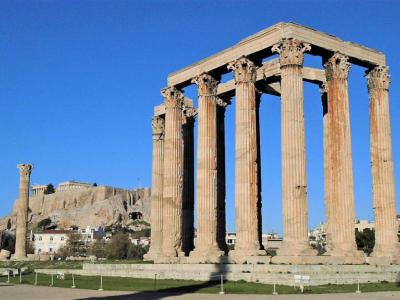
Even in its ruined state, the Athenian temple of Olympian Zeus remains a monument of awe-inspiring proportions, surpassing even the Parthenon in size. This colossal edifice saw its construction commence in the 6th century BC during the rule of the tyrant Peisistratos, who allegedly initiated the ambitious project to garner public favor. However, despite numerous attempts spanning many years to complete what would have been the greatest temple in the ancient world, it remained unfinished for over six and a half centuries.
In AD 132, the Roman emperor Hadrian, renowned for his admiration of classical Greek culture, dedicated the temple to Zeus Olympios during the Panhellenic festival, a competition of music and poetry held the year before the Olympics. This act took place during his second visit to Athens, and Hadrian also placed a gold and ivory inlaid statue of the god Zeus inside the temple. Regrettably, both the statue of Zeus and a colossal statue of the emperor himself have since been lost to history.
Today, only 15 of the original 104 Corinthian columns remain standing, each at a height of 17 meters (56 feet) – but enough to provide a sense of the temple's immense scale, which would have spanned about 96 meters (315 feet) in length and 40 meters (130 feet) in width. Nearby, there lies a 16th column that toppled during a storm in 1852, bearing witness to the passage of time. The temple's ruins extend beyond the towering columns, although entry into the temple may be restricted at times due to ongoing archaeological excavations.
Adjacent stands Hadrian's Arch, constructed in AD 131 and intentionally positioned to demarcate the boundary between the ancient city and the new Athens envisioned by Emperor Hadrian.
Tip:
For visitors who have acquired the Acropolis multi-site ticket, access to this historical site is automatically granted.
In AD 132, the Roman emperor Hadrian, renowned for his admiration of classical Greek culture, dedicated the temple to Zeus Olympios during the Panhellenic festival, a competition of music and poetry held the year before the Olympics. This act took place during his second visit to Athens, and Hadrian also placed a gold and ivory inlaid statue of the god Zeus inside the temple. Regrettably, both the statue of Zeus and a colossal statue of the emperor himself have since been lost to history.
Today, only 15 of the original 104 Corinthian columns remain standing, each at a height of 17 meters (56 feet) – but enough to provide a sense of the temple's immense scale, which would have spanned about 96 meters (315 feet) in length and 40 meters (130 feet) in width. Nearby, there lies a 16th column that toppled during a storm in 1852, bearing witness to the passage of time. The temple's ruins extend beyond the towering columns, although entry into the temple may be restricted at times due to ongoing archaeological excavations.
Adjacent stands Hadrian's Arch, constructed in AD 131 and intentionally positioned to demarcate the boundary between the ancient city and the new Athens envisioned by Emperor Hadrian.
Tip:
For visitors who have acquired the Acropolis multi-site ticket, access to this historical site is automatically granted.
2) Panathenaic Stadium (must see)
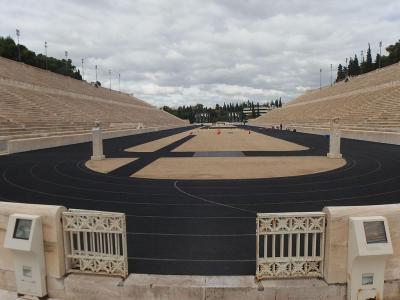
The Panathenaic is truly a remarkable historical site, being the only major stadium in the world constructed entirely of white marble. Its origins trace back to ancient times when it served as the venue for the athletic competitions of the Panathenaic Games, dedicated to the Goddess Athena and held every four years. The stadium underwent significant transformations, with a marble reconstruction in 329 BC and later expansion and renovation in 140 AD, accommodating up to 50,000 spectators.
Having fallen into disuse and disrepair after the 4th century AD, it was rediscovered and revitalized for the modern era, playing a pivotal role in the revival of the Olympic Games in the late 19th century. Despite its smaller scale compared to contemporary Olympic venues, the Panathenaic's elegant simplicity and iconic five Olympic rings continue to inspire awe. At the entrance, you'll encounter four stones engraved with the interesting history of the Olympics from the late 19th century to the present day.
The inaugural international Olympic Games in modern history were held here in 1896, with King George I of Greece opening the ceremony. Among participants were 241 male athletes from 14 countries, competing in 9 sports and 43 events. These early modern Olympic sports included athletics, cycling, fencing, gymnastics, tennis, shooting, swimming, weightlifting, and wrestling. Since then, athletes from across the globe have convened every four years, with the tradition enduring through the tumultuous 20th century wars.
Why You Should Visit:
A captivating place to explore, and you can enhance your visit with the free audio guide provided.
The on-site museum provides an engaging exhibition on the fascinating history of the Olympics.
Tip:
Don't miss the opportunity to climb to the upper tier for stunning views of the stadium.
Having fallen into disuse and disrepair after the 4th century AD, it was rediscovered and revitalized for the modern era, playing a pivotal role in the revival of the Olympic Games in the late 19th century. Despite its smaller scale compared to contemporary Olympic venues, the Panathenaic's elegant simplicity and iconic five Olympic rings continue to inspire awe. At the entrance, you'll encounter four stones engraved with the interesting history of the Olympics from the late 19th century to the present day.
The inaugural international Olympic Games in modern history were held here in 1896, with King George I of Greece opening the ceremony. Among participants were 241 male athletes from 14 countries, competing in 9 sports and 43 events. These early modern Olympic sports included athletics, cycling, fencing, gymnastics, tennis, shooting, swimming, weightlifting, and wrestling. Since then, athletes from across the globe have convened every four years, with the tradition enduring through the tumultuous 20th century wars.
Why You Should Visit:
A captivating place to explore, and you can enhance your visit with the free audio guide provided.
The on-site museum provides an engaging exhibition on the fascinating history of the Olympics.
Tip:
Don't miss the opportunity to climb to the upper tier for stunning views of the stadium.
3) Syntagma Square (Constitution Square)
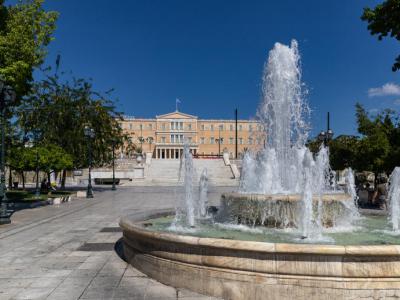
Constitution Square in Athens is where history, politics, and a good cup of coffee collide. This spacious landmark sits right in front of the 19th-century Royal Palace, which has been home to the Greek Parliament since 1935. And no, the square wasn’t just randomly named so-King Otto, Greece’s first monarch, was practically strong-armed into granting the country a Constitution here in 1843, thanks to a rather persuasive public and military uprising.
Nowadays, Constitution Square is still at the heart of the action. It’s not just a tourist hotspot-this is also Athens’ nerve center, linking visitors to top attractions by road, tram, bus, and subway. Political rallies, public gatherings, and plenty of people simply waiting for their Uber-this square sees it all on a regular basis.
Speaking of layout, Constitution Square has two levels-a bit like a giant marble stage set for both relaxation and spectacle. The central fountain, surrounded by benches, is perfect for a break, preferably with a Greek coffee in hand. Need WiFi? – No problem. Need a shade? – The pine and orange trees have you covered. And if caffeine calls, there are plenty of cafés ready to oblige. Oh, and in case you missed it, the whole square is clad in gleaming white marble, now with brand-new lampposts for that extra sparkle.
But the real showstopper is The Tomb of the Unknown Soldier. Guarded around the clock by the Evzones, Greece’s elite ceremonial soldiers, it’s a must-see. Their high-stepping routine, complete with kilts and pom-pom clogs, is as precise as it is fascinating. The tomb itself, unveiled on March 25, 1932, features a moving relief of a fallen Greek warrior (hoplite), forever frozen in time.
Tip:
If you fancy some retail therapy, just head to the lower end of the square-that’s where Ermou Street begins, Athens' ultimate shopping avenue. Happy strolling!
Nowadays, Constitution Square is still at the heart of the action. It’s not just a tourist hotspot-this is also Athens’ nerve center, linking visitors to top attractions by road, tram, bus, and subway. Political rallies, public gatherings, and plenty of people simply waiting for their Uber-this square sees it all on a regular basis.
Speaking of layout, Constitution Square has two levels-a bit like a giant marble stage set for both relaxation and spectacle. The central fountain, surrounded by benches, is perfect for a break, preferably with a Greek coffee in hand. Need WiFi? – No problem. Need a shade? – The pine and orange trees have you covered. And if caffeine calls, there are plenty of cafés ready to oblige. Oh, and in case you missed it, the whole square is clad in gleaming white marble, now with brand-new lampposts for that extra sparkle.
But the real showstopper is The Tomb of the Unknown Soldier. Guarded around the clock by the Evzones, Greece’s elite ceremonial soldiers, it’s a must-see. Their high-stepping routine, complete with kilts and pom-pom clogs, is as precise as it is fascinating. The tomb itself, unveiled on March 25, 1932, features a moving relief of a fallen Greek warrior (hoplite), forever frozen in time.
Tip:
If you fancy some retail therapy, just head to the lower end of the square-that’s where Ermou Street begins, Athens' ultimate shopping avenue. Happy strolling!
4) Metropolitan Cathedral
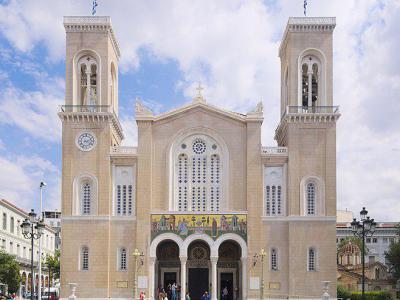
The Metropolitan Cathedral of Athens-or simply the "Metropolis", as the locals call it (because why bother with the full name when you can sound cool?). This grand cathedral has been standing tall since the mid-19th century, playing host to some of Greece’s most high-profile events-think royal weddings, state funerals, and the kind of ceremonies that make history books.
As for the story of its construction, it all started on Christmas Day, 1842, when someone had the bright idea to build a monumental church. But where to find all that marble? Easy-just dismantle 72 other churches across the country and re-purpose their stones. After 20 years and three architects juggling the job, the church was finally finished, proudly dedicated to the Annunciation of the Virgin. And its size-40 meters long, 20 meters wide, and 24 meters high-makes it the biggest religious building in Athens.
Step inside, and you’re greeted by a Greek Orthodox feast for the eyes: lavish icons, intricate murals, and an abundance of golden accents that make even the most skeptical visitor pause in awe. But beyond the grandeur, the cathedral also holds the tombs of two martyrs-Saint Philothéi, a woman who dedicated her life to rescuing Greek women from Ottoman harems (and was martyred for it in 1589), and Patriarch Gregory V, who was executed by the Ottomans in 1821. His body had quite the journey-rescued by Greek sailors from the Bosphorus, sent to Odessa (which is modern-day Ukraine), and eventually brought home to Athens 50 years later.
Out front, the statues tell even more stories. One honors the last Byzantine Emperor, who fought to the bitter end defending Constantinople in 1453. The other? A tribute to the Archbishop of Athens, a hero who helped protect the city’s Jewish community during World War II.
And if all this history has worked up your thirst, the square in front of the cathedral is the perfect place to sit back, sip a coffee, and take in the city’s rhythm-a little oasis amidst Athens' ever-busy streets.
As for the story of its construction, it all started on Christmas Day, 1842, when someone had the bright idea to build a monumental church. But where to find all that marble? Easy-just dismantle 72 other churches across the country and re-purpose their stones. After 20 years and three architects juggling the job, the church was finally finished, proudly dedicated to the Annunciation of the Virgin. And its size-40 meters long, 20 meters wide, and 24 meters high-makes it the biggest religious building in Athens.
Step inside, and you’re greeted by a Greek Orthodox feast for the eyes: lavish icons, intricate murals, and an abundance of golden accents that make even the most skeptical visitor pause in awe. But beyond the grandeur, the cathedral also holds the tombs of two martyrs-Saint Philothéi, a woman who dedicated her life to rescuing Greek women from Ottoman harems (and was martyred for it in 1589), and Patriarch Gregory V, who was executed by the Ottomans in 1821. His body had quite the journey-rescued by Greek sailors from the Bosphorus, sent to Odessa (which is modern-day Ukraine), and eventually brought home to Athens 50 years later.
Out front, the statues tell even more stories. One honors the last Byzantine Emperor, who fought to the bitter end defending Constantinople in 1453. The other? A tribute to the Archbishop of Athens, a hero who helped protect the city’s Jewish community during World War II.
And if all this history has worked up your thirst, the square in front of the cathedral is the perfect place to sit back, sip a coffee, and take in the city’s rhythm-a little oasis amidst Athens' ever-busy streets.
5) Church of Panaghia Kapnikarea
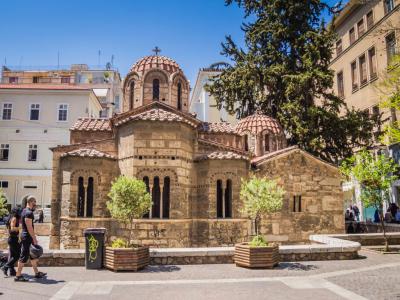
In the heart of modern Athens, the past and present do their daily dance. Right here, amid the high-energy, shop-till-you-drop chaos of Ermou Street, stands Kapnikarea-a charming Byzantine church that’s been stubbornly holding its ground since around 1050. That’s right, while today’s shoppers hunt for bargains, this little masterpiece has been casually watching history unfold for nearly a thousand years.
Like many early Christian structures, Kapnikarea wasn’t built from scratch. It took over prime real estate from an ancient Greek temple, likely dedicated to either Athena, the fierce protector of Athens, or Demeter, the goddess of the harvest. Talk about a divine property swap...
Much later, in the 19th century, Athens was getting a facelift. Enter King Otto I of Greece and his Bavarian architect, Leo von Klenze, who had grand plans to revamp the city. Kapnikarea-not exactly part of their modern vision-almost got the axe. But, plot twist! King Ludwig I of Bavaria, an art-loving, history-saving hero, intervened, ensuring the church survived. And let’s be honest, its slightly out-of-place vibe just makes it all the more intriguing.
Today, Kapnikarea is one of Athens’ most treasured churches. It’s a three-part complex: the main church, dedicated to the Virgin Mary, features a lovely colonnaded porch from the 12th century; a chapel to the north honors Saint Barbara; and a western exonarthex was added later for that extra touch of architectural flair.
Outside, you’ll spot a stunning mosaic from 1936, depicting the Virgin Mary holding baby Jesus. Step inside, and you’ll find Byzantine-inspired frescoes, some dating back to 1900.
One catch: Kapnikarea’s opening hours are as unpredictable as Athens’ traffic. So, if you find it open, consider it a lucky break and step inside. If not, well, at least you’ll have admired one of Athens’ most charming time capsules from the outside.
Like many early Christian structures, Kapnikarea wasn’t built from scratch. It took over prime real estate from an ancient Greek temple, likely dedicated to either Athena, the fierce protector of Athens, or Demeter, the goddess of the harvest. Talk about a divine property swap...
Much later, in the 19th century, Athens was getting a facelift. Enter King Otto I of Greece and his Bavarian architect, Leo von Klenze, who had grand plans to revamp the city. Kapnikarea-not exactly part of their modern vision-almost got the axe. But, plot twist! King Ludwig I of Bavaria, an art-loving, history-saving hero, intervened, ensuring the church survived. And let’s be honest, its slightly out-of-place vibe just makes it all the more intriguing.
Today, Kapnikarea is one of Athens’ most treasured churches. It’s a three-part complex: the main church, dedicated to the Virgin Mary, features a lovely colonnaded porch from the 12th century; a chapel to the north honors Saint Barbara; and a western exonarthex was added later for that extra touch of architectural flair.
Outside, you’ll spot a stunning mosaic from 1936, depicting the Virgin Mary holding baby Jesus. Step inside, and you’ll find Byzantine-inspired frescoes, some dating back to 1900.
One catch: Kapnikarea’s opening hours are as unpredictable as Athens’ traffic. So, if you find it open, consider it a lucky break and step inside. If not, well, at least you’ll have admired one of Athens’ most charming time capsules from the outside.
6) Pandrossou Street Market
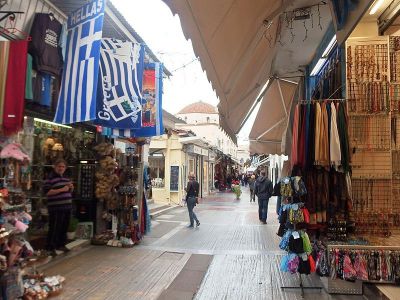
Pandrosou is one of the oldest, liveliest, and most unapologetically Greek streets in Athens. Back in the 19th century, this was a thriving marketplace-up until 1885, when a fire destroyed much of it. But like a true Athenian, Pandrosou bounced back, and today, it’s a bustling hub where old-world charm meets modern shopping temptations.
What’s on offer?-Everything. Clothing, souvenirs, handmade crafts, food, jewelry, and artwork-you name it, they sell it. Imagine the ancient Agora just a stone’s throw away, whispering tales of barter and trade, while today’s merchants display both traditional Greek treasures and trendy designs.
With nearly 100 shops, this street is a shopper’s paradise. Some of these businesses have been in the same family for generations-take Nick’s Corner, for example, where the hospitality is as warm as a Greek summer. Whether you’re after a postcard, a religious icon, a hand-painted bouzouki (musical instrument), or some locally made olive oil, you’ll find it here. And if it’s Sunday? Well, expect a full-on flea market experience, complete with bargain-priced clothes, jewelry, and street food that could convert you into a lifelong fan of Greek cuisine.
One small note of caution: If you’re planning to take home an ancient Greek, Roman, or Byzantine artifact, be aware that customs might have a few questions...
Tip:
At No. 36, the Centre for Hellenic Traditions showcases handcrafted items from across Greece. Meanwhile, at No. 50, Martinos Antiques is a four-story wonderland for collectors-whether you fancy an 18th-century dowry chest, a vintage sword, or a piece of Venetian glass, this place is packed with stories waiting to be rediscovered.
So, if you want a shopping experience with a side of history, Pandrosou Street is calling your name!
What’s on offer?-Everything. Clothing, souvenirs, handmade crafts, food, jewelry, and artwork-you name it, they sell it. Imagine the ancient Agora just a stone’s throw away, whispering tales of barter and trade, while today’s merchants display both traditional Greek treasures and trendy designs.
With nearly 100 shops, this street is a shopper’s paradise. Some of these businesses have been in the same family for generations-take Nick’s Corner, for example, where the hospitality is as warm as a Greek summer. Whether you’re after a postcard, a religious icon, a hand-painted bouzouki (musical instrument), or some locally made olive oil, you’ll find it here. And if it’s Sunday? Well, expect a full-on flea market experience, complete with bargain-priced clothes, jewelry, and street food that could convert you into a lifelong fan of Greek cuisine.
One small note of caution: If you’re planning to take home an ancient Greek, Roman, or Byzantine artifact, be aware that customs might have a few questions...
Tip:
At No. 36, the Centre for Hellenic Traditions showcases handcrafted items from across Greece. Meanwhile, at No. 50, Martinos Antiques is a four-story wonderland for collectors-whether you fancy an 18th-century dowry chest, a vintage sword, or a piece of Venetian glass, this place is packed with stories waiting to be rediscovered.
So, if you want a shopping experience with a side of history, Pandrosou Street is calling your name!
7) Monastiraki Square (must see)
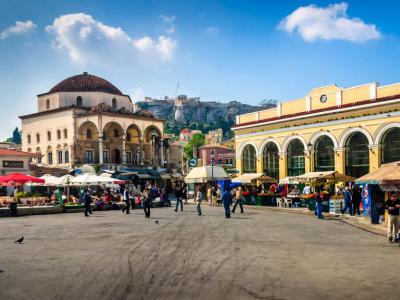
Monastiraki Square is a major gathering spot for locals and tourists in Athens. As such, it is well worth a visit, if only for a few minutes, just to soak up the lively and often festive atmosphere, which is as Greek as it gets. You can also indulge in some local street snacks like "koulouri", a bagel-like roll sprinkled with sesame seeds.
Monastiraki Square is renowned for its striking juxtaposition of architectural styles. Visitors are greeted by the iconic clock tower of the Ottoman-era Tzistarakis Mosque, which stands alongside the remnants of the ancient Agora and the ruins of the Hadrian’s Library. This eclectic mix of historical landmarks reflects the square’s evolution through various periods, from ancient Greece to Roman, Byzantine, and Ottoman times.
The vibrant flea market offers everything from antiques and souvenirs to contemporary fashion. On weekends, the square comes alive with an energetic atmosphere, showcasing traditional Greek music, street performances, and a lively exchange of local culture. And if that's not enough, the surrounding streets are dotted with shops, taverns, bistros, cafes, and tea houses, luring visitors with a chance for a pleasant break.
Monastiraki Square is renowned for its striking juxtaposition of architectural styles. Visitors are greeted by the iconic clock tower of the Ottoman-era Tzistarakis Mosque, which stands alongside the remnants of the ancient Agora and the ruins of the Hadrian’s Library. This eclectic mix of historical landmarks reflects the square’s evolution through various periods, from ancient Greece to Roman, Byzantine, and Ottoman times.
The vibrant flea market offers everything from antiques and souvenirs to contemporary fashion. On weekends, the square comes alive with an energetic atmosphere, showcasing traditional Greek music, street performances, and a lively exchange of local culture. And if that's not enough, the surrounding streets are dotted with shops, taverns, bistros, cafes, and tea houses, luring visitors with a chance for a pleasant break.
8) Tzistarakis Mosque
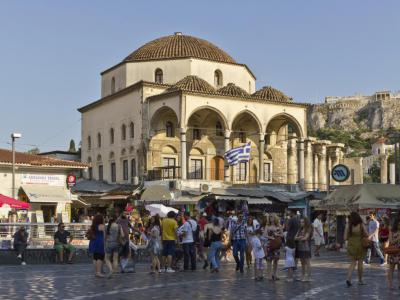
Athens spent centuries under Ottoman rule, but you wouldn’t know it just by looking around-most Ottoman-era structures have vanished, thanks to archaeologists who prefer digging up even older treasures. But one survivor, impossible to miss, still stands tall in Monastiraki Square: the Tzistarakis Mosque, the largest remaining Ottoman building in the Greek capital.
Built in 1759 under the watchful eye of Turkish governor Tzistarakis, the mosque sports one big central dome and two smaller ones, a design that sticks out in an area dominated by classical Greek aesthetics. While no longer a place of worship, today it houses an exhibition of ceramics, sculptures, and decorative arts, mostly from the Kyriazopoulos family's private collection. It may not be the Louvre, but what it lacks in size, it makes up for in charm-featuring rare and curious finds from different parts of Greece, including works linked to the Center for the Study of Traditional Pottery. If you need a break from Monastiraki’s never-ending flea market frenzy, this is your spot.
Now, here’s a scandalous little historical tidbit: the mosque was built using limestone from one of the pillars of the Temple of the Olympian Zeus-which was a big no-no. The Turkish Sultan himself had banned the destruction of ancient ruins, and locals, ever superstitious, feared that tearing down temples could bring plagues. When word got out, people were furious. The Sultan swiftly exiled Tzistarakis, but that wasn’t enough-he was later assassinated. Some workplace hazard, indeed...
After the Greek War of Independence, the mosque was repurposed as a meeting hall for elders before the Greek government claimed it. Over the years, it served as a prison, barracks, warehouse, and even a military concert venue. Sometime between 1839 and 1843, the minaret was demolished, ensuring that its days as a mosque were well and truly over.
So, whether you're here for the history, the architecture, or just a moment of peace, the Tzistarakis Mosque is worth a quick stop.
Built in 1759 under the watchful eye of Turkish governor Tzistarakis, the mosque sports one big central dome and two smaller ones, a design that sticks out in an area dominated by classical Greek aesthetics. While no longer a place of worship, today it houses an exhibition of ceramics, sculptures, and decorative arts, mostly from the Kyriazopoulos family's private collection. It may not be the Louvre, but what it lacks in size, it makes up for in charm-featuring rare and curious finds from different parts of Greece, including works linked to the Center for the Study of Traditional Pottery. If you need a break from Monastiraki’s never-ending flea market frenzy, this is your spot.
Now, here’s a scandalous little historical tidbit: the mosque was built using limestone from one of the pillars of the Temple of the Olympian Zeus-which was a big no-no. The Turkish Sultan himself had banned the destruction of ancient ruins, and locals, ever superstitious, feared that tearing down temples could bring plagues. When word got out, people were furious. The Sultan swiftly exiled Tzistarakis, but that wasn’t enough-he was later assassinated. Some workplace hazard, indeed...
After the Greek War of Independence, the mosque was repurposed as a meeting hall for elders before the Greek government claimed it. Over the years, it served as a prison, barracks, warehouse, and even a military concert venue. Sometime between 1839 and 1843, the minaret was demolished, ensuring that its days as a mosque were well and truly over.
So, whether you're here for the history, the architecture, or just a moment of peace, the Tzistarakis Mosque is worth a quick stop.
9) Hadrian's Library
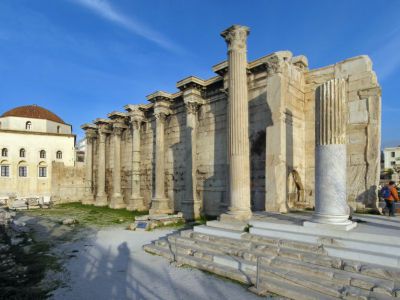
While not much remains of this Roman-era library today, back in the 2nd century AD, it was the place to be. Imagine a massive cloistered courtyard, a hundred grand columns, and enough space to make even the most extravagant book hoarder jealous. And who do we have to thank for this intellectual paradise?-Emperor Hadrian, the ultimate fanboy of Greek culture. In fact, he was so enamored with it, that they nicknamed him “Graecula” (which means “Little Greek”).
He decked out this sprawling complex with art galleries, lecture halls, and a magnificent public space-because why stop at books when you can have everything? His reign ushered in a golden age of peace and prosperity, giving arts and culture a serious upgrade across the empire.
In its prime, the library housed precious papyrus scrolls and exquisite artworks-until the barbaric Herules (from modern-day Germany) came knocking (not for a book club meeting, unfortunately). After their invasion, a Roman official named Herculius took on restoration duties, but history had more plans for the ruins. Over time, they became the foundations for not one, not two, but three different churches-a Byzantine one in the 5th century, another in the 7th, and a cathedral in the 12th. That's what they call re-purposing real estate!
These days, the site is finally open to the public, though excavation is still ongoing. A few original Corinthian columns have survived the centuries, hinting at the library’s former grandeur. And here’s a fun twist: the remains of the Tetraconch Church, smack in the middle of the ruins, were built entirely inside the library’s old courtyard.
Tip:
Your Acropolis ticket covers entry, so if you’re in the area, it’s a no-brainer to check it out. Or, if you’re feeling more mysterious, just walk along the perimeter fence and steal a few glances through the gaps-because who doesn’t love a little architectural intrigue?
He decked out this sprawling complex with art galleries, lecture halls, and a magnificent public space-because why stop at books when you can have everything? His reign ushered in a golden age of peace and prosperity, giving arts and culture a serious upgrade across the empire.
In its prime, the library housed precious papyrus scrolls and exquisite artworks-until the barbaric Herules (from modern-day Germany) came knocking (not for a book club meeting, unfortunately). After their invasion, a Roman official named Herculius took on restoration duties, but history had more plans for the ruins. Over time, they became the foundations for not one, not two, but three different churches-a Byzantine one in the 5th century, another in the 7th, and a cathedral in the 12th. That's what they call re-purposing real estate!
These days, the site is finally open to the public, though excavation is still ongoing. A few original Corinthian columns have survived the centuries, hinting at the library’s former grandeur. And here’s a fun twist: the remains of the Tetraconch Church, smack in the middle of the ruins, were built entirely inside the library’s old courtyard.
Tip:
Your Acropolis ticket covers entry, so if you’re in the area, it’s a no-brainer to check it out. Or, if you’re feeling more mysterious, just walk along the perimeter fence and steal a few glances through the gaps-because who doesn’t love a little architectural intrigue?
10) Fethiye Mosque
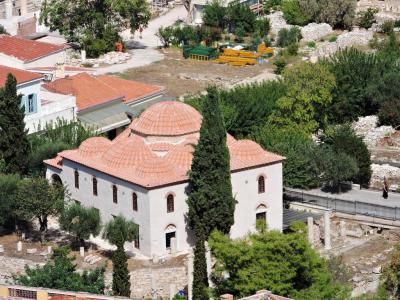
Just a stone’s throw from the Roman Forum, you’ll stumble upon one of Athens’ rare reminders of the Ottoman era. Enter the Fethiye Mosque, the city's oldest, built in 1458 atop the ruins of an 8th-century Byzantine basilica. It was commissioned by none other than Sultan Mehmet II himself-yes, the same guy who conquered Constantinople in 1453. Clearly a multitasker, he also had an appreciation for ancient Greek philosophers. The mosque’s name, “Fethiye,” means “conquest” in Turkish, but the Athenians, not exactly thrilled about their occupiers, skipped the history lesson and called it the Wheatmarket Mosque-because, well, there was a wheat market next door. Practical folks, those Athenians...
Fast-forward to the Morean War (in 1687-1688), when the Venetians briefly took over Athens and decided the mosque would make a great Catholic church dedicated to Dionysius the Areopagite. That didn’t last long, and by the early 19th century, after Greek independence, the minaret was taken down. The building then embarked on a very non-religious second life-first as a school, then as a barracks, then a military prison, and for a grand finale… a military bakery. Indeed, why not-nothing says “re-purposing” like fresh bread.
Today, the mosque still stands with its grand porticoed entrance, though you can’t go inside-it's now an archaeological storage facility (which is historian-speak for “off-limits”). But if you cross Eólou Street, right across from the Roman Forum, you’ll spot what’s left of a medrese (an Ottoman-era Islamic school), complete with a gateway and a single dome that have somehow outlasted centuries of change. A quiet reminder that history, much like Athens itself, is full of unexpected twists.
Fast-forward to the Morean War (in 1687-1688), when the Venetians briefly took over Athens and decided the mosque would make a great Catholic church dedicated to Dionysius the Areopagite. That didn’t last long, and by the early 19th century, after Greek independence, the minaret was taken down. The building then embarked on a very non-religious second life-first as a school, then as a barracks, then a military prison, and for a grand finale… a military bakery. Indeed, why not-nothing says “re-purposing” like fresh bread.
Today, the mosque still stands with its grand porticoed entrance, though you can’t go inside-it's now an archaeological storage facility (which is historian-speak for “off-limits”). But if you cross Eólou Street, right across from the Roman Forum, you’ll spot what’s left of a medrese (an Ottoman-era Islamic school), complete with a gateway and a single dome that have somehow outlasted centuries of change. A quiet reminder that history, much like Athens itself, is full of unexpected twists.
11) Museum of Greek Folk Musical Instruments
Imagine dedicating a good half a century of your life to collecting, studying, and preserving folk music. That’s exactly what the esteemed Cretan musicologist Phoivos Anogianákis did. In 1978, instead of hoarding his treasure trove of over 1,200 musical instruments like a mythical dragon guarding gold, he generously handed it over to the Greek state. 14 years later, a museum bearing his name opened its doors, celebrating the vibrant history of Greek folk and popular music, with his spectacular collection taking center stage.
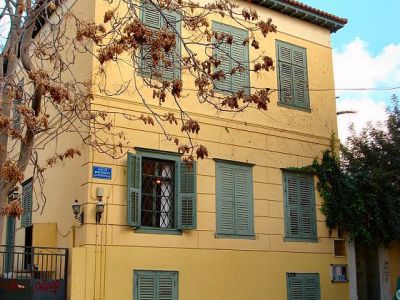
Now, this isn’t just any museum. Housed in a charming 1842 mansion-once the home of a well-to-do Athenian family-it tells the tale of Greek music, from island tunes to the smoky, sorrowful sounds of rempétika, the Greek answer to the blues, which arrived from Smyrna in 1922.
Inside, instruments from every corner of Greece are neatly arranged into four categories: drums, wind instruments, string instruments, and bells. Some are humble, others are absolute masterpieces. And because just looking at them isn’t enough, the museum provides photos, headphones to hear their unique sounds, and even historic videos showing these instruments in action-because nothing illustrates "folk tradition" better than a lively village festival.
Venture down to the basement, and you’ll find an eclectic mix of church bells, livestock bells, water whistles, wooden clappers, and flutes. Meanwhile, wind instruments like the tsampoúna (a goatskin bagpipe with serious character) and the Cretan lýra (small in size, but mighty in sound) proudly claim their spots on display.
Tip:
The courtyard is a lifesaver on sweltering summer days, and if luck is on your side, you might catch a live concert. There’s also a tiny bookstore packed with books and CDs for the true folk music enthusiast. And don’t be shy to ask-the friendly staff is happy to help. Otherwise, you’re free to roam, explore, and soak up the sounds of Greece at your own pace.
Now, this isn’t just any museum. Housed in a charming 1842 mansion-once the home of a well-to-do Athenian family-it tells the tale of Greek music, from island tunes to the smoky, sorrowful sounds of rempétika, the Greek answer to the blues, which arrived from Smyrna in 1922.
Inside, instruments from every corner of Greece are neatly arranged into four categories: drums, wind instruments, string instruments, and bells. Some are humble, others are absolute masterpieces. And because just looking at them isn’t enough, the museum provides photos, headphones to hear their unique sounds, and even historic videos showing these instruments in action-because nothing illustrates "folk tradition" better than a lively village festival.
Venture down to the basement, and you’ll find an eclectic mix of church bells, livestock bells, water whistles, wooden clappers, and flutes. Meanwhile, wind instruments like the tsampoúna (a goatskin bagpipe with serious character) and the Cretan lýra (small in size, but mighty in sound) proudly claim their spots on display.
Tip:
The courtyard is a lifesaver on sweltering summer days, and if luck is on your side, you might catch a live concert. There’s also a tiny bookstore packed with books and CDs for the true folk music enthusiast. And don’t be shy to ask-the friendly staff is happy to help. Otherwise, you’re free to roam, explore, and soak up the sounds of Greece at your own pace.
12) Benizelos Mansion
The Benizelos Mansion, Athens’ last-standing konaki – the aristocratic Ottoman-style urban home – is often missed by tourists. Tucked away in the city, this hidden gem somehow dodges the guidebook limelight, but lucky for you, it is open to explore free of charge (although, a little donation is always welcome).
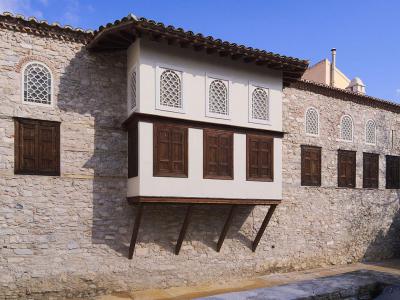
Built in the early 18th century, this two-story, stone-meets-timber residence once belonged to one of Athens' wealthiest families. It wasn’t just a fancy home-it was part of a much larger estate, possibly with a medieval olive press (because what’s a Greek mansion without a little olive oil history?). Today, it stands as a rare glimpse into the architecture of the late Ottoman period.
Inside, an exhibition-available in English and Greek-brings the past to life through visuals, audio, and interactive displays. One of the home’s most famous former residents, Saint Philothei, was a noblewoman-turned-monastic who devoted her life to philanthropy. Her relics now rest in the Metropolitan Cathedral of Athens-because, naturally, she was too important for just a family portrait on the wall.
Downstairs, the ground floor was all business. Three rooms and a grand portico stored the household essentials: grain, oil, wine-aka survival basics. A well and a wash basin built into the staircase hint at an advanced water system (because even 18th-century aristocrats knew the importance of plumbing).
Upstairs, things got cozy. The main living space revolved around the living quarters and the open corridor, with separate winter and summer rooms. The winter space had a fireplace for those ‘chilly’ Athenian nights, while the summer room featured stained-glass screens for a breezy, sunlit vibe.
But the real highlight is the enclosed balcony on the south façade, overlooking the courtyard garden-a slice of serenity in the middle of modern Athens. With its fine craftsmanship, Ottoman design, and a history full of intrigue, the Benizelos Mansion is more than just an old house-it’s an 18th-century time capsule waiting to be explored. So, why not step inside and let history do the talking?
Built in the early 18th century, this two-story, stone-meets-timber residence once belonged to one of Athens' wealthiest families. It wasn’t just a fancy home-it was part of a much larger estate, possibly with a medieval olive press (because what’s a Greek mansion without a little olive oil history?). Today, it stands as a rare glimpse into the architecture of the late Ottoman period.
Inside, an exhibition-available in English and Greek-brings the past to life through visuals, audio, and interactive displays. One of the home’s most famous former residents, Saint Philothei, was a noblewoman-turned-monastic who devoted her life to philanthropy. Her relics now rest in the Metropolitan Cathedral of Athens-because, naturally, she was too important for just a family portrait on the wall.
Downstairs, the ground floor was all business. Three rooms and a grand portico stored the household essentials: grain, oil, wine-aka survival basics. A well and a wash basin built into the staircase hint at an advanced water system (because even 18th-century aristocrats knew the importance of plumbing).
Upstairs, things got cozy. The main living space revolved around the living quarters and the open corridor, with separate winter and summer rooms. The winter space had a fireplace for those ‘chilly’ Athenian nights, while the summer room featured stained-glass screens for a breezy, sunlit vibe.
But the real highlight is the enclosed balcony on the south façade, overlooking the courtyard garden-a slice of serenity in the middle of modern Athens. With its fine craftsmanship, Ottoman design, and a history full of intrigue, the Benizelos Mansion is more than just an old house-it’s an 18th-century time capsule waiting to be explored. So, why not step inside and let history do the talking?
13) Anafiotika and Plaka Stairs (must see)
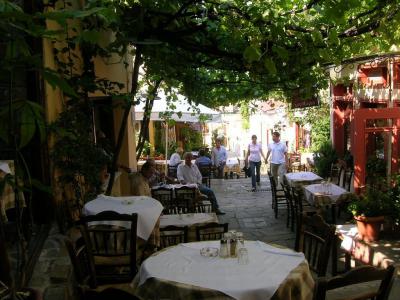
Nestled in the shadow of the Acropolis and frequently likened to the charming whitewashed villages of the rural Greek islands, Anafiotika is one of Athens' most delightful and idiosyncratic neighborhoods. Situated in the capital's Plaka district, it is poetically described as a "breeze of the Aegean" in the heart of the city, and as such exudes a unique character and ambiance.
Originally settled by the descendants of Anafi stonemasons, who arrived in the 19th century to work in the expanding capital, Anafiotika has retained much of its original charm. The area features simple stone houses, some of which are built directly into the bedrock. Many of them remain unchanged while others have undergone restoration over the years.
The cascades of vibrant bougainvillea and pots of geraniums and marigolds adorn the balconies and rooftops, adding to the prevailing tranquility that contrasts the bustle and noise of modern Athens. Back in antiquity, this area was abandoned because the Delphic Oracle claimed it as a sacred ground. Later, during Ottoman rule, locals ingeniously constructed their homes overnight, taking advantage of the law that granted ownership of the property if it were erected between sunset and sunrise.
Recently renovated, the Plaka Stairs neighborhood abounds in small eateries and bars scattered on the slopes of the Acropolis, particularly along Mnisikleous pedestrian street and its vicinity. Due to the hilly landscape, this street is designed in the form of steps, lined with cafes and restaurants on both sides. Creative and often compact seating arrangements along the steps create a lively atmosphere filled with music and the cheerful voices of the passers-by. This unique dining experience is guaranteed from early lunchtime until the evening.
Tip:
For those seeking a lovely spot for dinner and drinks, the Anafiotika Cafe Restaurant, located on the narrow Plaka Steps, offers a spacious patio area and a rooftop terrace that is perfect for catching the sunset.
Originally settled by the descendants of Anafi stonemasons, who arrived in the 19th century to work in the expanding capital, Anafiotika has retained much of its original charm. The area features simple stone houses, some of which are built directly into the bedrock. Many of them remain unchanged while others have undergone restoration over the years.
The cascades of vibrant bougainvillea and pots of geraniums and marigolds adorn the balconies and rooftops, adding to the prevailing tranquility that contrasts the bustle and noise of modern Athens. Back in antiquity, this area was abandoned because the Delphic Oracle claimed it as a sacred ground. Later, during Ottoman rule, locals ingeniously constructed their homes overnight, taking advantage of the law that granted ownership of the property if it were erected between sunset and sunrise.
Recently renovated, the Plaka Stairs neighborhood abounds in small eateries and bars scattered on the slopes of the Acropolis, particularly along Mnisikleous pedestrian street and its vicinity. Due to the hilly landscape, this street is designed in the form of steps, lined with cafes and restaurants on both sides. Creative and often compact seating arrangements along the steps create a lively atmosphere filled with music and the cheerful voices of the passers-by. This unique dining experience is guaranteed from early lunchtime until the evening.
Tip:
For those seeking a lovely spot for dinner and drinks, the Anafiotika Cafe Restaurant, located on the narrow Plaka Steps, offers a spacious patio area and a rooftop terrace that is perfect for catching the sunset.
14) Tower of the Winds
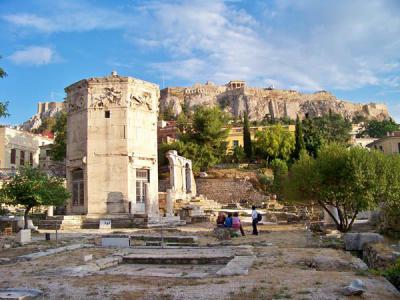
At the Tower of the Winds, you have science, mythology, and a touch of irony collide in an exquisite octagonal package. Standing proudly at 12 meters tall, this marble masterpiece was ancient Athens' answer to the weather app, a multi-functional timepiece that not only told the time but also predicted the wind’s next move. Think of it as a 2,000-year-old smart gadget, featuring sundials, a water clock, and a wind vane-all meticulously designed by a Syrian Greek astronomer around 50 BC (or perhaps even earlier, if some historians are to be believed).
Its frieze is a who’s who of the wind gods, with eight deities sculpted into the marble: from Boreas, blowing in the chill from the north, to Zephyrus, the west wind who, according to mythology, had a rather dramatic love life. Beneath them?-Eight sundials, because one just wasn’t enough. Inside?-A once-impressive water clock, powered by water piped directly from the Acropolis. And its height? Not just for show-it was designed so that Athenians could check the time and weather without craning their necks too much.
But history, as always, had its way with this tower. Early Christians turned it into a belfry, because why not? Then, during the Ottoman era, it became a tekke for whirling dervishes, where spiritual dancers twirled in meditation while the ancient sundials probably sighed in retirement. Over time, parts of the tower were buried, and today, faint Turkish inscriptions still linger on its interior walls-a nod to its many past lives.
Want to see it for yourself? Your ticket to the Roman Agora (or the Acropolis combo pass) will get you in. A small price to pay for a glimpse into one of history’s most sophisticated and repurposed buildings!
Its frieze is a who’s who of the wind gods, with eight deities sculpted into the marble: from Boreas, blowing in the chill from the north, to Zephyrus, the west wind who, according to mythology, had a rather dramatic love life. Beneath them?-Eight sundials, because one just wasn’t enough. Inside?-A once-impressive water clock, powered by water piped directly from the Acropolis. And its height? Not just for show-it was designed so that Athenians could check the time and weather without craning their necks too much.
But history, as always, had its way with this tower. Early Christians turned it into a belfry, because why not? Then, during the Ottoman era, it became a tekke for whirling dervishes, where spiritual dancers twirled in meditation while the ancient sundials probably sighed in retirement. Over time, parts of the tower were buried, and today, faint Turkish inscriptions still linger on its interior walls-a nod to its many past lives.
Want to see it for yourself? Your ticket to the Roman Agora (or the Acropolis combo pass) will get you in. A small price to pay for a glimpse into one of history’s most sophisticated and repurposed buildings!
15) Church of the Holy Apostles
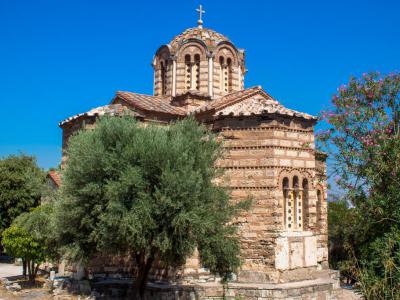
Ah, the Church of the Holy Apostles-small but mighty, still standing proud since the 10th century.
Tucked near the heart of the Ancient Roman Forum, this little Byzantine beauty has done what few buildings of its era have managed: keep most of its original structure intact. Built atop a 2nd-century shrine for Greece’s favorite mystical water nymphs, it was meant to honor Apostle Paul’s teachings in the Agora.
Speaking of its style: the exterior boasts intricate brick patterns that cleverly mimic Arabic calligraphy-because even in the 10th century, aesthetics mattered. The Ottoman era brought some changes (as they tended to do), but a mid-20th-century restoration swept away those 19th-century additions, bringing the church back to its Byzantine roots.
Visiting on a sweltering summer day, you’ll be grateful for this shady little oasis. Inside, you’ll find stunning Byzantine frescoes, lovingly salvaged from a demolished church-because good art deserves a second chance. And for the best part, this under-the-radar gem is rarely crowded, so you can soak up the history in peace.
No seating inside, but don’t worry-there are charming shaded benches nearby where you can rest, reflect, and pretend you’ve time-traveled a few centuries back.
Why else visit? Well, it’s not colossal, so it won’t leave you breathless from sheer scale-but it does offer a rare, unaltered glimpse into the world of smaller Byzantine churches. A true hidden treasure, just waiting for you to stumble upon it.
Tucked near the heart of the Ancient Roman Forum, this little Byzantine beauty has done what few buildings of its era have managed: keep most of its original structure intact. Built atop a 2nd-century shrine for Greece’s favorite mystical water nymphs, it was meant to honor Apostle Paul’s teachings in the Agora.
Speaking of its style: the exterior boasts intricate brick patterns that cleverly mimic Arabic calligraphy-because even in the 10th century, aesthetics mattered. The Ottoman era brought some changes (as they tended to do), but a mid-20th-century restoration swept away those 19th-century additions, bringing the church back to its Byzantine roots.
Visiting on a sweltering summer day, you’ll be grateful for this shady little oasis. Inside, you’ll find stunning Byzantine frescoes, lovingly salvaged from a demolished church-because good art deserves a second chance. And for the best part, this under-the-radar gem is rarely crowded, so you can soak up the history in peace.
No seating inside, but don’t worry-there are charming shaded benches nearby where you can rest, reflect, and pretend you’ve time-traveled a few centuries back.
Why else visit? Well, it’s not colossal, so it won’t leave you breathless from sheer scale-but it does offer a rare, unaltered glimpse into the world of smaller Byzantine churches. A true hidden treasure, just waiting for you to stumble upon it.
