

Architectural Landmarks, Sochi

Architectural Landmarks (Self Guided), Sochi

Sochi is home to a variety of architectural forms, although the prevalent style blends the man-made and the natural, as is fitting for a sea-side resort. On this self-guided tour you will visit the most notable buildings in Sochi.
How it works: Download the app "GPSmyCity: Walks in 1K+ Cities" from Apple App Store or Google Play Store to your mobile phone or tablet. The app turns your mobile device into a personal tour guide and its built-in GPS navigation functions guide you from one tour stop to next. The app works offline, so no data plan is needed when traveling abroad.

Download The GPSmyCity App

Architectural Landmarks Map

Guide Name: Architectural Landmarks
Guide Location: Russia » Sochi (See other walking tours in Sochi)
Guide Type: Self-guided Walking Tour (Sightseeing)
# of Attractions: 9
Tour Duration: 3 Hour(s)
Travel Distance: 7.7 Km or 4.8 Miles
Author: Linda
Sight(s) Featured in This Guide:
  • Train Station
  • Central Post Office
  • Sea Port
  • Villa Vera
  • Pushkinskaya
  • Primorskaya Hotel
  • Villa of A. V. Yakubson
  • Villa of V. Barsova
  • Villa of N. A. Shevelev
1
Train Station

1) Train Station (must see)

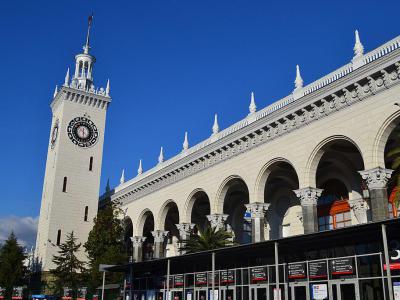
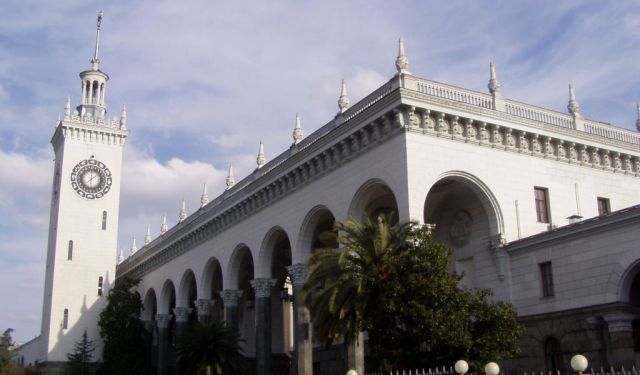
The Sochi Railway Station is a main gateway for travelers arriving by train. The current station building opened in 1952, at a time when railway stations were designed to look solid and important. The building has a clear, balanced shape with a tall central tower and a large clock. Arches, columns, and wide steps reflect the Soviet-era style and make the structure easy to recognize.

Inside, the station feels open and practical, with high ceilings and a wide main hall that can handle heavy passenger flow during holiday periods. Ticket counters, information boards, and waiting areas are arranged in clear zones, making it easy to find your way. Some original details, such as chandeliers, patterned floors, and wall decorations, are still visible and show how the space looked in the early 1950s, even though modern updates have been added.

The station serves both long-distance trains from major Russian cities and regional routes along the coast. Platforms are reached through underground passages, which keeps foot traffic away from moving trains. Signs are clear, and staff are usually present, helping visitors who are using the railway system for the first time. Trains arrive and leave throughout the day, so the station stays active without feeling crowded all the time.

For visitors, the station is more than just a transport point. Upper levels and open areas around the building offer views toward the sea and nearby neighborhoods. Many people pause to take photos of the tower or rest before continuing their trip. The station shows how travel, daily routines, and architecture come together in one place.
2
Central Post Office

2) Central Post Office

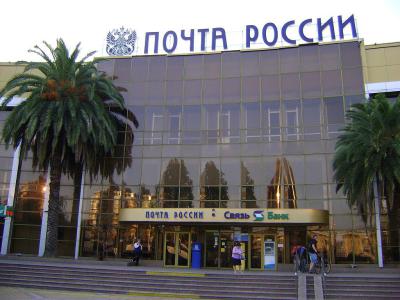
Central Post Office was built in the 1950s, when the Black Sea coast was being actively developed. It was built as a public service building for mail, telegrams, and everyday communication. The design followed Soviet standards, with simple planning, strong structure, and practical use of space, while also being adapted to the local climate and the area’s role as a resort.

The exterior shows typical mid-20th-century Soviet architecture. The building is symmetrical and easy to recognize, with wide steps and a clear, balanced shape. Decoration is limited. Columns and large windows are used mainly to shape the structure and bring in light. Light-colored materials help reduce heat and fit well with the coastal environment. The look is simple and functional rather than decorative.

Inside, the post office was designed for daily use, with large halls, high ceilings, and wide counters to handle steady visitor flow. Some floor patterns and wall details still show Soviet-era design, while modern equipment has been added without changing the building’s original function.
3
Sea Port

3) Sea Port (must see)

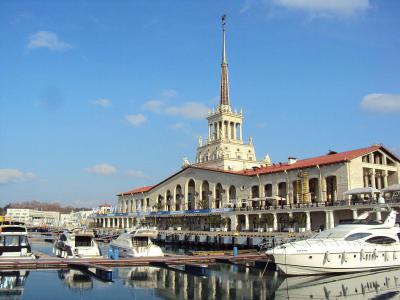
The Sea Port is both a working harbor and a public place by the water. The main terminal building was completed in 1955 and is a clear example of Stalinist Empire style, also known as Soviet Neoclassicism. The design is solid and symmetrical, with a strong focus on balance and order. From the start, the port was built to serve both passenger travel and cargo transport, and it continues to operate in these roles today.

One of the most noticeable features is the central spire, which rises 71 meters above the building. It is topped with a five-pointed star and can be seen from far along the shoreline, making it an easy landmark for visitors. The spire helps define the port’s silhouette and reflects the style and symbolism of the period when the building was constructed.

The terminal is also known for its decorative details. Sculptures by Valentin Ingal are placed on the building and represent the four seasons and the four cardinal points, linking architecture with ideas of time and direction. In front of the terminal, there is a fountain with a statue of the goddess of navigation, which adds a clear maritime reference and marks the main entrance area.

Around the building, the waterfront is arranged for pedestrians. Wide paths follow the edge of the harbor, with benches and open terraces facing the water. Visitors can watch cruise ships, yachts, and smaller sightseeing boats arrive and depart, often from close range. The mix of port activity and open walking space makes it easy to observe daily harbor life while spending time outdoors by the sea.
4
Villa Vera

4) Villa Vera

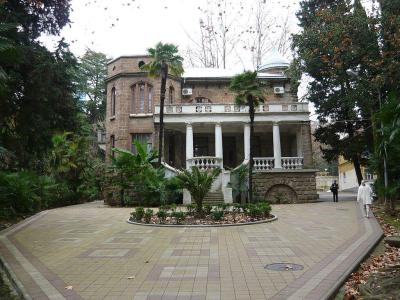
Villa Vera was built in 1910 as a private summer house, at a time when the area was becoming a resort for the Russian Empire. The villa belonged to Mr. Kostarev and was used as a seasonal retreat rather than a large permanent home. Over the years, the building was used in different ways but was not heavily changed. Its original shape and setting remain mostly intact, which is why it is now protected as a historical landmark.

The architecture reflects early 20th-century resort design and does not follow strict symmetry. One side of the building stands out with a two-story gallery, columns, and a wide staircase. Terraces, balconies, and large windows bring in light and air, while stone and brick construction reflects building practices of the time and suits the local climate.

Next to the villa is a quiet pine garden from the original design by Reingold Garbe. Shaded paths and frequent sightings of red squirrels make it a calm place for short walks, with most visitors stopping briefly to look around and take photos.
5
Pushkinskaya

5) Pushkinskaya

Pushkinskaya Library was founded in 1899 as a free public reading room. It was created to mark 100 years since the birth of Alexander Pushkin and is known as the first public library on the Caucasian coast. At that time, access to books was limited, so the library played an important role in everyday education. It was open to local residents and to people visiting the resort area for health or leisure, offering books and newspapers without charge.

The library was named after Alexander Pushkin, who is seen as the founder of modern Russian literature. From the start, its purpose was simple and practical: quiet reading and self-education. The reading rooms were quiet and meant for individual study, which helped the library become part of everyday local life.

While the library itself dates to 1899, the building most people recognize today opened later, on May 27, 1912. It was designed by architect A. Y. Butkin in the Art Nouveau style. The building is protected as an architectural monument and has kept its early 20th-century appearance. The library remains active, offering reading rooms, book lending, and regular lectures and small exhibitions.
6
Primorskaya Hotel

6) Primorskaya Hotel

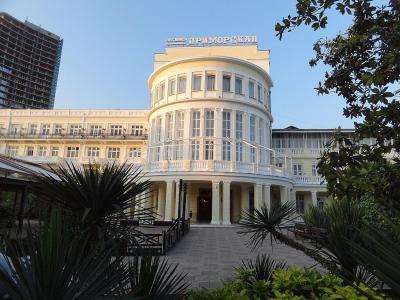
Primorskaya Hotel opened in 1936 and was designed by architect Jan A. The building is easy to recognize by its symmetrical design, thick walls, and high ceilings. For many years, it served as a major seaside hotel and hosted writers, artists, and official guests. The original structure is now protected as a historical monument and still keeps its 1930s appearance.

In the 2020s, the site began a major reconstruction by LSR Group. Early plans expected some work to finish by 2025, but later updates moved full completion to 2027. The project includes the restored historic building and two new 28-story towers, which are still under construction as of early 2026.

The finished complex is planned to include 652 rooms and apartment-style units, a higher number than earlier estimates. Modern features include spa areas, a year-round swimming pool, fitness facilities, and a helipad. The hotel remains about 100–200 meters from the sea, with direct access to the seaside promenade. Dining venues are planned within the complex, and Sel Marin is often used as a nearby reference point. In 2026, visitors should expect ongoing construction as the hotel prepares for full operation.
7
Villa of A. V. Yakubson

7) Villa of A. V. Yakubson

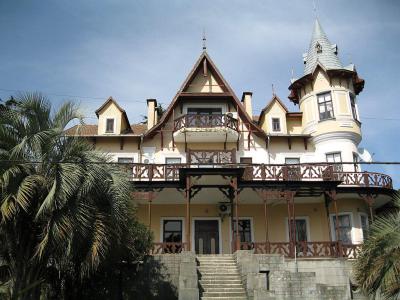
The Villa of A. V. Yakubson is a two-story residential building from the early 20th century. It belonged to doctor A. V. Yakubson and was designed by architect R. I. Budnik. The villa was built at a time when private houses were common along the Black Sea coast, especially for doctors and other professionals. Unlike large hotels, it was planned as a personal home, which explains its moderate size and practical layout.

The building is considered a clear example of romantic modernism from this period. This style focuses on different surfaces and textures instead of rich decoration. The facade is simple, with smooth walls and light details. Open galleries help block direct sun and improve air flow, while large windows provide natural light. Balconies and terraces connect the rooms with the garden around the house.

Over time, the villa changed its use, like many houses from this period. Some interiors were altered, but the main structure and exterior were kept. Today, it serves as administrative offices for Svetlana, a medical facility, and is usually viewed from the outside. The building reflects how early resort-era homes were planned before large hotels appeared.
8
Villa of V. Barsova

8) Villa of V. Barsova

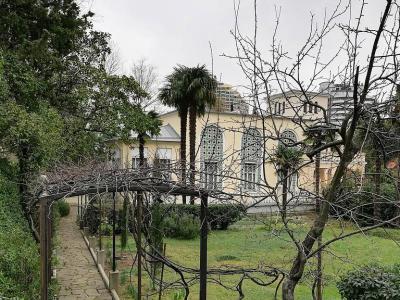
Villa of V. Barsova was built in 1947 as a private dacha for Valeria Barsova, a famous Soviet opera singer and People’s Artist of the USSR. The house was paid for by Barsova and built after the Second World War. She lived and worked here from 1947 to 1967. Because it was designed specifically for her, the villa is closely linked to her personal life and career.

The building is small and simple in shape. Its light-colored walls, tall windows, and sloped roof give it a calm, home-like look. Decorative details are limited to small balconies and modest trims around the windows. Although it was built during the Soviet period, the style feels traditional and personal rather than official.

Since 1988, the villa has been open as the Dacha-Museum of V. V. Barsova, part of the local history museum network. Visitors can enter the villa and see rooms connected to Barsova’s life. The exhibition shows a music salon, personal items, photographs, documents, and recordings. Guided tours explain her career and the villa’s role as a meeting place for musicians and artists.
9
Villa of N. A. Shevelev

9) Villa of N. A. Shevelev

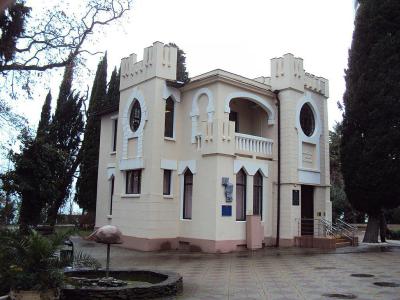
The Villa of N. A. Shevelev was built in 1903 for the artist N. A. Shevelev. At that time, this area was starting to develop as a resort, and artists and educated residents often built private villas for seasonal living and work. The building was never meant to be simple housing; it was designed to reflect creative taste and personal style.

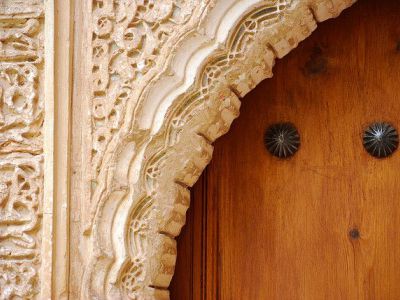
The villa is a rare local example of the Mauritanian style, which is unusual for this region. It is inspired by Spanish, Portuguese, Moorish, and medieval Islamic architecture. The exterior is highly decorative, with mosaics, stained glass, and colored marble. Complex shapes and patterns make the villa visually rich and more ornate than most buildings from the same period.

After the 1917 revolution, the villa lost its original private function and was later used for public purposes, which was common for buildings of this type. Today, it is mainly valued as an architectural landmark. Visitors usually see it from the outside while walking nearby, where its unusual style clearly stands out and helps show how varied early resort architecture could be.

Walking Tours in Sochi, Russia

Create Your Own Walk in Sochi

Create Your Own Walk in Sochi

Creating your own self-guided walk in Sochi is easy and fun. Choose the city attractions that you want to see and a walk route map will be created just for you. You can even set your hotel as the start point of the walk.
Sochi Introduction Walking Tour

Sochi Introduction Walking Tour

The city of Sochi is famous for its beaches, mountains and natural beauty, but there are also many amazing monuments, cathedrals and parks that set the city apart and make it a premier travel destination. Take this tour to visit Sochi's most notable landmarks.

Tour Duration: 3 Hour(s)
Travel Distance: 4.7 Km or 2.9 Miles