

Downtown Odessa Tour (Self Guided), Odessa
Downtown Odessa is the heart of this city, where you will find the most prominent attractions and wonderful landmarks. There are numerous monuments of important personalities in the city, beautiful sculptures and gorgeous buildings. Take the next self-guided tour and discover Odessa’s Downtown!
How it works: Download the app "GPSmyCity: Walks in 1K+ Cities" from Apple App Store or Google Play Store to your mobile phone or tablet. The app turns your mobile device into a personal tour guide and its built-in GPS navigation functions guide you from one tour stop to next. The app works offline, so no data plan is needed when traveling abroad.
Downtown Odessa Tour Map
Guide Name: Downtown Odessa Tour
Guide Location: Ukraine » Odessa (See other walking tours in Odessa)
Guide Type: Self-guided Walking Tour (Sightseeing)
# of Attractions: 8
Tour Duration: 1 Hour(s)
Travel Distance: 0.8 Km or 0.5 Miles
Author: leticia
Sight(s) Featured in This Guide:
Guide Location: Ukraine » Odessa (See other walking tours in Odessa)
Guide Type: Self-guided Walking Tour (Sightseeing)
# of Attractions: 8
Tour Duration: 1 Hour(s)
Travel Distance: 0.8 Km or 0.5 Miles
Author: leticia
Sight(s) Featured in This Guide:
- Petya und Gavrik Sculpture
- Monument to Vera Holodnaya
- Passage
- Monument to Vorontsov
- The Monument to the 12th Chair
- Leonid Utyosov Monument
- City Garden
- Monument to Sergei Utochkin
1) Petya und Gavrik Sculpture
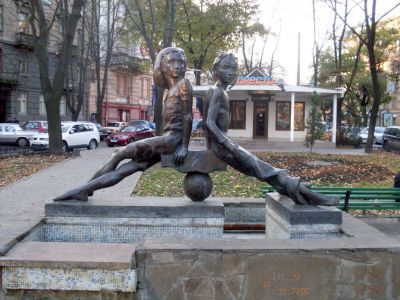
The Petya und Gavrik Sculpture in Odessa pays tribute to two beloved characters from the literary world of Valentin Kataev, whose 1930s novel The Lonely White Sail became a classic of Soviet-era children’s literature. Set against the backdrop of early 20th-century Odessa, Kataev’s story follows two boys—Petya Bachei, naïve and curious, and Gavrik Chernoivanenko, streetwise and fearless—as they stumble into revolutionary events far bigger than themselves. The sculpture captures this youthful spirit, reflecting how deeply these fictional characters became embedded in Odessa’s cultural memory.
Unveiled in 1988, it is situated on Vira Kholodna Square, close to the Transfiguration Cathedral. The sculptor portrayed the two boys mid-stride, as if navigating the city’s crowded streets and seaside paths. Their gestures suggest a moment of shared discovery, referencing the adventurous tone of Kataev’s narrative. This approach gives the sculpture a sense of movement, drawing passersby into the story it represents.
The monument’s placement along a popular pedestrian route makes it a familiar stop for visitors exploring Odessa’s waterfront. Its approachable scale invites interaction, and many tourists pause for a photo with the two literary companions. The sculpture also offers a glimpse into how Odessa honours its writers and the characters that shaped local imagination, blending literature, history, and public art into a single emotional landmark.
For those unfamiliar with The Lonely White Sail, the sculpture serves as an introduction to a work that captured the atmosphere of pre-revolutionary Odessa. For others, it is a nostalgic reminder of school readings and childhood adventures. In both cases, the scene evokes the city’s storytelling tradition and adds a touch of narrative charm to a walk along the shore.
Unveiled in 1988, it is situated on Vira Kholodna Square, close to the Transfiguration Cathedral. The sculptor portrayed the two boys mid-stride, as if navigating the city’s crowded streets and seaside paths. Their gestures suggest a moment of shared discovery, referencing the adventurous tone of Kataev’s narrative. This approach gives the sculpture a sense of movement, drawing passersby into the story it represents.
The monument’s placement along a popular pedestrian route makes it a familiar stop for visitors exploring Odessa’s waterfront. Its approachable scale invites interaction, and many tourists pause for a photo with the two literary companions. The sculpture also offers a glimpse into how Odessa honours its writers and the characters that shaped local imagination, blending literature, history, and public art into a single emotional landmark.
For those unfamiliar with The Lonely White Sail, the sculpture serves as an introduction to a work that captured the atmosphere of pre-revolutionary Odessa. For others, it is a nostalgic reminder of school readings and childhood adventures. In both cases, the scene evokes the city’s storytelling tradition and adds a touch of narrative charm to a walk along the shore.
2) Monument to Vera Holodnaya
The Monument to Vera Holodnaya on Preobrazhenskaya Street pays tribute to one of the earliest icons of Russian silent cinema. Unveiled in 2003, it stands at No. 25, just steps from the Transfiguration Cathedral, in a part of the city closely connected to Holodnaya’s final months. A small square named in her honour lies only a block away, reinforcing the neighbourhood’s connection to her short but influential legacy.
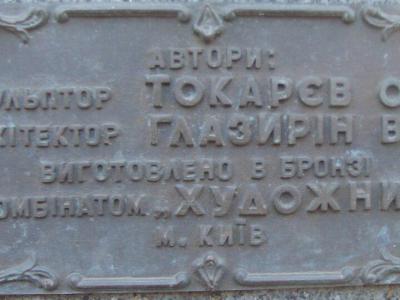
The bronze sculpture was created by sculptor Alexander Tokarev in collaboration with architect Vladimir Glazyrin. Their design presents Holodnaya with the elegance and poise associated with early film stars, capturing the atmosphere of an era when cinema relied solely on expression, movement, and visual emotion. The monument’s style subtly evokes the world she once dominated, offering a quiet reminder of the artistry that shaped the beginnings of film culture.
Vera Holodnaya, often called the “Queen of the Screen,” was one of the first great stars of Russian film. She arrived in Odessa in 1918, during a turbulent period marked by war and political change. Despite the uncertainty of the time, the city became the setting for her final creative chapter, as well as the final chapter of her life; she died in Odessa in 1919 at the age of twenty-five.
Today, the monument provides a reflective stop for visitors exploring central Odessa. Its location near the cathedral and along one of the city’s main streets makes it easy to encounter, yet its tone remains calm and contemplative. For those interested in cinema history or Odessa’s cultural landscape, it stands as a graceful reminder of a pioneering actress whose stardom helped define an entire era of film.
The bronze sculpture was created by sculptor Alexander Tokarev in collaboration with architect Vladimir Glazyrin. Their design presents Holodnaya with the elegance and poise associated with early film stars, capturing the atmosphere of an era when cinema relied solely on expression, movement, and visual emotion. The monument’s style subtly evokes the world she once dominated, offering a quiet reminder of the artistry that shaped the beginnings of film culture.
Vera Holodnaya, often called the “Queen of the Screen,” was one of the first great stars of Russian film. She arrived in Odessa in 1918, during a turbulent period marked by war and political change. Despite the uncertainty of the time, the city became the setting for her final creative chapter, as well as the final chapter of her life; she died in Odessa in 1919 at the age of twenty-five.
Today, the monument provides a reflective stop for visitors exploring central Odessa. Its location near the cathedral and along one of the city’s main streets makes it easy to encounter, yet its tone remains calm and contemplative. For those interested in cinema history or Odessa’s cultural landscape, it stands as a graceful reminder of a pioneering actress whose stardom helped define an entire era of film.
3) Passage (must see)
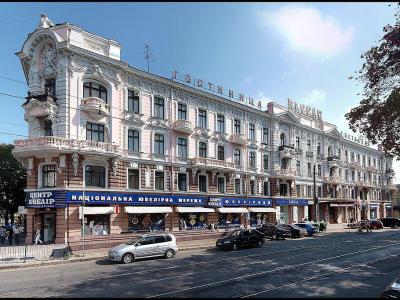
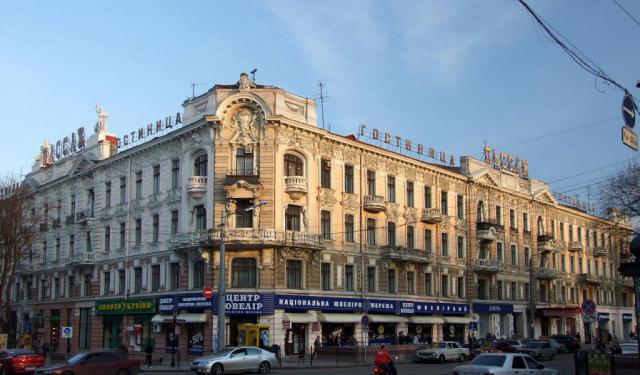
Odessa Passage is one of the city’s most striking landmarks, often described as a “palace for shoppers.” Located on Deribasovskaya Street, this late 19th-century architectural gem combines the elegance of a luxury arcade with the charm of a grand hotel. Built between 1898 and 1899 by architect Lev Vlodek, the Passage was designed in the Neo-Baroque style, adorned with lavish stucco decorations, sculptures, and a glass roof that floods the interior with natural light. From the moment visitors step inside, they are met with a dazzling display of art and craftsmanship that reflects the optimism and prosperity of Odessa’s golden age.
The building served both as a commercial and residential complex, with boutiques and offices on the lower levels and hotel rooms above. In its early years, the Passage was one of the most prestigious addresses in Odessa, hosting elegant shops, cafés, and salons. The glass-covered atrium remains the focal point, featuring sculptures of mythological figures and allegorical representations of trade, industry, and agriculture—symbols of the city’s thriving port economy.
Today, Odessa Passage continues to function as a mix of shopping arcade and hotel, preserving its fin-de-siècle grandeur while adapting to modern life. Small souvenir shops, fashion boutiques, and restaurants line its walkways, offering visitors a glimpse into the city’s blend of old and new.
A visit to the Passage is more than a shopping trip—it’s a step back into a time when Odessa was among the most sophisticated ports on the Black Sea.
The building served both as a commercial and residential complex, with boutiques and offices on the lower levels and hotel rooms above. In its early years, the Passage was one of the most prestigious addresses in Odessa, hosting elegant shops, cafés, and salons. The glass-covered atrium remains the focal point, featuring sculptures of mythological figures and allegorical representations of trade, industry, and agriculture—symbols of the city’s thriving port economy.
Today, Odessa Passage continues to function as a mix of shopping arcade and hotel, preserving its fin-de-siècle grandeur while adapting to modern life. Small souvenir shops, fashion boutiques, and restaurants line its walkways, offering visitors a glimpse into the city’s blend of old and new.
A visit to the Passage is more than a shopping trip—it’s a step back into a time when Odessa was among the most sophisticated ports on the Black Sea.
4) Monument to Vorontsov
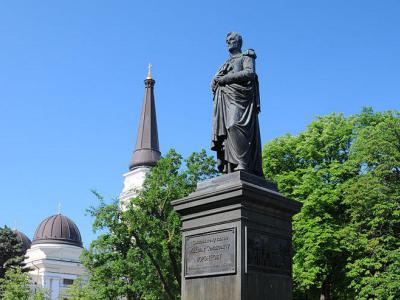
The Monument to Mikhail Vorontsov once stood as one of Odessa’s earliest and most imposing public memorials, occupying a prominent place in Sobor Square near the Transfiguration Cathedral. Unveiled in 1863, it was only the second monument ever erected in the city, funded by residents who sought to honour Prince Mikhail Semyonovich Vorontsov, the influential governor-general of the Novorossiya Region. Vorontsov served from 1823 to 1854, shaping Odessa’s early development and leaving a legacy that local elites of the 19th century were eager to commemorate.
Designed by the Austrian sculptor Friedrich Brugger, the monument featured a 3.2-metre bronze figure set atop an imposing eight-metre diorite pedestal. The pedestal included three intricate bas-reliefs, each illustrating key moments from Vorontsov’s life, such as his military engagement in France and his role in the Russo-Turkish War. Together, these elements created a stately tribute that blended artistry with historical storytelling, making the monument a focal point of Sobor Square for generations.
Throughout the Soviet era, the monument endured a complicated and sometimes contentious history. Although many imperial-era symbols were removed or reinterpreted, the statue survived repeated calls for demolition. At one point, Soviet authorities even replaced the inscription with a biting poem by Alexander Pushkin, who famously clashed with Vorontsov during his exile in Odessa. This unusual episode underscored the shifting political landscapes that shaped the monument’s identity over time.
In recent years, the monument entered yet another chapter. In November 2023, the Ukrainian government revoked its cultural heritage status in accordance with derussification laws aimed at removing symbols associated with the Russian Empire and Soviet Union. This decision marked a significant shift in how the city engages with its layered past.
For visitors to Odesa today, the Vorontsov monument is still visible in Sobor Square. The former site of the monument is not empty; rather, the monument itself now lacks its protected status and stands as a complex and layered artifact of the city's history, reflecting the very narratives about memory and identity that the text mentions.
Designed by the Austrian sculptor Friedrich Brugger, the monument featured a 3.2-metre bronze figure set atop an imposing eight-metre diorite pedestal. The pedestal included three intricate bas-reliefs, each illustrating key moments from Vorontsov’s life, such as his military engagement in France and his role in the Russo-Turkish War. Together, these elements created a stately tribute that blended artistry with historical storytelling, making the monument a focal point of Sobor Square for generations.
Throughout the Soviet era, the monument endured a complicated and sometimes contentious history. Although many imperial-era symbols were removed or reinterpreted, the statue survived repeated calls for demolition. At one point, Soviet authorities even replaced the inscription with a biting poem by Alexander Pushkin, who famously clashed with Vorontsov during his exile in Odessa. This unusual episode underscored the shifting political landscapes that shaped the monument’s identity over time.
In recent years, the monument entered yet another chapter. In November 2023, the Ukrainian government revoked its cultural heritage status in accordance with derussification laws aimed at removing symbols associated with the Russian Empire and Soviet Union. This decision marked a significant shift in how the city engages with its layered past.
For visitors to Odesa today, the Vorontsov monument is still visible in Sobor Square. The former site of the monument is not empty; rather, the monument itself now lacks its protected status and stands as a complex and layered artifact of the city's history, reflecting the very narratives about memory and identity that the text mentions.
5) The Monument to the 12th Chair (must see)
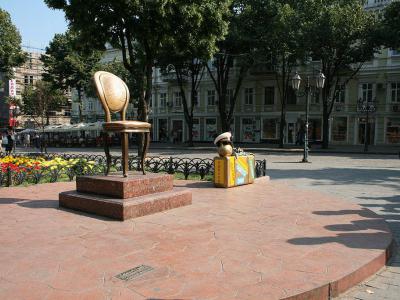
The Monument to the 12th Chair in Odessa pays tribute to one of the city’s most beloved literary icons: The Twelve Chairs, the satirical novel written by Ilya Ilf and Yevgeny Petrov, both Odessa natives. Installed in 1999 in the City Garden on Derybasivska Street, the sculpture captures the spirit of Odessa’s sharp humour and its long-standing affection for the book’s roguish characters. The novel, published in 1928, follows the adventures of Ostap Bender as he hunts for hidden jewels supposedly concealed in one of a dozen chairs—an unlikely treasure quest that has become part of local cultural memory.
The monument depicts the famous Rococo-style chair at the centre of the story, crafted in bronze with an intentionally inviting seat. Visitors often pause to rest on it or pose for photos, continuing the playful tradition that the book inspires. Its placement in the City Garden, a historic park filled with sculptures and live music, adds to the light-hearted atmosphere surrounding the piece.
For Odessa, the monument is more than a tribute to literature; it reflects the city’s identity shaped by satire, wit, and storytelling. The work also acknowledges Ilf and Petrov’s ties to Odessa, anchoring their fictional world within the city's real streets. Today, the 12th Chair remains a popular stop for travellers, blending humour, history, and local pride in one memorable sculpture.
The monument depicts the famous Rococo-style chair at the centre of the story, crafted in bronze with an intentionally inviting seat. Visitors often pause to rest on it or pose for photos, continuing the playful tradition that the book inspires. Its placement in the City Garden, a historic park filled with sculptures and live music, adds to the light-hearted atmosphere surrounding the piece.
For Odessa, the monument is more than a tribute to literature; it reflects the city’s identity shaped by satire, wit, and storytelling. The work also acknowledges Ilf and Petrov’s ties to Odessa, anchoring their fictional world within the city's real streets. Today, the 12th Chair remains a popular stop for travellers, blending humour, history, and local pride in one memorable sculpture.
6) Leonid Utyosov Monument (must see)
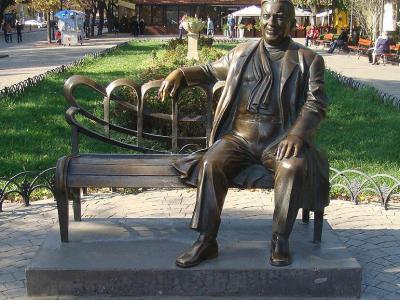
In the heart of Odessa, along the pedestrian stretch of Derybasivska Street, stands the Monument to Leonid Utyosov—a bronze sculpture that captures the relaxed spirit of one of the city’s most beloved entertainers. The figure shows the celebrated singer and comic actor seated on a bench, as though taking a pause after a lively performance.
The statue pays tribute to Leonid Osipovich Utyosov, born in 1895 in Odessa, who rose to fame as a jazz‑influenced singer, bandleader, and actor in the Soviet era. He became the first pop‑style performer to receive the title “People’s Artist of the USSR” in 1965. The monument was unveiled in 2000, on the city’s anniversary celebration, offering a friendly cultural highlight for visitors and residents alike.
The location is ideal for a leisurely visit: the bench sculpture sits in the small green space of the city garden adjacent to the famed street, and many visitors like to pause and take a photo next to Utyosov’s likeness. While the monument might appeal especially to those with some familiarity with 20th‑century Soviet popular culture, its charm and accessible setting make it a pleasant stop on a walking tour of Odessa’s downtown.
When strolling through Derybasivska and the surrounding pedestrian zones, allocating a few minutes to this monument adds a personal, human touch to the city’s rich architectural and cultural landscape. Consider visiting during daylight for the best photo lighting, and allow a moment to appreciate how a city remembers its entertainers as part of everyday urban life.
The statue pays tribute to Leonid Osipovich Utyosov, born in 1895 in Odessa, who rose to fame as a jazz‑influenced singer, bandleader, and actor in the Soviet era. He became the first pop‑style performer to receive the title “People’s Artist of the USSR” in 1965. The monument was unveiled in 2000, on the city’s anniversary celebration, offering a friendly cultural highlight for visitors and residents alike.
The location is ideal for a leisurely visit: the bench sculpture sits in the small green space of the city garden adjacent to the famed street, and many visitors like to pause and take a photo next to Utyosov’s likeness. While the monument might appeal especially to those with some familiarity with 20th‑century Soviet popular culture, its charm and accessible setting make it a pleasant stop on a walking tour of Odessa’s downtown.
When strolling through Derybasivska and the surrounding pedestrian zones, allocating a few minutes to this monument adds a personal, human touch to the city’s rich architectural and cultural landscape. Consider visiting during daylight for the best photo lighting, and allow a moment to appreciate how a city remembers its entertainers as part of everyday urban life.
7) City Garden (must see)
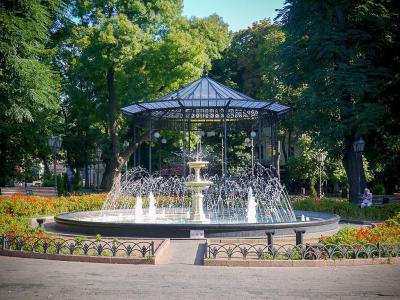
The public park known as the City Garden in Odessa lies at the heart of the city’s historic pedestrian street and offers a pleasant retreat from the surrounding urban bustle. It was founded in 1803 by Felix de Ribas, brother of the city’s early administrator, and three years later, he donated the grounds to the city.
Over the centuries, the garden has evolved into one of Odessa’s cherished green spaces, marked by its cast-iron pavilion, an open-air theatre stage used for music performances, and a fountain that operates to timed music in the warmer months. As you stroll through, you’ll find sculptures and monuments – for example, the decorative “Tree of Love” and the quirky monument to the “12th Chair” (a reference to the satirical novel by writers Ilya Ilf and Yevgeny Petrov).
The atmosphere here changes gently as the day progresses. In daylight, the green canopy and winding paths encourage quiet reflection, children’s laughter around the fountain, and the occasional snack café in the nearby façade. At dusk, the lights come on, and intimate concerts may begin on the summer theatre’s stage, lending a slightly theatrical tone to the space.
For someone visiting Odessa, this garden offers both a moment of calm and a slice of local rhythm. It sits on the famous pedestrian avenue, making it easy to incorporate into a casual city walk. As the city’s oldest park, it also provides a tangible connection to Odessa’s urban history – from its early 19th-century design through to its modern role as a meeting place for both residents and visitors.
Over the centuries, the garden has evolved into one of Odessa’s cherished green spaces, marked by its cast-iron pavilion, an open-air theatre stage used for music performances, and a fountain that operates to timed music in the warmer months. As you stroll through, you’ll find sculptures and monuments – for example, the decorative “Tree of Love” and the quirky monument to the “12th Chair” (a reference to the satirical novel by writers Ilya Ilf and Yevgeny Petrov).
The atmosphere here changes gently as the day progresses. In daylight, the green canopy and winding paths encourage quiet reflection, children’s laughter around the fountain, and the occasional snack café in the nearby façade. At dusk, the lights come on, and intimate concerts may begin on the summer theatre’s stage, lending a slightly theatrical tone to the space.
For someone visiting Odessa, this garden offers both a moment of calm and a slice of local rhythm. It sits on the famous pedestrian avenue, making it easy to incorporate into a casual city walk. As the city’s oldest park, it also provides a tangible connection to Odessa’s urban history – from its early 19th-century design through to its modern role as a meeting place for both residents and visitors.
8) Monument to Sergei Utochkin (must see)
The Monument to Sergei Utochkin on Derybasivska Street pays tribute to one of Odessa’s most energetic early-20th-century figures. Sergei Utochkin (1876–1916) gained recognition as a gifted all-around athlete before becoming one of the first aviators in the Russian Empire. His daring flights, performed at a time when aviation was still experimental and hazardous, drew enormous crowds and helped introduce the city to the excitement of powered flight. Beyond sports and aviation, he also played a role in Odessa’s cultural life, opening one of the city’s earliest cinemas.
Unveiled on September 2, 2001, the bronze sculpture stands in the City Garden, a central and historic green space along the pedestrian stretch of Derybasivska Street. This location is not accidental: it is close to the site of Utochkin’s former “Utoch-kino,” a reminder that he was an innovator both in the air and on the ground. The setting allows visitors to connect his story with the lively heart of Odessa’s cultural district.
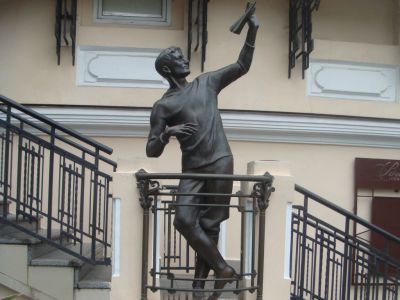
The monument, created by sculptor Alexander Tokarev with architectural design by Vladimir Glazyrin, presents Utochkin as a young man launching a paper airplane. This simple gesture captures the spirit of dreaming, experimentation, and curiosity that defined his life. Rather than portraying him as a heroic aviator in full flight gear, the sculpture opts for a quieter, more imaginative moment that highlights his aspirations.
Visitors often pause here to appreciate the statue’s subtle symbolism and approachable scale. Its placement along one of Odessa’s busiest pedestrian routes makes it a popular landmark for photographs and a natural stopping point during a stroll. The monument serves as both a tribute to Utochkin’s achievements and a reminder of the city’s long relationship with innovation and cultural creativity.
Unveiled on September 2, 2001, the bronze sculpture stands in the City Garden, a central and historic green space along the pedestrian stretch of Derybasivska Street. This location is not accidental: it is close to the site of Utochkin’s former “Utoch-kino,” a reminder that he was an innovator both in the air and on the ground. The setting allows visitors to connect his story with the lively heart of Odessa’s cultural district.
The monument, created by sculptor Alexander Tokarev with architectural design by Vladimir Glazyrin, presents Utochkin as a young man launching a paper airplane. This simple gesture captures the spirit of dreaming, experimentation, and curiosity that defined his life. Rather than portraying him as a heroic aviator in full flight gear, the sculpture opts for a quieter, more imaginative moment that highlights his aspirations.
Visitors often pause here to appreciate the statue’s subtle symbolism and approachable scale. Its placement along one of Odessa’s busiest pedestrian routes makes it a popular landmark for photographs and a natural stopping point during a stroll. The monument serves as both a tribute to Utochkin’s achievements and a reminder of the city’s long relationship with innovation and cultural creativity.
Walking Tours in Odessa, Ukraine
Create Your Own Walk in Odessa
Creating your own self-guided walk in Odessa is easy and fun. Choose the city attractions that you want to see and a walk route map will be created just for you. You can even set your hotel as the start point of the walk.
Odessa Primorsky Bоulevard Walking Tour
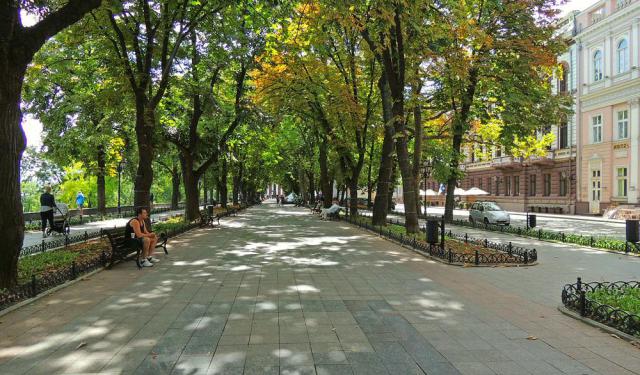
Primorsky Boulevard is one of the most prominent streets in Odessa, starting at Dumskaya Square and ending at Vorontsov’s Palace. This popular tourist attraction and wonderful sight is home to several monuments, and is a valuable landmark from an architectural, archaeological and historical points of view. This walking tour will guide you through amazing sights of Odessa.
Tour Duration: 1 Hour(s)
Travel Distance: 0.7 Km or 0.4 Miles
Tour Duration: 1 Hour(s)
Travel Distance: 0.7 Km or 0.4 Miles
Odessa Introduction Walking Tour
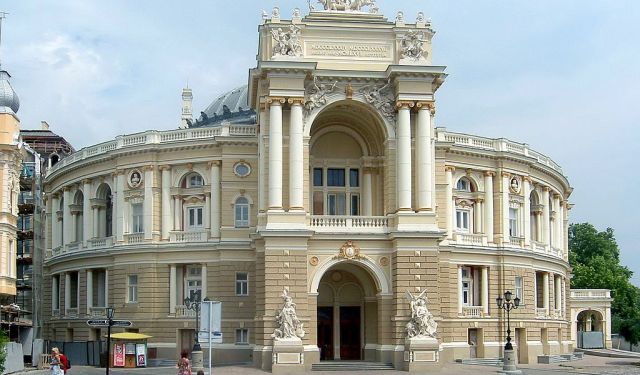
Odessa is the marvel of a city on the Black Sea shore and a true tourist mecca. Rich in history, it abounds in splendid architecture - buildings, fountains, monuments, statues, and more. Follow this walking tour to explore the most notable sights of Odessa.
Tour Duration: 3 Hour(s)
Travel Distance: 3.6 Km or 2.2 Miles
Tour Duration: 3 Hour(s)
Travel Distance: 3.6 Km or 2.2 Miles
The Most Popular Cities
/ view all