

Odessa Primorsky Bоulevard Walking Tour, Odessa

Odessa Primorsky Bоulevard Walking Tour (Self Guided), Odessa

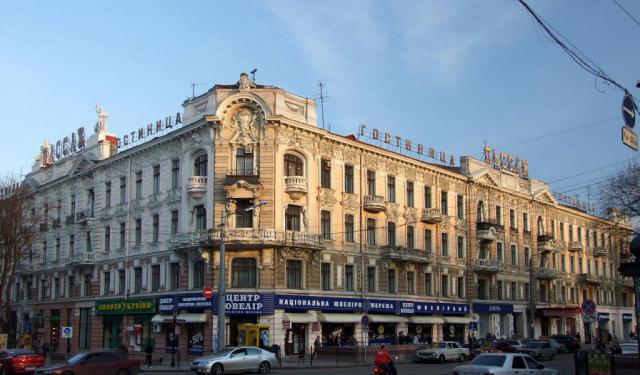
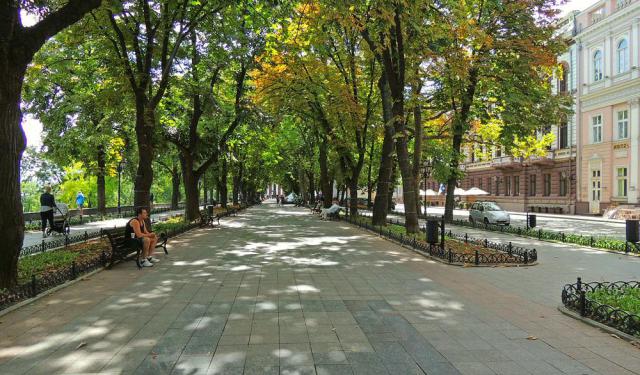
Primorsky Boulevard is one of the most prominent streets in Odessa, starting at Dumskaya Square and ending at Vorontsov’s Palace. This popular tourist attraction and wonderful sight is home to several monuments, and is a valuable landmark from an architectural, archaeological and historical points of view. This walking tour will guide you through amazing sights of Odessa.
How it works: Download the app "GPSmyCity: Walks in 1K+ Cities" from Apple App Store or Google Play Store to your mobile phone or tablet. The app turns your mobile device into a personal tour guide and its built-in GPS navigation functions guide you from one tour stop to next. The app works offline, so no data plan is needed when traveling abroad.

Download The GPSmyCity App

Odessa Primorsky Bоulevard Walking Tour Map

Guide Name: Odessa Primorsky Bоulevard Walking Tour
Guide Location: Ukraine » Odessa (See other walking tours in Odessa)
Guide Type: Self-guided Walking Tour (Sightseeing)
# of Attractions: 6
Tour Duration: 1 Hour(s)
Travel Distance: 0.7 Km or 0.4 Miles
Author: leticia
Sight(s) Featured in This Guide:
  • Directions Monument
  • Odessa City Hall
  • French Cannon
  • Remains of Ancient Greek Settlement
  • Potemkin Stairs
  • Duc de Richelieu Monument
1
Directions Monument

1) Directions Monument (must see)

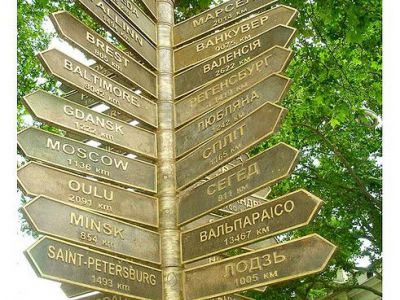
Located near Odessa City Hall, the Directions Monument is a quirky and charming landmark that offers both practicality and a touch of humor. The monument features an iron pole with multiple sides, each bearing the names of cities and their respective directions from Odessa. It serves as a playful guide for tourists and locals alike, making it easier for anyone to find their bearings—whether you're in need of a reminder of where you're from or just wondering how to get back home.

While it may seem like an ordinary directional sign, the monument's unique design stands out in Odessa's bustling cityscape. It combines functionality with a lighthearted spirit, inviting visitors to pause, admire, and maybe even chuckle as they check the directions. The inclusion of various cities on the monument highlights Odessa’s position as a crossroads of cultures, with connections extending across the globe.

For those exploring the area around City Hall, the Directions Monument offers a fun opportunity for a quick stop. It’s the perfect spot for a photo or to check your city’s name on one of its many sides. Whether you’re a first-time visitor or a returning traveler, the Directions Monument is sure to add a whimsical touch to your Odessa experience.
2
Odessa City Hall

2) Odessa City Hall

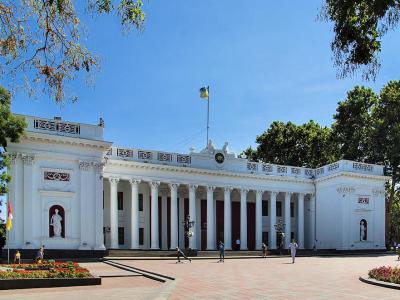
Odessa City Hall is one of the city’s most distinctive landmarks, located on Primorsky Boulevard, just a short distance from the famous Potemkin Stairs. This elegant building serves as the seat of the Odessa City Council and symbolizes the city’s long-standing civic pride. Constructed in the early 19th century, the hall was designed in the Neoclassical style by architect Francesco Boffo, who also worked on several other notable projects in Odessa, including the Potemkin Stairs and Vorontsov Palace. Its bright white façade, grand portico supported by Corinthian columns, and balanced proportions make it one of the most photographed buildings in the city.

Originally completed in 1837, the building stands on the site of Odessa’s first stock exchange, reflecting the city’s origins as a bustling port and commercial centre. The architecture conveys confidence and order, reflecting Odessa’s pivotal role as a vital hub for trade in the Black Sea region. Statues of Ceres, the goddess of agriculture, and Mercury, the god of commerce, adorn the front, symbolizing prosperity and growth.

Visitors approaching the hall are often greeted by the sound of the city clock, which plays fragments of the song “Odessa, My City” each hour. The surrounding square is shaded by trees and framed by monuments, including a statue of Alexander Pushkin, who once lived nearby.

Today, Odessa City Hall is not only an administrative centre but also a cultural and historical landmark. Its well-preserved architecture and setting along Primorsky Boulevard make it a natural stop for anyone exploring the city’s heart.
3
French Cannon

3) French Cannon (must see)

The "French Cannon" in Odessa is a historical monument that commemorates the city’s resilient defense during the Crimean War. Situated in front of the Odessa City Hall on Primorsky Boulevard, this cannon serves as a lasting reminder of the successful repulsion of an Anglo-French naval attack on the city in 1854-1855. Although it is commonly referred to as the "French Cannon" due to its connection to the French squadron involved in the attack, the cannon itself was captured from the British ship HMS Tiger, which was destroyed by Russian defenders during the war.

This remarkable piece of history was recovered from the wreckage of HMS Tiger, a British warship that ran aground and was subsequently obliterated by Russian forces. The cannon, one of the remnants of this dramatic encounter, was eventually placed in its current location as part of the city’s efforts to memorialize the courageous defense against the Anglo-French forces. The monument was unveiled in 1904, marking the 50th anniversary of the defense, and it continues to stand as a symbol of Odessa’s military legacy.

In 2004, the cannon underwent significant restoration work, ensuring its preservation for future generations. The iron parts were repainted, giving the monument a fresh, enduring presence. Visitors today can admire the cannon as it faces the bustling Primorsky Boulevard, one of Odessa’s most iconic streets, where it stands proudly as a tribute to the city's history and its role in the Crimean War.

Despite its misnomer, the French Cannon remains an essential part of Odessa's cultural and historical landscape. It attracts both history buffs and casual visitors, providing a fascinating glimpse into the city’s past while serving as a striking landmark near the Odessa City Hall.
4
Remains of Ancient Greek Settlement

4) Remains of Ancient Greek Settlement

The Remains of the Ancient Greek Settlement in Odessa offer a rare glimpse into the deep past of a city better known for its 19th-century boulevards and maritime culture. Long before the foundation of modern Odessa in 1794, this stretch of Black Sea coast was part of the wider Greek world, dotted with small trading posts that linked the Mediterranean with the steppe. Archaeologists have identified fragments of those early settlements within the current city limits, revealing how merchants and settlers lived along these shores more than two thousand years ago.

Excavations have uncovered the foundations of houses, storage pits, ceramics, and tools that suggest a modest but active community engaged in commerce. These finds align with what is known about the region’s role in the ancient grain trade, which connected Greek colonies such as Olbia and Tyras to markets across the Aegean. The settlement that once stood here was part of that network, supplying agricultural goods and serving as a contact point between Greek traders and local tribes.

Visitors today can observe the exposed stonework and interpretive displays that explain the layers of history beneath modern Odessa. While only partial structures remain, they clearly illustrate the layout of an ancient settlement, from domestic areas to spaces used for storage and craft activities. The site shows how everyday life unfolded on this frontier of the Hellenic world.

Nearby information panels provide context on dating, excavation history, and the significance of the artefacts uncovered. Taken together, the remains offer an informative contrast to the city’s later architectural heritage, reminding visitors that Odessa’s story begins not in the 18th century but in antiquity, when the Black Sea was a vibrant crossroads of cultures.
5
Potemkin Stairs

5) Potemkin Stairs (must see)

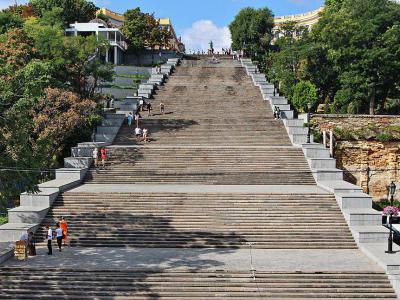
The Potemkin Stairs are among Odessa’s most recognizable landmarks, symbolizing the city’s link between the sea and the urban centre above. Completed in 1841, this grand staircase was originally designed by Italian architect Francesco Boffo to connect the port with Primorsky Boulevard. Comprising 192 steps and extending 142 metres in length, the stairs were ingeniously constructed to create an optical illusion: when viewed from the bottom, only the steps are visible, while from the top, only the landings appear—emphasizing the sense of monumental ascent or descent depending on one’s direction.

Originally called the Boulevard Steps, the monument gained worldwide fame in 1925 after its dramatic portrayal in Sergei Eisenstein’s silent film Battleship Potemkin, where a scene of a baby carriage tumbling down the steps became an enduring symbol of revolutionary cinema. This cinematic moment immortalized the site and gave the stairs their modern name, linking Odessa forever with Soviet film history and global culture alike.

Visitors climbing the Potemkin Stairs experience more than a feat of engineering—they walk through layers of Odessa’s history. Bronze plaques mark key points, and midway up, sweeping views of the harbour unfold, framed by classical balustrades and ornamental lamps. The nearby funicular, added in the early 20th century and rebuilt in recent decades, offers an alternative route to the top for those preferring a leisurely ride.

At the summit lies the elegant Primorsky Boulevard, lined with historic buildings, statues, and cafes, while at the base, the bustling port stretches toward the Black Sea. Together, they capture the spirit of Odessa—majestic, cinematic, and always connected to the sea.
6
Duc de Richelieu Monument

6) Duc de Richelieu Monument (must see)

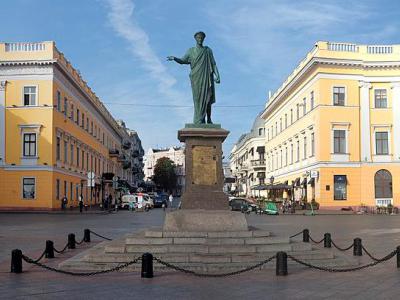
The Monument to Duc de Richelieu in Odessa marks a landmark moment in the city’s early years. Standing on the upper end of what many know as the Potemkin Stairs, the bronze statue was unveiled in 1828 and is credited as the first monument erected in the city.

The figure depicted is Armand Emmanuel de Vignerot du Plessis, 5th Duke of Richelieu, a French nobleman who arrived in the region in the early 19th century and served as governor of Odesa between 1803 and 1814. His tenure coincided with significant urban and commercial growth: new buildings, port facilities, and a trade‑friendly environment began to shape the city into a regional centre.

The statue itself presents the Duke dressed in Roman‑style drapery rather than contemporary attire, a choice intended to lend classical gravitas to his figure. It was sculpted by Ivan Martos and cast in bronze in Saint Petersburg. At the monument’s base, one can find relief panels and details referencing commerce, justice, and agriculture—elements central to the Duke’s vision for the city.

Visiting the monument offers both a photo‑worthy moment and a chance to reflect on Odessa’s transformation from a modest port settlement into a bustling civic centre in a relatively short period. Many locals still refer to the Duke affectionately as “our Duke”, an indicator of his enduring place in the city’s story. Given its prominent location and historical resonance, it’s worthwhile to pause here and consider the ways in which individuals, design, and commerce converged to shape the city you are walking through.

In passing by the statue, you also gain a sense of the layered history of the city’s development: political exile, imperial service, urban planning, trade expansion, and civic identity all converge in one figure and one setting. That layered story is part of the appeal for visitors keen to understand not just what the city looks like, but how it came to be.

Walking Tours in Odessa, Ukraine

Create Your Own Walk in Odessa

Create Your Own Walk in Odessa

Creating your own self-guided walk in Odessa is easy and fun. Choose the city attractions that you want to see and a walk route map will be created just for you. You can even set your hotel as the start point of the walk.
Downtown Odessa Tour

Downtown Odessa Tour

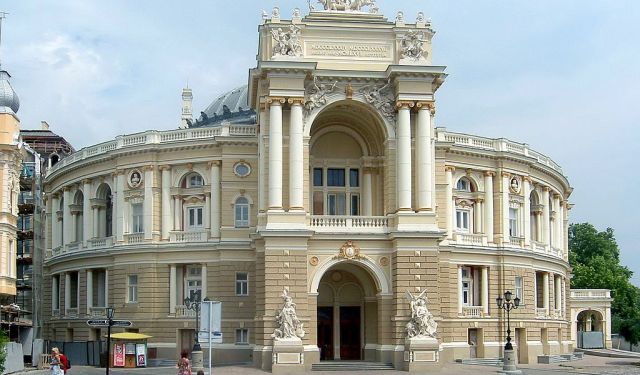
Downtown Odessa is the heart of this city, where you will find the most prominent attractions and wonderful landmarks. There are numerous monuments of important personalities in the city, beautiful sculptures and gorgeous buildings. Take the next self-guided tour and discover Odessa’s Downtown!

Tour Duration: 1 Hour(s)
Travel Distance: 0.8 Km or 0.5 Miles
Odessa Introduction Walking Tour

Odessa Introduction Walking Tour

Odessa is the marvel of a city on the Black Sea shore and a true tourist mecca. Rich in history, it abounds in splendid architecture - buildings, fountains, monuments, statues, and more. Follow this walking tour to explore the most notable sights of Odessa.

Tour Duration: 3 Hour(s)
Travel Distance: 3.6 Km or 2.2 Miles