

Historical Churches (Self Guided), Arequipa
Colonists from Spain brought to Peru and Arequipa the power of Catholicism, which is beautifully reflected today in the splendid architectural designs of Arequipa's numerous places of worship. Arequipa’s churches are among the most striking in Peru. Take this self-guided walking tour to explore the city's religious heritage.
How it works: Download the app "GPSmyCity: Walks in 1K+ Cities" from Apple App Store or Google Play Store to your mobile phone or tablet. The app turns your mobile device into a personal tour guide and its built-in GPS navigation functions guide you from one tour stop to next. The app works offline, so no data plan is needed when traveling abroad.
Historical Churches Map
Guide Name: Historical Churches
Guide Location: Peru » Arequipa (See other walking tours in Arequipa)
Guide Type: Self-guided Walking Tour (Sightseeing)
# of Attractions: 7
Tour Duration: 1 Hour(s)
Travel Distance: 2.1 Km or 1.3 Miles
Author: sabrina
Sight(s) Featured in This Guide:
Guide Location: Peru » Arequipa (See other walking tours in Arequipa)
Guide Type: Self-guided Walking Tour (Sightseeing)
# of Attractions: 7
Tour Duration: 1 Hour(s)
Travel Distance: 2.1 Km or 1.3 Miles
Author: sabrina
Sight(s) Featured in This Guide:
- Iglesia de La Merced (Church of La Merced)
- Iglesia de la Compania (Church of the Company)
- Cathedral of Arequipa
- Iglesia de San Agustin (San Agustin Church)
- Iglesia San Francisco (San Francisco Church)
- Iglesia Santa Marta (Saint Marta Church)
- Iglesia Santa Rosa (Santa Rosa Church)
1) Iglesia de La Merced (Church of La Merced) (must see)
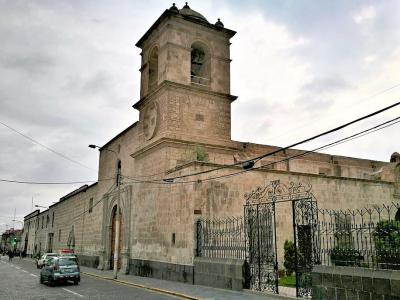
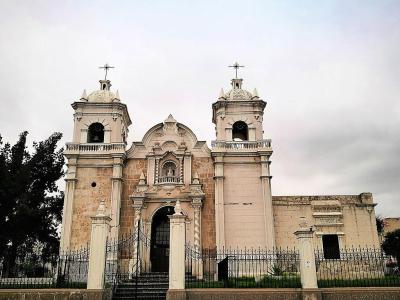
The Church of La Merced (Iglesia de La Merced), founded in 1540 by the Mercedarian Order, is one of the most enduring religious monuments in Arequipa. Built of sillar, the white volcanic stone that defines the city’s architecture, the church and adjoining convent embody centuries of history, devotion, and resilience. Construction began in 1551 and extended into the early 17th century, though earthquakes in 1687, 1860, and 1950 caused serious damage. Each reconstruction preserved its colonial character while adding new layers, making the church both a living symbol of faith and a cultural landmark within Arequipa’s historic centre.
The façade of La Merced combines Gothic and Baroque elements, its rough-hewn stonework offset by intricate carvings. Among the most striking details is the sculpted figure of the Virgin of Mercy flanked by sphinxes, a unique feature reflecting the artistry of colonial craftsmen. The sober portico, framed by small columns, gives way to a richly decorated interior that contrasts with the exterior’s restraint.
Inside, visitors encounter a masterpiece of Andean Baroque style. The main altar, finely crafted and covered in gold leaf, stands as the focal point of the church. Surrounding it are side chapels adorned with Cuzco School paintings depicting the Virgin of Mercy, Saint Peter Nolasco, and other revered saints. A colonial-era library containing antique volumes further highlights the intellectual and spiritual role the convent once played.
Today, the Church of La Merced continues to function as an active place of worship, offering both a glimpse into Arequipa’s colonial past and a moment of quiet reflection. For travelers, it is not only an architectural treasure but also a window into the enduring traditions of the Mercedarian order that shaped its history.
The façade of La Merced combines Gothic and Baroque elements, its rough-hewn stonework offset by intricate carvings. Among the most striking details is the sculpted figure of the Virgin of Mercy flanked by sphinxes, a unique feature reflecting the artistry of colonial craftsmen. The sober portico, framed by small columns, gives way to a richly decorated interior that contrasts with the exterior’s restraint.
Inside, visitors encounter a masterpiece of Andean Baroque style. The main altar, finely crafted and covered in gold leaf, stands as the focal point of the church. Surrounding it are side chapels adorned with Cuzco School paintings depicting the Virgin of Mercy, Saint Peter Nolasco, and other revered saints. A colonial-era library containing antique volumes further highlights the intellectual and spiritual role the convent once played.
Today, the Church of La Merced continues to function as an active place of worship, offering both a glimpse into Arequipa’s colonial past and a moment of quiet reflection. For travelers, it is not only an architectural treasure but also a window into the enduring traditions of the Mercedarian order that shaped its history.
2) Iglesia de la Compania (Church of the Company) (must see)
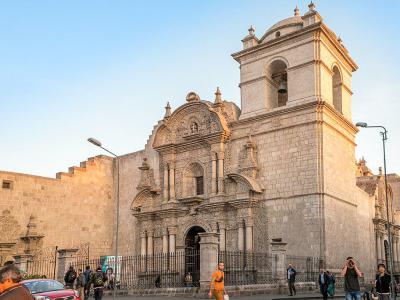
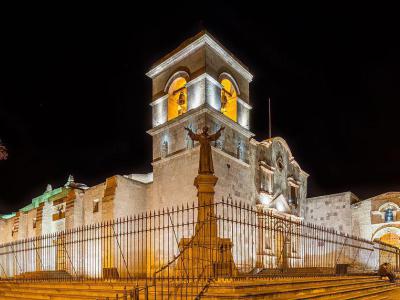
The Church of the Company (Iglesia de la Compania) stands as one of Arequipa’s most celebrated examples of colonial religious architecture. Built by the Jesuits in the late 16th century, it quickly became a spiritual and cultural centre for the city, reflecting the order’s influence in Peru during the Spanish colonial period. Though damaged and rebuilt several times due to earthquakes, the church, as it appears today, retains the rich character of its past, combining European styles with local artistry to create a building that is as much a symbol of Arequipa’s identity as it is a place of worship.
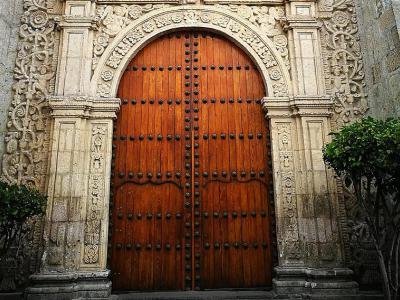
From the outside, the façade captures immediate attention with its intricate carvings made from sillar, the white volcanic stone that gives Arequipa its nickname, the “White City.” Unlike the sober lines of other colonial churches, the façade of the church is a masterpiece of the baroque mestizo style, where European motifs blend seamlessly with indigenous designs. Flora, fauna, angels, and even Andean symbols appear intertwined, offering a visual dialogue between cultures that makes the church unique in Peru’s architectural landscape.
Inside, the atmosphere shifts to one of quiet elegance and artistic richness. The main altar, gilded and elaborately decorated, stands as the focal point, while the side chapels house remarkable works of colonial painting and sculpture. The Chapel of San Ignacio, in particular, is famous for its vividly painted murals depicting tropical flora and fauna, a striking contrast to the church’s more restrained stone exterior. Visitors are often surprised by this burst of colour, which reflects both the Jesuit missionary spirit and the creative hand of indigenous artists.
For travellers, the Church of the Company is not only a site of religious significance but also a window into the cultural blending that shaped Arequipa’s history. It offers an intimate perspective on the city’s colonial past, while its artistry and detail reward those who linger to observe its many layers.
From the outside, the façade captures immediate attention with its intricate carvings made from sillar, the white volcanic stone that gives Arequipa its nickname, the “White City.” Unlike the sober lines of other colonial churches, the façade of the church is a masterpiece of the baroque mestizo style, where European motifs blend seamlessly with indigenous designs. Flora, fauna, angels, and even Andean symbols appear intertwined, offering a visual dialogue between cultures that makes the church unique in Peru’s architectural landscape.
Inside, the atmosphere shifts to one of quiet elegance and artistic richness. The main altar, gilded and elaborately decorated, stands as the focal point, while the side chapels house remarkable works of colonial painting and sculpture. The Chapel of San Ignacio, in particular, is famous for its vividly painted murals depicting tropical flora and fauna, a striking contrast to the church’s more restrained stone exterior. Visitors are often surprised by this burst of colour, which reflects both the Jesuit missionary spirit and the creative hand of indigenous artists.
For travellers, the Church of the Company is not only a site of religious significance but also a window into the cultural blending that shaped Arequipa’s history. It offers an intimate perspective on the city’s colonial past, while its artistry and detail reward those who linger to observe its many layers.
3) Cathedral of Arequipa (must see)
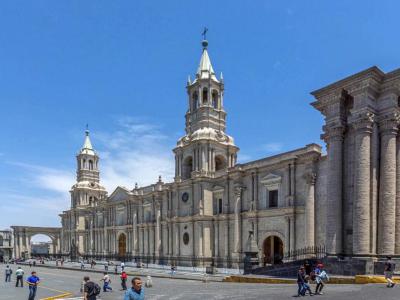
The Cathedral of Arequipa is one of Peru’s most remarkable religious monuments and a defining symbol of the “White City.” First built in the 16th century, it has been repeatedly rebuilt after earthquakes and fires, with its current appearance largely dating from the 19th century. Constructed primarily of sillar and ignimbrite-white volcanic stones typical of Arequipa-the cathedral reflects both resilience and artistry. Its neo-Renaissance façade, framed by two tall towers and adorned with seventy Corinthian columns, dominates the square, while details such as the English clock installed in 1842 add further historical depth.
Inside, the cathedral impresses with both scale and refinement. Three naves divided by pilasters are crowned by kerchief vaults, while the high altar, carved from Carrara marble, and the intricately detailed pulpit made in Belgium highlight international influences. Religious artworks, sculptures, altarpieces, and canvases enrich the chapels, offering visitors a glimpse of centuries of Catholic devotion in the region. One of the cathedral’s greatest treasures is its grand organ, crafted by the Belgian master François Bernard Loret, considered among the largest in South America and admired for having survived centuries of earthquakes.
The cathedral is also home to a museum, inaugurated in 2011, that preserves and displays its most valuable relics. Visitors can explore four galleries filled with gold and silver liturgical objects, priestly vestments, paintings-including works by Francisco Lazo-and unique historical items. Notable among them are the ornate garments of Archbishop Sebastián Goyeneche and the marriage certificate of Peruvian hero Francisco Bolognesi, connecting the cathedral to broader national history.
As the seat of the archbishop and the site of major festivals and processions, the Cathedral of Arequipa remains a living centre of faith and culture. Recognized as part of Arequipa’s UNESCO World Heritage historic centre, it is as much a spiritual landmark as it is an architectural masterpiece, offering travellers an essential stop for understanding the city’s heritage and identity.
Inside, the cathedral impresses with both scale and refinement. Three naves divided by pilasters are crowned by kerchief vaults, while the high altar, carved from Carrara marble, and the intricately detailed pulpit made in Belgium highlight international influences. Religious artworks, sculptures, altarpieces, and canvases enrich the chapels, offering visitors a glimpse of centuries of Catholic devotion in the region. One of the cathedral’s greatest treasures is its grand organ, crafted by the Belgian master François Bernard Loret, considered among the largest in South America and admired for having survived centuries of earthquakes.
The cathedral is also home to a museum, inaugurated in 2011, that preserves and displays its most valuable relics. Visitors can explore four galleries filled with gold and silver liturgical objects, priestly vestments, paintings-including works by Francisco Lazo-and unique historical items. Notable among them are the ornate garments of Archbishop Sebastián Goyeneche and the marriage certificate of Peruvian hero Francisco Bolognesi, connecting the cathedral to broader national history.
As the seat of the archbishop and the site of major festivals and processions, the Cathedral of Arequipa remains a living centre of faith and culture. Recognized as part of Arequipa’s UNESCO World Heritage historic centre, it is as much a spiritual landmark as it is an architectural masterpiece, offering travellers an essential stop for understanding the city’s heritage and identity.
4) Iglesia de San Agustin (San Agustin Church) (must see)
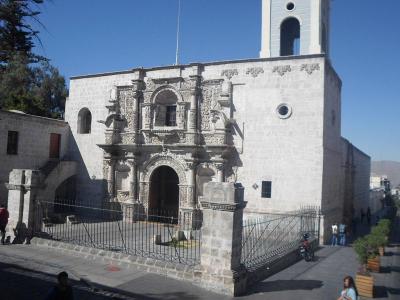
The San Agustin Church (Iglesia de San Agustin) in Arequipa is one of the city’s notable colonial churches, reflecting both the artistic richness and spiritual devotion of the region. Built by the Augustinian order in the 16th century, the church has withstood centuries of earthquakes, reconstructions, and transformations, each phase leaving its own imprint on the building. Today, it stands as a testimony to the endurance of Arequipa’s religious heritage and the craftsmanship of its builders, who worked primarily with sillar, the white volcanic stone that gives the city its “White City” nickname.
Architecturally, the church blends Baroque and mestizo-Baroque styles, making it a fine example of local artistic expression. Its façade is adorned with intricate carvings of foliage, angels, and saints, showcasing the creativity of indigenous stonemasons who infused European motifs with Andean symbolism. Inside, visitors will find a richly decorated main altar covered in gold leaf, which radiates an air of solemnity and grandeur. Side chapels feature paintings and sculptures that add further depth to the church’s artistic collection.
For tourists, the San Agustin Church offers more than just architectural beauty. It provides insight into the cultural and religious life of colonial Arequipa, where faith was intertwined with daily existence and local identity. The atmosphere inside the church is both peaceful and contemplative, making it an ideal stop for those seeking a quieter moment amid the busy city streets.
Visiting the San Agustin Church allows travelers to appreciate Arequipa’s layered history, where Spanish influences and Andean traditions merged to create unique expressions of faith and artistry still admired today.
Architecturally, the church blends Baroque and mestizo-Baroque styles, making it a fine example of local artistic expression. Its façade is adorned with intricate carvings of foliage, angels, and saints, showcasing the creativity of indigenous stonemasons who infused European motifs with Andean symbolism. Inside, visitors will find a richly decorated main altar covered in gold leaf, which radiates an air of solemnity and grandeur. Side chapels feature paintings and sculptures that add further depth to the church’s artistic collection.
For tourists, the San Agustin Church offers more than just architectural beauty. It provides insight into the cultural and religious life of colonial Arequipa, where faith was intertwined with daily existence and local identity. The atmosphere inside the church is both peaceful and contemplative, making it an ideal stop for those seeking a quieter moment amid the busy city streets.
Visiting the San Agustin Church allows travelers to appreciate Arequipa’s layered history, where Spanish influences and Andean traditions merged to create unique expressions of faith and artistry still admired today.
5) Iglesia San Francisco (San Francisco Church) (must see)
The San Francisco Church (Iglesia San Francisco) stands amid the cobbled streets of Arequipa’s historic center as a vivid emblem of colonial faith and architectural elegance. Located near the Plaza de Armas, the church anchors an important religious complex that includes a convent and museum. Visitors are drawn not only to its religious significance but also to its role as a living archive of Arequipa’s identity, constructed in gleaming sillar, the white volcanic stone.
The origins of the complex reach back to the arrival of Franciscan friars in 1540, who first established a modest adobe chapel dedicated to Saint Francis of Assisi. Over the centuries, the site underwent expansion and embellishment, particularly in the 17th century, when the use of sillar and the adoption of Baroque and Renaissance ornamentation gave it the form seen today. Surviving numerous earthquakes and phases of restoration, the church remains a spiritual hub and cultural landmark in the city.
Architecturally, San Francisco blends colonial restraint and baroque flourishes. Its façade displays carved details, Salomonic columns, and ornamental flourishes typical of the period, while the interior reveals chapels richly decorated with retablos, sculptures, and artwork. The adjoining convent enhances the experience: cloisters ringed by sillar columns open to tranquil gardens and a museum housing colonial religious art, Cusco-school paintings, ancient manuscripts, and liturgical objects used by the friars.
For today’s visitors, access to the church is free, while entry to the convent museum is modest (around 10 soles for adults, 5 for children). The site’s dual role-as place of worship and keeper of heritage-invites a contemplative walk through art, faith, and history.
The origins of the complex reach back to the arrival of Franciscan friars in 1540, who first established a modest adobe chapel dedicated to Saint Francis of Assisi. Over the centuries, the site underwent expansion and embellishment, particularly in the 17th century, when the use of sillar and the adoption of Baroque and Renaissance ornamentation gave it the form seen today. Surviving numerous earthquakes and phases of restoration, the church remains a spiritual hub and cultural landmark in the city.
Architecturally, San Francisco blends colonial restraint and baroque flourishes. Its façade displays carved details, Salomonic columns, and ornamental flourishes typical of the period, while the interior reveals chapels richly decorated with retablos, sculptures, and artwork. The adjoining convent enhances the experience: cloisters ringed by sillar columns open to tranquil gardens and a museum housing colonial religious art, Cusco-school paintings, ancient manuscripts, and liturgical objects used by the friars.
For today’s visitors, access to the church is free, while entry to the convent museum is modest (around 10 soles for adults, 5 for children). The site’s dual role-as place of worship and keeper of heritage-invites a contemplative walk through art, faith, and history.
6) Iglesia Santa Marta (Saint Marta Church)
The Saint Marta Church (Iglesia Santa Marta) stands on Plaza España as one of Arequipa’s historic religious landmarks, with origins tracing back to 1582. Over its long history, the church has undergone several transformations, yet it has remained a symbol of faith for the local community. Inside, it houses a treasured image of Christ Crucified, said to have been gifted by King Charles V of Spain, making it a unique and spiritually significant site for visitors. Beyond its religious role, the church is also admired for its location, offering sweeping views of the Chachani and Misti volcanoes that frame Arequipa’s skyline.
Construction of the current building was completed in 1678, with later improvements in 1810 and a remarkable Art Nouveau façade added in 1946. This façade is widely regarded as a masterpiece, distinguished by its two levels, Solomonic columns, and the central statue of Saint Martha, the patron saint of Arequipa. Over time, elements of Baroque and Plateresque design were also incorporated, giving the church its layered architectural character. Today, it represents not just a religious monument but also a showcase of the city’s evolving artistic traditions.
The church has also weathered challenges, particularly the 2001 earthquake, which left cracks in its towers and side walls that remain visible. These marks of vulnerability contrast with the building’s enduring presence, reminding visitors of the resilience of both the structure and the community it serves. Maintained by the Carmelite order, Santa Marta continues to stand as a space of devotion while embodying centuries of history, artistry, and cultural memory in the heart of Arequipa.
Construction of the current building was completed in 1678, with later improvements in 1810 and a remarkable Art Nouveau façade added in 1946. This façade is widely regarded as a masterpiece, distinguished by its two levels, Solomonic columns, and the central statue of Saint Martha, the patron saint of Arequipa. Over time, elements of Baroque and Plateresque design were also incorporated, giving the church its layered architectural character. Today, it represents not just a religious monument but also a showcase of the city’s evolving artistic traditions.
The church has also weathered challenges, particularly the 2001 earthquake, which left cracks in its towers and side walls that remain visible. These marks of vulnerability contrast with the building’s enduring presence, reminding visitors of the resilience of both the structure and the community it serves. Maintained by the Carmelite order, Santa Marta continues to stand as a space of devotion while embodying centuries of history, artistry, and cultural memory in the heart of Arequipa.
7) Iglesia Santa Rosa (Santa Rosa Church)
The Santa Rosa Church (Iglesia Santa Rosa) is a small but historic church that forms part of the Santa Rosa Monastery, founded in 1747 by Dominican nuns. Originally intended for the city of Moquegua, the monastery was instead built in the historic centre of Arequipa, on the corner of Santa Rosa passage and San Pedro Street. Dedicated to Saint Rose of Lima, the first saint of the Americas, the church has served as a place of prayer and reflection for centuries while remaining home to a cloistered community of Dominican nuns.
Architecturally, the church reflects Arequipa’s signature style, built from white volcanic ashlar stone that earned the city its nickname, the “White City.” Its design includes arches, pillars, and a prominent bell tower, elements that lend the complex the appearance of a small fortress or castle. The carved ashlar portal on San Pedro Street leads into the main nave, where mass is still celebrated. Another entrance, from Santa Rosa passage, opens onto a peaceful patio and a small shop where visitors can purchase traditional sweets prepared by the nuns, offering a glimpse into their quiet, self-sustaining life.
For tourists, the Iglesia Santa Rosa provides both a historical and spiritual experience. It offers a chance to admire the craftsmanship of Arequipa’s traditional architecture while also encountering the living faith of a cloistered order that has preserved its traditions for over two centuries. Visitors can step into the peaceful church, wander through the monastery courtyard, or taste the sweets prepared by the nuns, discovering a setting where history, faith, and everyday life come together.
Architecturally, the church reflects Arequipa’s signature style, built from white volcanic ashlar stone that earned the city its nickname, the “White City.” Its design includes arches, pillars, and a prominent bell tower, elements that lend the complex the appearance of a small fortress or castle. The carved ashlar portal on San Pedro Street leads into the main nave, where mass is still celebrated. Another entrance, from Santa Rosa passage, opens onto a peaceful patio and a small shop where visitors can purchase traditional sweets prepared by the nuns, offering a glimpse into their quiet, self-sustaining life.
For tourists, the Iglesia Santa Rosa provides both a historical and spiritual experience. It offers a chance to admire the craftsmanship of Arequipa’s traditional architecture while also encountering the living faith of a cloistered order that has preserved its traditions for over two centuries. Visitors can step into the peaceful church, wander through the monastery courtyard, or taste the sweets prepared by the nuns, discovering a setting where history, faith, and everyday life come together.
Walking Tours in Arequipa, Peru

Create Your Own Walk in Arequipa
Creating your own self-guided walk in Arequipa is easy and fun. Choose the city attractions that you want to see and a walk route map will be created just for you. You can even set your hotel as the start point of the walk.
Arequipa Introduction Walking Tour
Capital of the eponymous region of Peru, Arequipa is a colonial-era city rich in architecture built of the volcanic stone provided by three neighboring volcanoes. The historic downtown area of Arequipa is dominated by Plaza de Armas complete with a plethora of ancient churches located nearby, of which the most notable is the 17th-century Basilica Cathedral. This orientation tour will walk you... view more
Tour Duration: 2 Hour(s)
Travel Distance: 2.0 Km or 1.2 Miles
Tour Duration: 2 Hour(s)
Travel Distance: 2.0 Km or 1.2 Miles
The Most Popular Cities
/ view all