

Keelung Introduction Walking Tour (Self Guided), Keelung
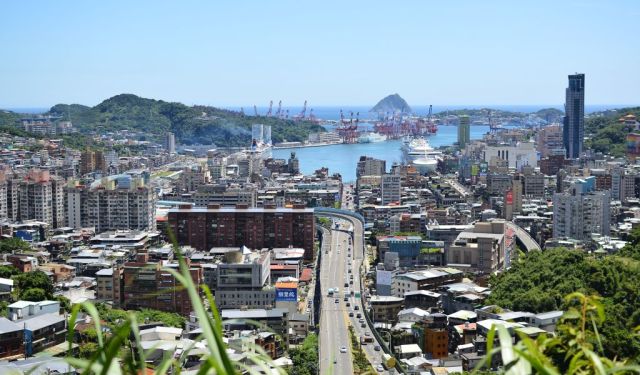
Think about a city whose rainy days inspired a beloved national tune. That city is Keelung. Composer Yang San-Iang took the usual rain sounds of the city and laid them onto a music sheet, creating the song “Rain Blues.” The lyrics capture the thoughts of a contemplative young traveler watching raindrops trickle down the window. It’s a fitting prelude for a place that has always listened to both the sea and the sky.
Keelung's name comes from the Ketagalan people, the Indigenous inhabitants of the region, whose language gave rise to the original word “Ketangalan.” Over time, Chinese settlers Fujian province adapted it to “Ke-lâng,” which means “chicken cage.” It was not until the 20th century that the modern spelling, Keelung, became fixed.
For centuries, the bay was more a landmark than a city. When the Spanish reached Taiwan in the early 17th century, they quickly saw Keelung’s value as a harbor. They built forts and trading posts here, only to be forced out by the Dutch, who also recognized the importance of its deep waters. In 1661, loyalists to China's Ming Dynasty expelled the Dutch from Taiwan, and Keelung entered another chapter as a coastal outpost.
By the 18th and 19th centuries, Chinese settlers from Fujian province were establishing fishing villages along the bay, slowly rooting the modern city. The Qing Dynasty built up the harbor as foreign ships began to arrive, but the real transformation came after 1895, when Japan took control of Taiwan following the First Sino-Japanese War. The Japanese expanded the Port of Keelung into a modern facility, dredging channels, constructing piers, and turning it into one of the busiest harbors in the country. Coal and rice funneled through the docks, making Keelung second only to Taipei in activity by the early 20th century.
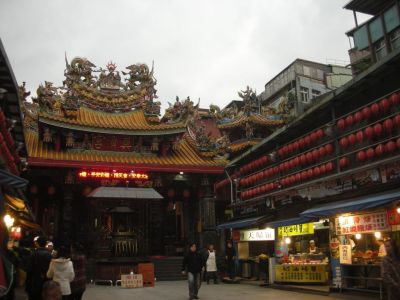
Even as container ships and ferries crowded the docks, the city kept its spiritual roots alive. Qingan Temple, built in the 18th century by Fujian settlers and dedicated to Mazu, the sea goddess, stands just steps from the waterfront. Its incense smoke and carved beams remind visitors that people here have long turned to the gods for safe passage across the waves.
The rain that once inspired a melancholy song still shapes Keelung’s rhythm today. As you wander the streets and waterfront, let it be your soundtrack. In Keelung, even the rain drop has a story to tell.
Keelung's name comes from the Ketagalan people, the Indigenous inhabitants of the region, whose language gave rise to the original word “Ketangalan.” Over time, Chinese settlers Fujian province adapted it to “Ke-lâng,” which means “chicken cage.” It was not until the 20th century that the modern spelling, Keelung, became fixed.
For centuries, the bay was more a landmark than a city. When the Spanish reached Taiwan in the early 17th century, they quickly saw Keelung’s value as a harbor. They built forts and trading posts here, only to be forced out by the Dutch, who also recognized the importance of its deep waters. In 1661, loyalists to China's Ming Dynasty expelled the Dutch from Taiwan, and Keelung entered another chapter as a coastal outpost.
By the 18th and 19th centuries, Chinese settlers from Fujian province were establishing fishing villages along the bay, slowly rooting the modern city. The Qing Dynasty built up the harbor as foreign ships began to arrive, but the real transformation came after 1895, when Japan took control of Taiwan following the First Sino-Japanese War. The Japanese expanded the Port of Keelung into a modern facility, dredging channels, constructing piers, and turning it into one of the busiest harbors in the country. Coal and rice funneled through the docks, making Keelung second only to Taipei in activity by the early 20th century.
Even as container ships and ferries crowded the docks, the city kept its spiritual roots alive. Qingan Temple, built in the 18th century by Fujian settlers and dedicated to Mazu, the sea goddess, stands just steps from the waterfront. Its incense smoke and carved beams remind visitors that people here have long turned to the gods for safe passage across the waves.
The rain that once inspired a melancholy song still shapes Keelung’s rhythm today. As you wander the streets and waterfront, let it be your soundtrack. In Keelung, even the rain drop has a story to tell.
How it works: Download the app "GPSmyCity: Walks in 1K+ Cities" from Apple App Store or Google Play Store to your mobile phone or tablet. The app turns your mobile device into a personal tour guide and its built-in GPS navigation functions guide you from one tour stop to next. The app works offline, so no data plan is needed when traveling abroad.
Download The GPSmyCity App



Keelung Introduction Walking Tour Map
Guide Name: Keelung Introduction Walking Tour
Guide Location: Taiwan » Keelung (See other walking tours in Keelung)
Guide Type: Self-guided Walking Tour (Sightseeing)
Tour Duration: 2 Hours
Travel Distance: 3.2 Km or 2 Miles
Tour Best Suited For: First-time visit
Guide Location: Taiwan » Keelung (See other walking tours in Keelung)
Guide Type: Self-guided Walking Tour (Sightseeing)
Tour Duration: 2 Hours
Travel Distance: 3.2 Km or 2 Miles
Tour Best Suited For: First-time visit
Sights Featured in This Walk




8

8) Zhongzheng Park (must see)
City Walks Overview
