

North of Addis Ababa Walking Tour, Addis Ababa

North of Addis Ababa Walking Tour (Self Guided), Addis Ababa

Some remarkable landmarks of Addis Ababa can be found in the north part of the city. There are monuments, beautiful buildings and the zoo where you can see lions walking. This self-guided tour will lead you through these attractions in the north of Addis Ababa.
How it works: Download the app "GPSmyCity: Walks in 1K+ Cities" from Apple App Store or Google Play Store to your mobile phone or tablet. The app turns your mobile device into a personal tour guide and its built-in GPS navigation functions guide you from one tour stop to next. The app works offline, so no data plan is needed when traveling abroad.

Download The GPSmyCity App

North of Addis Ababa Walking Tour Map

Guide Name: North of Addis Ababa Walking Tour
Guide Location: Ethiopia » Addis Ababa (See other walking tours in Addis Ababa)
Guide Type: Self-guided Walking Tour (Sightseeing)
# of Attractions: 8
Tour Duration: 2 Hour(s)
Travel Distance: 4.3 Km or 2.7 Miles
Author: vickyc
Sight(s) Featured in This Guide:
  • Addis Ababa University
  • Yekatit 12 Monument
  • Addis Ababa Zoo
  • National Museum of Ethiopia
  • St. George Armenian Church
  • Greek Orthodox Church
  • Hager Fikir Theater
  • Ethnological Museum
1
Addis Ababa University

1) Addis Ababa University

Addis Ababa University is the oldest and largest university in Ethiopia. It was founded in 1950 as the University College of Addis Ababa and later became a public university. Since then, it has played an important role in education, research, and public life. Many well-known leaders, scholars, and writers studied or worked here. Today, the university has many faculties, research centers, and libraries used by students from all over the country.

The main campus is also of interest to visitors because of its history and layout. Guenete Leul Palace, a former imperial residence built in the early 20th century, now serves as the university’s main administrative building. It reflects a time when Ethiopia was changing and modernizing. The campus also includes the Institute of Ethiopian Studies (IES) Museum, which is open to the public.

The campus feels open and relaxed, with trees, lawns, and wide paths between buildings. Students often sit outside to read, talk, or walk between classes. Most outdoor areas are open to visitors during the day, although some buildings are for academic use only. For tourists, walking through the campus offers a simple way to see student life and learn about education and history in a quiet setting.
2
Yekatit 12 Monument

2) Yekatit 12 Monument

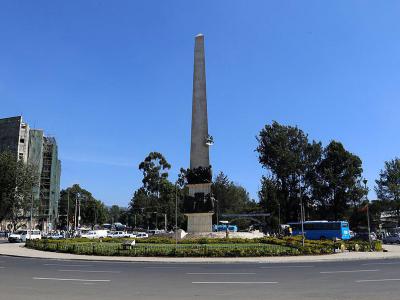
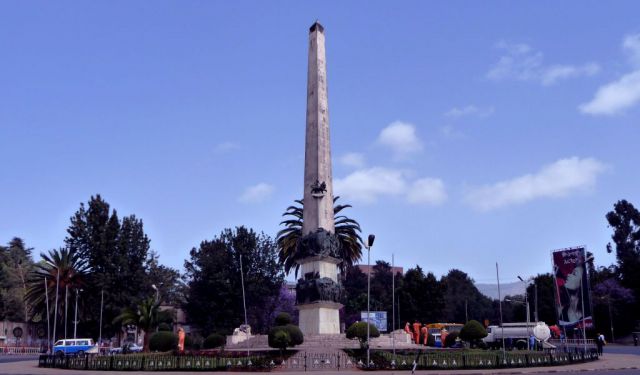
The Yekatit 12 Monument commemorates the Yekatit 12 pogrom of February 19–21, 1937, when fascist Italian forces carried out mass killings after an assassination attempt on Rodolfo Graziani. Most victims were civilians, and historical estimates place the death toll between 19,000 and 30,000. The monument stands as a public place of remembrance for the killings and the wider violence of the occupation.

The white stone obelisk was inaugurated on November 2, 1944, with two bronze bas-reliefs added in 1955. The monument was designed by Yugoslav sculptors Antun Augustinčić and Frano Kršinić. The reliefs show direct scenes from 1937, including killings, burning houses, and funerals, allowing visitors to understand the events through images rather than text alone.

One notable detail is the Lion of Judah, which remained in place even during the Derg period. Remembrance ceremonies are held each year on February 19. The monument is commonly linked with the Sidist Kilo area, and most visits last about 15–20 minutes.
3
Addis Ababa Zoo

3) Addis Ababa Zoo (must see)

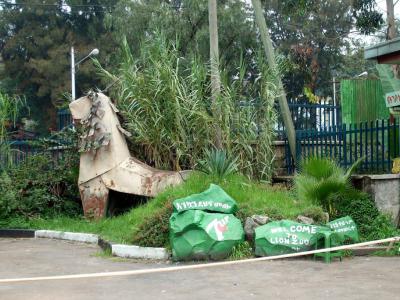
Addis Ababa Zoo, locally known as Anbesa Gebi (Lion Park), was founded in 1948 by Emperor Haile Selassie with seven lions captured in southwestern Ethiopia. For many decades, it served as the main public animal park and became closely linked to imperial history and national identity. The zoo later gained international attention for its population of genetically distinct black-maned lions, confirmed through DNA testing in 2012. These lions were considered part of a unique lineage often associated with Ethiopia’s royal past.

For most of its operation, animals were kept in small, concrete-floored cages with limited space and enrichment. These conditions led to long-standing criticism from the public, animal welfare groups, and international observers. As concerns grew, the zoo’s role gradually declined rather than being modernized on site. Most of the rare black-maned lions, including much of the later generations, were relocated to newer facilities designed to provide better living conditions.

Today, the original Lion Park is widely described as run down and holds very few animals, mainly monkeys, baboons, and sometimes a single lion or hyenas. Visitors who want to see animals now usually go to newer parks. These include Addis Zoo, a large 26-hectare site with open habitats, and Unity Park Zoo, where black-maned lions live in spacious enclosures designed to resemble forest environments, alongside other African species such as giraffes and zebras.
4
National Museum of Ethiopia

4) National Museum of Ethiopia (must see)

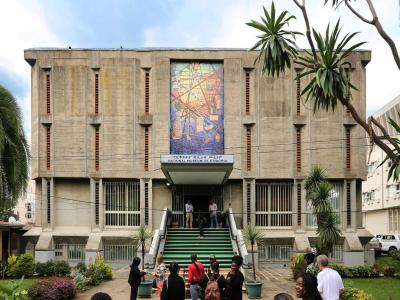
The National Museum of Ethiopia presents the country’s history in a clear and practical way, starting with early human origins and moving toward recent centuries. The museum developed from the Institute of Archaeology founded in 1958 and is best known for its role in paleoanthropology. Its most famous exhibit is “Lucy,” a 3.2-million-year-old Australopithecus afarensis fossil discovered in 1974 at Hadar. Visitors usually see a detailed replica, while the original bones are kept securely and shown only on special occasions.

The basement level focuses on early human history. Fossils, stone tools, and skeletal remains are arranged in a timeline, helping visitors follow how early hominids lived and evolved. Alongside Lucy, the museum also displays “Selam,” a very well-preserved child fossil discovered in 2000. Short labels explain where the finds came from and why they matter, making this section easy to understand without scientific training.

The ground floor covers ancient and medieval history, including objects from the Aksumite and Solomonic periods. Displays include coins, inscriptions, religious items, and artwork that show how early states, trade, and belief systems developed. This section links archaeology with written history and helps place the country within wider regional connections.

The upper floors focus on more recent history and daily life. One level displays royal objects and imperial-era items, including Emperor Haile Selassie’s wooden throne and personal belongings. Higher floors present ethnographic collections, with traditional clothing, tools, household objects, and crafts from different regions. The museum is easy to navigate, and most visits last about one to one and a half hours.
5
St. George Armenian Church

5) St. George Armenian Church

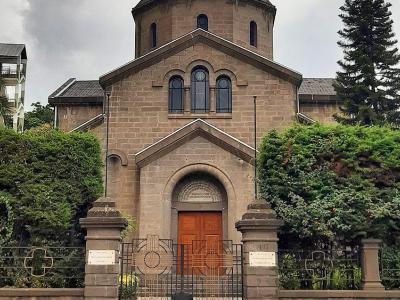
St. George Armenian Church, also known as Sourp Kevork, is connected to the Armenian community that has lived in Ethiopia for centuries. The community became more prominent in the late 19th and early 20th centuries, known for craftsmanship, jewelry making, and music.

The church was built between 1928 and 1935 and funded by Armenian businessman Mihran Mouradian in memory of his father, George. Made of grey stone, it follows Armenian church traditions with round arches and Byzantine influences. This design differs from Ethiopian Orthodox churches, which often use circular or octagonal layouts, showing how different Christian traditions exist side by side.

Inside, the church is quiet and mainly used for prayer, with a clearly separated altar following Armenian Apostolic tradition. Icons are few and differ in style from Ethiopian Orthodox art. Today, fewer than 100 Armenians remain in the country, so services are held mostly on major holidays or special events. The church may be closed at times, and access often depends on a caretaker. Visitors are expected to dress modestly and behave respectfully.
6
Greek Orthodox Church

6) Greek Orthodox Church

Greek Orthodox Church was built in the early 20th century for the local Greek community. It reflects long-standing ties between Greece and Ethiopia during a time when foreign groups were establishing schools, businesses, and religious centers. The church follows the Greek Orthodox tradition of Eastern Christianity, shaped by Byzantine practices. Its simple exterior and rectangular layout differ from the round form common in Ethiopian Orthodox churches.

Inside, the church follows a traditional Orthodox layout. The main feature is the iconostasis, a wooden screen at the front covered with icons of Christ, the Virgin Mary, and other saints. These images are part of worship and follow strict placement rules. The lack of large wall paintings keeps the space quiet and focused on prayer.

Services are usually held in Greek, but visitors may enter outside service times or observe quietly. Most visits take about 20 to 30 minutes. Modest dress is expected, and photography may be limited during worship. For tourists, the church offers a clear view of Greek Orthodox practice shaped by migration and shared history.
7
Hager Fikir Theater

7) Hager Fikir Theater

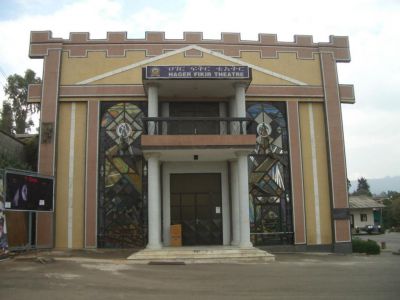
Hager Fikir Theatre is widely regarded as the oldest indigenous theater in Africa and is an important part of Ethiopian cultural history. Its work began in 1935, when the Ye-Hager Fikir Mahber association organized outdoor performances at Menelik Square to promote unity and resistance before the Italian invasion. In 1942, the group moved into a former warehouse that became the theater’s permanent home. The name “Hager Fikir,” meaning “Love of the Nation,” reflects its focus on patriotism and national identity.

Plays are mostly performed in Amharic and focus on Ethiopian society, daily life, and moral themes. The repertoire includes traditional stories and local adaptations of international works by writers such as Shakespeare and Molière. Performances depend on strong acting and clear storytelling rather than stage effects, making the main ideas easy to follow even without understanding the language.

The theater has a proscenium-style stage and seats about 860 people. It has trained many important Ethiopian artists, including singers Tilahun Gessesse and Aster Aweke, as well as theater pioneers Yoftahe Nigussie and Tesfaye Gessesse. Recent renovations aim to protect the historic building while improving comfort. Most performances are held in the evening and last about two hours.
8
Ethnological Museum

8) Ethnological Museum (must see)

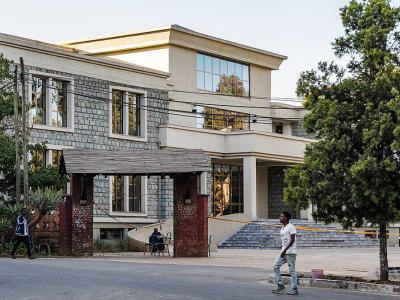
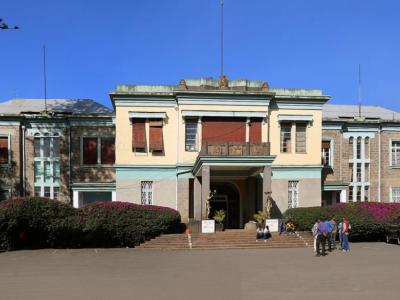
The Ethnological Museum is housed in a former imperial palace that once belonged to Emperor Haile Selassie. Built in the early 20th century, the building later became part of the national university campus. Visitors walk through rooms that mix the original palace layout with museum displays, showing how political history, education, and cultural study became connected in the modern period.

The museum focuses on Ethiopia’s many ethnic groups and ways of life. Displays cover topics such as farming, food preparation, clothing, housing, religion, and social customs. Everyday objects like tools, baskets, pottery, and musical instruments are shown with clear explanations. Exhibits are organized by theme rather than by region, which helps visitors compare traditions across different communities. Short texts and photographs explain how climate, geography, and belief systems shape daily life.

One section of the museum looks at life stages, including birth, childhood, marriage, and death. These displays explain rituals, family roles, and community responsibilities in a direct and easy-to-follow way. Another part focuses on religion and belief, showing how Christianity, Islam, and traditional practices have influenced culture over time. The former bedroom of Emperor Haile Selassie is also open to visitors, preserved with original furniture and personal items.

The museum is quiet and well arranged, making it comfortable to explore at a slow pace. Most visits take about one to one and a half hours. Paths are clearly marked, and information panels are written in simple language. For tourists, the museum offers a clear introduction to cultural diversity and everyday life, supported by a historic setting that adds depth to the experience.

Walking Tours in Addis Ababa, Ethiopia

Create Your Own Walk in Addis Ababa

Create Your Own Walk in Addis Ababa

Creating your own self-guided walk in Addis Ababa is easy and fun. Choose the city attractions that you want to see and a walk route map will be created just for you. You can even set your hotel as the start point of the walk.
Addis Ababa Introduction Walking Tour

Addis Ababa Introduction Walking Tour

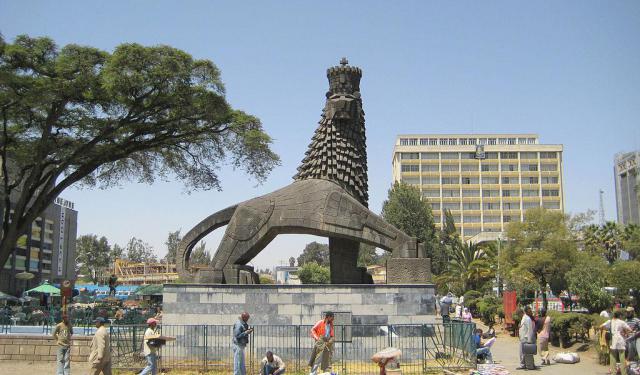
Addis Ababa, the capital of Ethiopia, is the country’s commercial and cultural hub, hosting a number of historic landmarks: monuments, squares, palaces and more. Among them the ones dedicated to the local Emperor Menelek and those commemorating the country's last, 20th-century emperor Haile Selassie. Follow this orientation walk to explore some of the top attractions of Addis Ababa.

Tour Duration: 3 Hour(s)
Travel Distance: 5.4 Km or 3.4 Miles
Religious Buildings

Religious Buildings

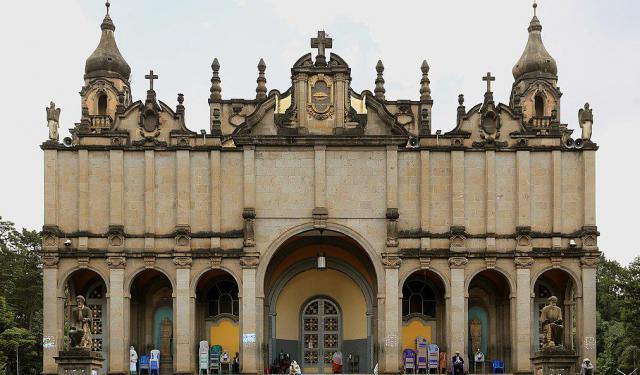
Ethiopia is mainly a Christian country. However, there are many other religions of the world there as the country has many ethnic groups. Addis Ababa boasts very beautiful and old, Christian cathedrals and churches. There are also Catholic churches and mosques in the city. This self-guided tour will lead you to the great religious sights of Addis Ababa.

Tour Duration: 4 Hour(s)
Travel Distance: 9.5 Km or 5.9 Miles