

Audio Guide: Old Dubai Walking Tour (Self Guided), Dubai
Imagine Dubai before the glitz, the skyscrapers, and the world records. The Old Quarter—incorporating the Al Fahidi Historical Neighbourhood—is where the story really began. Set along Dubai Creek in the 19th century, it was the city’s beating commercial heart, perfectly positioned to reel in merchants from India, Iran, and East Africa. The result was a multicultural trading hot spot long before the word “cosmopolitan” became fashionable.
Also commonly known as Meena Bazaar, this area is where South Asian traders—along with their spices, fabrics, and irresistible street food—left their mark. The alleys here are narrow, the houses topped with wind towers, and the souks brimming with gold, saffron, and just enough bargaining to make you feel like you’ve earned your purchase. Pearl divers and fishermen once shaped the local economy; today, it’s memories of that era that shape the atmosphere.
In the 20th century, the Al Maktoum ruling family turned Dubai into a thriving port and free-trade zone, laying the foundation for its modern development. Roads, docks, new districts—the city expanded rapidly… and yes, it also impacted the Old Quarter. Yet through all that growth, the traditional architecture stayed put, including the iconic wind towers that were essential for cooling homes in the harsh desert climate before electricity.
Indeed, history is layered thick here. Key landmarks in the Old Quarter include the Dubai Museum, housed in the Al Fahidi Fort, which traces the city’s evolution from a small, sand-swept trading post to a global metropolis. The Grand Mosque, with its elegant Islamic arches, adds spiritual calm, while the Textile Souk explodes with color and texture, and the Heritage Village gives a taste of how Emiratis lived, worked, and celebrated before the skyline went vertical. And for a glimpse of Dubai’s ruling past, Sheikh Saeed al-Maktoum’s House stands ready with stories in its carved doors and shaded courtyards.
Today, the Old Quarter is very much alive. It's a place where the past still whispers, the spices still tempt, and the wind towers still catch the breeze. It’s proof that Dubai didn’t appear overnight but grew: layer by layer, creek by creek, story by story...
Also commonly known as Meena Bazaar, this area is where South Asian traders—along with their spices, fabrics, and irresistible street food—left their mark. The alleys here are narrow, the houses topped with wind towers, and the souks brimming with gold, saffron, and just enough bargaining to make you feel like you’ve earned your purchase. Pearl divers and fishermen once shaped the local economy; today, it’s memories of that era that shape the atmosphere.
In the 20th century, the Al Maktoum ruling family turned Dubai into a thriving port and free-trade zone, laying the foundation for its modern development. Roads, docks, new districts—the city expanded rapidly… and yes, it also impacted the Old Quarter. Yet through all that growth, the traditional architecture stayed put, including the iconic wind towers that were essential for cooling homes in the harsh desert climate before electricity.
Indeed, history is layered thick here. Key landmarks in the Old Quarter include the Dubai Museum, housed in the Al Fahidi Fort, which traces the city’s evolution from a small, sand-swept trading post to a global metropolis. The Grand Mosque, with its elegant Islamic arches, adds spiritual calm, while the Textile Souk explodes with color and texture, and the Heritage Village gives a taste of how Emiratis lived, worked, and celebrated before the skyline went vertical. And for a glimpse of Dubai’s ruling past, Sheikh Saeed al-Maktoum’s House stands ready with stories in its carved doors and shaded courtyards.
Today, the Old Quarter is very much alive. It's a place where the past still whispers, the spices still tempt, and the wind towers still catch the breeze. It’s proof that Dubai didn’t appear overnight but grew: layer by layer, creek by creek, story by story...
How it works: Download the app "GPSmyCity: Walks in 1K+ Cities" from Apple App Store or Google Play Store to your mobile phone or tablet. The app turns your mobile device into a personal tour guide and its built-in GPS navigation functions guide you from one tour stop to next. The app works offline, so no data plan is needed when traveling abroad.
Old Dubai Walking Tour Map
Guide Name: Old Dubai Walking Tour
Guide Location: United Arab Emirates » Dubai (See other walking tours in Dubai)
Guide Type: Self-guided Walking Tour (Sightseeing)
# of Attractions: 8
Tour Duration: 1 Hour(s)
Travel Distance: 1.6 Km or 1 Miles
Author: alice
Sight(s) Featured in This Guide:
Guide Location: United Arab Emirates » Dubai (See other walking tours in Dubai)
Guide Type: Self-guided Walking Tour (Sightseeing)
# of Attractions: 8
Tour Duration: 1 Hour(s)
Travel Distance: 1.6 Km or 1 Miles
Author: alice
Sight(s) Featured in This Guide:
- Dubai Museum and Al Fahidi Fort
- Grand Mosque
- Dubai Textile Souk (Dubai Textile Market)
- Al Shindagha Watchtower
- Sheikh Saeed al-Maktoum's House
- Sheikh Obaid bin Thani House
- Heritage Village Dubai
- Diving Village Dubai
1) Dubai Museum and Al Fahidi Fort (must see)
If you want to peel back Dubai’s glittering skyline and see what life looked like before oil changed everything, head straight—well, figuratively speaking—to the Dubai Museum. Think of it as a time capsule wrapped in palm fronds and cannon smoke.
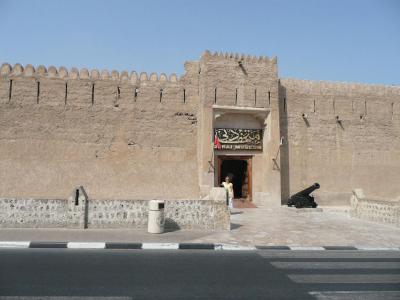
The museum sits inside Al Fahidi Fort, Dubai’s oldest surviving building, dating back to 1787—back when forts were built square, towers kept watch from three corners, and cannons weren’t just decorative. Step through the east entrance and you’re greeted by the UAE and Dubai flags flapping above two serious-looking cannons, as if still guarding the Creek from pirates. In the courtyard, there’s more artillery, plus an arish—a traditional summer house woven from palm fronds—complete with divans for lounging, a sleeping nook, and a kitchen where you can almost smell the old coffee.
Inside the fortress walls and underground galleries, history unfolds with flair. There’s a full display of weapons, a model of Dubai in 1820, and musical instruments paired with folk music that sounds like it’s drifting in from a village majlis (which is a special hall for receiving guests on formal occasions). One gallery features old maps and short films that rewind the city’s evolution—from pearl divers and dhow captains to skyscraper architects and metro lines.
Speaking of dhows (a lateen-rigged boat with one or two masts, used in the Arabian region), you’ll find one here—full-sized, naturally—alongside a recreated souk, complete with lifelike merchants selling goods as if they expect you to haggle. You’ll also come across a traditional mosque model, a family house, a Bedouin tent (camels included), and a celestial gallery where star maps explain how desert travelers once navigated by starlight rather than Google Maps...
The final stretch takes you into an archaeological diorama at Al Qusais, complete with ancient tombs and skeletons—as close to Indiana Jones as it possibly gets in Dubai.
Sound effects echo through every gallery, making it feel like the fort is alive again—market chatter, boat creaks, desert winds. And yes, there’s a gift shop that’s actually worth browsing.
Once you’ve soaked in the history, wander the nearby Al Fahidi district. Quiet lanes, coral-stone walls, and wind towers make the perfect contrast to the city’s steel and glass.
The museum sits inside Al Fahidi Fort, Dubai’s oldest surviving building, dating back to 1787—back when forts were built square, towers kept watch from three corners, and cannons weren’t just decorative. Step through the east entrance and you’re greeted by the UAE and Dubai flags flapping above two serious-looking cannons, as if still guarding the Creek from pirates. In the courtyard, there’s more artillery, plus an arish—a traditional summer house woven from palm fronds—complete with divans for lounging, a sleeping nook, and a kitchen where you can almost smell the old coffee.
Inside the fortress walls and underground galleries, history unfolds with flair. There’s a full display of weapons, a model of Dubai in 1820, and musical instruments paired with folk music that sounds like it’s drifting in from a village majlis (which is a special hall for receiving guests on formal occasions). One gallery features old maps and short films that rewind the city’s evolution—from pearl divers and dhow captains to skyscraper architects and metro lines.
Speaking of dhows (a lateen-rigged boat with one or two masts, used in the Arabian region), you’ll find one here—full-sized, naturally—alongside a recreated souk, complete with lifelike merchants selling goods as if they expect you to haggle. You’ll also come across a traditional mosque model, a family house, a Bedouin tent (camels included), and a celestial gallery where star maps explain how desert travelers once navigated by starlight rather than Google Maps...
The final stretch takes you into an archaeological diorama at Al Qusais, complete with ancient tombs and skeletons—as close to Indiana Jones as it possibly gets in Dubai.
Sound effects echo through every gallery, making it feel like the fort is alive again—market chatter, boat creaks, desert winds. And yes, there’s a gift shop that’s actually worth browsing.
Once you’ve soaked in the history, wander the nearby Al Fahidi district. Quiet lanes, coral-stone walls, and wind towers make the perfect contrast to the city’s steel and glass.
2) Grand Mosque (must see)
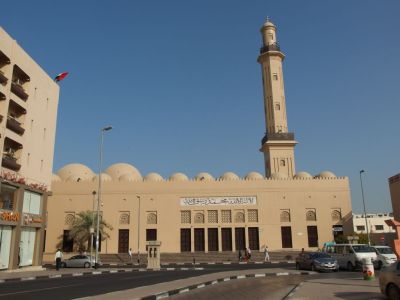
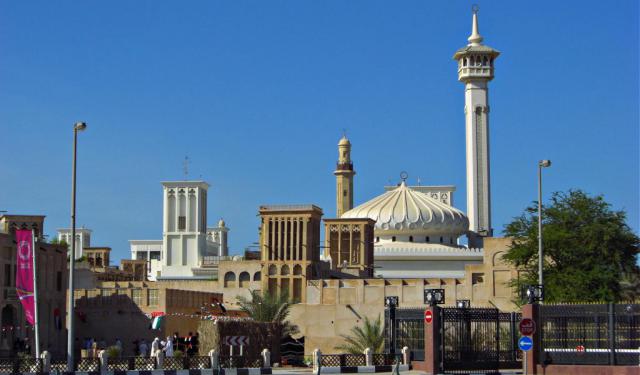
Wandering through Bur Dubai, you can't help spotting something suspiciously looking like a lighthouse with a prayer cap. If so, congratulations!—You’ve found the Grand Bur Dubai Mosque! Its 70-meter Anatolian-style minaret, rising above the skyline, is practically impossible to miss—unless you’re actively trying... Built in 1998 but styled to pass for something from 1900, this mosque is essentially Dubai’s architectural time traveler.
It stands where its predecessor once stood, a school where children once gathered to study the Quran. So yes, it's more than just a building but a quiet chapter of Dubai’s educational and spiritual story, rewritten in stone. And speaking of stone, the exterior keeps things calm and minimal, which only makes the nine large domes and 45 smaller ones on the roof stand out even more. Think of it as a celestial grid made local.
Once inside, you’ll find space for up to 1,200 worshipers—indeed, this mosque isn’t just a pretty face. A very much active house of worship, it anchors the neighborhood’s religious and cultural rhythm. Public tours run Sunday through Thursday, between 9:30 and 11:30 in the morning—just enough time to soak in the details without skipping lunch.
If you're not a worshiper but still asking yourself, Why come here?—The answer is simple. For this is a rare blend of historic spirit and modern craftsmanship—an artistic nod to Dubai’s past that still holds its own among the city’s sleek towers. And beyond the stone walls and domes, it offers something subtler: a glimpse into how deeply faith and daily life intertwine in a predominantly Muslim city.
Just one thing—dress modestly. It’s a working mosque, and respect is part of the experience.
It stands where its predecessor once stood, a school where children once gathered to study the Quran. So yes, it's more than just a building but a quiet chapter of Dubai’s educational and spiritual story, rewritten in stone. And speaking of stone, the exterior keeps things calm and minimal, which only makes the nine large domes and 45 smaller ones on the roof stand out even more. Think of it as a celestial grid made local.
Once inside, you’ll find space for up to 1,200 worshipers—indeed, this mosque isn’t just a pretty face. A very much active house of worship, it anchors the neighborhood’s religious and cultural rhythm. Public tours run Sunday through Thursday, between 9:30 and 11:30 in the morning—just enough time to soak in the details without skipping lunch.
If you're not a worshiper but still asking yourself, Why come here?—The answer is simple. For this is a rare blend of historic spirit and modern craftsmanship—an artistic nod to Dubai’s past that still holds its own among the city’s sleek towers. And beyond the stone walls and domes, it offers something subtler: a glimpse into how deeply faith and daily life intertwine in a predominantly Muslim city.
Just one thing—dress modestly. It’s a working mosque, and respect is part of the experience.
3) Dubai Textile Souk (Dubai Textile Market)
Now that you’re in Bur Dubai, the old soul of the city, check out the Dubai Textile Souk, stretching out like a woven tapestry of color, heritage, and very enthusiastic shopkeepers. This place — also known as the Old Souk or Bur Dubai Souk — sits right along Dubai Creek, with its equally famous siblings, the Gold Souk and Spice Souk, waiting across the water in Deira. To get there, you can just hop on an abra boat and glide over like a local...
The Textile Souk runs from 10 am to 10 pm, Saturday through Thursday, though some vendors disappear for a well-earned lunch siesta between 1 and 4. On Fridays, things kick off later, from 4 pm until closing. So, time it right and you’ll catch the buzz without melting.
Once upon a time, this place was the spot to buy fabrics for everything, from everyday clothing to wedding finery. The neighborhood didn’t grow in isolation — it was shaped by waves of traders from India and Pakistan who settled along the Creek. That’s how Hindi Lane was born, an alley bursting with bindis (a colored dot of religious or spiritual significance worn on the forehead), bangle bracelets, flowers, sari dresses, and devotional items — a pocket of Mumbai tucked into old Dubai.
Today, thanks to Dubai’s ambitious leap into the future, the souk leans more toward curious travelers than textile tycoons — which means you’re basically the star customer. Expect to be offered scarves in every color, fabric, and level of sparkle known to humankind...
Walk a little further and you’ll find fabrics, shoes, and jewelry that owe a clear nod to Delhi boutiques and Lahore bazaars. Pashmina fabrics and salwar kameez (traditional outfits of Pakistan) — they’re here, too, and yes, someone will try to convince you it’s “very special price, just for you.”
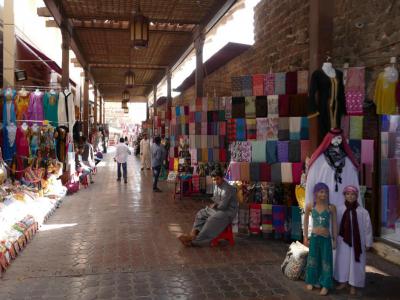
Architecturally, the souk is a time capsule with a few modern stitches. You’ll wander through shaded alleys — called “sikkas” — lined with tiny shops and draped in colorful textiles. Overhead, towering wooden arches funnel whatever breeze the desert allows, while traditional lanterns glow softly and make the whole place feel a bit like stepping into a story.
No skyscrapers. No glass. Just history, fabric, and a maze that smells faintly of incense and possibility.
The Textile Souk runs from 10 am to 10 pm, Saturday through Thursday, though some vendors disappear for a well-earned lunch siesta between 1 and 4. On Fridays, things kick off later, from 4 pm until closing. So, time it right and you’ll catch the buzz without melting.
Once upon a time, this place was the spot to buy fabrics for everything, from everyday clothing to wedding finery. The neighborhood didn’t grow in isolation — it was shaped by waves of traders from India and Pakistan who settled along the Creek. That’s how Hindi Lane was born, an alley bursting with bindis (a colored dot of religious or spiritual significance worn on the forehead), bangle bracelets, flowers, sari dresses, and devotional items — a pocket of Mumbai tucked into old Dubai.
Today, thanks to Dubai’s ambitious leap into the future, the souk leans more toward curious travelers than textile tycoons — which means you’re basically the star customer. Expect to be offered scarves in every color, fabric, and level of sparkle known to humankind...
Walk a little further and you’ll find fabrics, shoes, and jewelry that owe a clear nod to Delhi boutiques and Lahore bazaars. Pashmina fabrics and salwar kameez (traditional outfits of Pakistan) — they’re here, too, and yes, someone will try to convince you it’s “very special price, just for you.”
Architecturally, the souk is a time capsule with a few modern stitches. You’ll wander through shaded alleys — called “sikkas” — lined with tiny shops and draped in colorful textiles. Overhead, towering wooden arches funnel whatever breeze the desert allows, while traditional lanterns glow softly and make the whole place feel a bit like stepping into a story.
No skyscrapers. No glass. Just history, fabric, and a maze that smells faintly of incense and possibility.
4) Al Shindagha Watchtower
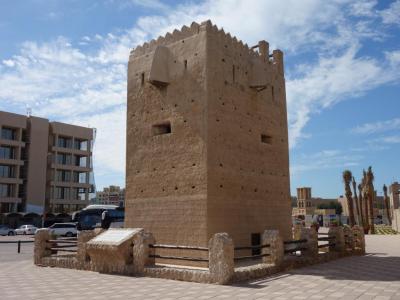
An integral feature of Old Dubai, the Al Shindagha Watchtower dates back to 1939. This stone sentinel kept watch over the creek, long before glass towers and luxury yachts arrived to steal the skyline. Restored in 1994, it stands today as a reminder that Dubai’s story began with vigilance, not superlatives...
Once part of a trio of defensive towers, it helped guard the growing settlement, back when the biggest threat wasn’t traffic on Sheikh Zayed Road but whatever might drift in with the tide. The surrounding neighborhood wasn’t just any patch of sand, either—this was home territory for Sheikh Saeed Al Maktoum, adding a royal touch to the already impressive architecture.
Built from stone that matches the district’s traditional style, the tower blends seamlessly with its surroundings—proof that form and function can coexist without trying too hard. A small plaque at the base offers visitors a fast-track history lesson for anyone curious about how this little structure played a big role in Dubai’s early defenses.
And, of course, there’s the modern function that no 1930s architect could have predicted: it makes a fantastic backdrop for photos. Snap the tower, snap the creek, snap yourself—no filter needed, but strongly encouraged...
Once part of a trio of defensive towers, it helped guard the growing settlement, back when the biggest threat wasn’t traffic on Sheikh Zayed Road but whatever might drift in with the tide. The surrounding neighborhood wasn’t just any patch of sand, either—this was home territory for Sheikh Saeed Al Maktoum, adding a royal touch to the already impressive architecture.
Built from stone that matches the district’s traditional style, the tower blends seamlessly with its surroundings—proof that form and function can coexist without trying too hard. A small plaque at the base offers visitors a fast-track history lesson for anyone curious about how this little structure played a big role in Dubai’s early defenses.
And, of course, there’s the modern function that no 1930s architect could have predicted: it makes a fantastic backdrop for photos. Snap the tower, snap the creek, snap yourself—no filter needed, but strongly encouraged...
5) Sheikh Saeed al-Maktoum's House
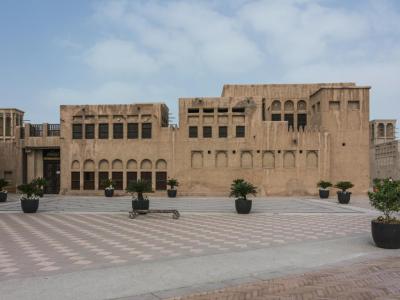
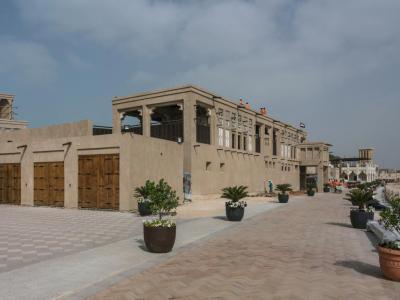
Standing on the Bur side of Dubai Creek is a house that once belonged to one of Dubai’s most admired rulers—so yes, it’s worth slowing down and stepping inside. Built in 1894, this home is a showcase of traditional Islamic design, complete with vaulted ceilings, teakwood doors, carved archways, and four elegant wind towers doing the ancient version of air-conditioning. Everything here revolves around a central courtyard, where life once unfolded between meeting rooms, storerooms, kitchens, and upper-floor bedrooms overlooking the creek and the open sea beyond.
Today, the house has traded family life for museum life, but it hasn’t lost its charm. The walls tell stories through photographs and lithographs of Dubai between the 1940s and 1960s, when the Creek was the city’s beating heart. You’ll also find a fascinating coin collection and an engrossing exhibit on pearl-diving—once the backbone of Dubai’s economy.
And speaking of pearls, it’s hard to imagine now, but the industry collapsed in the 1930s. Two global shocks did the damage: the Great Depression and Japan's entering the market with cheaper and higher-quality cultured pearls. But Sheik Saeed wasn’t the sort to sit and worry. Instead, he expanded the port, encouraged new trade from India and Iran, and helped shape Dubai into the commercial powerhouse it would soon become, souk by souk, shipment by shipment...
Here’s a small insider tip before you go: seek out the room showing photographs of the house before restoration. It’s a striking reminder of how much history nearly crumbled—and how much care went into preserving it.
Today, the house has traded family life for museum life, but it hasn’t lost its charm. The walls tell stories through photographs and lithographs of Dubai between the 1940s and 1960s, when the Creek was the city’s beating heart. You’ll also find a fascinating coin collection and an engrossing exhibit on pearl-diving—once the backbone of Dubai’s economy.
And speaking of pearls, it’s hard to imagine now, but the industry collapsed in the 1930s. Two global shocks did the damage: the Great Depression and Japan's entering the market with cheaper and higher-quality cultured pearls. But Sheik Saeed wasn’t the sort to sit and worry. Instead, he expanded the port, encouraged new trade from India and Iran, and helped shape Dubai into the commercial powerhouse it would soon become, souk by souk, shipment by shipment...
Here’s a small insider tip before you go: seek out the room showing photographs of the house before restoration. It’s a striking reminder of how much history nearly crumbled—and how much care went into preserving it.
6) Sheikh Obaid bin Thani House
The Sheikh Obaid bin Thani House, a quiet survivor from 1916, is one of the oldest homes in Al Shindagha. Thanks to a careful restoration in 1998, it still stands—proudly looking good for its age. Apart from just looking historic, though, this place hosts a permanent exhibit dedicated to Arabic calligraphy, which turns beautiful writing into a full-blown cultural experience. Think sweeping ink strokes, ancient texts, and modern forms all in one place. And yes, they even hold workshops and lectures—so you can learn a thing or two while pretending your handwriting could someday look that elegant...
The house itself is a two-story maze of 20 rooms, each one a reminder of life before skyscrapers. It’s an architectural monument built from the materials people once relied on—palm, sandalwood, and palm fronds, along with gypsum and stone. In today’s Dubai, where glass and steel rule the skyline, this place feels like a well-preserved whisper from the past.
What makes a visit even better is the mix of exhibits: history lovers, design fans, calligraphy nerds, and casual wanderers will all find something worth lingering over. In essence, this house is a layered story of Dubai’s heritage, written in wood, stone, and ink.
The house itself is a two-story maze of 20 rooms, each one a reminder of life before skyscrapers. It’s an architectural monument built from the materials people once relied on—palm, sandalwood, and palm fronds, along with gypsum and stone. In today’s Dubai, where glass and steel rule the skyline, this place feels like a well-preserved whisper from the past.
What makes a visit even better is the mix of exhibits: history lovers, design fans, calligraphy nerds, and casual wanderers will all find something worth lingering over. In essence, this house is a layered story of Dubai’s heritage, written in wood, stone, and ink.
7) Heritage Village Dubai
If you ever wondered what Dubai looked like before steel, glass, and superlatives became part of its daily vocabulary, the Heritage Village in Al Shindagha offers a remarkably grounded answer. Created in 1997 along the banks of Dubai Creek, it functions as a living museum where the city’s past isn’t just displayed—it’s reheated, re-stitched, and hammered back into shape for anyone curious enough to wander through. Managed by the Dubai Culture & Arts Authority, it sits within a wider heritage district filled with restored houses and small museum spaces that piece together the city’s earliest chapters.
As you move through the village, you slide from desert encampments to mountain hamlets to coastal fishing outposts, all reconstructed with the materials that once defined local life. Palm-frond barasti homes, Bedouin tents, and simple stone dwellings stand in gentle contrast with the modern skyline just across the creek. Together, they show how earlier communities adapted to heat, scarcity, and geography long before air-conditioning and expressways arrived to lighten the load.
The real heartbeat of the place comes from the artisans at work. Potters coax clay into familiar shapes using timeworn techniques, while weavers guide colorful threads across looms to produce rugs and textiles once common in households throughout the region. Metalworkers tap out tools and ornaments with a rhythm that feels older than the surrounding city itself.
In a space where everything is done by hand, the past stops feeling distant and instead becomes something you can practically hear, smell, and follow around a corner. Mixed with other displays, these live demonstrations paint a fuller picture of how the city functioned long before the era of mega-projects and global commerce reshaped its horizons.
Today, the Heritage Village offers a quieter counterpoint to modern Dubai, inviting visitors to slow their pace and tune into the textures of traditional Emirati life. Walk through its lanes, listen to the craftspeople at work, and you’ll catch a glimpse of the city’s identity long before it reached for the sky.
As you move through the village, you slide from desert encampments to mountain hamlets to coastal fishing outposts, all reconstructed with the materials that once defined local life. Palm-frond barasti homes, Bedouin tents, and simple stone dwellings stand in gentle contrast with the modern skyline just across the creek. Together, they show how earlier communities adapted to heat, scarcity, and geography long before air-conditioning and expressways arrived to lighten the load.
The real heartbeat of the place comes from the artisans at work. Potters coax clay into familiar shapes using timeworn techniques, while weavers guide colorful threads across looms to produce rugs and textiles once common in households throughout the region. Metalworkers tap out tools and ornaments with a rhythm that feels older than the surrounding city itself.
In a space where everything is done by hand, the past stops feeling distant and instead becomes something you can practically hear, smell, and follow around a corner. Mixed with other displays, these live demonstrations paint a fuller picture of how the city functioned long before the era of mega-projects and global commerce reshaped its horizons.
Today, the Heritage Village offers a quieter counterpoint to modern Dubai, inviting visitors to slow their pace and tune into the textures of traditional Emirati life. Walk through its lanes, listen to the craftspeople at work, and you’ll catch a glimpse of the city’s identity long before it reached for the sky.
8) Diving Village Dubai
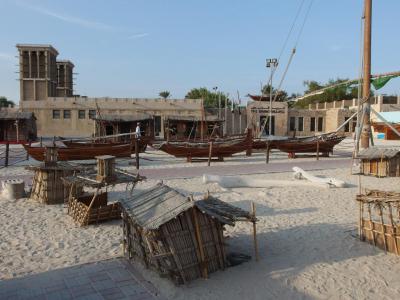
Dubai’s Diving Village, set along the waterfront in the Al Shindagha Heritage District, takes you straight into the city’s salt-sprayed origin story. Before high-risers and supercars stole the spotlight, this corner of the Creek buzzed with fishermen, pearl divers, and boatbuilders whose skills kept the region afloat—literally. It’s a place where the rhythm of daily life once depended on tides, weather, and the sturdy wooden dhow boats that stitched Dubai into global trade routes.
As you wander through the village, you’ll spot everything from sleek racing vessels to the nets and tools that generations of seafarers relied on. Boatbuilding takes center stage here, not as a quaint hobby but as the backbone of coastal survival. Racing dhows make an appearance too, hinting at a time when friendly rivalry on the water was just as important as a good day’s catch. The preserved boats scattered around the site show off craftsmanship that today feels like something between an art form and a superpower.
Pearling also steps into the spotlight. By the early 20th century, natural pearls were Dubai’s claim to fame, drawing merchants from India, East Africa, and beyond. The Diving Village recreates the world of those seasonal crews—divers, sailors, haulers, and captains—who worked in strict harmony with the sea. Restored workshops and displays unpack the rituals, tools, and teamwork behind an industry that once defined the Gulf. Even the dhow construction techniques get a moment of well-earned glory.
Of course, the tide eventually turned. Cultured pearls arrived from Japan in the 1930s, the global economy dipped, and the natural pearling industry slipped into decline. Dubai pivoted, leaning into re-export trade and, a few decades later, oil-driven development that reimagined the city entirely.
Today, the Diving Village stands as a compact tribute to the coastal communities that navigated those shifts with resilience and resourcefulness. It’s a reminder that long before Dubai reached for the sky, it drew its strength from the sea.
As you wander through the village, you’ll spot everything from sleek racing vessels to the nets and tools that generations of seafarers relied on. Boatbuilding takes center stage here, not as a quaint hobby but as the backbone of coastal survival. Racing dhows make an appearance too, hinting at a time when friendly rivalry on the water was just as important as a good day’s catch. The preserved boats scattered around the site show off craftsmanship that today feels like something between an art form and a superpower.
Pearling also steps into the spotlight. By the early 20th century, natural pearls were Dubai’s claim to fame, drawing merchants from India, East Africa, and beyond. The Diving Village recreates the world of those seasonal crews—divers, sailors, haulers, and captains—who worked in strict harmony with the sea. Restored workshops and displays unpack the rituals, tools, and teamwork behind an industry that once defined the Gulf. Even the dhow construction techniques get a moment of well-earned glory.
Of course, the tide eventually turned. Cultured pearls arrived from Japan in the 1930s, the global economy dipped, and the natural pearling industry slipped into decline. Dubai pivoted, leaning into re-export trade and, a few decades later, oil-driven development that reimagined the city entirely.
Today, the Diving Village stands as a compact tribute to the coastal communities that navigated those shifts with resilience and resourcefulness. It’s a reminder that long before Dubai reached for the sky, it drew its strength from the sea.
Walking Tours in Dubai, United Arab Emirates

Create Your Own Walk in Dubai
Creating your own self-guided walk in Dubai is easy and fun. Choose the city attractions that you want to see and a walk route map will be created just for you. You can even set your hotel as the start point of the walk.
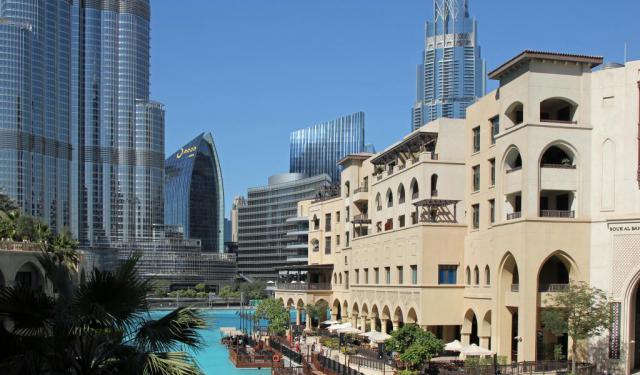
Dubai Downtown Walking Tour
Dubai’s evolution from a small trading post to a global metropolis is one of ambition and adaptability. Archaeological findings trace human activity in this area back to around 3000 BC, long before the modern skyline emerged. By the 7th century AD, Islam had taken root across the Arabian Peninsula, and Dubai’s position along the Gulf made it a natural stop on early maritime trade routes. The... view more
Tour Duration: 1 Hour(s)
Travel Distance: 2.8 Km or 1.7 Miles
Tour Duration: 1 Hour(s)
Travel Distance: 2.8 Km or 1.7 Miles
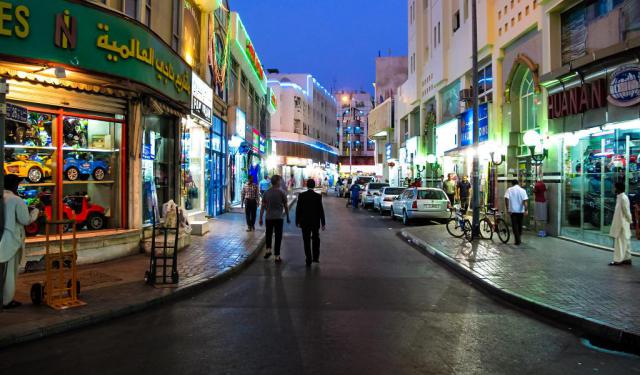
Deira Shopping Walk
Nestled along the northern bank of Dubai Creek, Deira is one of the city's oldest districts, with roots stretching back to the mid-1700s. Back then, small trading vessels used the creek's calm waters as a launchpad for merchant activity, setting the stage for Deira’s rise as a bustling commercial hub. By the 19th and early 20th centuries, as pearling and other industries thrived, Deira... view more
Tour Duration: 1 Hour(s)
Travel Distance: 1.8 Km or 1.1 Miles
Tour Duration: 1 Hour(s)
Travel Distance: 1.8 Km or 1.1 Miles
Useful Travel Guides for Planning Your Trip
Top 15 Uniquely Dubai Things to Buy
One big shopping center, such as Dubai, makes it easy and hard, at the same time, to stop one's choice on a proper souvenir to take home. A handful of gems, a Rolex watch, maybe, or a flying carpet... All of these may last in time, but come at a price. Here are some of the more traditional and,...
The Most Popular Cities
/ view all