

Winter Park Walking Tour, Orlando

Audio Guide: Winter Park Walking Tour (Self Guided), Orlando

Winter Park is often associated with writers, artists, and educators rather than large-scale tourism. Through its long connection with Rollins College, the city has hosted figures such as Margaret Mead, known for her work in anthropology and cultural studies, Maya Angelou, whose writing and public speaking shaped American literature and civil rights discourse, and Fred Rogers, best known for his work in children’s education and public broadcasting, along with many scholars and performers who contributed to the city’s cultural life.

Over time, Winter Park developed a reputation as a cultural and residential retreat just north of Orlando, known for its quieter pace and strong local identity.

The name “Winter Park” reflects the intentions of its founders rather than the local climate. In the late nineteenth century, developers from the northeastern United States chose the name to suggest a pleasant winter destination, offering a contrast to colder northern cities. The word “park” emphasized landscaped surroundings, open space, and a planned community built around lakes and tree-lined streets.

Winter Park began in the 1880s as a resort town connected to the railroad, attracting seasonal visitors seeking a mild climate. The establishment of Rollins College in 1885 gave the town an academic foundation that shaped its long-term character. Over the decades, Winter Park grew steadily while maintaining strict planning and preservation efforts, which helped protect its historic neighborhoods and civic buildings.

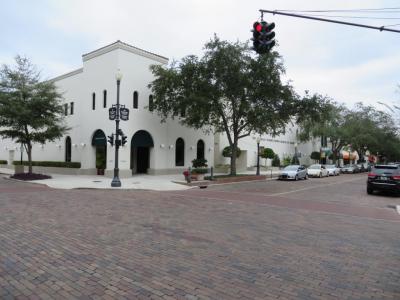
Today, Winter Park feels compact, walkable, and residential, with a clear town center surrounded by lakes, canals, and shaded streets. The layout encourages walking, with shops, museums, and cafés clustered along a few main corridors. The atmosphere is calm and orderly, with a strong emphasis on local businesses, cultural events, and outdoor public spaces.

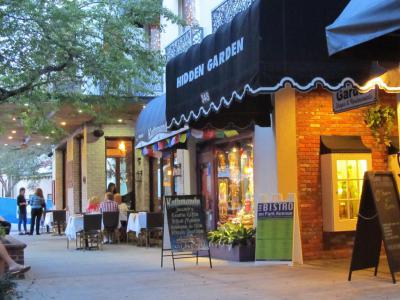
One of the central areas is Park Avenue, the city’s main street, lined with shops, galleries, restaurants, and brick sidewalks shaded by oak trees. Nearby is the Charles Hosmer Morse Museum of American Art, best known for its extensive collection of works by Louis Comfort Tiffany, including stained glass, lamps, and architectural pieces.

Winter Park’s appeal is in the small details: quiet streets, well-kept public spaces, and a town center that feels lived-in rather than built for crowds. As you explore, you’ll pass a mix of historic architecture, local businesses, and cultural landmarks that reflect the city’s long connection to education and the arts. Take your time, look around, and enjoy the calm pace that makes Winter Park feel distinct from the rest of the Orlando area.
How it works: Download the app "GPSmyCity: Walks in 1K+ Cities" from Apple App Store or Google Play Store to your mobile phone or tablet. The app turns your mobile device into a personal tour guide and its built-in GPS navigation functions guide you from one tour stop to next. The app works offline, so no data plan is needed when traveling abroad.

Download The GPSmyCity App

Winter Park Walking Tour Map

Guide Name: Winter Park Walking Tour
Guide Location: USA » Orlando (See other walking tours in Orlando)
Guide Type: Self-guided Walking Tour (Sightseeing)
# of Attractions: 7
Tour Duration: 1 Hour(s)
Travel Distance: 1.9 Km or 1.2 Miles
Author: brian
Sight(s) Featured in This Guide:
  • Casa Feliz Historic House Museum
  • Morse Museum of American Art
  • Park Avenue
  • Winter Park Historical Museum
  • All Saints Church of Winter Park
  • Annie Russell Theatre
  • Knowles Memorial Chapel
1
Casa Feliz Historic House Museum

1) Casa Feliz Historic House Museum

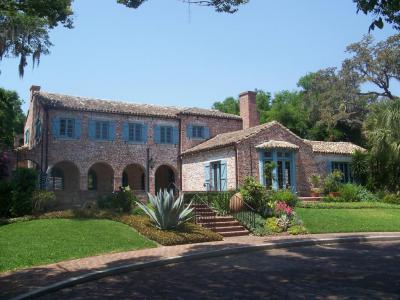
The Casa Feliz Historic House Museum is a restored Spanish farmhouse-style home located near downtown Winter Park. Built in 1933, the house was designed by architect James Gamble Rogers II for Robert Bruce Barbour, a local civic leader. Its thick masonry walls, clay tile roof, and shaded courtyards reflect a style inspired by traditional Spanish architecture adapted to Florida’s climate.

After decades of private ownership, the house faced demolition in the early 2000s. It was saved through a community effort and carefully relocated to its current site, where it was restored and reopened as a historic house museum. The restoration preserved original features such as hand-hewn beams, ironwork details, and interior wood finishes, while allowing the building to function as a public space.

Inside, visitors can explore furnished rooms that reflect domestic life in Winter Park during the early twentieth century. Exhibits focus on local history, architecture, and the people who shaped the community. The surrounding gardens and courtyards are part of the experience, offering quiet outdoor spaces that mirror the house’s original residential setting.

Casa Feliz shows how older residential buildings have been reused and maintained in Winter Park. Because it sits close to Park Avenue, it’s easy to reach on foot and works well as a brief stop while moving through the surrounding neighborhood.
2
Morse Museum of American Art

2) Morse Museum of American Art

The Morse Museum of American Art is located near Park Avenue in Winter Park and is best known for its extensive collection of works by Louis Comfort Tiffany. Founded in 1942, the museum focuses on American art from the late nineteenth and early twentieth centuries, with particular attention to decorative arts. The galleries are arranged in a clear, manageable layout that allows visitors to move through the collection without following a fixed route.

After you enter, begin with the stained-glass galleries. Stand a few steps back from the windows and notice how layered glass and subtle color shifts create depth rather than flat images. Move closer to see how individual pieces of glass are cut and assembled. Nearby, cases of lamps and metalwork show how similar patterns appear across different objects, using repeated natural forms such as flowers and vines.

Continue toward the reconstructed Tiffany Chapel, originally designed by Louis Comfort Tiffany for the 1893 World’s Columbian Exposition in Chicago. Pause at the entrance and take in the full height of the space before moving inside. Look at how stained glass, mosaics, lighting, and architectural details are integrated into a single environment. The chapel is arranged as a complete interior rather than a standard gallery, which changes how the work is experienced.

Additional rooms present rotating exhibitions and other examples of American art from the same period. These spaces provide context for the Tiffany collection and allow visitors to move at their own pace, returning to sections that draw their attention or spending time with specific works that stand out.
3
Park Avenue

3) Park Avenue

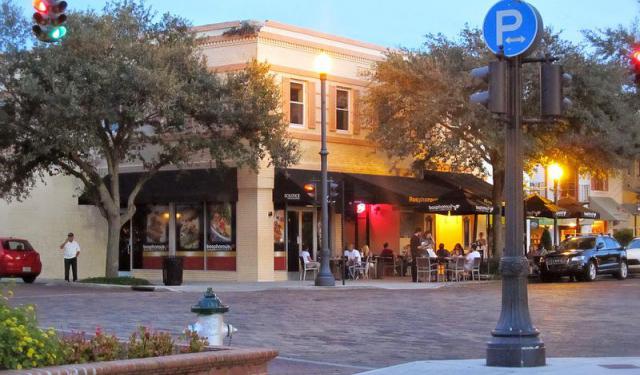
Park Avenue is the main street of Winter Park and plays a central role in how the city is laid out and used. It developed in the late nineteenth century when Winter Park was planned as a resort community for visitors from northern states. The arrival of the railroad made the area accessible, and city planners designed Park Avenue as a focal point surrounded by lakes, green space, and civic institutions.

The avenue was intentionally named after New York’s Park Avenue, though on a much smaller and quieter scale. Instead of tall buildings and heavy traffic, the street features brick sidewalks, low-rise storefronts, and a steady, walkable rhythm. Central Park runs alongside part of the avenue, adding open lawn space, shaded seating, and a rose garden that blends directly into the street rather than feeling separate from it.

Most of Winter Park’s cultural attractions are concentrated along or just off Park Avenue. Museums, cafés, galleries, and Rollins College are all within short walking distance, making the area easy to explore on foot. From here, visitors can also reach the nearby canal system, where boat tours travel between connected lakes and pass residential neighborhoods and historic homes.

Park Avenue functions as an everyday street for the city, used by residents and visitors throughout the day. Walking along it gives a clear view of how Winter Park was planned and how its central area continues to serve both local life and tourism without feeling overbuilt.
4
Winter Park Historical Museum

4) Winter Park Historical Museum

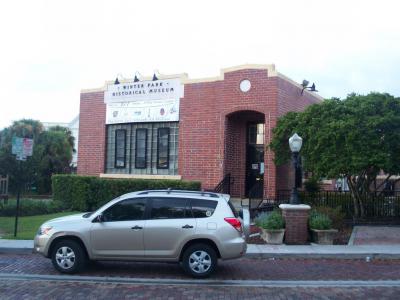
The Winter Park Historical Museum is a small local museum located just off Park Avenue in Winter Park. Housed in a historic former train depot, the building reflects the period when the railroad played a key role in the city’s early development. The museum focuses on Winter Park’s growth from a late nineteenth-century resort town into a planned residential and cultural community.

Exhibits trace the city’s early promotion as a winter destination for visitors from the northern United States, the arrival of the railroad, and the founding of Rollins College. Displays include photographs, maps, documents, and everyday objects that show how residents lived, worked, and organized the town. Particular attention is given to local planning, architecture, and civic life, rather than statewide or national history.

The museum also features rotating exhibitions that explore specific themes, such as historic neighborhoods, local businesses, or notable residents. Because of its compact size, the space is easy to explore in a short amount of time. Information panels are clearly written and focus on practical details rather than broad interpretation, making the material accessible without requiring prior knowledge.

The Winter Park Historical Museum works well as a brief stop while walking through the city center. It offers background that helps explain why Winter Park looks and functions the way it does today, using local examples drawn directly from the surrounding streets and buildings.
5
All Saints Church of Winter Park

5) All Saints Church of Winter Park

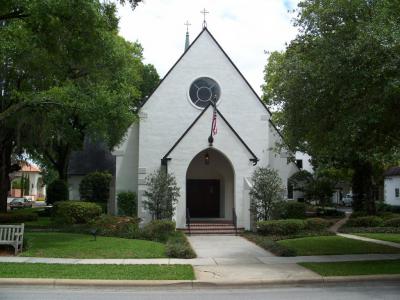
All Saints Episcopal Church is one of the most recognizable historic churches in Winter Park, located close to the city center and the Park Avenue area. Established in the early twentieth century, it reflects Winter Park’s growth from a small resort community into a permanent town with long-standing civic institutions. The church is known for its traditional Episcopal architecture and its role as an active parish serving local residents.

As you approach the building, pause across the street or near the entrance gate and take in the overall shape. Notice the warm-toned brick and the clean, symmetrical lines, which give the church a simple but formal presence. Look up toward the roofline and tower details, then take a moment to observe how the church sits within its landscaped grounds, with trees and walkways softening the edges of the property.

Step inside and allow your eyes to adjust to the quieter interior lighting. Walk slowly down the central aisle and look toward the altar area, where the design becomes more detailed. Along the side walls, notice the stained-glass windows and how they filter light into the space. Pay attention to the woodwork, stone elements, and the overall proportions of the nave, which are designed to feel balanced and calm without being overly ornate.

Visitors often stop here for a brief, respectful look at the building and its interior features. The church is usually quiet outside of services and events, and it offers a different kind of experience compared to the shops and museums nearby—more focused on architecture, craftsmanship, and the everyday life of the local community.
6
Annie Russell Theatre

6) Annie Russell Theatre

The Annie Russell Theatre is a historic performance venue on the campus of Rollins College in Winter Park. Opened in 1931, it is one of the oldest continually operating college theaters in the United States. The building was named after Annie Russell, a stage actress and educator who played a major role in establishing theater as part of Rollins College life.

The theatre is known for its intimate size and classical design, which creates a close connection between performers and audience. Over the decades, it has hosted student productions, faculty-led performances, and visiting artists, becoming a long-term part of Winter Park’s cultural scene. Its setting within the college also reflects the city’s strong link to education and the arts.

For visitors walking through the Rollins campus, the Annie Russell Theatre is an easy landmark to spot and a good reminder that Winter Park’s cultural life often centers on smaller venues and local programming rather than large concert halls. Performances vary throughout the year, so checking the schedule can be worthwhile if you want to attend a show during your visit.

If you’re walking around the Rollins campus, it’s worth stopping by to see where many of the college’s productions take place. The building is small and easy to miss if you’re not looking for it, but it has been part of Winter Park’s arts scene for decades. If there’s a show running, it can be a nice way to spend an evening locally.
7
Knowles Memorial Chapel

7) Knowles Memorial Chapel

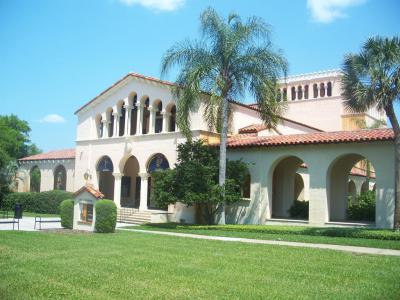
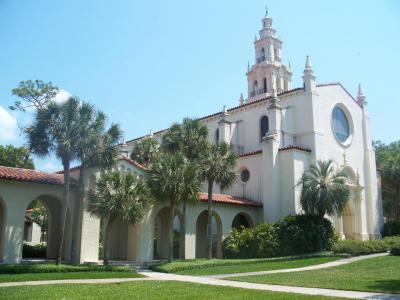
Knowles Memorial Chapel is a landmark building on the campus of Rollins College in Winter Park. Completed in 1932, it has long been used for campus gatherings, concerts, and ceremonies, and it remains one of the most recognizable structures in this part of Winter Park. Built in a Collegiate Gothic style, the chapel fits naturally into the traditional architecture found across the surrounding campus.

As you approach, stop far enough back to see the full exterior at once. Notice the tall stonework, the pointed arches, and the strong vertical lines that make the building look more dramatic from a distance than it does up close. Walk toward the entrance and look around the doorway and windows for carved details, then glance back to see how the chapel’s shape stands out among the lower campus buildings nearby.

If the doors are open, it’s worth going in for a few quiet minutes to look around. Step inside and pause near the entrance before moving forward. Let your eyes adjust, then look up above the doorway to spot the organ pipes over the entry area. From there, face down the central aisle toward the front of the chapel and notice how the stained-glass windows filter light into the space.

As you get closer to the altar, look to the left side of the chancel to see the main organ, and then glance to the right to notice additional organ pipes. Along that same right side, you’ll also notice religious paintings and a small side chapel with its own small altar, set slightly apart from the main seating area.

Walking Tours in Orlando, Florida

Create Your Own Walk in Orlando

Create Your Own Walk in Orlando

Creating your own self-guided walk in Orlando is easy and fun. Choose the city attractions that you want to see and a walk route map will be created just for you. You can even set your hotel as the start point of the walk.
Orlando Downtown Walking Tour

Orlando Downtown Walking Tour

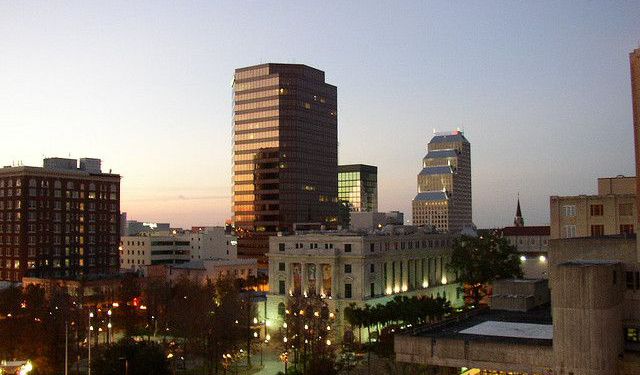
Welcome to Orlando, a city many people associate with theme parks, film crews, and childhood memories shaped by stories from Disney and Universal. It’s also a place that has hosted figures such as Neil Armstrong, who trained in Central Florida during the space program era, Louis Armstrong, who performed here during segregation, and Martin Luther King Jr., who visited the area while organizing...  view more

Tour Duration: 1 Hour(s)
Travel Distance: 2.1 Km or 1.3 Miles