Custom Walk in Tallinn, Estonia by diana_coile_96394 created on 2025-04-26
Guide Location: Estonia » Tallinn
Guide Type: Custom Walk
# of Sights: 16
Tour Duration: 3 Hour(s)
Travel Distance: 4.6 Km or 2.9 Miles
Share Key: 63NUW
Guide Type: Custom Walk
# of Sights: 16
Tour Duration: 3 Hour(s)
Travel Distance: 4.6 Km or 2.9 Miles
Share Key: 63NUW
How It Works
Please retrieve this walk in the GPSmyCity app. Once done, the app will guide you from one tour stop to the next as if you had a personal tour guide. If you created the walk on this website or come to the page via a link, please follow the instructions below to retrieve the walk in the app.
Retrieve This Walk in App
Step 1. Download the app "GPSmyCity: Walks in 1K+ Cities" on Apple App Store or Google Play Store.



Step 2. In the GPSmyCity app, download(or launch) the guide "Tallinn Map and Walking Tours".
Step 3. Tap the menu button located at upper right corner of the "Walks" screen and select "Retrieve custom walk". Enter the share key: 63NUW
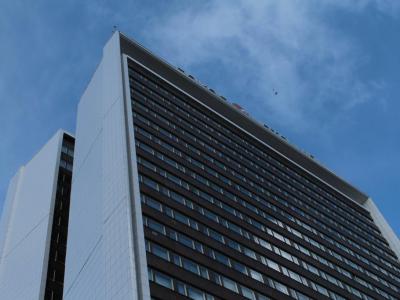
1) KGB Museum
The KGB Museum in Tallinn offers a fascinating glimpse into the complex and often secretive history of the Soviet era, particularly focusing on the intriguing story of the Viru Hotel. Built in 1972, the luxurious Viru Hotel was a symbol of Soviet prestige, intended for foreign guests. It was also a hub of covert operations by the Soviet state security organs, the KGB.
A distinctive feature of the hotel was its top floor, which was off-limits to the public and shrouded in mystery. Soviet managers claimed this floor housed only technical rooms. However, with the collapse of the Soviet Union and the KGB's hasty departure in the early 1990s, the true nature of these rooms was revealed. They were found to contain sophisticated, almost cinematic, listening devices reminiscent of James Bond movies, used for surveillance and espionage.
The museum, located on the 23rd floor of the Hotel Viru, has been preserved exactly as the KGB left it. This includes the infamous "technical rooms," now ironically marked with signs saying “There’s nothing here” in English and Estonian, echoing the dismissive official responses of the Soviet era.
The guided tours at the KGB Museum are not just about showcasing the remnants of surveillance technology. They delve into the peculiarities of life under Soviet rule, covering aspects such as espionage, sex work, and even the culinary aspects of the occupation era. The museum serves as a treasury of stories contrasting the idealized Soviet propaganda – portraying a society of content citizens under wise leadership, free of accidents or disasters – with the harsher realities of everyday life in the Soviet Union.
A distinctive feature of the hotel was its top floor, which was off-limits to the public and shrouded in mystery. Soviet managers claimed this floor housed only technical rooms. However, with the collapse of the Soviet Union and the KGB's hasty departure in the early 1990s, the true nature of these rooms was revealed. They were found to contain sophisticated, almost cinematic, listening devices reminiscent of James Bond movies, used for surveillance and espionage.
The museum, located on the 23rd floor of the Hotel Viru, has been preserved exactly as the KGB left it. This includes the infamous "technical rooms," now ironically marked with signs saying “There’s nothing here” in English and Estonian, echoing the dismissive official responses of the Soviet era.
The guided tours at the KGB Museum are not just about showcasing the remnants of surveillance technology. They delve into the peculiarities of life under Soviet rule, covering aspects such as espionage, sex work, and even the culinary aspects of the occupation era. The museum serves as a treasury of stories contrasting the idealized Soviet propaganda – portraying a society of content citizens under wise leadership, free of accidents or disasters – with the harsher realities of everyday life in the Soviet Union.
2) Dominican Monastery Claustrum
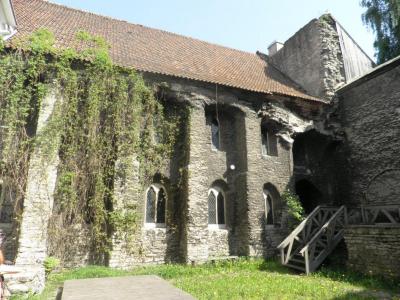
The Dominican Monastery Claustrum is located in the Old Town of Tallinn, not very far from the Viru Gates, which are the official entrance into this part of the city. The Monastery here was first formed in 1246, during a time period when the city was a thriving.
From a historical perspective, the building is one of the most important in all of Tallinn. The clausure holds the most important rooms in the old building, and they were used for many purposes during the years. During the 14th and 15th Century, the meetings of the leadership of the Hariju and Virumaa Knighthoods took place here. The Old Capital Hall used to be here also.
One of the first libraries in Tallinn was also located inside the Monastery. In addition to being able to see the old library, you can visit the old sacristy, vestry, and dormitories used by the monks and leaders of the city.
There is an extensive collection of medieval and Renaissance art and artifacts to be seen. You will especially want to check out the stone carvings, particularly those on some of the old tombstones. The relief of the angel, set in a triangle, is also quite stunning and was designed by Arendt Passer. He was a famous stone mason who did other work in the area, like the Pontus de la Gardie in the famous Tallinn Cathedral.
Just to the south of the monastery lies a narrow alley that is known as Catherine’s Passage. The wall here was from the original Monastery. There is a series of craft shops where you can watch artisans at work, just as in the days gone by.
From a historical perspective, the building is one of the most important in all of Tallinn. The clausure holds the most important rooms in the old building, and they were used for many purposes during the years. During the 14th and 15th Century, the meetings of the leadership of the Hariju and Virumaa Knighthoods took place here. The Old Capital Hall used to be here also.
One of the first libraries in Tallinn was also located inside the Monastery. In addition to being able to see the old library, you can visit the old sacristy, vestry, and dormitories used by the monks and leaders of the city.
There is an extensive collection of medieval and Renaissance art and artifacts to be seen. You will especially want to check out the stone carvings, particularly those on some of the old tombstones. The relief of the angel, set in a triangle, is also quite stunning and was designed by Arendt Passer. He was a famous stone mason who did other work in the area, like the Pontus de la Gardie in the famous Tallinn Cathedral.
Just to the south of the monastery lies a narrow alley that is known as Catherine’s Passage. The wall here was from the original Monastery. There is a series of craft shops where you can watch artisans at work, just as in the days gone by.
3) St. Catherine’s Passage (Katariina Käik) (must see)
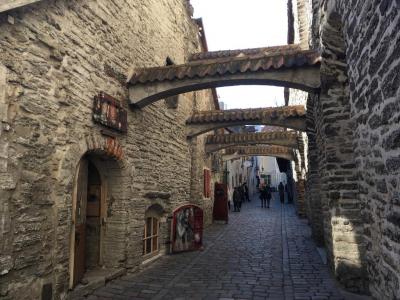
If you want to get a chance to really glimpse what life was like in the Old Town of Tallinn, you will want to visit Saint Catherine’s Passage. It is located just a short distance from the Town Hall.
The old passage connects Vene and Muurivahe Streets in town. On the northern end of the passage you will find the remnants of Saint Catherine’s Dominican Monastery Church, which is one of the oldest church in the city. In fact, the passage derives its name from the church. Many people like checking out the old tombstones that are an integral part of the sanctuary there. Many famous Estonians are buried at Saint Catherine’s cemetery.
The southern end of the passage will take you past some of the best artisan shops in Tallinn. You can watch the artists at work. It’s one of the best places to get a memento of your visit to Tallinn. The whole passage is a nice morning’s hike for the exercise alone. If you want to stop for a moment, you will want to get a cup of coffee at one of the quaint little cafes that are scattered down the passage.
The old passage connects Vene and Muurivahe Streets in town. On the northern end of the passage you will find the remnants of Saint Catherine’s Dominican Monastery Church, which is one of the oldest church in the city. In fact, the passage derives its name from the church. Many people like checking out the old tombstones that are an integral part of the sanctuary there. Many famous Estonians are buried at Saint Catherine’s cemetery.
The southern end of the passage will take you past some of the best artisan shops in Tallinn. You can watch the artists at work. It’s one of the best places to get a memento of your visit to Tallinn. The whole passage is a nice morning’s hike for the exercise alone. If you want to stop for a moment, you will want to get a cup of coffee at one of the quaint little cafes that are scattered down the passage.
4) Raeapteek (Town Hall Pharmacy)
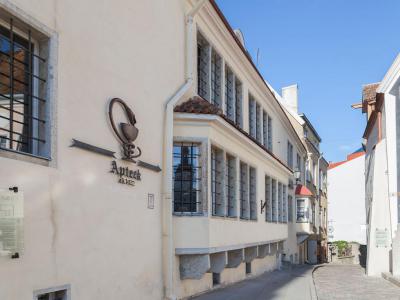
The Town Hall Pharmacy (Raeapteek) stands as one of Europe's oldest continuously operating pharmacies, maintaining its presence within the same historic building since the early 15th century. It holds the distinction of being both Tallinn's oldest commercial enterprise and its oldest medical institution. The earliest known visual representation of the Town-Hall Pharmacy can be traced back to an oil painting by Oldekop, depicting Tallinn's Town Hall Square in 1800. Photographs capturing the building's facade date back to 1889.
The precise founding date of the pharmacy remains uncertain among historians, but the oldest available records reveal that by 1422, the Town Hall Pharmacy had already changed hands twice. Some scholars suggest that its inception could be dated to 1415.
Within a town council's ledger, an entry by a chemist named Nuclawes mentions that the pharmacy's proprietors consisted of ten esteemed individuals, with the majority holding positions as aldermen. Subsequent documents, originating after 1422, indicate that the first pharmacist, Johann Molner, took charge, and medicinal products were already being dispensed at the pharmacy during the latter part of the 15th century.
The precise founding date of the pharmacy remains uncertain among historians, but the oldest available records reveal that by 1422, the Town Hall Pharmacy had already changed hands twice. Some scholars suggest that its inception could be dated to 1415.
Within a town council's ledger, an entry by a chemist named Nuclawes mentions that the pharmacy's proprietors consisted of ten esteemed individuals, with the majority holding positions as aldermen. Subsequent documents, originating after 1422, indicate that the first pharmacist, Johann Molner, took charge, and medicinal products were already being dispensed at the pharmacy during the latter part of the 15th century.
5) Raekoja Plats (Town Hall Square) (must see)
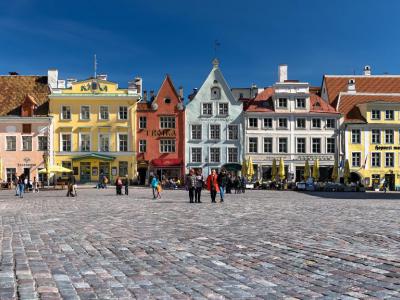
Town Hall Square is a fabulous location to soak up the long and storied history of Tallinn. It's in the center of the Old Town. Markets began opening on this site in the 11th century. Tallinn Town Hall is located in this square. Completed in 1404, it's the oldest Town Hall in Northern Europe.
Other historical buildings surround the square. There is the oldest pharmacy in Europe; it was established in approximately 1415. The pharmacy has a small museum with ancient medical instruments and medicines. The rest of the buildings are painted in attractive pastel colors and were built between the 15th and 17th centuries. Cobblestones throughout the square complete the old-world charm.
In the center of the square, visitors will find a circular stone with a compass rose. The L-shaped stone near the center of the square marks the site where a priest was executed. The priest killed a waitress who had served an overcooked omelet.
During the summer, the square is filled with open-air cafés. Enjoy alfresco dining and people-watching. There are regular outdoor markets held in Town Hall Square. Stalls feature souvenirs and traditional Estonian items.
You will find varied festivals and concerts throughout the year. Tallinn Old Town Days is a week-long festival that takes place at the beginning of summer. During this popular festival, visitors and locals are treated to exhibitions, theater plays, concerts, fairs, and non-stop entertainment.
In winter, the square becomes a winter wonderland with holiday decorations and a massive decorated fir tree. The Brotherhood of the Blackheads first erected a Christmas tree in the square in 1422. This is thought to be the world's first Christmas tree. Visitors can also enjoy a spirited Christmas market.
Why You Should Visit:
Town Hall Square is the oldest town square in Northern Europe and has been the center of Tallinn for eight centuries. Visit historic buildings and enjoy the old-world ambiance. There's no better place to get the feel of the town and nation than Town Hall Square.
Tips:
This square is incredibly festive over the winter holidays. Have a hot toddy, enjoy the holiday lights, shop for gifts, and admire the Christmas tree.
Other historical buildings surround the square. There is the oldest pharmacy in Europe; it was established in approximately 1415. The pharmacy has a small museum with ancient medical instruments and medicines. The rest of the buildings are painted in attractive pastel colors and were built between the 15th and 17th centuries. Cobblestones throughout the square complete the old-world charm.
In the center of the square, visitors will find a circular stone with a compass rose. The L-shaped stone near the center of the square marks the site where a priest was executed. The priest killed a waitress who had served an overcooked omelet.
During the summer, the square is filled with open-air cafés. Enjoy alfresco dining and people-watching. There are regular outdoor markets held in Town Hall Square. Stalls feature souvenirs and traditional Estonian items.
You will find varied festivals and concerts throughout the year. Tallinn Old Town Days is a week-long festival that takes place at the beginning of summer. During this popular festival, visitors and locals are treated to exhibitions, theater plays, concerts, fairs, and non-stop entertainment.
In winter, the square becomes a winter wonderland with holiday decorations and a massive decorated fir tree. The Brotherhood of the Blackheads first erected a Christmas tree in the square in 1422. This is thought to be the world's first Christmas tree. Visitors can also enjoy a spirited Christmas market.
Why You Should Visit:
Town Hall Square is the oldest town square in Northern Europe and has been the center of Tallinn for eight centuries. Visit historic buildings and enjoy the old-world ambiance. There's no better place to get the feel of the town and nation than Town Hall Square.
Tips:
This square is incredibly festive over the winter holidays. Have a hot toddy, enjoy the holiday lights, shop for gifts, and admire the Christmas tree.
6) Estonian History Museum - Great Guild Hall
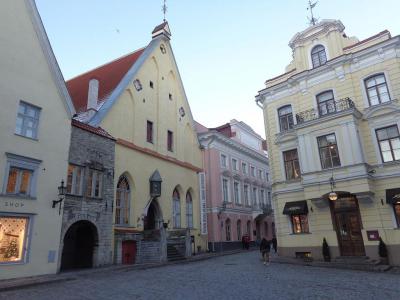
The Great Guild Hall is a wonderful old Gothic style structure that is located in the Old Town of Tallinn. It is not very far from Town Hall, and is just a couple of blocks south of Saint Olaf’s Church. You can find it directly across from the Holy Spirit Church.
It was built over a three year period that started in 1407. It was first used as a meeting place for Tallinn’s Merchant’s Union. During medieval times, local craft guilds controlled most aspects of business and commerce. The merchants of Tallinn banded together and became quite wealthy in their own right. Several old rooms in the building have been renovated and opened to the general public.
The hall now houses the Estonian History Museum, which brings to life over eleven thousand years of history of this part of the world. The displayed objects include archeological pieces, archived materials, ethnography, photography, glass and porcelain.
It was built over a three year period that started in 1407. It was first used as a meeting place for Tallinn’s Merchant’s Union. During medieval times, local craft guilds controlled most aspects of business and commerce. The merchants of Tallinn banded together and became quite wealthy in their own right. Several old rooms in the building have been renovated and opened to the general public.
The hall now houses the Estonian History Museum, which brings to life over eleven thousand years of history of this part of the world. The displayed objects include archeological pieces, archived materials, ethnography, photography, glass and porcelain.
7) House of the Brotherhood of Black Heads
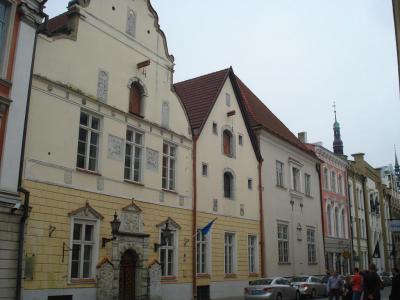
If you want to get a chance to see a piece of beautifully preserved Renaissance architecture in Tallinn, then you will want to visit the House of the Brotherhood of Black Heads. In fact, it is the only such surviving structure in downtown Tallinn.
From a historical perspective, the House was owned by an organization of young merchants from other countries, who worked throughout Estonia and Livonia during the late 14th Century. A house of some sort was on the property here for many years before the group purchased the land in the 16th Century. Major reconstruction took place in 1597.
From an architectural standpoint, the building reflects a Dutch interpretation of Renaissance artwork and styling. For instance, it is a two nave arched hall. The stunning painted doors are also quite Dutch in style, and are common among similar buildings located throughout the Low Countries. There is lots of ornamentation in the trim and doors of the building also.
From a historical perspective, the House was owned by an organization of young merchants from other countries, who worked throughout Estonia and Livonia during the late 14th Century. A house of some sort was on the property here for many years before the group purchased the land in the 16th Century. Major reconstruction took place in 1597.
From an architectural standpoint, the building reflects a Dutch interpretation of Renaissance artwork and styling. For instance, it is a two nave arched hall. The stunning painted doors are also quite Dutch in style, and are common among similar buildings located throughout the Low Countries. There is lots of ornamentation in the trim and doors of the building also.
8) St. Olav's Church (Oleviste Kirik) (must see)
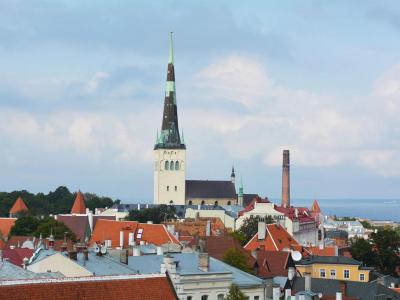
Saint Olav’s Church is one of the oldest churches in the city of Tallinn. It was built during the 1100s, and has been the center for religious life for the Scandinavian community of the city since then. Many people that attend here can trace their heritage back to when Denmark conquered Tallinn in 1219. The church is dedicated to King Olaf II of Norway though. The oldest surviving records that refer to the church are from 1267.
There is an old legend that the builder of the church, who was also named Olaf, fell to his death from the towers of the church. It adds mystery to this place. There is a painting depicting the event in the Chapel.
Sadly, the building was damaged during the 1300s, and had to be heavily rebuilt. In the 1500s, the tower of the chapel was raised to 159 meters in the air. It has been struck by lightning many times, but the tower really has a utilitarian function: it is a seaside landmark for naval vessels. From 1549 until 1625, before the tower was burned from a lightning strike, it was the tallest structure in the known world.
During the Soviet era, the KGB used the church’s spire as a radio tower and surveillance point. Today the building now houses a Baptist church.
The tower's viewing platform offers tourists one of the best views of Tallinn, and is open to the public from April through November of each year.
There is an old legend that the builder of the church, who was also named Olaf, fell to his death from the towers of the church. It adds mystery to this place. There is a painting depicting the event in the Chapel.
Sadly, the building was damaged during the 1300s, and had to be heavily rebuilt. In the 1500s, the tower of the chapel was raised to 159 meters in the air. It has been struck by lightning many times, but the tower really has a utilitarian function: it is a seaside landmark for naval vessels. From 1549 until 1625, before the tower was burned from a lightning strike, it was the tallest structure in the known world.
During the Soviet era, the KGB used the church’s spire as a radio tower and surveillance point. Today the building now houses a Baptist church.
The tower's viewing platform offers tourists one of the best views of Tallinn, and is open to the public from April through November of each year.
9) Nunna, Sauna and Kuldjala Towers (Town Wall) (must see)
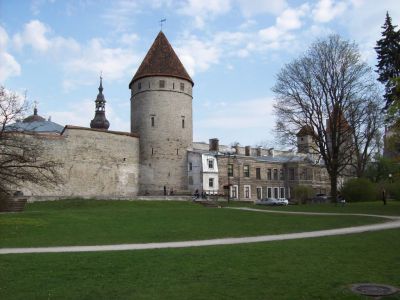
The Nunna, Sauna, and Kuldjala Towers are three of the remaining 26 towers that surround the Old Town of Tallinn. In the late 14th century, a massive project was started to build a fortified wall around the city to protect against invaders. By the 16th Century, the walls were raised to sixteen meters high with a thickness of 3 to 4 meters. This made it possible to defend against canon fire. During the 16th century, Tallinn was one of the most fortified cities in the entire world. The wall stretched 4 kilometers around old Tallinn.
These three towers are among the few that are still open to the general public. Visitors can come and walk through all three. In addition, there are some connection paths that are adjacent to the historic standing walls. It gives you a real sense of what the old town was like. Climbing the towers also gives you a great view of the city. You can imagine what it was like to be a guard on the towers. Admission is free.
These three towers are among the few that are still open to the general public. Visitors can come and walk through all three. In addition, there are some connection paths that are adjacent to the historic standing walls. It gives you a real sense of what the old town was like. Climbing the towers also gives you a great view of the city. You can imagine what it was like to be a guard on the towers. Admission is free.
10) Tallinn Old Town
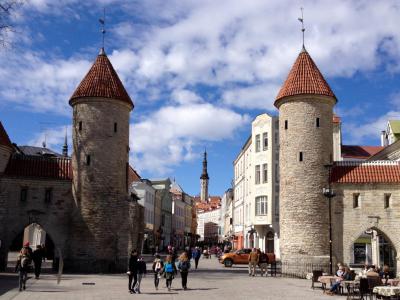
Tallinn Old Town, known as "Tallinna vanalinn" in Estonian, is the historical heart of Tallinn. Renowned for its well-preserved medieval and Hanseatic architecture, this area is a living testimony to the city's rich history. Spanning 113 hectares with a buffer zone of 2,253 hectares, the Old Town is characterized by its 13th-century city plan, which remains remarkably intact.
The Old Town has a history of prosperity and turmoil. Most buildings date back to the 13th-16th centuries, reflecting its medieval importance. However, WWII caused significant damage. Between 1941-1944, Soviet air raids, during the German occupation of Estonia, destroyed about 10% of Old Town buildings, leaving 20,000 homeless and many casualties.
Despite this turbulent history, Tallinn Old Town stands today as Northern Europe's best-preserved medieval city. Its Gothic spires, winding cobblestone streets, and enchanting architecture attract visitors worldwide. The area was once a hub for wealthy merchants from Germany, Denmark, and other regions. Now, it is a vibrant center with restaurants, bars, museums, and galleries, offering a blend of historical ambiance and modern vitality.
The Old Town's unique charm lies in its ability to maintain its medieval and Hanseatic structure completely. Recognized for its historical value and well-preserved state, it was inscribed as a UNESCO World Heritage Site in 1997. The city's layout includes original cobblestone streets lined with medieval churches, grand merchant houses, barns, and warehouses, many dating back to the Middle Ages.
Visitors to Tallinn Old Town often describe it as mystical, mesmerizing, and addictive. Spending a day wandering through its streets offers an immersive experience in an authentic medieval milieu, revealing why it holds such a special place in the annals of world heritage sites.
The Old Town has a history of prosperity and turmoil. Most buildings date back to the 13th-16th centuries, reflecting its medieval importance. However, WWII caused significant damage. Between 1941-1944, Soviet air raids, during the German occupation of Estonia, destroyed about 10% of Old Town buildings, leaving 20,000 homeless and many casualties.
Despite this turbulent history, Tallinn Old Town stands today as Northern Europe's best-preserved medieval city. Its Gothic spires, winding cobblestone streets, and enchanting architecture attract visitors worldwide. The area was once a hub for wealthy merchants from Germany, Denmark, and other regions. Now, it is a vibrant center with restaurants, bars, museums, and galleries, offering a blend of historical ambiance and modern vitality.
The Old Town's unique charm lies in its ability to maintain its medieval and Hanseatic structure completely. Recognized for its historical value and well-preserved state, it was inscribed as a UNESCO World Heritage Site in 1997. The city's layout includes original cobblestone streets lined with medieval churches, grand merchant houses, barns, and warehouses, many dating back to the Middle Ages.
Visitors to Tallinn Old Town often describe it as mystical, mesmerizing, and addictive. Spending a day wandering through its streets offers an immersive experience in an authentic medieval milieu, revealing why it holds such a special place in the annals of world heritage sites.
11) Kohtuotsa Viewing Point (must see)
Kohtuotsa Viewing Point, located in Tallinn, is one of the city's most popular and picturesque viewpoints. Perched on Toompea Hill in the heart of Tallinn's historic Old Town, this viewing platform offers visitors breathtaking panoramic views of the city and its surroundings. It's easily accessible on foot from various parts of the Old Town and is a must-visit attraction for tourists exploring Tallinn's historic center.
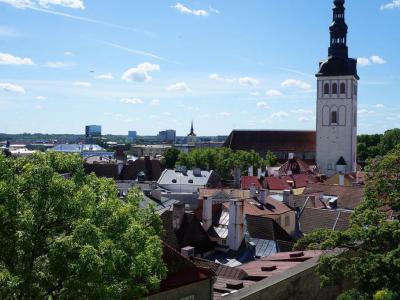
The main attraction of Kohtuotsa Viewing Point is the stunning view it provides. From this vantage point, visitors can enjoy a sweeping vista of Tallinn's Old Town, the modern cityscape, and the picturesque Gulf of Finland. It's particularly beautiful at sunrise and sunset when the city is bathed in warm, golden light.
The viewpoint allows you to spot several iconic landmarks of Tallinn, including the medieval walls and towers of the Old Town, Alexander Nevsky Cathedral with its onion domes, and the spires of Saint Olaf's Church. You'll also have a clear view of the bustling city below and the harbor in the distance.
The viewing point features a raised platform with safety railings, which provides a safe and comfortable place to take in the scenery. It's a popular spot for photography, so be sure to bring your camera or smartphone to capture the stunning views.
Kohtuotsa Viewing Point is free to access and is open year-round. The walk to the viewpoint may involve some uphill terrain and steps, but it's generally easy to reach on foot from various parts of the Old Town. It's also conveniently located near other attractions like the Toompea Castle and the Danish King's Garden.
After taking in the views, you can explore the charming streets of Tallinn's Old Town or visit one of the nearby cafes for a coffee or meal. This area is well-known for its cozy and historic dining establishments.
The main attraction of Kohtuotsa Viewing Point is the stunning view it provides. From this vantage point, visitors can enjoy a sweeping vista of Tallinn's Old Town, the modern cityscape, and the picturesque Gulf of Finland. It's particularly beautiful at sunrise and sunset when the city is bathed in warm, golden light.
The viewpoint allows you to spot several iconic landmarks of Tallinn, including the medieval walls and towers of the Old Town, Alexander Nevsky Cathedral with its onion domes, and the spires of Saint Olaf's Church. You'll also have a clear view of the bustling city below and the harbor in the distance.
The viewing point features a raised platform with safety railings, which provides a safe and comfortable place to take in the scenery. It's a popular spot for photography, so be sure to bring your camera or smartphone to capture the stunning views.
Kohtuotsa Viewing Point is free to access and is open year-round. The walk to the viewpoint may involve some uphill terrain and steps, but it's generally easy to reach on foot from various parts of the Old Town. It's also conveniently located near other attractions like the Toompea Castle and the Danish King's Garden.
After taking in the views, you can explore the charming streets of Tallinn's Old Town or visit one of the nearby cafes for a coffee or meal. This area is well-known for its cozy and historic dining establishments.
12) Alexander Nevsky Cathedral (must see)
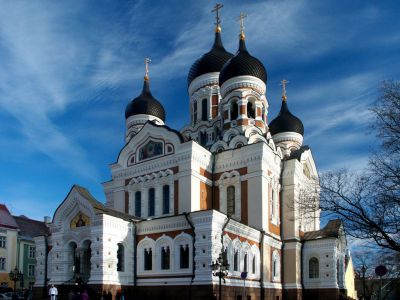
The Alexander Nevsky Cathedral is an orthodox cathedral in the Tallinn Old Town. It was built to a design by Mikhail Preobrazhensky in a typical Russian Revival style between 1894 and 1900, during the period when the country was part of the Russian Empire. The Alexander Nevsky Cathedral is Tallinn's largest and grandest orthodox cupola cathedral. It is dedicated to Saint Alexander Nevsky who in 1242 won the Battle of the Ice on Lake Peipus, in the territorial waters of present-day Estonia. The late Russian patriarch, Alexis II, started his priestly ministry in the church.
The Alexander Nevsky Cathedral crowns the Toompea Hill, the political center of Estonia. The cathedral was built during the period of late 19th century Russification and was so disliked by many Estonians as a symbol of oppression that the Estonian authorities scheduled the cathedral for demolition in 1924, but the decision was never implemented due to lack of funds and the building's massive construction. As the USSR was officially non-religious, many churches including this cathedral were left to decline. The church has been meticulously restored since Estonia regained independence from the Soviet Union in 1991.
The Alexander Nevsky Cathedral crowns the Toompea Hill, the political center of Estonia. The cathedral was built during the period of late 19th century Russification and was so disliked by many Estonians as a symbol of oppression that the Estonian authorities scheduled the cathedral for demolition in 1924, but the decision was never implemented due to lack of funds and the building's massive construction. As the USSR was officially non-religious, many churches including this cathedral were left to decline. The church has been meticulously restored since Estonia regained independence from the Soviet Union in 1991.
13) Toompea Hill (must see)
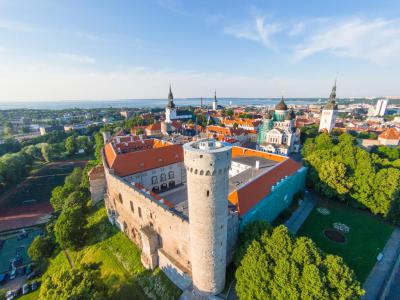
Toompea Hill is a limestone hill that sits about 20-30 meters (65 feet-98 feet) above the rest of the city. In Estonian mythology, Toompea is a grave mound erected by Linda for her husband, King Kalev. Linda sat on the grave mound, shed tears, and formed Ulemiste Lake.
Throughout Tallinn's history, the hill has been the site of various forts built to defend the city. Castle Square is the site where Tallinn was founded by the Knights of the Sword in 1229. Today, the spectacular Russian-style Alexander Nevsky Cathedral stands in Castle Square.
Toompea is the center of Estonia's government. Parliament meets in the Toompea Castle, which is topped by the Tall Hermann Tower. Tall Hermann was completed in 1371. Tradition dictates that whichever country flies its flag over Tall Hermann rules Estonia. Each day, the Estonian flag is raised at sunrise while the national anthem plays and lowered at sunset to the tune of My Fatherland is My Love.
In 1684, Toompea had a terrible fire, and most of its buildings were damaged. Because of the fire, Toompea has newer buildings than Lower Town and has a different look.
Toomkirik (Dome Church) was built in the 13th century and survived the brutal 1684 fire. Don't miss the medieval coats of arms in this beautiful example of an Estonian Lutheran Church. Toompea Castle was built on the ruins of a fortress built here during the 13th and 14th centuries. The current castle was completed in 1773 and features a pink Baroque facade.
Why You Should Visit:
Toompea has long been the seat of power for the area. The hilltop site has a long history, gorgeous views of Old Town, and exciting architecture.
Tips:
Check out one of the viewing platforms for a panorama of Old Town below and the Gulf of Finland. The view is breathtaking at sunset.
Throughout Tallinn's history, the hill has been the site of various forts built to defend the city. Castle Square is the site where Tallinn was founded by the Knights of the Sword in 1229. Today, the spectacular Russian-style Alexander Nevsky Cathedral stands in Castle Square.
Toompea is the center of Estonia's government. Parliament meets in the Toompea Castle, which is topped by the Tall Hermann Tower. Tall Hermann was completed in 1371. Tradition dictates that whichever country flies its flag over Tall Hermann rules Estonia. Each day, the Estonian flag is raised at sunrise while the national anthem plays and lowered at sunset to the tune of My Fatherland is My Love.
In 1684, Toompea had a terrible fire, and most of its buildings were damaged. Because of the fire, Toompea has newer buildings than Lower Town and has a different look.
Toomkirik (Dome Church) was built in the 13th century and survived the brutal 1684 fire. Don't miss the medieval coats of arms in this beautiful example of an Estonian Lutheran Church. Toompea Castle was built on the ruins of a fortress built here during the 13th and 14th centuries. The current castle was completed in 1773 and features a pink Baroque facade.
Why You Should Visit:
Toompea has long been the seat of power for the area. The hilltop site has a long history, gorgeous views of Old Town, and exciting architecture.
Tips:
Check out one of the viewing platforms for a panorama of Old Town below and the Gulf of Finland. The view is breathtaking at sunset.
14) Kiek in de Kök Museum and Bastion Tunnels
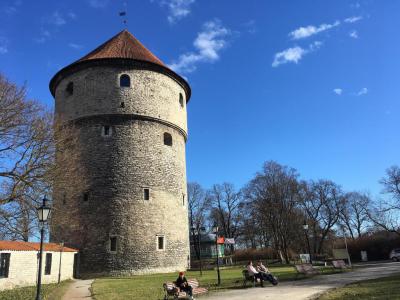
The phrase “Kiek in de Kok” derives from German, meaning "Peep into the Kitchen". Kiek in de Kök was an old artillery tower. Occupants of the tower used to be able to peek down into the kitchens of nearby homes, hence the name.
The tower was built in 1475 as part of the impressive fortifications that used to surround the town. It stands an impressive 38 meters high, and is made with walls that are 4 meters thick, which were designed to stand up against canon fire. Today you can still see old cannon balls that are embedded into the walls of the tower that date all the way back to the 16th century.
The old tower has been modified many times during its lifetime. In the 17th Century new gun holes were made at the top of the tower. The structure fell out of use by 1760. For a while, it became a repository for archives and was used briefly as apartments.
Today, the tower is a museum for the town’s fortification system with displays showing how the city's system of walls and towers developed through the centuries as well as other facets of life in old Tallinn. From the museum, one can also enter the Bastion tunnels, dating back to the 17th to 18th centuries, are an integral part of the city’s defense system.
The tower was built in 1475 as part of the impressive fortifications that used to surround the town. It stands an impressive 38 meters high, and is made with walls that are 4 meters thick, which were designed to stand up against canon fire. Today you can still see old cannon balls that are embedded into the walls of the tower that date all the way back to the 16th century.
The old tower has been modified many times during its lifetime. In the 17th Century new gun holes were made at the top of the tower. The structure fell out of use by 1760. For a while, it became a repository for archives and was used briefly as apartments.
Today, the tower is a museum for the town’s fortification system with displays showing how the city's system of walls and towers developed through the centuries as well as other facets of life in old Tallinn. From the museum, one can also enter the Bastion tunnels, dating back to the 17th to 18th centuries, are an integral part of the city’s defense system.
15) Tallinna Raekoda (Tallinn Town Hall) (must see)
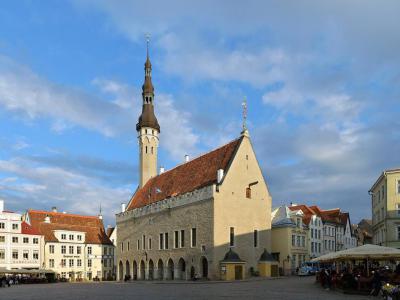
Tallinn Town Hall is the oldest and only preserved Gothic-style city hall in North Europe. In 2005, the Town Hall was awarded second prize for conservation of Architectural Heritage. Parts of the town hall date to the 13th century. The Town Hall was completed in 1404 and was the center of the town's government for almost 700 years, until 1970. Throughout the centuries, several additions, renovations, and architectural changes have been made.
Tallinn Town Hall was built with limestone. Traditional clay tiles adorn the exterior, which features a 64 meter (210 feet) tall spire that's visible from all over town. Gargoyles decorate the main facade. The Town Hall has an arcade formed with nine arcs and eight pillars. In inclement weather, merchants could gather under the shelter of the arcade. Criminals would be chained to one of the pillars so that townspeople could mock them.
The Town Hall's interior features attractive Gothic arches and works of art spanning the history of Tallinn. Benches were crafted in the 14th and 15th centuries. The largest hall in Town Hall is the Citizens Hall. It can hold up to 100 people and is often used for musical performances.
The Council Chamber features intricate wood carvings dating to 1375. Copies of 16th-century tapestries hang on interior walls. The original tapestries are on display in the Tallinn City Museum.
The Old Thomas weather vane is one of the town's most famous landmarks. The weather vane depicts a soldier who protects the city. Old Thomas was originally placed in 1530. Today, a copy stands on top of the town hall's spire, while the 1530 original is on display in the town hall's basement.
Tallinn regularly hosts concerts and receptions in this historic building. For a great view of the city, bring your camera and climb the tower.
Tallinn Town Hall was built with limestone. Traditional clay tiles adorn the exterior, which features a 64 meter (210 feet) tall spire that's visible from all over town. Gargoyles decorate the main facade. The Town Hall has an arcade formed with nine arcs and eight pillars. In inclement weather, merchants could gather under the shelter of the arcade. Criminals would be chained to one of the pillars so that townspeople could mock them.
The Town Hall's interior features attractive Gothic arches and works of art spanning the history of Tallinn. Benches were crafted in the 14th and 15th centuries. The largest hall in Town Hall is the Citizens Hall. It can hold up to 100 people and is often used for musical performances.
The Council Chamber features intricate wood carvings dating to 1375. Copies of 16th-century tapestries hang on interior walls. The original tapestries are on display in the Tallinn City Museum.
The Old Thomas weather vane is one of the town's most famous landmarks. The weather vane depicts a soldier who protects the city. Old Thomas was originally placed in 1530. Today, a copy stands on top of the town hall's spire, while the 1530 original is on display in the town hall's basement.
Tallinn regularly hosts concerts and receptions in this historic building. For a great view of the city, bring your camera and climb the tower.
16) Viru Gate (Viru Värav)
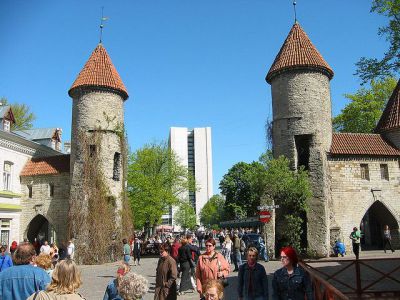
At one point in time, there were a total of 45 towers built into the walls that protected Tallinn. Twenty-six of those still remain. Two of the best preserved of the bunch are called Viru Gate. The gate dates from the 14th Century, as do most of the towers, and sits at the entrance way into the Old Town.
Today the two towers are quite lovely, having been covered in ivy over the years. It gives a gentle look to Viru Street. When you first enter the Old Town through the gate, it makes you feel as though you have stepped back in time.
The towers used to be the fore gates to the city, and a larger set was built a little further in, which were held up by a set of square towers. Most of the gate was pulled down in 1880, in order to make room for more street traffic. Since that time, though, the two towers have become a symbol for the Tallinn Old Town, which used to be the most fortified city in all of Europe back in the day.
Today the two towers are quite lovely, having been covered in ivy over the years. It gives a gentle look to Viru Street. When you first enter the Old Town through the gate, it makes you feel as though you have stepped back in time.
The towers used to be the fore gates to the city, and a larger set was built a little further in, which were held up by a set of square towers. Most of the gate was pulled down in 1880, in order to make room for more street traffic. Since that time, though, the two towers have become a symbol for the Tallinn Old Town, which used to be the most fortified city in all of Europe back in the day.
