Custom Walk in London, England by morrisdana_395d5 created on 2025-06-19
Guide Location: England » London
Guide Type: Custom Walk
# of Sights: 14
Tour Duration: 3 Hour(s)
Travel Distance: 5.9 Km or 3.7 Miles
Share Key: PZTTB
Guide Type: Custom Walk
# of Sights: 14
Tour Duration: 3 Hour(s)
Travel Distance: 5.9 Km or 3.7 Miles
Share Key: PZTTB
How It Works
Please retrieve this walk in the GPSmyCity app. Once done, the app will guide you from one tour stop to the next as if you had a personal tour guide. If you created the walk on this website or come to the page via a link, please follow the instructions below to retrieve the walk in the app.
Retrieve This Walk in App
Step 1. Download the app "GPSmyCity: Walks in 1K+ Cities" on Apple App Store or Google Play Store.



Step 2. In the GPSmyCity app, download(or launch) the guide "London Map and Walking Tours".
Step 3. Tap the menu button located at upper right corner of the "Walks" screen and select "Retrieve custom walk". Enter the share key: PZTTB
1) Seven Dials
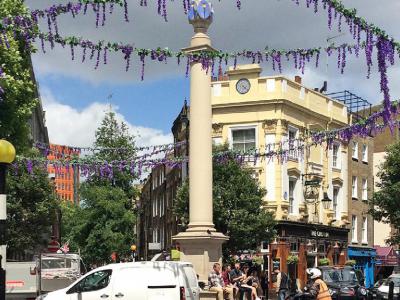
Situated between Covent Garden and Soho, you'll find Seven Dials, a quaint cobblestone area that beckons fashion enthusiasts with its vintage clothing and accessory boutiques, streetwear specialists, and cosmetics shops. It's a fantastic destination for shopping without the hefty London price tags, and it also offers a glimpse into the history of the UK's capital city.
Comprising seven interconnected streets and courtyards, this area was once part of the Saint Giles Rookery, a destitute neighborhood frequented by the impoverished, prostitutes, and petty thieves. Thanks to its seven escape routes, pickpockets frequently eluded capture. However, in 1690, Thomas Neale envisioned a transformation of this locale into an upper-middle-class district. His original plan centered on a square where six streets converged, featuring a pillar adorned with six sundials. Just before the project's completion, a seventh street was added, and while the name Seven Dials persisted, a seventh sundial was never affixed to the pillar. Nevertheless, the central spike was often interpreted as such.
In 1773, the Town Council removed the column, ostensibly for repairs but primarily to disperse the "undesirable elements" congregating at the central square. This move didn't significantly reduce crime, but it became a topic of local discussion. Over time, the "undesirable elements" lost interest and relocated to more lucrative areas, leading this spot to evolve into a favored gathering place for students.
Pubs and shops were either refurbished or newly opened around the pillar, which was replaced by a replica of the original in 1988. Today, Seven Dials draws millions of tourists annually who come to meander through its charming cobbled streets and discover hidden courtyards brimming with unique shops, boutiques, high-end cosmetics stores, bars, and restaurants.
Comprising seven interconnected streets and courtyards, this area was once part of the Saint Giles Rookery, a destitute neighborhood frequented by the impoverished, prostitutes, and petty thieves. Thanks to its seven escape routes, pickpockets frequently eluded capture. However, in 1690, Thomas Neale envisioned a transformation of this locale into an upper-middle-class district. His original plan centered on a square where six streets converged, featuring a pillar adorned with six sundials. Just before the project's completion, a seventh street was added, and while the name Seven Dials persisted, a seventh sundial was never affixed to the pillar. Nevertheless, the central spike was often interpreted as such.
In 1773, the Town Council removed the column, ostensibly for repairs but primarily to disperse the "undesirable elements" congregating at the central square. This move didn't significantly reduce crime, but it became a topic of local discussion. Over time, the "undesirable elements" lost interest and relocated to more lucrative areas, leading this spot to evolve into a favored gathering place for students.
Pubs and shops were either refurbished or newly opened around the pillar, which was replaced by a replica of the original in 1988. Today, Seven Dials draws millions of tourists annually who come to meander through its charming cobbled streets and discover hidden courtyards brimming with unique shops, boutiques, high-end cosmetics stores, bars, and restaurants.
2) Cecile Court
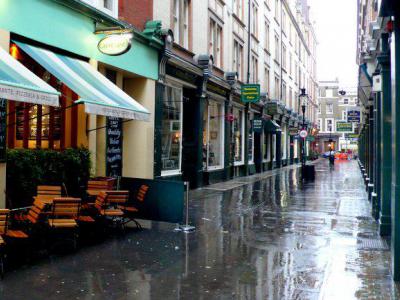
Heading down Charing Cross Road, or better still along the parallel St. Martin's Lane-take a few steps to the second turn on your right and you’ll find yourself in the magical time capsule known as Cecil Court. One-block-long and steeped in Victorian charm, this cobbled little pedestrian street is one of London’s oldest-and arguably most enchanted-lanes.
Now, rumor has it that J.K. Rowling took a stroll through here and thought, “Hmm, what if this were crawling with witches and wizards?” And thus, Diagon Alley was born! And honestly, it’s not hard to see why. The shop windows practically wink at you with curiosities: magical and psychic literature, shimmering maps, collector’s posters, and more old banknotes than Gringotts would know what to do with.
There’s The Witch Ball, serving up spells and spine-tinglers, and Marchpane, a children’s bookshop that quietly flexes its rare, signed Harry Potter editions like they’re just another Tuesday. Wandering here, don’t be surprised if you hear a whisper of wand wood against velvet or catch the scent of Butterbeer on the breeze.
It’s Diagon Alley with a London postcode-and no Ministry of Magic ID required.
Now, rumor has it that J.K. Rowling took a stroll through here and thought, “Hmm, what if this were crawling with witches and wizards?” And thus, Diagon Alley was born! And honestly, it’s not hard to see why. The shop windows practically wink at you with curiosities: magical and psychic literature, shimmering maps, collector’s posters, and more old banknotes than Gringotts would know what to do with.
There’s The Witch Ball, serving up spells and spine-tinglers, and Marchpane, a children’s bookshop that quietly flexes its rare, signed Harry Potter editions like they’re just another Tuesday. Wandering here, don’t be surprised if you hear a whisper of wand wood against velvet or catch the scent of Butterbeer on the breeze.
It’s Diagon Alley with a London postcode-and no Ministry of Magic ID required.
3) London Coliseum
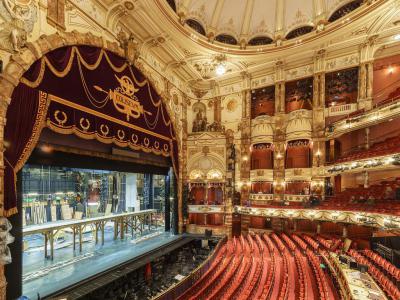
A splendid example of Edwardian architecture, this baroque-style theater, designed in 1904, boasts an impressive 2,350-seat auditorium and a rooftop glass dome housing a bar that offers stunning panoramic views. It made history by introducing London's inaugural revolving stage and by being the pioneer of theater lifts in Europe. To this day, it remains the quintessential "People's Palace" for entertainment.
The expansive auditorium was built on four levels: Stalls, Dress Circle, Grand Tier, and Balcony. Notably, it lacked a pit, a departure from the norms of the late Victorian era when pits were reserved for lower-class patrons. Oswald Stoll, the visionary behind the theater, envisioned a family-friendly establishment, eschewing class distinctions. Astonishingly, during World War II, the Coliseum served as a canteen for the Air Raid Patrol, and even Winston Churchill delivered a speech from its stage. Post-1945, it predominantly featured American musicals, and in 1961, it transformed into a Cinerama Theatre.
Presently, the Coliseum stands as one of the city's most esteemed venues, primarily serving as the home of the English National Opera. This institution is renowned for its groundbreaking opera productions, which are performed in English and come at more affordable rates than those at the nearby Royal Opera House. In recent times, the company has also ventured into musicals, occasionally featuring renowned opera singers. During the opera's offseason, which includes the summer and winter holiday periods, the venue welcomes the English National Ballet and other performing troupes.
For those eager to delve into the building's architectural marvels and rich history, guided tours are available on selected dates at 11am, providing captivating insights into the theater's past and design.
The expansive auditorium was built on four levels: Stalls, Dress Circle, Grand Tier, and Balcony. Notably, it lacked a pit, a departure from the norms of the late Victorian era when pits were reserved for lower-class patrons. Oswald Stoll, the visionary behind the theater, envisioned a family-friendly establishment, eschewing class distinctions. Astonishingly, during World War II, the Coliseum served as a canteen for the Air Raid Patrol, and even Winston Churchill delivered a speech from its stage. Post-1945, it predominantly featured American musicals, and in 1961, it transformed into a Cinerama Theatre.
Presently, the Coliseum stands as one of the city's most esteemed venues, primarily serving as the home of the English National Opera. This institution is renowned for its groundbreaking opera productions, which are performed in English and come at more affordable rates than those at the nearby Royal Opera House. In recent times, the company has also ventured into musicals, occasionally featuring renowned opera singers. During the opera's offseason, which includes the summer and winter holiday periods, the venue welcomes the English National Ballet and other performing troupes.
For those eager to delve into the building's architectural marvels and rich history, guided tours are available on selected dates at 11am, providing captivating insights into the theater's past and design.
4) Trafalgar Square (must see)
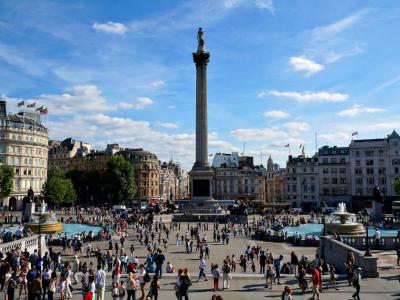
Britain’s most self-important plaza, Trafalgar Square is arguably the closest thing to London’s beating heart (if London had ventricles paved in pigeons and protest signs). Want the official center of the city? That’s actually a tiny traffic island called Charing Cross, just south of the square. Yep, all distances to London are measured from there. Not Buckingham Palace. Not Big Ben. A glorified roundabout...
Now, if you're into obscure imperial measurements, Trafalgar’s got you covered. Nestled behind the café, you’ll find the Imperial Standard measures: inches, feet, yards, chains, perches, poles... basically, the greatest hits of Victorian measuring tape. Originally installed in 1876, they were moved in 2003 when the north terrace was pedestrianized-because who needs traffic when you’ve got trivia?
The square gets its name from the Battle of Trafalgar, a Napoleonic showdown where Admiral Lord Nelson heroically defeated the French and Spanish fleets in 1805... and promptly died doing so. 30 years later, the square got its now-famous name. Then, in 1843, they added Nelson’s Column, a towering tribute built from Devon granite, with bronze panels depicting his greatest hits: Saint Vincent, The Nile, Copenhagen, and Trafalgar-which, to be fair, did earn him the naming rights.
By 1868, the stone lions guarding the column were considered too puny for British pride, so the sculptor Edwin Landseer crafted bronze ones instead, with remarkable anatomical precision. Beautiful, grand, majestic-except, apparently, he got one detail hilariously wrong: he sculpted the back of the lions as if they had beanbag backs (real lions don’t sag like that).
Surrounded by fountains, tourists, and-until recently-a whole lot of feathered freeloaders, Trafalgar was once London’s top pigeon hangout. That is, until a mayor declared them public enemy number one and evicted the birdseed dealers. The pigeons, scandalized, have never quite forgiven the city.
Tip:
Plant yourself on the steps, let the sounds of the city wash over you, and watch the sun dip behind Nelson’s heroic silhouette. Or just use it as your springboard to the rest of London-you’re already at the center, after all.
Now, if you're into obscure imperial measurements, Trafalgar’s got you covered. Nestled behind the café, you’ll find the Imperial Standard measures: inches, feet, yards, chains, perches, poles... basically, the greatest hits of Victorian measuring tape. Originally installed in 1876, they were moved in 2003 when the north terrace was pedestrianized-because who needs traffic when you’ve got trivia?
The square gets its name from the Battle of Trafalgar, a Napoleonic showdown where Admiral Lord Nelson heroically defeated the French and Spanish fleets in 1805... and promptly died doing so. 30 years later, the square got its now-famous name. Then, in 1843, they added Nelson’s Column, a towering tribute built from Devon granite, with bronze panels depicting his greatest hits: Saint Vincent, The Nile, Copenhagen, and Trafalgar-which, to be fair, did earn him the naming rights.
By 1868, the stone lions guarding the column were considered too puny for British pride, so the sculptor Edwin Landseer crafted bronze ones instead, with remarkable anatomical precision. Beautiful, grand, majestic-except, apparently, he got one detail hilariously wrong: he sculpted the back of the lions as if they had beanbag backs (real lions don’t sag like that).
Surrounded by fountains, tourists, and-until recently-a whole lot of feathered freeloaders, Trafalgar was once London’s top pigeon hangout. That is, until a mayor declared them public enemy number one and evicted the birdseed dealers. The pigeons, scandalized, have never quite forgiven the city.
Tip:
Plant yourself on the steps, let the sounds of the city wash over you, and watch the sun dip behind Nelson’s heroic silhouette. Or just use it as your springboard to the rest of London-you’re already at the center, after all.
5) Admiralty Arch
The Mall-London’s answer to a Parisian boulevard (if Paris had fewer croissants and more royal pageantry). This grand, tree-lined stretch was laid out in the early 1900s as a grand tribute to Queen Victoria. Gliding elegantly along the top edge of St. James’s Park, it is perfect for parades, pomp, and the occasional royal wave.
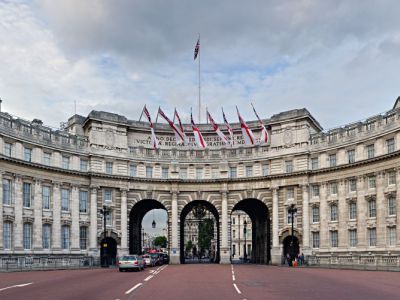
At one end of the Mall, rising like a stone eyebrow over the road, stands Admiralty Arch. It’s not just one arch-oh no-it’s five: two for pedestrians, two for cars, and one exclusive center arch, which is rolled out only for state occasions or when the King’s feeling particularly dramatic. Until 2012, the Arch moonlighted as a government building and even hosted the Prime Minister whenever No. 10 needed a makeover. Presently, it’s undergoing conversion into a luxury hotel, complete with a jaw-dropping £150-million penthouse-basically Buckingham Palace without the job.
And now, a small detour into the bizarre: look closely at the inside wall of the right-hand car arch (as you face The Mall), and you might spot... a bronze nose. Yes, the nose. Not a lost statue part or prank gone wrong, but a fully intentional nose installed by a rogue artist in 1997. No one really knows why it’s there, though some whisper it’s a tribute to the Duke of Wellington’s famously generous proboscis. What we do know is that the Royal Horse Guards still give it a lucky rub as they pass by-maybe as a sign of their admiration for the Iron Duke or maybe simply because even in a city of secrets, superstition always gets the last laugh...
At one end of the Mall, rising like a stone eyebrow over the road, stands Admiralty Arch. It’s not just one arch-oh no-it’s five: two for pedestrians, two for cars, and one exclusive center arch, which is rolled out only for state occasions or when the King’s feeling particularly dramatic. Until 2012, the Arch moonlighted as a government building and even hosted the Prime Minister whenever No. 10 needed a makeover. Presently, it’s undergoing conversion into a luxury hotel, complete with a jaw-dropping £150-million penthouse-basically Buckingham Palace without the job.
And now, a small detour into the bizarre: look closely at the inside wall of the right-hand car arch (as you face The Mall), and you might spot... a bronze nose. Yes, the nose. Not a lost statue part or prank gone wrong, but a fully intentional nose installed by a rogue artist in 1997. No one really knows why it’s there, though some whisper it’s a tribute to the Duke of Wellington’s famously generous proboscis. What we do know is that the Royal Horse Guards still give it a lucky rub as they pass by-maybe as a sign of their admiration for the Iron Duke or maybe simply because even in a city of secrets, superstition always gets the last laugh...
6) 10 Downing Street
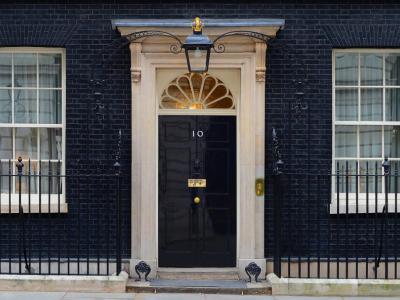
10 Downing Street-or as the British press affectionately calls it, Number 10-is the official residence and workplace of the UK’s Prime Minister. It has been the address for power players since the 18th century. Don’t be fooled by its modest black door-it’s basically the palace of spreadsheets and late-night policy debates-equal parts nerve center and nerve-wracking...
Originally cobbled together from three separate houses (because one apparently wasn't enough for 18th-century real estate ambitions), Number 10 now contains over 100 rooms. The PM’s family lives on the third floor, their kitchen’s tucked away in the basement, and the rest of the place is a maze of offices, reception rooms, and the odd spot for international awkward silences. There’s even a private garden-half an acre, no less-perfect for pondering global crises over a cup of Earl Grey.
Now, speaking of doors, that iconic black front door is not wood but reinforced steel. No keyhole, either-because obviously, in this house, you don’t knock, you get buzzed in. A doorman’s always on duty because the door only opens from the inside. (Some say this is where British stoicism is forged.)
And the phrase “in the hot seat”? Thank Number 10 for that. The hallway used to feature a rather dramatic black chair, complete with a coal-filled drawer underneath to warm the night watchman's backside. Forget ergonomics-that was 18th-century comfort.
The house has taken its share of hits. During WWII, a German bomb rudely messed with the kitchen. Then in 1991, the IRA launched a mortar attack-Downing Street survived, but a splinter still sticks defiantly in the upstairs plaster, like a war story the walls refuse to let go.
Inside, the Grand Staircase displays portraits of every British Prime Minister in order, a visual reminder that political haircuts have come a long way. Tony Blair added bees to the décor (yes, actual plaster bees in the window frames), while Margaret Thatcher insisted on a mini roof over one door-presumably for extra austerity.
Public tours-unfortunately, not happening. Entry is tighter than the King’s biscuit tin. But if you’re into wizardry, you’ll appreciate the Harry Potter trivia-Number 10 doubles as a magical portal, as revealed in The Half-Blood Prince. And yes, Kingsley wizard Shacklebolt worked here undercover, guarding the Prime Minister against the dark forces of Lord Voldemort. There's obviously more to this place than you'd expect...
Tip:
Pair your Downing Street sightseeing with a wider walk through Whitehall and Westminster. Politics, pomp, and a splash of Potter-it’s all just a few steps away.
Originally cobbled together from three separate houses (because one apparently wasn't enough for 18th-century real estate ambitions), Number 10 now contains over 100 rooms. The PM’s family lives on the third floor, their kitchen’s tucked away in the basement, and the rest of the place is a maze of offices, reception rooms, and the odd spot for international awkward silences. There’s even a private garden-half an acre, no less-perfect for pondering global crises over a cup of Earl Grey.
Now, speaking of doors, that iconic black front door is not wood but reinforced steel. No keyhole, either-because obviously, in this house, you don’t knock, you get buzzed in. A doorman’s always on duty because the door only opens from the inside. (Some say this is where British stoicism is forged.)
And the phrase “in the hot seat”? Thank Number 10 for that. The hallway used to feature a rather dramatic black chair, complete with a coal-filled drawer underneath to warm the night watchman's backside. Forget ergonomics-that was 18th-century comfort.
The house has taken its share of hits. During WWII, a German bomb rudely messed with the kitchen. Then in 1991, the IRA launched a mortar attack-Downing Street survived, but a splinter still sticks defiantly in the upstairs plaster, like a war story the walls refuse to let go.
Inside, the Grand Staircase displays portraits of every British Prime Minister in order, a visual reminder that political haircuts have come a long way. Tony Blair added bees to the décor (yes, actual plaster bees in the window frames), while Margaret Thatcher insisted on a mini roof over one door-presumably for extra austerity.
Public tours-unfortunately, not happening. Entry is tighter than the King’s biscuit tin. But if you’re into wizardry, you’ll appreciate the Harry Potter trivia-Number 10 doubles as a magical portal, as revealed in The Half-Blood Prince. And yes, Kingsley wizard Shacklebolt worked here undercover, guarding the Prime Minister against the dark forces of Lord Voldemort. There's obviously more to this place than you'd expect...
Tip:
Pair your Downing Street sightseeing with a wider walk through Whitehall and Westminster. Politics, pomp, and a splash of Potter-it’s all just a few steps away.
7) Churchill War Rooms (must see)
Tucked beneath the former Office of Public Information-now the Treasury-lies one of London’s best-kept “open secrets”: the Churchill War Rooms. This covert bunker was the nerve center from which Winston Churchill directed Britain’s wartime efforts... and occasionally napped in his bathrobe.
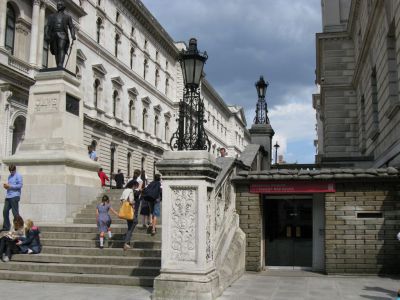
Hidden right under Clive Steps on King Charles Street, the entrance is so discreet you might walk right past without noticing it. In fact, the Nazis never guessed that Britain’s emergency government was cheekily hiding in plain sight, just 12 feet below London’s crust. For comparison, Hitler himself was holed up a paranoid 180 feet underground. Overcompensating, perhaps?
Built in 1938 and retrofitted as the war heated up, the War Rooms were reinforced with a “bomb-resistant” ceiling. Emphasis on resistant, not bomb-proof, which made every thunderclap a bit more thrilling for those working below. Spanning 30,000 square feet, the facility came equipped with everything from conference rooms to bedrooms, because a good nap is crucial for strategic warfare...
When the war ended, everyone simply left. No cleanup, no moving out, just poof-gone. Clocks are still frozen at 4:58 pm, marking the first wartime Cabinet meeting in 1940, and the calendar in the Map Room eternally reads August 16, 1945-the day Japan surrendered. It's like time hit “pause” and never came back.
You’ll see phones with odd green handles-high-tech marvels of the 1940s known as scrambler phones. They took 20 minutes to warm up and blasted white noise like an angry seashell. Eavesdropping? Not on Churchill’s watch.
Meanwhile, the walls are studded with pinholes from frantic map-stabbing, some patched so many times they now qualify as historical patchwork quilts.
Churchill himself only spent a handful of nights here, but he used the bunker frequently-for meetings, cigars, and power naps in less-than-Prime-Ministerial attire. One of the highlights is a fire bucket turned ashtray, where he’d casually discard cigar stubs. Enterprising Marine guards allegedly sold those stubs to souvenir hunters. Recycling and capitalism at their finest.
Rumor has it there’s a second, even deeper bunker underneath, full of pipes, cables, and possibly Churchill’s wine cellar. Sadly, not open to the public-yet...
Tip:
Book online to skip the queue.
The audio tour takes a little over an hour.
Bring snacks-dining nearby is limited unless you fancy lunching on history alone.
Hidden right under Clive Steps on King Charles Street, the entrance is so discreet you might walk right past without noticing it. In fact, the Nazis never guessed that Britain’s emergency government was cheekily hiding in plain sight, just 12 feet below London’s crust. For comparison, Hitler himself was holed up a paranoid 180 feet underground. Overcompensating, perhaps?
Built in 1938 and retrofitted as the war heated up, the War Rooms were reinforced with a “bomb-resistant” ceiling. Emphasis on resistant, not bomb-proof, which made every thunderclap a bit more thrilling for those working below. Spanning 30,000 square feet, the facility came equipped with everything from conference rooms to bedrooms, because a good nap is crucial for strategic warfare...
When the war ended, everyone simply left. No cleanup, no moving out, just poof-gone. Clocks are still frozen at 4:58 pm, marking the first wartime Cabinet meeting in 1940, and the calendar in the Map Room eternally reads August 16, 1945-the day Japan surrendered. It's like time hit “pause” and never came back.
You’ll see phones with odd green handles-high-tech marvels of the 1940s known as scrambler phones. They took 20 minutes to warm up and blasted white noise like an angry seashell. Eavesdropping? Not on Churchill’s watch.
Meanwhile, the walls are studded with pinholes from frantic map-stabbing, some patched so many times they now qualify as historical patchwork quilts.
Churchill himself only spent a handful of nights here, but he used the bunker frequently-for meetings, cigars, and power naps in less-than-Prime-Ministerial attire. One of the highlights is a fire bucket turned ashtray, where he’d casually discard cigar stubs. Enterprising Marine guards allegedly sold those stubs to souvenir hunters. Recycling and capitalism at their finest.
Rumor has it there’s a second, even deeper bunker underneath, full of pipes, cables, and possibly Churchill’s wine cellar. Sadly, not open to the public-yet...
Tip:
Book online to skip the queue.
The audio tour takes a little over an hour.
Bring snacks-dining nearby is limited unless you fancy lunching on history alone.
8) Big Ben & Houses of Parliament (must see)
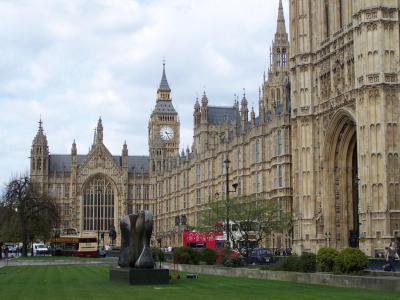
Ah yes, Big Ben-London’s most famous timekeeper! Often mistaken for the entire tower, technically, it's just the bell inside. The tower itself, once modestly named the Clock Tower, got a royal upgrade in 2012 and is now known as the Elizabeth Tower, in honor of Queen Elizabeth II’s Diamond Jubilee.
As for Big Ben-the bell-it weighs a jaw-dropping 15 tonnes. That’s about the weight of three adult elephants. It chimes every hour with a deep, resonant bong that echoes across the city, while four smaller bells handle the quarter-hour duties like loyal timekeeping sidekicks.
As for the name “Big Ben”, theories abound. Some say it was named after Benjamin Hall, the rather large man in charge of installing the bell. Others swear it honors Benjamin Caunt, a Victorian heavyweight boxer. Either way, it’s clear: you didn’t get to be “Big Ben” by being discreet.
Just next door, you'll find the Palace of Westminster, home of the Houses of Parliament-that’s the House of Commons and the House of Lords for those keeping score. After a fire in 1834 burned the old palace to a crisp, King William IV generously offered up Buckingham Palace as a backup. The MPs politely declined, presumably because having tea in the Throne Room seemed a bit too much.
These days, the House of Commons is often in the headlines, especially during the theatrical Wednesdays known as Prime Minister’s Questions. Yes, it’s as lively as it sounds. The public can watch the action live, either by scoring a free ticket through their MP or simply queuing up outside (bonus points if it’s raining-very British).
In terms of security, expect the full “airport-lite” treatment. Bags scanned, belts off, shoes inspected-but thankfully, no need to explain your carry-on liquids.
Now, if the idea of parliamentary debates doesn’t tickle your fancy and you’re more into aesthetic admiration, simply head over to Westminster Bridge-some 500 yards away. From there, you’ll get the postcard shot of Big Ben and the Parliament buildings, no queuing or shoe removal required. Just you, the view, and a thousand other camera-happy tourists. Smile for history!
As for Big Ben-the bell-it weighs a jaw-dropping 15 tonnes. That’s about the weight of three adult elephants. It chimes every hour with a deep, resonant bong that echoes across the city, while four smaller bells handle the quarter-hour duties like loyal timekeeping sidekicks.
As for the name “Big Ben”, theories abound. Some say it was named after Benjamin Hall, the rather large man in charge of installing the bell. Others swear it honors Benjamin Caunt, a Victorian heavyweight boxer. Either way, it’s clear: you didn’t get to be “Big Ben” by being discreet.
Just next door, you'll find the Palace of Westminster, home of the Houses of Parliament-that’s the House of Commons and the House of Lords for those keeping score. After a fire in 1834 burned the old palace to a crisp, King William IV generously offered up Buckingham Palace as a backup. The MPs politely declined, presumably because having tea in the Throne Room seemed a bit too much.
These days, the House of Commons is often in the headlines, especially during the theatrical Wednesdays known as Prime Minister’s Questions. Yes, it’s as lively as it sounds. The public can watch the action live, either by scoring a free ticket through their MP or simply queuing up outside (bonus points if it’s raining-very British).
In terms of security, expect the full “airport-lite” treatment. Bags scanned, belts off, shoes inspected-but thankfully, no need to explain your carry-on liquids.
Now, if the idea of parliamentary debates doesn’t tickle your fancy and you’re more into aesthetic admiration, simply head over to Westminster Bridge-some 500 yards away. From there, you’ll get the postcard shot of Big Ben and the Parliament buildings, no queuing or shoe removal required. Just you, the view, and a thousand other camera-happy tourists. Smile for history!
9) Westminster Abbey (must see)
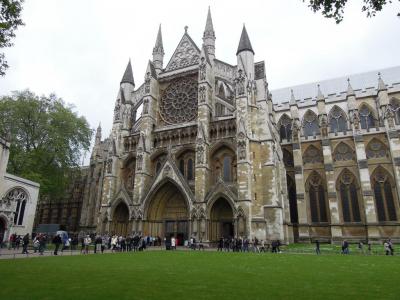
Westminster Abbey-the Gothic heavyweight champion of British heritage, parked squarely in the City of Westminster. Back in the day, Westminster wasn’t even part of London proper. It was its own thing.
The roots of this holy site stretch all the way back to the late 10th century. But it wasn’t until King Edward the Confessor decided to go full Romanesque here, in the 11th century, that things got serious. He turned the abbey into one of Europe’s top-tier religious mega-structures. Edward didn’t live to see it fully materialize, though, but history appreciates his effort.
In 1245, Henry III kicked off construction of the Gothic version we see today. He also commissioned the fancy Cosmati pavement near the High Altar-because kings of all people do appreciate custom flooring. Most of what we admire here now was wrapped up under Richard II, and in 1519, Henry VII added a gorgeous chapel to the Virgin Mary for good measure. As for the iconic west towers, Early Gothic Revival, they were built between 1722 and 1745.
But Westminster Abbey is not just a church. No. It’s the spiritual VIP lounge of the UK. Monarchs have been crowned here since 1066, starting with William the Conqueror. It’s also the final resting place for legends: Queen Elizabeth I, Isaac Newton, Charles Darwin, Geoffrey Chaucer, Rudyard Kipling, Laurence Olivier… Basically, if you’ve made Britain proud, there’s a plot here waiting for you.
And don’t forget the emotional landmarks: Princess Diana’s funeral in 1997, and the royal wedding of Prince William and Kate Middleton in 2011. Yes, this place has seen more royal drama than a season of The Crown.
If you consider visiting, remember: Lines form year-round, so book online to skip the queue like a pro. But don’t plan your Instagram reel just yet-no photography inside is allowed. It’s all eyes and memory...
As a bonus round, make a literary pilgrimage to Poet’s Corner and pay respects to Mr. Charles Dickens himself. Per his modest request, his gravestone simply reads:
CHARLES DICKENS
BORN 7th FEBRUARY 1812
DIED 9th JUNE 1870
Dickens died in Kent, but the public insisted-and The Times newspaper rallied behind the cause-that only Westminster would do as his final resting place. The funeral was private. The legacy-immortal.
So, whether it’s the soaring arches, the centuries of coronations, or the sheer weight of brilliance buried beneath your feet, Westminster Abbey is London in its architectural form-solemn, storied, and just a touch dramatic.
The roots of this holy site stretch all the way back to the late 10th century. But it wasn’t until King Edward the Confessor decided to go full Romanesque here, in the 11th century, that things got serious. He turned the abbey into one of Europe’s top-tier religious mega-structures. Edward didn’t live to see it fully materialize, though, but history appreciates his effort.
In 1245, Henry III kicked off construction of the Gothic version we see today. He also commissioned the fancy Cosmati pavement near the High Altar-because kings of all people do appreciate custom flooring. Most of what we admire here now was wrapped up under Richard II, and in 1519, Henry VII added a gorgeous chapel to the Virgin Mary for good measure. As for the iconic west towers, Early Gothic Revival, they were built between 1722 and 1745.
But Westminster Abbey is not just a church. No. It’s the spiritual VIP lounge of the UK. Monarchs have been crowned here since 1066, starting with William the Conqueror. It’s also the final resting place for legends: Queen Elizabeth I, Isaac Newton, Charles Darwin, Geoffrey Chaucer, Rudyard Kipling, Laurence Olivier… Basically, if you’ve made Britain proud, there’s a plot here waiting for you.
And don’t forget the emotional landmarks: Princess Diana’s funeral in 1997, and the royal wedding of Prince William and Kate Middleton in 2011. Yes, this place has seen more royal drama than a season of The Crown.
If you consider visiting, remember: Lines form year-round, so book online to skip the queue like a pro. But don’t plan your Instagram reel just yet-no photography inside is allowed. It’s all eyes and memory...
As a bonus round, make a literary pilgrimage to Poet’s Corner and pay respects to Mr. Charles Dickens himself. Per his modest request, his gravestone simply reads:
CHARLES DICKENS
BORN 7th FEBRUARY 1812
DIED 9th JUNE 1870
Dickens died in Kent, but the public insisted-and The Times newspaper rallied behind the cause-that only Westminster would do as his final resting place. The funeral was private. The legacy-immortal.
So, whether it’s the soaring arches, the centuries of coronations, or the sheer weight of brilliance buried beneath your feet, Westminster Abbey is London in its architectural form-solemn, storied, and just a touch dramatic.
10) Queen's Gallery
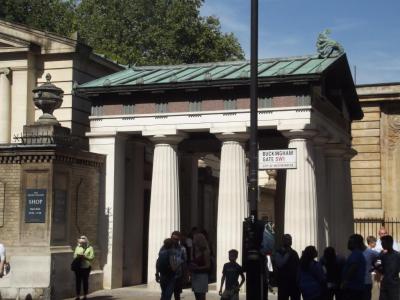
In today's London, it's almost a rite of passage for every visitor to make their way to Buckingham Palace to witness the renowned Changing of the Guard ceremony. However, what many may not realize is that the palace also boasts a remarkable cultural attraction of its own – the Queen's Gallery. Interestingly, it's worth noting that at one point in history, Buckingham House, which once occupied the same location as the palace does today, was considered a possible location for the British Museum. Ultimately, this idea was abandoned due to cost considerations.
Originally a private chapel, this space was repurposed after World War II, following bomb damage, and officially reopened as a gallery in 1962. Today, it’s part of the Royal Collection Trust and holds rotating exhibitions that draw from one of the largest and most prestigious art collections in the world.
The gallery features works by legendary artists like Michelangelo, Raphael, Rembrandt, Vermeer, Van Dyck, and Rubens, among many others. It houses the world’s largest group of Leonardo da Vinci’s drawings, as well as impressive displays of Fabergé eggs, Sèvres porcelain, royal jewelry, ceremonial weaponry, and textiles. The venue spans just seven rooms, making it an ideal visit for those looking to experience culture without spending an entire day in a museum.
Visitors may be surprised to learn that this royal gallery’s collection is actually three times larger than that of the National Gallery. And because exhibitions change regularly, you’re guaranteed a fresh experience each time you go-one season may spotlight Renaissance art, while another focuses on royal fashion or historic photography. The gallery is curated to feel intimate but rich in content, combining regal elegance with public accessibility.
For tourists, it’s an easy addition to a day exploring Buckingham Palace or St. James’s Park, especially if you’re already planning to catch the Changing of the Guard. A visit can be topped off with a stop at the on-site gift shop, which offers tasteful royal-themed souvenirs. Just be aware: photography and phone use are not allowed inside the gallery.
In short, the Queen’s Gallery is a hidden gem: a stylish dive into centuries of royal taste, curated with velvet ropes and a dash of royal flair.
Tip:
Get your ticket stamped before leaving, and you’ll be able to return for free within the next 12 months to see future exhibitions.
Originally a private chapel, this space was repurposed after World War II, following bomb damage, and officially reopened as a gallery in 1962. Today, it’s part of the Royal Collection Trust and holds rotating exhibitions that draw from one of the largest and most prestigious art collections in the world.
The gallery features works by legendary artists like Michelangelo, Raphael, Rembrandt, Vermeer, Van Dyck, and Rubens, among many others. It houses the world’s largest group of Leonardo da Vinci’s drawings, as well as impressive displays of Fabergé eggs, Sèvres porcelain, royal jewelry, ceremonial weaponry, and textiles. The venue spans just seven rooms, making it an ideal visit for those looking to experience culture without spending an entire day in a museum.
Visitors may be surprised to learn that this royal gallery’s collection is actually three times larger than that of the National Gallery. And because exhibitions change regularly, you’re guaranteed a fresh experience each time you go-one season may spotlight Renaissance art, while another focuses on royal fashion or historic photography. The gallery is curated to feel intimate but rich in content, combining regal elegance with public accessibility.
For tourists, it’s an easy addition to a day exploring Buckingham Palace or St. James’s Park, especially if you’re already planning to catch the Changing of the Guard. A visit can be topped off with a stop at the on-site gift shop, which offers tasteful royal-themed souvenirs. Just be aware: photography and phone use are not allowed inside the gallery.
In short, the Queen’s Gallery is a hidden gem: a stylish dive into centuries of royal taste, curated with velvet ropes and a dash of royal flair.
Tip:
Get your ticket stamped before leaving, and you’ll be able to return for free within the next 12 months to see future exhibitions.
11) Buckingham Palace (must see)
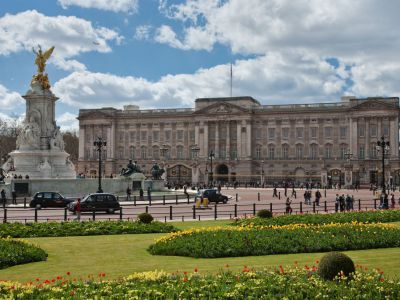
The postcard-perfect face of the British monarchy, Buckingham Palace is possibly the world’s fanciest “office.” What began in 1703 as a cozy townhouse for the Duke of Buckingham (hence the name) ended up becoming royal property in 1761 when King George III bought it for his wife, Queen Charlotte. By 1837, Queen Victoria had officially moved in, setting up camp and turning it into the headquarters of royal business and the heart of Britain's ceremonial life ever since.
Today, the palace packs a whopping 775 rooms, including 52 royal and guest bedrooms, 78 bathrooms (because clearly, you never know when you’ll need a backup loo), and countless other rooms fit for everything from crown-polishing to state banquets. While most of these royal spaces are strictly off-limits, commoners-like us, the curious public-can sneak a peek during special visiting seasons, mainly August and September, plus select days in winter and spring.
Step inside the palace’s 19 State Rooms and prepare to have your jaw royally dropped. Here, we’re talking chandeliers that could double as UFOs, lavish gold trim, and masterpieces by Rembrandt and Rubens just casually hanging around. You’ll stroll through the Throne Room (cue the imaginary fanfare), the Ballroom where knighthoods are handed out like royal gold stars, the Grand Staircase, and a variety of drawing rooms, each with its own personality-from the Blue Drawing Room’s stately charm to the Music Room’s lapis columns and the gleaming White Drawing Room. Don’t skip the State Dining Room either-this is where the portraits watch you more than you watch them.
Outside, the Changing of the Guard steals the show with its precision marching, bearskin hats, and musical flair. It’s essentially a military ballet, free of charge-but do arrive early for the best view, as everyone and their selfie stick wants in.
Right next door, the Queen’s Gallery serves up rotating exhibits from the Royal Collection, including priceless paintings, sparkling jewels, and historic treasures galore. A few steps away, the Royal Mews stables show off the royal horses and carriages, because royalty of all people needs a stylish ride.
Tip:
Snag a timed-entry ticket (they’re released in 15-minute waves), and if you’ve got time, tack on a garden tour for some fresh air and manicured perfection. Give yourself two hours-minimum-because once you step into Buckingham Palace, you’ll want to soak up every royal second.
Today, the palace packs a whopping 775 rooms, including 52 royal and guest bedrooms, 78 bathrooms (because clearly, you never know when you’ll need a backup loo), and countless other rooms fit for everything from crown-polishing to state banquets. While most of these royal spaces are strictly off-limits, commoners-like us, the curious public-can sneak a peek during special visiting seasons, mainly August and September, plus select days in winter and spring.
Step inside the palace’s 19 State Rooms and prepare to have your jaw royally dropped. Here, we’re talking chandeliers that could double as UFOs, lavish gold trim, and masterpieces by Rembrandt and Rubens just casually hanging around. You’ll stroll through the Throne Room (cue the imaginary fanfare), the Ballroom where knighthoods are handed out like royal gold stars, the Grand Staircase, and a variety of drawing rooms, each with its own personality-from the Blue Drawing Room’s stately charm to the Music Room’s lapis columns and the gleaming White Drawing Room. Don’t skip the State Dining Room either-this is where the portraits watch you more than you watch them.
Outside, the Changing of the Guard steals the show with its precision marching, bearskin hats, and musical flair. It’s essentially a military ballet, free of charge-but do arrive early for the best view, as everyone and their selfie stick wants in.
Right next door, the Queen’s Gallery serves up rotating exhibits from the Royal Collection, including priceless paintings, sparkling jewels, and historic treasures galore. A few steps away, the Royal Mews stables show off the royal horses and carriages, because royalty of all people needs a stylish ride.
Tip:
Snag a timed-entry ticket (they’re released in 15-minute waves), and if you’ve got time, tack on a garden tour for some fresh air and manicured perfection. Give yourself two hours-minimum-because once you step into Buckingham Palace, you’ll want to soak up every royal second.
12) Clarence House
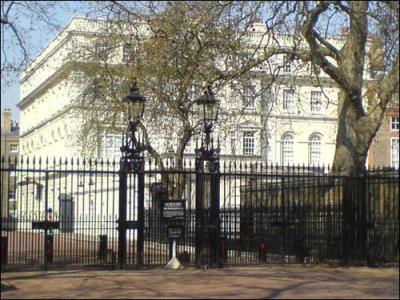
Clarence House, which served as the Queen Mother's London residence for nearly five decades until her passing in 2002, is now the home of Charles, the Prince of Wales, and his spouse, Camilla, the Duchess of Cornwall. This Regency mansion, constructed in 1828 by architect John Nash for the Duke of Clarence (who later became King William IV), was built because the Duke found the nearby Saint James's Palace too cramped for his tastes. However, post-World War II renovations have resulted in little of Nash's original design remaining.
If you wish to visit Clarence House, you must book a guided tour in advance (as they are in high demand), and be prepared for security checks and restrictions similar to those at airports. Besides getting a glimpse behind the scenes of a functioning royal residence, the primary attraction is the display of 20th-century British paintings by artists such as Augustus John and Walter Sickert.
If you wish to visit Clarence House, you must book a guided tour in advance (as they are in high demand), and be prepared for security checks and restrictions similar to those at airports. Besides getting a glimpse behind the scenes of a functioning royal residence, the primary attraction is the display of 20th-century British paintings by artists such as Augustus John and Walter Sickert.
13) St. James's Palace
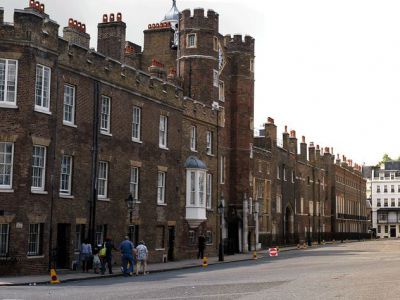
Constructed in the 1530s by Henry VIII, who also laid out the hunting grounds that eventually became Saint James's Park, Saint James's Palace marked the first royal dwelling on this particular parcel of land, located to the south of Piccadilly and to the north of The Mall. Following the devastating fire that engulfed Whitehall Palace in 1698, all of London's attention shifted to this palace, which assumed the role of the new royal residence. Throughout the 18th and 19th centuries, the surrounding area grew into a prestigious residential district, leading to the disappearance of older estates as mansions sprouted and streets were carefully planned for the aristocracy.
In 1952, Queen Elizabeth II delivered her first address as monarch from this historic location, and foreign ambassadors continue to hold official accreditation to the Court of Saint James's. While the palace houses various royal chambers and administrative offices, it remains off-limits to the general public. Nevertheless, the unassuming Tudor facade is worth a brief detour from The Mall, and the Friary Court in front provides an impressive backdrop for Trooping the Colour, a component of the Queen's official birthday festivities.
Visitors often seize the opportunity to capture a photo of the guardsman in scarlet attire standing watch outside the imposing Tudor gateway. It's worth noting that the Changing the Guard ceremony at this location occurs solely on days when there is a changing of the guard at Buckingham Palace.
In 1952, Queen Elizabeth II delivered her first address as monarch from this historic location, and foreign ambassadors continue to hold official accreditation to the Court of Saint James's. While the palace houses various royal chambers and administrative offices, it remains off-limits to the general public. Nevertheless, the unassuming Tudor facade is worth a brief detour from The Mall, and the Friary Court in front provides an impressive backdrop for Trooping the Colour, a component of the Queen's official birthday festivities.
Visitors often seize the opportunity to capture a photo of the guardsman in scarlet attire standing watch outside the imposing Tudor gateway. It's worth noting that the Changing the Guard ceremony at this location occurs solely on days when there is a changing of the guard at Buckingham Palace.
14) Goodwin’s Court
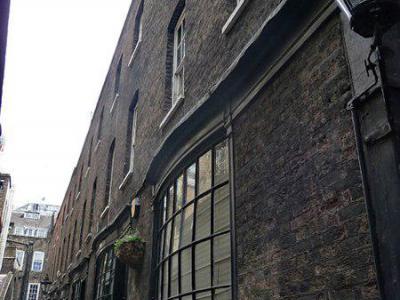
Imagine you're wandering through London's Covent Garden, dodging selfie sticks and street performers, when suddenly-bam!-you stumble upon a time portal disguised as an alleyway. Welcome to Goodwin’s Court: dark, narrow, and delightfully mysterious, like London’s best-kept secret and possibly its spookiest shortcut.
Tucked behind the unassuming facade of The Theatre Goers Club of Great Britain-and just a wand-flick away from Charing Cross Road and Cecil Court-this sliver of Georgian charm has been haunting the city since around 1627. Amid those glossy black doors with gleaming knockers, brass nameplates that whisper of bygone businesses, and bow-fronted windows that curve so gracefully, you’d swear they were sketched by a Georgian architect with a flair for drama.
Now, Harry Potter fans-prepare your gasps. Goodwin’s Court didn’t make it to the big screen, but it might as well have. Its moody vibes, authentic old-school lanterns, and shadowy elegance evoke a sense of (and inspired the props created by Warner Bros. for) its creepy evil cinematographic twin, Knockturn Alley. Depending on the weather and lighting-and London’s got options-it can feel equal parts Diagon and doom.
Sure, you won’t find a wand shop or a dodgy apothecary tucked behind those windows here. But the eerie resemblance to the set designs in the films is so uncanny, it might just send shivers down your spine, prompting you to start checking over your shoulder for Death Eaters. Bellatrix Lestrange-is that you, darling?-or is it Lucius Malfoy apparating in the dead of night!?
So brace yourself for this detour. After all, Goodwin’s Court isn’t just a street-it’s a stroll through magical déjà vu...
Tucked behind the unassuming facade of The Theatre Goers Club of Great Britain-and just a wand-flick away from Charing Cross Road and Cecil Court-this sliver of Georgian charm has been haunting the city since around 1627. Amid those glossy black doors with gleaming knockers, brass nameplates that whisper of bygone businesses, and bow-fronted windows that curve so gracefully, you’d swear they were sketched by a Georgian architect with a flair for drama.
Now, Harry Potter fans-prepare your gasps. Goodwin’s Court didn’t make it to the big screen, but it might as well have. Its moody vibes, authentic old-school lanterns, and shadowy elegance evoke a sense of (and inspired the props created by Warner Bros. for) its creepy evil cinematographic twin, Knockturn Alley. Depending on the weather and lighting-and London’s got options-it can feel equal parts Diagon and doom.
Sure, you won’t find a wand shop or a dodgy apothecary tucked behind those windows here. But the eerie resemblance to the set designs in the films is so uncanny, it might just send shivers down your spine, prompting you to start checking over your shoulder for Death Eaters. Bellatrix Lestrange-is that you, darling?-or is it Lucius Malfoy apparating in the dead of night!?
So brace yourself for this detour. After all, Goodwin’s Court isn’t just a street-it’s a stroll through magical déjà vu...
