Custom Walk in Annapolis, Maryland by seanmcelhaney_aa574 created on 2025-07-15
Guide Location: USA » Annapolis
Guide Type: Custom Walk
# of Sights: 15
Tour Duration: 2 Hour(s)
Travel Distance: 3.2 Km or 2 Miles
Share Key: FAT3N
Guide Type: Custom Walk
# of Sights: 15
Tour Duration: 2 Hour(s)
Travel Distance: 3.2 Km or 2 Miles
Share Key: FAT3N
How It Works
Please retrieve this walk in the GPSmyCity app. Once done, the app will guide you from one tour stop to the next as if you had a personal tour guide. If you created the walk on this website or come to the page via a link, please follow the instructions below to retrieve the walk in the app.
Retrieve This Walk in App
Step 1. Download the app "GPSmyCity: Walks in 1K+ Cities" on Apple App Store or Google Play Store.



Step 2. In the GPSmyCity app, download(or launch) the guide "Annapolis Map and Walking Tours".
Step 3. Tap the menu button located at upper right corner of the "Walks" screen and select "Retrieve custom walk". Enter the share key: FAT3N
1) Main Street (must see)
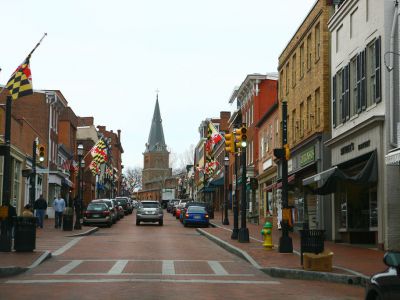
Located between Church Circle and City Dock, Main Street can’t be missed with its ever-busy sidewalks, views of the Annapolis Harbor, and bustling shops. They say that Main Street is the lifeblood of Annapolis and, indeed, represents the very best of what the state of Maryland has to offer. Defined by as much as three centuries of history and lovingly-preserved 18th- and 19th-century buildings lining its five blocks, this thoroughfare is something of a living museum, providing visitors and residents alike with some truly historical experience.
Given the assembly of architectural details, attractive qualities, interesting discoveries, and everyday pleasures found here, it is easy to see why Main Street is a source of pride not only for Annapolitans, but for Americans across the country. Nightlife, dining, and art, as well as shopping take the center stage here, making Main Street a great point to start a day on the town, be it for a leisurely outing, special event, or some other occasion.
There's a contagious energy in the air of Main Street that some call addictive. Just look in any direction and you will surely find something to pique your imagination - physically and visually associated with history, maritime culture, and architectural character. Among the eye catchers are, undoubtedly, the Chesapeake Bay, midshipmen in dress whites, historic landmarks, bars, restaurants and art galleries of every size and description, offering visitors plenty of options to choose from, no matter what they look for. There are also a handful of cafes, ice cream parlors, bookstores, and shops selling souvenirs, jewelry, comics, and apparel aimed at tourists to be found.
Throughout the year, the city and merchants decorate the street with hanging flower baskets, flags, and banners. Each October brings visitors in their thousands who arrive for the world's largest in-water power and sail boat shows taking place at City Dock. The street has a festive atmosphere during the holiday season too, when the Downtown Business Association and businesses along Main Street sponsor Midnight Madness two nights before Christmas to attract holiday shoppers to their decorated stores.
Given the assembly of architectural details, attractive qualities, interesting discoveries, and everyday pleasures found here, it is easy to see why Main Street is a source of pride not only for Annapolitans, but for Americans across the country. Nightlife, dining, and art, as well as shopping take the center stage here, making Main Street a great point to start a day on the town, be it for a leisurely outing, special event, or some other occasion.
There's a contagious energy in the air of Main Street that some call addictive. Just look in any direction and you will surely find something to pique your imagination - physically and visually associated with history, maritime culture, and architectural character. Among the eye catchers are, undoubtedly, the Chesapeake Bay, midshipmen in dress whites, historic landmarks, bars, restaurants and art galleries of every size and description, offering visitors plenty of options to choose from, no matter what they look for. There are also a handful of cafes, ice cream parlors, bookstores, and shops selling souvenirs, jewelry, comics, and apparel aimed at tourists to be found.
Throughout the year, the city and merchants decorate the street with hanging flower baskets, flags, and banners. Each October brings visitors in their thousands who arrive for the world's largest in-water power and sail boat shows taking place at City Dock. The street has a festive atmosphere during the holiday season too, when the Downtown Business Association and businesses along Main Street sponsor Midnight Madness two nights before Christmas to attract holiday shoppers to their decorated stores.
2) The Annapolis Pottery
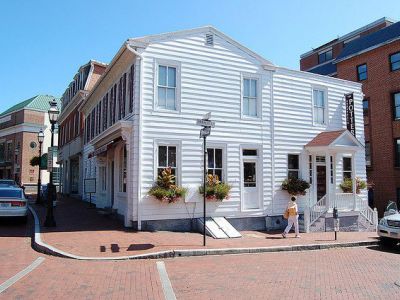
The Annapolis Pottery is the only working pottery in the core of Annapolis. The pottery was established in 1969, and is the greatest place of its type to emerge since then. It allows you to witness the process of creating pottery pieces such as mugs and other dishes. The pottery originates from award winning artists, thus creating a large variety of beauties. Come to the Annapolis Pottery to buy and watch products come to life.
3) Government House
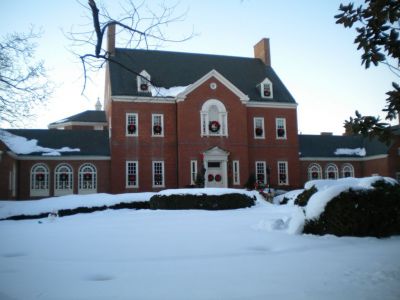
Adjacent to the Maryland State House complex, the official residence of Maryland's Governor, the Government House, also known as the Governor's Mansion, was built in 1870 to the design of Baltimore architect R. Snowden Andrews (1830–1903). Originally designed in the fashion of the Victorian time, with a mansard roof and Italianate arched windows, the mansion was converted to its present Georgian-style country house appearance in 1935–36. More renovations, including cleaning, painting, and roof repairs were done in 1947, followed by a new skylight installed by Maryland craftsmen in 1987, and a fountain, featuring Maryland symbols, placed in the garden in 1990.
The building features seven public rooms: the Entrance Hall, Federal Reception Room, Victorian Library, Empire Parlor, Conservatory, State Dining Room and the Drawing Room. In the Entrance Hall there are portraits of Queen Henrietta Maria, after whom Maryland was named, painted in 1901 by Florence MacKubin, and of Charles Calvert, the Fifth Lord Baltimore. A portrait of Frederick Douglass, commissioned in 2014 and painted by Simmie Knox, is on display in the Drawing Room, along the portrait of George Washington painted during the Revolutionary War by Charles Willson’s Peale, one of America's foremost portrait painters.
The State Dining Room features the portrait of the Sharpe Family, painted in 1753 and attributed to Arthur Devis. A portrait bust of Harriet Tubman, displayed on a wooden pedestal made from wood of Maryland’s historic Wye Oak, is displayed in the Conservatory. Among other treasures attesting to Maryland's rich and glorious past found here are the furnishings by Potthast, the eminent Baltimore furniture makers of the 19th century. The Victorian library now recalls the original ambiance of Government House, and panels and roundels from those doors can be seen here as well.
Visitors to the house used to enter through magnificent walnut doors, carved with the Maryland coat of arms and symbols of Maryland industry and agriculture. The list of important guests to the state, received in this house since the founding of the colony in 1634, includes some illustrious individuals, like Mark Twain, Her Royal Highness Queen Elizabeth, the Queen Mother, and Sugar Ray Leonard.
The building features seven public rooms: the Entrance Hall, Federal Reception Room, Victorian Library, Empire Parlor, Conservatory, State Dining Room and the Drawing Room. In the Entrance Hall there are portraits of Queen Henrietta Maria, after whom Maryland was named, painted in 1901 by Florence MacKubin, and of Charles Calvert, the Fifth Lord Baltimore. A portrait of Frederick Douglass, commissioned in 2014 and painted by Simmie Knox, is on display in the Drawing Room, along the portrait of George Washington painted during the Revolutionary War by Charles Willson’s Peale, one of America's foremost portrait painters.
The State Dining Room features the portrait of the Sharpe Family, painted in 1753 and attributed to Arthur Devis. A portrait bust of Harriet Tubman, displayed on a wooden pedestal made from wood of Maryland’s historic Wye Oak, is displayed in the Conservatory. Among other treasures attesting to Maryland's rich and glorious past found here are the furnishings by Potthast, the eminent Baltimore furniture makers of the 19th century. The Victorian library now recalls the original ambiance of Government House, and panels and roundels from those doors can be seen here as well.
Visitors to the house used to enter through magnificent walnut doors, carved with the Maryland coat of arms and symbols of Maryland industry and agriculture. The list of important guests to the state, received in this house since the founding of the colony in 1634, includes some illustrious individuals, like Mark Twain, Her Royal Highness Queen Elizabeth, the Queen Mother, and Sugar Ray Leonard.
Sight description based on Wikipedia.
4) Maryland Inn
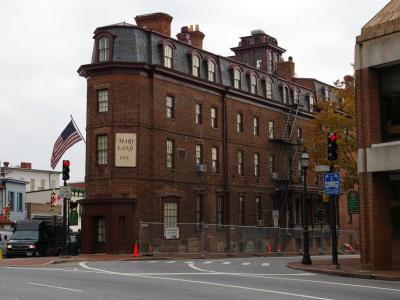
The Maryland Inn – one of Annapolis's main charms – dates back to the end of the American Revolutionary War. Renowned for its unique ambiance, the inn was built in 1720 and has operated continuously to the present day, smoothly combining timeless elegance with modern conveniences. Laid in red Flemish bond brick, the imposing building stands three and a half stories tall, with each floor level emphasized by belt courses. Together with the other two Historic Inns of Annapolis (Governor Calvert House and Robert Johnson Inn), this semi-octagonal landmark is a member of Historic Hotels of America, the official program of the National Trust for Historic Preservation.
In 1772, Thomas Hyde, a respected merchant and civic leader, acquired a long-term lease on a lot on Church Circle, on which he had constructed the front part of what is now the Maryland Inn. In 1782, Hyde advertised it for sale, describing it as "an elegant brick house adjoining Church Circle in a dry and healthy part of the city, this House is one hundred feet front, three story height, has 20 fireplaces and is one of the first houses in the state for a house of entertainment."
The inn remained a popular place for lodging throughout the 19th century. In 1868, it was acquired by the Maryland Hotel Company and remained the most prominent Annapolis hotel and the favorite rendezvous for important national state and military visitors. By World War I, the inn’s facilities had been outmoded and many of its rooms converted into offices and apartments.
Over the next several decades, the building had changed several hands, until in 1953, the new owners, who appreciated the inn’s importance in Maryland’s history and architecture, began its restoration set to preserve the Colonial design whilst fitting it with modern amenities.
In 1772, Thomas Hyde, a respected merchant and civic leader, acquired a long-term lease on a lot on Church Circle, on which he had constructed the front part of what is now the Maryland Inn. In 1782, Hyde advertised it for sale, describing it as "an elegant brick house adjoining Church Circle in a dry and healthy part of the city, this House is one hundred feet front, three story height, has 20 fireplaces and is one of the first houses in the state for a house of entertainment."
The inn remained a popular place for lodging throughout the 19th century. In 1868, it was acquired by the Maryland Hotel Company and remained the most prominent Annapolis hotel and the favorite rendezvous for important national state and military visitors. By World War I, the inn’s facilities had been outmoded and many of its rooms converted into offices and apartments.
Over the next several decades, the building had changed several hands, until in 1953, the new owners, who appreciated the inn’s importance in Maryland’s history and architecture, began its restoration set to preserve the Colonial design whilst fitting it with modern amenities.
Sight description based on Wikipedia.
5) St. John's College
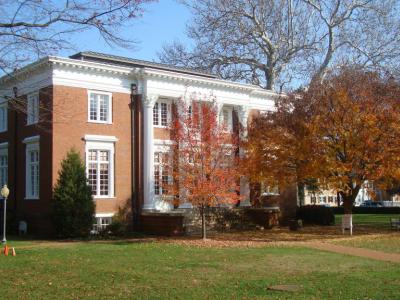
St. John's College is a private liberal arts college with dual campuses in Annapolis, Maryland, and Santa Fe, New Mexico. It is known for its Great Books curriculum. St. John's has no religious affiliation.
St. John's claims to be one of the oldest institutions of higher learning in the United States as the successor institution of King William's School, a preparatory school founded in 1696; the current institution received a collegiate charter in 1784. In 1937, St. John's adopted a Great Books curriculum based on discussion of works from the Western canon of philosophical, religious, historical, mathematical, scientific, and literary works.
The college grants only one bachelor's degree, a degree in Liberal Arts. Two master's degrees are available through the college's graduate institute: one in Liberal Arts, which is a modified version of the undergraduate curriculum (differing mostly in that the graduate students are not restricted to a set sequence of courses), and one in Eastern Classics, which applies most of the features of the undergraduate curriculum (seminars, preceptorials, language study and a set sequence of courses) to a list of classic works from India, China and Japan. The Master of Arts in Eastern Classics is only available at the Santa Fe campus.
St. John's claims to be one of the oldest institutions of higher learning in the United States as the successor institution of King William's School, a preparatory school founded in 1696; the current institution received a collegiate charter in 1784. In 1937, St. John's adopted a Great Books curriculum based on discussion of works from the Western canon of philosophical, religious, historical, mathematical, scientific, and literary works.
The college grants only one bachelor's degree, a degree in Liberal Arts. Two master's degrees are available through the college's graduate institute: one in Liberal Arts, which is a modified version of the undergraduate curriculum (differing mostly in that the graduate students are not restricted to a set sequence of courses), and one in Eastern Classics, which applies most of the features of the undergraduate curriculum (seminars, preceptorials, language study and a set sequence of courses) to a list of classic works from India, China and Japan. The Master of Arts in Eastern Classics is only available at the Santa Fe campus.
Sight description based on Wikipedia.
6) Chase-Lloyd House
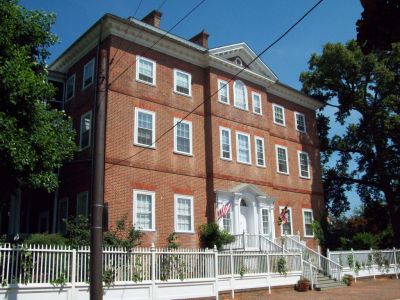
The Chase-Lloyd House in Annapolis is a three-story brick Georgian mansion, dating from 1769-1774, with interiors by William Buckland.
Its construction was started for Samuel Chase, who would later be a signatory to the Declaration of Independence and Associate Justice of the Supreme Court, but Chase sold the building unfinished to Edward Lloyd IV in 1771. Lloyd completed the house in 1774 with assistance from Buckland and another architect, William Noke. The house remained in the Lloyd family until 1847, when it was sold back to the descendants of Chase.
The house's plan is of the four room, center hall type, but on a very large scale. The entrance hall contains a screen of free-standing Ionic order columns, beyond which a central stair rises to the large Palladian window at the landing. The ascending stair flights split at the landing, rising in parallel runs to flank the first run on either side. In 1888 the house was bequeathed for use as a home for elderly women, and it continues in this use today. While the upper floors are off limits to visitors, the main floor and the extensive gardens are open to the public. The house was designated a National Historic Landmark in 1970.
Its construction was started for Samuel Chase, who would later be a signatory to the Declaration of Independence and Associate Justice of the Supreme Court, but Chase sold the building unfinished to Edward Lloyd IV in 1771. Lloyd completed the house in 1774 with assistance from Buckland and another architect, William Noke. The house remained in the Lloyd family until 1847, when it was sold back to the descendants of Chase.
The house's plan is of the four room, center hall type, but on a very large scale. The entrance hall contains a screen of free-standing Ionic order columns, beyond which a central stair rises to the large Palladian window at the landing. The ascending stair flights split at the landing, rising in parallel runs to flank the first run on either side. In 1888 the house was bequeathed for use as a home for elderly women, and it continues in this use today. While the upper floors are off limits to visitors, the main floor and the extensive gardens are open to the public. The house was designated a National Historic Landmark in 1970.
Sight description based on Wikipedia.
7) William Paca House and Garden (must see)
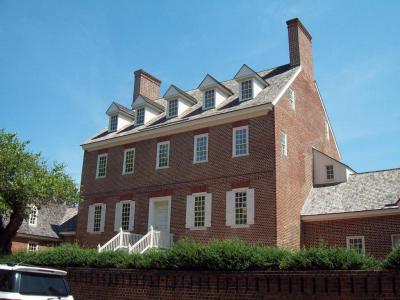
The William Paca House (once known as Carvel Hall) is an 18th-century landmark comprising a five-part Georgian-style mansion and the terraced pleasure garden, both built between 1763 and 1765 to the design by William Paca, a patriot leader who was one of Maryland’s four Signers of the Declaration of Independence in 1776 and the state’s third Governor, serving from 1782 to 1785.
The brickwork structure comprises a central two-and-a-half-story block on an elevated platform, flanked by symmetrical one-and-a-half-story end pavilions, connected to the central structure by one-and-a-half-story hyphens. The building's beautiful interior boasts original woodwork remaining in the central hall, stair hall and the west parlor, including the stair's original Chinese Chippendale balustrade and other decorations relevant to the Georgian Era style. The two-acre (8,100 m2) walled garden, which includes a two-story summer house, represents precise geometric parterres of three-season blooming flowers.
The Paca family resided in the mansion along with their servants and slaves until 1780. After William Paca sold the house, it continued as a single-family home until 1801, upon which it served mainly as a rental property for much of the 19th century. National tennis champion William Larned bought the property in 1901 and converted it into a hotel, with a large addition attached to the back and extending over most of the old garden. For much of the 20th century, Carvel Hall was Annapolis’s finest hotel.
Concerned that developers might eventually tear down the historic edifice, Historic Annapolis and the State of Maryland bought the Paca mansion and the rest of the Carvel Hall site in 1965. Beginning the same year and over the next decade, a team of experts had painstakingly restored the house and the garden to their original 18th-century splendor using details drawn from historic artwork and archaeological excavations.
Today, this picturesque retreat from the bustle of the city, replete with period furnishings and paintings, reveals the inner workings of an upper-class household in colonial and revolutionary Annapolis. In 1971, the mansion was declared a National Historic Landmark.
Both, the house and the garden are open for guided tours Monday to Saturday, from 10 am to 5 pm, and Sundays, from 10 am to 5 pm (last tour at 3.30 pm).
The brickwork structure comprises a central two-and-a-half-story block on an elevated platform, flanked by symmetrical one-and-a-half-story end pavilions, connected to the central structure by one-and-a-half-story hyphens. The building's beautiful interior boasts original woodwork remaining in the central hall, stair hall and the west parlor, including the stair's original Chinese Chippendale balustrade and other decorations relevant to the Georgian Era style. The two-acre (8,100 m2) walled garden, which includes a two-story summer house, represents precise geometric parterres of three-season blooming flowers.
The Paca family resided in the mansion along with their servants and slaves until 1780. After William Paca sold the house, it continued as a single-family home until 1801, upon which it served mainly as a rental property for much of the 19th century. National tennis champion William Larned bought the property in 1901 and converted it into a hotel, with a large addition attached to the back and extending over most of the old garden. For much of the 20th century, Carvel Hall was Annapolis’s finest hotel.
Concerned that developers might eventually tear down the historic edifice, Historic Annapolis and the State of Maryland bought the Paca mansion and the rest of the Carvel Hall site in 1965. Beginning the same year and over the next decade, a team of experts had painstakingly restored the house and the garden to their original 18th-century splendor using details drawn from historic artwork and archaeological excavations.
Today, this picturesque retreat from the bustle of the city, replete with period furnishings and paintings, reveals the inner workings of an upper-class household in colonial and revolutionary Annapolis. In 1971, the mansion was declared a National Historic Landmark.
Both, the house and the garden are open for guided tours Monday to Saturday, from 10 am to 5 pm, and Sundays, from 10 am to 5 pm (last tour at 3.30 pm).
Sight description based on Wikipedia.
8) Brice House and Garden
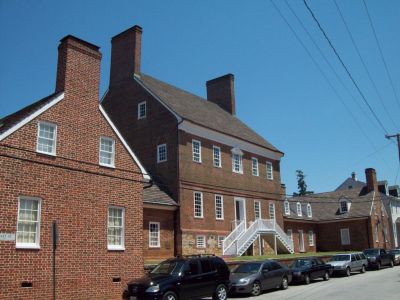
The Brice House is one of three similarly preserved 18th century Georgian style brick houses in Annapolis, along with the Hammond-Harwood House and the William Paca House. It is a five-part brick mansion with a large central block and flanking pavilions with connecting hyphens. Of the three, the Brice House's exterior is the most austere, giving its brickwork particular prominence. The interior is more richly detailed, and has been attributed to William Buckland.
The Brice house was built by James Brice, who served as Mayor of Annapolis and as acting Governor of Maryland in 1792. Archaeological excavations at the house in 1998 uncovered hoodoo caches, spiritual offerings placed by African-American slaves who were servants at the mansion.
The Brice House represents a simplified Georgian-style mansion that relies on its elevated site along a narrow street, its scale and the mass of its brickwork to make it one of the most impressive buildings of its style in the United States. In 1970, the property was declared a National Historic Landmark.
The Brice house was built by James Brice, who served as Mayor of Annapolis and as acting Governor of Maryland in 1792. Archaeological excavations at the house in 1998 uncovered hoodoo caches, spiritual offerings placed by African-American slaves who were servants at the mansion.
The Brice House represents a simplified Georgian-style mansion that relies on its elevated site along a narrow street, its scale and the mass of its brickwork to make it one of the most impressive buildings of its style in the United States. In 1970, the property was declared a National Historic Landmark.
Sight description based on Wikipedia.
9) Artisan's House
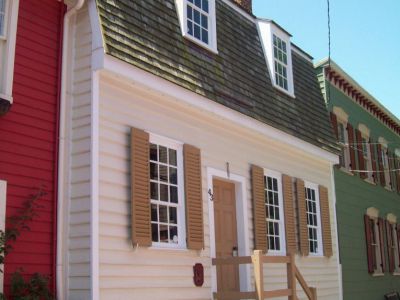
Built in 1777, the historic Artisan's House represents a typical 18th century modest, middle-class dwelling in Annapolis. The popular one-and-a-half-story frame home features English bond brick foundation, original random-width beaded weather-boarding and cornerboards, as well as the front facade with the traditional six-panel door.
The house was likely used as a barracks during the Revolutionary War. Because of this, it is also commonly referred to as "Hogshead." The Hogshead is a contributing property in the Colonial Annapolis Historic District, is owned by the Historic Annapolis Foundation, and operated as an 18th-century period historic house museum with Colonial-era re-enactors.
The property was listed on the National Register of Historic Places in 1973.
The house was likely used as a barracks during the Revolutionary War. Because of this, it is also commonly referred to as "Hogshead." The Hogshead is a contributing property in the Colonial Annapolis Historic District, is owned by the Historic Annapolis Foundation, and operated as an 18th-century period historic house museum with Colonial-era re-enactors.
The property was listed on the National Register of Historic Places in 1973.
Sight description based on Wikipedia.
10) Shiplap House
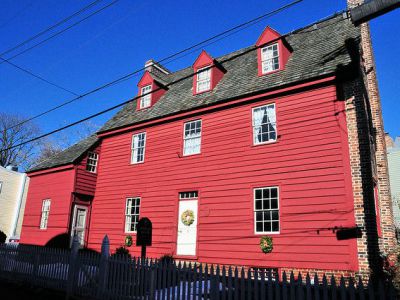
Built around 1715, the Shiplap House is one of the oldest standing buildings in Annapolis, still retaining the beauty of its time. Like most of the historic properties in the city, it initially served as a store and tavern.
From as early as 1718, the property was owned by Edward Smith, who ran it as an inn and tavern until 1724. Attesting to this is the National Historic District Site & Building Survey plaque on the right side of the front door, which indicates that this house is a contributing building to the downtown Annapolis historic district designation. In 1780, the establishment was bought by John Humphrey who opened here another tavern, called Harp & Crown.
The building's later occupants included merchants and artisans, as well as the noted artist, Francis Blackwell Mayer, who used it as his private home from 1877 to 1901. By 1957, the house fallen into disrepair and was purchased by the Historic Annapolis Foundation. Restored over the years, today it is marked as a national landmark and serves as the Foundation's administrative office, not open to the public.
The name "shiplap" comes from the random-width flush siding (called shiplap), a traditional shipbuilding technique used on the building's rear facade and north-east ell. The amazingly wide, painted barn red siding boards are made from the very old, mature trees from the area. There is a small formal garden to the right of the house and a small parking area to the left.
The building is said to be haunted by ghosts. The most popular of them, named Adrianne, originated back in the days when it was Harp & Crown Tavern. She was one of Humphrey’s baristas and a prostitute, and was often proposed marriage by men. She is believed to have been killed by one of her suitors after being rejected. The other two spirits spotted in the house are a 5 year old girl with blonde hair and a blue dress, named Audrey, and her maid, described as a young teenager wearing a dark dress. Employees report the spirits' presence with footsteps heard on the steps, unseen forces playing with the phones, cold spots and feelings of being touched. Spooky!!!
From as early as 1718, the property was owned by Edward Smith, who ran it as an inn and tavern until 1724. Attesting to this is the National Historic District Site & Building Survey plaque on the right side of the front door, which indicates that this house is a contributing building to the downtown Annapolis historic district designation. In 1780, the establishment was bought by John Humphrey who opened here another tavern, called Harp & Crown.
The building's later occupants included merchants and artisans, as well as the noted artist, Francis Blackwell Mayer, who used it as his private home from 1877 to 1901. By 1957, the house fallen into disrepair and was purchased by the Historic Annapolis Foundation. Restored over the years, today it is marked as a national landmark and serves as the Foundation's administrative office, not open to the public.
The name "shiplap" comes from the random-width flush siding (called shiplap), a traditional shipbuilding technique used on the building's rear facade and north-east ell. The amazingly wide, painted barn red siding boards are made from the very old, mature trees from the area. There is a small formal garden to the right of the house and a small parking area to the left.
The building is said to be haunted by ghosts. The most popular of them, named Adrianne, originated back in the days when it was Harp & Crown Tavern. She was one of Humphrey’s baristas and a prostitute, and was often proposed marriage by men. She is believed to have been killed by one of her suitors after being rejected. The other two spirits spotted in the house are a 5 year old girl with blonde hair and a blue dress, named Audrey, and her maid, described as a young teenager wearing a dark dress. Employees report the spirits' presence with footsteps heard on the steps, unseen forces playing with the phones, cold spots and feelings of being touched. Spooky!!!
11) Kunta Kinte - Alex Haley Memorial (must see)
Located at the head of the Annapolis harbor, beside the City Dock, the Kunta Kinte-Alex Haley Memorial is the only memorial in the United States commemorating the actual name and place of landing of an enslaved African in the New World. The monument was inspired by Alex Haley’s 1976 Pulitzer Prize-winning novel, “Roots: The Saga of an American Family”, which tells the story of his ancestor, Kunta Kinte, an 18th-century African boy from the Gambian town of Jufferee, who was sold into slavery and transported in chains to the United States. The memorial marks the very spot where Kunta Kinte set foot on American soil, and is dedicated to all of African Americans' ancestors whose names are lost forever in the oceans of time.
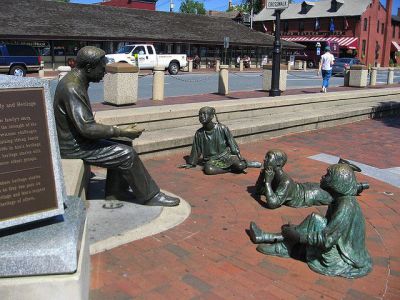
The memorial comprises three distinct areas: the Alex Haley sculpture group, the Compass Rose, and the Story Wall. The former depicts Haley himself, reading from a book on his lap to three children of different races sitting in front of him. The nearby Compass Rose is made of granite and measures 14 feet in diameter; it includes a bronze inlaid compass and the world map oriented to true North, with Annapolis at its center. The third piece, lining the retaining sea wall on Compromise Street, is the Story Wall. It represents a series of ten markers topped with bronze plaques, each displaying a quote from Alex Haley’s book. Each quote is accompanied by text and unique graphics to explain its meaning.
The “A Luta Continua” (Portuguese: “the struggle continues”) slogan refers to the 23 years of challenges that took to erect this memorial, from 1979, when Alex Haley’s best selling story prompted discussions of its placing, to June 12, 2002, when the final phase of the Kunta Kinte-Alex Haley Memorial was dedicated. In 1981, the first commemorative plaque installed on the site was stolen within just 48 hours, allegedly by the Ku Klux Klan! The news of the theft made international headlines, but the plaque was never recovered. Two months later, citizens of Annapolis had raised funds and replaced it.
Today, the memorial is seen by almost 1,000,000 visitors a year. Sadly, Alex Haley himself did not live to see it completed.
The memorial comprises three distinct areas: the Alex Haley sculpture group, the Compass Rose, and the Story Wall. The former depicts Haley himself, reading from a book on his lap to three children of different races sitting in front of him. The nearby Compass Rose is made of granite and measures 14 feet in diameter; it includes a bronze inlaid compass and the world map oriented to true North, with Annapolis at its center. The third piece, lining the retaining sea wall on Compromise Street, is the Story Wall. It represents a series of ten markers topped with bronze plaques, each displaying a quote from Alex Haley’s book. Each quote is accompanied by text and unique graphics to explain its meaning.
The “A Luta Continua” (Portuguese: “the struggle continues”) slogan refers to the 23 years of challenges that took to erect this memorial, from 1979, when Alex Haley’s best selling story prompted discussions of its placing, to June 12, 2002, when the final phase of the Kunta Kinte-Alex Haley Memorial was dedicated. In 1981, the first commemorative plaque installed on the site was stolen within just 48 hours, allegedly by the Ku Klux Klan! The news of the theft made international headlines, but the plaque was never recovered. Two months later, citizens of Annapolis had raised funds and replaced it.
Today, the memorial is seen by almost 1,000,000 visitors a year. Sadly, Alex Haley himself did not live to see it completed.
12) Annapolis Summer Garden Theatre
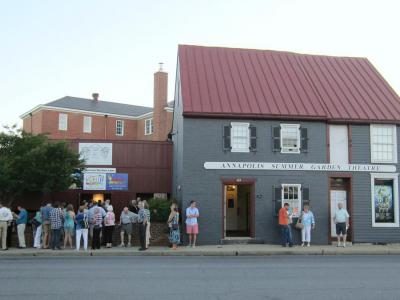
The Annapolis Summer Garden Theatre came into existence in 1966 with the first performance season outdoors behind the Carvel Hall Hotel, which encased the historic William Paca House & Gardens. A year earlier, “Olde Town” Annapolis was designated a Registered National Historic District, prompting the restoration of many of historic buildings therein. The brick and frame Old Shaw Blacksmith Shop building that houses the theater today is the only link to Annapolis’s life as a commercial seaport remaining on Compromise Street, and was first mentioned in the Annapolis archives in 1696!
Once the site of a colonial warehouse storing goods for a thriving transatlantic market in the first third of the 19th century, by 1960 the Shaw Blacksmith Shop had been abandoned and remained vacant after its previous owners, the Shaw family - respected blacksmiths, had moved their business to Parole. In 1967, work began to convert the property to an outdoor theater, which took imagination and a great deal of effort. Vacant for a number of years, the building was inhabited by more than a few critters, and truckloads of dirt, old horseshoe nails, and other debris had to be carted away.
Led by volunteers showcasing musicals on an outdoor stage during summer, the Longtime community theater lovingly maintained this historic property in its rustic, charming, challenging, intimate, and magical condition, effectively transforming it from an industrial facility to a popular cultural venue.
Starting circa 1983, and over the next 25 years, the property had undergone numerous modifications (largely with volunteer effort) set to improve safety and security against the ravages of time and damages from natural causes, such as 2003 Hurricane Isabel. Another leg of renovation took place in 2006, marking the theater's 40th anniversary. Today, the Old Shaw Blacksmith Shop building is a piece of historic beauty right in Annapolis's core.
Once the site of a colonial warehouse storing goods for a thriving transatlantic market in the first third of the 19th century, by 1960 the Shaw Blacksmith Shop had been abandoned and remained vacant after its previous owners, the Shaw family - respected blacksmiths, had moved their business to Parole. In 1967, work began to convert the property to an outdoor theater, which took imagination and a great deal of effort. Vacant for a number of years, the building was inhabited by more than a few critters, and truckloads of dirt, old horseshoe nails, and other debris had to be carted away.
Led by volunteers showcasing musicals on an outdoor stage during summer, the Longtime community theater lovingly maintained this historic property in its rustic, charming, challenging, intimate, and magical condition, effectively transforming it from an industrial facility to a popular cultural venue.
Starting circa 1983, and over the next 25 years, the property had undergone numerous modifications (largely with volunteer effort) set to improve safety and security against the ravages of time and damages from natural causes, such as 2003 Hurricane Isabel. Another leg of renovation took place in 2006, marking the theater's 40th anniversary. Today, the Old Shaw Blacksmith Shop building is a piece of historic beauty right in Annapolis's core.
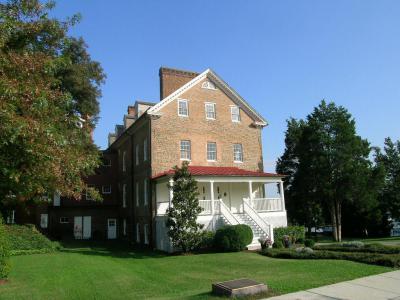
13) Charles Carroll House
Located on the grounds of historic St. Mary’s Parish, the Charles Carroll House was the birthplace and home of Charles Carroll of Carrollton, the signer of the Declaration of Independence, who was Catholic. Founded in 1853, the three-storey brick home features the main floor's modest foyer and the large parlor area, consisting of two rooms, now used for lectures. The Charles Carroll House is a significant historic feature, as its owner was not only a signer of the Declaration of Independence, but he also played a major role in the establishment of religious tolerance.
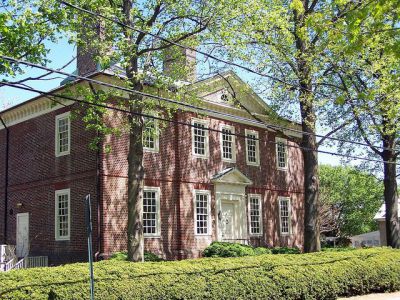
14) Upton Scott House
The Upton Scott House is a historic two-and-a-half-story, rectangular brick dwelling designed by William Brown. It shares a similar outward appearance with Brown's own home on the South River, now known as the London Town Publik House, but is much more elaborately finished. The property was built for Dr. Upton Scott, the personal physician to the Royal Governor of the Province of Maryland, and is of the transitional Georgian style.
In 1753, Dr. Upton Scott came to Maryland to serve as personal physician to Governor Horatio Sharpe. He purchased his lot in 1759 but did not begin construction until 1762, employing the services of William Brown to oversee the work. Scott’s house, surrounded by handsome gardens, was completed in 1765. After the Revolution, Robert Eden, Maryland’s last colonial governor, lived with the Scotts when he returned to the new state in hopes of claiming compensation for property seized during the war. Eden’s efforts failed, and he died here in 1784. The Scott’s nephew, Francis Scott Key, lived in the house while he was a student at St. John’s College.
The Upton Scott house boasts lavish interior and had sustained only minor alterations in the 20th century. In 1975, it was listed on the National Register of Historic Places.
In 1753, Dr. Upton Scott came to Maryland to serve as personal physician to Governor Horatio Sharpe. He purchased his lot in 1759 but did not begin construction until 1762, employing the services of William Brown to oversee the work. Scott’s house, surrounded by handsome gardens, was completed in 1765. After the Revolution, Robert Eden, Maryland’s last colonial governor, lived with the Scotts when he returned to the new state in hopes of claiming compensation for property seized during the war. Eden’s efforts failed, and he died here in 1784. The Scott’s nephew, Francis Scott Key, lived in the house while he was a student at St. John’s College.
The Upton Scott house boasts lavish interior and had sustained only minor alterations in the 20th century. In 1975, it was listed on the National Register of Historic Places.
Sight description based on Wikipedia.
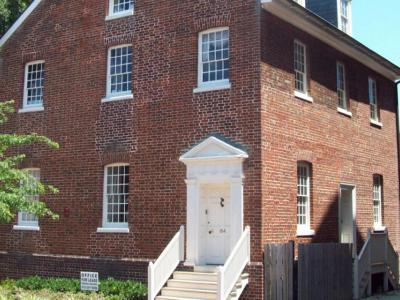
15) John Callahan House
John Callahan House, known previously as Pinkney-Callahan House, is yet another historic edifice in Annapolis. This house is a significant example of Colonial craftsmanship and design, and ranks among the major architectural monuments of the city.
This brick home was built around 1785-90, designed by John Callahan, a prominent and wealthy Annapolitan, who served as the Register of the Western Shore Land Office between 1778 and 1803. The house features an unusual gable-end principal facade and a largely intact Georgian/Federal interior finishes. It once served as St. John's College Infirmary.
The property has been moved twice in efforts to prevent its demolition. In 1900-01, it was relocated to St. John’s Street, and then to its present site on Conduit Street in 1972. John Callahan House is a contributing property in the Colonial Annapolis Historic District. It was first listed on the National Register of Historic Places on November 12, 1971, and then again, after its relocation, in 1973.
This brick home was built around 1785-90, designed by John Callahan, a prominent and wealthy Annapolitan, who served as the Register of the Western Shore Land Office between 1778 and 1803. The house features an unusual gable-end principal facade and a largely intact Georgian/Federal interior finishes. It once served as St. John's College Infirmary.
The property has been moved twice in efforts to prevent its demolition. In 1900-01, it was relocated to St. John’s Street, and then to its present site on Conduit Street in 1972. John Callahan House is a contributing property in the Colonial Annapolis Historic District. It was first listed on the National Register of Historic Places on November 12, 1971, and then again, after its relocation, in 1973.
Sight description based on Wikipedia.
