

Audio Guide: Cabo San Lucas Introduction Walking Tour (Self Guided), Cabo San Lucas
Early English sailors noticed the region’s resemblance to England’s Needles islands. Despite this unusual connection, the area did not attract many settlers due to its remote location.
Cabo San Lucas, at the southern tip of the Baja California Peninsula, has a history tied to the sea, trade, and isolation. The name Cabo San Lucas means “Cape of Saint Luke” in Spanish, given by early explorers who mapped these waters in the 16th century. Long before their arrival, the Pericú people lived here, surviving mainly by fishing. For centuries, the cape remained far from colonial centers, known primarily as a landmark for passing ships.
During the age of the Spanish Empire, the cape gained notoriety as a hiding place for pirates who preyed on Manila galleons traveling between Asia and the Mexican port of Acapulco. Ships crossing the Pacific carried silver, spices, and silk, and Cabo San Lucas offered both a lookout point and a safe harbor.
Yet a permanent settlement never took root. The region’s remoteness and arid land kept Cabo quiet until the 19th century, when small fishing and salt-producing communities began to appear. The town remained modest, with only a few families and basic docks, until the 20th century brought change.
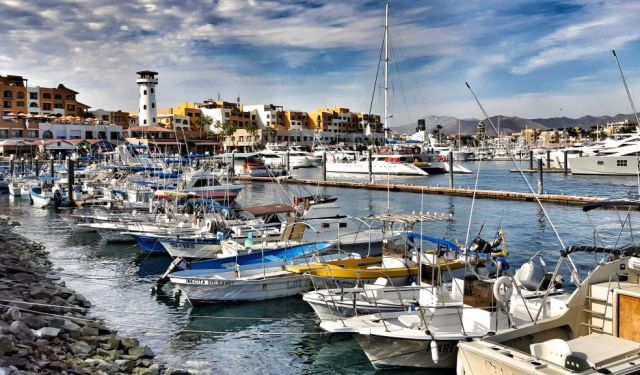
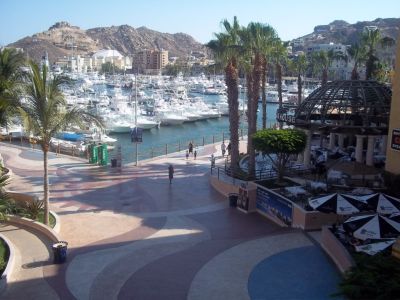
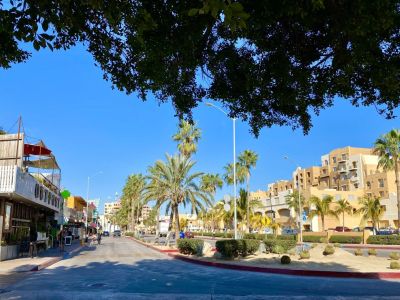
What ultimately transformed its fate was the sea itself. The deep waters off the cape proved rich in marlin, tuna, and other sport fish, and by the 1940s, outsiders began arriving for fishing expeditions. Sport fishing became the first draw for visitors, slowly reshaping the once-sleepy village. The construction of Marina Cabo San Lucas provided a modern harbor for yachts and cruise ships, marking the shift from a local economy to global tourism. At the same time, the creation of Boulevard Lázaro Cárdenas gave the growing town a central artery lined with shops, restaurants, and hotels, reinforcing its identity as a tourist hub.
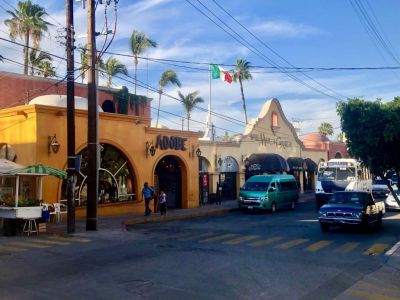
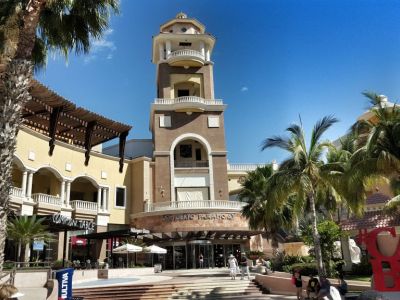
By the late 20th century, tourism had turned Cabo San Lucas into one of Mexico’s best-known resorts, where desert landscapes meet the deep blue sea. Yet the old stories remain - the sea as provider, the port as shelter, and the cape as a constant landmark. As you walk through Cabo today, you are tracing its journey from forgotten outpost to thriving city, one snapshot at a time.
Cabo San Lucas, at the southern tip of the Baja California Peninsula, has a history tied to the sea, trade, and isolation. The name Cabo San Lucas means “Cape of Saint Luke” in Spanish, given by early explorers who mapped these waters in the 16th century. Long before their arrival, the Pericú people lived here, surviving mainly by fishing. For centuries, the cape remained far from colonial centers, known primarily as a landmark for passing ships.
During the age of the Spanish Empire, the cape gained notoriety as a hiding place for pirates who preyed on Manila galleons traveling between Asia and the Mexican port of Acapulco. Ships crossing the Pacific carried silver, spices, and silk, and Cabo San Lucas offered both a lookout point and a safe harbor.
Yet a permanent settlement never took root. The region’s remoteness and arid land kept Cabo quiet until the 19th century, when small fishing and salt-producing communities began to appear. The town remained modest, with only a few families and basic docks, until the 20th century brought change.
What ultimately transformed its fate was the sea itself. The deep waters off the cape proved rich in marlin, tuna, and other sport fish, and by the 1940s, outsiders began arriving for fishing expeditions. Sport fishing became the first draw for visitors, slowly reshaping the once-sleepy village. The construction of Marina Cabo San Lucas provided a modern harbor for yachts and cruise ships, marking the shift from a local economy to global tourism. At the same time, the creation of Boulevard Lázaro Cárdenas gave the growing town a central artery lined with shops, restaurants, and hotels, reinforcing its identity as a tourist hub.
By the late 20th century, tourism had turned Cabo San Lucas into one of Mexico’s best-known resorts, where desert landscapes meet the deep blue sea. Yet the old stories remain - the sea as provider, the port as shelter, and the cape as a constant landmark. As you walk through Cabo today, you are tracing its journey from forgotten outpost to thriving city, one snapshot at a time.
How it works: Download the app "GPSmyCity: Walks in 1K+ Cities" from Apple App Store or Google Play Store to your mobile phone or tablet. The app turns your mobile device into a personal tour guide and its built-in GPS navigation functions guide you from one tour stop to next. The app works offline, so no data plan is needed when traveling abroad.
Download The GPSmyCity App



Cabo San Lucas Introduction Walking Tour Map
Guide Name: Cabo San Lucas Introduction Walking Tour
Guide Location: Mexico » Cabo San Lucas (See other walking tours in Cabo San Lucas)
Guide Type: Self-guided Walking Tour (Sightseeing)
Tour Duration: 2 Hours
Travel Distance: 2.9 Km or 1.8 Miles
Tour Best Suited For: First-time visit
Guide Location: Mexico » Cabo San Lucas (See other walking tours in Cabo San Lucas)
Guide Type: Self-guided Walking Tour (Sightseeing)
Tour Duration: 2 Hours
Travel Distance: 2.9 Km or 1.8 Miles
Tour Best Suited For: First-time visit
Sights Featured in This Walk

City Walks Overview
