

El Paso Introduction Walking Tour, El Paso

El Paso Introduction Walking Tour (Self Guided), El Paso

Every city in the world has its unique characteristics, and El Paso is no exception! It is a prosperous city with extremely beautiful architectural monuments of historical importance, fiberglass statues of ferocious alligators and brave cowboys and many other characters. You can see a different side of the city by taking the following tour to guide you through its streets.
How it works: Download the app "GPSmyCity: Walks in 1K+ Cities" from Apple App Store or Google Play Store to your mobile phone or tablet. The app turns your mobile device into a personal tour guide and its built-in GPS navigation functions guide you from one tour stop to next. The app works offline, so no data plan is needed when traveling abroad.

Download The GPSmyCity App

El Paso Introduction Walking Tour Map

Guide Name: El Paso Introduction Walking Tour
Guide Location: USA » El Paso (See other walking tours in El Paso)
Guide Type: Self-guided Walking Tour (Sightseeing)
# of Attractions: 11
Tour Duration: 2 Hour(s)
Travel Distance: 3.5 Km or 2.2 Miles
Author: DanaOffice
Sight(s) Featured in This Guide:
  • San Jacinto Plaza
  • Cortez Building
  • St. Clement's Church
  • Sunset Heights
  • Cathedral Parish of Saint Patrick
  • El Paso Holocaust Museum and Study Center
  • El Paso Museum of History
  • Vaquero Statue
  • Hotel Paso del Norte
  • Palace Theater
  • El Centro
1
San Jacinto Plaza

1) San Jacinto Plaza

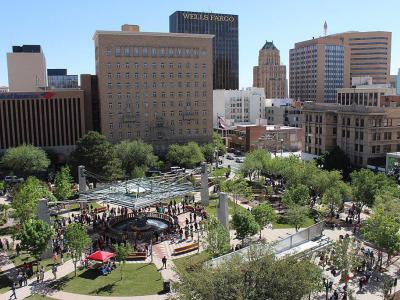
San Jacinto Plaza has long served as a central meeting place in the downtown area. It developed in the late nineteenth century as nearby businesses, hotels, and transportation routes expanded. The square was named after the Battle of San Jacinto, the 1836 event that helped secure Texas’ independence, and it has remained a gathering place for community events and daily social life.

In the early twentieth century the plaza became known for its gardens, walkways, and shaded benches. One unusual attraction was a small pond that once held live alligators. These animals lived in the plaza during the mid-1900s and became a well-known local curiosity. Although the alligators were later removed, the story is still remembered by many residents and remains part of the plaza’s history.

The plaza was redesigned and reopened in 2016 after a major renovation. The project added new paving, lighting, trees, and seating areas while keeping the square open and easy to use. A splash fountain near the centre now draws families and children, especially during warm weather. Today the plaza continues to work as a public gathering place where office workers, visitors, and local residents pause to relax while exploring the surrounding downtown area.
2
Cortez Building

2) Cortez Building

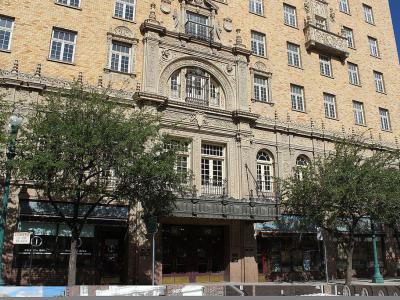
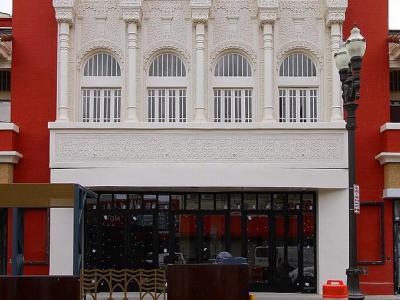
Opened on September 10, 1926, as the Hotel Orndorff, the Cortez Building was commissioned by Alzina Orndorff DeGroff and designed by Henry Trost of Trost & Trost at a cost of roughly $1.4–$1.5 million. It replaced earlier hotels on the same site, including the Hotel Vendome and a previous four-story Hotel Orndorff. Renamed the Hotel Hussmann in 1927 and the Hotel Cortez in 1935, it operated as a prominent hotel until its closure in 1970.

The structure is primarily Spanish Colonial Revival in style, reflecting regional influences and romantic interpretations of Spain’s architectural past. Its façade features decorative stonework, Spanish coats of arms, and sculpted busts of helmeted conquistadores. Arched openings and vertical lines define its Spanish Colonial Revival character. When completed, it was among the tallest buildings in the area and became a prominent landmark near San Jacinto Plaza.

After years of change, the property was converted into office space in 1984. A major restoration carried out in 2011–2012 addressed significant water damage and stabilized the historic structure. Today, the building provides approximately 132,631 square feet of commercial space, with ground-floor dining venues such as Unbranded Tavern and Kitchen contributing to ongoing activity at street level.
3
St. Clement's Church

3) St. Clement's Church

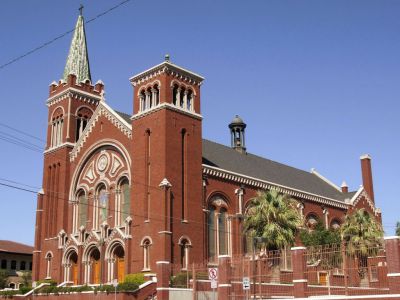
St. Clement’s Church is one of the oldest Anglican congregations in the border region. The parish was founded in 1870, when the Rev. Joseph Wilkin Tays began holding Episcopal services for local residents. As the community grew, the congregation needed a more permanent place of worship. In 1882, members built a wooden chapel that served the parish for several years while plans developed for a larger and more durable church building.

The present church was built in the early twentieth century. The cornerstone was laid in 1907, and the building was completed in 1908. It was designed by architect S. E. Patton in the Gothic Revival style. Built from local bluestone, the church includes pointed arches, tall windows, and a bell tower.

Inside, the church has a central nave that leads toward the altar, following a layout common in Anglican worship spaces. Stained-glass windows bring color and light into the interior and depict scenes from Christian tradition. Wooden furnishings and simple details create a calm setting for worship. In 2007, the congregation joined the Anglican Church in North America, and the church continues to hold regular services and community activities today.
4
Sunset Heights

4) Sunset Heights

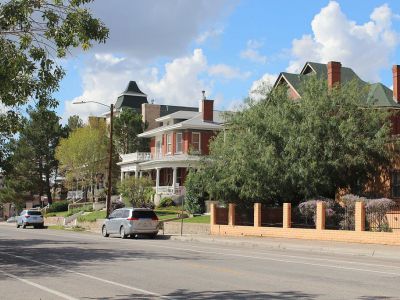
Sunset Heights is one of the oldest residential neighborhoods in the area. It developed in the 1890s as rail connections and business growth encouraged home building west of downtown. Originally called the Satterthwaite Addition, it was renamed Sunset Heights in 1901 after a newspaper naming contest, and many houses were built on higher ground overlooking the Rio Grande valley and nearby mountains.

Most of the homes in Sunset Heights were built between about 1890 and 1930. Walking through the neighborhood, visitors can see several architectural styles popular at the time. Some houses follow Victorian designs with decorative wood details, while others are Craftsman homes with wide porches and simple shapes. Mission and Spanish Revival features also appear, along with a few Tudor Revival and American Foursquare houses.

The neighborhood also played a role in regional history in the early twentieth century. It was home to business owners and professionals, and to figures connected with the Mexican Revolution between 1910 and 1920. Pancho Villa owned property here for a time, and architect Henry C. Trost also lived in the area. In 1984, Sunset Heights was designated a historic district.
5
Cathedral Parish of Saint Patrick

5) Cathedral Parish of Saint Patrick

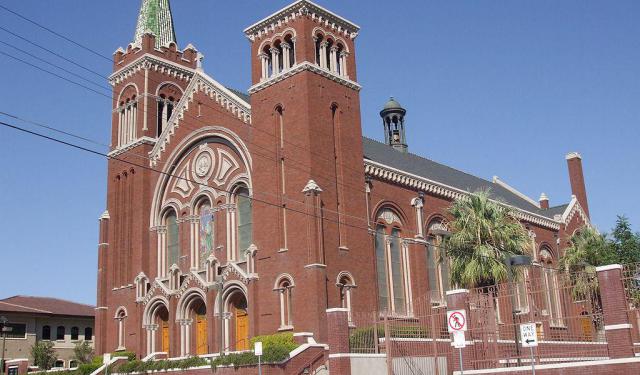
The Cathedral Parish of Saint Patrick is the seat of the Roman Catholic Diocese of El Paso and the mother church for about 670,000 Catholics in the region. Since July 9, 2013, the diocese has been led by Bishop Mark J. Seitz, appointed earlier that year by Pope Francis. The cathedral also remains closely connected to Cathedral High School and Saint Patrick Elementary School located beside it.

The building was designed by the St. Louis architectural firm Barnett, Haynes & Barnett in the form of a Byzantine basilica shaped by Italian Renaissance influence. Groundbreaking took place on April 8, 1914, and the cornerstone was blessed on November 12, 1916. Its design reflects early 20th-century church architecture in the United States, combining traditional European models with the needs of a growing border diocese.

Inside, Roman columns frame the central nave and lead toward the altar. Frescoes depict biblical scenes across the upper walls and ceiling, while the Stations of the Cross appear in bas-relief carvings along the interior walls. The balance of painted surfaces, sculpted detail, and filtered light creates a calm setting suited to both daily worship and major liturgical celebrations.
6
El Paso Holocaust Museum and Study Center

6) El Paso Holocaust Museum and Study Center (must see)

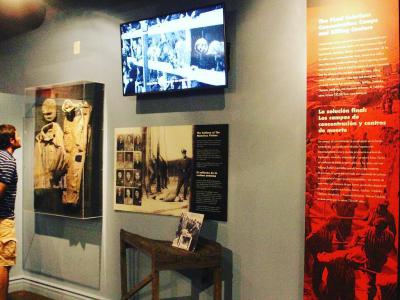
El Paso Holocaust Museum and Study Center was founded in 1984 by Holocaust survivor Henry Kellen and local community members who wanted to preserve personal stories and promote human rights education. What started as a small local effort became a museum and study centre focused on teaching the history of the Holocaust and encouraging discussion about prejudice, responsibility, and moral choices. Its work is based on remembrance and on the idea that learning about the past can influence how people act today.

The permanent exhibition explains the rise of Nazism in Germany and the persecution of Jews and other targeted groups during the Second World War. It explains how ghettos, concentration camps, and extermination camps were established across Europe. Photographs, documents, personal items, and survivor testimonies make the history more personal, while a model of the Auschwitz complex shows how the camp system worked. Panels also outline key events such as the Nuremberg Laws of 1935 and Kristallnacht in 1938.

Another part of the museum looks at other genocides and human rights violations around the world. By linking the Holocaust to later events, it encourages visitors to recognize patterns of discrimination and the early signs of intolerance. Educational programmes, lectures, and student activities are an important part of its mission.

Most visitors move through the museum at a quiet, steady pace. The layout gives time to read, listen, and reflect. For those interested in twentieth-century history and human rights, it provides a clear introduction to one of the most tragic chapters in modern history.
7
El Paso Museum of History

7) El Paso Museum of History (must see)

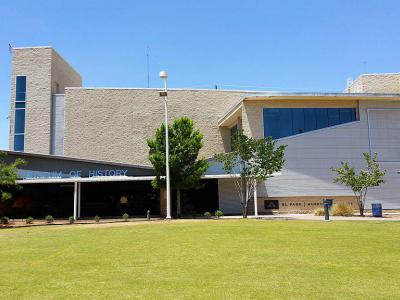
El Paso Museum of History presents the history of the Paso del Norte region through the lives of the people who shaped it. Established in 1974, the museum focuses on the cultural exchange that developed along the Rio Grande, where Indigenous communities, Spanish colonists, Mexican residents, and later American settlers influenced one another over centuries. The institution places local events within broader North American history, showing how shifting borders, migration, trade routes, and political change affected daily life in this frontier setting.

The main exhibition, “Changing Pass: People, Land, and Memory,” guides visitors chronologically from early settlement to the twentieth century. Displays examine Indigenous cultures of the region, the arrival of Spanish missions in the late sixteenth century, and the growth of communities tied to agriculture and river trade. Artifacts, photographs, maps, and recorded testimonies help explain how these developments shaped everyday life along the Rio Grande.

Later sections address the Mexican–American War of 1846–1848, the redrawing of the international boundary, the arrival of the railroad in the 1880s, and the impact of the Mexican Revolution in the early 1900s. A large interactive digital wall known as the Digie allows visitors to browse archival materials and community-submitted stories, adding a participatory dimension and linking historical events with present-day voices.

Temporary exhibitions rotate throughout the year, often focusing on regional culture, civil rights history, music traditions, and neighborhood life. Public programs, lectures, and family workshops further support dialogue about identity and shared heritage. For travelers seeking historical context beyond surface impressions, the museum offers a clear and well-organized introduction to the development of this binational border region.
8
Vaquero Statue

8) Vaquero Statue

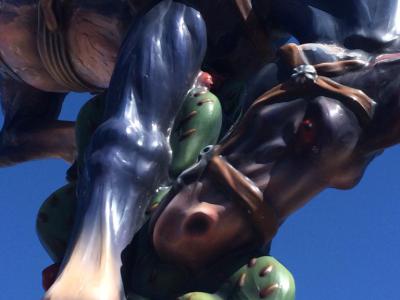
Luis Jiménez’s Vaquero is a large outdoor sculpture that celebrates the region’s ranching roots through a bold, modern image of a Mexican American cowboy. The word “vaquero” comes from the Spanish vaca (cow) and points to the horsemen who shaped cattle culture across the Southwest and northern Mexico. Jiménez modeled Vaquero in 1980, using bright, glossy color and fiberglass to push back against the traditional, solemn look of many public monuments.

The sculpture shows a rider on a bucking bronco with one arm raised holding a pistol. Horse and rider form a sweeping curve that suggests fast movement and energy. Jiménez used fiberglass with a bright, glossy finish, linking the cowboy image to popular culture rather than traditional bronze monuments. The work also highlights the Spanish and Mexican roots of the vaquero tradition.

A version of Vaquero stood outside the local art museum from 1998 until 2011, where the piece became a well-known landmark for visitors arriving at the building. The sculpture was on loan from a private collector, and after a sale the work left in 2011 for a new home, later appearing at Crystal Bridges in Arkansas.
9
Hotel Paso del Norte

9) Hotel Paso del Norte

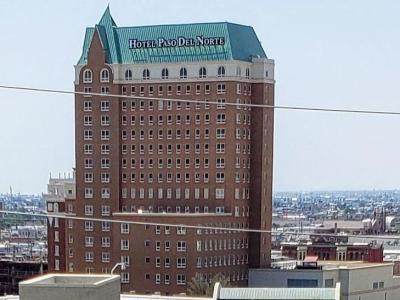
Opened in 1912, Hotel Paso del Norte reflects early twentieth-century growth tied to rail travel and cross-border trade. Designed in Beaux-Arts style, it welcomed passengers with modern comforts and became part of the area’s social life. A recent restoration preserved its historic character while adapting the building for contemporary use.

The most recognizable feature is the large stained-glass dome above the lobby. Its geometric glass panels filter daylight onto marble floors and columns. Early twentieth-century details are paired with contemporary furnishings, while historic photographs in public areas recall the hotel’s role in community events.

Today, the property offers guest rooms, dining spaces, meeting facilities, and a rooftop pool. From the upper levels, visitors can see the surrounding downtown and the international boundary, linking a stay here with more than a century of regional history.
10
Palace Theater

10) Palace Theater

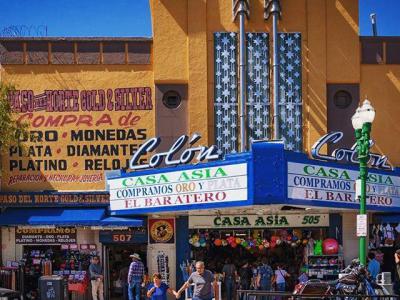
The Palace Theater opened on August 1, 1914, originally under the name Alhambra Theatre. Commissioned by brothers Rodolfo and Manuel Cruz and designed by architect Henry C. Trost, the theater was built at a cost of about $150,000. In November 1920, after renovations that rebuilt the lobby and rearranged the seating, it was renamed the Palace Theater. During the early twentieth century, it served as a popular venue for both live performances and motion pictures.

The building reflects Spanish Colonial Revival architecture with strong Moorish influences. Its façade features arabesque patterns and stylized script inspired by Islamic design. Inside, a large auditorium and stage hosted both vaudeville acts and films. In 1918, a large pipe organ, then one of the largest theater organs in the Southwest, was installed to accompany silent movies.

Over time, the theater followed the same pattern as many historic cinemas. By the mid-1970s the theater shifted to adult films and closed as a cinema in 1984. Later, the building housed several nightclubs, including the music venue Tricky Falls from 2011 to 2018. Purchased in 2019 by Abundant Living Faith Center, it reopened on September 3, 2023, as a church and ministry space while preserving features such as the original gilded stage frame.
11
El Centro

11) El Centro

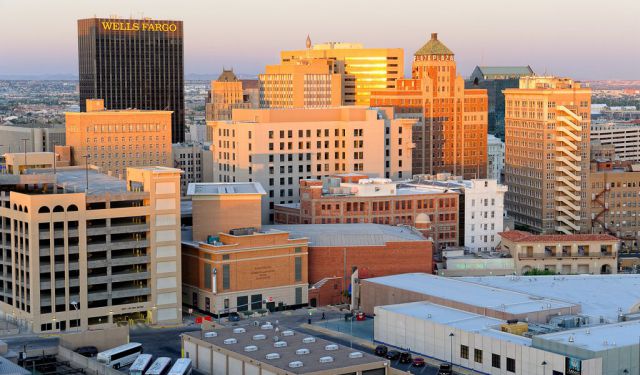
El Centro is the historic heart of El Paso. Located near the Rio Grande and the international border, it grew in the late 1800s and early 1900s as railroads and trade brought new business to the area. Banks, hotels, department stores, and theaters were built here, turning the district into the main commercial and social centre of the city. Many of those early buildings still stand and show how important this area once was and still is.

Different architectural styles appear along its streets, from simple brick commercial blocks to Art Deco and Mission Revival façades. Two key landmarks are the Plaza Theatre, opened in 1930 in the Spanish Colonial Revival style, and San Jacinto Plaza, a long-time public gathering place. The plaza was once known for its small alligator pond and today offers shaded seating and open space for public events.

In recent years, murals, restored storefronts, and public art have helped refresh the district. Government offices stand next to cafés, galleries, and local shops. Seasonal markets and festivals often fill the streets and squares. Walking through El Centro gives visitors a clear view of how border history, trade, and daily life have shaped this part of the city over time.

Walking Tours in El Paso, Texas

Create Your Own Walk in El Paso

Create Your Own Walk in El Paso

Creating your own self-guided walk in El Paso is easy and fun. Choose the city attractions that you want to see and a walk route map will be created just for you. You can even set your hotel as the start point of the walk.
Historical Churches

Historical Churches

There are many places of worship in El Paso which are worthy ones visit. The churches in the city belong to various denominations and this results in different architectural styles. You will be thrilled at the sight of these gorgeous structures. Take the following self-guided tour and visit the most outstanding religious venues of El Paso.

Tour Duration: 2 Hour(s)
Travel Distance: 5.4 Km or 3.4 Miles