

Audio Guide: Gdansk Old Town Walking Tour (Self Guided), Gdansk
Standing between river and sea, Gdansk has spent a thousand years welcoming arrivals and surviving departures.
Where the Motława River meets the Baltic Sea, Gdansk has long stood at the crossroads of trade, politics, and culture. Its name is believed to derive from “Gdania”, an early name for the river flowing through the settlement, though some linguists connect it to old Slavic words related to damp or marshy land. The earliest written reference to Gdansk appears in 997, when the Bohemian missionary Saint Adalbert visited the area, recording it as “the city of Gdansk”.
By the early Middle Ages, Gdansk had developed into a fortified settlement within the Polish state under the Piast rulers. Its position near the mouth of the Vistula River quickly made it an important commercial hub. Merchants transported grain, timber, amber, and salt through its port, helping the town grow in both wealth and influence. During the 13th and 14th centuries, Gdansk became increasingly tied to international commerce and eventually joined the Hanseatic League, a powerful network of trading cities across northern Europe.
Control of Gdansk shifted repeatedly over the centuries. In 1308, the city fell under the rule of the Teutonic Knights, who strengthened its fortifications and expanded its trading role. After a rebellion against Teutonic rule in the 15th century, Gdansk returned to the Polish Crown and entered a prosperous era within the Polish-Lithuanian Commonwealth. The 16th and early 17th centuries marked its golden age, when grain exports from the Polish interior enriched the city and financed elaborate merchant houses, churches, and civic buildings that still define the historic center today.
In later centuries, Gdansk became entangled in the struggles between Prussia and Poland. It was absorbed into Prussia during the partitions of Poland, later becoming part of the German Empire under the name Danzig. After World War I, it became the semi-autonomous Free City of Danzig under League of Nations supervision. Following extensive wartime destruction during World War II, Gdańsk returned to Poland and underwent major reconstruction.
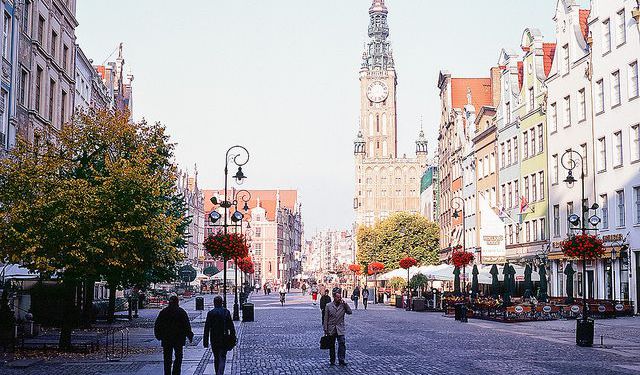
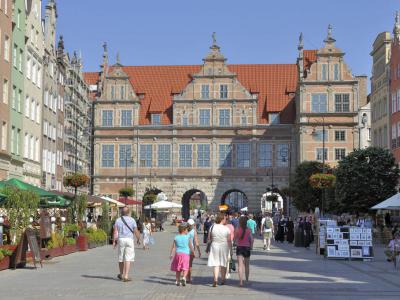
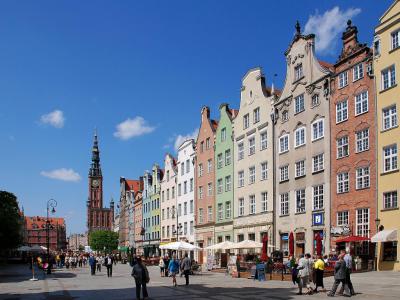
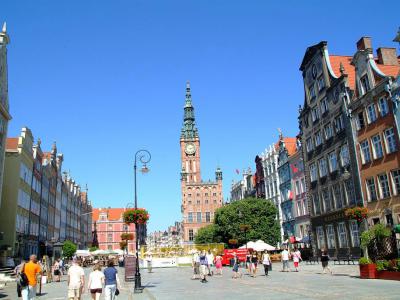
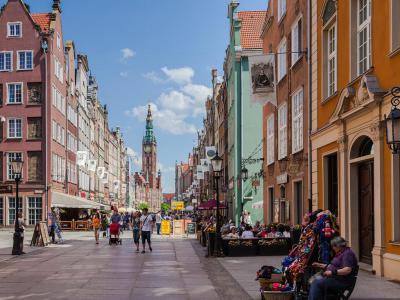
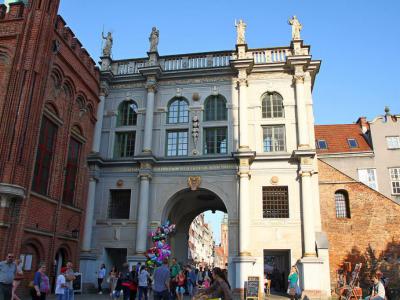
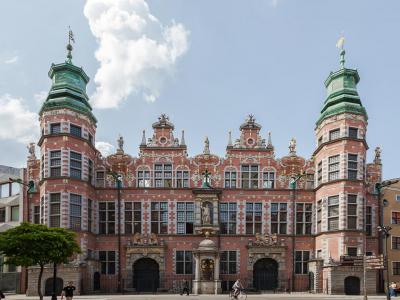
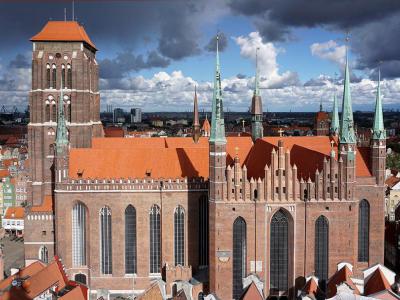
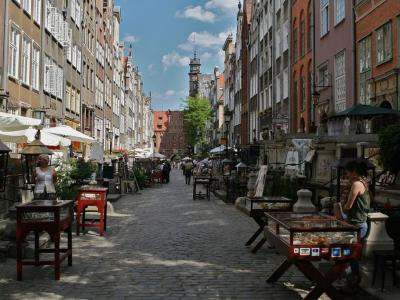
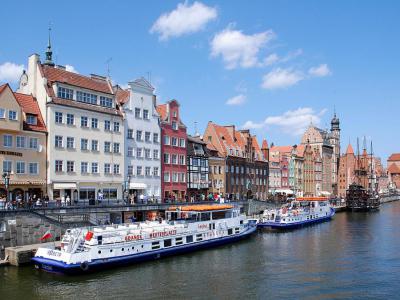
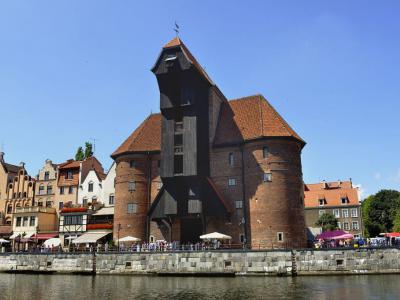
Walking through the center of Gdansk, visitors pass beneath the historic Green Gate before entering Long Street, a grand street lined with colorful merchant houses and ornate façades. Nearby, the towering Saint Mary's Church dominates the skyline, while narrow Mariacka Street reveals amber shops and stone terraces. Along the waterfront, Long Embankment Street follows the Motława River toward the medieval Crane Gate, one of the city’s most recognizable harbor landmarks.
And as you move from gate to street, from riverbank to market square, you follow the same path of arrivals and departures that has shaped Gdansk for centuries, proving that here, between river and sea, every step is part of a longer journey.
Where the Motława River meets the Baltic Sea, Gdansk has long stood at the crossroads of trade, politics, and culture. Its name is believed to derive from “Gdania”, an early name for the river flowing through the settlement, though some linguists connect it to old Slavic words related to damp or marshy land. The earliest written reference to Gdansk appears in 997, when the Bohemian missionary Saint Adalbert visited the area, recording it as “the city of Gdansk”.
By the early Middle Ages, Gdansk had developed into a fortified settlement within the Polish state under the Piast rulers. Its position near the mouth of the Vistula River quickly made it an important commercial hub. Merchants transported grain, timber, amber, and salt through its port, helping the town grow in both wealth and influence. During the 13th and 14th centuries, Gdansk became increasingly tied to international commerce and eventually joined the Hanseatic League, a powerful network of trading cities across northern Europe.
Control of Gdansk shifted repeatedly over the centuries. In 1308, the city fell under the rule of the Teutonic Knights, who strengthened its fortifications and expanded its trading role. After a rebellion against Teutonic rule in the 15th century, Gdansk returned to the Polish Crown and entered a prosperous era within the Polish-Lithuanian Commonwealth. The 16th and early 17th centuries marked its golden age, when grain exports from the Polish interior enriched the city and financed elaborate merchant houses, churches, and civic buildings that still define the historic center today.
In later centuries, Gdansk became entangled in the struggles between Prussia and Poland. It was absorbed into Prussia during the partitions of Poland, later becoming part of the German Empire under the name Danzig. After World War I, it became the semi-autonomous Free City of Danzig under League of Nations supervision. Following extensive wartime destruction during World War II, Gdańsk returned to Poland and underwent major reconstruction.
Walking through the center of Gdansk, visitors pass beneath the historic Green Gate before entering Long Street, a grand street lined with colorful merchant houses and ornate façades. Nearby, the towering Saint Mary's Church dominates the skyline, while narrow Mariacka Street reveals amber shops and stone terraces. Along the waterfront, Long Embankment Street follows the Motława River toward the medieval Crane Gate, one of the city’s most recognizable harbor landmarks.
And as you move from gate to street, from riverbank to market square, you follow the same path of arrivals and departures that has shaped Gdansk for centuries, proving that here, between river and sea, every step is part of a longer journey.
How it works: Download the app "GPSmyCity: Walks in 1K+ Cities" from Apple App Store or Google Play Store to your mobile phone or tablet. The app turns your mobile device into a personal tour guide and its built-in GPS navigation functions guide you from one tour stop to next. The app works offline, so no data plan is needed when traveling abroad.
Download The GPSmyCity App



Gdansk Old Town Walking Tour Map
-->
Guide Name: Gdansk Old Town Walking Tour
Guide Location: Poland » Gdansk (See other walking tours in Gdansk)
Guide Type: Self-guided Walking Tour (Sightseeing)
Tour Duration: 2 Hours
Travel Distance: 2.2 Km or 1.4 Miles
Tour Best Suited For: First-time visit
Guide Location: Poland » Gdansk (See other walking tours in Gdansk)
Guide Type: Self-guided Walking Tour (Sightseeing)
Tour Duration: 2 Hours
Travel Distance: 2.2 Km or 1.4 Miles
Tour Best Suited For: First-time visit
Sights Featured in This Walk

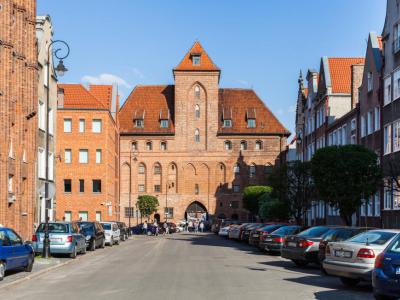
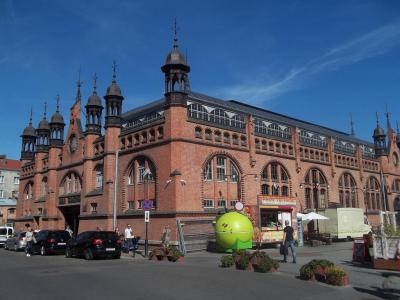
Walking Tours in Gdansk, Poland

Create Your Own Walk in Gdansk
Creating your own self-guided walk in Gdansk is easy and fun. Choose the city attractions that you want to see and a walk route map will be created just for you. You can even set your hotel as the start point of the walk.
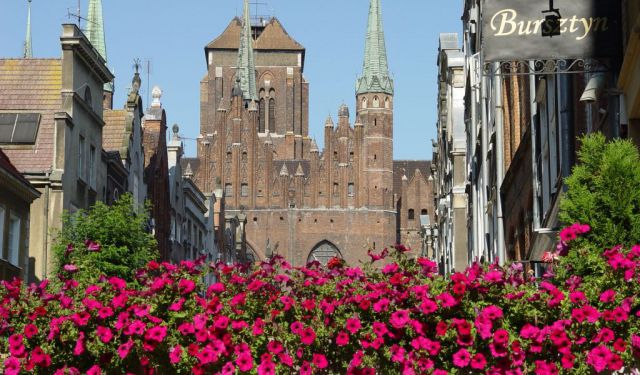
Gdansk's Historical Churches Tour
Gdansk has a long history of Catholicism, hence the abundance of spectacular churches here. Let's delve into some of the most impressive temples that grace the cityscape and see what they are.
Saint John's Church, a Gothic masterpiece, stands tall in the heart of Gdansk. It dates back to the 14th century and features impressive brickwork and intricate details. Its towering spire is a... view more
Tour Duration: 1 Hour
Travel Distance: 1.6 Km or 1 Miles
Saint John's Church, a Gothic masterpiece, stands tall in the heart of Gdansk. It dates back to the 14th century and features impressive brickwork and intricate details. Its towering spire is a... view more
Tour Duration: 1 Hour
Travel Distance: 1.6 Km or 1 Miles
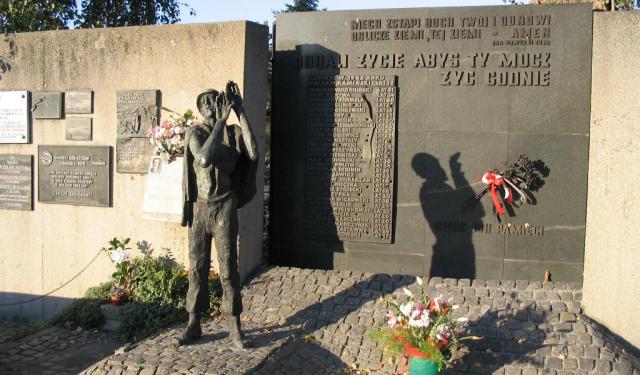
Solidarity Union Walking Tour
For decades, the word “Solidarity” has been synonymous with the city of Gdansk. The peaceful Solidarity revolution, started here in the August of 1980, marked the outset of the fall of communism not only in Poland but also throughout Eastern Europe.
Stemmed from the country's first free labor union born out of strikes at the Lenin Shipyard, now the Gdansk Shipyard,... view more
Tour Duration: 1 Hour
Travel Distance: 0.8 Km or 0.5 Miles
Stemmed from the country's first free labor union born out of strikes at the Lenin Shipyard, now the Gdansk Shipyard,... view more
Tour Duration: 1 Hour
Travel Distance: 0.8 Km or 0.5 Miles
The Most Popular Cities
/ view all