

Audio Guide: Lyon Introduction Walking Tour (Self Guided), Lyon
If cities kept diaries, Lyon’s would have been over 2,000 years long - and still adding new chapters. Capital of the Auvergne-Rhône-Alpes region, Lyon sits confidently where the Rhône and Saône rivers meet, as if it chose the spot for dramatic effect. Founded in 43 BC as Lugdunum, a Roman settlement for war refugees, it quickly climbed the ranks to become the capital of Roman Gaul. Not bad for a hilltop start...
Two future Roman emperors - Claudius and Caracalla - were born here, which means Lyon can casually claim having produced emperors, too. The name Lugdunum probably blends the Celtic god Lug with the word “dunos,” which means hill or fortress - a nod to Fourvière hill, where it all began. Over centuries, Lugdon softened into Luon, and eventually, by the 1200s, settled into the name Lyon we know today.
The Renaissance period saw Lyon shift from imperial outpost to financial powerhouse. It became France’s banking capital and a silk-trading giant, weaving strong ties with Italy; the elegant buildings in the Old Town still whisper with Italian accents...
Printing presses hummed, books circulated, and ideas traveled. By the 19th century, Lyon's industry was booming - but so were tensions. The silk workers rose up in 1831 and again in 1834, leaving their mark on French labour history.
During World War II, Lyon turned into a base for Nazi forces, but was also a city of quiet courage. The traboules - those secret passageways threading through buildings - became lifelines for the French Resistance, helping people disappear when they needed to most.
Today, Lyon is proudly known for its cuisine as much as its past. To feel the city's scale, stand in Bellecour Square, one of Europe’s largest pedestrian spaces, and let it unfold around you. Nearby, Jacobins' Square adds elegance with its fountain and polished façades. The former Palace of Justice - also known colloquially as the “Palace of the 24 Columns” - stands like a reminder that Lyon has always meant business.
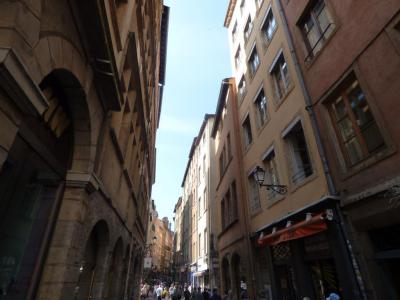
Cross into the Old Town to find Lyon Cathedral and Rue Saint-Jean, where hidden traboules, such as the Pink Tower Passageway and Thomassin House, reveal centuries of stories. In the central part of the city called Presqu’île, the Lyon Fresco, Terreaux Square, and Republic Street show how history and modern life share the same stage.
Still, Lyon isn’t just a collection of monuments. It's primarily about atmosphere - the mix of Roman ambition, Renaissance flair, industrial grit, and contemporary rhythm. Walk its streets, cross its bridges, and step through its hidden doorways. Let Lyon reveal to you its layers one by one, and discover why this city still continues to shape French culture and identity.
Two future Roman emperors - Claudius and Caracalla - were born here, which means Lyon can casually claim having produced emperors, too. The name Lugdunum probably blends the Celtic god Lug with the word “dunos,” which means hill or fortress - a nod to Fourvière hill, where it all began. Over centuries, Lugdon softened into Luon, and eventually, by the 1200s, settled into the name Lyon we know today.
The Renaissance period saw Lyon shift from imperial outpost to financial powerhouse. It became France’s banking capital and a silk-trading giant, weaving strong ties with Italy; the elegant buildings in the Old Town still whisper with Italian accents...
Printing presses hummed, books circulated, and ideas traveled. By the 19th century, Lyon's industry was booming - but so were tensions. The silk workers rose up in 1831 and again in 1834, leaving their mark on French labour history.
During World War II, Lyon turned into a base for Nazi forces, but was also a city of quiet courage. The traboules - those secret passageways threading through buildings - became lifelines for the French Resistance, helping people disappear when they needed to most.
Today, Lyon is proudly known for its cuisine as much as its past. To feel the city's scale, stand in Bellecour Square, one of Europe’s largest pedestrian spaces, and let it unfold around you. Nearby, Jacobins' Square adds elegance with its fountain and polished façades. The former Palace of Justice - also known colloquially as the “Palace of the 24 Columns” - stands like a reminder that Lyon has always meant business.
Cross into the Old Town to find Lyon Cathedral and Rue Saint-Jean, where hidden traboules, such as the Pink Tower Passageway and Thomassin House, reveal centuries of stories. In the central part of the city called Presqu’île, the Lyon Fresco, Terreaux Square, and Republic Street show how history and modern life share the same stage.
Still, Lyon isn’t just a collection of monuments. It's primarily about atmosphere - the mix of Roman ambition, Renaissance flair, industrial grit, and contemporary rhythm. Walk its streets, cross its bridges, and step through its hidden doorways. Let Lyon reveal to you its layers one by one, and discover why this city still continues to shape French culture and identity.
How it works: Download the app "GPSmyCity: Walks in 1K+ Cities" from Apple App Store or Google Play Store to your mobile phone or tablet. The app turns your mobile device into a personal tour guide and its built-in GPS navigation functions guide you from one tour stop to next. The app works offline, so no data plan is needed when traveling abroad.
Lyon Introduction Walking Tour Map
Guide Name: Lyon Introduction Walking Tour
Guide Location: France » Lyon (See other walking tours in Lyon)
Guide Type: Self-guided Walking Tour (Sightseeing)
# of Attractions: 10
Tour Duration: 2 Hour(s)
Travel Distance: 2.8 Km or 1.7 Miles
Author: emily
Sight(s) Featured in This Guide:
Guide Location: France » Lyon (See other walking tours in Lyon)
Guide Type: Self-guided Walking Tour (Sightseeing)
# of Attractions: 10
Tour Duration: 2 Hour(s)
Travel Distance: 2.8 Km or 1.7 Miles
Author: emily
Sight(s) Featured in This Guide:
- Place Bellecour (Bellecour Square)
- Place des Jacobins (Jacobins' Square)
- Ancien Palais de Justice (The Former Palace of Justice)
- Lyon Cathedral
- Rue Saint-Jean - Old Lyon Traboules
- La Tour Rose Traboule (The Pink Tower Passageway)
- Maison Thomassin (Thomassin House)
- Fresque des Lyonnais (The Lyon Fresco)
- Place des Terreaux (Terreaux Square)
- Rue de la Republique (Republic Street)
1) Place Bellecour (Bellecour Square)
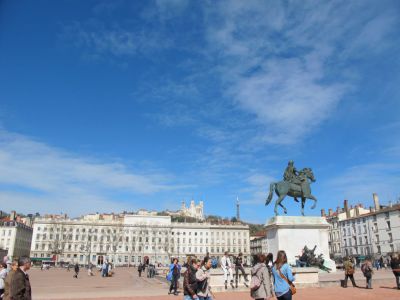
If Lyon had a front porch, it would definitely be Bellecour Square - big, open, and impossible to ignore. It’s the third largest square in France, the largest fully pedestrian square in Europe, and the beating heart of the city. But it didn’t start out this polished.
Roll back to Gallo-Roman times, and this grand square was not a square at all. It was an island - basically a sandy leftover from river floods - used for military drills and trade.
By the 12th century, the Archbishop of Lyon had planted a vineyard here. Officially, it was for “medicinal purposes,” but you may draw your own conclusions... Later, the vines disappeared, the land was abandoned, and the whole place turned into a swamp. Not exactly postcard material.
In 1562, Baron des Adrets parked his troops here during an attack on Lyon. After the drama settled, the land dried out and became pasture. Then, in 1604, King Henry III had a bright idea: let’s build a proper public square. Simple? Not at all. The archbishop objected, lawyers got involved, and the argument between the crown and clergy dragged on for more than a century. Urban planning, 17th-century style...
Finally, in 1708, King Louis XIV settled the matter. The square opened in 1715 under the name Louis-le-Grand. A few decades later, during the French Revolution, it witnessed a much darker chapter - a guillotine stood here, reminding everyone that public squares can host both celebrations and upheaval.
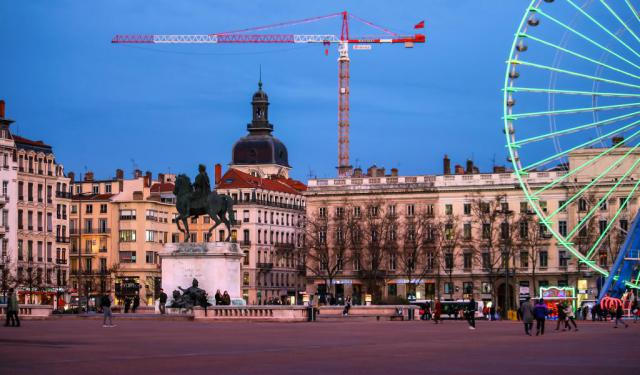
Today, at the centre, you’ll find the equestrian statue of Louis XIV, installed in 1825 to replace the earlier version destroyed in revolutionary enthusiasm. At its base, two allegorical figures represent the Saône and Rhône rivers, as if quietly supporting the king. At the western end, there’s a gentler presence: statues of author Antoine de Saint-Exupéry and his Little Prince, watching over the square with poetic calm.
Around the edges, life continues. Two pavilions sit here - one houses the Tourist Office, the other an art gallery. There’s a small play area, a fountain, a couple of bars, and from time to time, a giant Ferris wheel rises above it all, giving visitors a slow spin above Lyon’s rooftops.
From sandy island to swamp, from royal ambition to revolutionary drama, Bellecour Square has seen it all - and it’s still the place where Lyon gathers, pauses, and looks around.
Roll back to Gallo-Roman times, and this grand square was not a square at all. It was an island - basically a sandy leftover from river floods - used for military drills and trade.
By the 12th century, the Archbishop of Lyon had planted a vineyard here. Officially, it was for “medicinal purposes,” but you may draw your own conclusions... Later, the vines disappeared, the land was abandoned, and the whole place turned into a swamp. Not exactly postcard material.
In 1562, Baron des Adrets parked his troops here during an attack on Lyon. After the drama settled, the land dried out and became pasture. Then, in 1604, King Henry III had a bright idea: let’s build a proper public square. Simple? Not at all. The archbishop objected, lawyers got involved, and the argument between the crown and clergy dragged on for more than a century. Urban planning, 17th-century style...
Finally, in 1708, King Louis XIV settled the matter. The square opened in 1715 under the name Louis-le-Grand. A few decades later, during the French Revolution, it witnessed a much darker chapter - a guillotine stood here, reminding everyone that public squares can host both celebrations and upheaval.
Today, at the centre, you’ll find the equestrian statue of Louis XIV, installed in 1825 to replace the earlier version destroyed in revolutionary enthusiasm. At its base, two allegorical figures represent the Saône and Rhône rivers, as if quietly supporting the king. At the western end, there’s a gentler presence: statues of author Antoine de Saint-Exupéry and his Little Prince, watching over the square with poetic calm.
Around the edges, life continues. Two pavilions sit here - one houses the Tourist Office, the other an art gallery. There’s a small play area, a fountain, a couple of bars, and from time to time, a giant Ferris wheel rises above it all, giving visitors a slow spin above Lyon’s rooftops.
From sandy island to swamp, from royal ambition to revolutionary drama, Bellecour Square has seen it all - and it’s still the place where Lyon gathers, pauses, and looks around.
2) Place des Jacobins (Jacobins' Square)
If you’re standing in the middle of traffic coming from twelve different directions, engines humming, pedestrians weaving past - and somehow, this busy crossroads still manages to be one of Lyon’s most elegant squares. Rest assured - you're in Jacobins' Square.
In the late 13th century, Jacobin monks settled here, building a convent and a church. Over time, the open space nearby turned into a walled market. Then, in 1556, the walls came down, and a triangular public square took shape.
A few years later, in 1562, some surrounding buildings were demolished to create Rue Saint Dominique, opening the area even further. A modest fountain appeared, and the square became the local social network - the place where people gathered to exchange news, rumors, and probably a fair bit of harmless gossip. It was even renamed Comfort Square. Sadly, the fountain wasn’t very comforting; it was too small for the growing population and was eventually removed.
In 1609, things became more ambitious. A pyramidal obelisk was installed, crowned with a cross. Around its base, the name of God was engraved in 24 languages - quite an international statement for its time. But history had other plans.
The French Revolution swept it away, along with many religious symbols. The church was rebuilt in 1689, the convent restored in 1714, only for the church to be demolished again in 1818. The convent survived a little longer, serving as the Préfecture until 1852. Indeed, if buildings could sigh, this block would have done so more than once...
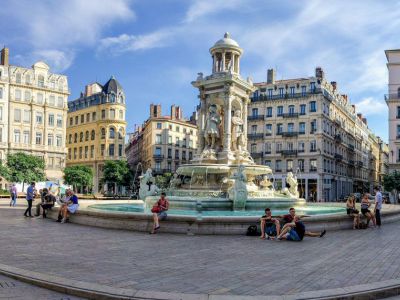
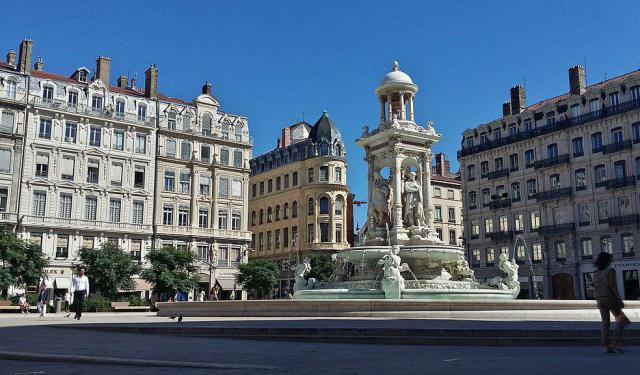
Now shift to the 19th century. The fountain you see today dates from 1878 and was designed by architect Gaspard André. The four statues added in 1885 - representing the engraver Benoît Audran, celebrated sculptor Guillaume Coustou, Renaissance architect Philibert de l’Orme, and 19th-century painter Hippolyte Flandrin - were sculpted by Charles Degeorges, turning the square into an open-air tribute to Lyon’s artistic heritage. And in 2004, a plaque was installed nearby to remind visitors of the square’s layered past.
So yes, traffic may swirl around it. But at its centre, Jacobins' Square stands calmly - a small stage where monks, merchants, revolutionaries, artists, and modern commuters have all played their part.
In the late 13th century, Jacobin monks settled here, building a convent and a church. Over time, the open space nearby turned into a walled market. Then, in 1556, the walls came down, and a triangular public square took shape.
A few years later, in 1562, some surrounding buildings were demolished to create Rue Saint Dominique, opening the area even further. A modest fountain appeared, and the square became the local social network - the place where people gathered to exchange news, rumors, and probably a fair bit of harmless gossip. It was even renamed Comfort Square. Sadly, the fountain wasn’t very comforting; it was too small for the growing population and was eventually removed.
In 1609, things became more ambitious. A pyramidal obelisk was installed, crowned with a cross. Around its base, the name of God was engraved in 24 languages - quite an international statement for its time. But history had other plans.
The French Revolution swept it away, along with many religious symbols. The church was rebuilt in 1689, the convent restored in 1714, only for the church to be demolished again in 1818. The convent survived a little longer, serving as the Préfecture until 1852. Indeed, if buildings could sigh, this block would have done so more than once...
Now shift to the 19th century. The fountain you see today dates from 1878 and was designed by architect Gaspard André. The four statues added in 1885 - representing the engraver Benoît Audran, celebrated sculptor Guillaume Coustou, Renaissance architect Philibert de l’Orme, and 19th-century painter Hippolyte Flandrin - were sculpted by Charles Degeorges, turning the square into an open-air tribute to Lyon’s artistic heritage. And in 2004, a plaque was installed nearby to remind visitors of the square’s layered past.
So yes, traffic may swirl around it. But at its centre, Jacobins' Square stands calmly - a small stage where monks, merchants, revolutionaries, artists, and modern commuters have all played their part.
3) Ancien Palais de Justice (The Former Palace of Justice)
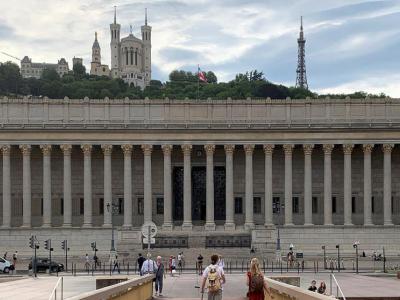
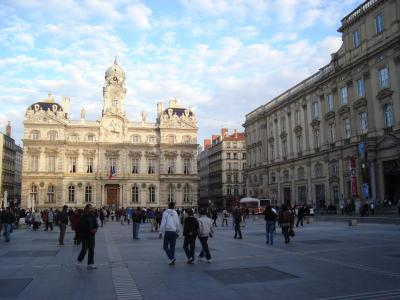
If buildings could clear their throats before speaking, the Former Palace of Justice would not need to - it already makes its point the moment you see those 24 Corinthian columns lined up like a very disciplined jury.
Commanding and symmetrical, it stands on the ground that has dealt with legal matters since the 14th century. The structure you see today was completed in 1842 by architect Victor Baltard, who clearly believed that justice should look solid, orderly, and just a little intimidating. Rectangular in form and arranged around a central courtyard, it remains one of France’s finest Neo-classical statements.
Step inside, and you enter the grand “Hall of Lost Steps,” though nothing feels exactly lost about it. This was the waiting area where lawyers paced, witnesses rehearsed their testimonies, and tension quietly built before a judge called a name. Tall marble columns rise toward vaulted ceilings, stucco details frame the space, and three cupolas allow light to filter down with appropriate drama. The red-carpeted grand staircase sweeps upward to the upper chambers and visitors’ gallery, while a smaller set of marble steps leads to the Assize Court.
Today, only this court and the Court of Appeal still operate here. In earlier decades, the palace witnessed trials that shaped modern French history. The most famous took place in 1987, when Klaus Barbie - the Nazi officer known as the “Butcher of Lyon” - was tried and sentenced to life imprisonment for crimes against humanity. Thus, the courtroom became not just a legal setting, but a place of national reckoning.
Even if legal procedure is not your usual travel interest, this building offers something more than courtrooms. It represents centuries of civic authority layered onto one site - medieval courts replaced by 19th-century grandeur, all facing the river with quiet confidence. Take a moment to stand before those columns, imagine the footsteps echoing across the marble floors, and consider how architecture can turn law into theatre, where justice arrives with classical proportions...
Commanding and symmetrical, it stands on the ground that has dealt with legal matters since the 14th century. The structure you see today was completed in 1842 by architect Victor Baltard, who clearly believed that justice should look solid, orderly, and just a little intimidating. Rectangular in form and arranged around a central courtyard, it remains one of France’s finest Neo-classical statements.
Step inside, and you enter the grand “Hall of Lost Steps,” though nothing feels exactly lost about it. This was the waiting area where lawyers paced, witnesses rehearsed their testimonies, and tension quietly built before a judge called a name. Tall marble columns rise toward vaulted ceilings, stucco details frame the space, and three cupolas allow light to filter down with appropriate drama. The red-carpeted grand staircase sweeps upward to the upper chambers and visitors’ gallery, while a smaller set of marble steps leads to the Assize Court.
Today, only this court and the Court of Appeal still operate here. In earlier decades, the palace witnessed trials that shaped modern French history. The most famous took place in 1987, when Klaus Barbie - the Nazi officer known as the “Butcher of Lyon” - was tried and sentenced to life imprisonment for crimes against humanity. Thus, the courtroom became not just a legal setting, but a place of national reckoning.
Even if legal procedure is not your usual travel interest, this building offers something more than courtrooms. It represents centuries of civic authority layered onto one site - medieval courts replaced by 19th-century grandeur, all facing the river with quiet confidence. Take a moment to stand before those columns, imagine the footsteps echoing across the marble floors, and consider how architecture can turn law into theatre, where justice arrives with classical proportions...
4) Lyon Cathedral (must see)
In 450 AD, on or about, Bishop Patiens of Lyon - later sainted, so clearly doing something right - decided the city needed a proper cathedral. He dedicated it to Saint Stephen. A baptistry followed in the 7th century, because what’s a cathedral without a place for dramatic spiritual beginnings? Nearby stood the Church of Saint Croix. All of this activity took place right here in Old Lyon, close to the Saône River - the very ground where Lyon Cathedral would rise 800 years later.
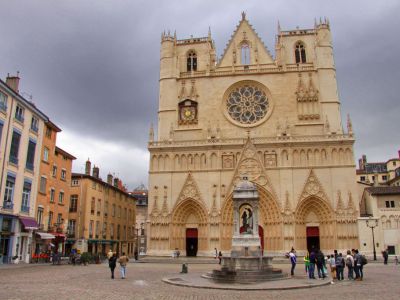
Now, here’s where the story gets ambitious. The new cathedral was built over the ruins of Saint Stephen’s and is traditionally linked to Saints Pothinus and Irenaeus, early Christian figures in Lyon. Construction began in 1180 and, in true medieval fashion, took nearly three centuries to wrap up in 1476.
And yet, somehow, the style holds together beautifully. Romanesque solidity meets Gothic height in a surprisingly calm architectural handshake - no dramatic identity crisis despite the long build...
The numbers are impressive. The cathedral stretches 263 feet in length, with the nave soaring 107 feet high. The façade leans Gothic, with pointed arches and vertical lines drawing your eyes upward. Move toward the apse and choir, and you feel the heavier, rounded strength of Romanesque design. Above you, the ribbed vault of the nave lifts in full Gothic confidence, as if the building is taking a deep, stone-carved breath.
Inside, you’ll see one of the cathedral's greatest stars: a 30-foot-high astronomical clock. Installed in 1383, it didn’t just tell time - it mapped the heavens. Its astrolabe charts the positions of the Sun, Moon, stars, and Earth. Quite advanced for the Middle Ages...
The clock was smashed in 1562, during the Wars of Religion, by François de Beaumont, Baron of Adrets - clearly not a fan of delicate mechanics - and later rebuilt in 1661 by master clockmaker Guillaume Norrisson. Second life, same cosmic ambition...
Each year, in December, candles glow in windows across Lyon to honor the Virgin Mary. It is then that the cathedral façade transforms into a canvas of light during the Festival of Lights, marking the city’s gratitude for the end of the plague in 1643. Stone, history, astronomy, and light are all layered into one remarkable building.
Now, here’s where the story gets ambitious. The new cathedral was built over the ruins of Saint Stephen’s and is traditionally linked to Saints Pothinus and Irenaeus, early Christian figures in Lyon. Construction began in 1180 and, in true medieval fashion, took nearly three centuries to wrap up in 1476.
And yet, somehow, the style holds together beautifully. Romanesque solidity meets Gothic height in a surprisingly calm architectural handshake - no dramatic identity crisis despite the long build...
The numbers are impressive. The cathedral stretches 263 feet in length, with the nave soaring 107 feet high. The façade leans Gothic, with pointed arches and vertical lines drawing your eyes upward. Move toward the apse and choir, and you feel the heavier, rounded strength of Romanesque design. Above you, the ribbed vault of the nave lifts in full Gothic confidence, as if the building is taking a deep, stone-carved breath.
Inside, you’ll see one of the cathedral's greatest stars: a 30-foot-high astronomical clock. Installed in 1383, it didn’t just tell time - it mapped the heavens. Its astrolabe charts the positions of the Sun, Moon, stars, and Earth. Quite advanced for the Middle Ages...
The clock was smashed in 1562, during the Wars of Religion, by François de Beaumont, Baron of Adrets - clearly not a fan of delicate mechanics - and later rebuilt in 1661 by master clockmaker Guillaume Norrisson. Second life, same cosmic ambition...
Each year, in December, candles glow in windows across Lyon to honor the Virgin Mary. It is then that the cathedral façade transforms into a canvas of light during the Festival of Lights, marking the city’s gratitude for the end of the plague in 1643. Stone, history, astronomy, and light are all layered into one remarkable building.
5) Rue Saint-Jean - Old Lyon Traboules (must see)
Back in 1954, Lyon’s Old Town made history. It became the first city in France to receive protection under the Malraux Law, long before “heritage preservation” became fashionable dinner conversation. The law shielded three Renaissance neighbourhoods wrapped around Fourvière Hill, namely: Saint Jean, Saint Paul, and Saint Georges.
In the Middle Ages, Saint Jean was the place to be - politically, religiously, and strategically. Power lived here. Right at the heart of it stands Lyon Cathedral, alongside the Romanesque Manecanterie, the former choir school.
But the real local secret isn’t just above ground - it’s hidden in the walls. The first traboule, or foot tunnel, linked Saint-Jean Street to Government Square. Why? Because medieval streets were few, the hill was steep, and everyone needed quicker access to the Saône River for fresh water. When streets failed, ingenuity stepped in...
So, Lyon built passageways - traboules - hidden corridors threading through buildings, across courtyards, quietly connecting one street to another. In the 19th century, more were added. The silk workers - the famous Canuts - used them to carry delicate rolls of silk down to the river without exposing them to rain.
When those same workers rebelled in the 1830s against wealthy silk merchants, the traboules turned into strategic hideouts. Fast forward to World War II, and the tunnels once again proved useful - this time sheltering members of the French Resistance. Indeed, these walls have seen more secrets than a confessional.
Now, if you’re curious, head to 54 Rue Saint-Jean. Look for a modest green door with a small engraved sign reading “The Long Traboule.” It doesn’t shout for attention - it doesn’t need to. This is the longest traboule in Old Lyon. Cross the threshold, and you’ll pass through five courtyards and four different buildings, emerging on Beef Street, if you’re translating literally. It feels less like walking through a corridor and more like slipping through time.
Around 50 traboules are open to the public today. But many more remain hidden, known mostly to residents. And that’s the charm of Lyon - a city where history doesn’t just sit in monuments. It runs behind walls, under your feet, and occasionally behind an unassuming green door...
In the Middle Ages, Saint Jean was the place to be - politically, religiously, and strategically. Power lived here. Right at the heart of it stands Lyon Cathedral, alongside the Romanesque Manecanterie, the former choir school.
But the real local secret isn’t just above ground - it’s hidden in the walls. The first traboule, or foot tunnel, linked Saint-Jean Street to Government Square. Why? Because medieval streets were few, the hill was steep, and everyone needed quicker access to the Saône River for fresh water. When streets failed, ingenuity stepped in...
So, Lyon built passageways - traboules - hidden corridors threading through buildings, across courtyards, quietly connecting one street to another. In the 19th century, more were added. The silk workers - the famous Canuts - used them to carry delicate rolls of silk down to the river without exposing them to rain.
When those same workers rebelled in the 1830s against wealthy silk merchants, the traboules turned into strategic hideouts. Fast forward to World War II, and the tunnels once again proved useful - this time sheltering members of the French Resistance. Indeed, these walls have seen more secrets than a confessional.
Now, if you’re curious, head to 54 Rue Saint-Jean. Look for a modest green door with a small engraved sign reading “The Long Traboule.” It doesn’t shout for attention - it doesn’t need to. This is the longest traboule in Old Lyon. Cross the threshold, and you’ll pass through five courtyards and four different buildings, emerging on Beef Street, if you’re translating literally. It feels less like walking through a corridor and more like slipping through time.
Around 50 traboules are open to the public today. But many more remain hidden, known mostly to residents. And that’s the charm of Lyon - a city where history doesn’t just sit in monuments. It runs behind walls, under your feet, and occasionally behind an unassuming green door...
6) La Tour Rose Traboule (The Pink Tower Passageway)
In the heart of Lyon’s Saint-Jean district stands a building with two names and plenty of personality: the House of the Sieve - or, more memorably, The Pink Tower. Built in the 16th century and attributed to the Italian architect Sebastiano Serlio of Bologna, it carries the elegance of the Renaissance with quiet confidence. The courtyard was refreshed in the 17th century, but the spirit of the place remains unmistakably Renaissance.
As for the curious name “House of the Sieve,” no one can say for certain. One popular theory links it to Martin de Troyes, a 16th-century tax collector whose coat of arms may have featured a sieve - perhaps a subtle reminder that taxes, like flour, must pass through fine filters.
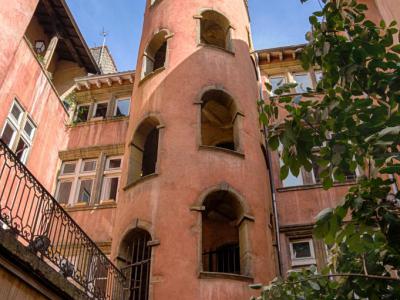
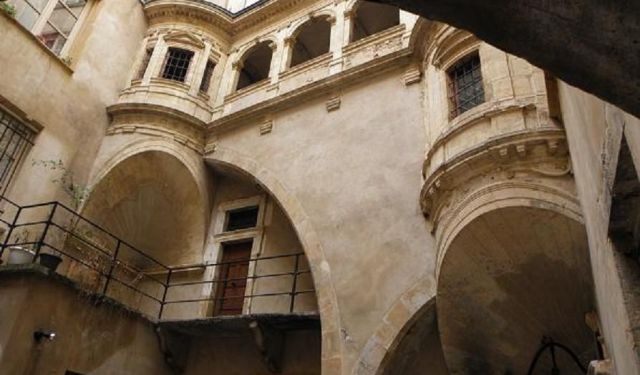
From the street, you might walk past without suspecting anything dramatic. The façade is reserved, almost discreet. But step through the gate, and the building changes character completely. Suddenly, rising before you, is a monumental circular tower washed in soft pink plaster - a bold architectural statement hidden in plain sight.
Inside that tower curls a grand spiral staircase-belvedere, climbing upward in elegant curves. Semicircular bay windows open onto terraces and gardens that unfold across several levels, while a historic well stands quietly at the courtyard’s edge, as if keeping watch over centuries of stories.
The Pink Tower has also hosted its share of distinguished guests. In 1600, King Henri IV of France stayed here briefly during his marriage celebrations with Marie de Medici. Imagine the courtyard filled with royal footsteps and whispered courtly conversations. Its significance was officially recognized in 1937, when it was listed as a historic monument. Still, like many grand old residences, it experienced periods of neglect before careful restoration efforts revived its former glory.
Today, known as the tallest building in the Saint-Jean area, the Pink Tower remains one of Old Lyon’s most captivating sights. It stands not just as an architectural curiosity, but as a symbol of the neighborhood’s hidden wonders - especially the famous traboules that weave through the district. So, whenever you wander these medieval streets, don’t be fooled by modest façades. Sometimes the real spectacle is waiting just behind the door.
As for the curious name “House of the Sieve,” no one can say for certain. One popular theory links it to Martin de Troyes, a 16th-century tax collector whose coat of arms may have featured a sieve - perhaps a subtle reminder that taxes, like flour, must pass through fine filters.
From the street, you might walk past without suspecting anything dramatic. The façade is reserved, almost discreet. But step through the gate, and the building changes character completely. Suddenly, rising before you, is a monumental circular tower washed in soft pink plaster - a bold architectural statement hidden in plain sight.
Inside that tower curls a grand spiral staircase-belvedere, climbing upward in elegant curves. Semicircular bay windows open onto terraces and gardens that unfold across several levels, while a historic well stands quietly at the courtyard’s edge, as if keeping watch over centuries of stories.
The Pink Tower has also hosted its share of distinguished guests. In 1600, King Henri IV of France stayed here briefly during his marriage celebrations with Marie de Medici. Imagine the courtyard filled with royal footsteps and whispered courtly conversations. Its significance was officially recognized in 1937, when it was listed as a historic monument. Still, like many grand old residences, it experienced periods of neglect before careful restoration efforts revived its former glory.
Today, known as the tallest building in the Saint-Jean area, the Pink Tower remains one of Old Lyon’s most captivating sights. It stands not just as an architectural curiosity, but as a symbol of the neighborhood’s hidden wonders - especially the famous traboules that weave through the district. So, whenever you wander these medieval streets, don’t be fooled by modest façades. Sometimes the real spectacle is waiting just behind the door.
7) Maison Thomassin (Thomassin House)
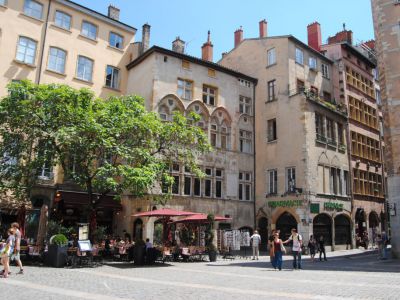
When it comes to Thomassin House, standing proudly on Exchange Square, history doesn’t whisper on it - it practically clears its throat and begins a long story. This is one of the oldest buildings in the neighbourhood, and it has earned this title honestly.
Back in the Middle Ages, Exchange Square was the beating heart of Lyon’s textile trade. Three or four major fairs were held here every year, attracting merchants from France, Italy, and the Netherlands. Deals were struck, fortunes were made, and among the families counting their profits were the Thomassins.
In 1493, they purchased a house that had already been standing on the square since 1298 - because when you’re doing well in business, you don’t always build new, you upgrade. The Thomassins gave the building a Gothic makeover, adding those elegant vertical lines and decorative details that still catch the eye today.
Later times could not resist leaving their own mark either. The 18th and 20th centuries brought further renovations, including first-floor mullioned windows topped with a frieze of the Zodiac signs - a kind of medieval astrology meeting merchant ambition... Twin bays of windows were framed with delicate trefoil arches, and above them rose a pointed ogival arch displaying carved coats of arms.
Looking closely, you can't help spotting the symbols of power: the Dauphin - literally a dolphin, representing the heir to the French throne - alongside the emblem of King Charles VIII, shown as a lily flower, and Queen Anne of Brittany, symbolized by an ermine. It’s almost like a stone résumé carved into the façade, announcing connections, loyalty, and prestige.
And yet, for all the architectural drama outside, the real treasure is hidden within. What survives from the original 13th-century house is a painted wooden ceiling on the first floor, uncovered during renovations in 1964. Decorated with the coats of arms of Saint Louis, his mother Blanche de Castille, and the Fuers - the building’s earliest known owners - it is one of the oldest surviving painted ceilings in France.
So, as you stand here, remember: this old house is a witness to trade fairs, royal symbols, ambitious merchants, and centuries of careful reinvention - all layered behind one very confident façade.
Back in the Middle Ages, Exchange Square was the beating heart of Lyon’s textile trade. Three or four major fairs were held here every year, attracting merchants from France, Italy, and the Netherlands. Deals were struck, fortunes were made, and among the families counting their profits were the Thomassins.
In 1493, they purchased a house that had already been standing on the square since 1298 - because when you’re doing well in business, you don’t always build new, you upgrade. The Thomassins gave the building a Gothic makeover, adding those elegant vertical lines and decorative details that still catch the eye today.
Later times could not resist leaving their own mark either. The 18th and 20th centuries brought further renovations, including first-floor mullioned windows topped with a frieze of the Zodiac signs - a kind of medieval astrology meeting merchant ambition... Twin bays of windows were framed with delicate trefoil arches, and above them rose a pointed ogival arch displaying carved coats of arms.
Looking closely, you can't help spotting the symbols of power: the Dauphin - literally a dolphin, representing the heir to the French throne - alongside the emblem of King Charles VIII, shown as a lily flower, and Queen Anne of Brittany, symbolized by an ermine. It’s almost like a stone résumé carved into the façade, announcing connections, loyalty, and prestige.
And yet, for all the architectural drama outside, the real treasure is hidden within. What survives from the original 13th-century house is a painted wooden ceiling on the first floor, uncovered during renovations in 1964. Decorated with the coats of arms of Saint Louis, his mother Blanche de Castille, and the Fuers - the building’s earliest known owners - it is one of the oldest surviving painted ceilings in France.
So, as you stand here, remember: this old house is a witness to trade fairs, royal symbols, ambitious merchants, and centuries of careful reinvention - all layered behind one very confident façade.
8) Fresque des Lyonnais (The Lyon Fresco) (must see)
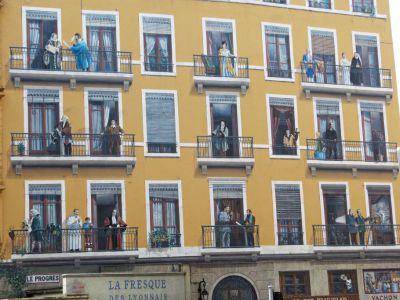
On the Saône side of Lyon’s first district, at the corner of Quai Saint Vincent and Martinière Street, a seven-storey building pulls off one of the city’s cleverest illusions. Two of its walls - one about 800 square metres, the other 200 - are covered with a gigantic “trick of the eye” mural.
And it really does trick you. Windows that don’t exist suddenly open. Balconies appear where there are none. You may even find yourself waving at someone who’s technically made of paint.
Stretching roughly 200 metres along the Saint Vincent side and 600 along Martinière, this mural has become a landmark in its own right. It presents 30 figures linked to Lyon - 24 from the past and six more modern personalities - arranged as if they all live together in one very distinguished apartment block. The contemporary characters stand at street level, casually “interacting” with passersby, as if they’ve just stepped out for coffee.
This painted façade tells 2,000 years of Lyon’s story. Emperor Claudius represents the Roman chapter. Abbé Pierre, founder of the Emmaus movement and member of the French Resistance, appears as a reminder of 20th-century social activism. Football legend Bernard Lacombe joins the line-up, while culinary icon Paul Bocuse seems to wait in the doorway of an imaginary café, ready to comment on the menu.
Look up, and you’ll spot explorer Giovanni da Verrazzano, who sailed for Francis I and reached what would later become New York. Antoine de Saint-Exupéry leans out with his Little Prince, quietly observing the world below. Long-serving mayor Édouard Herriot puffs thoughtfully on his pipe. Nearby, Auguste and Louis Lumière present their first motion-picture camera, the device that launched cinema and secured Lyon’s place in film history.
More faces peer from windows and balconies, creating the impression that the entire building is alive with conversation. The mural was created in 1995 by the artist cooperative CitéCréation, as part of a project to revitalize this busy waterfront district. The idea proved so successful that similar “balcony” murals later appeared elsewhere, including Barcelona.
If you want the full effect, come in the morning. Between 10 and 11 a.m., when the sun hits the wall just right, the illusion sharpens, and the figures seem almost ready to step out. Indeed, this neighbourhood is rich in wall art - but none quite match the scale and storytelling power of The Lyon Fresco.
And it really does trick you. Windows that don’t exist suddenly open. Balconies appear where there are none. You may even find yourself waving at someone who’s technically made of paint.
Stretching roughly 200 metres along the Saint Vincent side and 600 along Martinière, this mural has become a landmark in its own right. It presents 30 figures linked to Lyon - 24 from the past and six more modern personalities - arranged as if they all live together in one very distinguished apartment block. The contemporary characters stand at street level, casually “interacting” with passersby, as if they’ve just stepped out for coffee.
This painted façade tells 2,000 years of Lyon’s story. Emperor Claudius represents the Roman chapter. Abbé Pierre, founder of the Emmaus movement and member of the French Resistance, appears as a reminder of 20th-century social activism. Football legend Bernard Lacombe joins the line-up, while culinary icon Paul Bocuse seems to wait in the doorway of an imaginary café, ready to comment on the menu.
Look up, and you’ll spot explorer Giovanni da Verrazzano, who sailed for Francis I and reached what would later become New York. Antoine de Saint-Exupéry leans out with his Little Prince, quietly observing the world below. Long-serving mayor Édouard Herriot puffs thoughtfully on his pipe. Nearby, Auguste and Louis Lumière present their first motion-picture camera, the device that launched cinema and secured Lyon’s place in film history.
More faces peer from windows and balconies, creating the impression that the entire building is alive with conversation. The mural was created in 1995 by the artist cooperative CitéCréation, as part of a project to revitalize this busy waterfront district. The idea proved so successful that similar “balcony” murals later appeared elsewhere, including Barcelona.
If you want the full effect, come in the morning. Between 10 and 11 a.m., when the sun hits the wall just right, the illusion sharpens, and the figures seem almost ready to step out. Indeed, this neighbourhood is rich in wall art - but none quite match the scale and storytelling power of The Lyon Fresco.
9) Place des Terreaux (Terreaux Square)
If Lyon had a living room, this would be it. Perfectly rectangular, grand, and confidently grey, Terreaux Square stretches across the Presqu’île between the Rhône and the Saône, right at the foot of Croix-Rousse hill. It sits in the 1st district like a stone stage set - symmetrical, open, and always ready for action. No surprise it’s part of Lyon’s UNESCO-listed historic centre.
By day, the square works as a social magnet. You can claim a café table and let time pass slowly with a drink, settle on the steps of the Museum of Fine Arts, or admire the dramatic fountain at the centre. On the eastern side rises the elegant City Hall of Lyon, built in the mid-17th century, rebuilt after a fire, and still serving its purpose. Across from it stands the former 17th-century nunnery of Saint-Pierre, which has housed the Fine Arts Museum since 1803 - proof that even convent walls can reinvent themselves.
The symmetry of lines may look calm, but they hide a rather dramatic past. Terreaux has seen far more than just casual espresso moments.
In 1642, Henri Coiffier de Ruzé, Marquis of Cinq-Mars, lost his head here after plotting against Cardinal Richelieu. During the French Revolution, the guillotine returned with alarming efficiency. And after the siege of Lyon, dozens more were executed on this very ground. Yes, this peaceful square once echoed with the sharp logic of political justice - 18th-century style.
Now look at the centrepiece. The powerful fountain was created by Frédéric Auguste Bartholdi - the same sculptor who later gave the world the Statue of Liberty. Inaugurated in 1891, the dramatic group shows a woman driving a quadriga, representing the Garonne River and its four tributaries charging toward the sea. Muscles tense, horses rear, water surges - it’s stone theatre at full volume.
Today, Terreaux Square balances beauty and memory. It’s a meeting point, a museum forecourt, a civic address, and a former revolutionary stage all in one. Stand still for a moment. Listen past the café chatter and splashing fountain. History hasn’t left here - it’s just learned to share the space...
By day, the square works as a social magnet. You can claim a café table and let time pass slowly with a drink, settle on the steps of the Museum of Fine Arts, or admire the dramatic fountain at the centre. On the eastern side rises the elegant City Hall of Lyon, built in the mid-17th century, rebuilt after a fire, and still serving its purpose. Across from it stands the former 17th-century nunnery of Saint-Pierre, which has housed the Fine Arts Museum since 1803 - proof that even convent walls can reinvent themselves.
The symmetry of lines may look calm, but they hide a rather dramatic past. Terreaux has seen far more than just casual espresso moments.
In 1642, Henri Coiffier de Ruzé, Marquis of Cinq-Mars, lost his head here after plotting against Cardinal Richelieu. During the French Revolution, the guillotine returned with alarming efficiency. And after the siege of Lyon, dozens more were executed on this very ground. Yes, this peaceful square once echoed with the sharp logic of political justice - 18th-century style.
Now look at the centrepiece. The powerful fountain was created by Frédéric Auguste Bartholdi - the same sculptor who later gave the world the Statue of Liberty. Inaugurated in 1891, the dramatic group shows a woman driving a quadriga, representing the Garonne River and its four tributaries charging toward the sea. Muscles tense, horses rear, water surges - it’s stone theatre at full volume.
Today, Terreaux Square balances beauty and memory. It’s a meeting point, a museum forecourt, a civic address, and a former revolutionary stage all in one. Stand still for a moment. Listen past the café chatter and splashing fountain. History hasn’t left here - it’s just learned to share the space...
10) Rue de la Republique (Republic Street)
If you ever visited the Golden Head Park - the grand green lung of Lyon, there, among trees and joggers, you would find a memorial to Claude-Marius Vaisse. Not exactly a household name, unless you’re into 19th-century urban makeovers. As mayor in 1854, Vaisse basically gave Lyon a serious facelift, including new roads, aqueducts, and canals, and, of course, a polished Exchange complete with a restored City Hall. Indeed, he didn’t just manage the city - he reshaped it.
His ambition was particularly visible in the Presqu’île. Three new roads were carved out to link Bellecour Square with other key spaces. Two fresh squares - Republic and Cordeliers - appeared on the map. And running confidently between them is Republic Street - beginning at Bellecour Square, stretching through Republic Square, and continuing toward Louis Pradel Square like a well-planned statement.
Locals casually call it “rue de la Re,” which sounds friendly, but make no mistake - this is Lyon’s answer to Paris' Champs-Élysées. The street hums with energy. Luxury boutiques stand shoulder to shoulder with budget shops. Fast food kiosks compete with cafés where espresso arrives with confidence. Restaurants spill onto pavements. And above it all rise elegant Haussmann-style façades, built when the street itself was laid out, giving the whole avenue a distinctly Parisian rhythm.
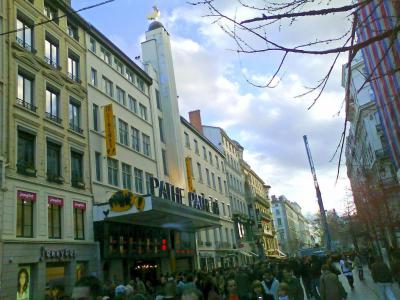
Number 85 has its own story. Originally a theatre, it was built by industrialist and art lover Émile Guimet - a telling example of how commerce and culture can share the same address. Raise your eyes, and you may notice the proud rooster perched atop the Art Deco Cinema Pathé, watching over the shoppers below like a feathery guardian of entertainment.
At Cordeliers Square, the Palace of Commerce stands beside the Church of Saint Bonaventure, mixing business with devotion in classic Lyon style. Not far away, the modern New Grand Bazaar overflows with retail temptation. Meanwhile, at Comedy Square, the City Hall and the sleek Opera Nouvel face each other, balancing tradition and modern design.
And here’s the quiet triumph: this lively, shop-lined artery - buzzing, glittering, occasionally overwhelming - forms part of Lyon’s UNESCO World Heritage site. Urban planning with style, history with momentum, and a street that still performs its daily show...
His ambition was particularly visible in the Presqu’île. Three new roads were carved out to link Bellecour Square with other key spaces. Two fresh squares - Republic and Cordeliers - appeared on the map. And running confidently between them is Republic Street - beginning at Bellecour Square, stretching through Republic Square, and continuing toward Louis Pradel Square like a well-planned statement.
Locals casually call it “rue de la Re,” which sounds friendly, but make no mistake - this is Lyon’s answer to Paris' Champs-Élysées. The street hums with energy. Luxury boutiques stand shoulder to shoulder with budget shops. Fast food kiosks compete with cafés where espresso arrives with confidence. Restaurants spill onto pavements. And above it all rise elegant Haussmann-style façades, built when the street itself was laid out, giving the whole avenue a distinctly Parisian rhythm.
Number 85 has its own story. Originally a theatre, it was built by industrialist and art lover Émile Guimet - a telling example of how commerce and culture can share the same address. Raise your eyes, and you may notice the proud rooster perched atop the Art Deco Cinema Pathé, watching over the shoppers below like a feathery guardian of entertainment.
At Cordeliers Square, the Palace of Commerce stands beside the Church of Saint Bonaventure, mixing business with devotion in classic Lyon style. Not far away, the modern New Grand Bazaar overflows with retail temptation. Meanwhile, at Comedy Square, the City Hall and the sleek Opera Nouvel face each other, balancing tradition and modern design.
And here’s the quiet triumph: this lively, shop-lined artery - buzzing, glittering, occasionally overwhelming - forms part of Lyon’s UNESCO World Heritage site. Urban planning with style, history with momentum, and a street that still performs its daily show...
Walking Tours in Lyon, France

Create Your Own Walk in Lyon
Creating your own self-guided walk in Lyon is easy and fun. Choose the city attractions that you want to see and a walk route map will be created just for you. You can even set your hotel as the start point of the walk.
Food Tour in Lyon
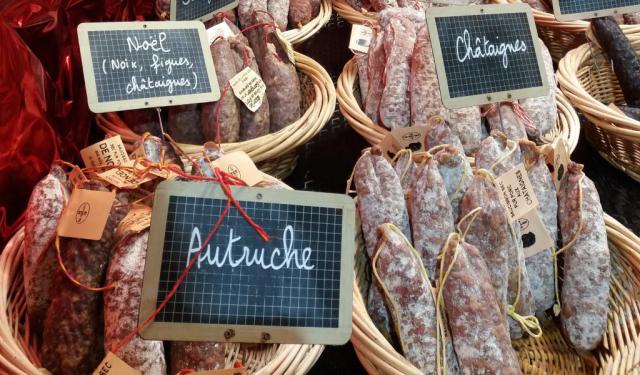
In addition to its architectural beauty, Lyon – often referred to as the gastronomic capital of France – boasts a vibrant culinary scene that will delight passionate foodies. An ideal place to discover French cuisine and fall in love with it, there is no shortage of addresses in Lyon to stock up on quality and delicious products.
At the heart of Lyon's culinary culture is the Paul... view more
Tour Duration: 1 Hour(s)
Travel Distance: 2.9 Km or 1.8 Miles
At the heart of Lyon's culinary culture is the Paul... view more
Tour Duration: 1 Hour(s)
Travel Distance: 2.9 Km or 1.8 Miles
Lyon Secret Passageways Walk
Lyon’s secret passageways, known as traboules, form a hidden network of covered corridors that wind through courtyards, staircases, and buildings, revealing a colourful and little-seen side of the city’s past. The name comes from the Latin trans-ambulare, meaning “to pass through,” and their origins date as far back as the 4th century, when the inhabitants of Lugdunum (ancient Lyon) used... view more
Tour Duration: 1 Hour(s)
Travel Distance: 1.8 Km or 1.1 Miles
Tour Duration: 1 Hour(s)
Travel Distance: 1.8 Km or 1.1 Miles
Lyon's Architectural Landmarks
Founded by the Romans in the 1st century BC, the charming French city of Lyon has played a major role in the political, cultural, and economic development of Europe for many years. The city's two millennia-long history is clearly imprinted in its urban fabric, manifested in numerous buildings of various epochs and styles.
Among the plethora of local architectural landmarks, the Ancient... view more
Tour Duration: 2 Hour(s)
Travel Distance: 4.3 Km or 2.7 Miles
Among the plethora of local architectural landmarks, the Ancient... view more
Tour Duration: 2 Hour(s)
Travel Distance: 4.3 Km or 2.7 Miles
Useful Travel Guides for Planning Your Trip
Gastronomic Delights: 10 Places to Buy Great Food in Lyon, France
The city of Lyon is famous for its contribution to the culinary arts. Here food lovers will find hundreds of specialty shops throughout the city offering some of the world's finest and award-winning products fit to delight any epicurean palate. Let your taste buds lead you on this voyage into...
The Most Popular Cities
/ view all