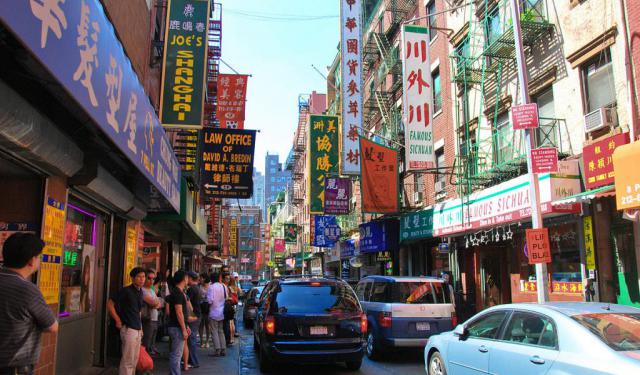


NYC's Chinatown and Little Italy Walking Tour (Self Guided), New York
If New York were a giant cookbook, Chinatown and Little Italy would definitely be the chapters where flavors go wild. These two neighbors on Manhattan’s Lower East Side started as modest immigrant enclaves and somehow ended up becoming two of the city’s most recognizable cultural districts. Their stories mirror the bigger tale of New York itself: arrivals from faraway places, tight-knit communities, and a whole lot of adaptation.
Little Italy took shape in the mid-19th century, when waves of Italians—mostly from Southern Italy and Sicily—landed in New York seeking economic opportunity and relief from political instability back home. By the 1880s and '90s, Mulberry Street had become their unofficial headquarters, surrounded by churches, mutual-aid societies, and family-run shops that seemed to operate on equal parts tradition and espresso. At its height, Little Italy stretched far beyond the few blocks you see today, housing tens of thousands of immigrants. But as Italian-Americans prospered, many moved to other parts of New York, and urban renewal projects shrank the district into the compact, charmingly symbolic slice it is now—especially lively during events like the Feast of San Gennaro.
Chinatown emerged slightly later but wasted no time growing as Chinese immigrants, initially drawn to the American West, faced harsh discriminatory laws such as the Chinese Exclusion Act of 1882. Many of them resettled in New York, forming a concentrated community around Mott, Pell, and Doyers Streets. Clan associations and benevolent societies helped keep the neighborhood steady through decades of restrictive policies. Then came 1965, when immigration reforms opened the gates, and Chinatown expanded quickly. By the 1970s and '80s, as Italian immigration slowed, Chinese immigration increased, and Chinatown surged south and east, eventually overtaking Little Italy in both population and physical size.
Today, the two neighborhoods sit shoulder to shoulder as living reminders of New York’s immigrant heritage. Walk from Mulberry Street to Canal Street and then up to Mott Street, and you'll encounter historic buildings, including one of the area’s quiet treasures with a rare wooden pagoda roof. Moving from cannoli and cafés of Little Italy to the vibrant and often crowded Chinatown, you'll see markets piled high with produce, noodle shops, and restaurants showing off their roasted ducks in the window.
Places like Kimlau Square, the Memorial Arch dedicated to Chinese Americans who died in WWII, Confucius Plaza, and the Mahayana Buddhist Temple add more depth to the journey. Together, these side-by-side communities remind you that New York’s landscape isn’t just built of stone and steel—it’s built of stories that traveled across oceans and never stopped growing.
Little Italy took shape in the mid-19th century, when waves of Italians—mostly from Southern Italy and Sicily—landed in New York seeking economic opportunity and relief from political instability back home. By the 1880s and '90s, Mulberry Street had become their unofficial headquarters, surrounded by churches, mutual-aid societies, and family-run shops that seemed to operate on equal parts tradition and espresso. At its height, Little Italy stretched far beyond the few blocks you see today, housing tens of thousands of immigrants. But as Italian-Americans prospered, many moved to other parts of New York, and urban renewal projects shrank the district into the compact, charmingly symbolic slice it is now—especially lively during events like the Feast of San Gennaro.
Chinatown emerged slightly later but wasted no time growing as Chinese immigrants, initially drawn to the American West, faced harsh discriminatory laws such as the Chinese Exclusion Act of 1882. Many of them resettled in New York, forming a concentrated community around Mott, Pell, and Doyers Streets. Clan associations and benevolent societies helped keep the neighborhood steady through decades of restrictive policies. Then came 1965, when immigration reforms opened the gates, and Chinatown expanded quickly. By the 1970s and '80s, as Italian immigration slowed, Chinese immigration increased, and Chinatown surged south and east, eventually overtaking Little Italy in both population and physical size.
Today, the two neighborhoods sit shoulder to shoulder as living reminders of New York’s immigrant heritage. Walk from Mulberry Street to Canal Street and then up to Mott Street, and you'll encounter historic buildings, including one of the area’s quiet treasures with a rare wooden pagoda roof. Moving from cannoli and cafés of Little Italy to the vibrant and often crowded Chinatown, you'll see markets piled high with produce, noodle shops, and restaurants showing off their roasted ducks in the window.
Places like Kimlau Square, the Memorial Arch dedicated to Chinese Americans who died in WWII, Confucius Plaza, and the Mahayana Buddhist Temple add more depth to the journey. Together, these side-by-side communities remind you that New York’s landscape isn’t just built of stone and steel—it’s built of stories that traveled across oceans and never stopped growing.
How it works: Download the app "GPSmyCity: Walks in 1K+ Cities" from Apple App Store or Google Play Store to your mobile phone or tablet. The app turns your mobile device into a personal tour guide and its built-in GPS navigation functions guide you from one tour stop to next. The app works offline, so no data plan is needed when traveling abroad.
NYC's Chinatown and Little Italy Walking Tour Map
Guide Name: NYC's Chinatown and Little Italy Walking Tour
Guide Location: USA » New York (See other walking tours in New York)
Guide Type: Self-guided Walking Tour (Sightseeing)
# of Attractions: 7
Tour Duration: 1 Hour(s)
Travel Distance: 1.6 Km or 1 Miles
Author: doris
Sight(s) Featured in This Guide:
Guide Location: USA » New York (See other walking tours in New York)
Guide Type: Self-guided Walking Tour (Sightseeing)
# of Attractions: 7
Tour Duration: 1 Hour(s)
Travel Distance: 1.6 Km or 1 Miles
Author: doris
Sight(s) Featured in This Guide:
- Mulberry Street
- Canal Street
- Columbus Park
- Bayard Street
- Mott Street
- Kimlau Square
- Mahayana Buddhist Temple
1) Mulberry Street
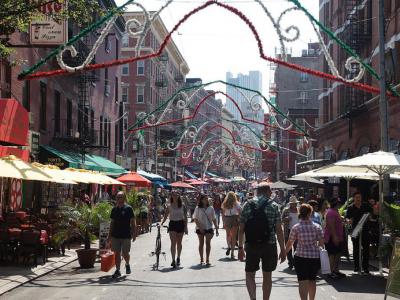
Mulberry Street, Little Italy’s main artery since the early 1900s, still feels like the neighborhood’s most relaxed stretch—a place where Italians from every corner of the city drift in for espresso, conversation, and a little people-watching. By day, it’s all cafés, social clubs, and street vendors slinging quick bites. By night, the lights flicker on, menus appear in the hands of very persuasive hosts, and suddenly the whole street acts like it’s auditioning for a movie set.
Speaking of movies, step onto the edge of the strip, and you’ll find Mulberry Street Bar, a place that’s been pouring drinks (and collecting stories) since 1908. Actors, mob bosses, and actors pretending to be mob bosses have all warmed its barstools. The wood is dark, the ceiling is tin, and the jukebox insists on Sinatra, The Four Tops, and Elvis—as it should. It’s been a backdrop for Donnie Brasco, Godfather III, The Sopranos, and other hit productions. Order a Peroni, settle in, and enjoy the atmosphere. Despite its résumé, you’re perfectly safe here—promise...
And if you prefer your dinner with a dash of mafia lore, Umberto’s Clam House is waiting. Slide into the last table in the back—the very spot where Italian-American mobster “Crazy Joe” Gallo met his fate in 1972. These days, the loudest thing in the room is the conversation, and the baked clams and linguine with white clam sauce are famous for far better reasons.
For something sweet, wander over to Caffé Roma, a cash-only institution dating back to 1891. The décor is charmingly old-school, the pastries are worth every calorie, and no one rushes you out the door. If you spot a free seat by the window, consider it an invitation from the dessert gods.
Then there’s Ferrara Bakery & Café, another Little Italy classic. Whether you’re craving a cappuccino, a cannoli, or something to smuggle home for later, you'll find it all here in abundance.
But when hunger returns, Sapori d’Italia offers cozy pasta and pizza indoors or breezy outdoor tables. And for a quick detour into Chinatown flavor, Tasty Dumpling serves some of the city’s best budget-friendly dumplings and a hot-and-sour soup that could convert anyone. Also note that, if you happen to arrive in mid-September, the 11-day Feast of San Gennaro turns Mulberry Street into a joyful festival of parades, music, rides, and food—lots of food...
Speaking of movies, step onto the edge of the strip, and you’ll find Mulberry Street Bar, a place that’s been pouring drinks (and collecting stories) since 1908. Actors, mob bosses, and actors pretending to be mob bosses have all warmed its barstools. The wood is dark, the ceiling is tin, and the jukebox insists on Sinatra, The Four Tops, and Elvis—as it should. It’s been a backdrop for Donnie Brasco, Godfather III, The Sopranos, and other hit productions. Order a Peroni, settle in, and enjoy the atmosphere. Despite its résumé, you’re perfectly safe here—promise...
And if you prefer your dinner with a dash of mafia lore, Umberto’s Clam House is waiting. Slide into the last table in the back—the very spot where Italian-American mobster “Crazy Joe” Gallo met his fate in 1972. These days, the loudest thing in the room is the conversation, and the baked clams and linguine with white clam sauce are famous for far better reasons.
For something sweet, wander over to Caffé Roma, a cash-only institution dating back to 1891. The décor is charmingly old-school, the pastries are worth every calorie, and no one rushes you out the door. If you spot a free seat by the window, consider it an invitation from the dessert gods.
Then there’s Ferrara Bakery & Café, another Little Italy classic. Whether you’re craving a cappuccino, a cannoli, or something to smuggle home for later, you'll find it all here in abundance.
But when hunger returns, Sapori d’Italia offers cozy pasta and pizza indoors or breezy outdoor tables. And for a quick detour into Chinatown flavor, Tasty Dumpling serves some of the city’s best budget-friendly dumplings and a hot-and-sour soup that could convert anyone. Also note that, if you happen to arrive in mid-September, the 11-day Feast of San Gennaro turns Mulberry Street into a joyful festival of parades, music, rides, and food—lots of food...
2) Canal Street
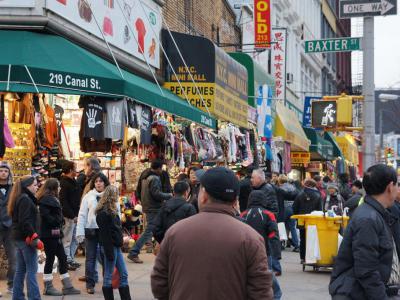
Roll the tape back to the 1980s, when Canal Street was every tinkerer’s paradise. Popular Electronics dropped its latest DIY project each month, and hobbyists would march straight here, list in hand, knowing they could find every resistor, capacitor, and mystery widget tucked into the cluttered counters of its electronics shops. Fast-forward a few decades, and the silicon dreamscape has given way to racks of industrial plastics and an impressive economy of knockoff handbags, fragrances, jewelry, watches, and designer fashions—almost all made in China and arriving by the container load.
Even with the tech era long gone, Canal Street still knows how to put on a show. Vendors line the sidewalks with coconut drinks, durian, vegetables, homemade noodles, and all kinds of Chinese snacks that perfume the air from one end to the Manhattan Bridge. Nearly every doorway is hiding something—sometimes a shop filled with handcrafted Asian ceramics, sometimes a tiny cash-only souvenir store where prices are a fraction of what you’d pay in Times Square. And since no merchant enjoys seeing a customer leave empty-handed, haggling isn’t just welcomed—it’s practically a local sport.
A few steps away, at 200 Canal Street, the NEW KAM MAN Supermarket (working from 9:30 a.m. to 7 p.m.) spreads out across three floors of temptation. Groceries, pottery, cast-iron teapots, chopsticks, Japanese lunch boxes, cosmetics, teas, herbs—you name it. And up on the renovated upper level, Hello Kitty has staged a full takeover: stationery, trinkets, sake sets, skincare, blankets… essentially every cute object known to humankind.
Food lovers won’t go hungry, either. Canal Street and its side streets hold a dense constellation of eateries—mostly Cantonese, with plenty of regional outliers—some of them incredibly good, almost all of them reasonably priced.
And one more note: those whispered offers for “special” watches and handbags are totally normal here. If you’re hunting for a knockoff of a $1,200 bag—sometimes impressively close to the real thing, sometimes not so much—you’ll find options from $20 to $150. Deals happen in doorways, alleys, and side corners. It’s not dangerous; it’s just Canal Street doing what Canal Street does best: running an underground market in broad daylight...
Even with the tech era long gone, Canal Street still knows how to put on a show. Vendors line the sidewalks with coconut drinks, durian, vegetables, homemade noodles, and all kinds of Chinese snacks that perfume the air from one end to the Manhattan Bridge. Nearly every doorway is hiding something—sometimes a shop filled with handcrafted Asian ceramics, sometimes a tiny cash-only souvenir store where prices are a fraction of what you’d pay in Times Square. And since no merchant enjoys seeing a customer leave empty-handed, haggling isn’t just welcomed—it’s practically a local sport.
A few steps away, at 200 Canal Street, the NEW KAM MAN Supermarket (working from 9:30 a.m. to 7 p.m.) spreads out across three floors of temptation. Groceries, pottery, cast-iron teapots, chopsticks, Japanese lunch boxes, cosmetics, teas, herbs—you name it. And up on the renovated upper level, Hello Kitty has staged a full takeover: stationery, trinkets, sake sets, skincare, blankets… essentially every cute object known to humankind.
Food lovers won’t go hungry, either. Canal Street and its side streets hold a dense constellation of eateries—mostly Cantonese, with plenty of regional outliers—some of them incredibly good, almost all of them reasonably priced.
And one more note: those whispered offers for “special” watches and handbags are totally normal here. If you’re hunting for a knockoff of a $1,200 bag—sometimes impressively close to the real thing, sometimes not so much—you’ll find options from $20 to $150. Deals happen in doorways, alleys, and side corners. It’s not dangerous; it’s just Canal Street doing what Canal Street does best: running an underground market in broad daylight...
3) Columbus Park
If you ever wanted to stand on a piece of ground that’s seen the full sweep of New York drama—from notorious slum to tai-chi paradise—Columbus Park is the place. Sitting at the southern edge of Chinatown, this patch of green once formed the beating, chaotic heart of the legendary Five Points district, the 19th-century neighborhood infamous for its overcrowded tenements, poverty, crime, and unsanitary conditions. Its reputation traveled far and wide, helped along by reformers, scandal-hungry journalists, and, much later, Martin Scorsese’s “Gangs of New York” movie.
Back in the mid-1800s, Five Points was the city’s favorite cautionary tale. Moral crusaders declared it a breeding ground for everything that could go wrong in a booming metropolis, and their complaints eventually pushed officials into action. What followed was a slow, stubborn battle to clear out the worst of the tenements and replace them with fresh air, sunlight, and something resembling order. In the 1890s, the city brought in Calvert Vaux—the same mind who co-designed Central Park—to re-imagine the space. His plan introduced greenery, light, and open areas as antidotes to the district’s former density and chaos. When Mulberry Bend Park opened in 1897, New York finally closed the chapter on Five Points’ notorious past.
By 1911, the park gained a new name—Columbus Park—thanks to a wave of early-20th-century enthusiasm for national heroes. But the surrounding streets were already rewriting themselves. Chinese immigrants were steadily reshaping Lower Manhattan, and before long, the park slipped naturally into its new role as the neighborhood's outdoor living room.
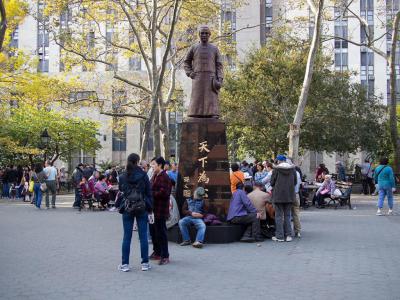
Today, Columbus Park feels like Chinatown in miniature. Early mornings bring calm tai-chi routines and the sound of traditional instruments warming up the day. Later, the atmosphere shifts to animated card games, spirited mahjong, and conversations that roll on for hours. Kids take over the playgrounds, athletes claim the courts, and everyone eventually passes by the statue of Sun Yat-sen standing dignified at the center of it all.
It may not be the largest park in the city, but few spots capture New York’s ability to reinvent itself quite so gracefully—from the grit of Five Points to the vibrant community rhythms of present-day Chinatown. If you want a quick dose of local life, this little green square delivers.
Back in the mid-1800s, Five Points was the city’s favorite cautionary tale. Moral crusaders declared it a breeding ground for everything that could go wrong in a booming metropolis, and their complaints eventually pushed officials into action. What followed was a slow, stubborn battle to clear out the worst of the tenements and replace them with fresh air, sunlight, and something resembling order. In the 1890s, the city brought in Calvert Vaux—the same mind who co-designed Central Park—to re-imagine the space. His plan introduced greenery, light, and open areas as antidotes to the district’s former density and chaos. When Mulberry Bend Park opened in 1897, New York finally closed the chapter on Five Points’ notorious past.
By 1911, the park gained a new name—Columbus Park—thanks to a wave of early-20th-century enthusiasm for national heroes. But the surrounding streets were already rewriting themselves. Chinese immigrants were steadily reshaping Lower Manhattan, and before long, the park slipped naturally into its new role as the neighborhood's outdoor living room.
Today, Columbus Park feels like Chinatown in miniature. Early mornings bring calm tai-chi routines and the sound of traditional instruments warming up the day. Later, the atmosphere shifts to animated card games, spirited mahjong, and conversations that roll on for hours. Kids take over the playgrounds, athletes claim the courts, and everyone eventually passes by the statue of Sun Yat-sen standing dignified at the center of it all.
It may not be the largest park in the city, but few spots capture New York’s ability to reinvent itself quite so gracefully—from the grit of Five Points to the vibrant community rhythms of present-day Chinatown. If you want a quick dose of local life, this little green square delivers.
4) Bayard Street
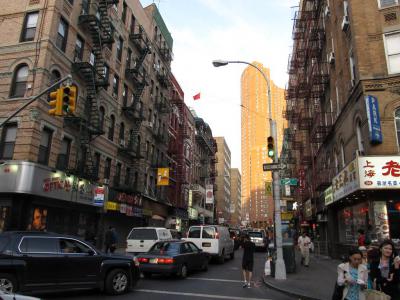
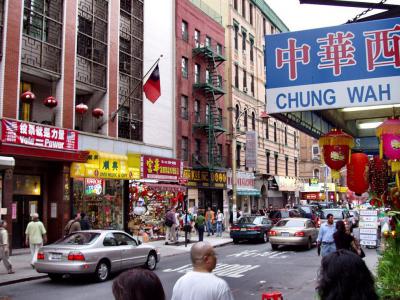
Sliding into Bayard Street, you’ll notice right away—it doesn’t try to hide its identity but leans boldly into its Chinese roots. With steam, aromas, and neon drifting through the air, the whole place feels like someone picked up a Hong Kong side street and gently placed it in Lower Manhattan. Down at street level, fish markets, bakeries, and tiny restaurants compete for your attention; above them, walk-up apartments house multi-generation families whose stories stretch back to southern China and Hong Kong.
Keep moving, and you’ll eventually spot a small crowd doing the universal sign for “this is the place”—eating ice cream directly on the sidewalk. That’s your cue: you’ve reached the Chinatown Ice Cream Factory. This family-run shop has been scooping happiness for more than three decades, offering flavors that are creamy, silky, and just adventurous enough to make you wonder why you ever settled for vanilla. Arrive before the big rush, and you might snag samples of Ginger, Durian, Green Tea, Egg Custard, Black Sesame, or the ever-beloved Lychee. Choose wisely—or do what most people do and pretend you’ll only try one...
Once you escape the gravitational pull of the ice cream line, glance across the street at Mei Li Wah, the kingdom of steamed buns. They churn out warm, fluffy pockets filled with pork, chicken, pineapple, egg yolk—you name it. Most customers grab a bag and eat as they wander, but you can also sit down and point at the gigantic wall photos if decision-making isn’t your strong suit. Be patient if the trays are empty; locals sometimes buy buns in bulk, and the staff works at a pace that means business.
Before you leave the area behind, pause at the corner of Bayard and Mott. Here, Sun’s Organic Garden offers shelves of fragrant teas, with shopkeepers happy to steer you toward something soothing, energizing, or simply intriguing. Whether you’re after a gentle jasmine or a bold oolong, they’ll help you find your perfect cup before you continue your Chinatown adventure.
Keep moving, and you’ll eventually spot a small crowd doing the universal sign for “this is the place”—eating ice cream directly on the sidewalk. That’s your cue: you’ve reached the Chinatown Ice Cream Factory. This family-run shop has been scooping happiness for more than three decades, offering flavors that are creamy, silky, and just adventurous enough to make you wonder why you ever settled for vanilla. Arrive before the big rush, and you might snag samples of Ginger, Durian, Green Tea, Egg Custard, Black Sesame, or the ever-beloved Lychee. Choose wisely—or do what most people do and pretend you’ll only try one...
Once you escape the gravitational pull of the ice cream line, glance across the street at Mei Li Wah, the kingdom of steamed buns. They churn out warm, fluffy pockets filled with pork, chicken, pineapple, egg yolk—you name it. Most customers grab a bag and eat as they wander, but you can also sit down and point at the gigantic wall photos if decision-making isn’t your strong suit. Be patient if the trays are empty; locals sometimes buy buns in bulk, and the staff works at a pace that means business.
Before you leave the area behind, pause at the corner of Bayard and Mott. Here, Sun’s Organic Garden offers shelves of fragrant teas, with shopkeepers happy to steer you toward something soothing, energizing, or simply intriguing. Whether you’re after a gentle jasmine or a bold oolong, they’ll help you find your perfect cup before you continue your Chinatown adventure.
5) Mott Street
In a way, Mott Street can be regarded as Chinatown’s greatest hits album: all the flavors, colors, and characters packed into one compact stretch. For visitors, it’s a buffet of everything you came for—steaming dumplings, crowded fish markets, bargain-packed gift shops, tea houses that smell like comfort, and jewelry stores that sparkle suspiciously close to payday. And tucked between all that, you still find a few stubborn Italian holdouts from the neighborhood's earlier era, adding their own charm to the mix.
For locals, though, Mott Street isn’t a sightseeing list—it’s the front porch. More than a century after the first Chinese families arrived, this street still functions as a genuine community, not just a themed backdrop. Kids grow up here, grandparents trade news on the sidewalk, and generations layer their stories into the brickwork.
Now, about the food—because let’s be honest, this is why most people end up here. Make your way to WO HOP on the south end of Mott. The place is practically a rite of passage: open until 4:30 a.m., blissfully unfussy, and split into two worlds—the “new” upstairs with booths and the “classic” downstairs with plain tables that look like they’ve heard some serious late-night confessions. The menu reads like a greatest-hits playlist of Chinese comfort dishes. Go for the house special fried rice or the shrimp in lobster sauce. Portions are big enough to feed your future self.
Keep moving north to Grand Street, and suddenly you’re in vegetable paradise—row after row of fresh produce priced so attractively you’ll consider picking up ingredients you can’t even identify. Then there’s DI PALO’S FINE FOODS, an Italian family institution representing all 20 regions of Italy with cheeses, meats, olive oils, and vinegars that could start an argument on their own. The staff offers generous guidance and samples, and yes, they’ll even ship your discoveries to friends in other states.
As you wander these streets, look up from time to time. Many buildings still wear delicate Eastern design touches—sunbursts, swirls, shells, even expressive faces—all quiet reminders of the cultures that have shaped this neighborhood, one generation after another...
For locals, though, Mott Street isn’t a sightseeing list—it’s the front porch. More than a century after the first Chinese families arrived, this street still functions as a genuine community, not just a themed backdrop. Kids grow up here, grandparents trade news on the sidewalk, and generations layer their stories into the brickwork.
Now, about the food—because let’s be honest, this is why most people end up here. Make your way to WO HOP on the south end of Mott. The place is practically a rite of passage: open until 4:30 a.m., blissfully unfussy, and split into two worlds—the “new” upstairs with booths and the “classic” downstairs with plain tables that look like they’ve heard some serious late-night confessions. The menu reads like a greatest-hits playlist of Chinese comfort dishes. Go for the house special fried rice or the shrimp in lobster sauce. Portions are big enough to feed your future self.
Keep moving north to Grand Street, and suddenly you’re in vegetable paradise—row after row of fresh produce priced so attractively you’ll consider picking up ingredients you can’t even identify. Then there’s DI PALO’S FINE FOODS, an Italian family institution representing all 20 regions of Italy with cheeses, meats, olive oils, and vinegars that could start an argument on their own. The staff offers generous guidance and samples, and yes, they’ll even ship your discoveries to friends in other states.
As you wander these streets, look up from time to time. Many buildings still wear delicate Eastern design touches—sunbursts, swirls, shells, even expressive faces—all quiet reminders of the cultures that have shaped this neighborhood, one generation after another...
6) Kimlau Square
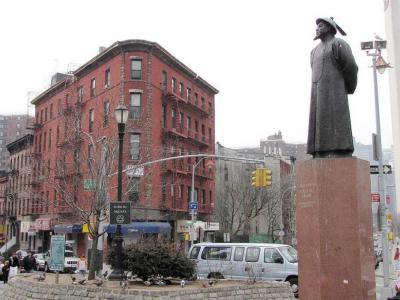
As you drift into what many New Yorkers casually call “Little China,” you’ll notice something: this neighborhood doesn’t grow in sudden leaps—it expands like a slow but determined tide, inching toward the Manhattan Bridge and pushing eastward to a crossroads that could give a GPS a nervous breakdown. That chaotic starburst of streets is Kimlau Square, and right in the middle of it stands the Kim Lau Arch. It’s named after a New York–raised Chinese-American airman who died heroically in World War II. But the memorial honors all Chinese who served the nation—stretching back to the laborers who laid the tracks of America’s coast-to-coast railroads.
A few steps away, the mood shifts from military valor to imperial resolve. Here, you’ll find the statue of Lin Zexu, the Qing Dynasty official, who famously tried to save China from the swelling opium trade and British interference. He pushed so hard for reform that he managed to kick off the First Opium War—proof that even good intentions can light historical fireworks. When the statue arrived in the 1990s, The New York Times noted it carried more than just an anti-drug message. It also reflected a shifting balance of power within Chinatown, as newcomers from mainland China—especially the Fujianese—were gaining influence over the older Cantonese community.
Continue east along Division Street, and you’ll reach Confucius Plaza, a 1970s residential complex that still counts as prime real estate by neighborhood standards. Its bronze statue of Confucius, installed in 1976, watches over the square with the calm patience of someone who has seen centuries of human chaos. For locals, it’s not just decoration; it’s a gathering place, a landmark, and a reminder that wisdom is always welcome—especially in a neighborhood where the streets meet at angles no philosopher ever planned for...
A few steps away, the mood shifts from military valor to imperial resolve. Here, you’ll find the statue of Lin Zexu, the Qing Dynasty official, who famously tried to save China from the swelling opium trade and British interference. He pushed so hard for reform that he managed to kick off the First Opium War—proof that even good intentions can light historical fireworks. When the statue arrived in the 1990s, The New York Times noted it carried more than just an anti-drug message. It also reflected a shifting balance of power within Chinatown, as newcomers from mainland China—especially the Fujianese—were gaining influence over the older Cantonese community.
Continue east along Division Street, and you’ll reach Confucius Plaza, a 1970s residential complex that still counts as prime real estate by neighborhood standards. Its bronze statue of Confucius, installed in 1976, watches over the square with the calm patience of someone who has seen centuries of human chaos. For locals, it’s not just decoration; it’s a gathering place, a landmark, and a reminder that wisdom is always welcome—especially in a neighborhood where the streets meet at angles no philosopher ever planned for...
7) Mahayana Buddhist Temple
If you ever wondered where serenity manages to survive in the middle of Canal Street traffic, the Mahayana Buddhist Temple has the answer—quietly, patiently, and with a giant golden Buddha watching over the whole scene. This temple traces its story back to 1962, when the Lin family and a group of dedicated lay practitioners set up a small shrine for new arrivals from Hong Kong, Taiwan, and mainland China. At a time when Buddhist spaces in New York were scarce, their little temple became a lifeline of ritual, language, and community support.
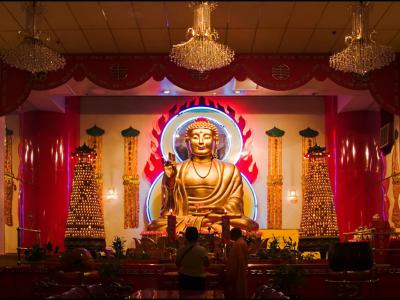
As Chinatown expanded, so did the temple’s ambitions. The modest early building gave way to the larger, more traditional-looking temple at 133 Canal Street, completed in 1997. From the outside, two golden lions stand guard—looking equally prepared to protect sacred teachings and judge your bubble tea choices... Once inside, the noise of the city drops away, replaced by a spacious hall glowing with color and dominated by a grand, golden seated Buddha (New York's largest) surrounded by bright murals.
Visitors will notice 32 plaques along the walls, each one illustrating a moment from the Buddha’s life, as if the temple decided to curate a spiritual storyboard. Signs encourage quiet respect, though you’ll also find gentle invitations to participate: lighting incense, observing rituals, or trying your luck with a fortune slip—available for a small donation ($1 is all they request) and a great sense of curiosity.
On Sundays, the temple hosts a public service from 10 a.m. to 2 p.m., which ends with a vegetarian lunch in the basement. Think of it as spiritual reflection followed by comforting home-style cooking. And if you feel inspired on your way out, the upstairs gift shop offers everything from devotional to non-religious items, both mass-produced and handmade crafts.
The Mahayana Buddhist Temple remains one of Chinatown’s most enduring cultural landmarks—a place where faith, art, and community meet under one gilded roof. It’s a gentle reminder that even in a neighborhood famous for its energy and noise, there’s always room for a moment of calm...
As Chinatown expanded, so did the temple’s ambitions. The modest early building gave way to the larger, more traditional-looking temple at 133 Canal Street, completed in 1997. From the outside, two golden lions stand guard—looking equally prepared to protect sacred teachings and judge your bubble tea choices... Once inside, the noise of the city drops away, replaced by a spacious hall glowing with color and dominated by a grand, golden seated Buddha (New York's largest) surrounded by bright murals.
Visitors will notice 32 plaques along the walls, each one illustrating a moment from the Buddha’s life, as if the temple decided to curate a spiritual storyboard. Signs encourage quiet respect, though you’ll also find gentle invitations to participate: lighting incense, observing rituals, or trying your luck with a fortune slip—available for a small donation ($1 is all they request) and a great sense of curiosity.
On Sundays, the temple hosts a public service from 10 a.m. to 2 p.m., which ends with a vegetarian lunch in the basement. Think of it as spiritual reflection followed by comforting home-style cooking. And if you feel inspired on your way out, the upstairs gift shop offers everything from devotional to non-religious items, both mass-produced and handmade crafts.
The Mahayana Buddhist Temple remains one of Chinatown’s most enduring cultural landmarks—a place where faith, art, and community meet under one gilded roof. It’s a gentle reminder that even in a neighborhood famous for its energy and noise, there’s always room for a moment of calm...
Walking Tours in New York, New York

Create Your Own Walk in New York
Creating your own self-guided walk in New York is easy and fun. Choose the city attractions that you want to see and a walk route map will be created just for you. You can even set your hotel as the start point of the walk.
Grand Central Station to Union Square
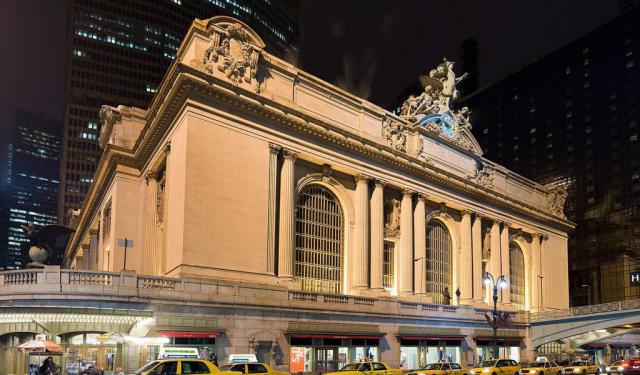
Despite being smaller than almost everything around it, including the humongous MetLife Building that dwarfs it from behind, the Grand Central Terminal is just so gorgeous and palatial-looking that it still manages to be the centerpiece of the whole East Side of Midtown Manhattan. Passing from here to Union Square, our self-guided tour is bound to introduce you to some of New York City’s most... view more
Tour Duration: 2 Hour(s)
Travel Distance: 3.8 Km or 2.4 Miles
Tour Duration: 2 Hour(s)
Travel Distance: 3.8 Km or 2.4 Miles
George Washington's New York
While not really a New York fan himself, George Washington held the city in high esteem, calling it “a post of infinite importance,” and is even credited with coining the term “New Yorker”. The scene of some of Washington’s greatest military trials and political triumphs, NYC is a home to several important sites associated with his life and career, such as Fraunces Tavern, Bowling Green,... view more
Tour Duration: 1 Hour(s)
Travel Distance: 1.6 Km or 1 Miles
Tour Duration: 1 Hour(s)
Travel Distance: 1.6 Km or 1 Miles
Midtown Manhattan Walking Tour
If you’ve ever pictured New York City as a canyon of skyscrapers, glowing billboards, and streets that pulse with constant activity, Midtown Manhattan is the version you likely imagined. Hard to believe, but this buzzing district started out as open farmland—proof that even the busiest corners of the world have humble beginnings... Everything changed after the Commissioners’ Plan of 1811... view more
Tour Duration: 2 Hour(s)
Travel Distance: 4.1 Km or 2.5 Miles
Tour Duration: 2 Hour(s)
Travel Distance: 4.1 Km or 2.5 Miles
Times Square to Central Park
A leisurely self-guided stroll from Times Square to Central Park will take you to some of NYC’s prominent locations, each worth visiting in their own right.
At 49th Street, Fifth Avenue lives up to its lofty reputation with the Rockefeller Center, one of the world’s biggest business and entertainment complexes, and a triumph of Art Deco architecture. Like the neighboring Times Square, the... view more
Tour Duration: 2 Hour(s)
Travel Distance: 3.2 Km or 2 Miles
At 49th Street, Fifth Avenue lives up to its lofty reputation with the Rockefeller Center, one of the world’s biggest business and entertainment complexes, and a triumph of Art Deco architecture. Like the neighboring Times Square, the... view more
Tour Duration: 2 Hour(s)
Travel Distance: 3.2 Km or 2 Miles
NYC Greenwich Village Walking Tour
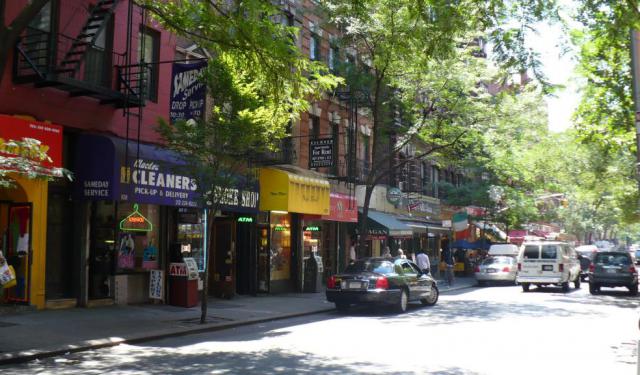
Seeing Manhattan as a neatly pressed suit, one can easily imagine Greenwich Village as the shirt stubbornly refusing to stay tucked in. Its tree-lined streets, classic brownstones, and endless supply of cafés, jazz clubs, and Off-Broadway theaters have lured generations of writers, poets, artists, radicals, and runaways looking for a life less ordinary. This reputation was cemented in the... view more
Tour Duration: 1 Hour(s)
Travel Distance: 2.2 Km or 1.4 Miles
Tour Duration: 1 Hour(s)
Travel Distance: 2.2 Km or 1.4 Miles
NYC Top Religious Sites Walking Tour
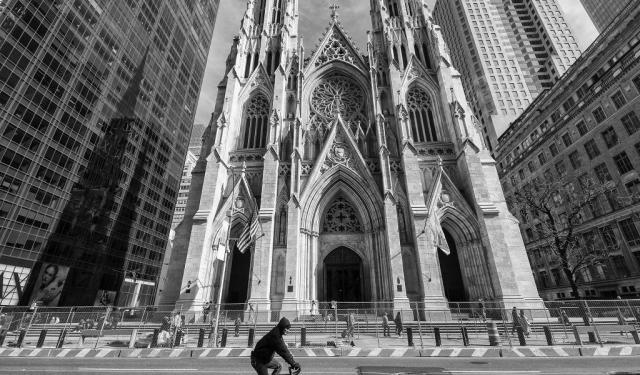
Other than high-risers, New York City is also famous for the variety of beautiful places of worship renowned for their architectural splendor. After 1830, inspired by a love for all things medieval imported from England, the Gothic style developed in the metropolis, as first illustrated by the Grace Church (1846). The best example of this style, however, remains St Patrick’s Cathedral, which... view more
Tour Duration: 3 Hour(s)
Travel Distance: 7.0 Km or 4.3 Miles
Tour Duration: 3 Hour(s)
Travel Distance: 7.0 Km or 4.3 Miles
Useful Travel Guides for Planning Your Trip
NYC Souvenir Guide: 15 Authentic New York City Products to Take Home
In keeping with the song, one might think that, if they can make it in New York City, they can make it anywhere. Well, not always... Some of the things made in New York City aren't made anywhere else, and you'll definitely want to try or keep at least some of them to prolong your NYC...
NYC Beer Tour
There are many great places to drink in New York City. Still, discerning connoisseurs are likely to find themselves awash in a sea of mediocre beer without first gaining a proper lay of the beer land. For those whose curiosity and taste buds urge them to venture beyond ubiquitious draft staples like...
Bar Tour of Lower East Side, New York City
The Lower East Side has been described the most livable neighborhood in NYC. Unique and dynamic, LES has boutique shops, cafes and restaurants alongside great bars and museums.In this historic neighborhood, residents strive to preserve its roots. Here, you can find young professionals who challenge...
7 Best Drinking Places in Upper West Side, NY
With “Bar Tour of the Upper West Side” sample a cross section from NYC’s great gamut of drinking establishments, including a Belgian Brasserie, a wine bar, Irish pubs, and one dive — just for fun! These spots offer something a little extra, like craft beers, inspirational artwork, a chance...
NY Villages Best Tea and Coffee
This is a guide to the best tea and coffee shops and houses in the East, West, Washington Square and Greenwich Villages of Manhattan. None of these are chains, so tourists looking to avoid Starbucks can find sanctuary in this app. All of these run the gamut between W and E 14th Streets, and down 1st...
The Most Popular Cities
/ view all