

Brooklyn New York Walking Tour (Self Guided), New York
The story of Brooklyn predates the brownstones and bagels. The area's earliest known inhabitants were the Lenape, the Indigenous tribe also known as the Delaware, who lived along the shores of the East River and Gowanus Bay long before Europeans discovered the uses of potatoes...
The Dutch, who arrived during the 17th century, established several farming villages here, naming one of them Breuckelen. The name stuck (even if the Dutch wooden shoes didn’t). Those early settlements stayed charmingly rural throughout the colonial period, gradually forming a patchwork of towns that spread across the western tip of Long Island. Brooklyn Heights, founded in 1646, was one of the earliest centers of this development.
Skip forward to the early 1800s, when industry, immigration, and constant interaction with Manhattan across the river started pushing Brooklyn toward big-city status. The real plot twist came in 1883 with the arrival of the Brooklyn Bridge—an engineering marvel that didn’t connect merely two shorelines but two futures. By 1898, Brooklyn had officially joined New York City, and its old City Hall gracefully accepted a “promotion” to Brooklyn Borough Hall.
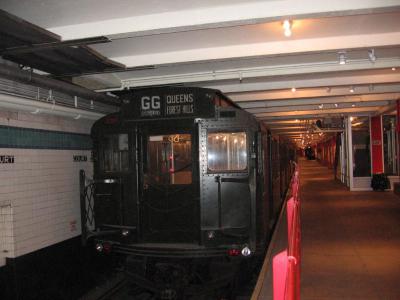
As the borough expanded, so did its infrastructure. The New York Transit Museum, housed in a 1936 decommissioned subway station, preserves the story of the city’s transportation system, which helped knit together Brooklyn’s diverse neighborhoods.
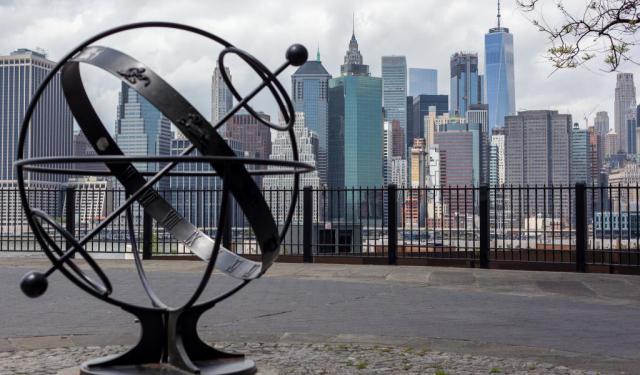
Still, the borough didn’t grow on infrastructure alone. Social and spiritual energy powered plenty of change. Plymouth Church, led by the charismatic Henry Ward Beecher, became a national abolitionist hotspot. Meanwhile, civic pride kept rising, too, eventually bringing to life the Brooklyn Heights Promenade, a mid-20th-century gift that lets everyone enjoy postcard views of the Harbor, the Brooklyn Bridge, and Manhattan’s skyline—all without taking a single ferry.
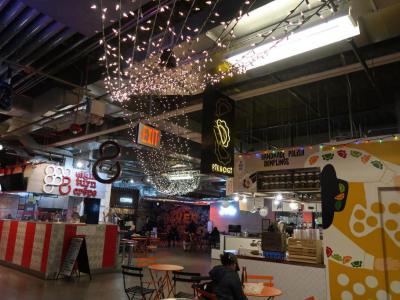
The Dekalb Market Hall reflects a more contemporary phase of reinvention, transforming a Downtown Brooklyn space into a bustling culinary hall that echoes the borough’s long-standing cultural diversity.
Today, Brooklyn thrives on creativity and the kind of variety that makes every neighborhood feel like its own micro-planet. Its old Dutch motto—“Unity makes strength”—still hits the mark. And after a 21st-century wave of revival, reinvention, and the occasional hipster beard oil, Brooklyn continues to prove that transformation isn’t just a phase here; it’s the borough’s permanent way of life...
The Dutch, who arrived during the 17th century, established several farming villages here, naming one of them Breuckelen. The name stuck (even if the Dutch wooden shoes didn’t). Those early settlements stayed charmingly rural throughout the colonial period, gradually forming a patchwork of towns that spread across the western tip of Long Island. Brooklyn Heights, founded in 1646, was one of the earliest centers of this development.
Skip forward to the early 1800s, when industry, immigration, and constant interaction with Manhattan across the river started pushing Brooklyn toward big-city status. The real plot twist came in 1883 with the arrival of the Brooklyn Bridge—an engineering marvel that didn’t connect merely two shorelines but two futures. By 1898, Brooklyn had officially joined New York City, and its old City Hall gracefully accepted a “promotion” to Brooklyn Borough Hall.
As the borough expanded, so did its infrastructure. The New York Transit Museum, housed in a 1936 decommissioned subway station, preserves the story of the city’s transportation system, which helped knit together Brooklyn’s diverse neighborhoods.
Still, the borough didn’t grow on infrastructure alone. Social and spiritual energy powered plenty of change. Plymouth Church, led by the charismatic Henry Ward Beecher, became a national abolitionist hotspot. Meanwhile, civic pride kept rising, too, eventually bringing to life the Brooklyn Heights Promenade, a mid-20th-century gift that lets everyone enjoy postcard views of the Harbor, the Brooklyn Bridge, and Manhattan’s skyline—all without taking a single ferry.
The Dekalb Market Hall reflects a more contemporary phase of reinvention, transforming a Downtown Brooklyn space into a bustling culinary hall that echoes the borough’s long-standing cultural diversity.
Today, Brooklyn thrives on creativity and the kind of variety that makes every neighborhood feel like its own micro-planet. Its old Dutch motto—“Unity makes strength”—still hits the mark. And after a 21st-century wave of revival, reinvention, and the occasional hipster beard oil, Brooklyn continues to prove that transformation isn’t just a phase here; it’s the borough’s permanent way of life...
How it works: Download the app "GPSmyCity: Walks in 1K+ Cities" from Apple App Store or Google Play Store to your mobile phone or tablet. The app turns your mobile device into a personal tour guide and its built-in GPS navigation functions guide you from one tour stop to next. The app works offline, so no data plan is needed when traveling abroad.
Brooklyn New York Walking Tour Map
Guide Name: Brooklyn New York Walking Tour
Guide Location: USA » New York (See other walking tours in New York)
Guide Type: Self-guided Walking Tour (Sightseeing)
# of Attractions: 6
Tour Duration: 2 Hour(s)
Travel Distance: 3.9 Km or 2.4 Miles
Author: doris
Sight(s) Featured in This Guide:
Guide Location: USA » New York (See other walking tours in New York)
Guide Type: Self-guided Walking Tour (Sightseeing)
# of Attractions: 6
Tour Duration: 2 Hour(s)
Travel Distance: 3.9 Km or 2.4 Miles
Author: doris
Sight(s) Featured in This Guide:
- Brooklyn Bridge
- Plymouth Church
- Brooklyn Heights Promenade
- Brooklyn Borough Hall
- New York Transit Museum
- Dekalb Market Hall at Brooklyn Downtown
1) Brooklyn Bridge (must see)
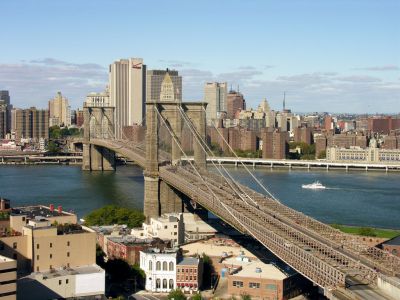
Seeking the most dramatic entrance into Manhattan?—The Brooklyn Bridge is the one. Stretching across the East River like a steel-wire tightrope for giants, this is one of New York’s most recognizable silhouettes since 1883—equal parts engineering flex and architectural poetry. The country took notice of it rather early, awarding the bridge the National Historic Landmark status in 1964, following which, civil engineers gave it their own stamp of admiration (as a National Historic Civil Engineering Landmark) in 1972.
The idea of linking Brooklyn and Manhattan had been floating around since the early 1800s, but it took the engineering duo—of John Augustus Roebling with the design, and his son Washington with the execution—to actually make it happen. Construction kicked off in 1869, and after fourteen ambitious, chaotic, and occasionally hazardous years, the bridge finally opened on May 24, 1883. President Chester A. Arthur even showed up for the ceremony, thus proving that ribbon-cuttings were the hot ticket long before Instagram...
Architecturally, the bridge is a hybrid marvel: part suspension bridge, part cable-stayed experiment, all held together by an orchestra of vertical and diagonal cables. Its stone towers, crowned with Neo-Gothic arches, rise from the river like a pair of cathedral doorways, guiding a roadway that stays well above passing ships thanks to long, raised viaducts.
The structure's numbers are just as solid. The main span clocks in at nearly 2,000 feet, the bridge itself expands and contracts by up to 16 inches, depending on the weather’s mood swings, and ships can glide under it with 127 feet of clearance to spare. Six trusses run beneath the roadway, while four enormous cables hold everything aloft—convincing evidence that 19th-century engineering was not messing around...
But the bridge saves its finest touch for people on foot. Eighteen feet above the cars is the elevated promenade, a wooden boardwalk divided down the middle, so cyclists and pedestrians can coexist in relative peace. Step onto it, and the city opens around you—skyline ahead, river below, and the gentle hum of New York all around. Indeed, it’s more than just a crossing, but a small, unforgettable performance...
The idea of linking Brooklyn and Manhattan had been floating around since the early 1800s, but it took the engineering duo—of John Augustus Roebling with the design, and his son Washington with the execution—to actually make it happen. Construction kicked off in 1869, and after fourteen ambitious, chaotic, and occasionally hazardous years, the bridge finally opened on May 24, 1883. President Chester A. Arthur even showed up for the ceremony, thus proving that ribbon-cuttings were the hot ticket long before Instagram...
Architecturally, the bridge is a hybrid marvel: part suspension bridge, part cable-stayed experiment, all held together by an orchestra of vertical and diagonal cables. Its stone towers, crowned with Neo-Gothic arches, rise from the river like a pair of cathedral doorways, guiding a roadway that stays well above passing ships thanks to long, raised viaducts.
The structure's numbers are just as solid. The main span clocks in at nearly 2,000 feet, the bridge itself expands and contracts by up to 16 inches, depending on the weather’s mood swings, and ships can glide under it with 127 feet of clearance to spare. Six trusses run beneath the roadway, while four enormous cables hold everything aloft—convincing evidence that 19th-century engineering was not messing around...
But the bridge saves its finest touch for people on foot. Eighteen feet above the cars is the elevated promenade, a wooden boardwalk divided down the middle, so cyclists and pedestrians can coexist in relative peace. Step onto it, and the city opens around you—skyline ahead, river below, and the gentle hum of New York all around. Indeed, it’s more than just a crossing, but a small, unforgettable performance...
2) Plymouth Church
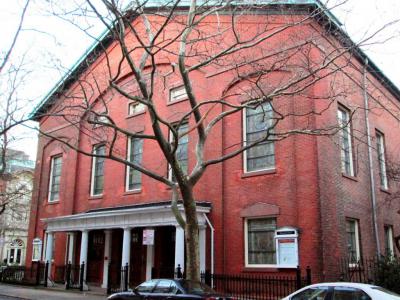
If Brooklyn Heights had a greatest-hits album, Plymouth Church would be right on track one. Built in 1849–50, this unassuming brick giant was designed by Joseph C. Wells—the very same Wells who later helped found the American Institute of Architects. At a glance, the place looks more like a 19th-century performance hall rather than a church, with its broad, barn-like interior and a sweeping arc of pews all aimed at the pulpit. And that was intentional. Plymouth Church was created to hold an audience—because its first pastor was Henry Ward Beecher, the era’s most electrifying abolitionist preacher.
Founded in 1847 by 21 New England transplants, the congregation formed around the reform-minded Tappan brothers, wealthy evangelical merchants who weren’t shy about stirring the pot. They purchased the site from the First Presbyterian Church, which had simply outgrown the spot and moved a few blocks away. The new owners had something very different in mind.
Beecher quickly turned Plymouth Church into a powerhouse of the anti-slavery movement. His sister, Harriet Beecher Stowe—coincidentally, the author of “Uncle Tom’s Cabin” novel—shared the family calling. Inside the church itself, history ran even deeper. The building’s tunnel-like basement became a hidden station on the so-called Underground Railroad (the one that secretly carried slaves from the South to Canada), thus earning the nickname “the Grand Central Depot” long before New York’s actual Grand Central existed...
And then there’s the Abraham Lincoln moment. In October 1859, the congregation invited the rising Illinois lawyer to Brooklyn on a promise to pay him $200. Lincoln showed up, attended Sunday service on February 26, 1860—there’s a plaque marking his pew—and the next day delivered his famous anti-slavery address to a packed house of 1,500 people. Eight months later, he was President.
Today, Plymouth Church sits comfortably within the Brooklyn Heights Historic District and holds both the National Register and the National Historic Landmark statuses. It’s still a place of worship, but its legacy stretches far beyond Sunday services. Being in a building that once doubled as a theater, a safehouse, a political stage, and a moral megaphone, you realize that history doesn’t always whisper. Sometimes, it preaches, too...
Founded in 1847 by 21 New England transplants, the congregation formed around the reform-minded Tappan brothers, wealthy evangelical merchants who weren’t shy about stirring the pot. They purchased the site from the First Presbyterian Church, which had simply outgrown the spot and moved a few blocks away. The new owners had something very different in mind.
Beecher quickly turned Plymouth Church into a powerhouse of the anti-slavery movement. His sister, Harriet Beecher Stowe—coincidentally, the author of “Uncle Tom’s Cabin” novel—shared the family calling. Inside the church itself, history ran even deeper. The building’s tunnel-like basement became a hidden station on the so-called Underground Railroad (the one that secretly carried slaves from the South to Canada), thus earning the nickname “the Grand Central Depot” long before New York’s actual Grand Central existed...
And then there’s the Abraham Lincoln moment. In October 1859, the congregation invited the rising Illinois lawyer to Brooklyn on a promise to pay him $200. Lincoln showed up, attended Sunday service on February 26, 1860—there’s a plaque marking his pew—and the next day delivered his famous anti-slavery address to a packed house of 1,500 people. Eight months later, he was President.
Today, Plymouth Church sits comfortably within the Brooklyn Heights Historic District and holds both the National Register and the National Historic Landmark statuses. It’s still a place of worship, but its legacy stretches far beyond Sunday services. Being in a building that once doubled as a theater, a safehouse, a political stage, and a moral megaphone, you realize that history doesn’t always whisper. Sometimes, it preaches, too...
3) Brooklyn Heights Promenade
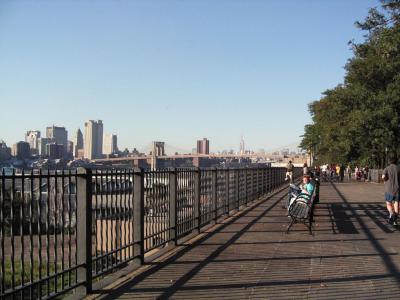
The Brooklyn Heights Promenade—locals call it the Esplanade, but you can think of it as New York’s front-row balcony that serves up some of the most jaw-dropping views in the city. From here, the Manhattan skyline stretches out like it’s posing for a postcard, the East River glints below, and the Brooklyn Bridge and Brooklyn Bridge Park complete the scene like well-behaved supporting actors.
This lofty walkway owes its existence to one of the great plot twists in mid-20th-century urban planning. Back in the 1940s and ’50s, Robert Moses had a plan to drive the Brooklyn-Queens Expressway straight through the heart of Brooklyn Heights. The residents, not thrilled at the idea of a roaring highway replacing their 19th-century streets, pushed back—loudly. What followed was a negotiation worthy of a city-planning soap opera, ending with a creative solution: a triple-decked cantilever built into the bluff, with the highway hidden below and a pedestrian oasis placed proudly on top.
When the Promenade opened in 1950, Brooklyn Heights gained a new best friend. Elevated above the harbor, it quickly became the ideal spot for soaking in Lower Manhattan, Governors Island, and the river crossings that stitch the city together. Benches, trees, and a generous walkway softened the scene, creating a calm strip of waterfront serenity floating above the traffic humming below.
In 1965, the area became New York’s very first landmarked historic district, and the Promenade hasn’t stopped showing off since. It’s appeared in films, travel photos, and more “best views” lists than it can probably count. And just like in its early days, the community still keeps an eye on it—especially as debates over the aging Brooklyn-Queens Expressway stir up fresh questions about the future of the structure beneath your feet.
Stretching nearly two thousand feet, the Promenade is an easy, breezy stroll. The benches are often filled with people reading, sipping coffee, or pretending not to be taking dozens of skyline photos. And despite the expressway below, the atmosphere remains surprisingly peaceful—a perfect balance of city energy and Brooklyn calm.
Today, the Brooklyn Heights Promenade stands as a vivid example that, when New Yorkers band together, even a highway can become a scenic overlook...
This lofty walkway owes its existence to one of the great plot twists in mid-20th-century urban planning. Back in the 1940s and ’50s, Robert Moses had a plan to drive the Brooklyn-Queens Expressway straight through the heart of Brooklyn Heights. The residents, not thrilled at the idea of a roaring highway replacing their 19th-century streets, pushed back—loudly. What followed was a negotiation worthy of a city-planning soap opera, ending with a creative solution: a triple-decked cantilever built into the bluff, with the highway hidden below and a pedestrian oasis placed proudly on top.
When the Promenade opened in 1950, Brooklyn Heights gained a new best friend. Elevated above the harbor, it quickly became the ideal spot for soaking in Lower Manhattan, Governors Island, and the river crossings that stitch the city together. Benches, trees, and a generous walkway softened the scene, creating a calm strip of waterfront serenity floating above the traffic humming below.
In 1965, the area became New York’s very first landmarked historic district, and the Promenade hasn’t stopped showing off since. It’s appeared in films, travel photos, and more “best views” lists than it can probably count. And just like in its early days, the community still keeps an eye on it—especially as debates over the aging Brooklyn-Queens Expressway stir up fresh questions about the future of the structure beneath your feet.
Stretching nearly two thousand feet, the Promenade is an easy, breezy stroll. The benches are often filled with people reading, sipping coffee, or pretending not to be taking dozens of skyline photos. And despite the expressway below, the atmosphere remains surprisingly peaceful—a perfect balance of city energy and Brooklyn calm.
Today, the Brooklyn Heights Promenade stands as a vivid example that, when New Yorkers band together, even a highway can become a scenic overlook...
4) Brooklyn Borough Hall
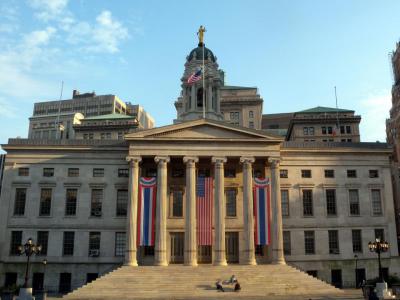
Brooklyn Borough Hall—the “founding father” Brooklyn clad in marble—is the borough’s oldest public building and the onetime nerve center of the independent City of Brooklyn. Back in the day, this place was practically a one-stop municipal universe. The mayor worked here, the City Council debated here, the courtroom kept order, and yes—even a jail was tucked inside. Early 19th-century efficiency: all your civic drama under one roof...
The mastermind behind all this was Gamaliel King, Brooklyn’s go-to architect for both grand government buildings and equally grand churches. He started making his mark in the 1820s and later designed standout structures like the 12th Street Reformed Church in Park Slope. Borough Hall was one of his boldest statements, wrapped in Greek Revival confidence and gleaming with Tuckahoe marble—a look that basically declared, “Yes, this is government, and yes, it’s impressive.”
By the time the 1980s rolled around, the building needed more than a little freshening up. So, Brooklyn gave it the architectural equivalent of a full spa treatment. Stonework was revived, the cupola got brand-new copper shingles, and the roof earned stainless-steel cladding worthy of a superhero suit. Even the statue of Virtue—planned in the original design but never executed—was finally brought to life using old sketches. The surrounding plaza was raised, a decorative iron fence installed, and historic-style lighting set the whole scene glowing again.
Today, Borough Hall still anchors Brooklyn’s Civic Center with all the gravitas of a seasoned statesman who’s aged remarkably well. It’s not just a relic of the borough’s past—it’s a polished reminder of Brooklyn’s civic pride, restored and ready for generations of admirers, gawkers, and history lovers alike.
The mastermind behind all this was Gamaliel King, Brooklyn’s go-to architect for both grand government buildings and equally grand churches. He started making his mark in the 1820s and later designed standout structures like the 12th Street Reformed Church in Park Slope. Borough Hall was one of his boldest statements, wrapped in Greek Revival confidence and gleaming with Tuckahoe marble—a look that basically declared, “Yes, this is government, and yes, it’s impressive.”
By the time the 1980s rolled around, the building needed more than a little freshening up. So, Brooklyn gave it the architectural equivalent of a full spa treatment. Stonework was revived, the cupola got brand-new copper shingles, and the roof earned stainless-steel cladding worthy of a superhero suit. Even the statue of Virtue—planned in the original design but never executed—was finally brought to life using old sketches. The surrounding plaza was raised, a decorative iron fence installed, and historic-style lighting set the whole scene glowing again.
Today, Borough Hall still anchors Brooklyn’s Civic Center with all the gravitas of a seasoned statesman who’s aged remarkably well. It’s not just a relic of the borough’s past—it’s a polished reminder of Brooklyn’s civic pride, restored and ready for generations of admirers, gawkers, and history lovers alike.
5) New York Transit Museum
Down on Schermerhorn Street—literally down—you’ll find the New York Transit Museum, tucked inside a bona fide 1936 subway station that hasn’t seen regular service in decades. Court Street Station may well be retired from the daily commute, but it’s been reborn as Brooklyn’s time capsule of buses, trains, and all things underground. If you’ve ever wondered what the city’s transit history looks like without someone pushing past you, this is the place.
The museum began life on July 4, 1976, as a temporary Bicentennial exhibit. The idea was simple: open for a couple of months, show off some preserved subway cars, and wrap things up after Labor Day. New Yorkers, however, had other plans. The exhibit turned into a hit, refused to fade away, and eventually became a permanent member of Brooklyn’s cultural line-up.
Walk down the station stairs, and you step straight into the wealth of transit heritage. Vintage subway cars stretch along the platform like they’re waiting for the next rush hour, complete with their original seats, signage, and that unmistakable “old train” charm. Alongside them, exhibits unpack how the city carved out its tunnel network, the workers who made it possible, and the street-level trolleys and buses that connected the whole system. Even everyday details—like ticket machines, fire hydrants, and decades-old metal signs—get their moment in the spotlight.
Up on the mezzanine, you’ll find rotating exhibits, a small screening room playing classic courtesy and safety campaigns, and a gift shop filled with transit-themed temptations. There are also restrooms, water fountains, and a bring-your-own-snack area for anyone who wants a break before diving back into New York’s subterranean past.
And here’s a seasonal perk: visit between Thanksgiving and New Year, and you might just catch the famous Nostalgia Train. It’s not a display—it actually runs. Climb aboard a 1930s R1/9 subway car, ride nine stops, and feel the city roll by the way it did nearly a century ago. It’s the rare moment on the subway when everyone onboard is actually smiling...
The museum began life on July 4, 1976, as a temporary Bicentennial exhibit. The idea was simple: open for a couple of months, show off some preserved subway cars, and wrap things up after Labor Day. New Yorkers, however, had other plans. The exhibit turned into a hit, refused to fade away, and eventually became a permanent member of Brooklyn’s cultural line-up.
Walk down the station stairs, and you step straight into the wealth of transit heritage. Vintage subway cars stretch along the platform like they’re waiting for the next rush hour, complete with their original seats, signage, and that unmistakable “old train” charm. Alongside them, exhibits unpack how the city carved out its tunnel network, the workers who made it possible, and the street-level trolleys and buses that connected the whole system. Even everyday details—like ticket machines, fire hydrants, and decades-old metal signs—get their moment in the spotlight.
Up on the mezzanine, you’ll find rotating exhibits, a small screening room playing classic courtesy and safety campaigns, and a gift shop filled with transit-themed temptations. There are also restrooms, water fountains, and a bring-your-own-snack area for anyone who wants a break before diving back into New York’s subterranean past.
And here’s a seasonal perk: visit between Thanksgiving and New Year, and you might just catch the famous Nostalgia Train. It’s not a display—it actually runs. Climb aboard a 1930s R1/9 subway car, ride nine stops, and feel the city roll by the way it did nearly a century ago. It’s the rare moment on the subway when everyone onboard is actually smiling...
6) Dekalb Market Hall at Brooklyn Downtown
In essence, DeKalb Market Hall is Brooklyn’s answer to Chelsea Market—only a little smaller, a little scrappier, and absolutely determined to out-flavor the rest of the country. Tucked inside the City Point complex in Downtown Brooklyn, it’s a sprawling underground playground where local vendors, regional favorites, and global comfort foods form one big culinary block party. The hardest part of visiting is deciding where to start...
Craving jerk chicken that means business? Easy. Feeling the magnetic pull of soft, pillowy steam buns? You have it. Maybe pierogi and kielbasa that taste like someone’s Polish grandmother is judging your posture while she cooks? They’ve got that too. And that’s before you even see the rest of the roster. With more than forty food stalls operating under one roof, DeKalb is less a food hall and more a flavor arena.
You’ll wander past ramen stations, noodle counters, dessert alcoves, a BBQ joint, a creamery, a cheesebar, Hawaiian comfort food, burgers of all temperaments, and a bar serving craft beer on tap and in cans. They even installed a Katz’s Delicatessen satellite here—perfect for anyone who wants the sandwich without pilgrimage to their Lower East Side crazy-busy original location.
And the perks don’t stop at eating. DeKalb throws in a full Trader Joe’s for post-feast foraging, plus daily programming with a show kitchen and a live-music stage that keeps the place humming. The lighting is cozy, the scale is pleasantly roomy, and a mix of sit-down restaurants and communal seating gives you plenty of territory to settle in.
In short, the atmosphere hits just right, the food lineup refuses to quit, and every appetite—be it carnivore, vegetarian, vegan, or undecided—gets a seat at the table. So, drop in and roam freely; your taste buds will handle the rest...
Craving jerk chicken that means business? Easy. Feeling the magnetic pull of soft, pillowy steam buns? You have it. Maybe pierogi and kielbasa that taste like someone’s Polish grandmother is judging your posture while she cooks? They’ve got that too. And that’s before you even see the rest of the roster. With more than forty food stalls operating under one roof, DeKalb is less a food hall and more a flavor arena.
You’ll wander past ramen stations, noodle counters, dessert alcoves, a BBQ joint, a creamery, a cheesebar, Hawaiian comfort food, burgers of all temperaments, and a bar serving craft beer on tap and in cans. They even installed a Katz’s Delicatessen satellite here—perfect for anyone who wants the sandwich without pilgrimage to their Lower East Side crazy-busy original location.
And the perks don’t stop at eating. DeKalb throws in a full Trader Joe’s for post-feast foraging, plus daily programming with a show kitchen and a live-music stage that keeps the place humming. The lighting is cozy, the scale is pleasantly roomy, and a mix of sit-down restaurants and communal seating gives you plenty of territory to settle in.
In short, the atmosphere hits just right, the food lineup refuses to quit, and every appetite—be it carnivore, vegetarian, vegan, or undecided—gets a seat at the table. So, drop in and roam freely; your taste buds will handle the rest...
Walking Tours in New York, New York

Create Your Own Walk in New York
Creating your own self-guided walk in New York is easy and fun. Choose the city attractions that you want to see and a walk route map will be created just for you. You can even set your hotel as the start point of the walk.
NYC Top Religious Sites Walking Tour
Other than high-risers, New York City is also famous for the variety of beautiful places of worship renowned for their architectural splendor. After 1830, inspired by a love for all things medieval imported from England, the Gothic style developed in the metropolis, as first illustrated by the Grace Church (1846). The best example of this style, however, remains St Patrick’s Cathedral, which... view more
Tour Duration: 3 Hour(s)
Travel Distance: 7.0 Km or 4.3 Miles
Tour Duration: 3 Hour(s)
Travel Distance: 7.0 Km or 4.3 Miles
Midtown Manhattan Walking Tour
If you’ve ever pictured New York City as a canyon of skyscrapers, glowing billboards, and streets that pulse with constant activity, Midtown Manhattan is the version you likely imagined. Hard to believe, but this buzzing district started out as open farmland—proof that even the busiest corners of the world have humble beginnings... Everything changed after the Commissioners’ Plan of 1811... view more
Tour Duration: 2 Hour(s)
Travel Distance: 4.1 Km or 2.5 Miles
Tour Duration: 2 Hour(s)
Travel Distance: 4.1 Km or 2.5 Miles
Grand Central Station to Union Square
Despite being smaller than almost everything around it, including the humongous MetLife Building that dwarfs it from behind, the Grand Central Terminal is just so gorgeous and palatial-looking that it still manages to be the centerpiece of the whole East Side of Midtown Manhattan. Passing from here to Union Square, our self-guided tour is bound to introduce you to some of New York City’s most... view more
Tour Duration: 2 Hour(s)
Travel Distance: 3.8 Km or 2.4 Miles
Tour Duration: 2 Hour(s)
Travel Distance: 3.8 Km or 2.4 Miles
NYC Greenwich Village Walking Tour
Seeing Manhattan as a neatly pressed suit, one can easily imagine Greenwich Village as the shirt stubbornly refusing to stay tucked in. Its tree-lined streets, classic brownstones, and endless supply of cafés, jazz clubs, and Off-Broadway theaters have lured generations of writers, poets, artists, radicals, and runaways looking for a life less ordinary. This reputation was cemented in the... view more
Tour Duration: 1 Hour(s)
Travel Distance: 2.2 Km or 1.4 Miles
Tour Duration: 1 Hour(s)
Travel Distance: 2.2 Km or 1.4 Miles
New York's Central Park Walking Tour
Arguably the most famous public park in the world today, Central Park has been called the lungs of New York City – literally “central”, it is where Manhattanites go to get a sense of space and air. Plan for at least half a day to wander along its many pathways, take a rowboat on the water, enjoy the landscaping and the numerous man-made wonders, spend some time at the zoo or bring a pair of... view more
Tour Duration: 3 Hour(s)
Travel Distance: 4.6 Km or 2.9 Miles
Tour Duration: 3 Hour(s)
Travel Distance: 4.6 Km or 2.9 Miles
Times Square to Central Park
A leisurely self-guided stroll from Times Square to Central Park will take you to some of NYC’s prominent locations, each worth visiting in their own right.
At 49th Street, Fifth Avenue lives up to its lofty reputation with the Rockefeller Center, one of the world’s biggest business and entertainment complexes, and a triumph of Art Deco architecture. Like the neighboring Times Square, the... view more
Tour Duration: 2 Hour(s)
Travel Distance: 3.2 Km or 2 Miles
At 49th Street, Fifth Avenue lives up to its lofty reputation with the Rockefeller Center, one of the world’s biggest business and entertainment complexes, and a triumph of Art Deco architecture. Like the neighboring Times Square, the... view more
Tour Duration: 2 Hour(s)
Travel Distance: 3.2 Km or 2 Miles
Useful Travel Guides for Planning Your Trip
7 Best Drinking Places in Upper West Side, NY
With “Bar Tour of the Upper West Side” sample a cross section from NYC’s great gamut of drinking establishments, including a Belgian Brasserie, a wine bar, Irish pubs, and one dive — just for fun! These spots offer something a little extra, like craft beers, inspirational artwork, a chance...
NYC Beer Tour
There are many great places to drink in New York City. Still, discerning connoisseurs are likely to find themselves awash in a sea of mediocre beer without first gaining a proper lay of the beer land. For those whose curiosity and taste buds urge them to venture beyond ubiquitious draft staples like...
Bar Tour of Lower East Side, New York City
The Lower East Side has been described the most livable neighborhood in NYC. Unique and dynamic, LES has boutique shops, cafes and restaurants alongside great bars and museums.In this historic neighborhood, residents strive to preserve its roots. Here, you can find young professionals who challenge...
NYC Souvenir Guide: 15 Authentic New York City Products to Take Home
In keeping with the song, one might think that, if they can make it in New York City, they can make it anywhere. Well, not always... Some of the things made in New York City aren't made anywhere else, and you'll definitely want to try or keep at least some of them to prolong your NYC...
NY Villages Best Tea and Coffee
This is a guide to the best tea and coffee shops and houses in the East, West, Washington Square and Greenwich Villages of Manhattan. None of these are chains, so tourists looking to avoid Starbucks can find sanctuary in this app. All of these run the gamut between W and E 14th Streets, and down 1st...
The Most Popular Cities
/ view all