Custom Walk in Lucca, Italy by freeze923_34a36 created on 2025-03-27
Guide Location: Italy » Lucca
Guide Type: Custom Walk
# of Sights: 15
Tour Duration: 2 Hour(s)
Travel Distance: 3.4 Km or 2.1 Miles
Share Key: HL73E
Guide Type: Custom Walk
# of Sights: 15
Tour Duration: 2 Hour(s)
Travel Distance: 3.4 Km or 2.1 Miles
Share Key: HL73E
How It Works
Please retrieve this walk in the GPSmyCity app. Once done, the app will guide you from one tour stop to the next as if you had a personal tour guide. If you created the walk on this website or come to the page via a link, please follow the instructions below to retrieve the walk in the app.
Retrieve This Walk in App
Step 1. Download the app "GPSmyCity: Walks in 1K+ Cities" on Apple App Store or Google Play Store.



Step 2. In the GPSmyCity app, download(or launch) the guide "Lucca Map and Walking Tours".
Step 3. Tap the menu button located at upper right corner of the "Walks" screen and select "Retrieve custom walk". Enter the share key: HL73E
1) Lucca Railway Station
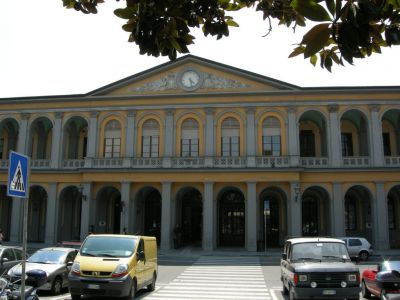
The Lucca Railway Station is the principal railway hub of the city of Lucca, located in the Tuscany region of central Italy. Opened on 29 September 1846, the station is an important stop along the Viareggio–Florence railway and serves as a junction for regional train lines connecting Pisa and Aulla. Despite its significance within Lucca, the most important railway station in the province is situated in Viareggio.
The station’s passenger building was designed by engineer Enrico Pohlmeyer, who was responsible for the general plan, and Lucchese architect Giuseppe Pardini, who created the architectural elevations. The resulting structure features an elegant and refined façade, adorned with a double row of arches that provide a sense of lightness to the building. Despite some modifications over the years, the station has retained its original 19th-century charm.
Historically, the square in front of the station served as the terminal for the Lucca–Ponte a Moriano tramway, operational from 1884 until its closure in 1932. The tramway's urban section utilized an underground gallery beneath the city walls, known as the Cairoli sortie, which remains visible today. Another tramway, the Lucca-Monsummano line, electrified and operating on a metric gauge track, had a stop near the station before being permanently decommissioned in 1957.
Recent developments include the construction of a new cycle-pedestrian underpass, initiated on 22 May 2023, to enhance connectivity between Piazzale Ricasoli and the station, improving pedestrian and cyclist safety and traffic flow. The Lucca Railway Station also offers a range of facilities, including a bar inside the building for travelers' convenience. Outside, designated areas for buses and taxi cabs ensure seamless connectivity with the rest of the city and surrounding regions.
The station’s passenger building was designed by engineer Enrico Pohlmeyer, who was responsible for the general plan, and Lucchese architect Giuseppe Pardini, who created the architectural elevations. The resulting structure features an elegant and refined façade, adorned with a double row of arches that provide a sense of lightness to the building. Despite some modifications over the years, the station has retained its original 19th-century charm.
Historically, the square in front of the station served as the terminal for the Lucca–Ponte a Moriano tramway, operational from 1884 until its closure in 1932. The tramway's urban section utilized an underground gallery beneath the city walls, known as the Cairoli sortie, which remains visible today. Another tramway, the Lucca-Monsummano line, electrified and operating on a metric gauge track, had a stop near the station before being permanently decommissioned in 1957.
Recent developments include the construction of a new cycle-pedestrian underpass, initiated on 22 May 2023, to enhance connectivity between Piazzale Ricasoli and the station, improving pedestrian and cyclist safety and traffic flow. The Lucca Railway Station also offers a range of facilities, including a bar inside the building for travelers' convenience. Outside, designated areas for buses and taxi cabs ensure seamless connectivity with the rest of the city and surrounding regions.
2) Lucca's City Walls (The Lucca Ramparts) (must see)
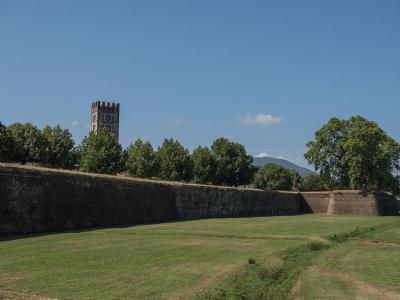
The first thing to notice as one approaches the city center of Lucca is the walls. They completely encircle the old town. In order to enter the old city, one must pass through one of the main ports, or gates. They are Porta Elisa, Porta San Donato, Porta San Jacabo, Porta Sangta Maria, Porta V. Emanuele or Porta San Pietro.
The midieval wall wraps around the old city for two and a half miles. It is the only complete and intact city wall left in Italy. Lucca has had three walls. The first was a Roman defensive wall that lasted to around 1000 AD. The second, medieval wall expanded to enclose the growing city. The last wall was built in the 16th and 17th centuries.
The final wall was made to repel raiders from Pisa and the quarrelsome Medicis of Florence. It was effective. Not even when the Medicis controlled the papacy could they control Lucca. The wall remains today as a reminder of Luchese independence. In 1860 Italy was unified and city walls became unnecessary. But Lucca insisted on keeping theirs.
The midieval wall wraps around the old city for two and a half miles. It is the only complete and intact city wall left in Italy. Lucca has had three walls. The first was a Roman defensive wall that lasted to around 1000 AD. The second, medieval wall expanded to enclose the growing city. The last wall was built in the 16th and 17th centuries.
The final wall was made to repel raiders from Pisa and the quarrelsome Medicis of Florence. It was effective. Not even when the Medicis controlled the papacy could they control Lucca. The wall remains today as a reminder of Luchese independence. In 1860 Italy was unified and city walls became unnecessary. But Lucca insisted on keeping theirs.
3) Duomo di San Martino (St. Martin's Cathedral) (must see)
It is said the Cathedral of Saint Martin was founded by San Frediano in the 6th century and rebuilt by Bishop Anselmo da Baggio in 1060. It came into its current form in the 12th and 13th centuries. Anselmo later became Pope Alexander II. In 1372, the apse of the church and the wall of the transept were completed. The style was Gothic.
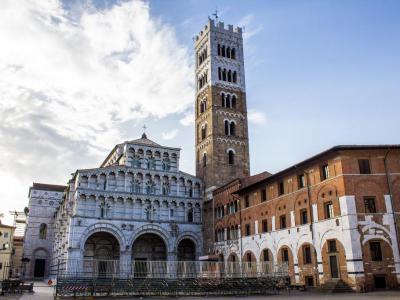
The facade of the church is in three great arches surmounted by three rows of galleries filled with sculptures. To the right of the facade is the bell tower. It has a four-sided base and five rows of windows divided by pilasters. The crown is made of Ghibeline merlons.
The interior is laid out in a Latin cross with three naves. The two side naves are topped by false galleries. The central nave is contained in a semicircular apse with three large Romanesque windows.
The left aisle has a small chapel holding the sacred relic, the Holy Face of Lucca. The relic is a wooden crucifix with the image of Christ, supposedly carved by Christ's contemporary Nicodemus. It is said to have suddenly appeared in Lucca in 742 AD. The chapel itself was built by Matteo Civitali in 1484. Civitali was a sculptor of Renaissance Lucca.
Off the sacristy is the funeral monument of Ilaria del Carretto, made by the sculptor Jacabo della Quercia. Ilaria was the wife of Paolo Guinigi, Lord of Lucca until 1430. The Lady Ilaria died very young. Her image depicts her lying on the sarcophagus as if asleep, her faithful dog at her feet. Her ghost is said to haunt the Guinigi tower at night.
The Cathedral is also famous for its long association with members of the Puccini family who moved to Lucca from the mountain village of Celle in 1719. Giacomo Puccini’s personal involvement with the Duomo began when he was sent here to attend a seminary school.
The Cathedral, at one time, was a home of two magnificent organs: one from the 15th century and the other from the 17th. Little remains of these instruments today but the gallery and frontal pipes are still visible. From the early 1870s, Puccini took part in the Festival of Santa Croce at the Cathedral, first as a boy singer, then as a member of the choir, and later as a deputy organist.
The facade of the church is in three great arches surmounted by three rows of galleries filled with sculptures. To the right of the facade is the bell tower. It has a four-sided base and five rows of windows divided by pilasters. The crown is made of Ghibeline merlons.
The interior is laid out in a Latin cross with three naves. The two side naves are topped by false galleries. The central nave is contained in a semicircular apse with three large Romanesque windows.
The left aisle has a small chapel holding the sacred relic, the Holy Face of Lucca. The relic is a wooden crucifix with the image of Christ, supposedly carved by Christ's contemporary Nicodemus. It is said to have suddenly appeared in Lucca in 742 AD. The chapel itself was built by Matteo Civitali in 1484. Civitali was a sculptor of Renaissance Lucca.
Off the sacristy is the funeral monument of Ilaria del Carretto, made by the sculptor Jacabo della Quercia. Ilaria was the wife of Paolo Guinigi, Lord of Lucca until 1430. The Lady Ilaria died very young. Her image depicts her lying on the sarcophagus as if asleep, her faithful dog at her feet. Her ghost is said to haunt the Guinigi tower at night.
The Cathedral is also famous for its long association with members of the Puccini family who moved to Lucca from the mountain village of Celle in 1719. Giacomo Puccini’s personal involvement with the Duomo began when he was sent here to attend a seminary school.
The Cathedral, at one time, was a home of two magnificent organs: one from the 15th century and the other from the 17th. Little remains of these instruments today but the gallery and frontal pipes are still visible. From the early 1870s, Puccini took part in the Festival of Santa Croce at the Cathedral, first as a boy singer, then as a member of the choir, and later as a deputy organist.
4) Church of San Giusto
The Church of San Giusto in Lucca is a striking example of medieval architecture, built in the second half of the 12th century over a pre-existing religious site. The church owes its name to Giustino Salce, a 12th-century Italian figure.
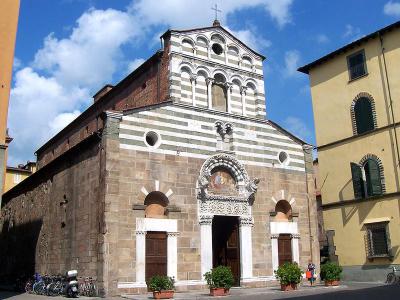
The façade is a masterpiece of Romanesque design, featuring a mixed decorative scheme. The upper part showcases alternating white and black marble stripes, forming two small superimposed loggias-a distinctive feature in Tuscan architecture. The central portal, crafted by Guidetto’s workshop, is particularly notable for its intricate sculptural details. Two twisting atlases (one now partly missing) support protruding lions flanking the lunette, while additional ornamentation includes vegetal motifs, fantastic creatures, and classical mascarons. The archivolt, echoing the upper façade with its black and white pattern, rests on two cubes adorned with masks of Classical origin.
The side portals are more restrained in decoration but maintain the elaborate capitals found in the central entrance. Above them, simple oculi provide balance, while the central doorway is crowned by a double-mullioned window. The apse's exterior features Lombard bands and two levels of single-mullioned windows, adding to the church’s rhythmic elegance.
The interior underwent significant modifications in the 17th century, embracing the Baroque style. However, in the early 20th century, efforts were made to strip away these later additions to restore the church’s presumed original medieval appearance. Fortunately, some elements of the Baroque period were preserved, reflecting a dialogue between historical layers.
A blend of Romanesque grandeur and Baroque refinement, San Giusto stands as a testament to Lucca’s architectural evolution, capturing the essence of its medieval and later artistic transformations.
The façade is a masterpiece of Romanesque design, featuring a mixed decorative scheme. The upper part showcases alternating white and black marble stripes, forming two small superimposed loggias-a distinctive feature in Tuscan architecture. The central portal, crafted by Guidetto’s workshop, is particularly notable for its intricate sculptural details. Two twisting atlases (one now partly missing) support protruding lions flanking the lunette, while additional ornamentation includes vegetal motifs, fantastic creatures, and classical mascarons. The archivolt, echoing the upper façade with its black and white pattern, rests on two cubes adorned with masks of Classical origin.
The side portals are more restrained in decoration but maintain the elaborate capitals found in the central entrance. Above them, simple oculi provide balance, while the central doorway is crowned by a double-mullioned window. The apse's exterior features Lombard bands and two levels of single-mullioned windows, adding to the church’s rhythmic elegance.
The interior underwent significant modifications in the 17th century, embracing the Baroque style. However, in the early 20th century, efforts were made to strip away these later additions to restore the church’s presumed original medieval appearance. Fortunately, some elements of the Baroque period were preserved, reflecting a dialogue between historical layers.
A blend of Romanesque grandeur and Baroque refinement, San Giusto stands as a testament to Lucca’s architectural evolution, capturing the essence of its medieval and later artistic transformations.
5) Palazzo Ducale (Palace of the Doges)
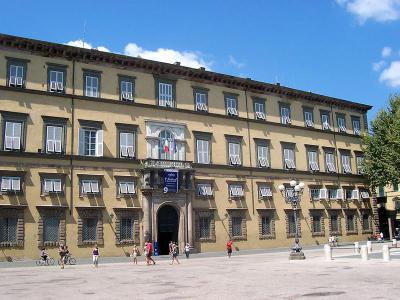
The Ducal Palace (Palazzo Ducale) stands as a testament to Lucca’s layered history, reflecting centuries of political shifts and architectural refinements. Located in the heart of the city, the palace occupies the former site of the Fortezza Augustan, once home to the feared condottiero Castruccio Castracani. His grand residence-perhaps designed by Giotto-was demolished in 1370 following a popular uprising.
The structure was later repurposed as a fortified residence by Paolo Guinigi in 1401, but his fall in 1429 led to another partial dismantling. Eventually, the remains were transformed into the Palazzo Pubblico, serving as Lucca’s governmental headquarters. The palace saw another chapter of aristocratic splendor when Elisa Baciocchi, Napoleon’s sister, took residence here. Following the Unification of Italy in 1861, it passed into the hands of the province of Lucca.
The palace’s present-day grandeur is largely attributed to Bartolomeo Ammannati, who redesigned its façade in 1578. The right-wing, a later addition by Francesco Pini in 1728, reflects the influence of Filippo Juvarra. In the 19th century, Lorenzo Nottolini, the ducal architect, further enriched the interiors, leaving behind a monumental staircase leading to a grand gallery of statues.
Among the palace’s striking features is its central courtyard, which remains unfinished but boasts a double portico and a central statue of the Lucchese lawyer Francesco Carrara, sculpted by Augusto Passaglia. The Cortile degli Svizzeri, another incomplete courtyard, references the Swiss Guard who once served the Republic of Lucca and is distinguished by Ammannati’s rusticated stonework.
Inside, the Hall of the General Council of the Republic preserves a Flemish painting and a fresco symbolizing Lucchese's freedom. The Ammannati Loggia, perched above the Loggia delle Guardie, showcases grotesque decorations and stucco work. The Staffieri Hall dazzles with frescoes by Luigi Ademollo. Until 1977, the palace housed Lucca’s National Gallery now relocated to Villa Guinigi.
Today, the Ducal Palace remains an enduring symbol of Lucca’s political and artistic evolution-a grand space where Renaissance refinement meets the echoes of medieval power struggles.
The structure was later repurposed as a fortified residence by Paolo Guinigi in 1401, but his fall in 1429 led to another partial dismantling. Eventually, the remains were transformed into the Palazzo Pubblico, serving as Lucca’s governmental headquarters. The palace saw another chapter of aristocratic splendor when Elisa Baciocchi, Napoleon’s sister, took residence here. Following the Unification of Italy in 1861, it passed into the hands of the province of Lucca.
The palace’s present-day grandeur is largely attributed to Bartolomeo Ammannati, who redesigned its façade in 1578. The right-wing, a later addition by Francesco Pini in 1728, reflects the influence of Filippo Juvarra. In the 19th century, Lorenzo Nottolini, the ducal architect, further enriched the interiors, leaving behind a monumental staircase leading to a grand gallery of statues.
Among the palace’s striking features is its central courtyard, which remains unfinished but boasts a double portico and a central statue of the Lucchese lawyer Francesco Carrara, sculpted by Augusto Passaglia. The Cortile degli Svizzeri, another incomplete courtyard, references the Swiss Guard who once served the Republic of Lucca and is distinguished by Ammannati’s rusticated stonework.
Inside, the Hall of the General Council of the Republic preserves a Flemish painting and a fresco symbolizing Lucchese's freedom. The Ammannati Loggia, perched above the Loggia delle Guardie, showcases grotesque decorations and stucco work. The Staffieri Hall dazzles with frescoes by Luigi Ademollo. Until 1977, the palace housed Lucca’s National Gallery now relocated to Villa Guinigi.
Today, the Ducal Palace remains an enduring symbol of Lucca’s political and artistic evolution-a grand space where Renaissance refinement meets the echoes of medieval power struggles.
6) Citadel Square and Puccini Monument
Nestled in the pedestrian heart of Lucca, Citadel Square (Piazza Cittadella) is an essential stop for visitors exploring this historic Tuscan city. The square is renowned for being the birthplace of the celebrated composer Giacomo Puccini, whose legacy remains deeply intertwined with the cultural identity of Lucca. His childhood home, now the Puccini Museum Casa Natale, stands as a tribute to his extraordinary musical achievements and offers a glimpse into his early life.
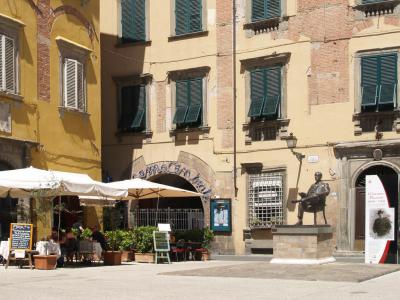
At the center of the square sits the bronze statue of Puccini, depicted in a relaxed pose on a chair, cigarette in hand. This striking monument is a final homage to the maestro, respected by both Italians and tourists who pause here during their travels to honor his contributions to music. The statue naturally draws the attention of passersby, serving as a focal point of the square’s vibrant atmosphere.
Historically, the square was originally known as Piazza di Poggio, named after the influential Poggio family, one of the most powerful clans in medieval Lucca. However, following their failed attempt to seize control of the city in 1522-an event known as the Conspiracy of the Poggi-the family was exiled, and the square was renamed Piazza del Grano. Later, it took on the name Piazza Cittadella, inspired by a significant Baroque-era building once renowned for its hanging garden, visible from the square.
Citadel Square captures Lucca’s Roman heritage and lively charm. A favorite gathering spot, it’s lined with cafés, pubs, and restaurants. Notable stops include Osteria Tosco, known for its garden setting and local delicacies, and Mercatino di Walter e Lucia, offering gourmet products like olive oils and regional wines. Whether one is drawn by the music, the history, or simply the inviting atmosphere, Citadel Square stands as a living tribute to Puccini and the timeless spirit of Lucca.
At the center of the square sits the bronze statue of Puccini, depicted in a relaxed pose on a chair, cigarette in hand. This striking monument is a final homage to the maestro, respected by both Italians and tourists who pause here during their travels to honor his contributions to music. The statue naturally draws the attention of passersby, serving as a focal point of the square’s vibrant atmosphere.
Historically, the square was originally known as Piazza di Poggio, named after the influential Poggio family, one of the most powerful clans in medieval Lucca. However, following their failed attempt to seize control of the city in 1522-an event known as the Conspiracy of the Poggi-the family was exiled, and the square was renamed Piazza del Grano. Later, it took on the name Piazza Cittadella, inspired by a significant Baroque-era building once renowned for its hanging garden, visible from the square.
Citadel Square captures Lucca’s Roman heritage and lively charm. A favorite gathering spot, it’s lined with cafés, pubs, and restaurants. Notable stops include Osteria Tosco, known for its garden setting and local delicacies, and Mercatino di Walter e Lucia, offering gourmet products like olive oils and regional wines. Whether one is drawn by the music, the history, or simply the inviting atmosphere, Citadel Square stands as a living tribute to Puccini and the timeless spirit of Lucca.
7) Church of San Michele (must see)
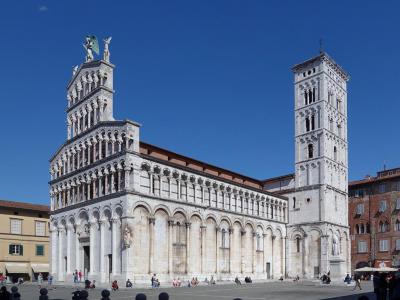
The full name of the Church is San Michele in Foro. It was built in the Forum, the center of public life in the Commune of the City. The Church dates from 795 AD. Pope Alexander II ordered the Church rebuilt in 1070. The massive Pisan-Baroque facade resembles nothing less than a gigantic wedding cake.
There are four levels of arcades. The upper two tiers are free-standing loggias. The lower section is faced with white marble blind arcades. The center part of the upper facade has an iron-winged statue of Saint Michael spearing the dragon. If one looks closely one may see the emerald on Michael's finger ring.
On the lower right corner of the facade is a statue of Madonna Salute Portus, Made by Matteo Civitali to mark the end of the plague of 1476.
The interior has two aisles and a nave and a transept design with a semicircular apse. The nave is supported by arcades with massive columns. There is a terra-cotta image of the Madonna and child by Andrea della Robbia. A painted mural by Filippo Lippi celebrates saints Helen, Rocco, Gerome, and Sebastian.
The bell tower was built in the 13th century. It rises over the southern transept of the building. The upper level of the tower was cut off in 1366 by the Doge of Pisa, Giovanni dell'Angello, because the bells were too loud.
The basilica is only a short walk from the Lucca train station. The nearest bus station is San Salvatore on the LAM Verde route.
There are four levels of arcades. The upper two tiers are free-standing loggias. The lower section is faced with white marble blind arcades. The center part of the upper facade has an iron-winged statue of Saint Michael spearing the dragon. If one looks closely one may see the emerald on Michael's finger ring.
On the lower right corner of the facade is a statue of Madonna Salute Portus, Made by Matteo Civitali to mark the end of the plague of 1476.
The interior has two aisles and a nave and a transept design with a semicircular apse. The nave is supported by arcades with massive columns. There is a terra-cotta image of the Madonna and child by Andrea della Robbia. A painted mural by Filippo Lippi celebrates saints Helen, Rocco, Gerome, and Sebastian.
The bell tower was built in the 13th century. It rises over the southern transept of the building. The upper level of the tower was cut off in 1366 by the Doge of Pisa, Giovanni dell'Angello, because the bells were too loud.
The basilica is only a short walk from the Lucca train station. The nearest bus station is San Salvatore on the LAM Verde route.
8) Torre delle Ore (The Clock Tower)
Back in the Middle Ages, the towers of Lucca had been growing like mushrooms, with some collapses being rather commonplace. The towers were built higher and higher in the belief of their owners that the height equaled respect. In the 14th century, Castruccio Castracani, the Duke of Lucca, ordered a good number of them to be demolished.
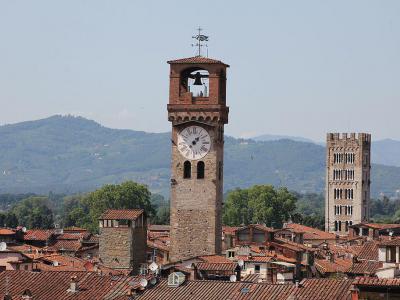
Among the tallest towers still in place is the Clock Tower. Built in the 13th century, it stands 164 feet high on the corner of Via Fillungo and Via Dell'Arancio. Several families of the local nobility had owned the tower over the centuries, but it is better known for a dark legend involving a woman and the devil.
Lucida Mansi, a cruel beauty notorious for having killed her husband and many lovers after that, wanted to stay young forever. Mad at the sight of wrinkles on her face, she made a deal with the devil that would keep her young for the next thirty years, upon which he would claim her soul at the midnight of the 14th of August 1623.
Indeed, for the next three decades Lucida had enjoyed a fabulous life filled with extravagance, luxury, and numerous romances. People marveled at her youth whilst others grew old.
As the day of 14th of August 1623 drew nearer, Lucida grew more and more desperate. In a bid to stop the clock from chiming midnight, she climbed to the top of the tower but still failed to halt the bell strike, and so the devil took her soul.
There are 207 wooden steps within the tower leading to the clock mechanism. Entrance costs only a few euros, so it would be a shame not to see it.
Among the tallest towers still in place is the Clock Tower. Built in the 13th century, it stands 164 feet high on the corner of Via Fillungo and Via Dell'Arancio. Several families of the local nobility had owned the tower over the centuries, but it is better known for a dark legend involving a woman and the devil.
Lucida Mansi, a cruel beauty notorious for having killed her husband and many lovers after that, wanted to stay young forever. Mad at the sight of wrinkles on her face, she made a deal with the devil that would keep her young for the next thirty years, upon which he would claim her soul at the midnight of the 14th of August 1623.
Indeed, for the next three decades Lucida had enjoyed a fabulous life filled with extravagance, luxury, and numerous romances. People marveled at her youth whilst others grew old.
As the day of 14th of August 1623 drew nearer, Lucida grew more and more desperate. In a bid to stop the clock from chiming midnight, she climbed to the top of the tower but still failed to halt the bell strike, and so the devil took her soul.
There are 207 wooden steps within the tower leading to the clock mechanism. Entrance costs only a few euros, so it would be a shame not to see it.
9) Via Fillungo (Fillungo Street)
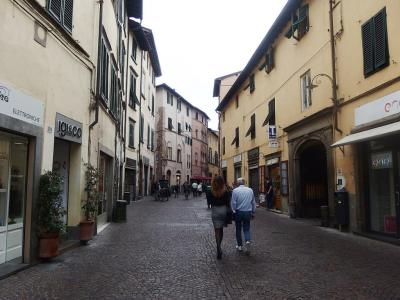
The via Fillungo is the main shopping street in Lucca. It is about 2,300 feet in length and a width of 33 feet and it runs through the historic center of the city within the ancient walls.
It is named for the the Fillongo Castle in the Garfagnana district of Lucca, feudal home of the Falabrina family. The Falabrinas had feudal rights in the area. Houses cozy up to palaces along the via Fillungo. It is a crooked, medieval street.
Walking is the best way to see the walled city. The street has been effectively divided into three parts since ancient times. The Great Way starts from the Porta dei Borghi. As the via Mordini is reached, on the right, is the Piazza San Frediano and the old Basilica San Frediano. On the left is the circle of the ancient Roman amphitheater.
The "Panther", is the next part of the Street. It starts at the via Mordini and moves to the Plaza dei Mercanti. The third section of the road goes from the Piazza dei Mercanti to the Canto Arc. Here is the church of Santo Cristoforo, renovated in the 12th century.
Shops on the street are set into the buildings to minimize the architectural impact. The street is lined with shops and cafes. Many shops are of the "boutique" variety and may be a bit pricey. Except for occasional speeding bicycles, the walking is a pleasant, casual way to pick up local products, like buccellato.
It is named for the the Fillongo Castle in the Garfagnana district of Lucca, feudal home of the Falabrina family. The Falabrinas had feudal rights in the area. Houses cozy up to palaces along the via Fillungo. It is a crooked, medieval street.
Walking is the best way to see the walled city. The street has been effectively divided into three parts since ancient times. The Great Way starts from the Porta dei Borghi. As the via Mordini is reached, on the right, is the Piazza San Frediano and the old Basilica San Frediano. On the left is the circle of the ancient Roman amphitheater.
The "Panther", is the next part of the Street. It starts at the via Mordini and moves to the Plaza dei Mercanti. The third section of the road goes from the Piazza dei Mercanti to the Canto Arc. Here is the church of Santo Cristoforo, renovated in the 12th century.
Shops on the street are set into the buildings to minimize the architectural impact. The street is lined with shops and cafes. Many shops are of the "boutique" variety and may be a bit pricey. Except for occasional speeding bicycles, the walking is a pleasant, casual way to pick up local products, like buccellato.
10) Church of San Frediano (must see)
In the 6th century AD, a church was built in Lucca dedicated to the Levites Vincenzo, Stefano and Lorenzo. Fredianus, an Irish pilgrim who became bishop of Lucca in 560 AD, gets credit for the construction. The Basilica today is built in the Romanesque style and it is located in the Piazza San Frediano.
In 1112 the church was rebuilt. It was reconsecrated in 1147 by Pope Eugene III. The church had three naves and an apse. The facade faced east. This was departure from the Dominican custom of facades facing west.
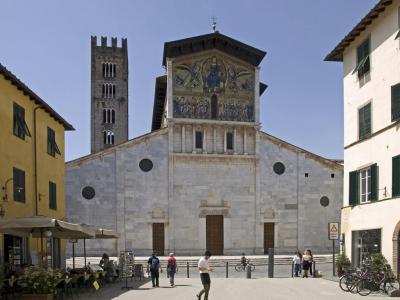
Sometime in the 13th century the central nave was raised and a wooden ceiling installed. In the same period the upper facade received a mosaic of the Ascension of Christ with angels and apostles around the Madonna. The Madonna image was later replaced by the center window.
In the 14th and 16th centuries chapels were built in the side aisles and the facade was extended. The three portals of the facade are marked by pillars under an architrave and blind arches. There is a loggia at the middle level with columns and two single lancet windows. The bell tower, near the apse, dates back to the 13th century.
Inside the church the aisles and nave are set off by columns with round arches. The center nave is high with a wooden truss ceiling.
The basilica is a short walk from the Ampitheater Square.
In 1112 the church was rebuilt. It was reconsecrated in 1147 by Pope Eugene III. The church had three naves and an apse. The facade faced east. This was departure from the Dominican custom of facades facing west.
Sometime in the 13th century the central nave was raised and a wooden ceiling installed. In the same period the upper facade received a mosaic of the Ascension of Christ with angels and apostles around the Madonna. The Madonna image was later replaced by the center window.
In the 14th and 16th centuries chapels were built in the side aisles and the facade was extended. The three portals of the facade are marked by pillars under an architrave and blind arches. There is a loggia at the middle level with columns and two single lancet windows. The bell tower, near the apse, dates back to the 13th century.
Inside the church the aisles and nave are set off by columns with round arches. The center nave is high with a wooden truss ceiling.
The basilica is a short walk from the Ampitheater Square.
11) Porta dei Borghi (Village Gate)
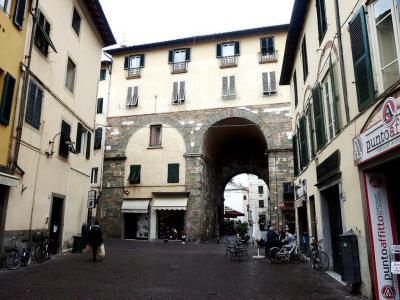
The Village Gate (Porta San Pietro) in Lucca is one of the historic entrances to the city's impressive Renaissance walls. These fortifications, completed in 1648, encircle Lucca’s historic center and remain among the best-preserved city walls in Europe. Built with stone, brick, and earthworks, the walls were intended as a defensive measure against the Republic of Florence but never saw military action.
The Village Gate, located on the southern side of the walls, is one of the main points of access to the old town. Over time, it has adapted to the city’s evolving needs. In the 19th century, under the rule of Maria Luisa de Borbón of Spain, Lucca’s walls were transformed from military fortifications into a public promenade. The Village Gate, like other city gates, now serves as a welcoming entrance for both residents and visitors exploring the city’s rich history.
Today, the area around the gate offers a scenic entryway into Lucca’s charming streets, with the fortified walls functioning as a popular green space for walking, cycling, and cultural events. The Village Gate remains a testament to Lucca’s enduring independence and historical significance.
The Village Gate, located on the southern side of the walls, is one of the main points of access to the old town. Over time, it has adapted to the city’s evolving needs. In the 19th century, under the rule of Maria Luisa de Borbón of Spain, Lucca’s walls were transformed from military fortifications into a public promenade. The Village Gate, like other city gates, now serves as a welcoming entrance for both residents and visitors exploring the city’s rich history.
Today, the area around the gate offers a scenic entryway into Lucca’s charming streets, with the fortified walls functioning as a popular green space for walking, cycling, and cultural events. The Village Gate remains a testament to Lucca’s enduring independence and historical significance.
12) Pizzeria Da Gherardo
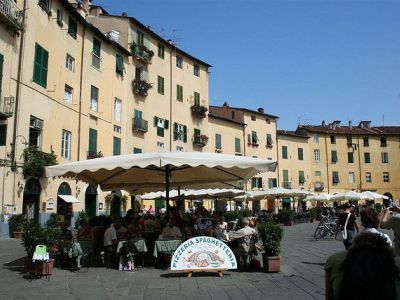
Nestled in the heart of Lucca’s historic Anfiteatro Square (Piazza Anfiteatro), Pizzeria Da Gherardo offers an authentic Italian dining experience that seamlessly blends tradition with a welcoming atmosphere. More than just a pizzeria, this establishment is a full-fledged restaurant and bar, boasting a menu rich in classic Italian dishes, an impressive selection of wines, and a variety of cocktails and desserts.
With nearly thirty different kinds of pizza to choose from, Pizzeria Da Gherardo caters to all tastes, whether you prefer a simple Margherita or something more elaborate. Beyond pizza, guests can indulge in a range of traditional Tuscan meals crafted from high-quality, fresh ingredients, including Italian-origin meats and locally sourced produce. The commitment to culinary excellence is evident in every dish served.
The setting of Da Gherardo is as captivating as its menu. Anfiteatro Square, one of Lucca’s most picturesque squares, traces its origins to the second century AD when it functioned as a Roman amphitheater. Enclosed within Lucca’s remarkably preserved 16th-century walls, this vibrant location is the perfect backdrop for a leisurely meal, offering both an intimate connection to history and a lively dining environment. The restaurant accommodates up to 100 guests outdoors and 80 indoors, making it an excellent choice for both intimate dinners and group reservations.
At Da Gherardo, hospitality is a priority. Open for both lunch and dinner, the restaurant invites visitors to relax and enjoy the essence of Lucca’s culinary tradition. Whether stopping by for a casual meal, a celebratory gathering, or simply a glass of wine while soaking in the charm of the piazza, Pizzeria Da Gherardo guarantees a taste of Italy that lingers long after the last bite.
With nearly thirty different kinds of pizza to choose from, Pizzeria Da Gherardo caters to all tastes, whether you prefer a simple Margherita or something more elaborate. Beyond pizza, guests can indulge in a range of traditional Tuscan meals crafted from high-quality, fresh ingredients, including Italian-origin meats and locally sourced produce. The commitment to culinary excellence is evident in every dish served.
The setting of Da Gherardo is as captivating as its menu. Anfiteatro Square, one of Lucca’s most picturesque squares, traces its origins to the second century AD when it functioned as a Roman amphitheater. Enclosed within Lucca’s remarkably preserved 16th-century walls, this vibrant location is the perfect backdrop for a leisurely meal, offering both an intimate connection to history and a lively dining environment. The restaurant accommodates up to 100 guests outdoors and 80 indoors, making it an excellent choice for both intimate dinners and group reservations.
At Da Gherardo, hospitality is a priority. Open for both lunch and dinner, the restaurant invites visitors to relax and enjoy the essence of Lucca’s culinary tradition. Whether stopping by for a casual meal, a celebratory gathering, or simply a glass of wine while soaking in the charm of the piazza, Pizzeria Da Gherardo guarantees a taste of Italy that lingers long after the last bite.
13) Piazza dell'Anfiteatro (Amphitheater Square) (must see)
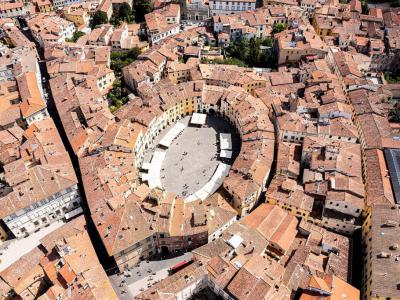
The elliptical square used to be a Roman amphitheater. Built in the 1st century AD in the reign of the Emperor Claudius, it was originally outside the city walls. It was rather large, having fifty-four arches and a seating capacity of ten thousand. Public meetings as well as games and dramas were held in the arena.
In the 6th century AD, during the Gothic wars, the amphitheater became a defensive liability because of its size and position outside the city walls. The amphitheater was fortified by closing the outer arches. In time, other buildings used as houses, storage spaces or prisons were added to the structures around the arena.
During the middle ages the upper parts of the original amphitheater began to disappear. The materials taken were used in the constructions. The arena remained along with a ruined arch or two. Buildings enclosed the space, creating a de facto square. Most of these buildings were military storehouses or used to stock salt or such.
In the early 19th century, architect Lornzo Nottolini, was deeply involved in what was called the Great Project of Tuscany, including the urban renewal of Lucca. Nottolini was commissioned to restore and revive the Piazza based on the Roman ruins of the amphitheater.
Nottolini designed a new open square just as big as the original structure. It followed the elliptical shape of the arena exactly. It became an urban market center and space for open shops. In the early 20th century the official market was shifted to another area but the square continued to be called Market Square (Piazza del Maercato).
The square can be entered only through one of its four doorways. The lowest one of these is part of the original structure of the amphitheater. To enter the market square is to follow in the steps of the Lucchese from ancient times until now.
In the 6th century AD, during the Gothic wars, the amphitheater became a defensive liability because of its size and position outside the city walls. The amphitheater was fortified by closing the outer arches. In time, other buildings used as houses, storage spaces or prisons were added to the structures around the arena.
During the middle ages the upper parts of the original amphitheater began to disappear. The materials taken were used in the constructions. The arena remained along with a ruined arch or two. Buildings enclosed the space, creating a de facto square. Most of these buildings were military storehouses or used to stock salt or such.
In the early 19th century, architect Lornzo Nottolini, was deeply involved in what was called the Great Project of Tuscany, including the urban renewal of Lucca. Nottolini was commissioned to restore and revive the Piazza based on the Roman ruins of the amphitheater.
Nottolini designed a new open square just as big as the original structure. It followed the elliptical shape of the arena exactly. It became an urban market center and space for open shops. In the early 20th century the official market was shifted to another area but the square continued to be called Market Square (Piazza del Maercato).
The square can be entered only through one of its four doorways. The lowest one of these is part of the original structure of the amphitheater. To enter the market square is to follow in the steps of the Lucchese from ancient times until now.
14) Torre Guinigi (Guinigi Tower) (must see)
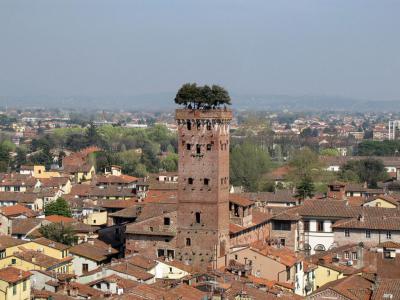
The Guinigi Tower is easy to spot. It is a square tower of bright red brick. It rises to a height of 125 feet and there are Holm oak trees growing on the roof. There is a need to climb the tower, sit in the shade of aged oaks and look out over the ancient city of Lucca. Alert: this urge is irresistible.
The Guinigi Tower was built in 1384. The Guinigis were rich from the silk trade that passed through Lucca at the time. Once Lucca had as many as 250 such towers. Only nine remained after the warlord Castruccio Castracani ordered them demolished. This was in the 14th century, the interesting time of plagues, raids, violence. It was a time for towers.
The towers were not only havens and defensive assets, they were symbols of wealth and power and respect. Every player had to have one. At least one. When Castracani died, the Guinigi took over the city. They would keep their Tower of Power forever.
In 1805 Napoleon ruled in Tuscany. He gave the region to his sister, Elisa, making her the Grand Duchess of Tuscany. It is because of her the walls of the Tower were maintained. It is possible to visit the tower. It is 230 steps up to the observation deck. The original stairs were on the outside. Now they are inside. It's a small mercy.
Of course there are legends about the tower. If one climbs to the top in the evening, one may see a ghostly lady sitting under an oak tree with her pet dog. This is the lady Ilaria, the deceased wife of Paolo Guinigi. If she smiles at you, your heart is pure. If not, well...
The tower is open to the public for a modest fee. Reach the top and the amazing panorama of Lucca will unravel at your feet.
The Guinigi Tower was built in 1384. The Guinigis were rich from the silk trade that passed through Lucca at the time. Once Lucca had as many as 250 such towers. Only nine remained after the warlord Castruccio Castracani ordered them demolished. This was in the 14th century, the interesting time of plagues, raids, violence. It was a time for towers.
The towers were not only havens and defensive assets, they were symbols of wealth and power and respect. Every player had to have one. At least one. When Castracani died, the Guinigi took over the city. They would keep their Tower of Power forever.
In 1805 Napoleon ruled in Tuscany. He gave the region to his sister, Elisa, making her the Grand Duchess of Tuscany. It is because of her the walls of the Tower were maintained. It is possible to visit the tower. It is 230 steps up to the observation deck. The original stairs were on the outside. Now they are inside. It's a small mercy.
Of course there are legends about the tower. If one climbs to the top in the evening, one may see a ghostly lady sitting under an oak tree with her pet dog. This is the lady Ilaria, the deceased wife of Paolo Guinigi. If she smiles at you, your heart is pure. If not, well...
The tower is open to the public for a modest fee. Reach the top and the amazing panorama of Lucca will unravel at your feet.
15) Porta San Gervasio (St. Gervasio's Gate)
Porta San Gervasio is one of the four gates from the 13th century that once formed part of the Walls of Lucca. It was almost completely demolished during the construction of the Renaissance walls (the latter still visible today); the only other similar gate still in place is Porta dei Borghi, located on Via Fillungo.
Also known as dell'Annunziata (the Annunciation gate), Porta San Gervasio was completed in 1255 and was dedicated to Saints Gervasio and Protasio.
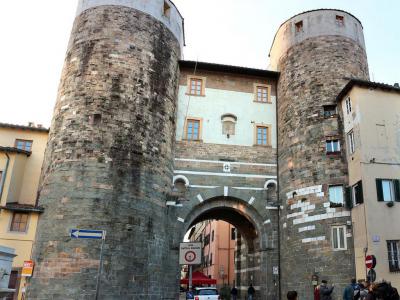
The gate has a wide opening, eight meters high, covered by a round arch; the inner lunette carries the image of Madonna and the Child, with two kneeling Saints (probably Gervasio and Protasio) and two Angels uncovering the curtain, as well as a fragment of San Giovannino at the foot of the Virgin.
The two towers, made of gray sandstone with white limestone decorations, originally had battlements and a walkway connecting them at the top. Back in the day, the gate had a drawbridge over a moat; the latter is still preserved and runs opposite Via del Fosso.
Today the two towers are used as private residences. In the top left one, seen from Via del Fosso, Italo Meschi (1887-1957), the guitarist, poet and anarchist-pacifist once lived; while in the right-hand tower, his cousin, painter Alfredo Meschi (1905-1981), had a studio.
The gate underwent restoration in 2006-2007.
Also known as dell'Annunziata (the Annunciation gate), Porta San Gervasio was completed in 1255 and was dedicated to Saints Gervasio and Protasio.
The gate has a wide opening, eight meters high, covered by a round arch; the inner lunette carries the image of Madonna and the Child, with two kneeling Saints (probably Gervasio and Protasio) and two Angels uncovering the curtain, as well as a fragment of San Giovannino at the foot of the Virgin.
The two towers, made of gray sandstone with white limestone decorations, originally had battlements and a walkway connecting them at the top. Back in the day, the gate had a drawbridge over a moat; the latter is still preserved and runs opposite Via del Fosso.
Today the two towers are used as private residences. In the top left one, seen from Via del Fosso, Italo Meschi (1887-1957), the guitarist, poet and anarchist-pacifist once lived; while in the right-hand tower, his cousin, painter Alfredo Meschi (1905-1981), had a studio.
The gate underwent restoration in 2006-2007.
