Custom Walk in York, England by chiesaistria2006_586653 created on 2026-03-07
Guide Location: England » York
Guide Type: Custom Walk
# of Sights: 13
Tour Duration: 2 Hour(s)
Travel Distance: 3.3 Km or 2.1 Miles
Share Key: B26CZ
Guide Type: Custom Walk
# of Sights: 13
Tour Duration: 2 Hour(s)
Travel Distance: 3.3 Km or 2.1 Miles
Share Key: B26CZ
How It Works
Please retrieve this walk in the GPSmyCity app. Once done, the app will guide you from one tour stop to the next as if you had a personal tour guide. If you created the walk on this website or come to the page via a link, please follow the instructions below to retrieve the walk in the app.
Retrieve This Walk in App
Step 1. Download the app "GPSmyCity: Walks in 1K+ Cities" on Apple App Store or Google Play Store.



Step 2. In the GPSmyCity app, download(or launch) the guide "York Map and Walking Tours".
Step 3. Tap the menu button located at upper right corner of the "Walks" screen and select "Retrieve custom walk". Enter the share key: B26CZ
1) York Minster (must see)
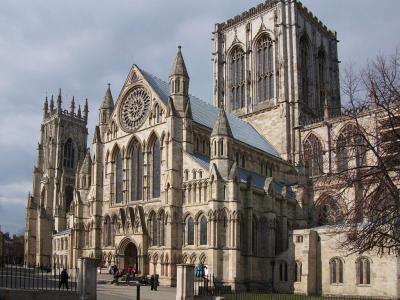
The York Minister is an impressive cathedral with a long and storied history. The Romans settled here and named the area Eboracum in 71 AD. King Edwin was baptized in a small wooden church here in 625. A stone church was built, and King Edwin was buried in the stone church in 633. In 1088, a new Minister was built. The Minister was expanded between 1154 and 1225. In 1328, the York Minister hosted a royal wedding between King Edward III and Philippa of Hainault.
Richard Scrope, Archbishop of York, was accused of treason by Henry IV and beheaded in 1405. His tomb lies in the Minister.
The Minister as it stands today was completed in 1471. It is the second-largest Gothic cathedral in Northern Europe. The name "minister" harkens to Anglo-Saxon missionary churches. The cathedral's official name is the Cathedral and Metropolitical Church of Saint Peter in York.
The Minister features majestic architecture, including a Gothic nave and a Perpendicular Gothic quire. The 1408 Great East Window is the largest expanse of stained glass in the world. Each lancet in the magnificent Five Sisters Window is 53 feet tall. A gorgeous rose window graces the south transept. The design of the west window is known as The Heart of Yorkshire.
The transepts feature wooden roofs. The nave was completed in 1350 and is England's widest Gothic nave. The central tower is 235 feet tall (72 meters). The choir is 102 feet tall (31 meters). The octagonal Chapter House was built in 1280 and features wonderful stone carvings.
Visitors can view the remains of the Roman fort in the cathedral's museum.
Why You Should Visit:
The York Minister is one of the most impressive churches in Northern Europe. It was one of the few Catholic churches not destroyed by Henry VIII, as he wanted to convert it to an Anglican church. The soaring nave, impressive towers, storied history, and Gothic architecture are the highlight of any York visit.
Tips:
Go for an evensong service, usually held in the evenings at 5:15 pm, and experience the acoustic wonders of the choir and organ.
The 35 church bells ring at 10:00 am on Sundays.
Richard Scrope, Archbishop of York, was accused of treason by Henry IV and beheaded in 1405. His tomb lies in the Minister.
The Minister as it stands today was completed in 1471. It is the second-largest Gothic cathedral in Northern Europe. The name "minister" harkens to Anglo-Saxon missionary churches. The cathedral's official name is the Cathedral and Metropolitical Church of Saint Peter in York.
The Minister features majestic architecture, including a Gothic nave and a Perpendicular Gothic quire. The 1408 Great East Window is the largest expanse of stained glass in the world. Each lancet in the magnificent Five Sisters Window is 53 feet tall. A gorgeous rose window graces the south transept. The design of the west window is known as The Heart of Yorkshire.
The transepts feature wooden roofs. The nave was completed in 1350 and is England's widest Gothic nave. The central tower is 235 feet tall (72 meters). The choir is 102 feet tall (31 meters). The octagonal Chapter House was built in 1280 and features wonderful stone carvings.
Visitors can view the remains of the Roman fort in the cathedral's museum.
Why You Should Visit:
The York Minister is one of the most impressive churches in Northern Europe. It was one of the few Catholic churches not destroyed by Henry VIII, as he wanted to convert it to an Anglican church. The soaring nave, impressive towers, storied history, and Gothic architecture are the highlight of any York visit.
Tips:
Go for an evensong service, usually held in the evenings at 5:15 pm, and experience the acoustic wonders of the choir and organ.
The 35 church bells ring at 10:00 am on Sundays.
2) Bootham Bar
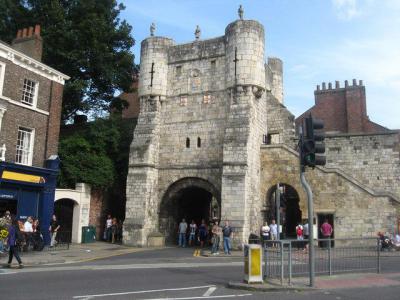
Although much of Bootham Bar was built in the 14th and 19th centuries, it also has some of the oldest surviving stonework, dating to the 11th century. It stands almost on the site of Porta Principalis Dextra, the northwestern gate of Eboracum. It was named in the 12th century as "barram de Bootham", meaning bar at the booths, after the nearby market booths. It was the last of the bars to lose its barbican, which was removed in 1835.
One interesting historical anecdote is that in 1501 a door knocker was attached to the bar's entrance in order to prevent Scots from entering the town. Nowadays, of course, all are welcome. Be sure to check out this historical landmark when visiting York.
Why You Should Visit:
This is the closest gate to the Minster and between here and Monk Bar you will find the most popular and attractive section of the City Wall. Unparalleled views of gardens, Minster, university, neighborhoods.
Tip:
The first floor has a square paved area which is worth a look round before you go to the walls via a black steel gate.
One interesting historical anecdote is that in 1501 a door knocker was attached to the bar's entrance in order to prevent Scots from entering the town. Nowadays, of course, all are welcome. Be sure to check out this historical landmark when visiting York.
Why You Should Visit:
This is the closest gate to the Minster and between here and Monk Bar you will find the most popular and attractive section of the City Wall. Unparalleled views of gardens, Minster, university, neighborhoods.
Tip:
The first floor has a square paved area which is worth a look round before you go to the walls via a black steel gate.
3) Mansion House
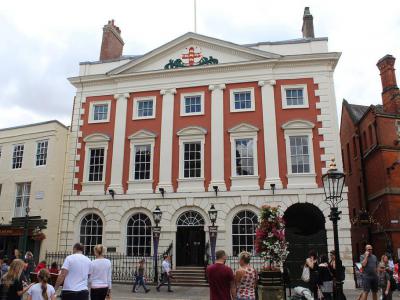
The Mansion House in York stands as a proud testament to Georgian architecture and serves as the residence of the city's Lord Mayors during their tenure. It holds the distinction of being the earliest purpose-built house of its kind still in use, predating its London counterpart by at least two decades.
Constructed on the grounds of the old "Common Hall Gates," which once provided entry to the 15th-century York Guildhall, the Mansion House holds historical significance deeply rooted in the city's governance. The foundation stone was laid in 1725, and after seven years of construction, the house was completed in 1732. Although the architect remains unknown, the frontage is tentatively attributed to William Etty.
Each May, the Mayor Making ceremony takes place in the Guildhall, preceding the Lord Mayor's occupancy of the Mansion House. This tradition connects the modern city administration with its medieval roots.
Inside, the Mansion House boasts an impressive collection of civic silver, including artifacts such as a 17th-century silver chamber pot and gold cup procured for the City of York through the bequest of Marmaduke Rawdon in 1669. The collection also includes notable pieces of regalia, such as a 17th-century mace and two historic city swords: the Bowes Sword, donated by Sir Martin Bowes in 1545, and the Sigismund Sword, once owned by the Holy Roman Emperor Sigismund dating back to 1416.
Beyond its silver collection and regalia, the Mansion House is adorned with antique furniture and oil paintings depicting previous Lord Mayors of York, including notable figures such as George IV as Prince Regent, Charles Watson-Wentworth, Marquis of Rockingham, and George Hudson.
Constructed on the grounds of the old "Common Hall Gates," which once provided entry to the 15th-century York Guildhall, the Mansion House holds historical significance deeply rooted in the city's governance. The foundation stone was laid in 1725, and after seven years of construction, the house was completed in 1732. Although the architect remains unknown, the frontage is tentatively attributed to William Etty.
Each May, the Mayor Making ceremony takes place in the Guildhall, preceding the Lord Mayor's occupancy of the Mansion House. This tradition connects the modern city administration with its medieval roots.
Inside, the Mansion House boasts an impressive collection of civic silver, including artifacts such as a 17th-century silver chamber pot and gold cup procured for the City of York through the bequest of Marmaduke Rawdon in 1669. The collection also includes notable pieces of regalia, such as a 17th-century mace and two historic city swords: the Bowes Sword, donated by Sir Martin Bowes in 1545, and the Sigismund Sword, once owned by the Holy Roman Emperor Sigismund dating back to 1416.
Beyond its silver collection and regalia, the Mansion House is adorned with antique furniture and oil paintings depicting previous Lord Mayors of York, including notable figures such as George IV as Prince Regent, Charles Watson-Wentworth, Marquis of Rockingham, and George Hudson.
4) Coney Street
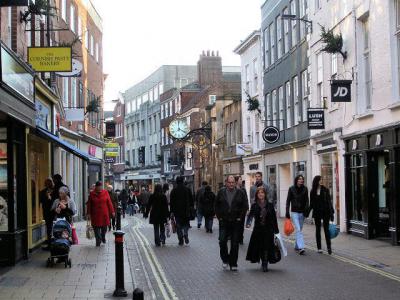
Coney Street is a key shopping area in York's city center. It extends from Spurriergate and Market Street junction to Saint Helen's Square in the northwest. This street dates back to the Roman times in York, known as Eboracum, where it was situated just outside the southwestern city walls. Near its northern end, there was a bridge crossing the River Ouse. Archeological digs have uncovered a grain warehouse from the 1st century on the street’s southwest side.
The earliest mention of the street is around 1150 under the name "Cuningstrete," meaning King's Street. The term "street" is used instead of "gate," indicating it originated in the Anglian period, supported by the discovery of two coin hoards in the 1760s.
By 1308, Coney Street had become York's most important street. In 1335, houses were built in Saint Martin's churchyard, which were repeatedly reconstructed until the final structures were demolished in 1958. The Guild of Saint Christopher Maison Dieu almshouse was built here in 1396, followed by York Guildhall in 1459, near the street’s northern end. Right in front of the Guildhall, the York Mansion House was erected in 1725, and in 1782, the area was cleared to form St Helen's Square.
In the 19th century, Coney Street was filled with shops including notable businesses like the House of Bewlay tobacconist, Burgin's perfumery, and the Leak & Thorp department store. Throughout the 20th century, many of these shops were replaced by national chain stores. Despite several closures in the 2010s, the street continues to host a variety of High Street shops and cafes. It's also a popular spot for buskers who perform there throughout the day.
The earliest mention of the street is around 1150 under the name "Cuningstrete," meaning King's Street. The term "street" is used instead of "gate," indicating it originated in the Anglian period, supported by the discovery of two coin hoards in the 1760s.
By 1308, Coney Street had become York's most important street. In 1335, houses were built in Saint Martin's churchyard, which were repeatedly reconstructed until the final structures were demolished in 1958. The Guild of Saint Christopher Maison Dieu almshouse was built here in 1396, followed by York Guildhall in 1459, near the street’s northern end. Right in front of the Guildhall, the York Mansion House was erected in 1725, and in 1782, the area was cleared to form St Helen's Square.
In the 19th century, Coney Street was filled with shops including notable businesses like the House of Bewlay tobacconist, Burgin's perfumery, and the Leak & Thorp department store. Throughout the 20th century, many of these shops were replaced by national chain stores. Despite several closures in the 2010s, the street continues to host a variety of High Street shops and cafes. It's also a popular spot for buskers who perform there throughout the day.
5) York Dungeon (must see)
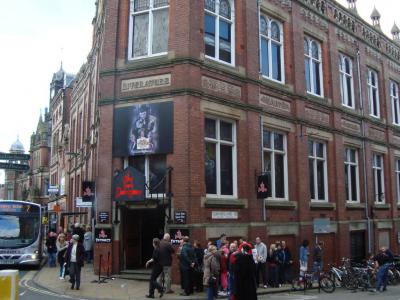
York Dungeon, located in York, offers a unique blend of education and entertainment through its portrayal of the darker aspects of local history. This attraction, which opened its doors in 1986, was the second such Dungeon, following the London Dungeon established in 1974. Both attractions are designed as interactive live-action horror shows, drawing from historical events but presented with a theatrical twist.
At the York Dungeon, visitors experience history through actor-led shows, complete with special effects and detailed models and displays. The tours at the Dungeon are particularly structured, beginning every 7 minutes and lasting anywhere from one to one and a half hours. These tours guide visitors through a series of dramatically reconstructed scenes and historical reenactments.
One of the standout experiences at the York Dungeon is the Great Plague show. Set in 1551, this exhibit recreates a plague doctor’s surgery, where an actor, playing the role of an assistant to a deceased plague doctor, leads the narration. Another significant highlight is the recreation of The Golden Fleece Inn, a historic York pub, where visitors gather to hear chilling local ghost stories.
Additional shows enrich the Dungeon experience. These include the "Judgement of Sinners," where visitors find themselves accused of various historical crimes, and the "Torture Chamber," which showcases gruesome torture devices. Throughout the tour, actors in the roles of plague doctors’ assistants, innkeepers, night watches, torturers, judges, executioners, stagecoach guards, and witch-burners engage with the audience, sharing macabre and thrilling tales.
York Dungeon thus serves as a portal to the past, inviting visitors to explore the grim and eerie aspects of York’s history in a uniquely immersive environment.
Why You Should Visit:
Atmospheric and realistic. The actors are very good and the stories are entertaining. Some surprises and audience participation were used well.
At the very least, you get an insight into some of the poor living and health conditions that folks had to put up with along with the barbarity of those in power.
Tip:
Pre-book online so you can turn up at your time and just go straight in; otherwise, risk being turned away or waiting in a lengthy queue.
At the York Dungeon, visitors experience history through actor-led shows, complete with special effects and detailed models and displays. The tours at the Dungeon are particularly structured, beginning every 7 minutes and lasting anywhere from one to one and a half hours. These tours guide visitors through a series of dramatically reconstructed scenes and historical reenactments.
One of the standout experiences at the York Dungeon is the Great Plague show. Set in 1551, this exhibit recreates a plague doctor’s surgery, where an actor, playing the role of an assistant to a deceased plague doctor, leads the narration. Another significant highlight is the recreation of The Golden Fleece Inn, a historic York pub, where visitors gather to hear chilling local ghost stories.
Additional shows enrich the Dungeon experience. These include the "Judgement of Sinners," where visitors find themselves accused of various historical crimes, and the "Torture Chamber," which showcases gruesome torture devices. Throughout the tour, actors in the roles of plague doctors’ assistants, innkeepers, night watches, torturers, judges, executioners, stagecoach guards, and witch-burners engage with the audience, sharing macabre and thrilling tales.
York Dungeon thus serves as a portal to the past, inviting visitors to explore the grim and eerie aspects of York’s history in a uniquely immersive environment.
Why You Should Visit:
Atmospheric and realistic. The actors are very good and the stories are entertaining. Some surprises and audience participation were used well.
At the very least, you get an insight into some of the poor living and health conditions that folks had to put up with along with the barbarity of those in power.
Tip:
Pre-book online so you can turn up at your time and just go straight in; otherwise, risk being turned away or waiting in a lengthy queue.
6) York Crown Court
York Crown Court, situated at York Castle in York, is a key legal center for criminal cases and is recognized as a Grade I listed building for its architectural and historical significance. The court's roots go back to the York Guildhall, but in 1668, operations moved to York Castle with the building of a Grand Jury House and later a Sessions House in 1675. By the mid-1700s, these buildings were falling apart, leading to the demolition of the Grand Jury House and the construction of a new facility in its place.
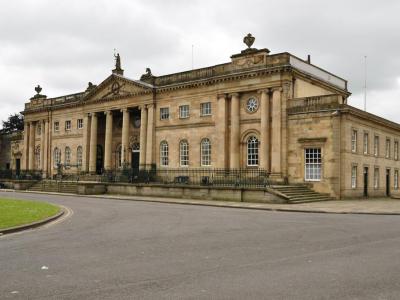
The current structure, finished in 1777, was designed by John Carr in the Neoclassical style. It features a facade made of ashlar stone, symmetrically arranged with thirteen sections. The middle section stands out with a row of four Ionic columns under a detailed pediment. This style extends to the wings, which also feature Ionic columns, rounded sash windows, and smaller square windows above. Inside, the building houses two large courtrooms on each side.
The court has hosted several famous trials, including the 1882 case of Mary Fitzpatrick, who was convicted of murder. More recent cases include the 2010 trial of soccer players Craig Nelthorpe and Michael Rankine. The court was also used for filming a key scene of the TV series "Death Comes to Pemberley" in 2013.
Following the Courts Act of 1971, it transitioned to its present role as York Crown Court, with major updates completed in 1991. Today, the York Crown Court stands as an essential institution in the city, continuing to serve its historical and judicial roles.
The current structure, finished in 1777, was designed by John Carr in the Neoclassical style. It features a facade made of ashlar stone, symmetrically arranged with thirteen sections. The middle section stands out with a row of four Ionic columns under a detailed pediment. This style extends to the wings, which also feature Ionic columns, rounded sash windows, and smaller square windows above. Inside, the building houses two large courtrooms on each side.
The court has hosted several famous trials, including the 1882 case of Mary Fitzpatrick, who was convicted of murder. More recent cases include the 2010 trial of soccer players Craig Nelthorpe and Michael Rankine. The court was also used for filming a key scene of the TV series "Death Comes to Pemberley" in 2013.
Following the Courts Act of 1971, it transitioned to its present role as York Crown Court, with major updates completed in 1991. Today, the York Crown Court stands as an essential institution in the city, continuing to serve its historical and judicial roles.
7) York Castle Museum (must see)
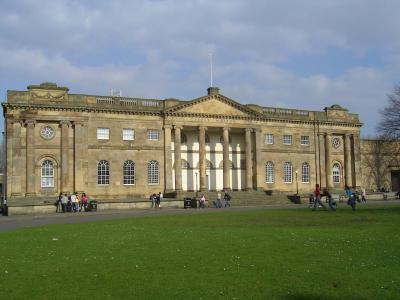
York Castle Museum was built on the site of York Castle. York Castle was originally built by William the Conqueror in 1068. However, York Castle fell into ruins, and two prisons were built using stone from the ruined castle.
The York Castle Museum is located in the two former prisons, which are now connected by a gallery. The Debtor's Prison is a three-story building completed in 1705. The Female Prison was completed in 1783. Dick Turpin, an infamous highwayman, was captured and imprisoned in The Debtor's Prison.
The Raindale Mill was moved to the museum grounds in the 1960s. This reconstructed 19th-century flour mill was used to grind grain into flour.
The museum was founded in 1938 by John L. Kirk. Kirk had a large collection of Social History items he wished to display, and the City of York decided to collaborate with him. Kirk recreated a Victorian street to display his various Victorian items. The Toy Stories exhibition focuses on the history of children's toys. The Sixties exhibition tells the stories of that radical decade. The Cells tells stories of life in The Debtor's Prison and The Female Prison. 1914: When the World Changed Forever commemorates World War I. Finally, Shaping the Body: Food, Fashion & Life focuses on the fashion industry.
Why You Should Visit:
The York Castle invites visitors to step back in time and immerse themselves in Victorian History. Instead of seeing objects in glass cases, visitors can see historic items set amongst a shopping street.
Tip:
Try to time your visit with the half-hour guided tour through Kirkgate (very interesting and informative) and take some 20p coins to have a go on the machines from the old days.
The York Castle Museum is located in the two former prisons, which are now connected by a gallery. The Debtor's Prison is a three-story building completed in 1705. The Female Prison was completed in 1783. Dick Turpin, an infamous highwayman, was captured and imprisoned in The Debtor's Prison.
The Raindale Mill was moved to the museum grounds in the 1960s. This reconstructed 19th-century flour mill was used to grind grain into flour.
The museum was founded in 1938 by John L. Kirk. Kirk had a large collection of Social History items he wished to display, and the City of York decided to collaborate with him. Kirk recreated a Victorian street to display his various Victorian items. The Toy Stories exhibition focuses on the history of children's toys. The Sixties exhibition tells the stories of that radical decade. The Cells tells stories of life in The Debtor's Prison and The Female Prison. 1914: When the World Changed Forever commemorates World War I. Finally, Shaping the Body: Food, Fashion & Life focuses on the fashion industry.
Why You Should Visit:
The York Castle invites visitors to step back in time and immerse themselves in Victorian History. Instead of seeing objects in glass cases, visitors can see historic items set amongst a shopping street.
Tip:
Try to time your visit with the half-hour guided tour through Kirkgate (very interesting and informative) and take some 20p coins to have a go on the machines from the old days.
8) Clifford's Tower (must see)
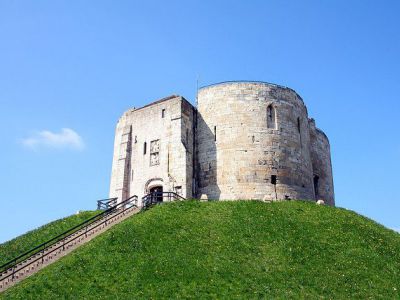
Clifford's Tower in York is a historical site steeped in a rich and tumultuous past. It stands as the largest surviving part of York Castle, which was once northern England's most formidable medieval royal fortress. The tower has recently been enhanced with a significant update in 2022, which includes a dramatic roof deck, internal walkways, and a soundscape interpretation that narrates the tower's compelling history like never before. These new features make its history and interior more accessible, providing a vivid account of its dramatic and sometimes tragic events.
Originally constructed by William the Conqueror in 1068-69, Clifford's Tower was built to assert control over the rebellious north. The tower has endured multiple devastations, having been burned down twice before being reconstructed by Henry III in the 13th century. It is named after a particularly dark event where Roger de Clifford was executed for treason against Edward II and displayed on the tower walls.
Today, the tower's stone structure, dating from the late 13th century, invites visitors to explore its multifaceted history. The site is not only significant for its military and royal associations but also as a tragic site of the 1190 massacre of about 150 Jews who sought refuge there. Visitors can climb to the top of the tower to walk the open-air wall that guards once patrolled, offering unparalleled views of York, including the Old Minister, the North York Moors, and other remnants of York Castle.
From this vantage point, one can also view the "Eye of York"-a collection of buildings that includes the Female Prison, Debtor's Prison, and the Assize Courts, enhancing the understanding of York's historical and architectural development. The panoramic views from the tower make it an ideal starting point for anyone visiting the city.
The ground floor of Clifford's Tower, once the royal exchequer, now invites visitors to explore its history. A tactile model in the courtyard showcases its unique, possibly French-inspired four-lobed architecture. The first floor features a richly decorated chapel, formerly private apartments. Historically, the tower has served as a prison and royal mint, and it was here that the infamous highwayman Dick Turpin was identified, leading to his execution in 1739.
Originally constructed by William the Conqueror in 1068-69, Clifford's Tower was built to assert control over the rebellious north. The tower has endured multiple devastations, having been burned down twice before being reconstructed by Henry III in the 13th century. It is named after a particularly dark event where Roger de Clifford was executed for treason against Edward II and displayed on the tower walls.
Today, the tower's stone structure, dating from the late 13th century, invites visitors to explore its multifaceted history. The site is not only significant for its military and royal associations but also as a tragic site of the 1190 massacre of about 150 Jews who sought refuge there. Visitors can climb to the top of the tower to walk the open-air wall that guards once patrolled, offering unparalleled views of York, including the Old Minister, the North York Moors, and other remnants of York Castle.
From this vantage point, one can also view the "Eye of York"-a collection of buildings that includes the Female Prison, Debtor's Prison, and the Assize Courts, enhancing the understanding of York's historical and architectural development. The panoramic views from the tower make it an ideal starting point for anyone visiting the city.
The ground floor of Clifford's Tower, once the royal exchequer, now invites visitors to explore its history. A tactile model in the courtyard showcases its unique, possibly French-inspired four-lobed architecture. The first floor features a richly decorated chapel, formerly private apartments. Historically, the tower has served as a prison and royal mint, and it was here that the infamous highwayman Dick Turpin was identified, leading to his execution in 1739.
9) Foss Bridge
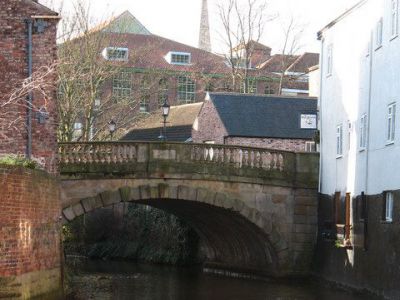
Foss Bridge, nestled in the historic city of York, holds a significant place among the numerous bridges adorning the landscape. Serving as a crucial link between Fossgate and Walmgate streets, this iconic structure boasts a distinguished Georgian architecture characterized by its singular gritstone arch and ornate balusters.
The origins of Foss Bridge trace back to the Viking era, suggesting a long-standing history of river crossings at this strategic point. Initially, a wooden bridge occupied this site, serving not only as a passage but also as a bustling hub for a fish market, adding a vibrant layer to the city's commerce and culture.
However, the transition from wood to stone heralded a new chapter in the bridge's story. In 1811–12, the present incarnation of Foss Bridge emerged, a testament to the architectural prowess of Peter Atkinson the Younger. This architectural gem replaced its wooden predecessor, offering enhanced durability and stability while preserving the vital connection between Fossgate and Walmgate.
Beyond its utilitarian function, Foss Bridge stands as a testament to York's rich heritage, earning its designation as a Grade II* listed building. Its enduring presence not only facilitates pedestrian and vehicular movement but also serves as a reminder of the city's architectural and historical legacy.
Moreover, the bridge's unique design, characterized by the Georgian gritstone arch and intricate balusters, sets it apart as a distinctive landmark in York's urban landscape. This singular feature distinguishes Foss Bridge, endowing it with a timeless elegance that captivates residents and visitors alike.
Today, Foss Bridge continues to play a vital role in connecting communities and preserving the city's heritage. Its graceful silhouette against the backdrop of the River Foss serves as a poignant reminder of York's enduring spirit and its ability to bridge the past with the present.
The origins of Foss Bridge trace back to the Viking era, suggesting a long-standing history of river crossings at this strategic point. Initially, a wooden bridge occupied this site, serving not only as a passage but also as a bustling hub for a fish market, adding a vibrant layer to the city's commerce and culture.
However, the transition from wood to stone heralded a new chapter in the bridge's story. In 1811–12, the present incarnation of Foss Bridge emerged, a testament to the architectural prowess of Peter Atkinson the Younger. This architectural gem replaced its wooden predecessor, offering enhanced durability and stability while preserving the vital connection between Fossgate and Walmgate.
Beyond its utilitarian function, Foss Bridge stands as a testament to York's rich heritage, earning its designation as a Grade II* listed building. Its enduring presence not only facilitates pedestrian and vehicular movement but also serves as a reminder of the city's architectural and historical legacy.
Moreover, the bridge's unique design, characterized by the Georgian gritstone arch and intricate balusters, sets it apart as a distinctive landmark in York's urban landscape. This singular feature distinguishes Foss Bridge, endowing it with a timeless elegance that captivates residents and visitors alike.
Today, Foss Bridge continues to play a vital role in connecting communities and preserving the city's heritage. Its graceful silhouette against the backdrop of the River Foss serves as a poignant reminder of York's enduring spirit and its ability to bridge the past with the present.
10) The Shambles (must see)
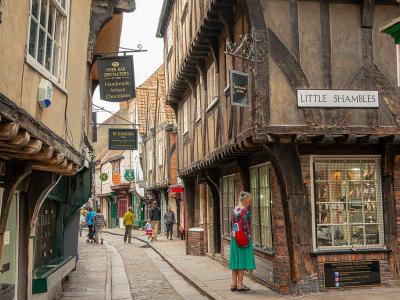
The Shambles is a historic street. Shambles refers to a meat market, and several streets with butcher shops are named The Shambles. Butcher stalls in this area were named in the 1086 Doomsday Book. The oldest buildings that line The Shambles today were built in the 14th century, and most were built by 1475. By 1426 the street was known as the Great Flesh Shambles, and later the street name was shortened to The Shambles.
Slaughterhouses were set up at the back of the butcher shops. The pavements were raised on the cobblestone street to allow easier cleaning of blood.
This narrow street features overhanging buildings, and some areas are so skinny that visitors can touch both sides of the street at once. The overhanging buildings would have sheltered the walls below and protected the display meat from the sun.
Visitors will find a shrine to Saint Margaret Clitherow on this street. Known as the "Pearl of York," she was martyred in 1586 for refusing to enter a plea to the charge of harboring Catholic priests. Saint Margaret Clitherow was married to a butcher and lived on The Shambles.
Butchers no longer line The Shambles, but several buildings still display meat hooks and meat shelves on display. Today's shops include restaurants, a bakery, and a bookshop.
Shambles Market runs daily between The Shambles and Parliament Street.
Why You Should Visit:
The Shambles is known as one of the best-preserved medieval streets in England. While fans believe it may have been the inspiration for Harry Potter's Diagon Alley, author J.K Rowling has denied these rumors. Regardless, the charming narrow street will transport visitors back in time.
Tips:
Visitors will also love exploring the five snickelways that lead off The Shambles. These snickelways are narrow alleys that connect to other streets.
Slaughterhouses were set up at the back of the butcher shops. The pavements were raised on the cobblestone street to allow easier cleaning of blood.
This narrow street features overhanging buildings, and some areas are so skinny that visitors can touch both sides of the street at once. The overhanging buildings would have sheltered the walls below and protected the display meat from the sun.
Visitors will find a shrine to Saint Margaret Clitherow on this street. Known as the "Pearl of York," she was martyred in 1586 for refusing to enter a plea to the charge of harboring Catholic priests. Saint Margaret Clitherow was married to a butcher and lived on The Shambles.
Butchers no longer line The Shambles, but several buildings still display meat hooks and meat shelves on display. Today's shops include restaurants, a bakery, and a bookshop.
Shambles Market runs daily between The Shambles and Parliament Street.
Why You Should Visit:
The Shambles is known as one of the best-preserved medieval streets in England. While fans believe it may have been the inspiration for Harry Potter's Diagon Alley, author J.K Rowling has denied these rumors. Regardless, the charming narrow street will transport visitors back in time.
Tips:
Visitors will also love exploring the five snickelways that lead off The Shambles. These snickelways are narrow alleys that connect to other streets.
11) York City Walls (must see)
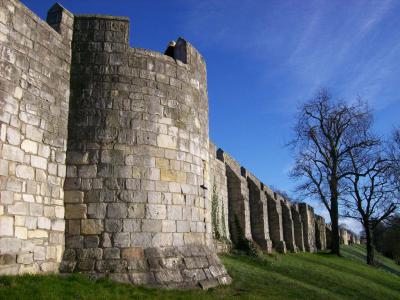
The York City Walls in York are a historic and extensive fortification that has surrounded the city since Roman times. Today, York boasts more miles of intact walls than any other city in England, known collectively as the York City Walls, the Bar Walls, or, less accurately, the Roman Walls. The latter term is a misnomer since the majority of the surviving structure is not of Roman origin, and the layout of the walls has significantly evolved since the Roman period.
These walls originally date back to around 71 AD when the Romans built a wooden fort near the River Ouse, covering approximately 50 acres. The fort's rectangular boundary was integral to its defensive strategy. However, these early fortifications proved inadequate during the Viking invasions, necessitating the construction of more robust defenses.
Between the 12th and 14th centuries, a new stone wall was erected, utilizing the foundations of the old Roman walls and extending southwards across both sides of the Rivers Ouse and Foss. This expansion effectively enclosed the city, enhancing its defense against future threats. Today, the walls stand about 13 feet high and 6 feet wide, a testament to medieval engineering and strategic planning.
Access to the city is controlled through four main gates, also known as "bars": Bootham Bar, Monk Bar, Walmgate Bar, and Micklegate Bar. These gates not only served as toll collection points in medieval times but also played crucial roles in the city’s defense during wartime. Each gate has its unique historical significance and architectural features, contributing to the overall heritage of York’s medieval city defenses.
These walls originally date back to around 71 AD when the Romans built a wooden fort near the River Ouse, covering approximately 50 acres. The fort's rectangular boundary was integral to its defensive strategy. However, these early fortifications proved inadequate during the Viking invasions, necessitating the construction of more robust defenses.
Between the 12th and 14th centuries, a new stone wall was erected, utilizing the foundations of the old Roman walls and extending southwards across both sides of the Rivers Ouse and Foss. This expansion effectively enclosed the city, enhancing its defense against future threats. Today, the walls stand about 13 feet high and 6 feet wide, a testament to medieval engineering and strategic planning.
Access to the city is controlled through four main gates, also known as "bars": Bootham Bar, Monk Bar, Walmgate Bar, and Micklegate Bar. These gates not only served as toll collection points in medieval times but also played crucial roles in the city’s defense during wartime. Each gate has its unique historical significance and architectural features, contributing to the overall heritage of York’s medieval city defenses.
12) Monk Bar
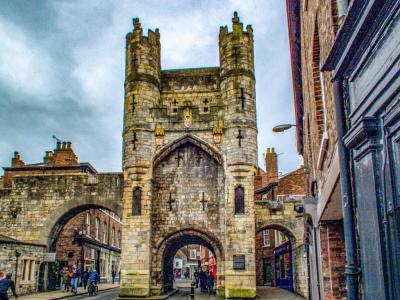
A bar is a gate in the medieval England - the word "bar" has its origin in barries. Monk Bar is ranked as the tallest and most elaborate of York's surviving medieval city gates. It was constructed in the early 14th century as a self-contained fortress, with each floor capable of being separately defended.
On the front of the bar is an arch supporting a gallery, including "murder-holes" through which missiles and boiling water could be rained down upon attackers. Later, it was used to jail unruly Catholics, and you can experience what it was like for being a "bad Catholic" by squeezing yourself into the cramped Little-Ease Prison tucked away in one of the towers.
Today, Monk Bar houses a fascinating museum dedicated to Richard III and has the only working portcullis in York, complete with spiked railings. Between Monk Bar and Bootham Bar is one of the nicest sections of York City Wall.
On the front of the bar is an arch supporting a gallery, including "murder-holes" through which missiles and boiling water could be rained down upon attackers. Later, it was used to jail unruly Catholics, and you can experience what it was like for being a "bad Catholic" by squeezing yourself into the cramped Little-Ease Prison tucked away in one of the towers.
Today, Monk Bar houses a fascinating museum dedicated to Richard III and has the only working portcullis in York, complete with spiked railings. Between Monk Bar and Bootham Bar is one of the nicest sections of York City Wall.
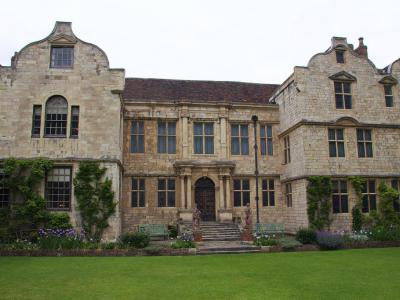
13) Treasurer's House (must see)
In the care of the National Trust since 1930 (it was one of its first major properties), and tucked away behind the Minster, the Treasurer's House has both a lovely garden and fascinating collection of art and antiques.
The name derives from it being on the site of the medieval house of the Minster's Treasurer, a post abolished at the Reformation. The present building dates from the 17th century, but had been added to with various accretions and was actually three separate houses when in 1897 it was bought by Frank Green (1861-1954).
Green was a wealthy local industrialist and used his considerable wealth and educated taste to restore the house to what he thought it should look like in its heyday, albeit with a central great hall which was entirely of his own imagination.
He was an early collector of antiques, and his aim to deliver a home as a showcase for his collection of furniture, paintings and other treasures, with great attention to paid to the detail of their presentation. Each room was designed in the style of a different period as a setting for his period furniture collection.
He was famously fastidious – not to say fussy – and the house abounds with notices telling the staff what to do and how to behave, and metal floor studs to indicate the exact position of the furniture. It is said he even wandered around to check on things at night! A bachelor, he gave the house to the Trust in 1930, while he moved on to Ashwick House in Somerset.
Visitors can wander on their own, and there is an audio guide available on request, as well as braille and large print guides. In each room, there is a separate guide to the paintings on display. Afterwards, the gardens make a great place to escape the touristy bustle of the city.
Tip:
To reach the cellar and attic you need to go on an accompanied tour: the cellar tour is mainly of interest to ghost enthusiasts (there are still people who claim to see them!), while the attic tour gives a great insight into the servants' lives. You can also have a wander round the very pleasant, photogenic garden and go down in the basement to find a reasonably priced tearoom, toilets, and maybe a ghost or two.
The name derives from it being on the site of the medieval house of the Minster's Treasurer, a post abolished at the Reformation. The present building dates from the 17th century, but had been added to with various accretions and was actually three separate houses when in 1897 it was bought by Frank Green (1861-1954).
Green was a wealthy local industrialist and used his considerable wealth and educated taste to restore the house to what he thought it should look like in its heyday, albeit with a central great hall which was entirely of his own imagination.
He was an early collector of antiques, and his aim to deliver a home as a showcase for his collection of furniture, paintings and other treasures, with great attention to paid to the detail of their presentation. Each room was designed in the style of a different period as a setting for his period furniture collection.
He was famously fastidious – not to say fussy – and the house abounds with notices telling the staff what to do and how to behave, and metal floor studs to indicate the exact position of the furniture. It is said he even wandered around to check on things at night! A bachelor, he gave the house to the Trust in 1930, while he moved on to Ashwick House in Somerset.
Visitors can wander on their own, and there is an audio guide available on request, as well as braille and large print guides. In each room, there is a separate guide to the paintings on display. Afterwards, the gardens make a great place to escape the touristy bustle of the city.
Tip:
To reach the cellar and attic you need to go on an accompanied tour: the cellar tour is mainly of interest to ghost enthusiasts (there are still people who claim to see them!), while the attic tour gives a great insight into the servants' lives. You can also have a wander round the very pleasant, photogenic garden and go down in the basement to find a reasonably priced tearoom, toilets, and maybe a ghost or two.
